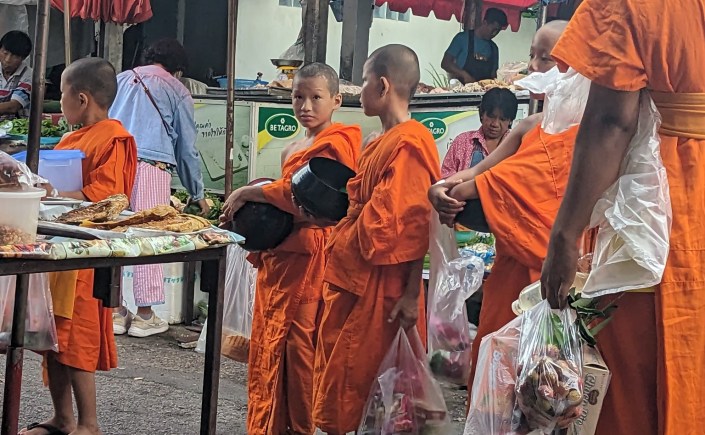
After being stuck at home for the past 3 years (except for a 2-month stint in Chiang Mai last year), we decided it was time to tick something off our bucket list: spending an extended period in Chiang Mai, Thailand. We have visited several times previously and fell in love with the city. Ideally, we would have liked to have spent September through March there, but my hip replacement surgery changed our timeline. We arrived in November and stayed until the end of May. Unlike the United States, there are only 3 seasons in Thailand – rainy, hot, and cold. If you add in smoky season, I guess that would be four, but smoky season is just a part of hot season. The cold season is not what most would call cold; the temperatures range from around 60 degrees at night to the mid-80’s during the day. I was a bit hesitant to stay there during smoky and hot seasons but decided to give it a go anyhow.
I have already shared much of what we did during our time in Chiang Mai in previous posts but wanted to share my thoughts after spending so much time there. And I neglected to post anything about Songkran so I will include that in this post as well.
One of the things that a person visiting Thailand will need to adapt to is not being able to read or speak the language. Now, I know that some visitors can, but I am not among them, nor is Clayton. The alphabet is completely different than ours; it contains 32 vowels (short and long), 44 consonants (split into 3 classes) and 4 tone marks (high, low, rising, falling). There is also a neutral tone, but it does not have a special mark. So, to read Thai, one needs to be able to read the letters (and there is no spacing between words; only a space at the end of a sentence), translate the Thai letters into Latin-script letters, and then understand what the word means. To speak Thai, add in the correct tone so that a Thai can understand what you said. I have provided much glee among the Thais that I have attempted to speak to. They giggle uproariously at my Thai! As an example, here is a simple sentence in Thai (the marks above some of the letters are tone marks):

Here it is in Latin-script alphabet:

Each “mai” is pronounced differently! The meaning of the sentence is “New wood doesn’t burn, does it?”. But you knew that, right? LOL!
Google Lens has provided to be an invaluable tool. After opening the app, you just point your camera at something written in Thai, and it translates it for you. It is not perfect, but it is tremendously helpful.
Clayton’s barber shop advertises a butt shave, according to Google Lens. I am assuming this is not an accurate translation, but you never know! I thought the translation for the first item at the nail salon wasn’t quite right but came back a week later and it had been fixed. So much better!
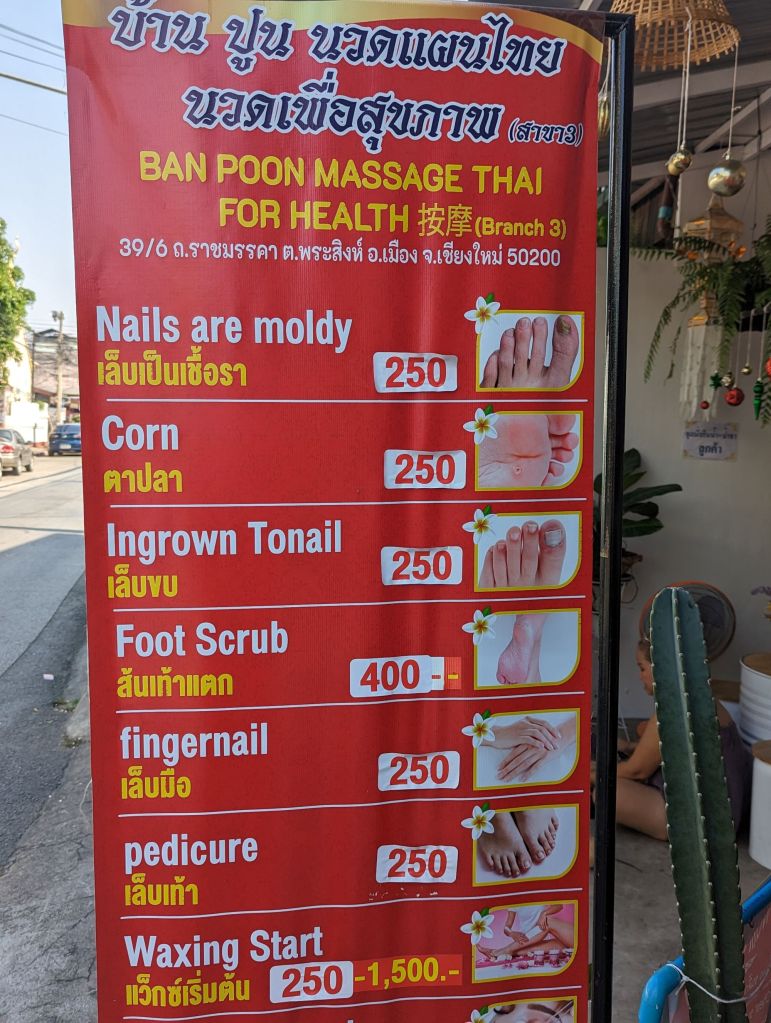
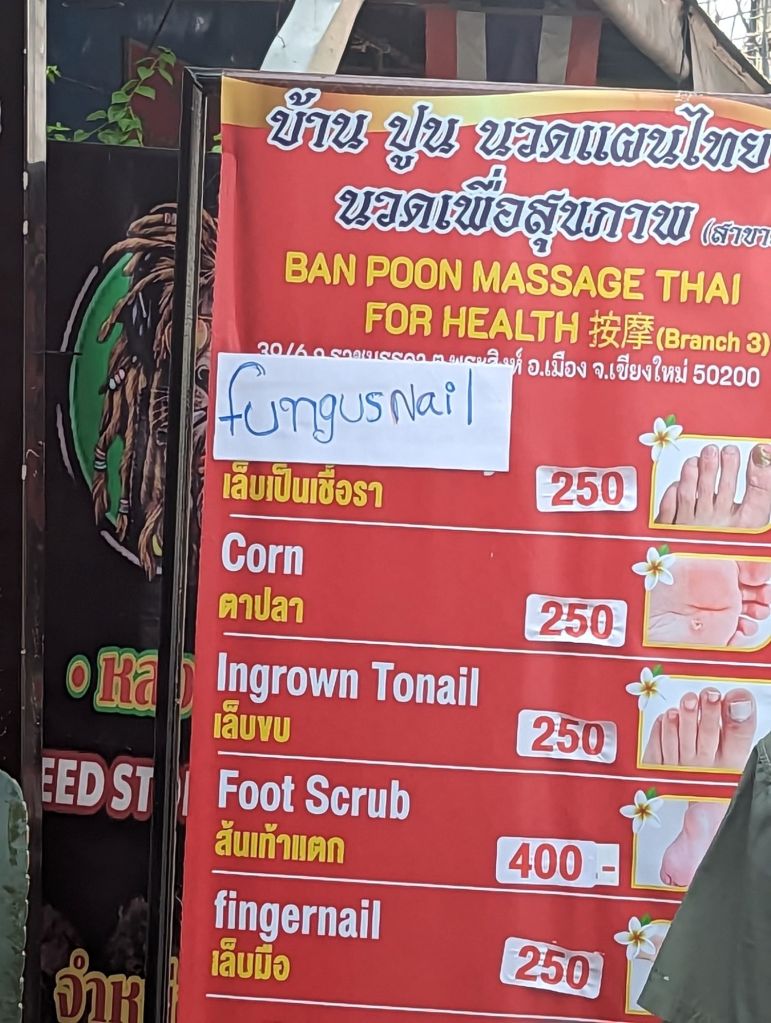
Google Translate works OK, too and allows you to have an actual conversation in a different language. Some of the translations are “interesting”.
Shopping was a bit of a struggle when we first arrived. And then we discovered Lazada – the Amazon of Thailand. My first purchase was a hairdryer. I thought the price was a misprint – $2 for a full-sized hairdryer. I figured I couldn’t go too far wrong by trying it out (shipping added another $1) and so if a toy hairdryer showed up, I wouldn’t be out too much money. Imagine my surprise and delight when a “real”, fully functioning hairdryer appeared a couple of days later. The delivery guy called when he arrived (they actually still do COD in Thailand, though I always paid for my purchases in advance). Since I had success with that first purchase, Clayton and I found all types of things we could make use of; all at bargain basement prices. Some of the items came from China, which added about a week to the delivery time. But still, the convenience couldn’t be beaten. When we stayed for two months last year, there were things we just did without. For a 6-month stay, we decided to purchase some items that would make our lives easier. The front desk guy at our apartment would hold our purchases for us so we didn’t need to be home to accept delivery.
Our day-to-day shopping was done at the fruit and vegetable market by the Chiang Mai gate. Every couple of weeks we made a pilgrimage to a “real” grocery store to pick up items that weren’t available at the fresh market or the small grocery store near us. I don’t want you to think that I did any actual cooking (one of the best parts of living in Thailand), but we did like to have breakfast and dinner in our apartment so that we didn’t eat out for three meals/day. Breakfast was typically eggs and toast or oatmeal, served with lots of tropical fruit. We ate lunch out daily. By the time we left, we had found our favorite places for our favorite Thai foods and rotated between them. Dinner was typically a sandwich and yogurt. We like to eat light in the evenings.
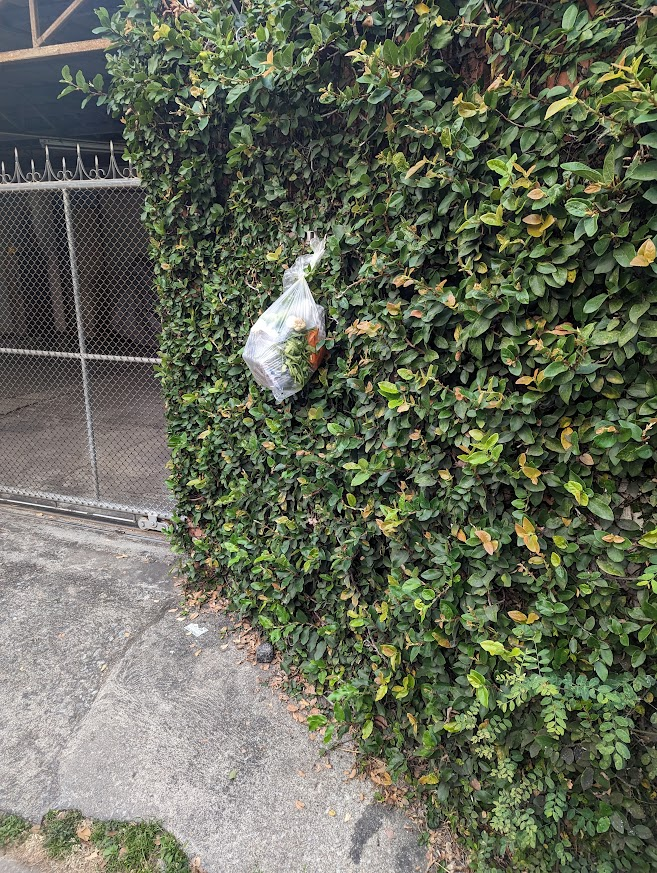
There were some definite differences in our daily life in Chiang Mai compared to the US. Garbage was put in plastic bags and tied to a fence. Our apartment had garbage cans, but that was atypical. The garbage was picked up by the garbage men who then often sat on the bags of garbage.

There were certain days that alcohol was not sold, either in restaurants or stores. Most of these were tried to Buddhist holidays but it was also true on election days. Incidentally, alcohol cannot be served in Chiang Mai between the hours of 2 pm to 5 pm. Apparent too many people were showing up drunk at work…
Fashion-wise, it was very much a mixed bag. Most people wore what they could afford, which meant that you saw the most interesting combinations of colors and patterns. In general, Thais dress very modestly. You don’t see many in shorts and/or revealing tops. Most wear long pants and long-sleeved shirts. Add to that a sweatshirt, even in over 100-degree heat! Occasionally, you see people in pajamas. I have been told that it is a sign of wealth. If you can afford special pajamas, you are upper-middle class. There is a minimum wage in Thailand, but it is just over $300 US per month. Social security exists as well, but only pays 600 Baht/month, which is around $20. The amount increases with age and tops out at 1000 Baht/month if you are over 90 (around $30). Most elderly Thais live with family. Obviously, even with the lower standard of living in Thailand, $20-$30/month isn’t sufficient for anyone to live independently. You often see older people working. Every day, we walked by an elderly woman grilling bananas and selling them for 10 Baht/each. She was a sweet little lady and always offered me bananas with a big smile. I nicknamed her “Nana Banana”. I tried one and let’s just say that it is an acquired taste. There are two types of bananas in Thailand – the kind you are probably familiar with, and the smaller, cooking bananas. She grilled the cooking bananas which are not as sweet. Grilling them gives them a leathery texture. I always felt bad turning down her bananas but didn’t want her to waste them on me since I didn’t really like them.
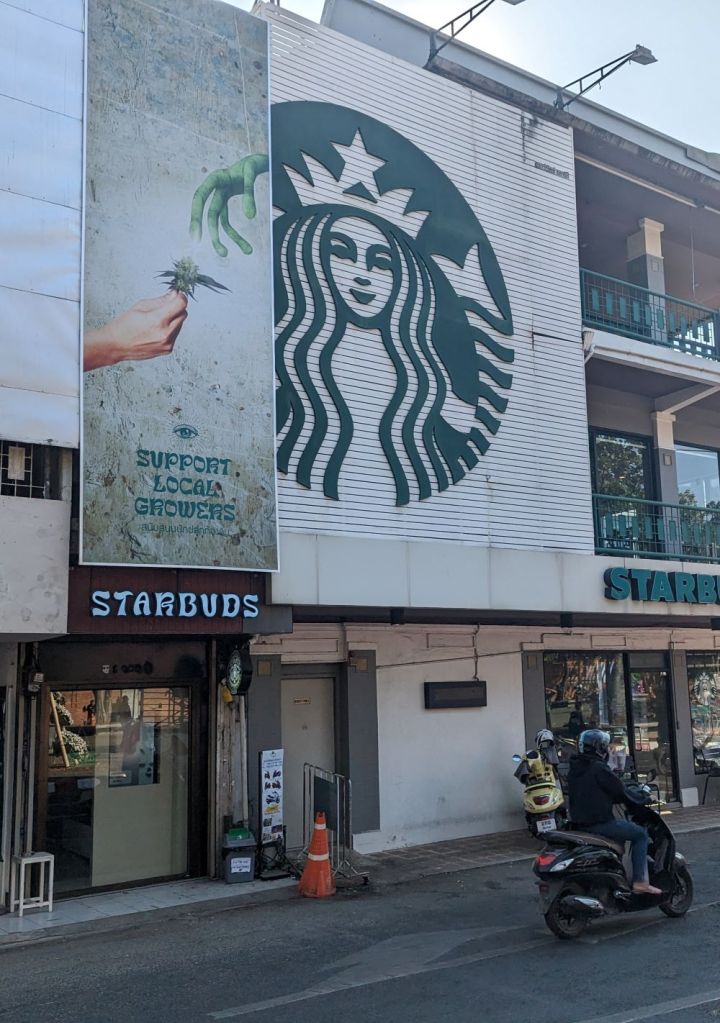
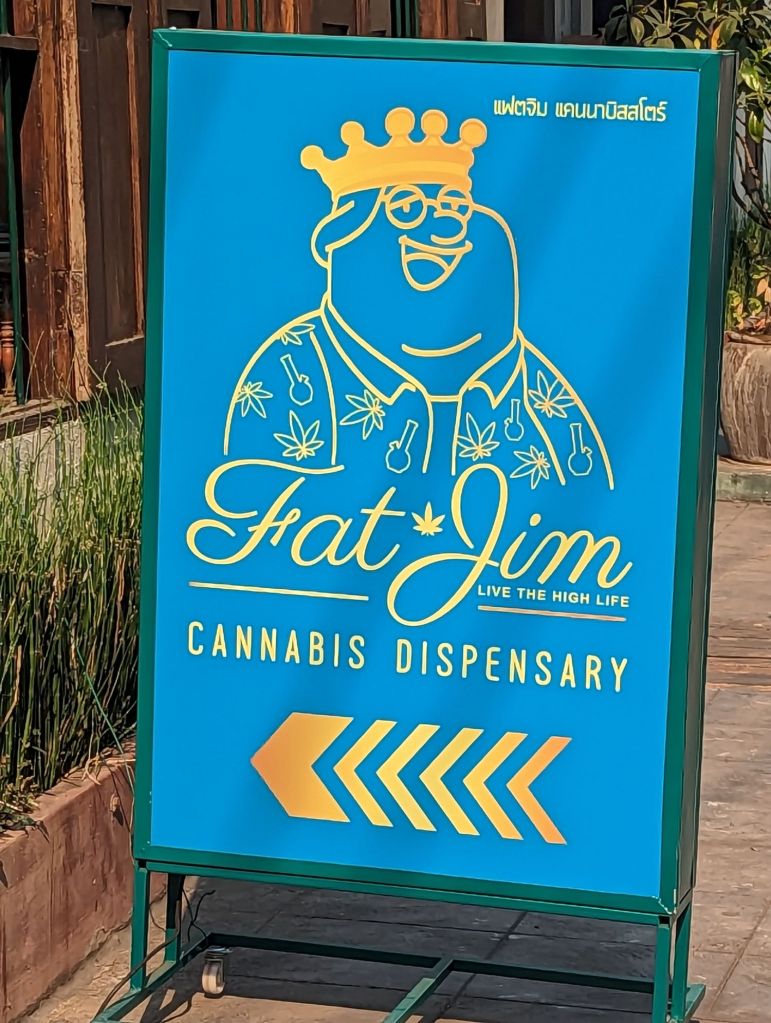
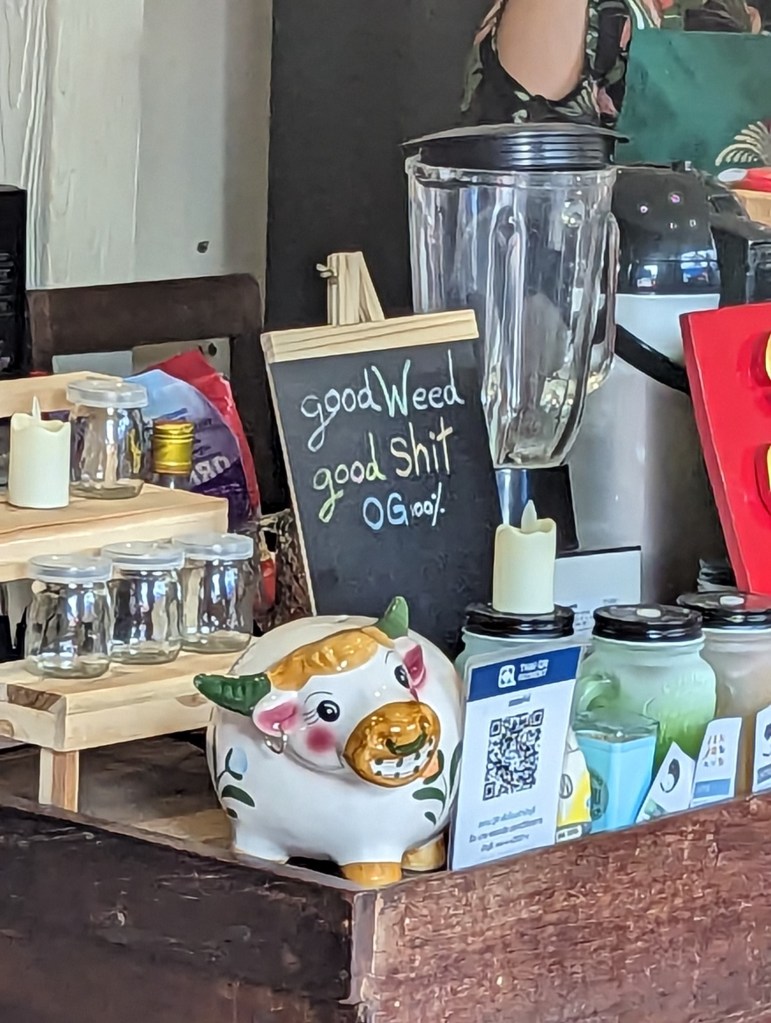
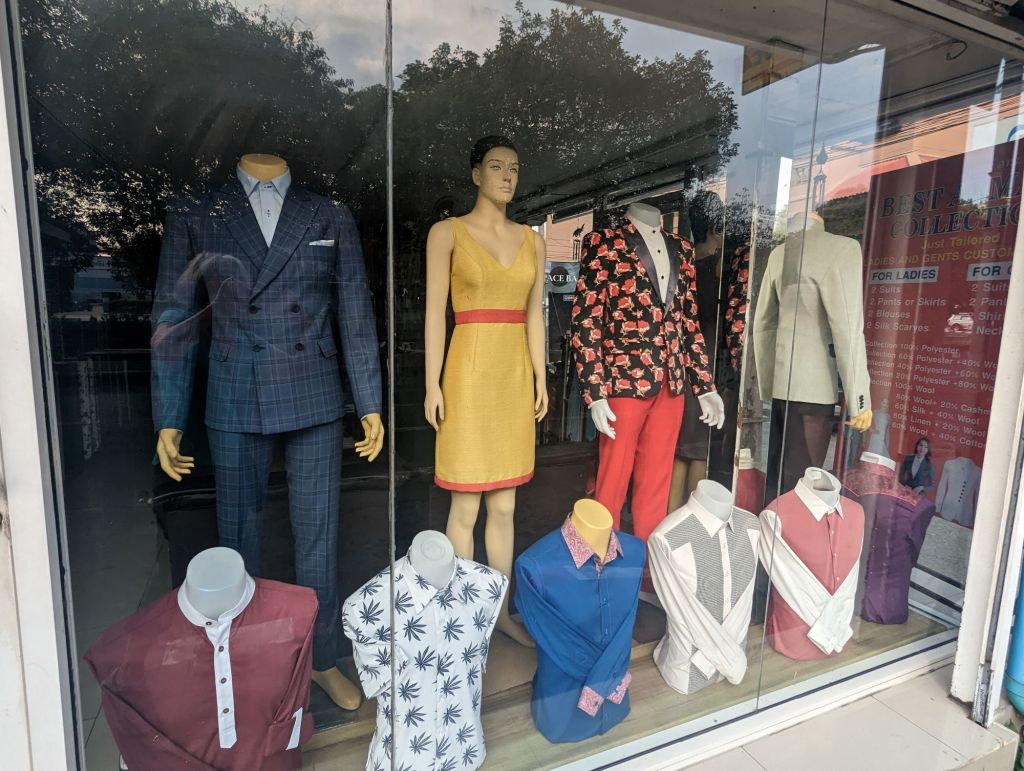
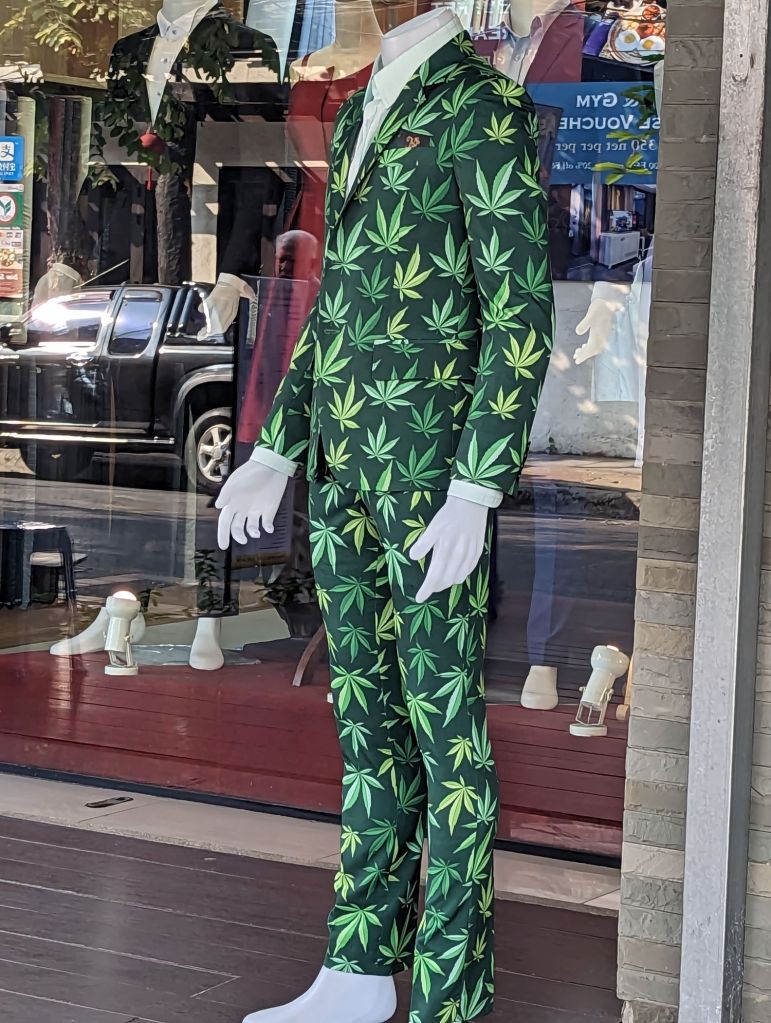
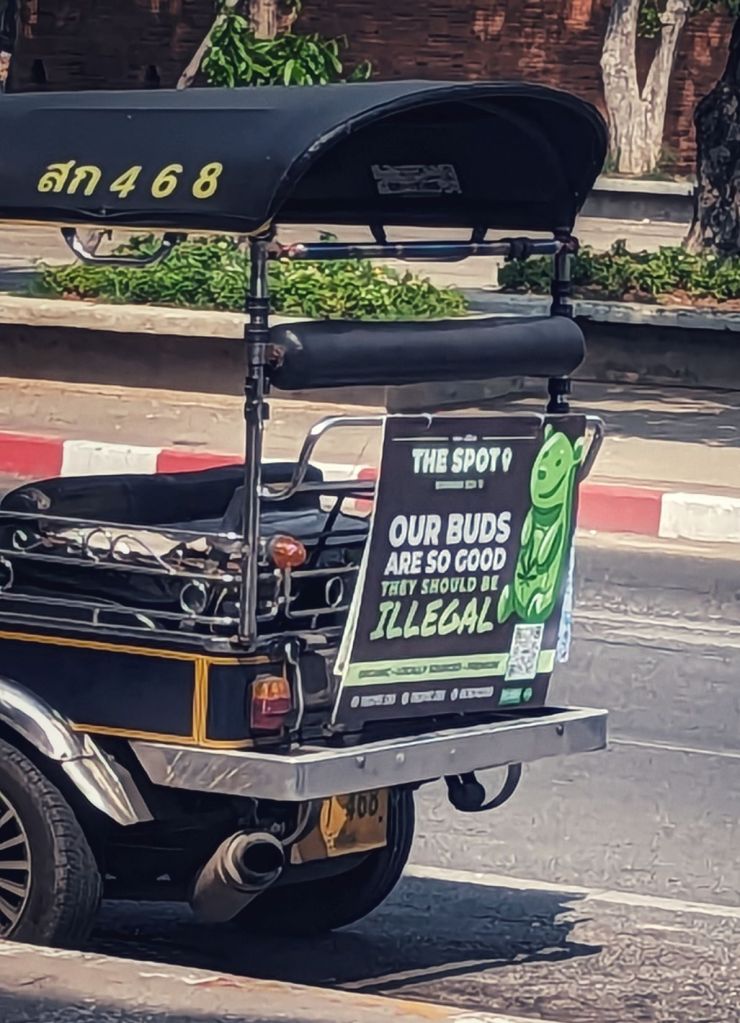
Marijuana was sort-of legalized last year and so the number of pot shops blossomed. Pot is legal in Washington state, where we live, so it was no big deal to us. But, for many of the British and Aussie backpacker set, it was a big draw. There were streets lined with pot shops near the main tourist part of town. One of my coffee shops got in on the action. Sadly, the Star Buds store wasn’t in business for long, though I do appreciate the name and location! Even Armani got into the game, fashion-wise. Not to be outdone, this haberdasher designed this fabulous suit.
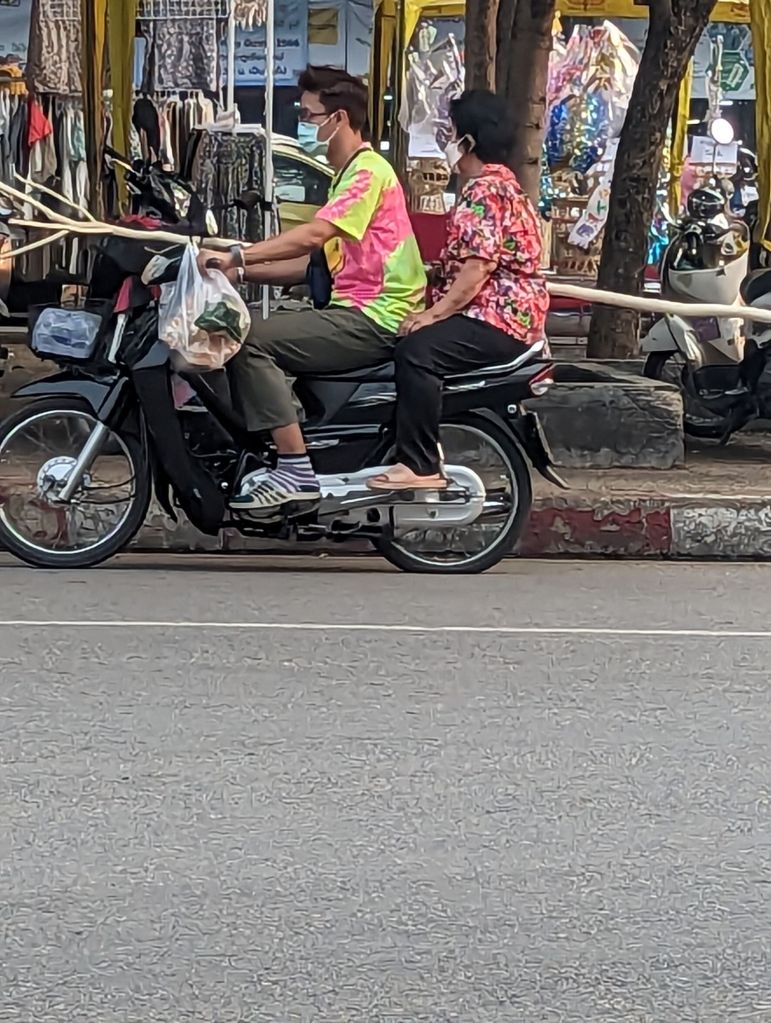
We learned to “drive like Thais”; in other words, to drive as if no traffic laws, signs, or signals exist. We became immune to seeing two-year olds “help” their parents steer their motor scooters. It became common to see four on a scooter, the family minivan of Thailand. People drive what they can afford, and not everyone can afford a car. Scooters drive right through the markets – why walk when you can ride? Whilst riding, we became used to cars pulling out in front of us (without signaling), other scooters passing us on the left and right within our own lane, scooters driving really fast (typically, the food delivery drivers) or really slow (tuk-tuks, scooters with sidecars attached that haul goods, multiple people riding a 110-cc bike, etc.). As scary as the other scooter drivers are, the car drivers are even scarier. I may be completely off-base, but I think that since most Thais grow up riding scooters that being in a bigger vehicle throws off their depth perception in gauging distances. It’s crazy getting behind a car turning. Most come to an almost complete stop before making a turn and then either turn wide or cut the corner. Or the exact opposite – typically a young guy in a big pickup driving like a bat out of hell! The excitement comes in by trying to anticipate what everyone around you is going to do and to be prepared for all eventualities.
Our first few months were idyllic – the weather was fantastic. In the mornings, the temperature was typically in the 60’s to low 70’s. By late afternoon, it warmed to the mid-80’s and then cooled off after the sun went down (between 6:30 and 7:00 pm). It was perfect weather for walking. We took morning walks, midday walks (to get lunch) and evening walks. And then, in February, smoky season started. Farmers burn their crops at this time of year. Usually, it is worst during the months of March and April. This year, it started early and lasted longer. It is illegal to burn, but that doesn’t stop anyone from doing it. Besides, farmers from surrounding countries burn crops, so even if Thailand managed to quash the habit, there would still be smoke. Locals told us that this was the worst burning season in years. Chiang Mai topped the “world’s most polluted city” list for weeks on end. To make matters worse, hot season kicked in in April. So, besides the nasty smoke, the temperature hovered around 105 degrees daily. We returned to wearing masks outdoors. It helped keep us breathing and helped keep the crud out of our lungs. We ran an air purifier day and night. We also had to run air conditioning 24/7 because of the excessive heat. It did cool down at night, but the temperature only dropped into the upper 70’s to low 80’s. Sadly, our lovely daily walks had to end. From what I read in the news, this was the worst heat wave SE Asia has ever seen.
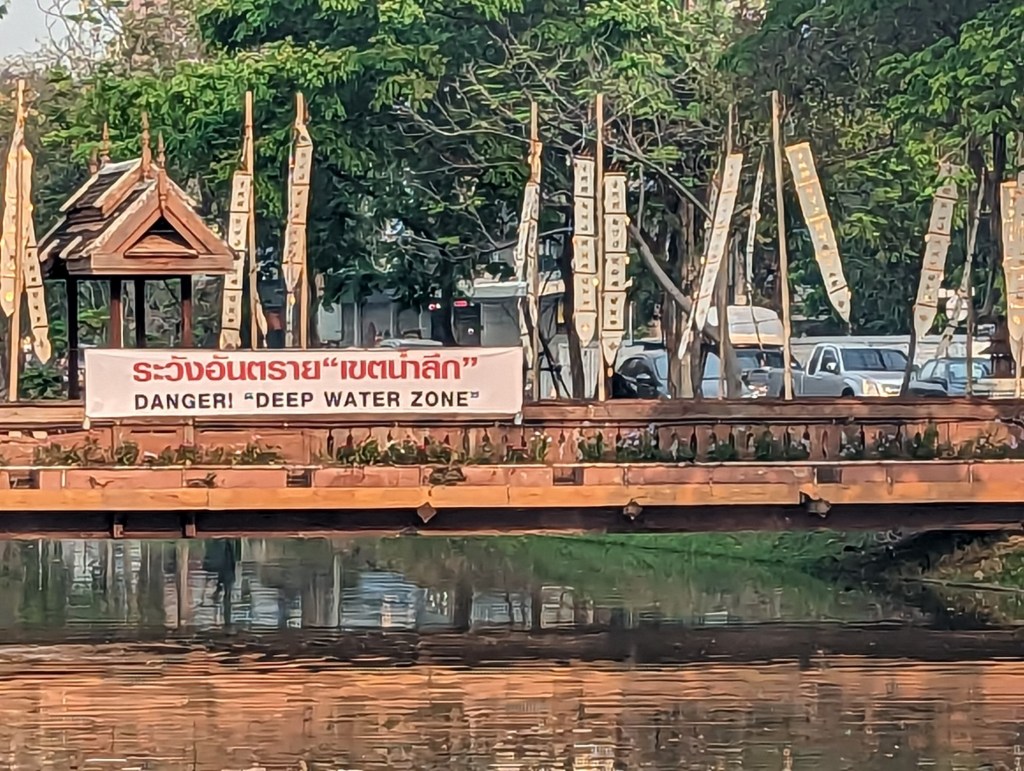
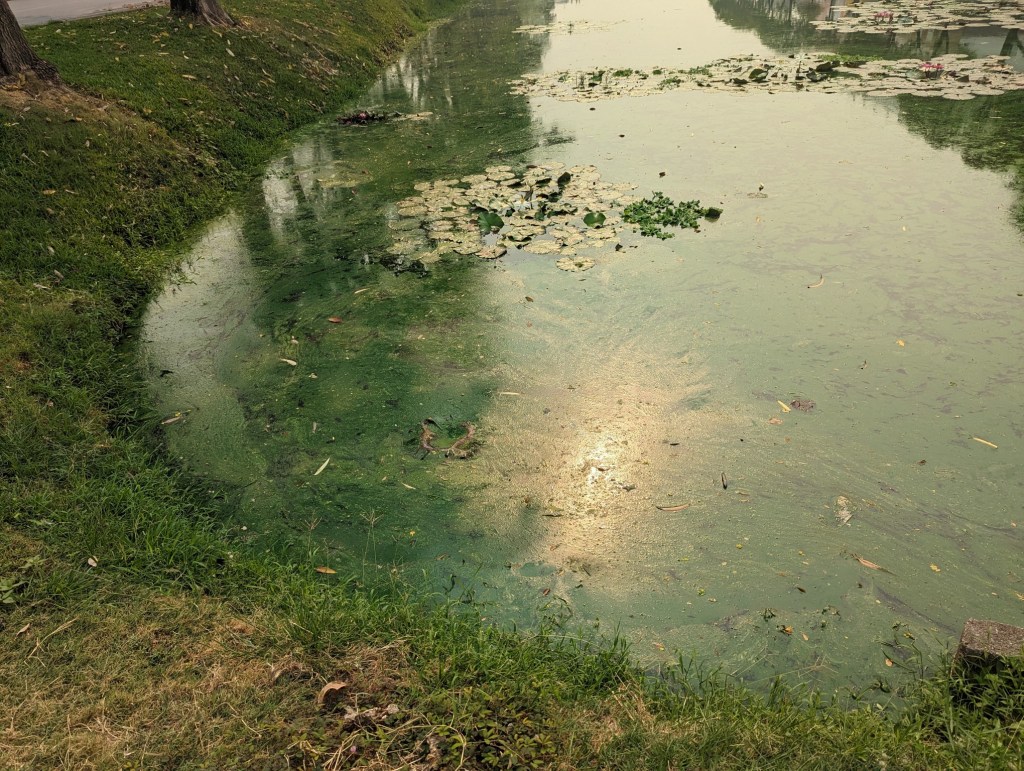
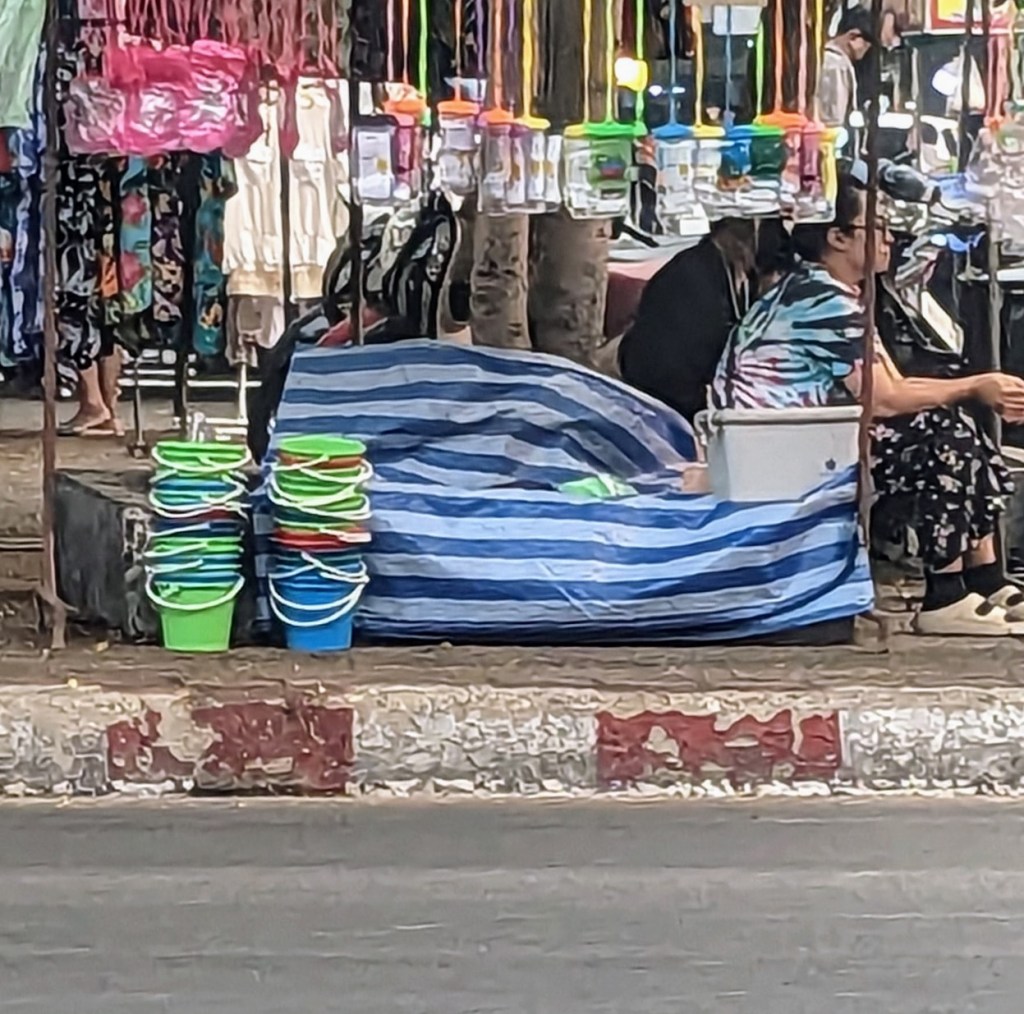
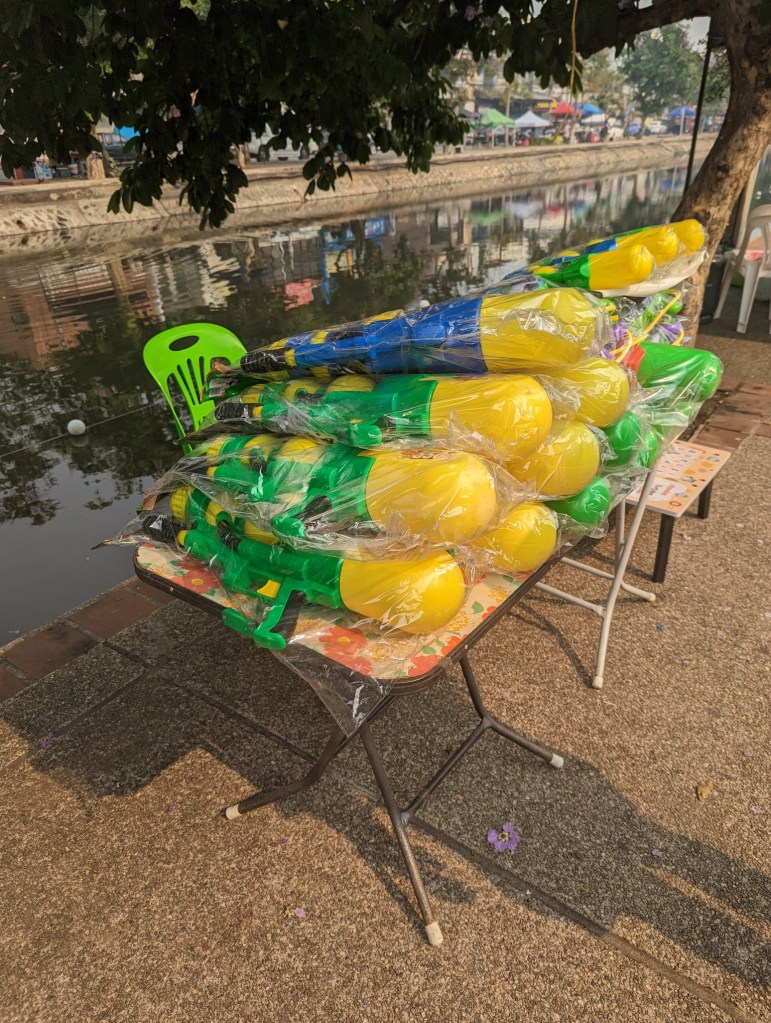
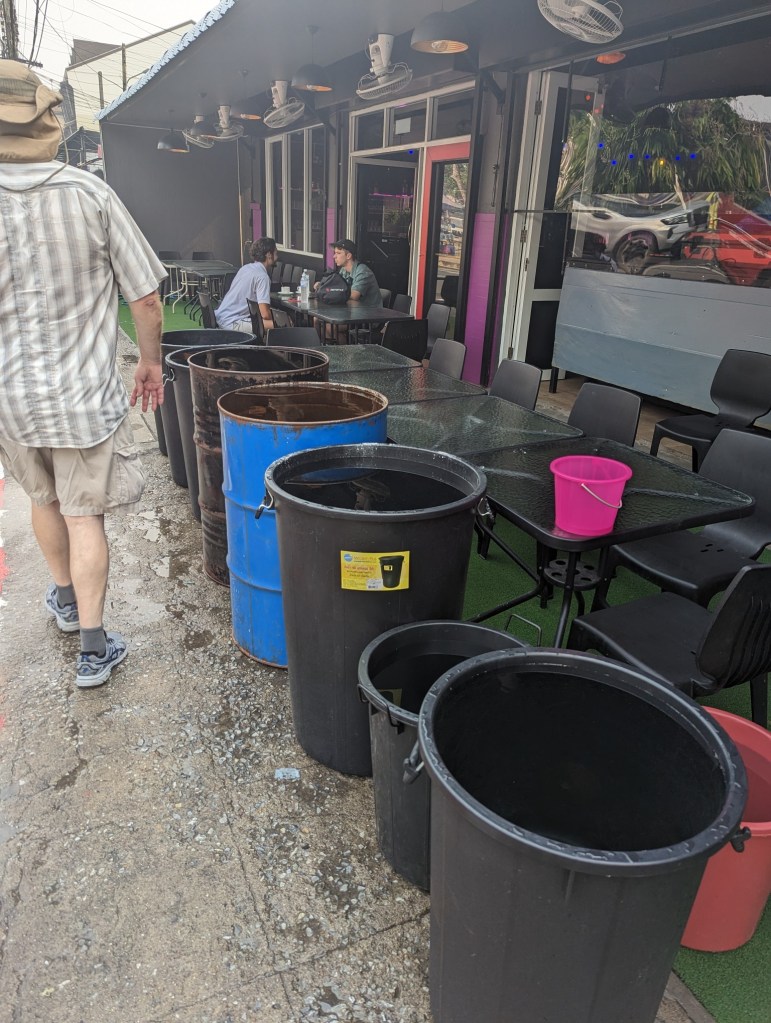
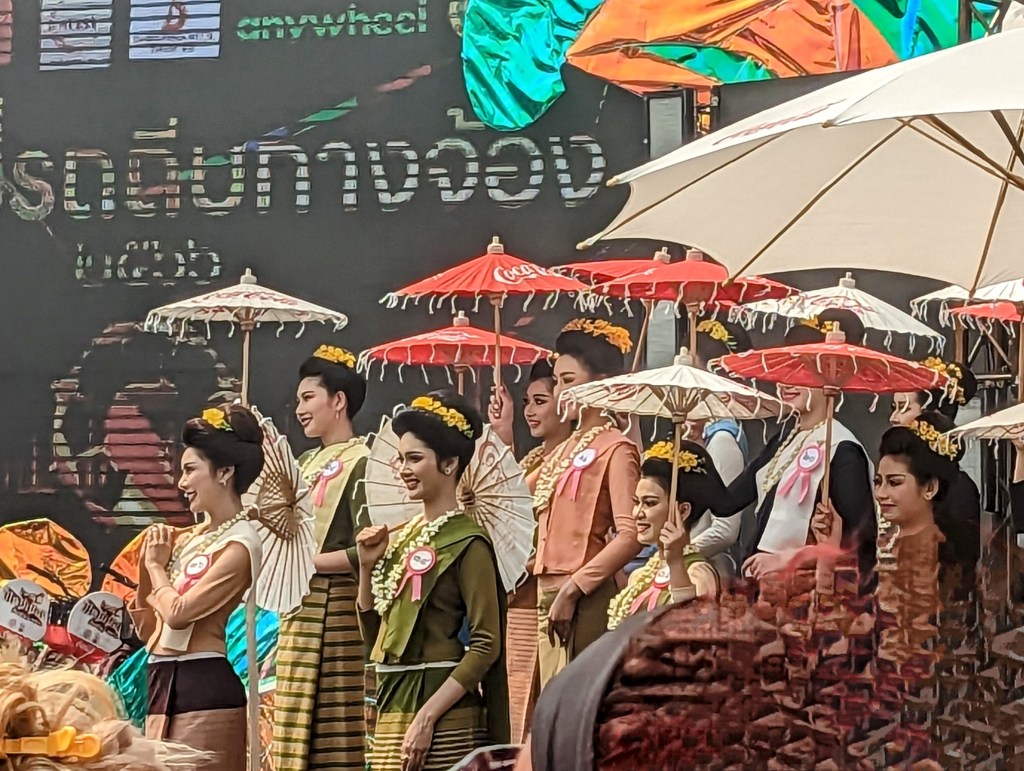
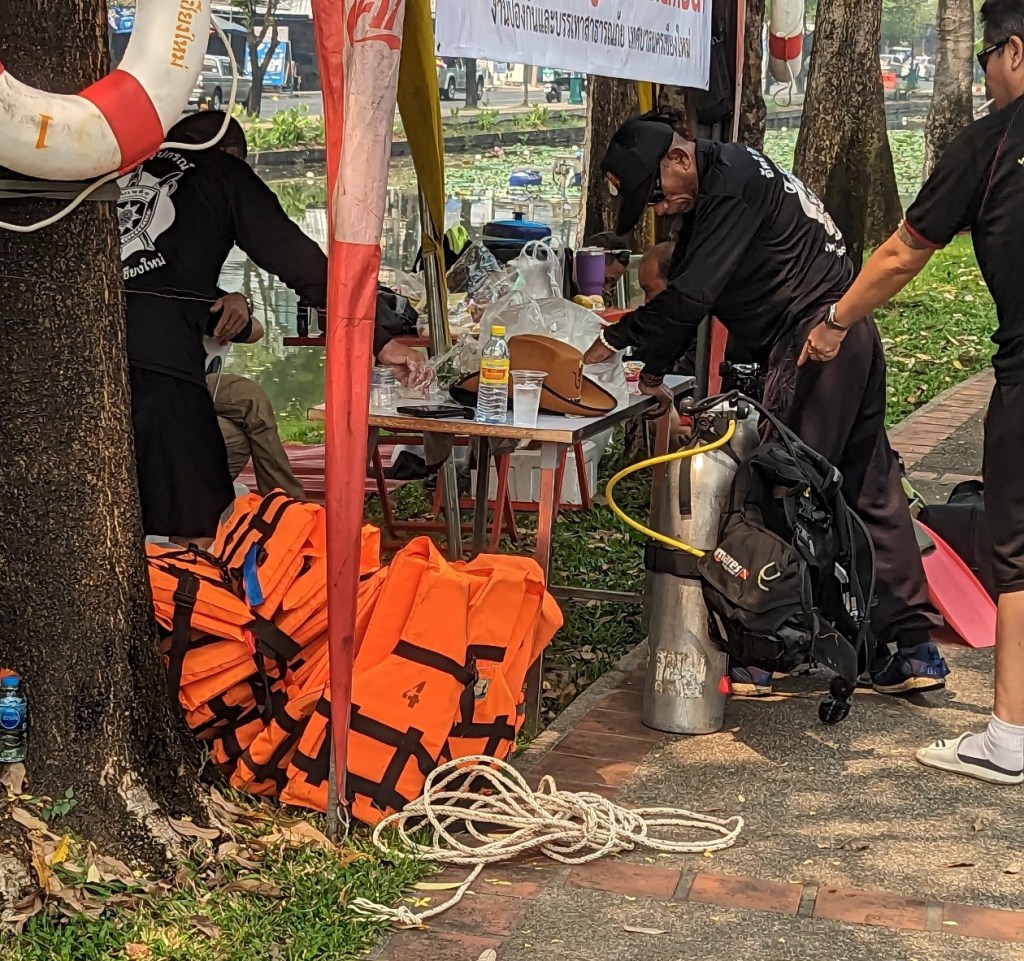
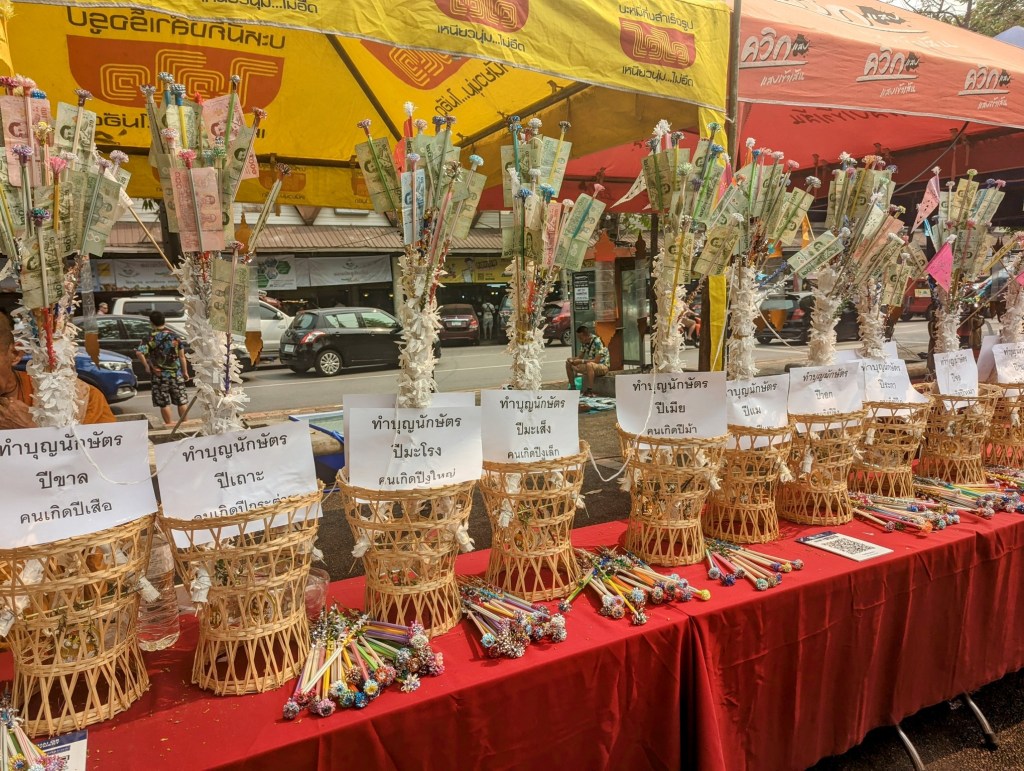
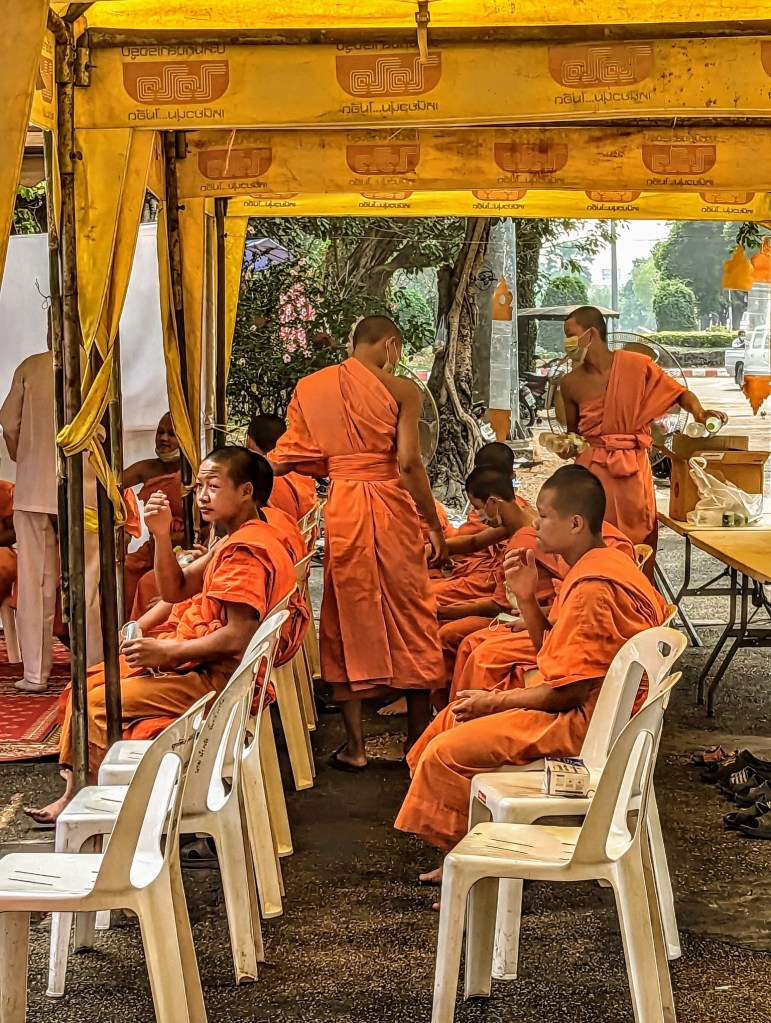
In the middle of this record-setting hot spell, Songkran happened. Songkran is the Thai New Year, which is celebrated over 3 days (or more!). If you have seen pictures of the world’s largest water fight, you have seen Songkran! It is a much deeper experience for Thai people than just super-soakers, though. The roots of Songkran are in the Buddhist faith. The faithful here go to their local Wat (temple), pour water on elders’ hands, spend time with family, and of course, go crazy with water! A week before Songkran, we started to see signs of the upcoming festivities. We had seen pictures of the craziness and really didn’t know what to expect. Friends had told us that the locals used water from the moat that surrounds the old city to refill their water guns. Gross, gross, gross. The moat water is not clean, and we weren’t too sure that we wanted to be a part of that. But we did want to experience a little bit of fun, so the first morning of Songkran, we walked to the Tha Pae Gate area. All along the moat, there were booths set up selling buckets, water guns, masks, cell phone protectors, and all sorts of accoutrements related to the festival. There was supposed to be a “Thai women in traditional dress carrying umbrellas while riding bicycles” competition and so we set up shop on the 2nd floor of the McDonalds across the street. We had an excellent view of the action – garbage cans filled with water lined the streets and if you walked or rode by, someone would throw buckets of water on you. There were pickups filled with young people shooting you with their super-soakers and people with hoses spraying those that walked by. One thing we did not see was anyone using moat water. Lots of local businesses provided water for refills. Despite the signs, we never saw anyone in the moat, either.
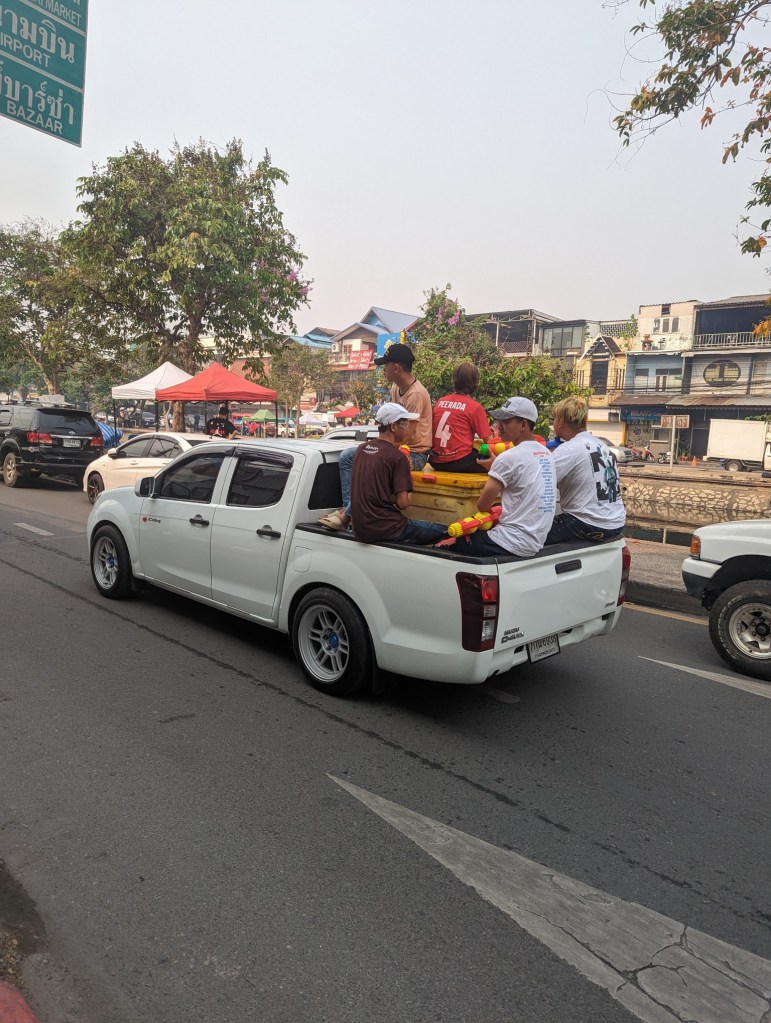
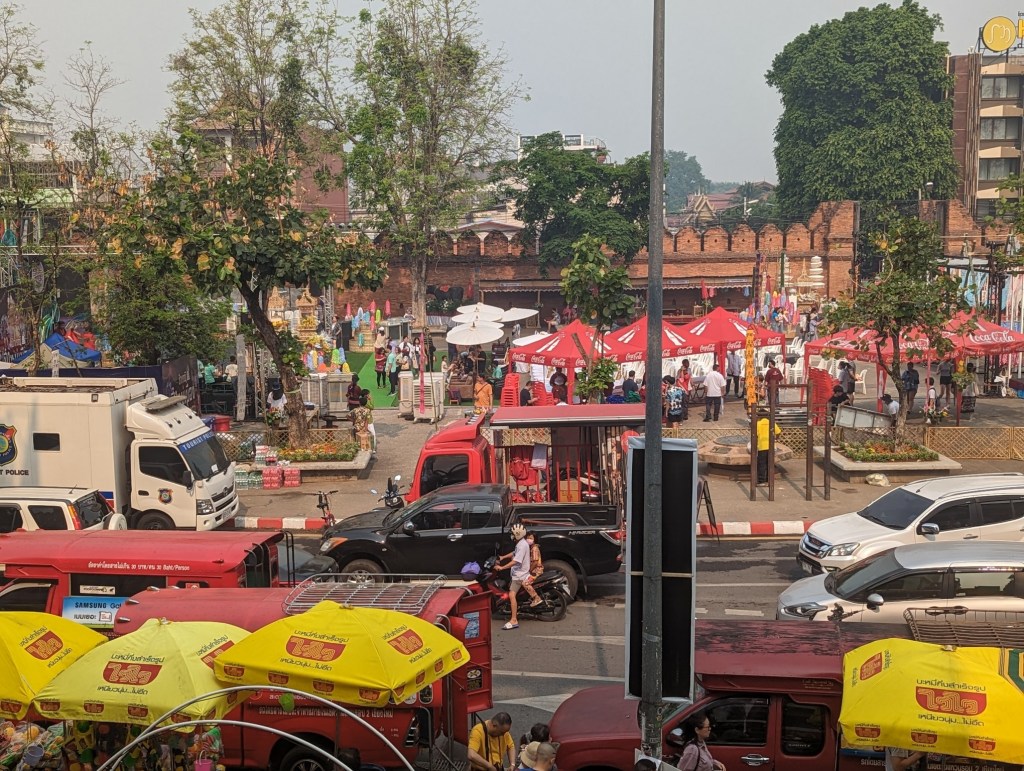
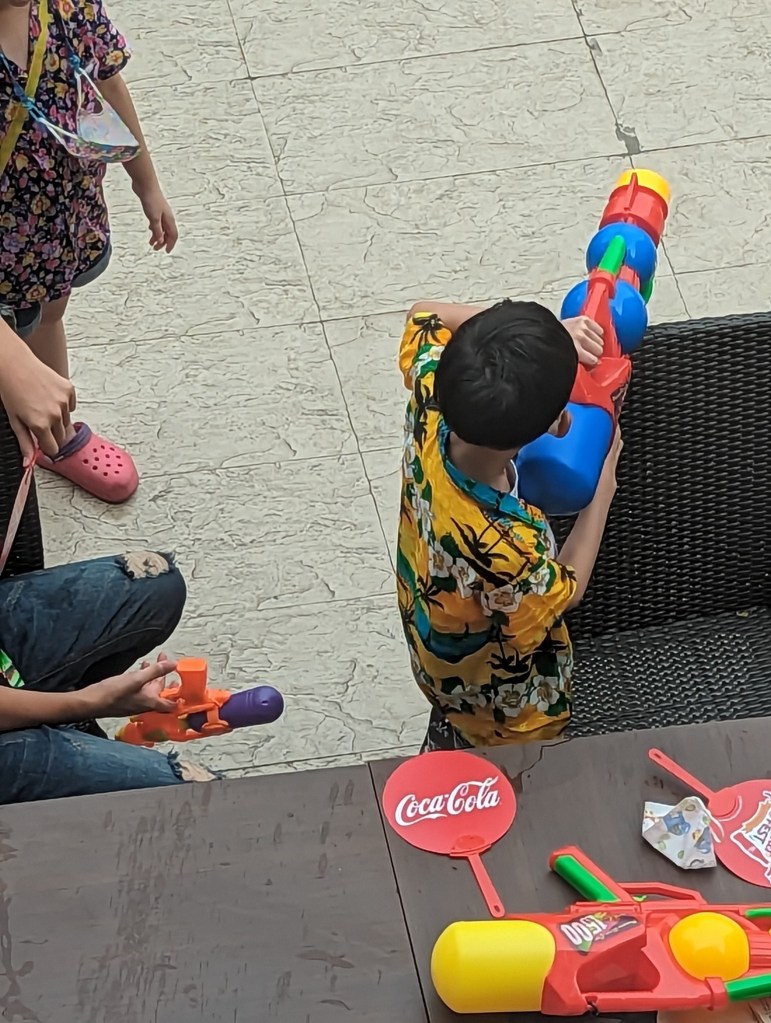
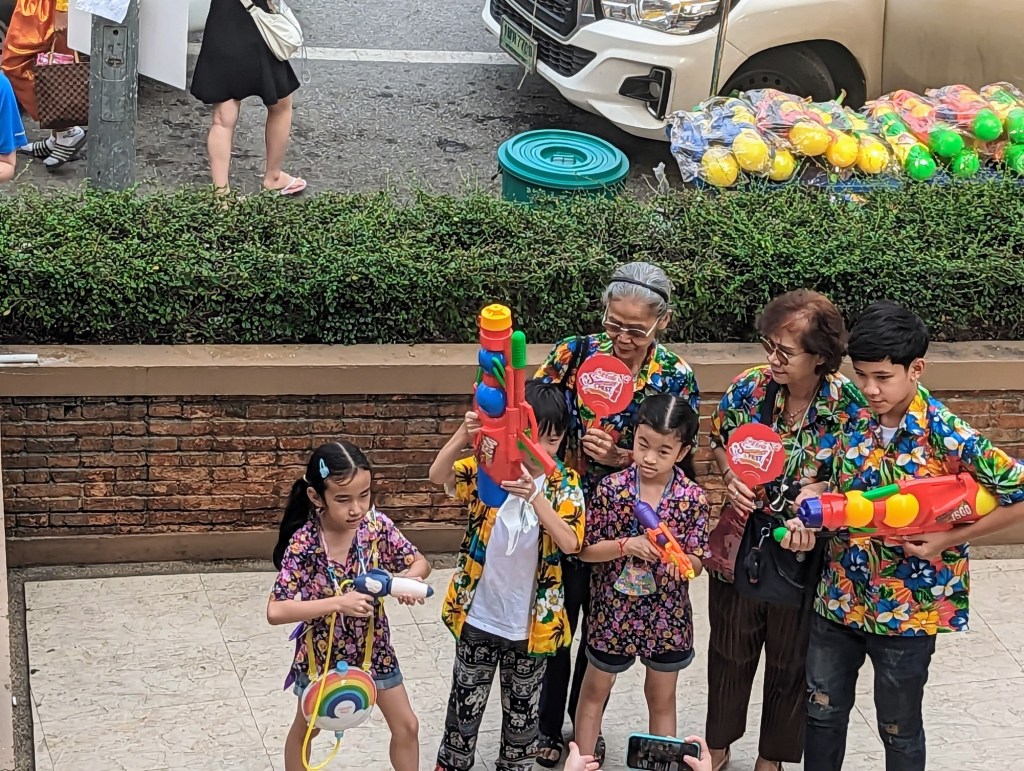
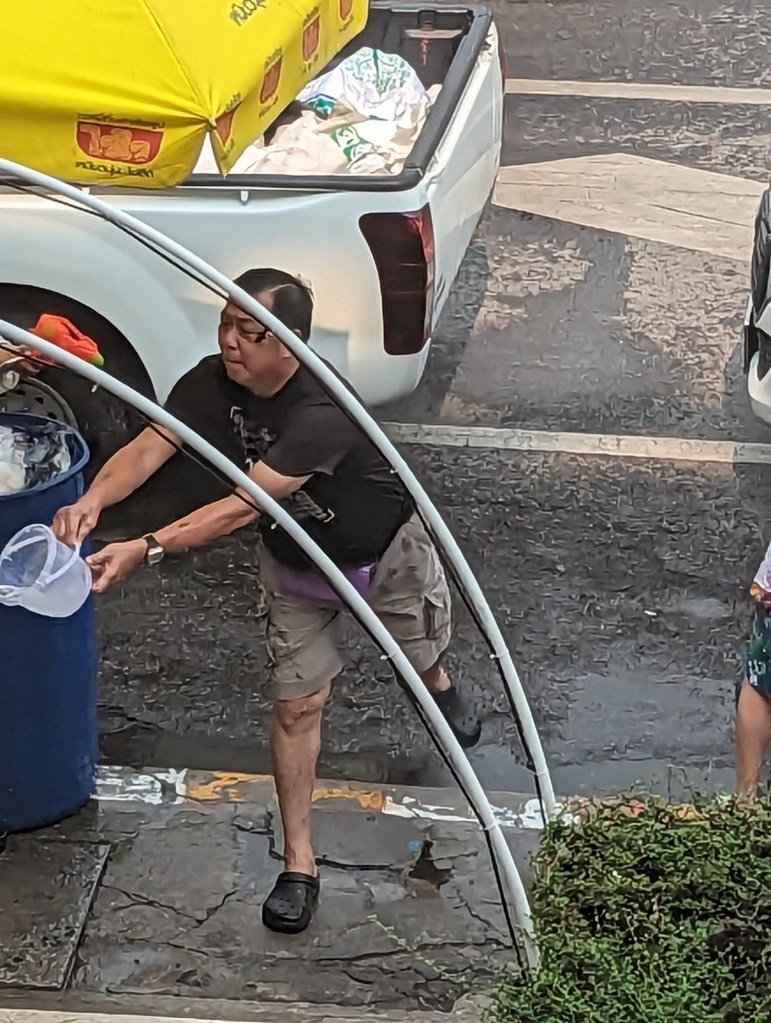
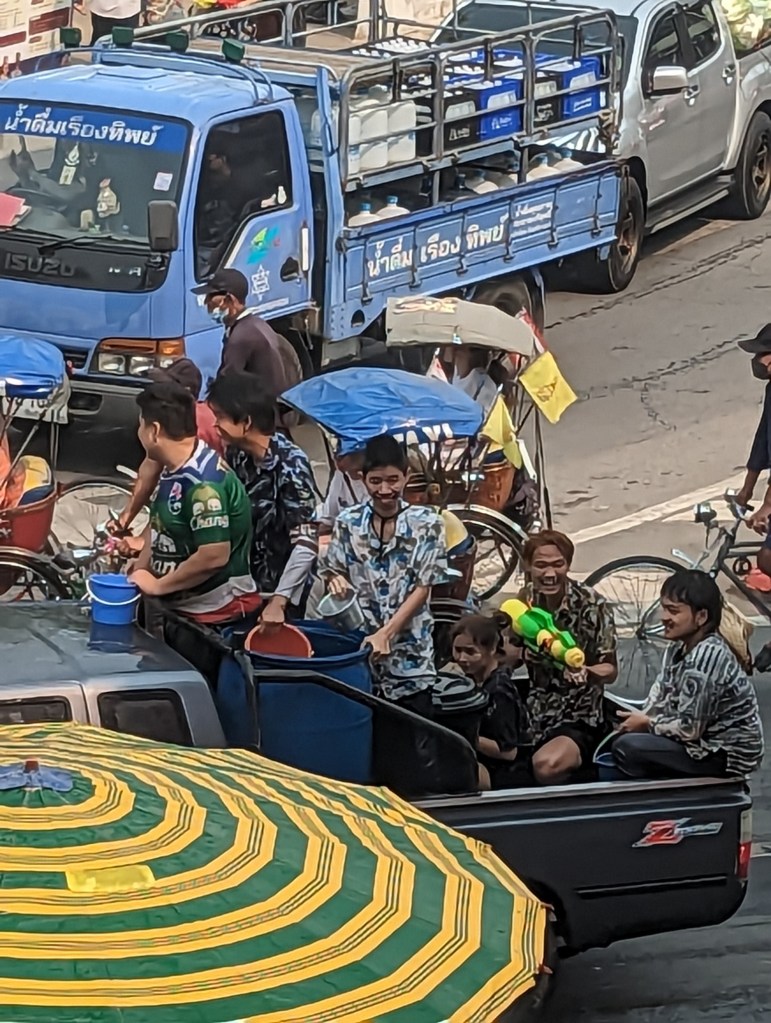
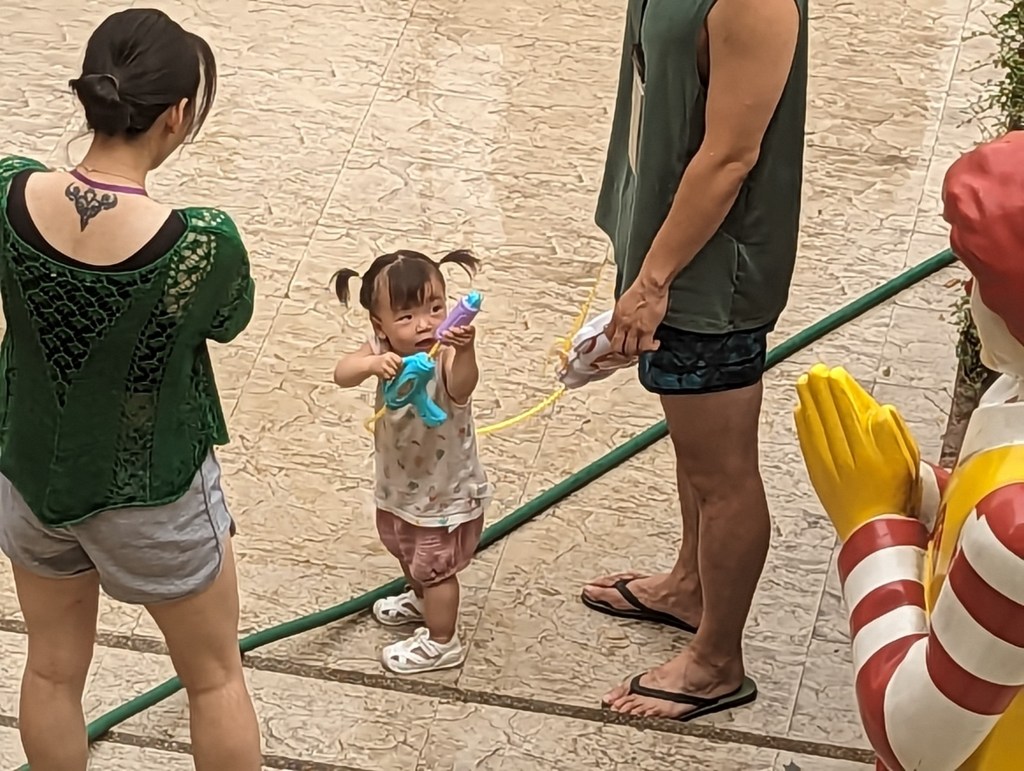
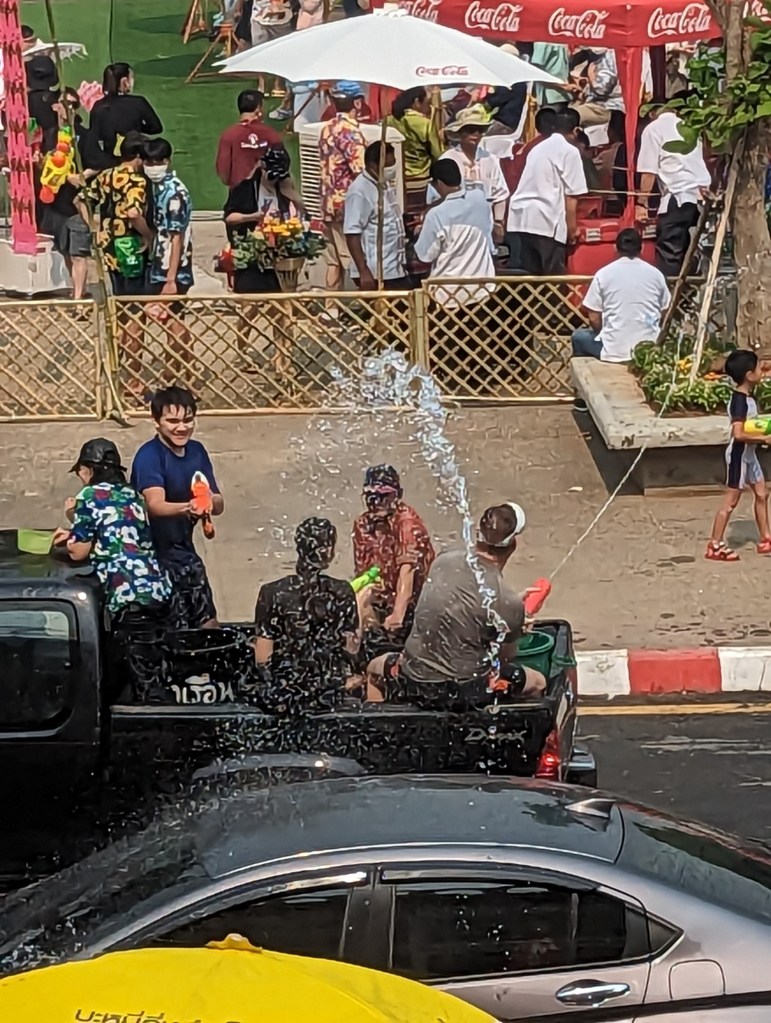
Everyone was having so much fun that we decided to join in. Incidentally, due to Covid, this was the first Songkran Festival in three years, and so people were really letting loose! We didn’t have water guns but were happy to let others soak us. Clayton made it a special point to let the little ones spray him. Given the excessive heat, it felt great!
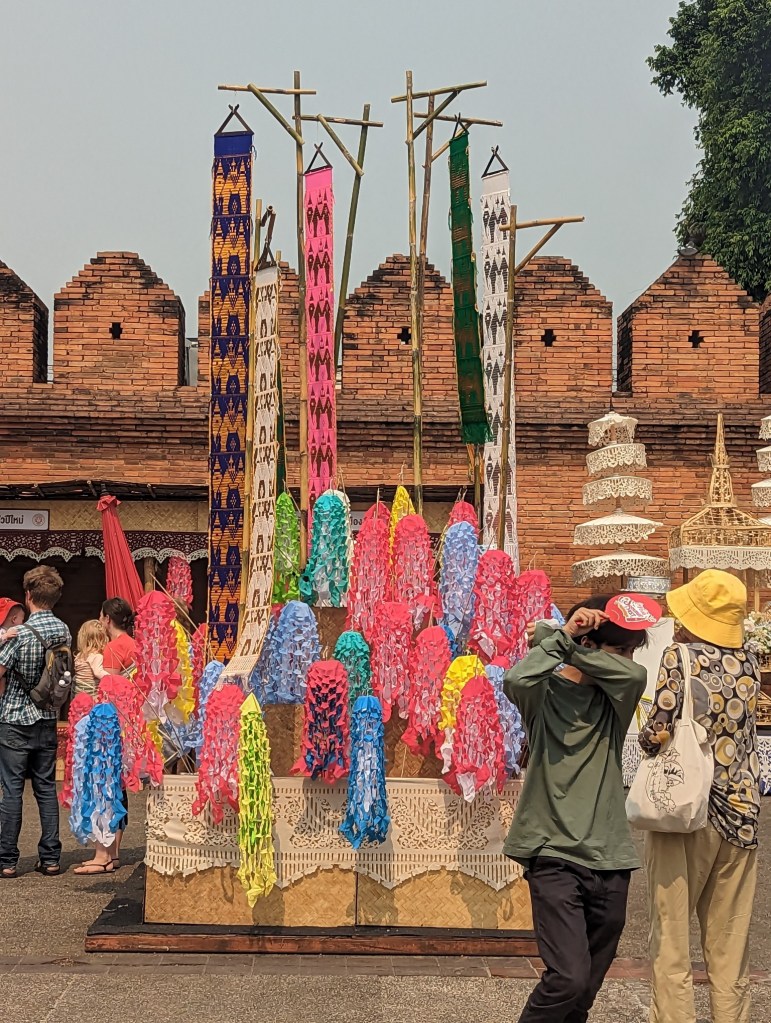
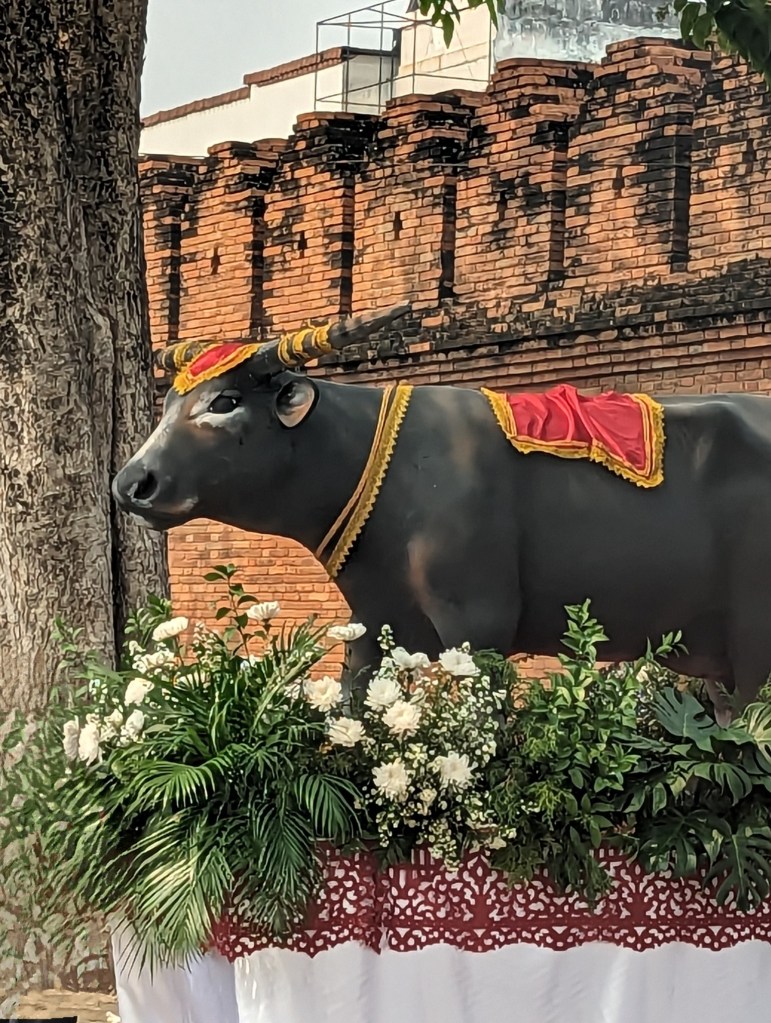
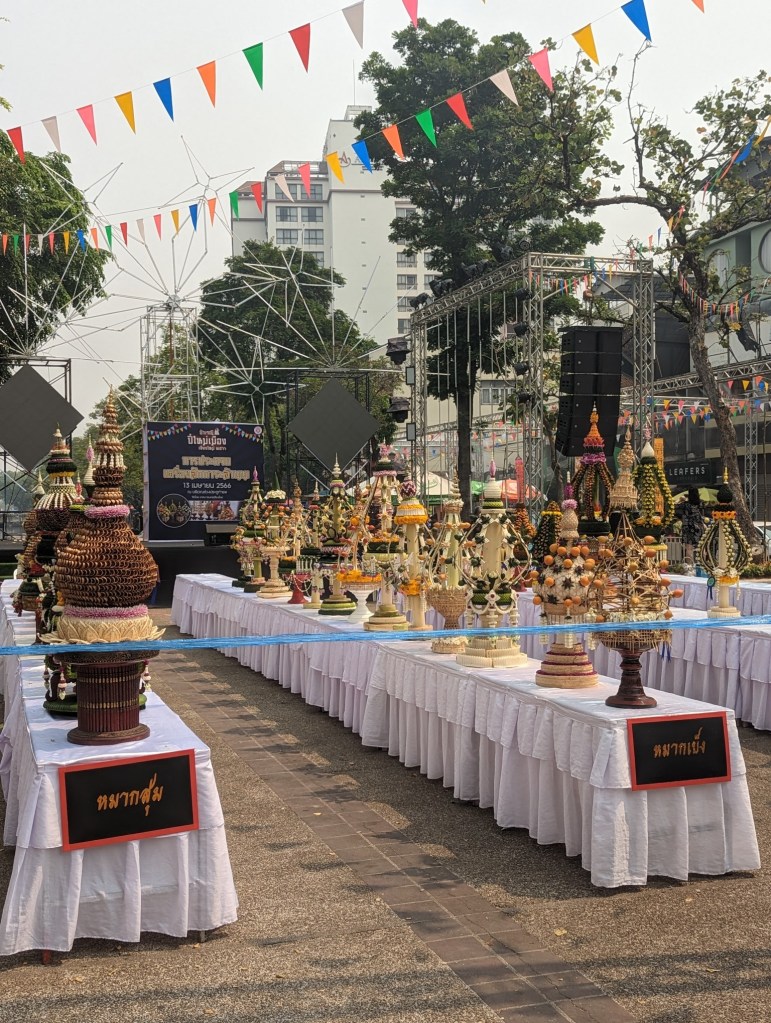
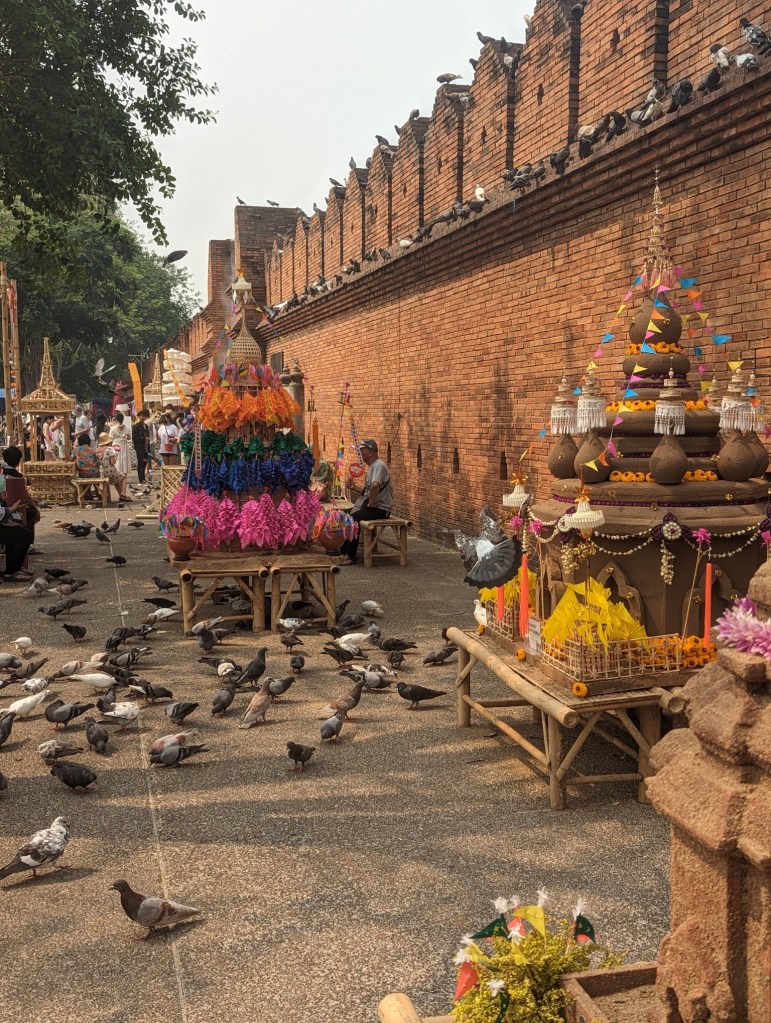

Thank you Chat GPT for producing this lovely Songkran Rap:
Yo yo yo, it’s time to celebrate
The Thai New Year with a splash of fate
Songkran is the festival of water and fun
When you can soak anyone under the sun
It’s a tradition that goes back to ancient times
When people sprinkled water as a sign of good vibes
Now it’s a massive water fight in the streets
With buckets, hoses, and water guns on repeat
But Songkran is more than just getting wet
It’s also about respect and gratitude, don’t forget
You can visit temples, make offerings, and pray
Or wash the hands of elders and monks in a gentle way
Songkran is a time to cleanse and renew
To wash away the bad and welcome the good
So grab your friends, family, and strangers too
And join the party of Songkran, the coolest thing to do!
Thai school children have their summer break during hot season, which makes sense. School starts up again in mid-May, which is when smoky season finally ended. There were some fabulous thunderstorms around then as well. I attempted (unsuccessfully) to upload a couple of videos I took of the rain; I have never seen anything like it, and I have been in tropical storms before. Within 5 minutes, the street in front of our place had turned into a river. Crazy!
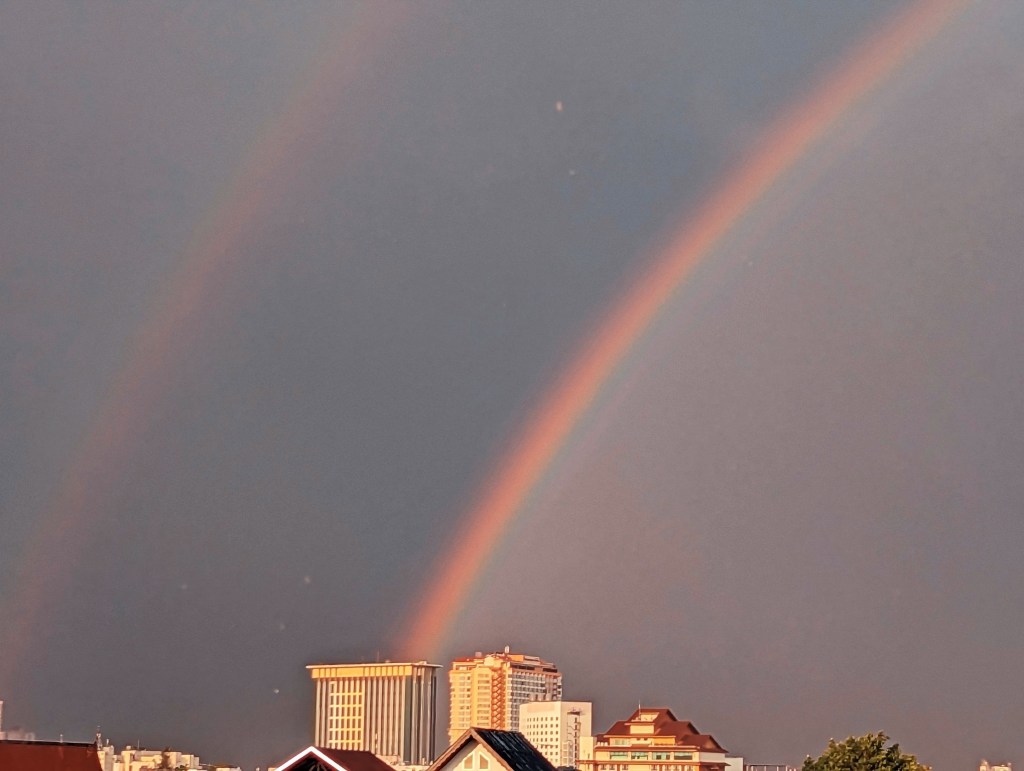
Will we be in Chiang Mai during the smoky and hot season again? Not on purpose. Once was enough. We will return in September after spending the summer back in Seattle. It will be rainy season when we go back, but in the northern part of Thailand, that means one or two rainstorms daily, and nice weather in between. We will miss the lovely people of Chiang Mai while we are gone. We had lots of hugs and tears when we let people know that we were leaving, but that gives us that much more to look forward to when we return. Thais are known for being warm and friendly. We certainly experienced that, and it is one of the main reasons why we love the area so much.
When we return in September, we have a few side trips planned that I will be writing about. We are taking a trip to Vietnam in October, a cruise in December, and a trip to India in February. More adventures ahead!
 travelswithheather