
Beautiful and elegant are but two words that describe Thai dance. One of the best parts of living in a different country is learning about its cultural heritage. I had the opportunity to attend a class on Lanna dance and textiles. The Lanna Kingdom was the “kingdom of a million rice fields” in northern Thailand from the 13th to 18th centuries. There were over 30 tribes in the highlands and lowlands of Lanna; our class focused on five of them.
Traditionally, Thai women wear “pha sin”; what you might call a sarong. Unlike the sarongs that are sold to tourists, a pha sin (pronounced paw scene) is a round tube of fabric, divided into three sections: the head, body, and feet. The “head” holds the pha sin in place by being rolled down and is oftentimes covered by a belt. The “body” is the main part and contains many distinctive designs, depending on the tribe. What all have in common is a belief in cosmology; the patterns typically depict the ocean, sand, forests, mountains, flowers, etc. The “feet” is the end of the pha sin and typically has some type of trim in order to distinguish it from the head. Traditionally, the colors in a pha sin were muted as natural dyes were used. In modern times, artificial dyes are used, and so colors are brighter.


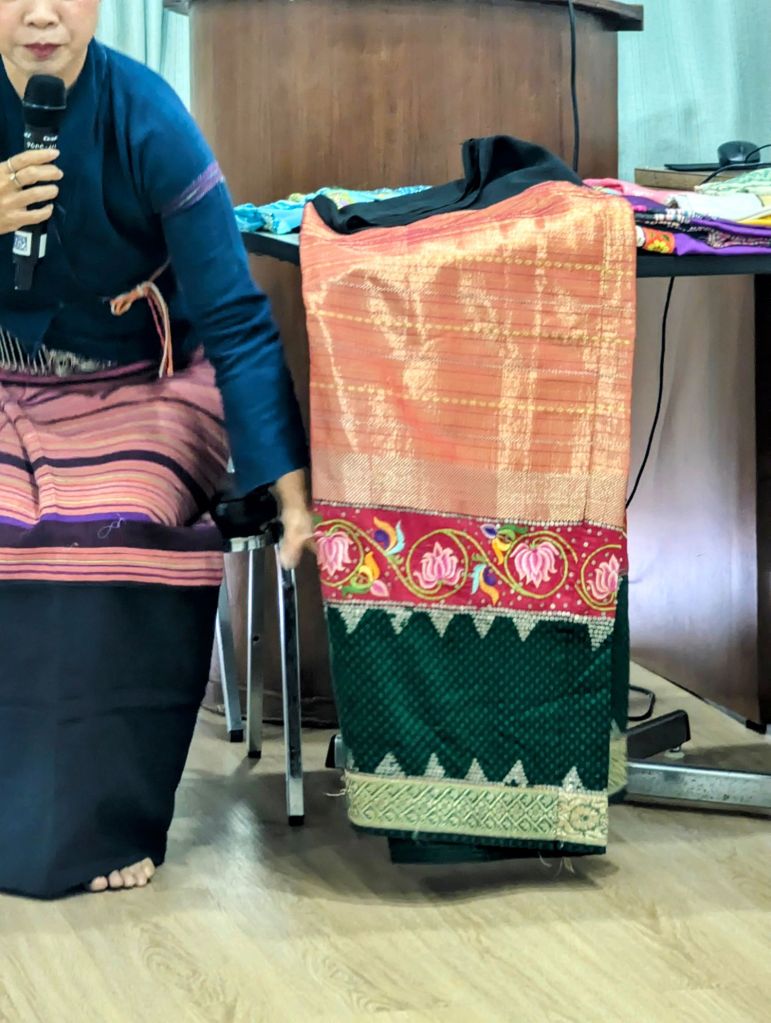
When wearing a pha sin, the seam is normally hidden by folding the tube of fabric over the seam. However, one tribe puts the seam in the back, to protect one from black magic. In some tribes, the ankles must be hidden. Going topless? Fine!
After learning about the textiles used to create the pha sin, we were treated to dances representing the tribes. In Thai culture, dances are for worship as opposed to performances.
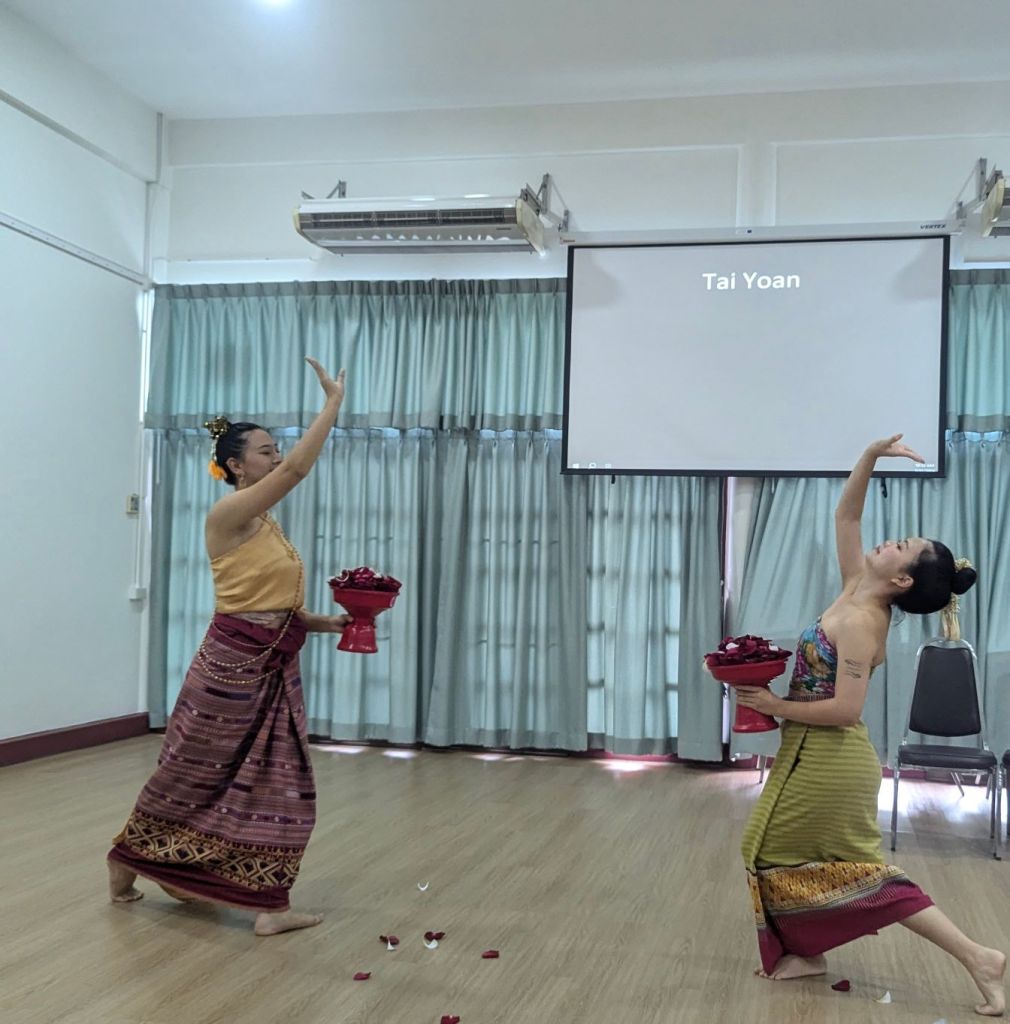
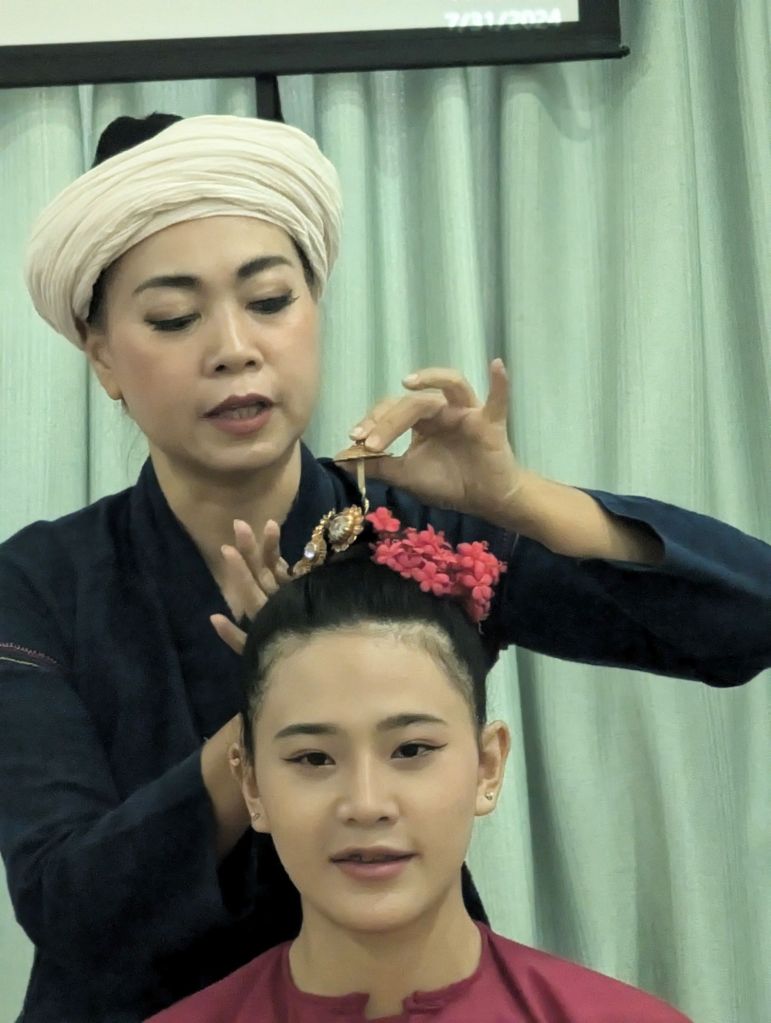
Prior to dancing, women assist each other with ornamentation, adding jewelry and other items to complete their outfits. The first dance we saw was the Flower Blessing Dance from the Thai Yoan culture.
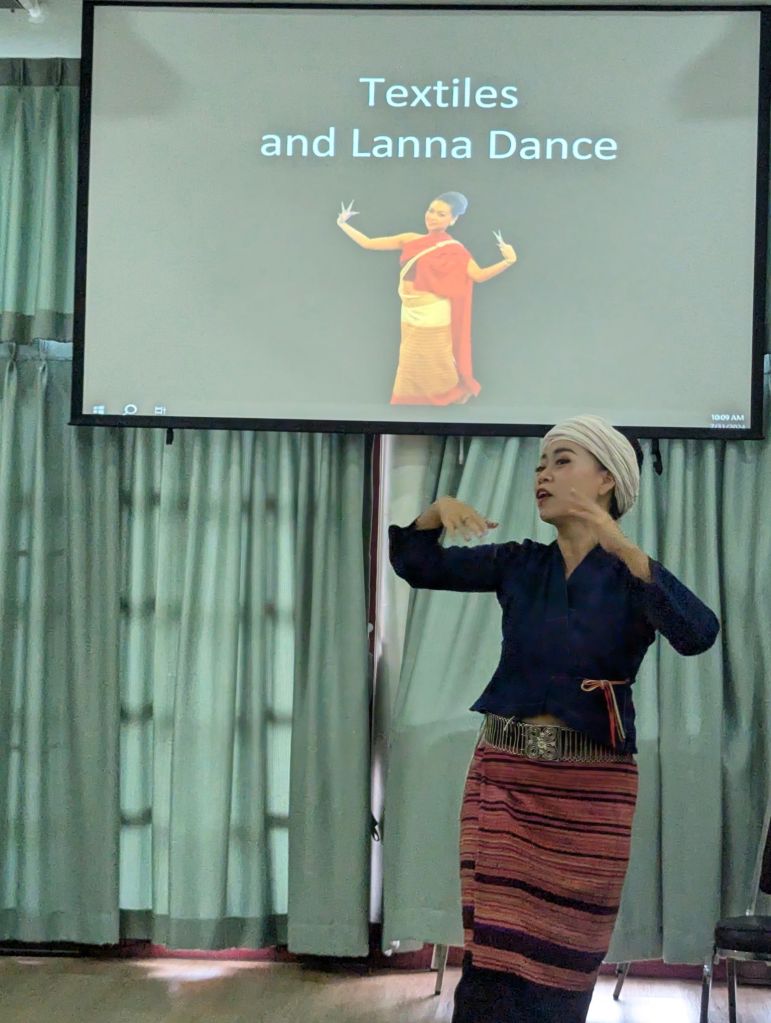
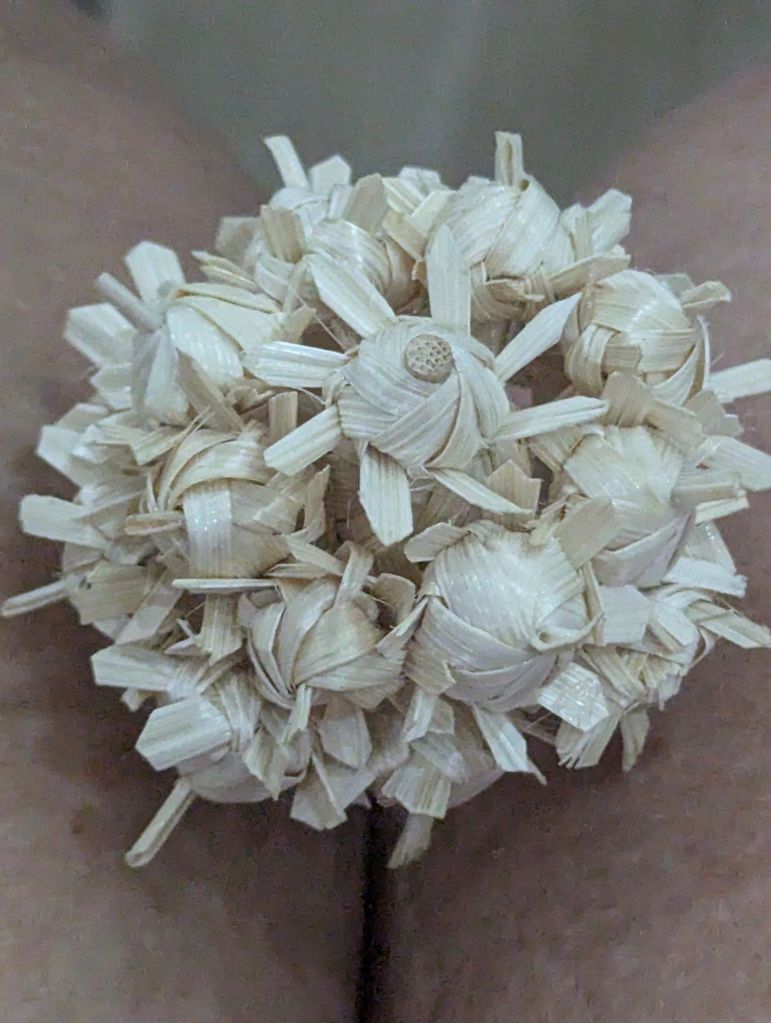
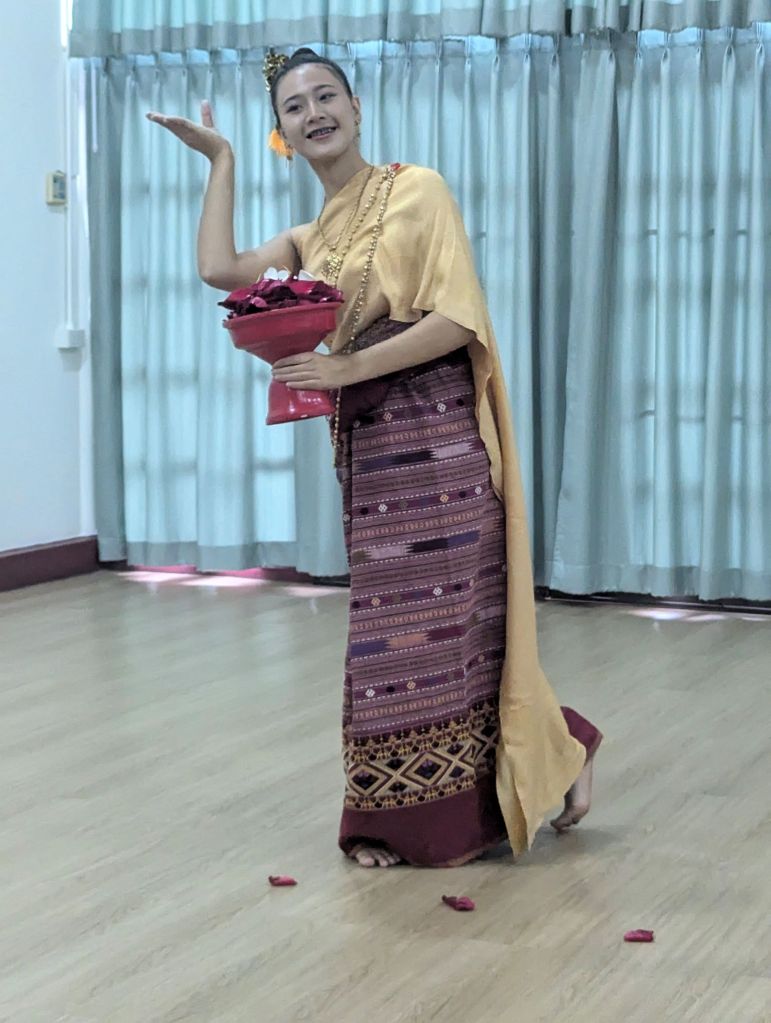
The next performance was representative of the Thai Lao. Typical ornamentation in this culture uses the flower which we call a plumeria or frangipani.
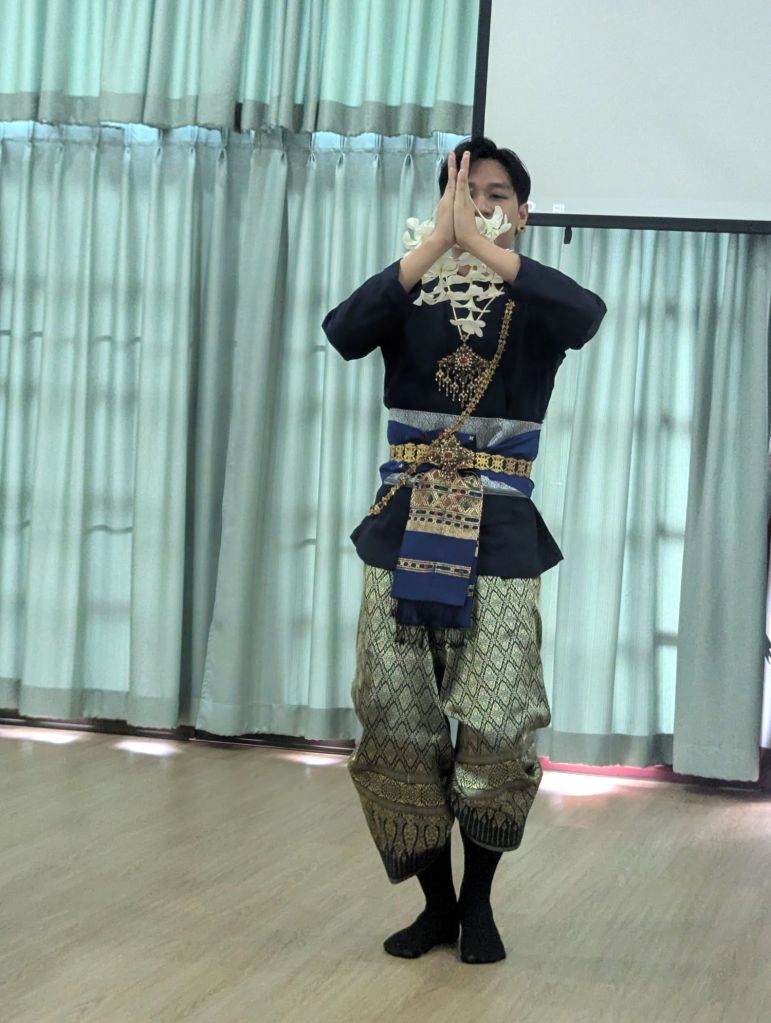
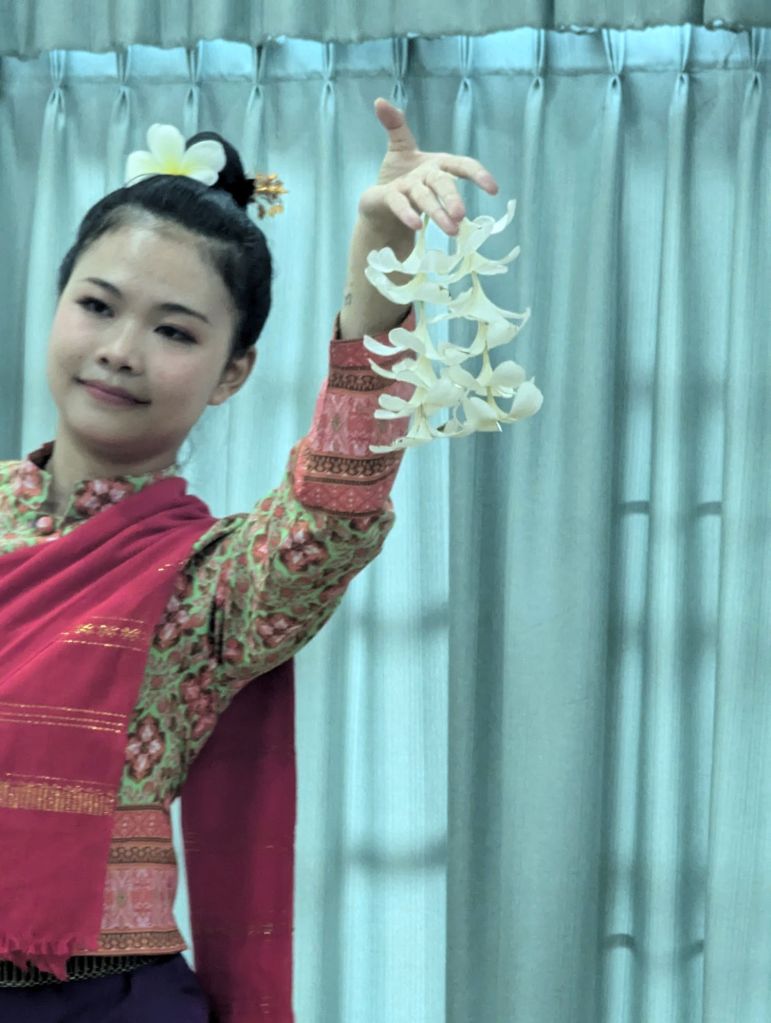
Thai Yao dancing
Thai Lue dance originated in Vietnam and Laos. The headdress that all are wearing are created from a long piece of fabric that is wound around the head.
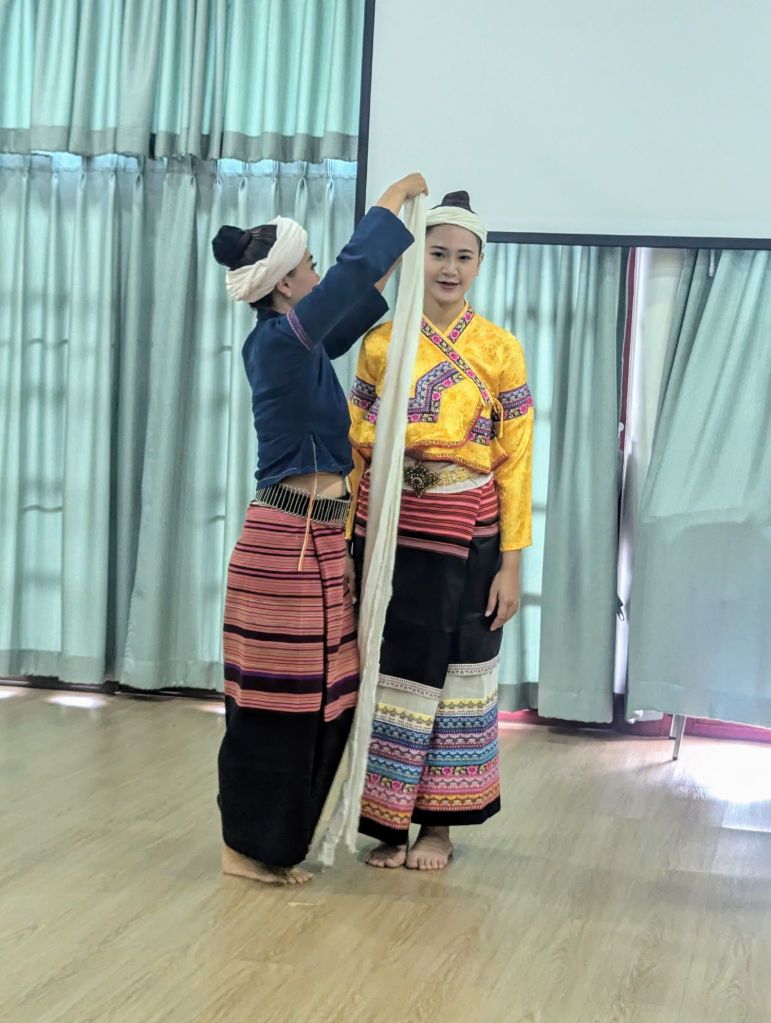

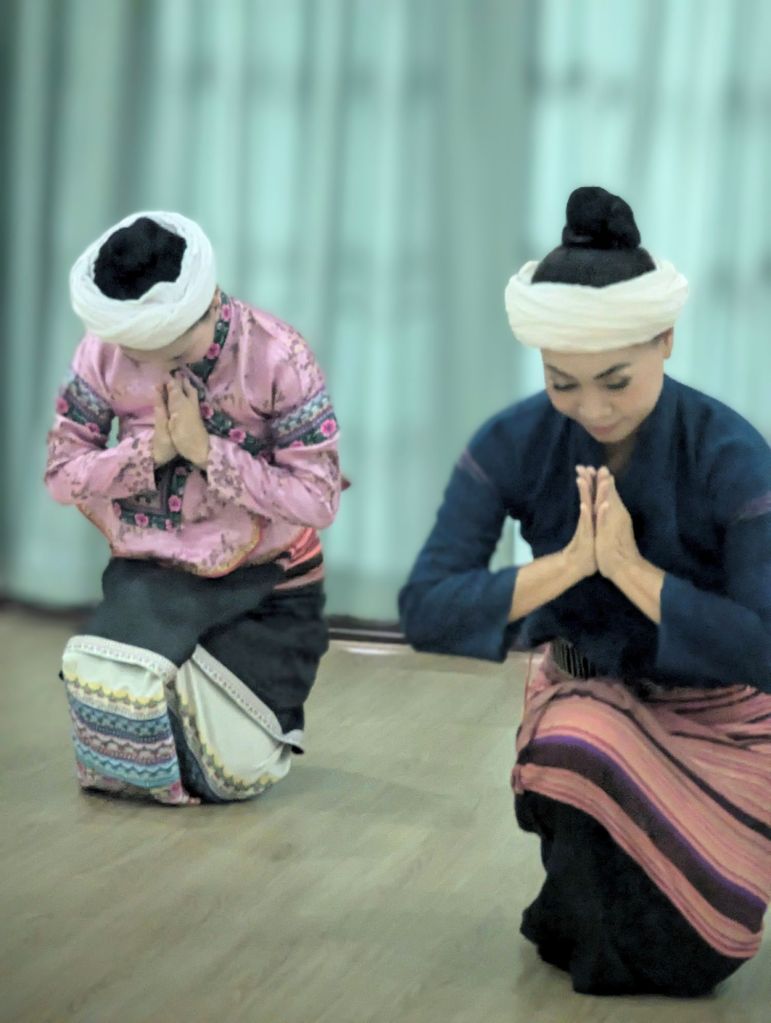
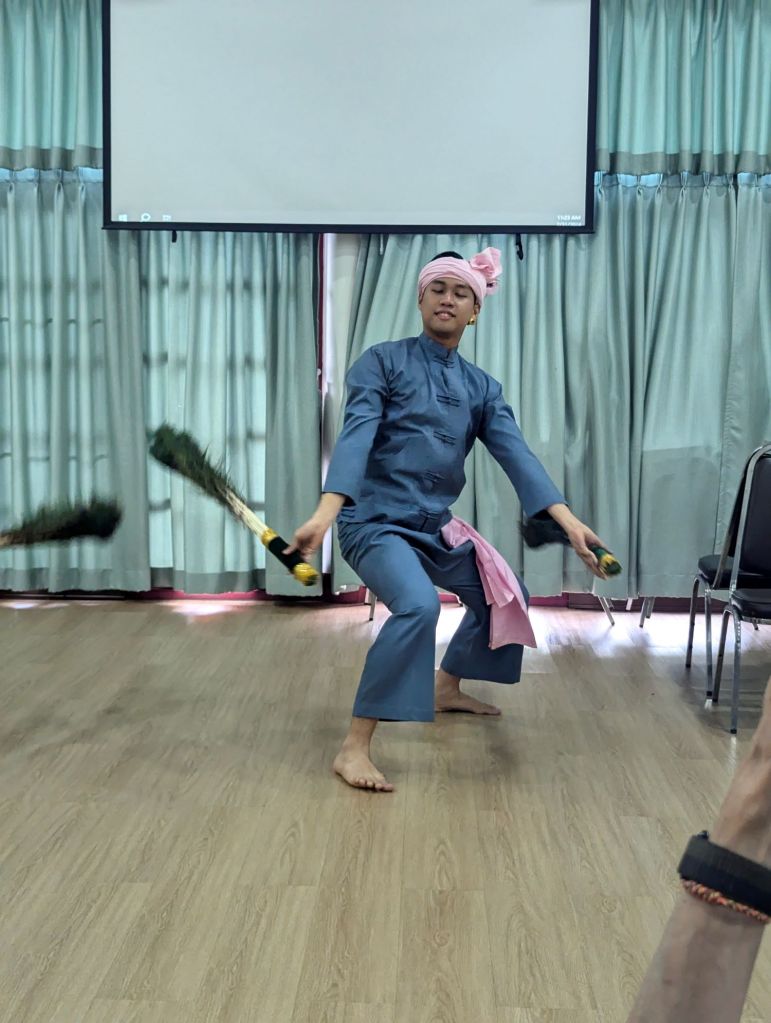
Next up, Thai Kiun. The dance was choreographed by the young man who is not only an expert in Thai dance, but also in martial arts. He incorporated some martial arts moves into the routine. As you can see, this dance necessitated a change of costume for him.
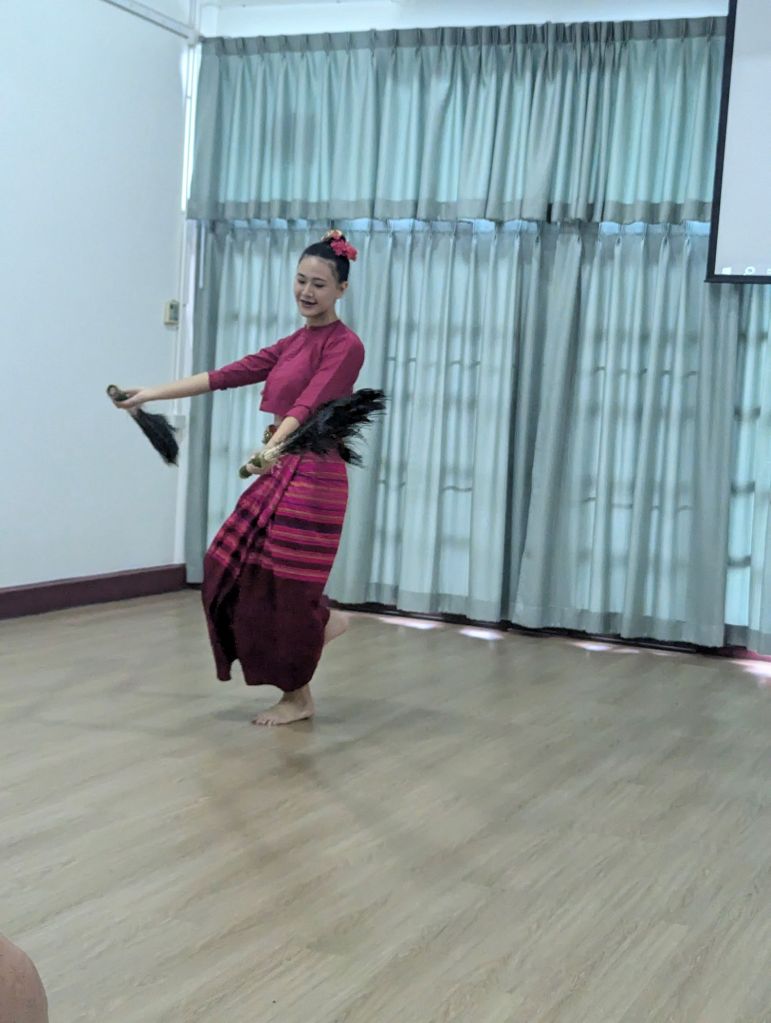
The final dance was from the Thai Yai tribe, the Candle Dance. The maids in our apartment are Thai Yai; many came from Burma (now Myanmar) originally. People here still call the country Burma! The Thai Yai pha sin is the only one that is not a tube; it is a large piece of fabric that is wrapped around the dancer and secured with a rope at the waist. Then the fabric is rolled down to cover the rope. To me, the Thai Yai fabrics were the most beautiful.
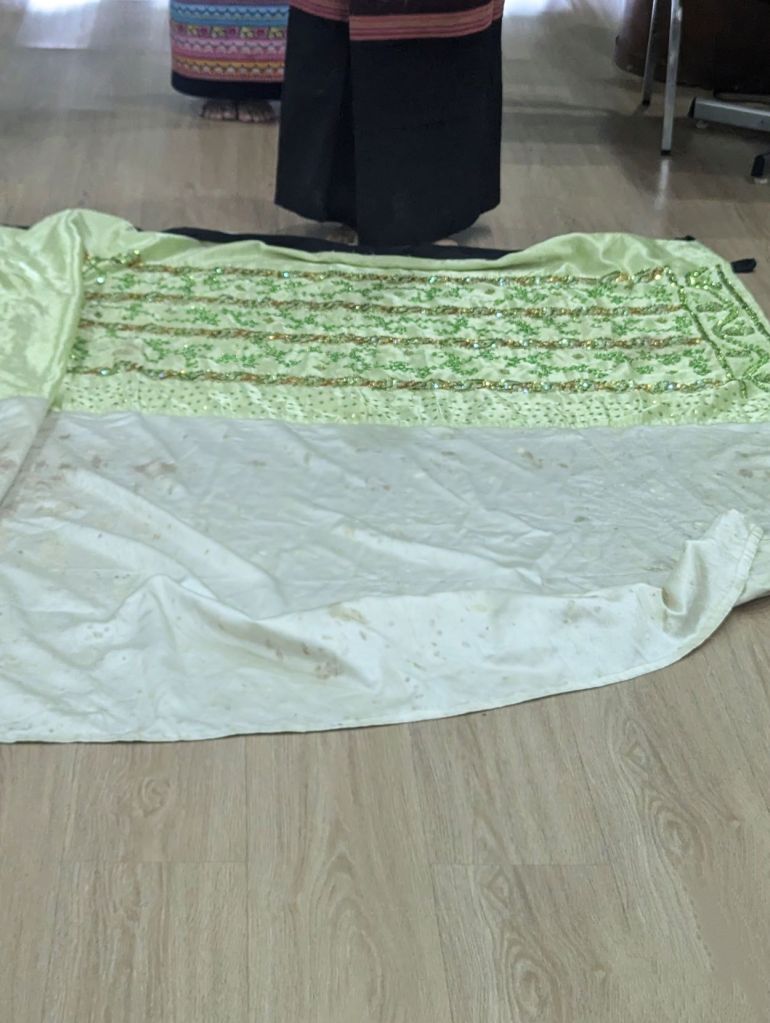
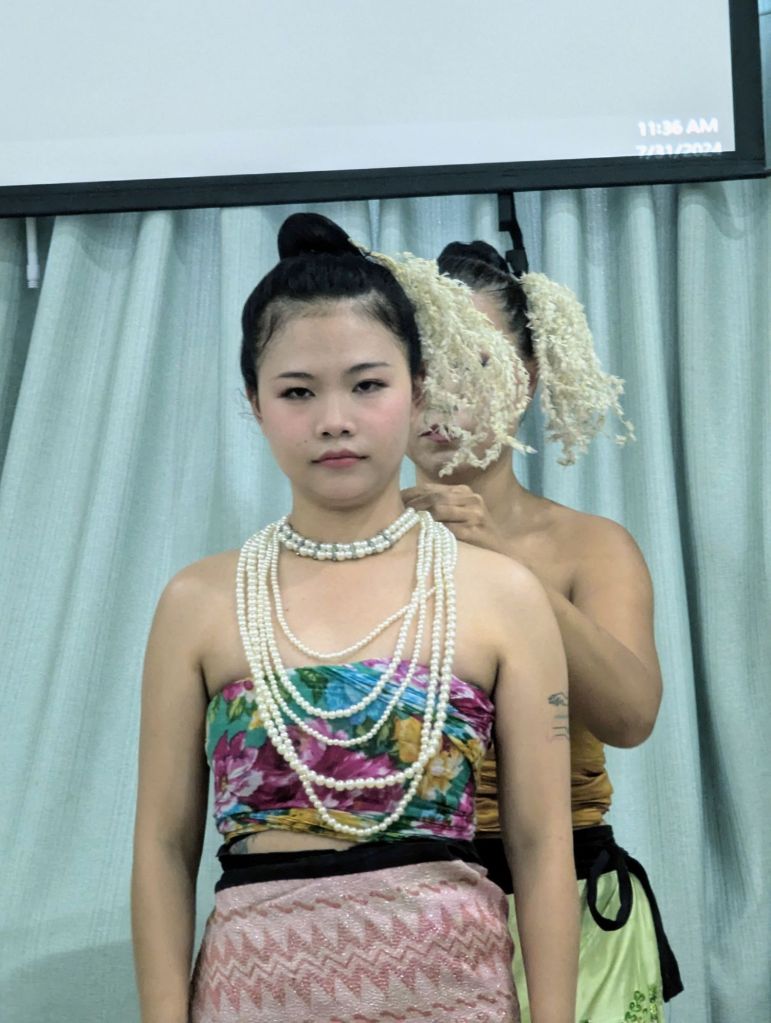
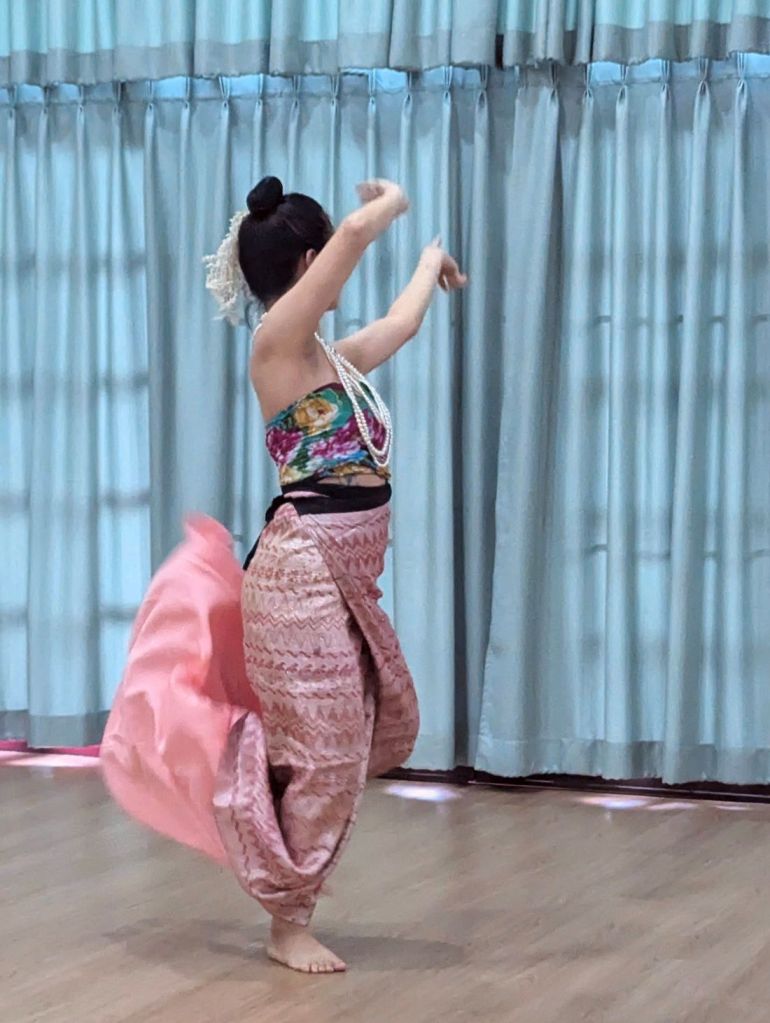

The final dance: Thai Yai
The teacher explained that the spirit of the person is contained in the head of the pha sin, so when she dies, her pha sin will be passed along to her niece, but the heads will first be removed.
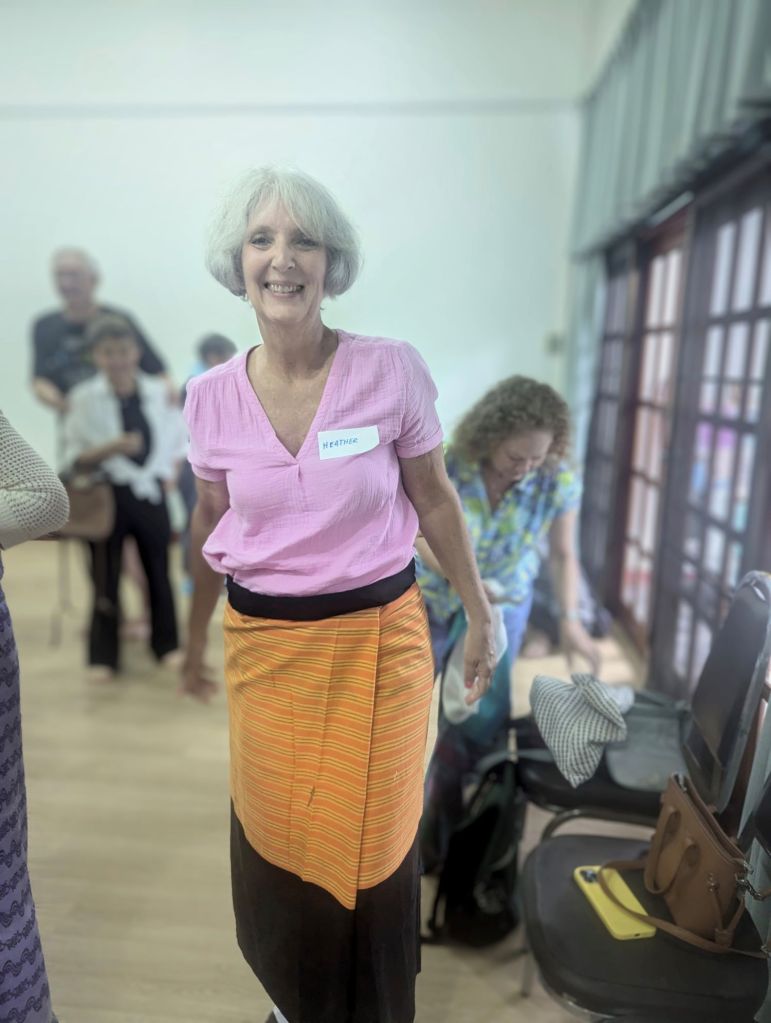
We couldn’t leave until we successfully figured out how to put on a pha sin!
 travelswithheather