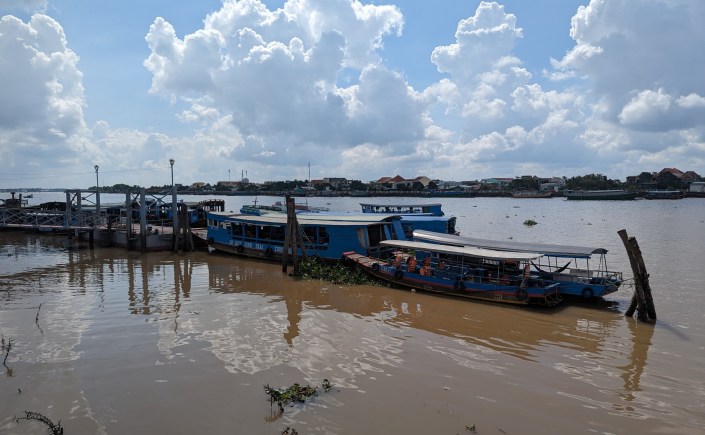
Since we had already seen much of Ho Chi Minh City (and will be returning in a couple of months), we decided to join the optional tour that would take us on a Mekong Delta River tour. Due to morning rush hour traffic, it took nearly two hours to reach the river.
When we got out of the city, we started to pass through rice paddies. Rice is one of the biggest industries here in Vietnam; over forty million tons are grown annually. Half of that is grown in the Mekong Delta, which is why it is known as the rice basket of Vietnam. Rice is the main food here and is eaten at every meal. Your typical Vietnamese consumes 124 kg (about 250 lbs.) of rice per year! Traditionally, rice was grown by hand. Farmers germinate the rice in warm water, and then scatter the seeds. The saplings are then pulled and replanted into rows. For three months, the farmer tends the crop before harvesting. Scythes used to be used for harvesting, but now combines do the work. The grain is separated from the husk with grinders. The husk is used for fuel for brick kilns. It is also used as fuel for cooking and the ash is then used for fertilizer. All you ever wanted to know about rice, right?
But wait, there’s more! Rice has multiple names. While on the plant, it is known as lua. After harvest, thoc. The grains are gao, and after steaming, is called com. Pho is rice noodles. Vietnamese use the names of rice products to refer to spouses and lovers. One may tease by asking if you are going to eat pho today. This means, “Are you going to visit your lover?” “You must eat com every day” refers to being with your husband or wife.
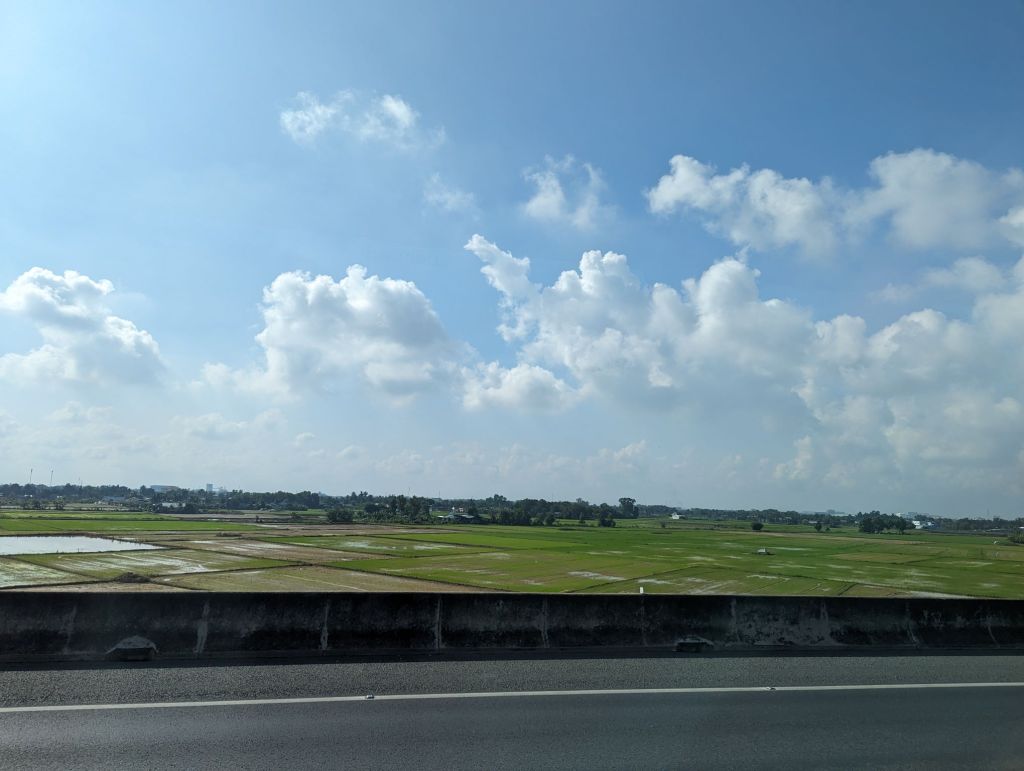
We noticed that there were what appeared to be stone caskets in many of the rice paddies. Though it is no longer legal, farmers buried their dead in their fields. The bodies are buried below the surface of the ground; the stone casket is just for show. The belief is that burying in this way keeps the family connection and that the family is blessed by the dead.
There were also some stone houses that had no doors or windows, just holes in the walls. These are for swallows to nest in. Swallows’ nests are thought to have magical properties. The government controls the sale of birds’ nests grown in caves in caves and they sell for up to $700 US per pound. The houses resemble caves (to the birds) and the nests harvested from them fetch up to $200 per pound.
We finally reached the dock where we would board the boat. The Mekong River empties into the South China Sea, but don’t call it that here! The Vietnamese refer to it as the Eastern Sea, due to a water dispute with China. The water is very brown due to the amount of silt in it. 150 tons of silt are brought in yearly. The silt is used by farmers as fertilizer. Many tropical fruits are grown in the area due to the rich soil.
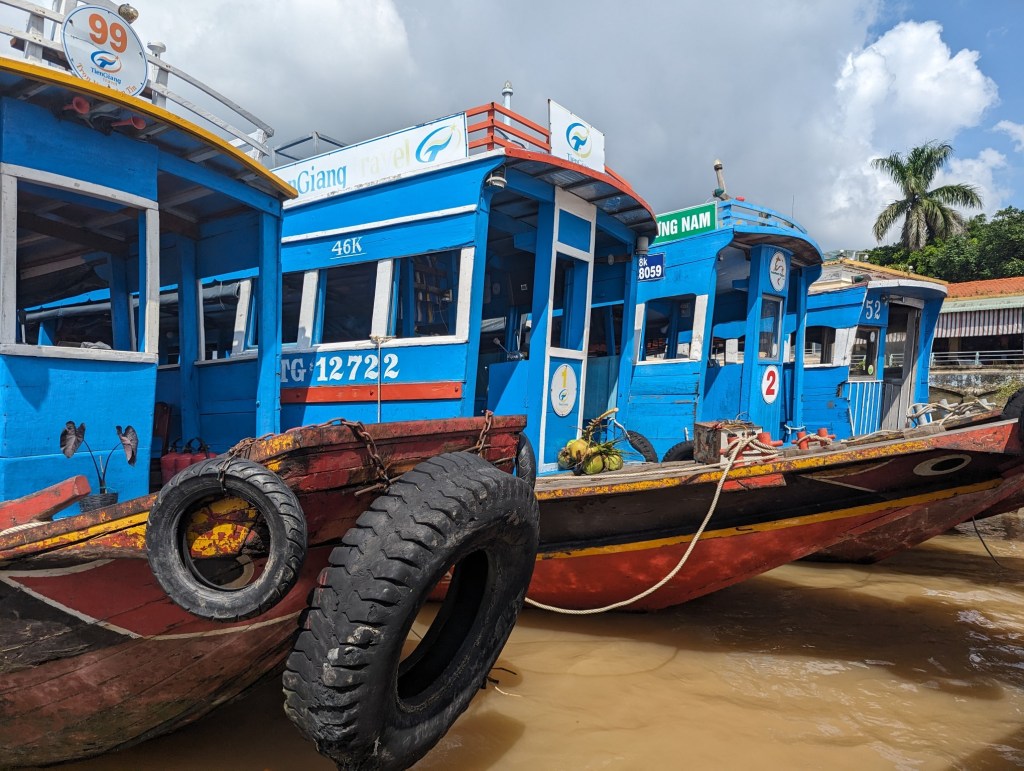
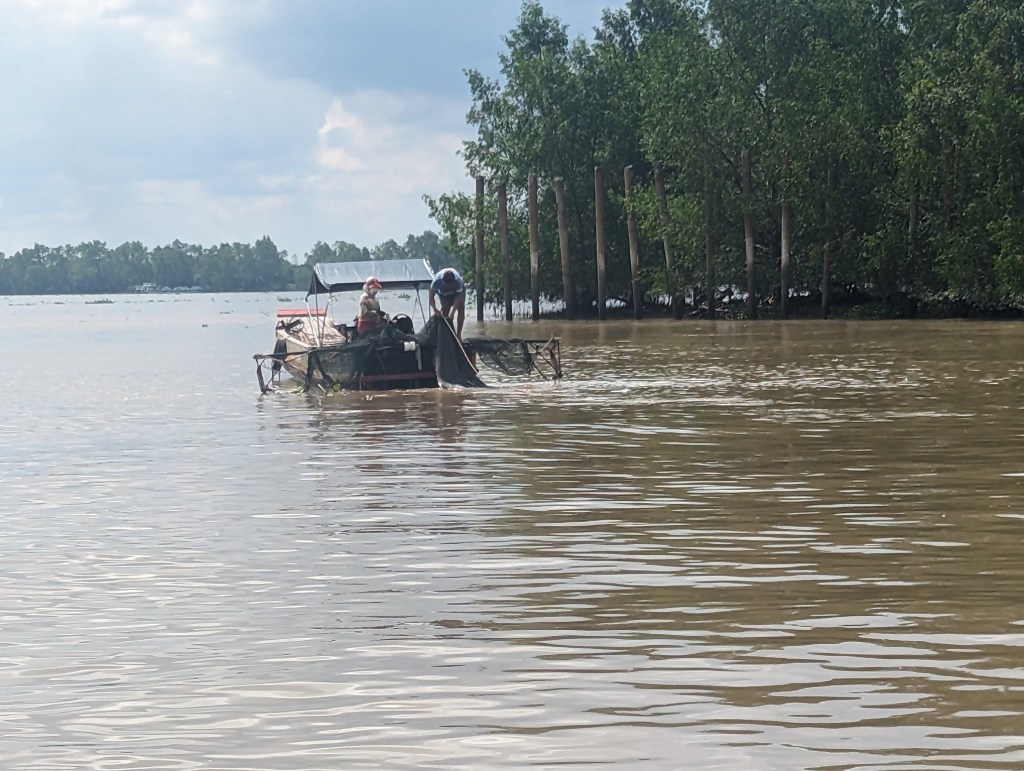
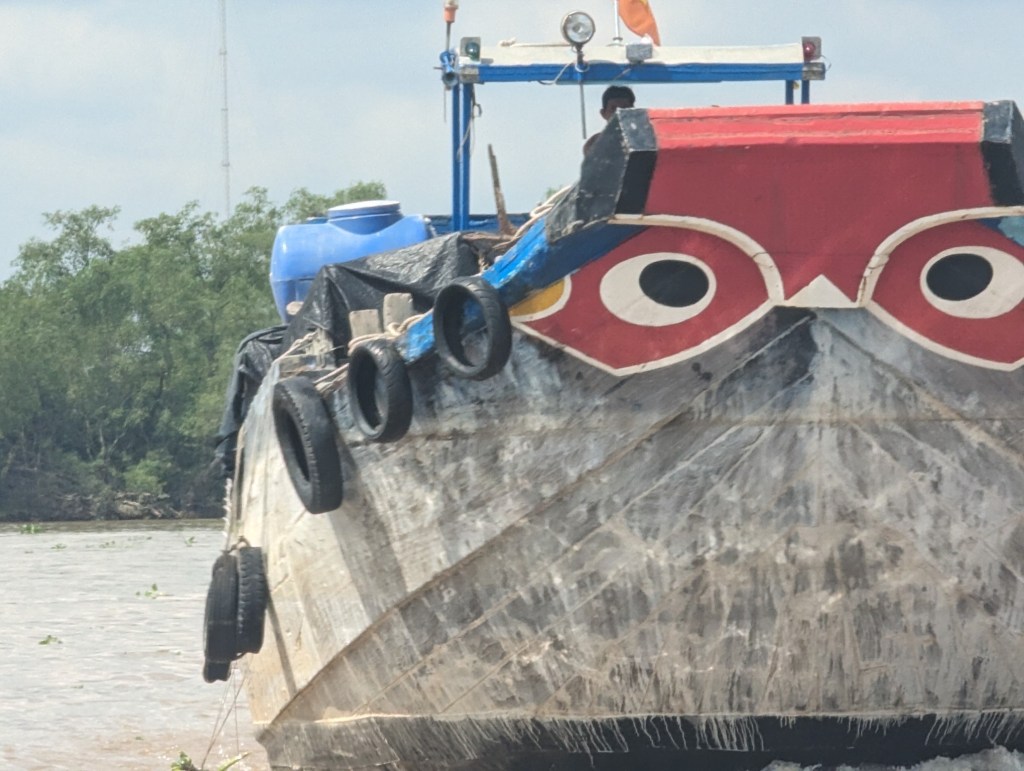
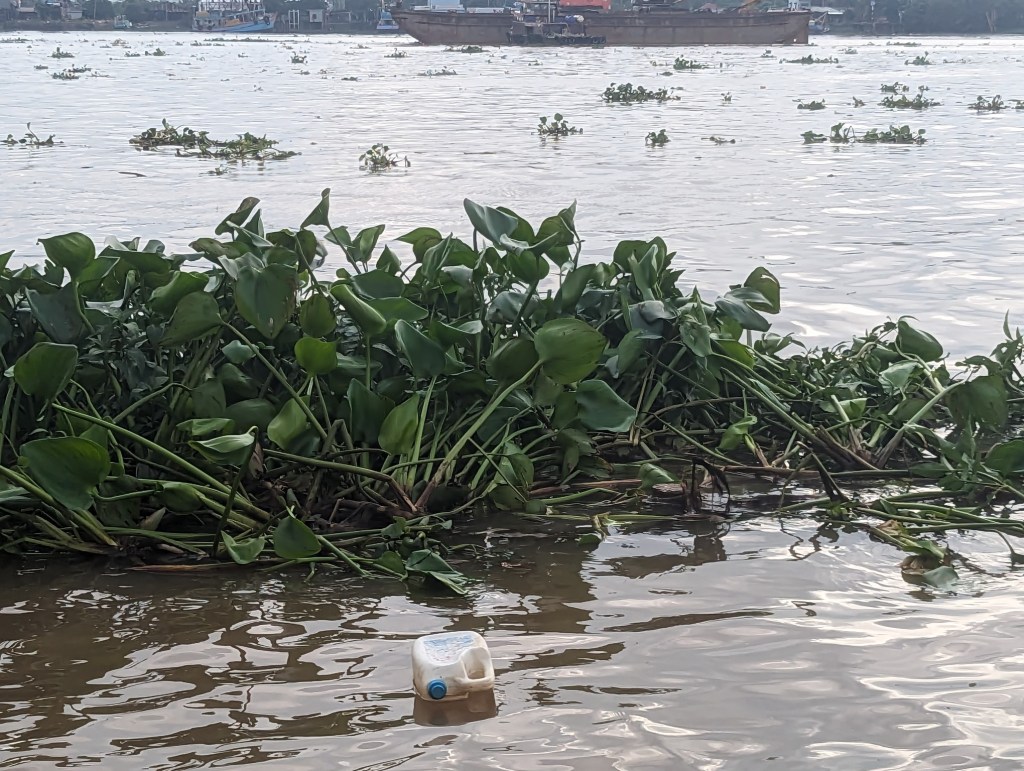
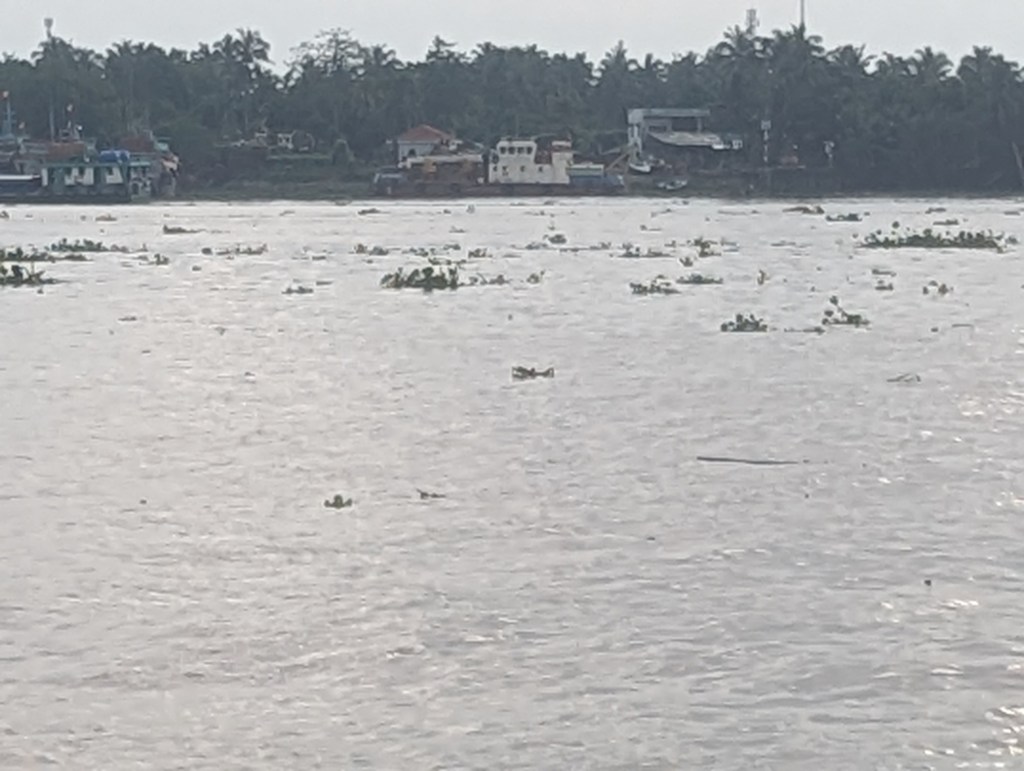
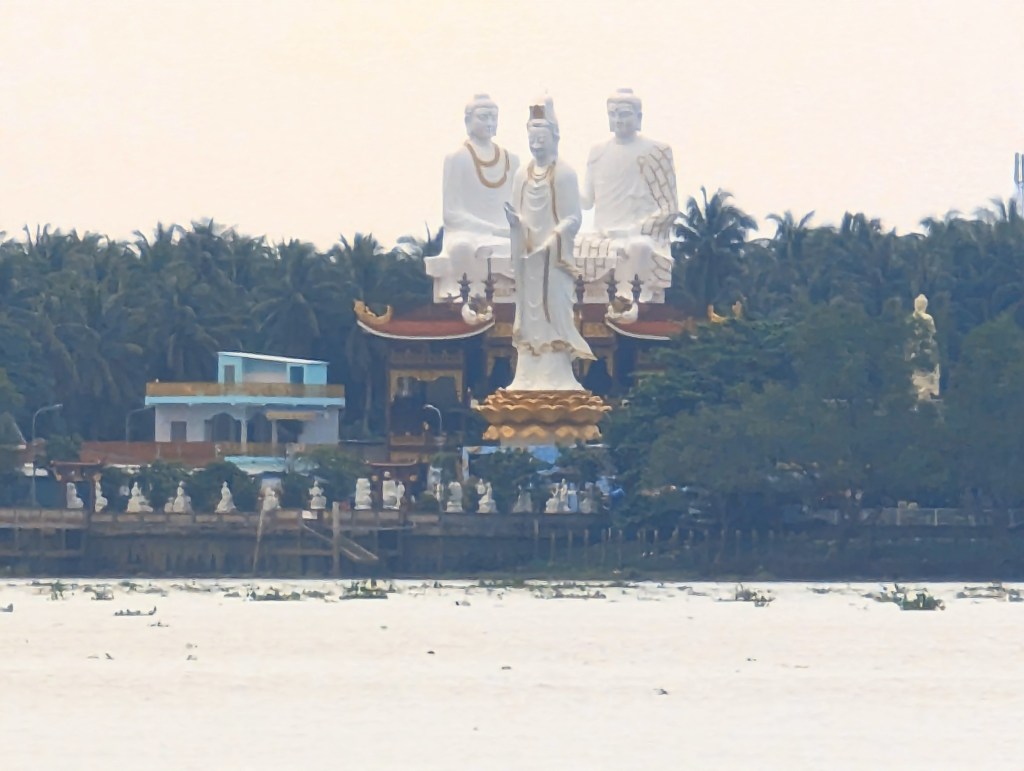
We passed by several boats with eyes painted on them. In the past, it was believed that the eyes would scare off predators in the water, such as alligators. There are no longer any alligators in the water here, but it is traditional to still paint eyes on the boats. The only boats without eyes are fishing boats. Fishermen don’t want to scare away the fish! There were several Buddha statues on the shore. Fishermen will stop in front of them for prayers before making the nine-hour trip down the river to the sea. Water hyacinths float all over the river as well. These are used to make handicrafts like purses; the stems are mixed with bran from rice to make pig feed.
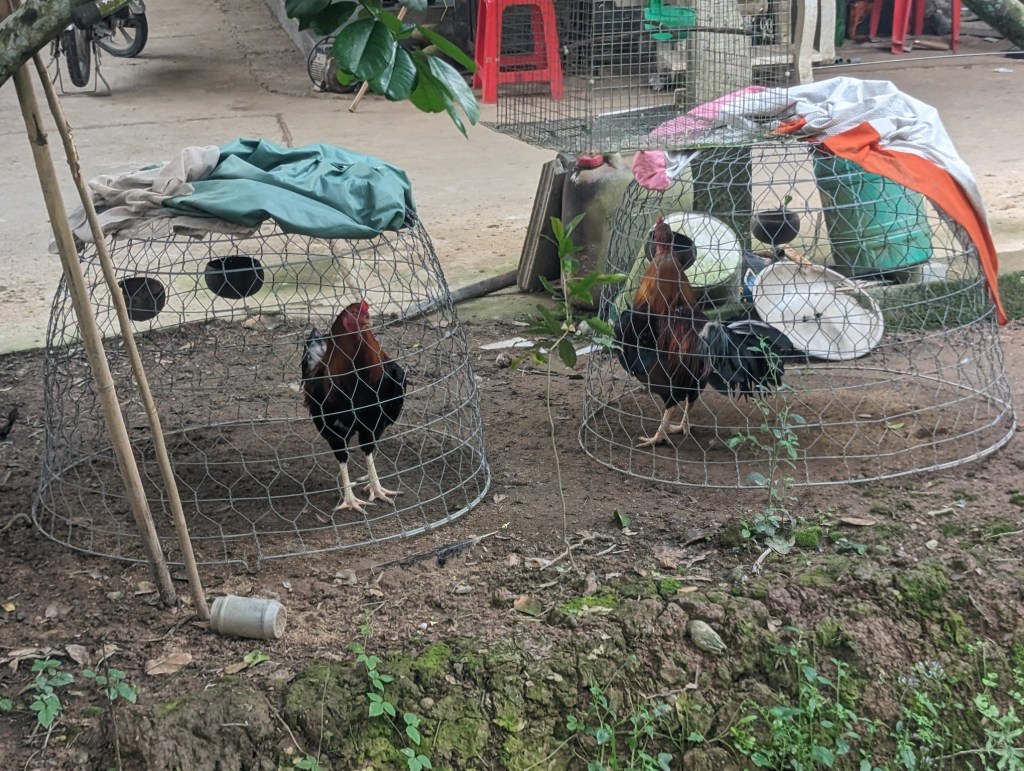
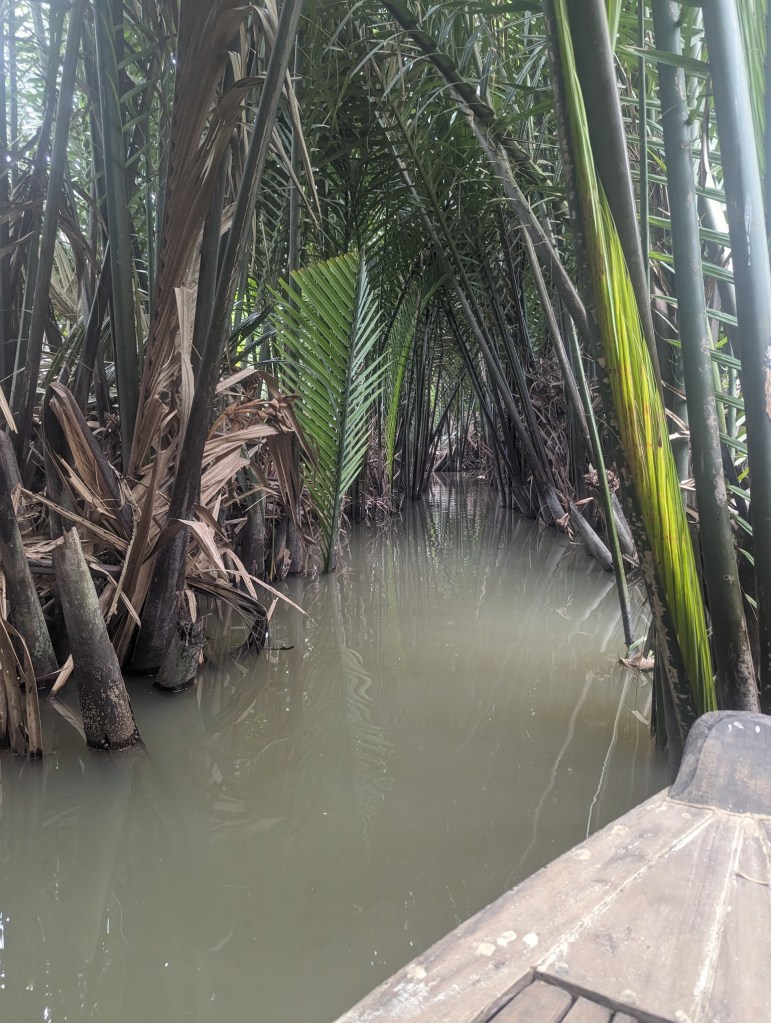
The boat entered a small creek, lined with bamboo and water coconut. We floated a short distance and then disembarked for a walk along the river to view fruit trees and see up close how the local people live. We passed by plenty of free-range chicken. The roosters in the cages are cockfighting roosters. Cockfighting is very popular in Vietnam. It is legal to have cockfights, but illegal to bet on them. I am sure everyone follows that rule!


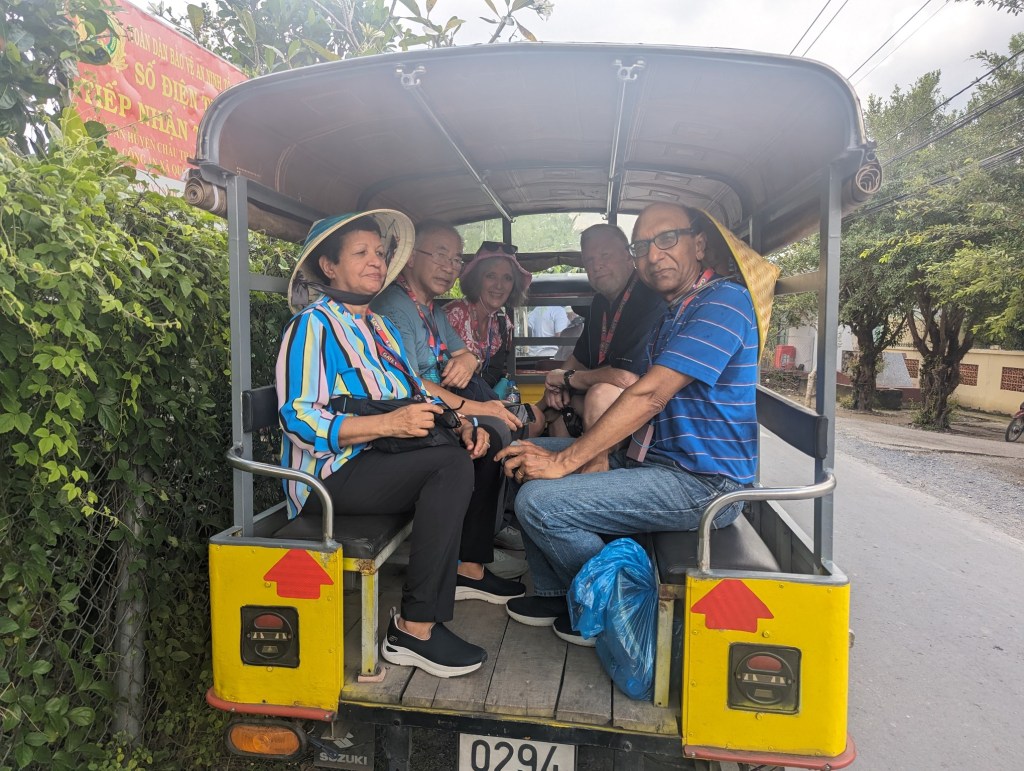
We were given a short ride on tuk-tuks. They are bigger than the tuk-tuks in Thailand; there are two benches in the back, like a Thai song thaew. So, I called them tuk-thaews!

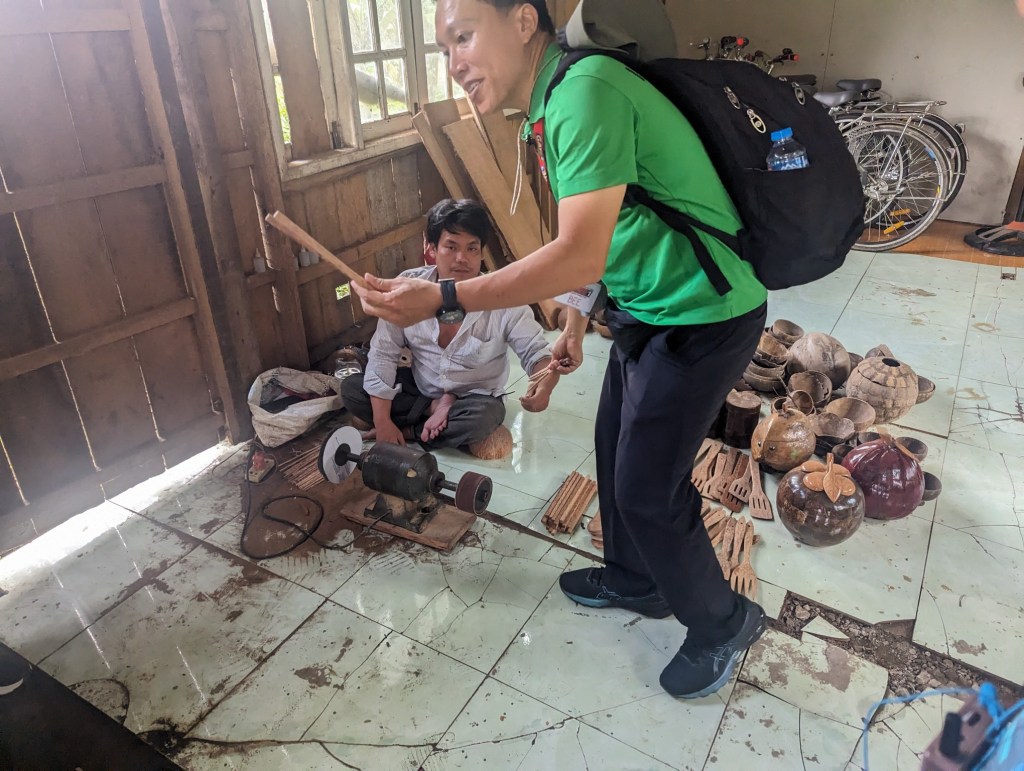
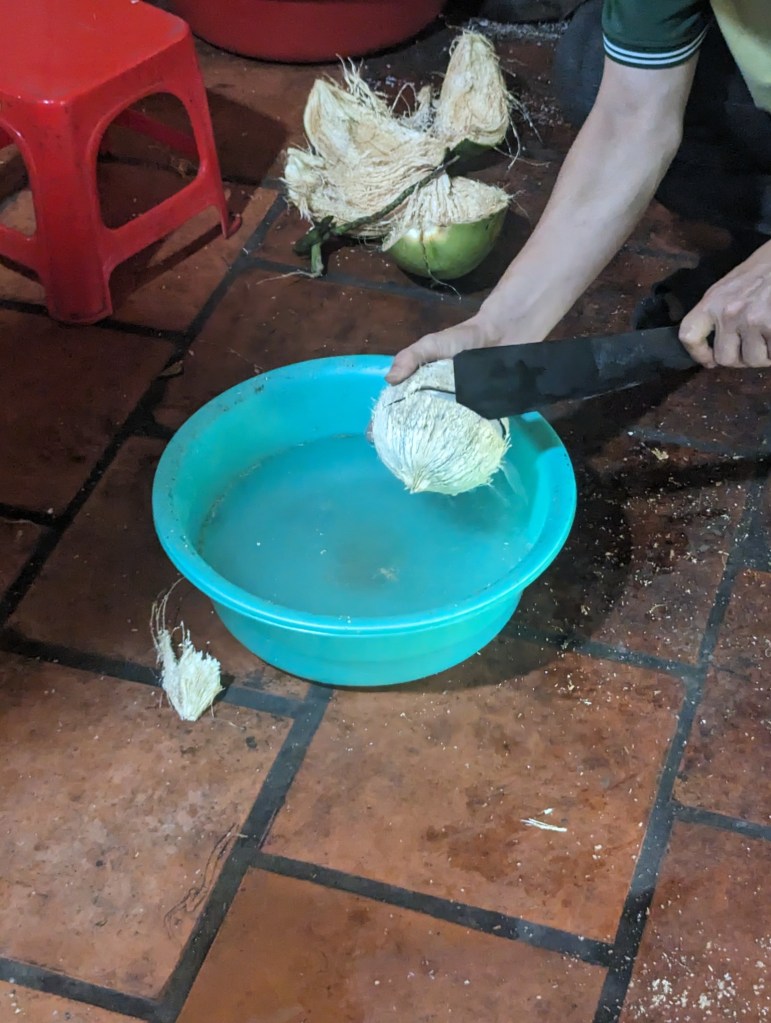
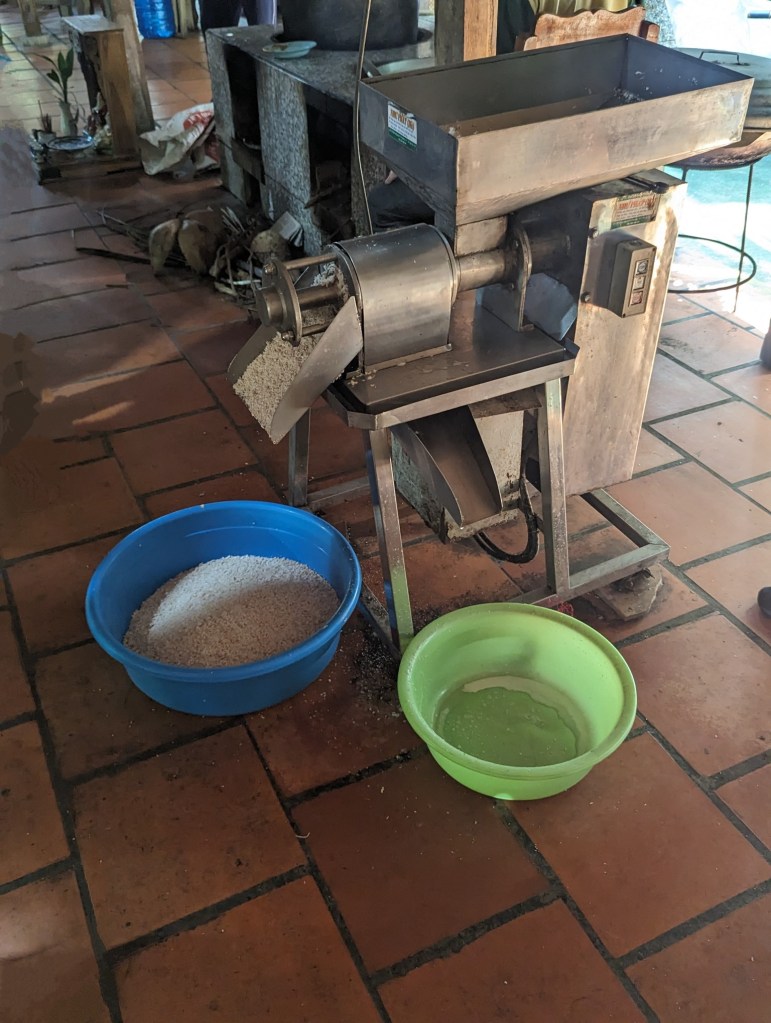
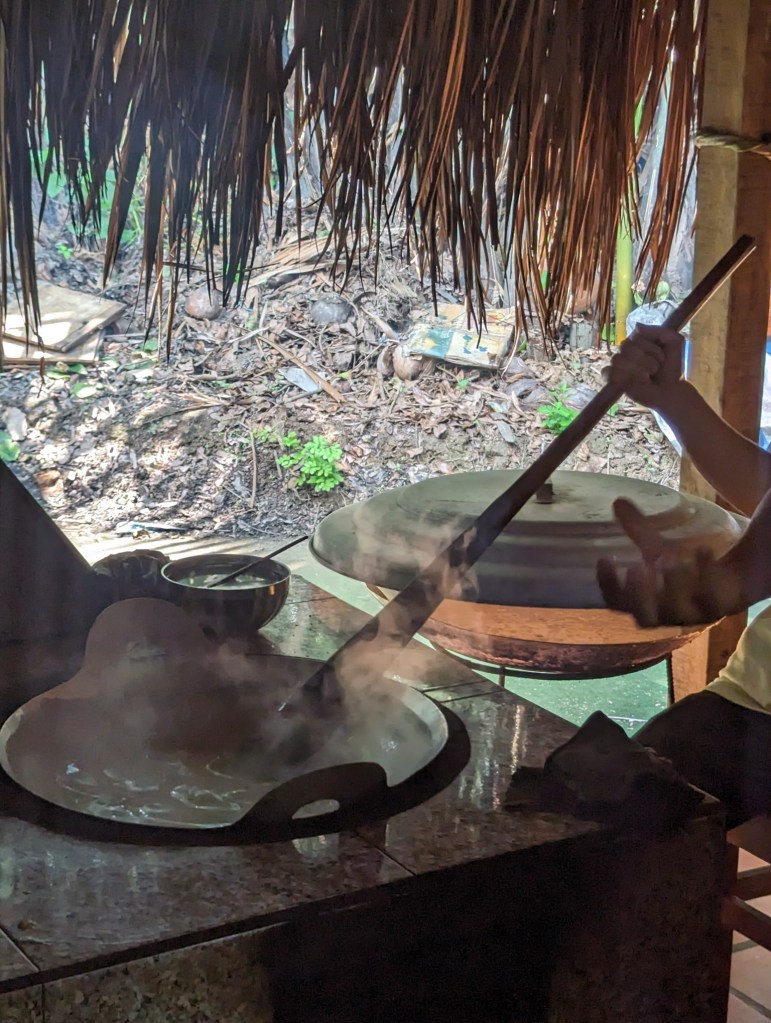
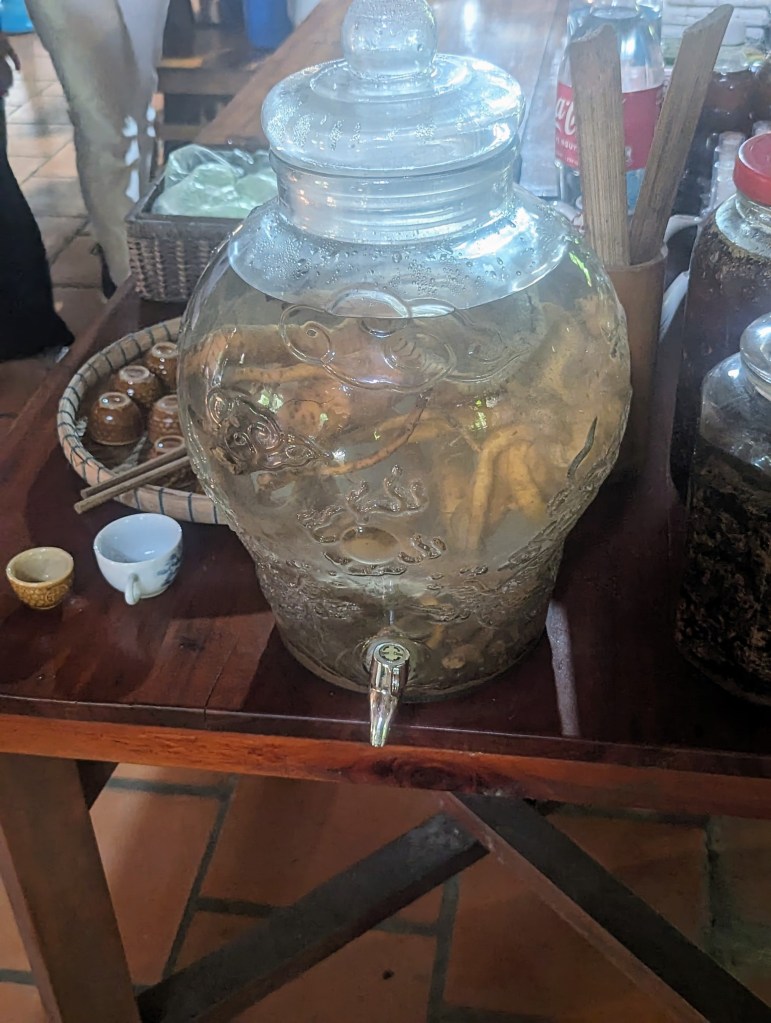
We stopped by a coconut candy/happy water (grain alcohol) making home and sampled the goods. They demonstrated how they open a coconut using a spear, and then husk it and remove the meat. The husks are ground up and used for other things. The liquid in the coconut and meat are used for a variety of purposes. Here, they made alcohol (happy water) and candy (for sale, of course!)
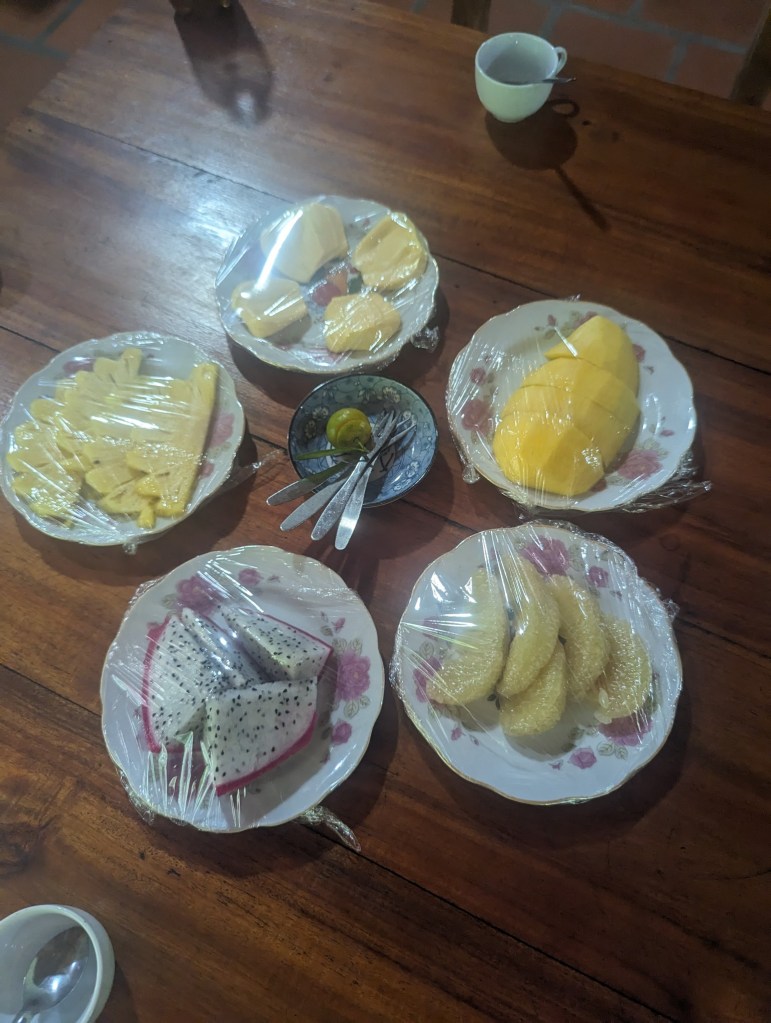
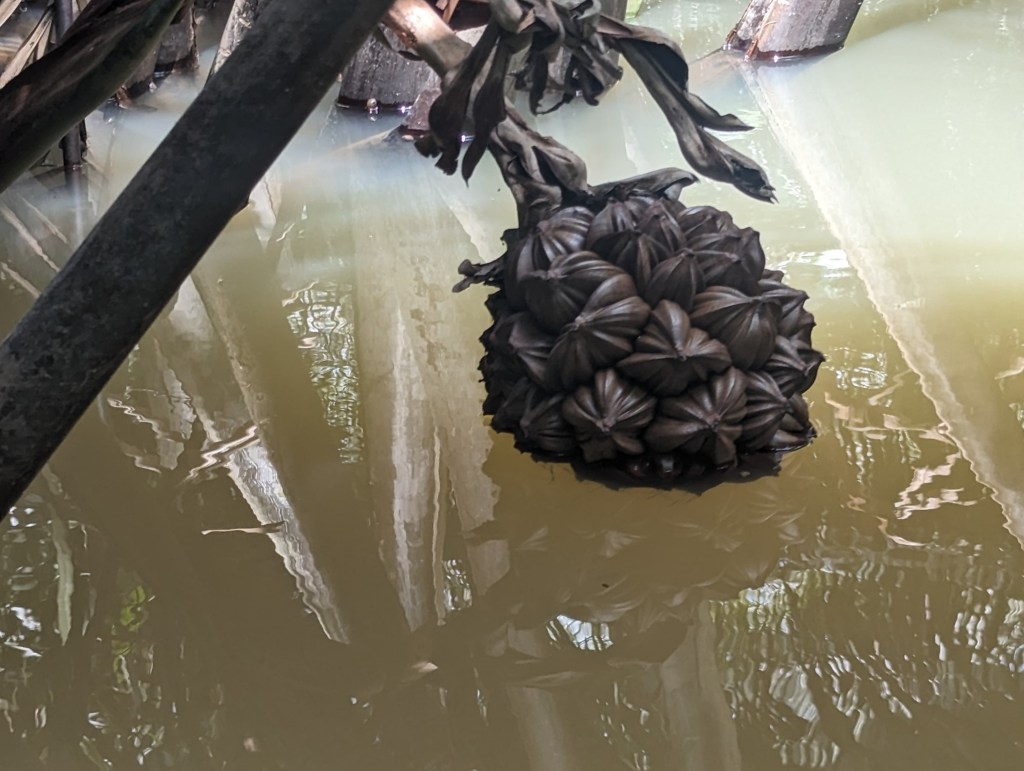
Finally, we boarded sampans to float further down the narrow creek. I loved the water coconut shells; I think they are very beautiful. We managed to disembark without falling in (those sampans are tippy!) and walked a short distance to lunch, where we were fed enormous amounts of delicious food before heading back to town.


It was an altogether enjoyable day!
 travelswithheather