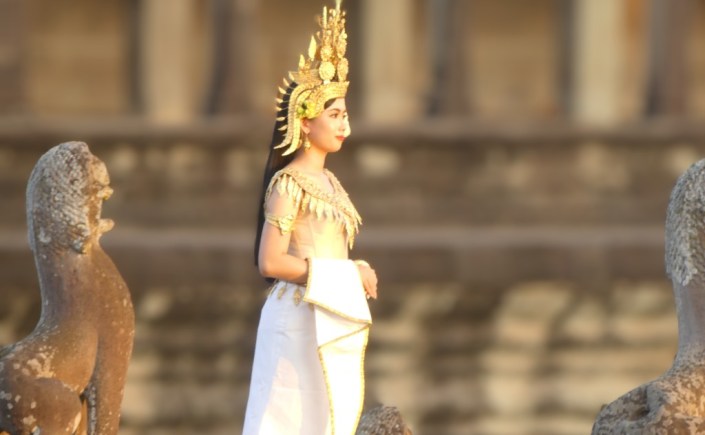
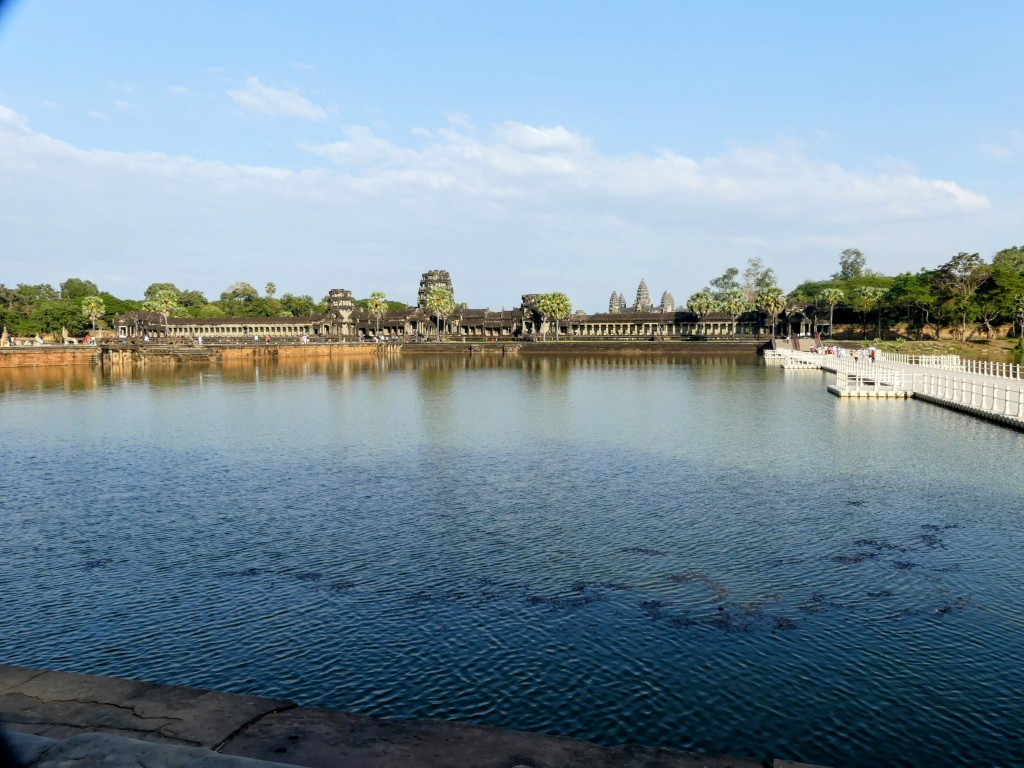
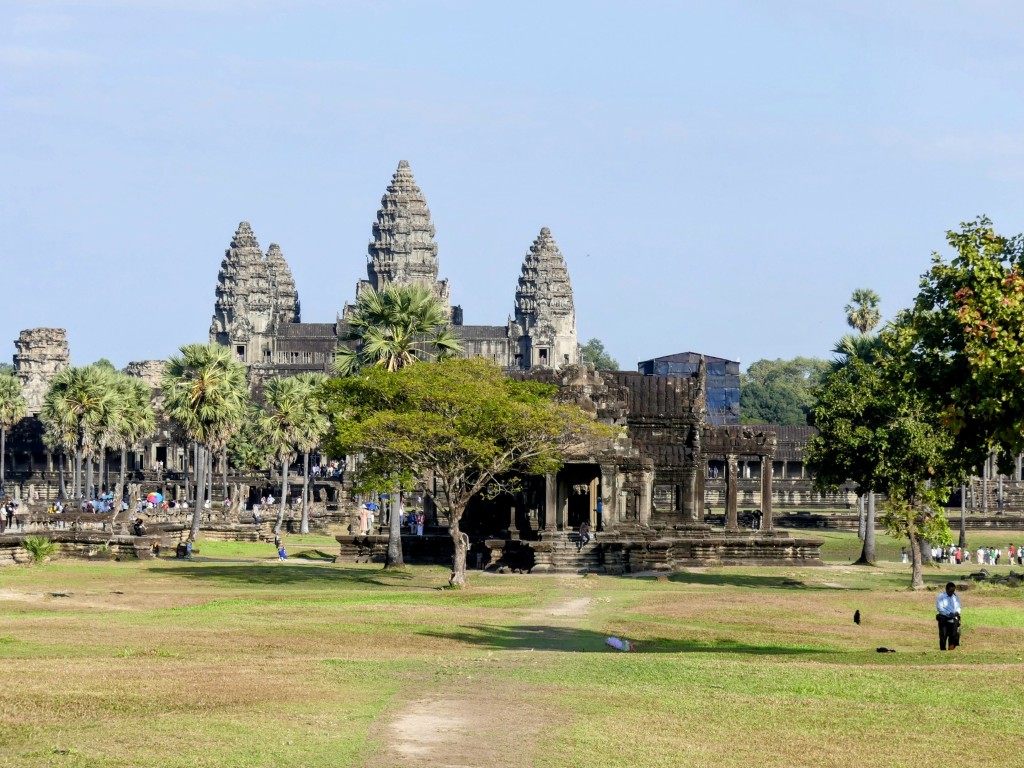
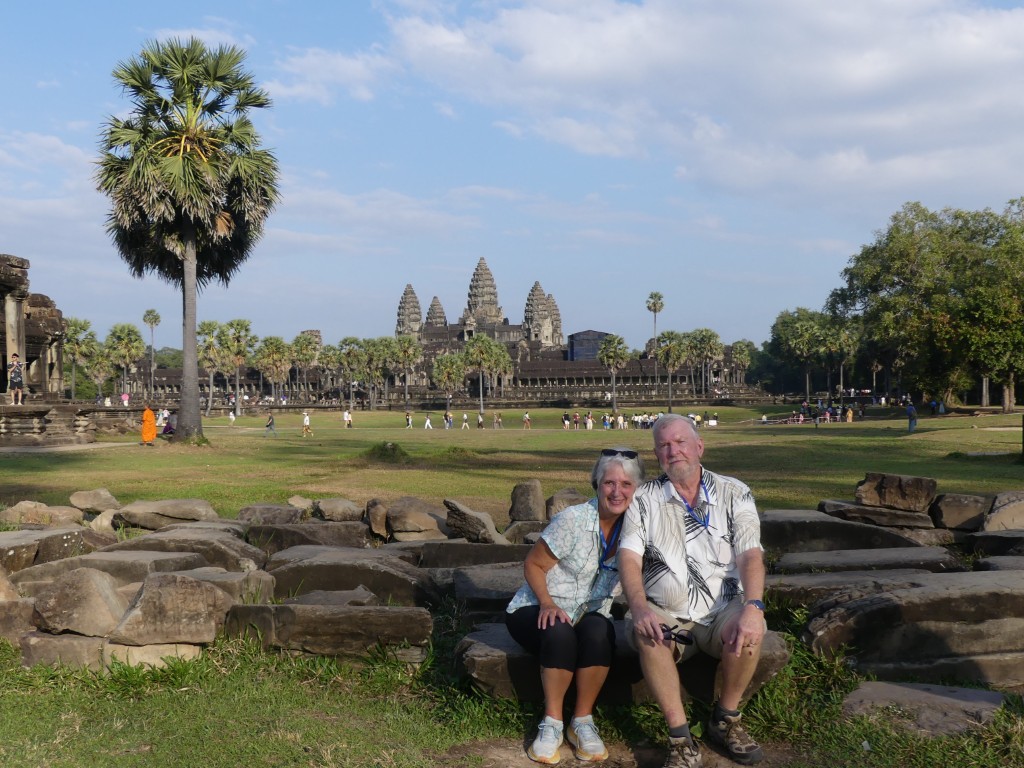
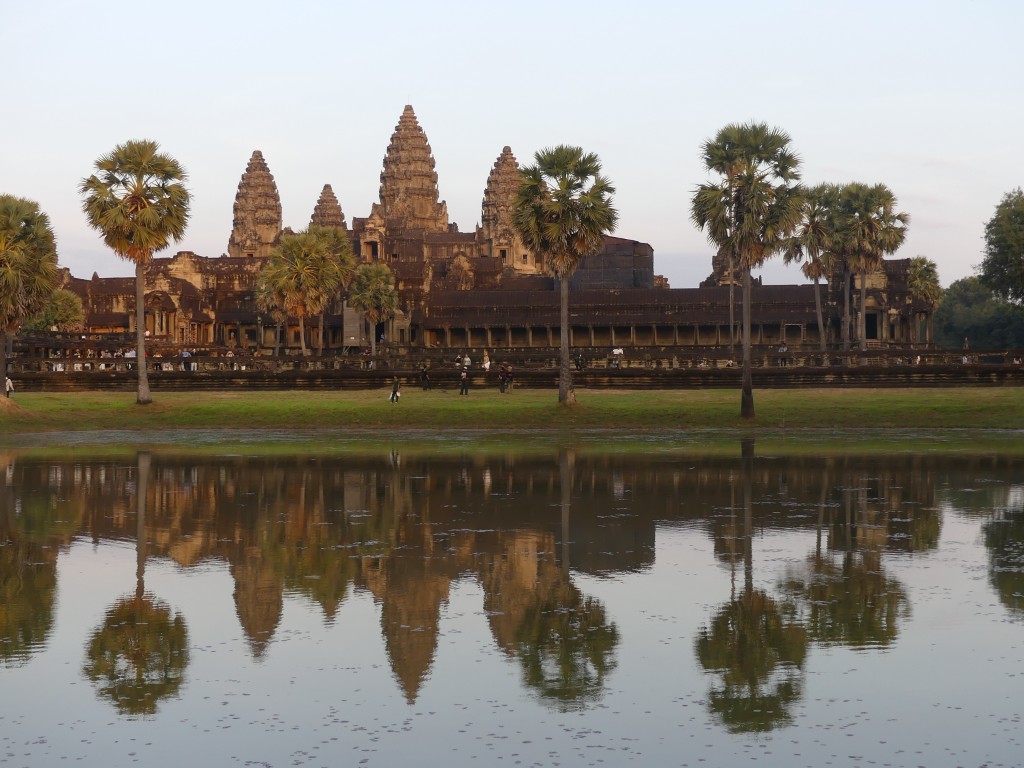
When many think of Angkor Wat, they think of the beautiful temple with the reflecting pond in front. This is indeed the temple of Angkor Wat, but there are 1080 temples, many built by different kings during their rule: new king, new temple. People of the Man ethnicity from China married Indians that had arrived by sea, creating the Cambodian race. We visited three of the temples: Angkor Thom, Ta Phrom, and Angkor Wat. Many enjoy seeing the sun rise at Angkor Wat; our visit was in the afternoon so we could see the sun set there.
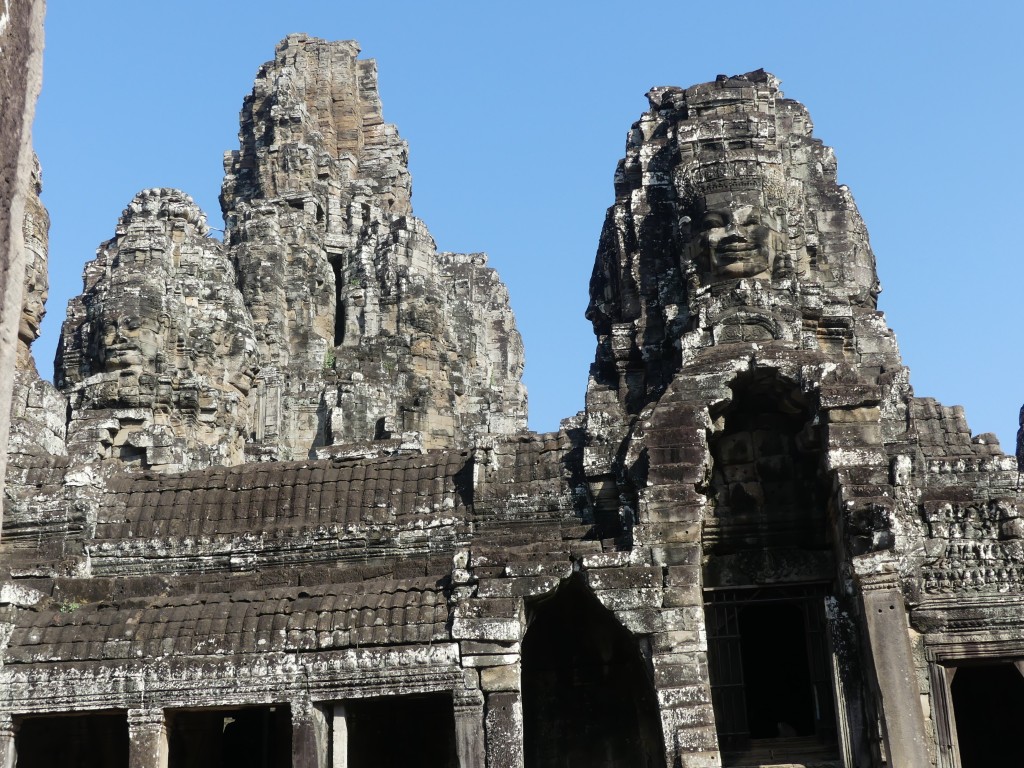
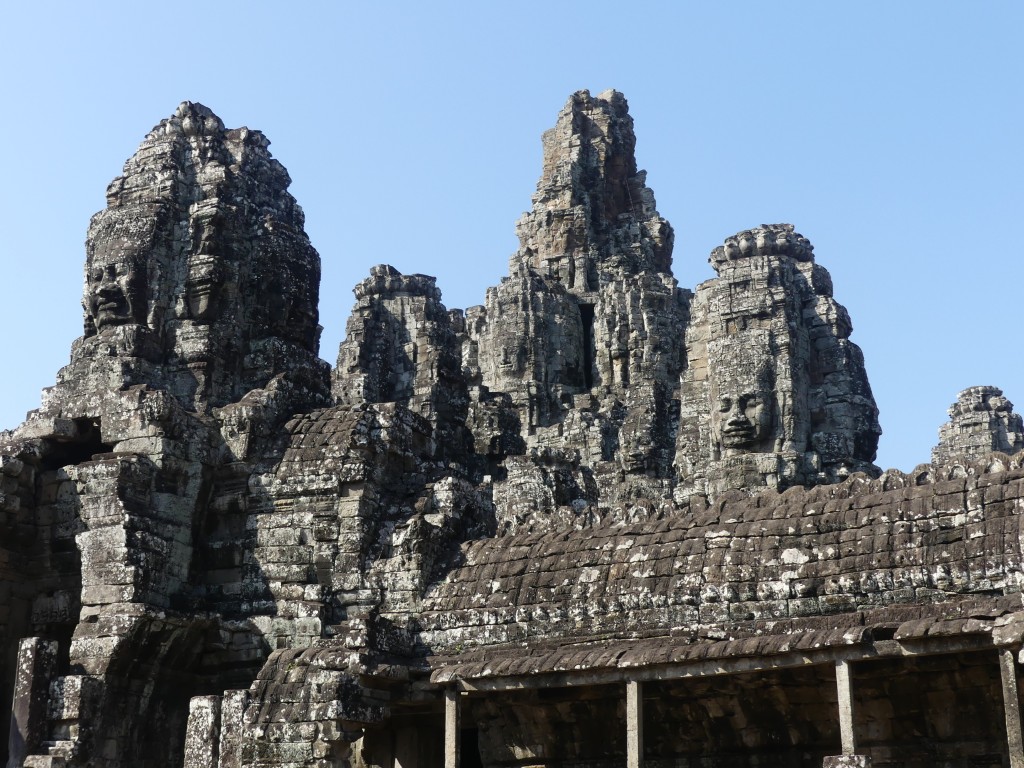
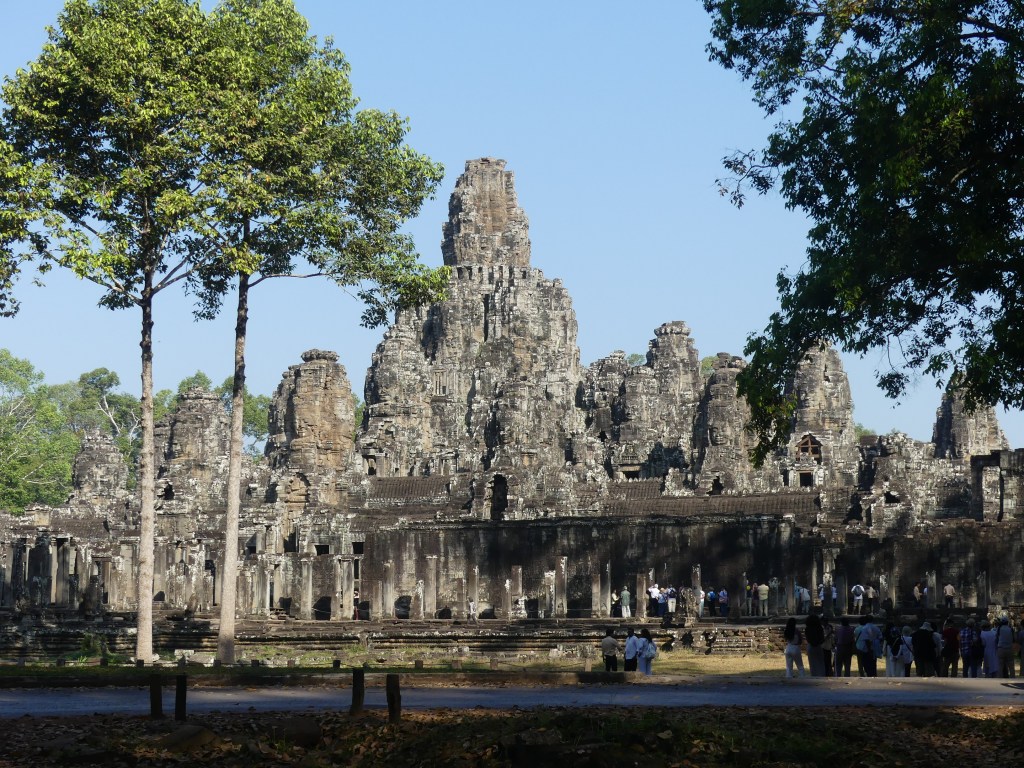
We entered Angkor Thom through the Bayon entrance. This temple is best known for its “smiling faces”, of which there are two hundred set among its fifty-four towers. The temple was built between 1181 to 1218. The gate we entered through has 4 smiling faces. The gate is only large enough for an elephant to fit through, so we had to ditch our large tour bus and transfer to smaller vehicles. A moat surrounds the temple, which helps to preserve the water table. The bridge we crossed has Naga guarding having a tug of war, with good on the right and evil on the left. This temple was built to honor the Hindu god Brahma, whose faces show love, compassion, sympathy, and equality; it is not common in Hindu to have temples built to him. One must be careful in the area – monkeys like to drop rocks on the heads of visitors!
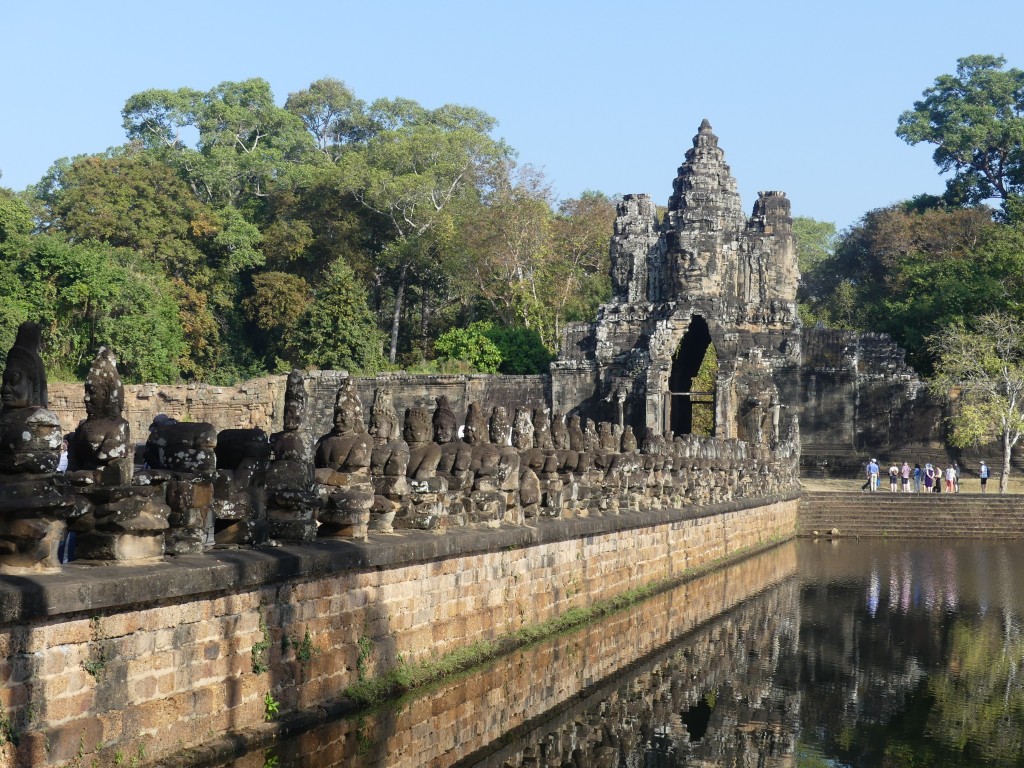
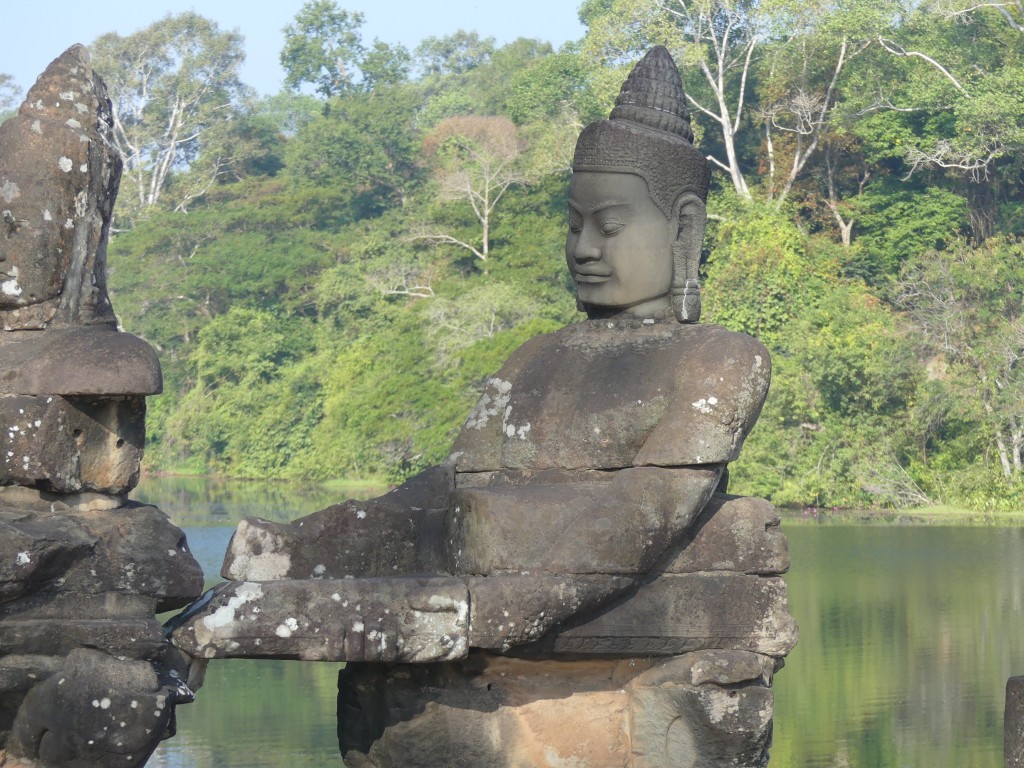
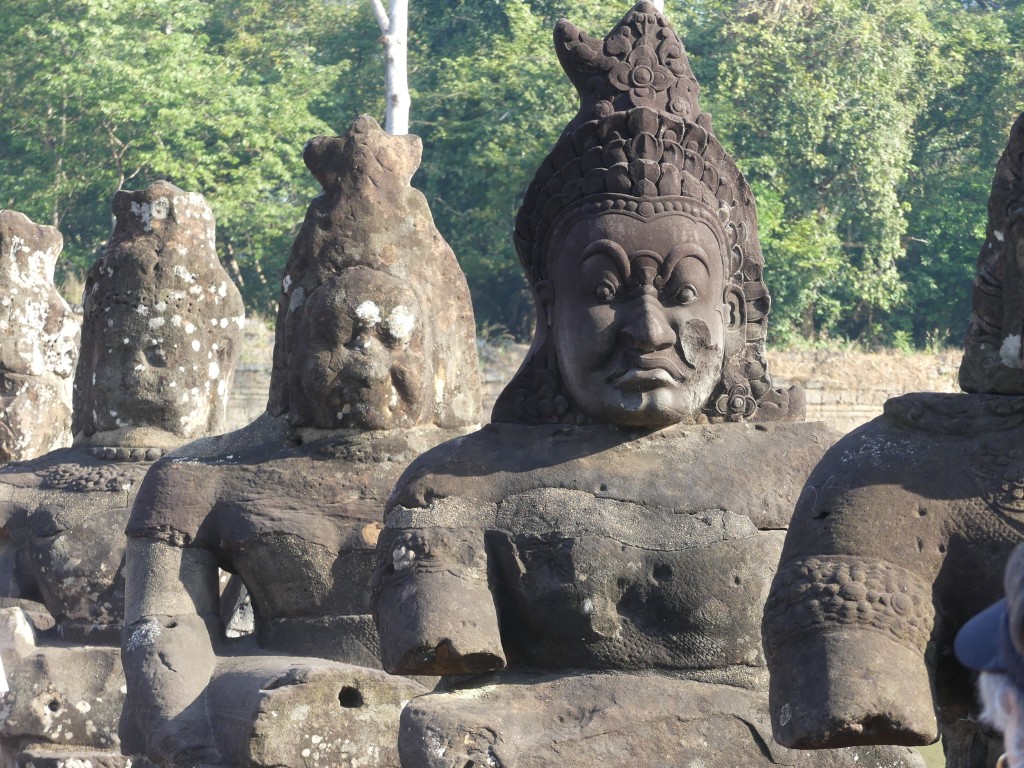
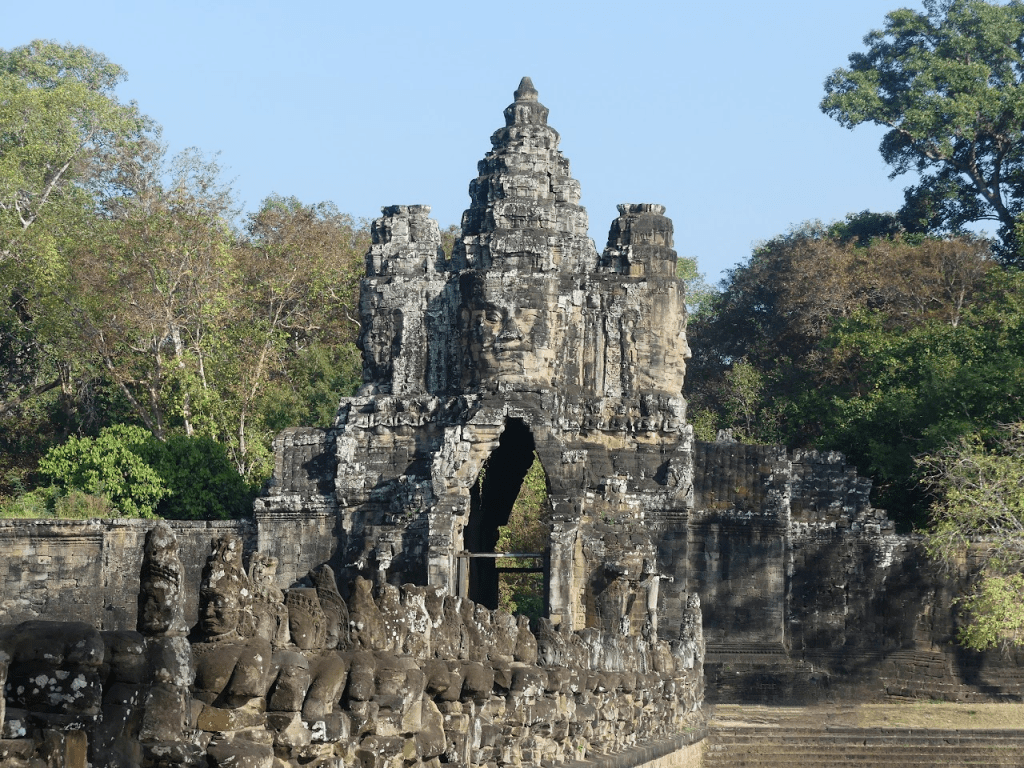
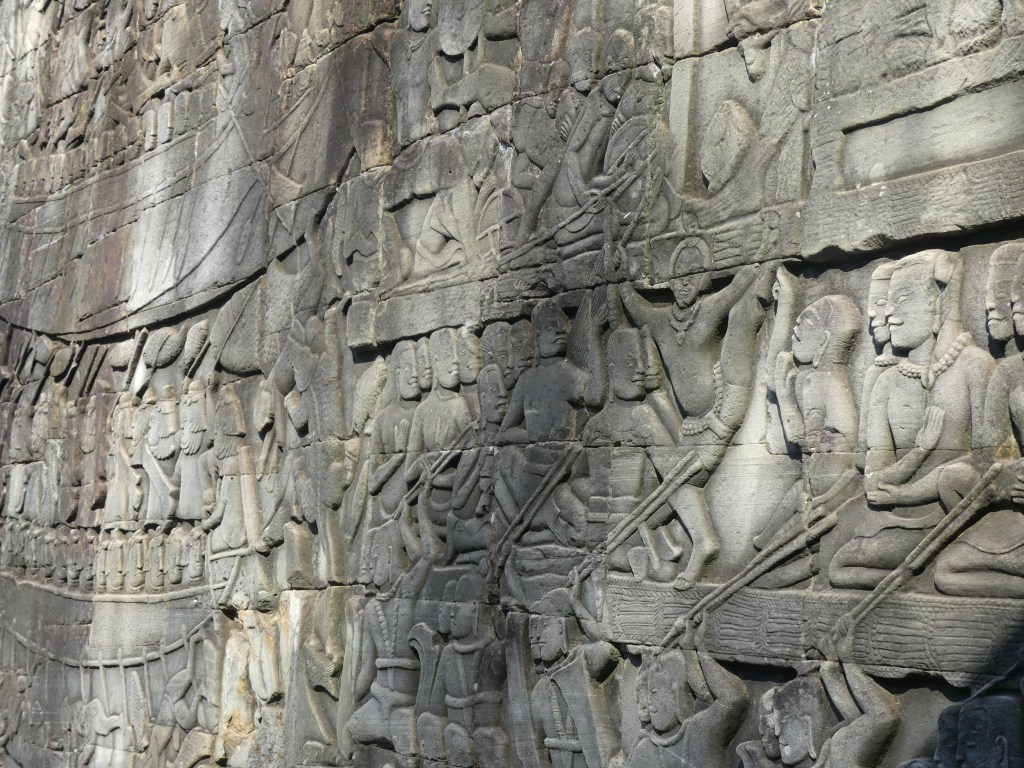
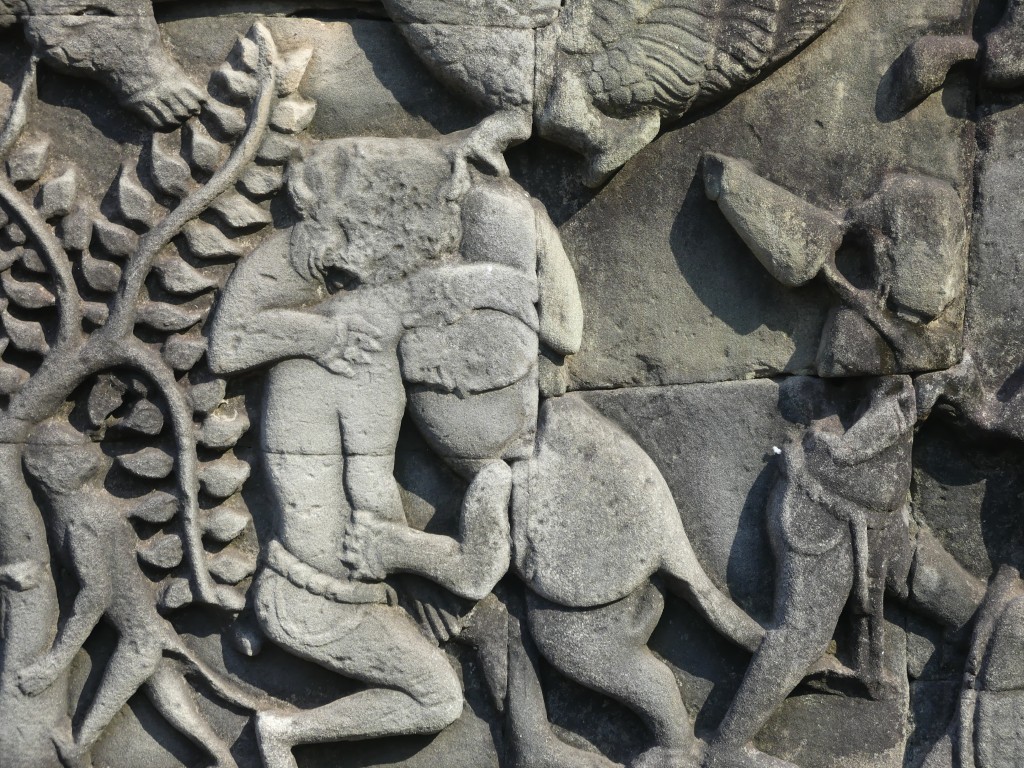
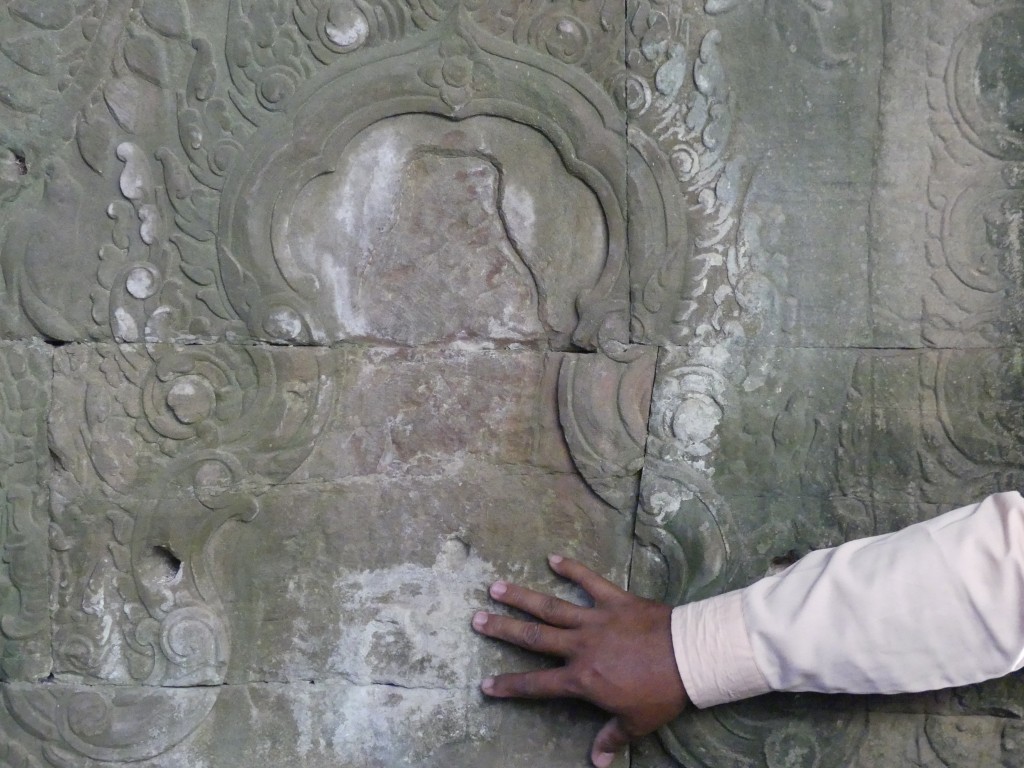
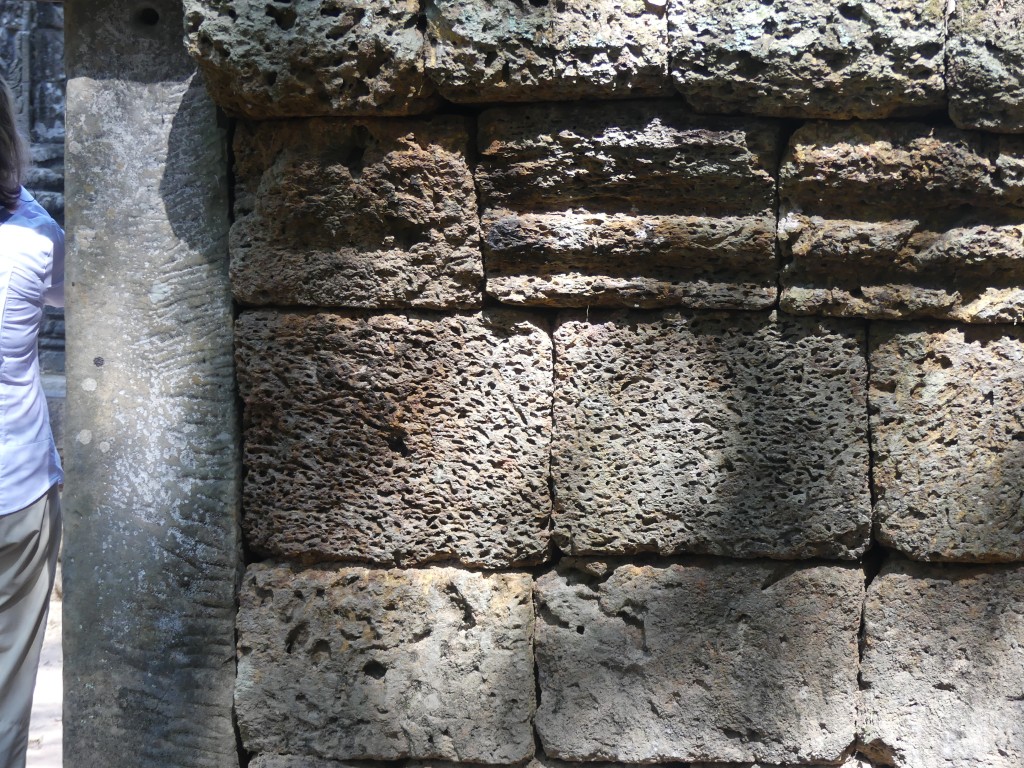
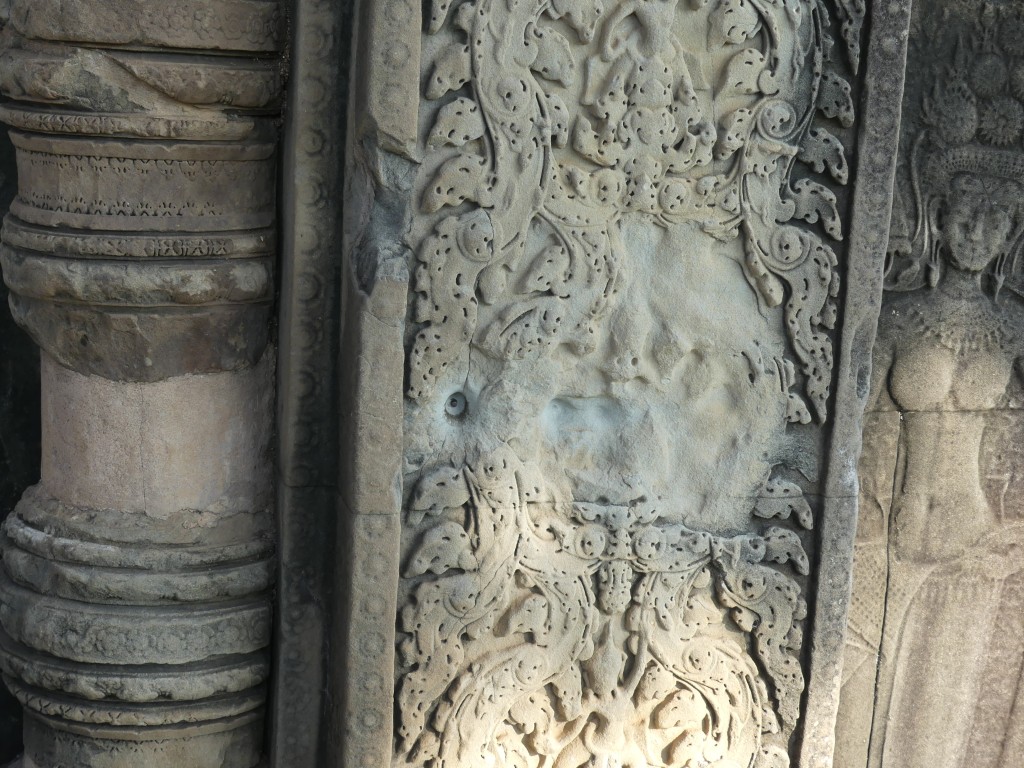
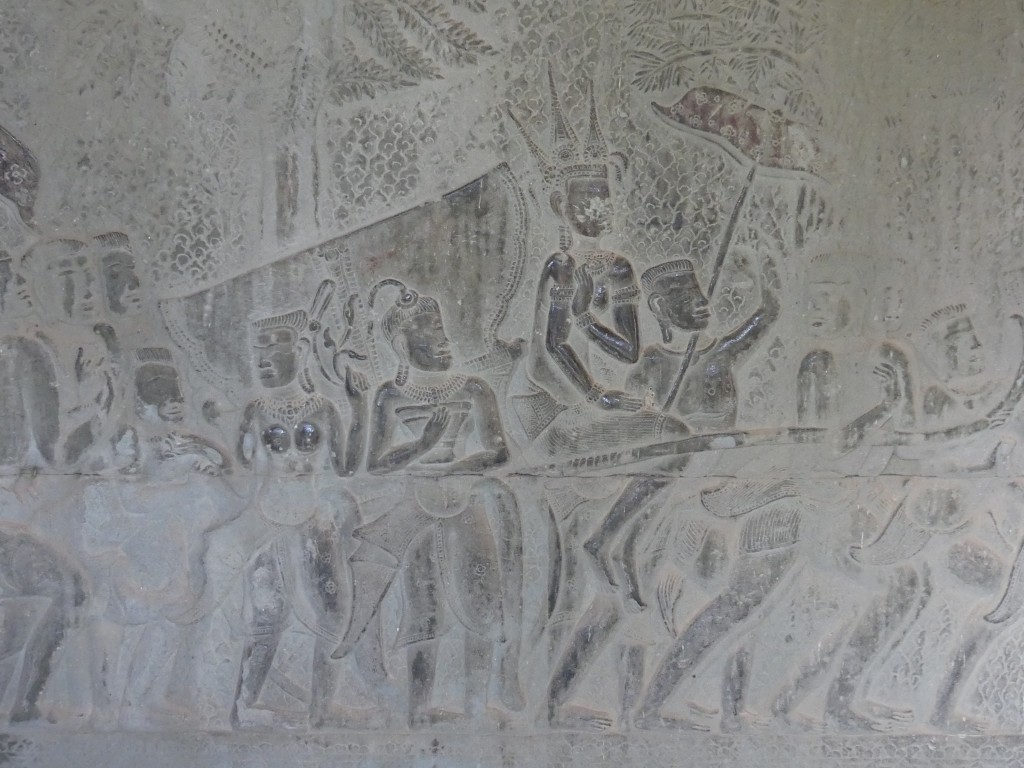
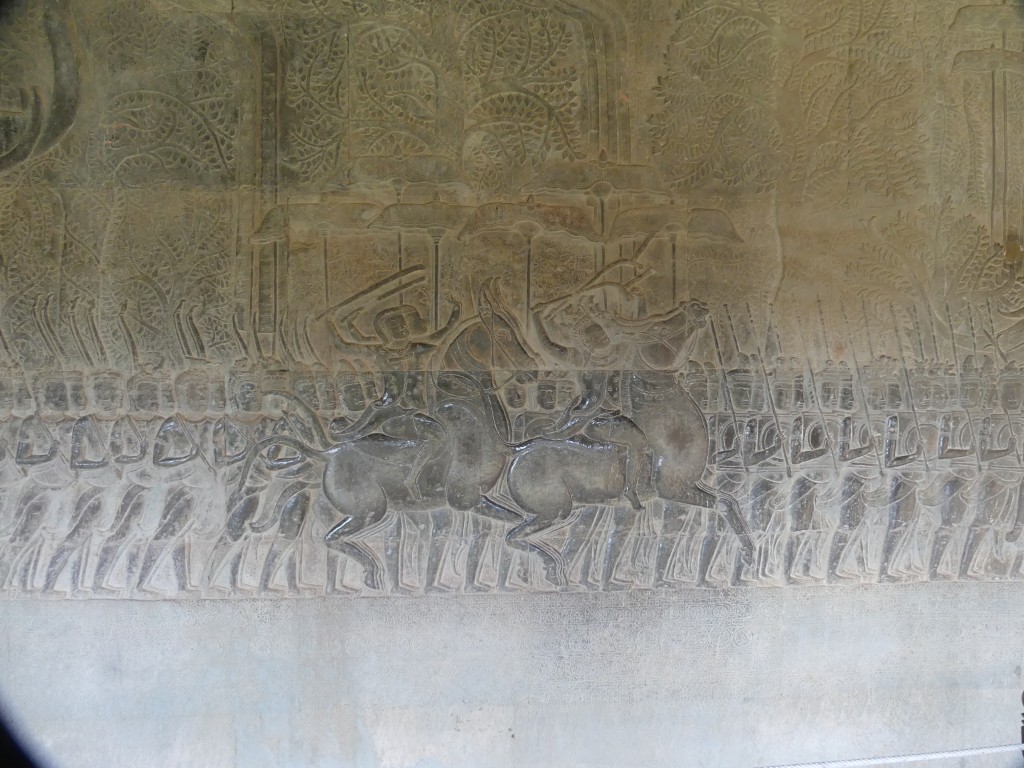
The construction of the temple is sandstone. Back in the day, over a million people lived in the area. As we walked through, our tour guide described the imagery carved into the walls. Images of Buddha were removed by Hindus.
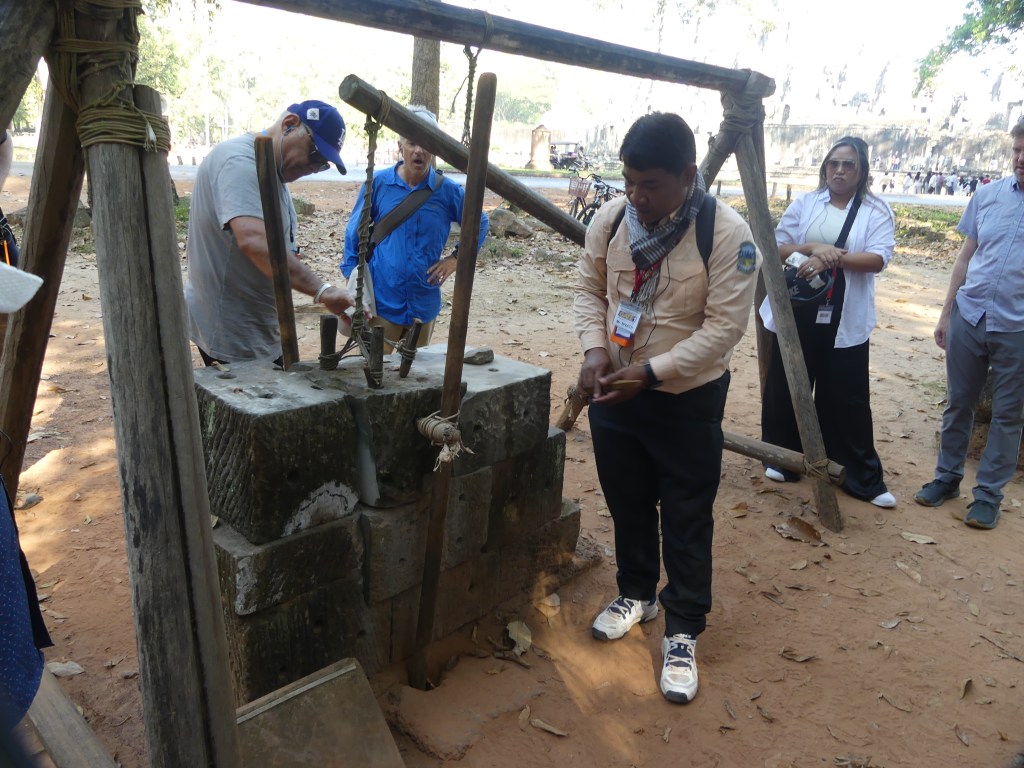

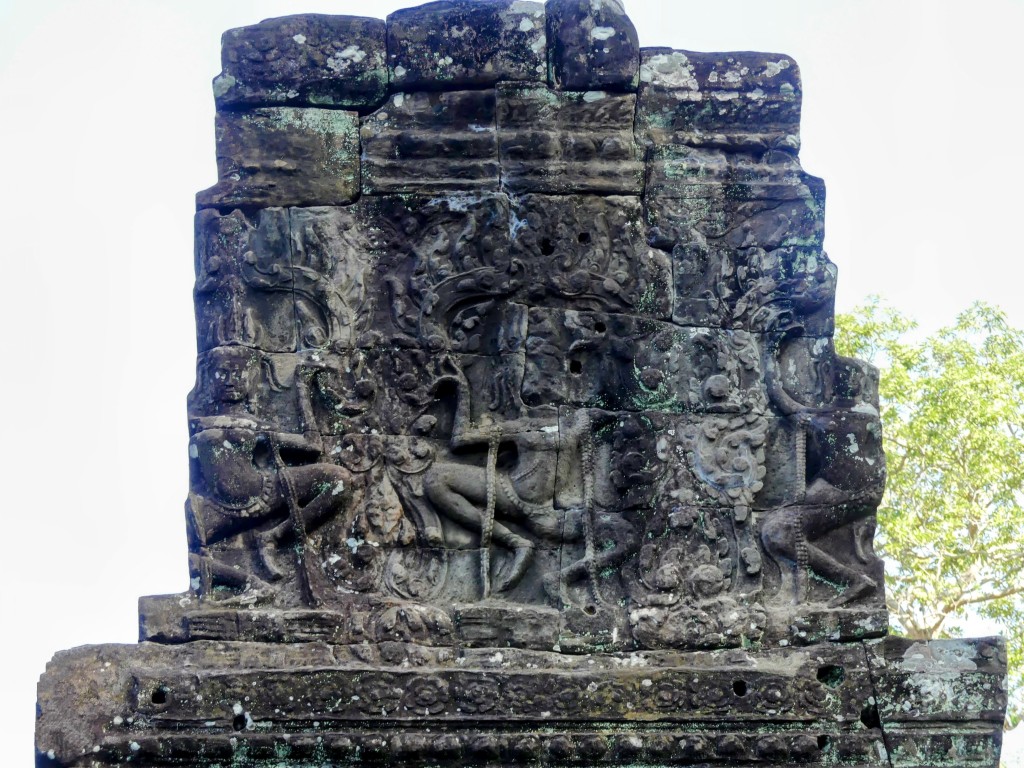



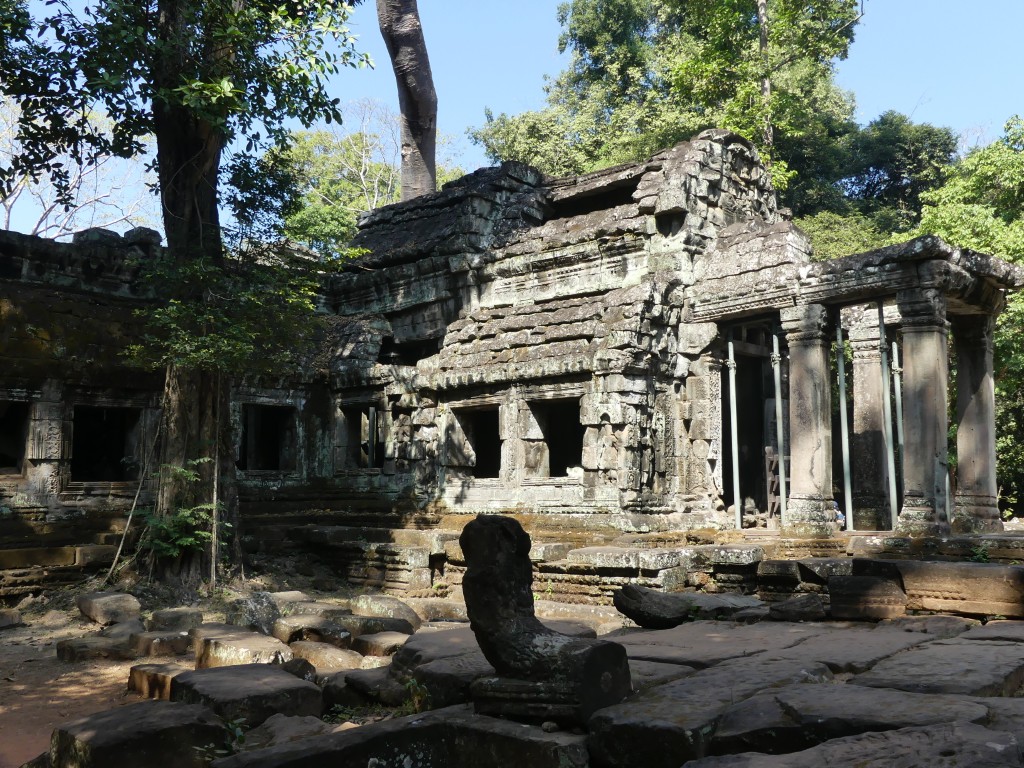
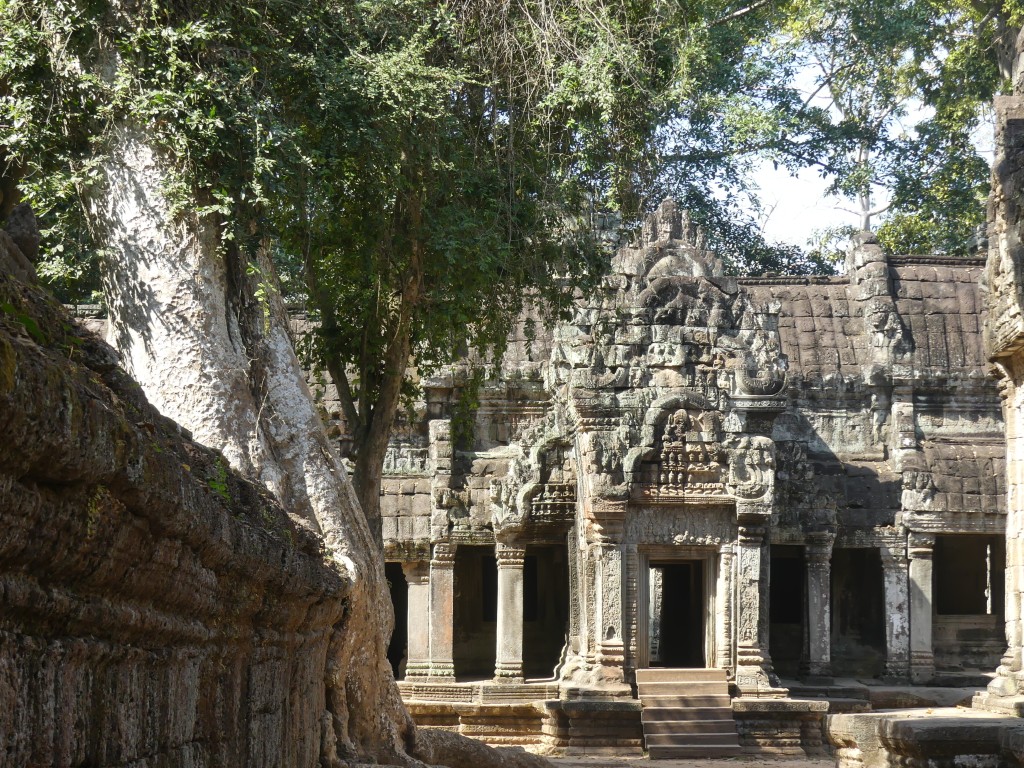
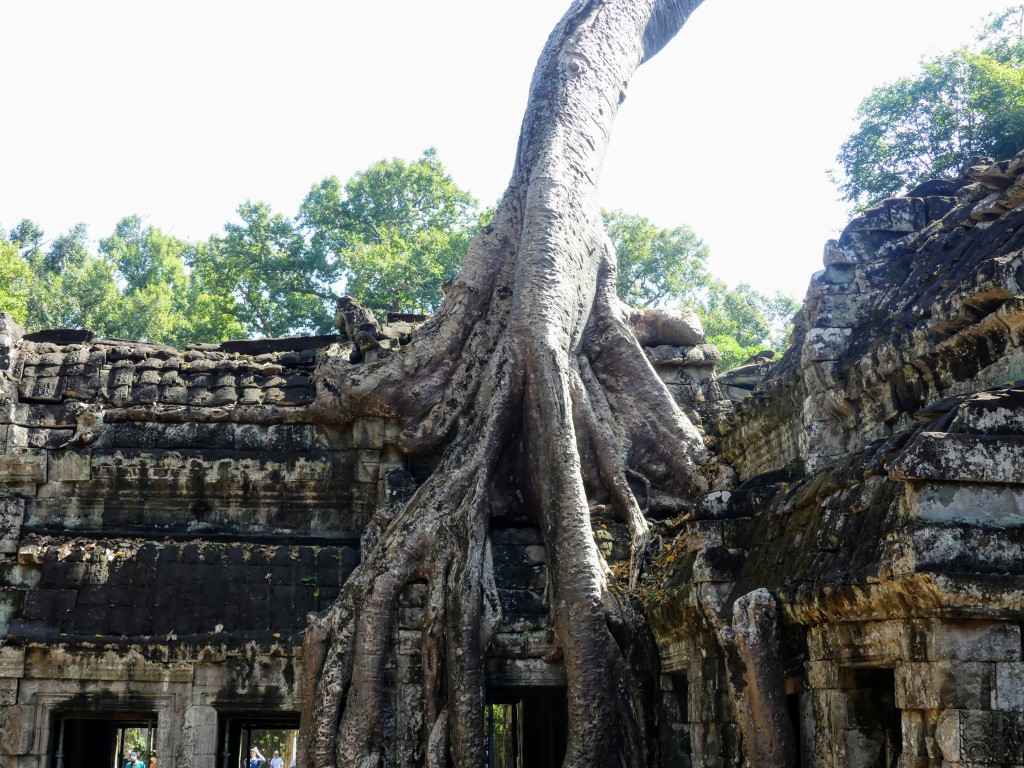
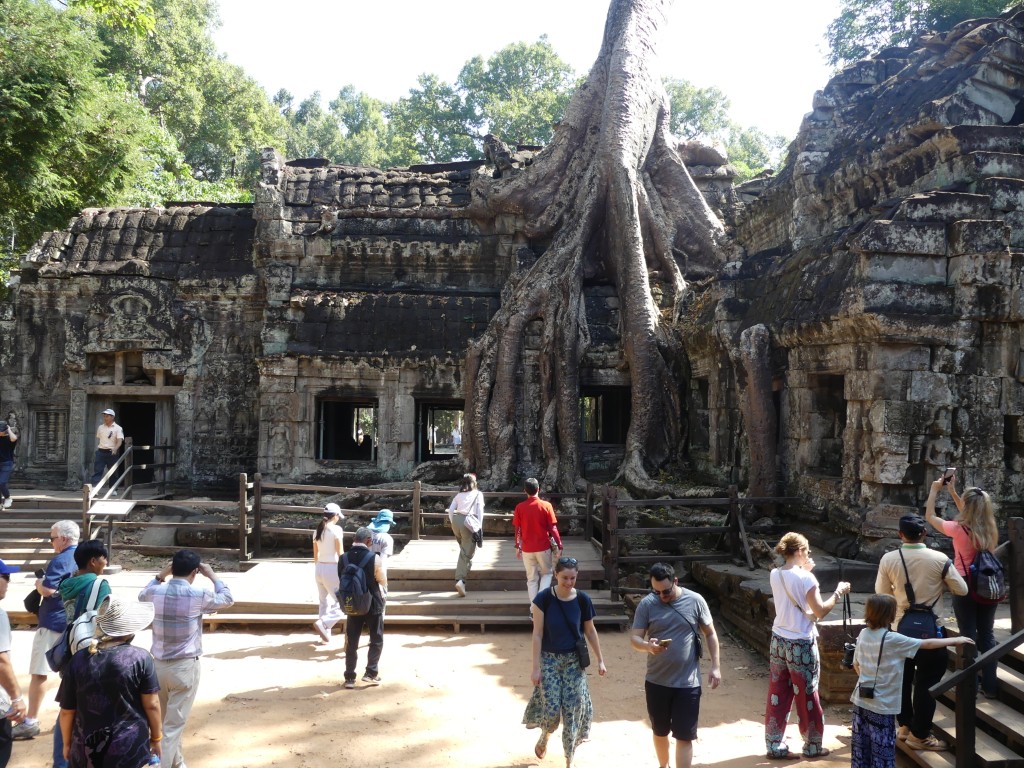
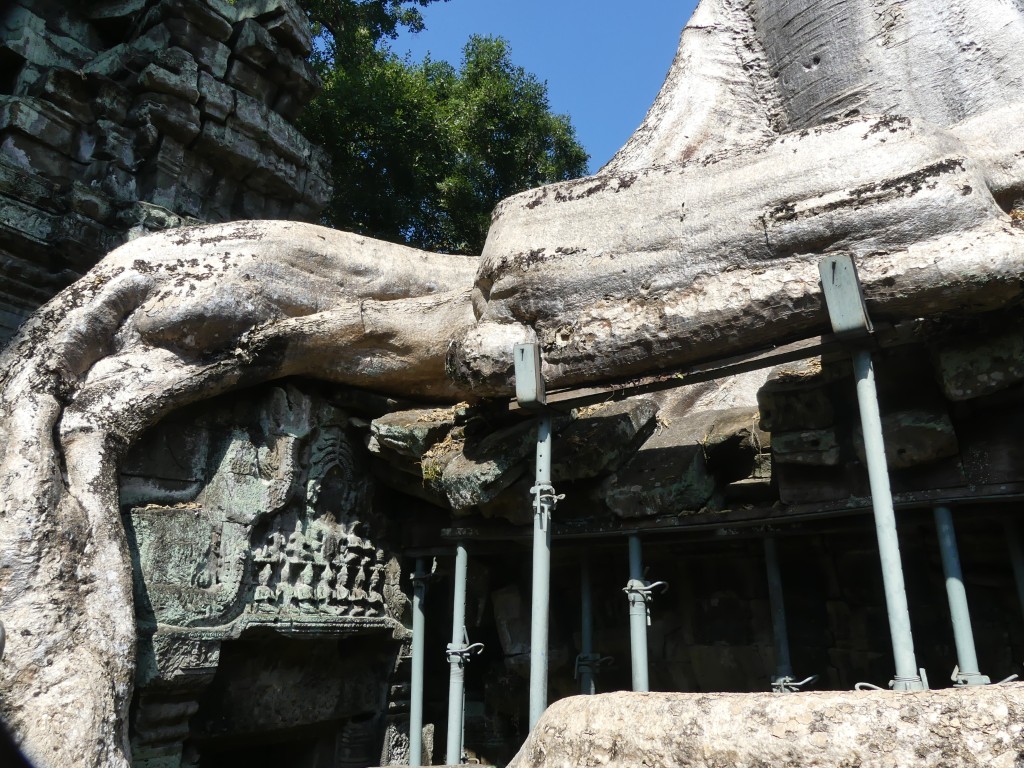
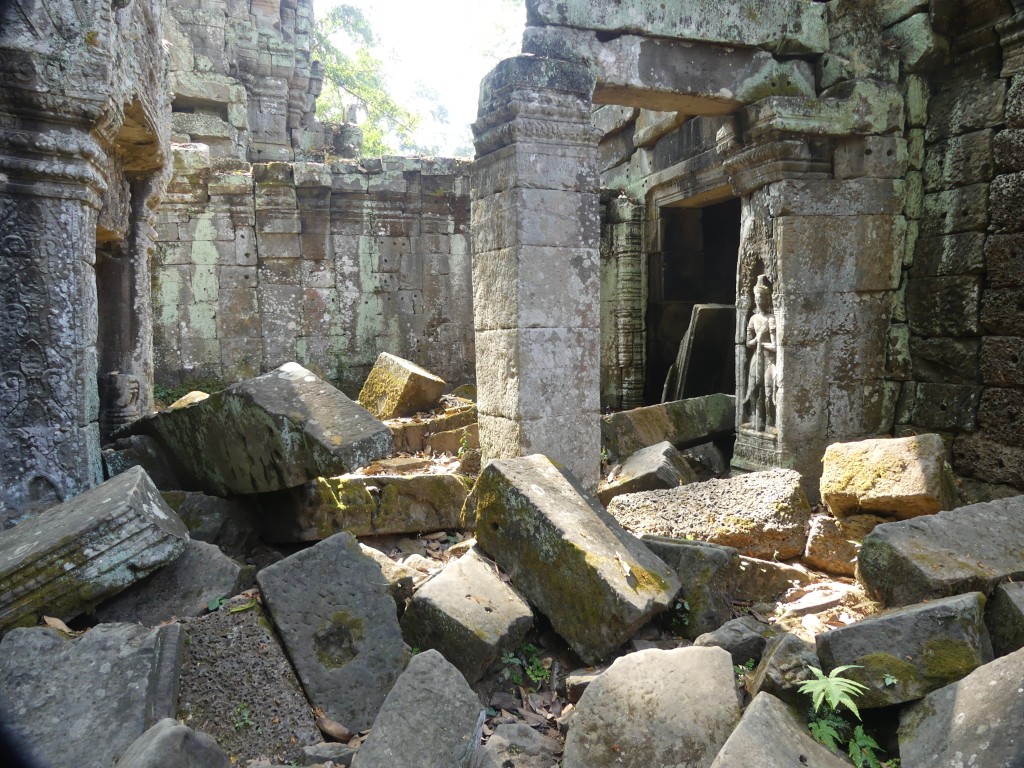
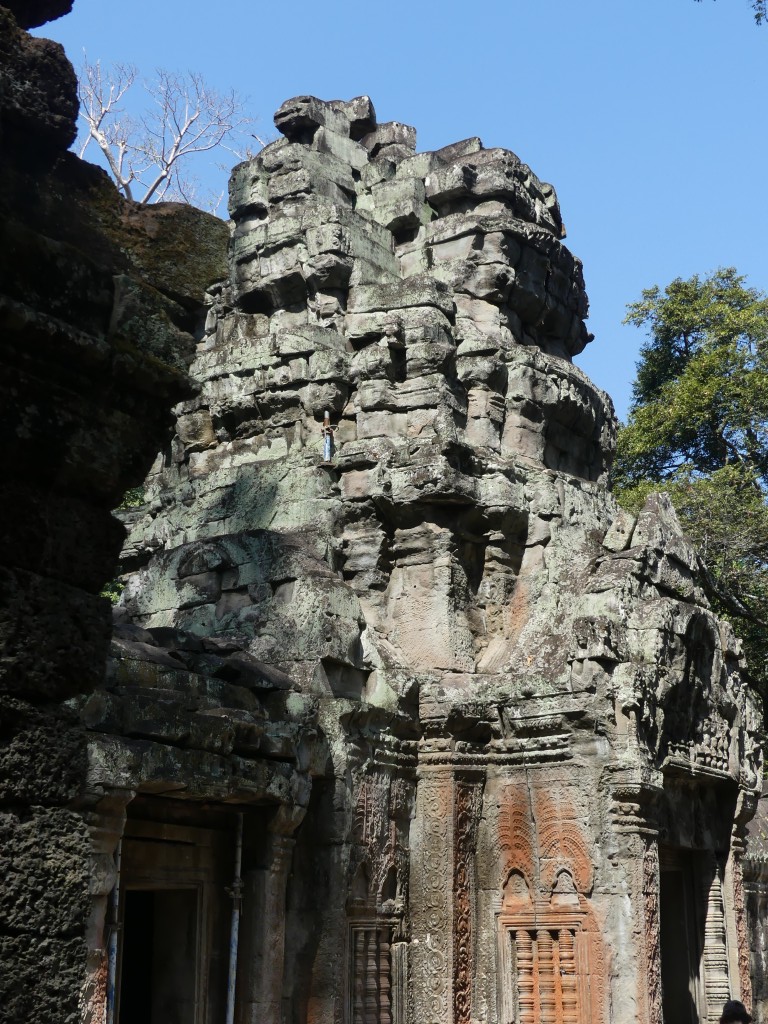
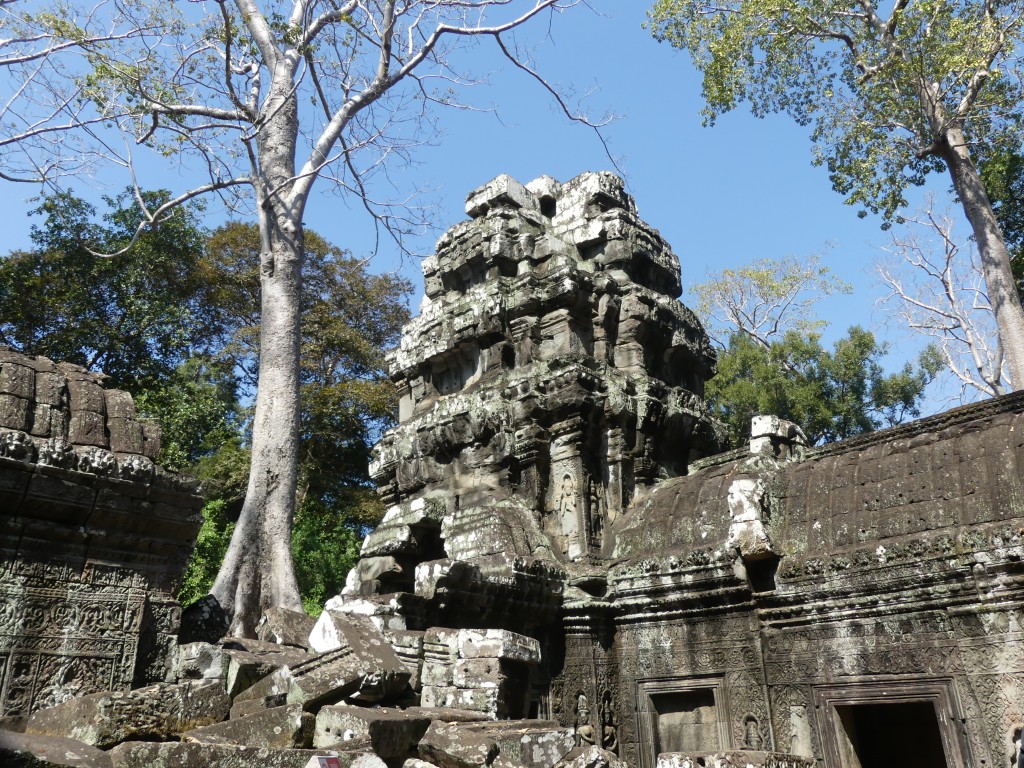
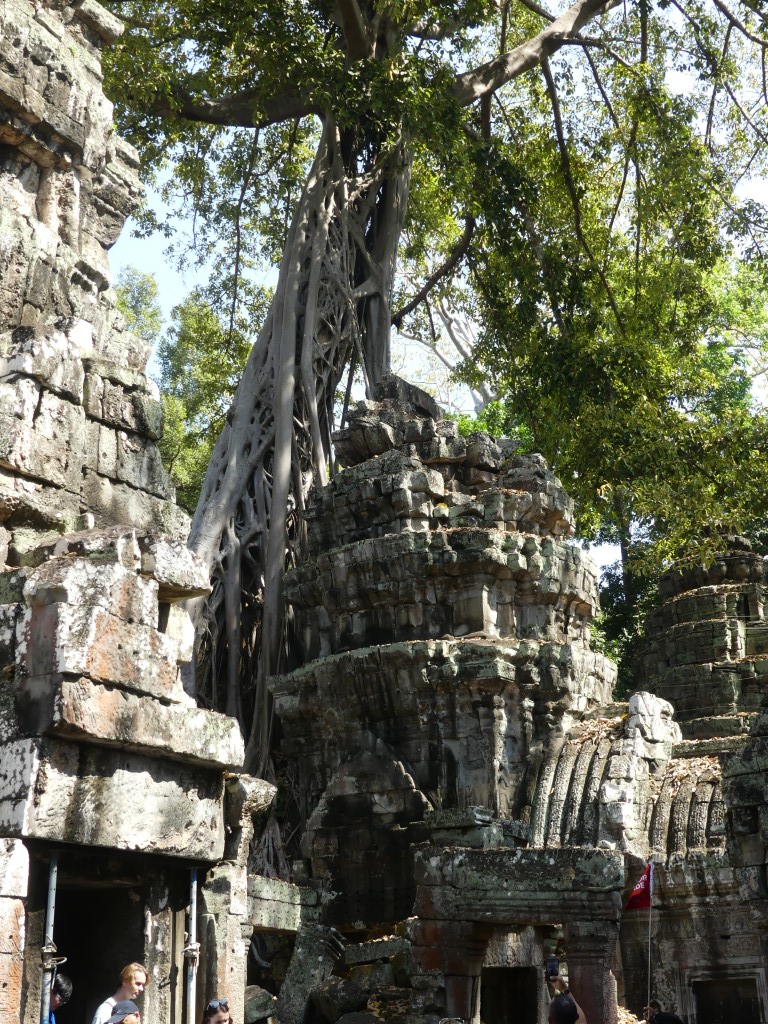
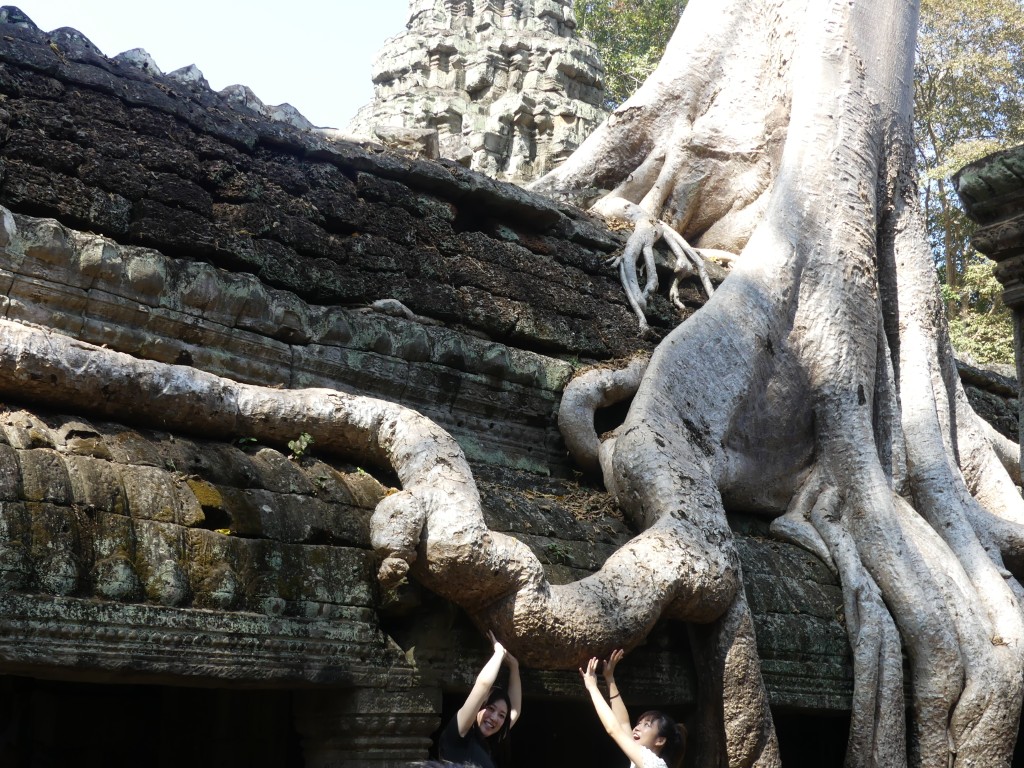
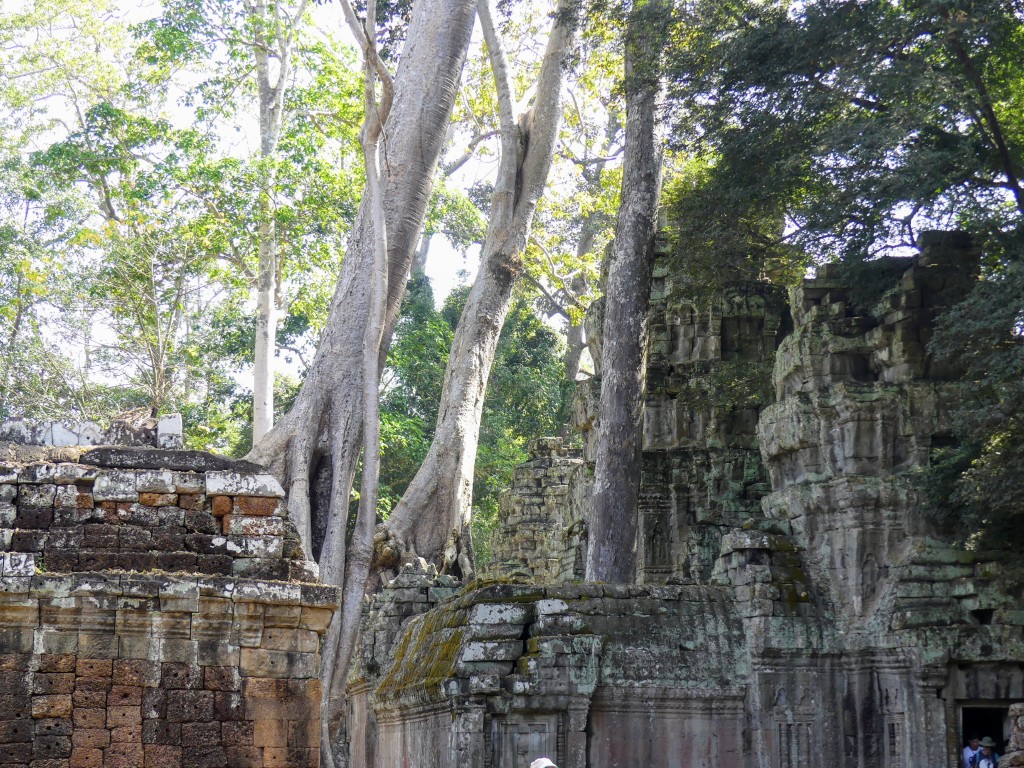
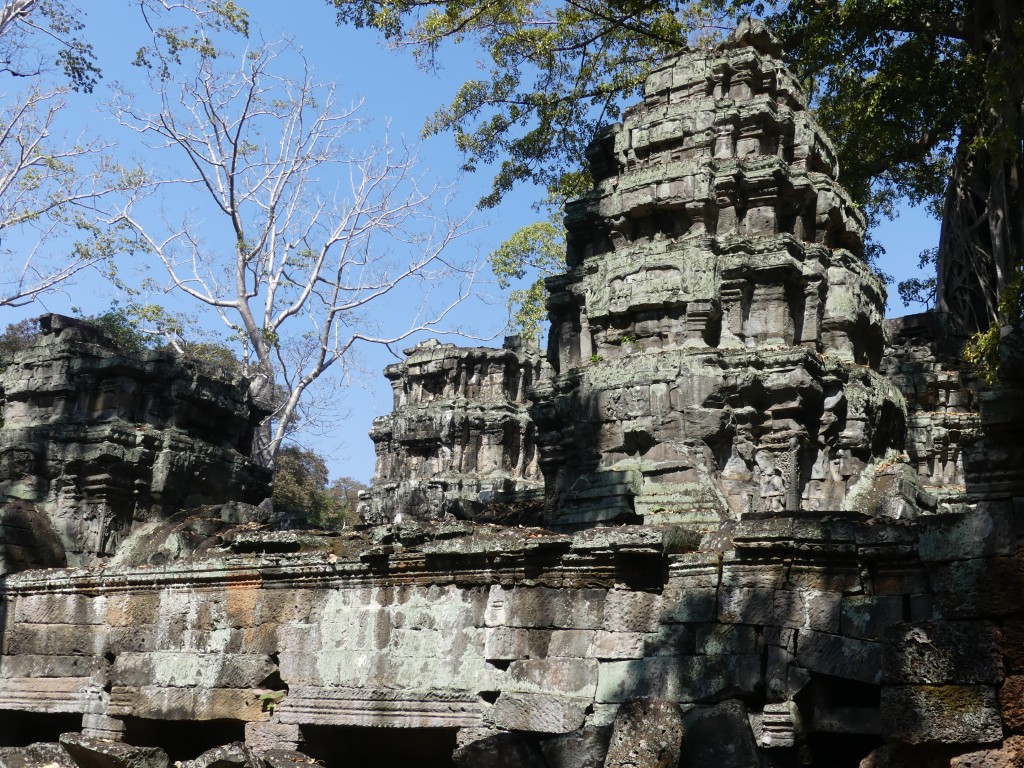
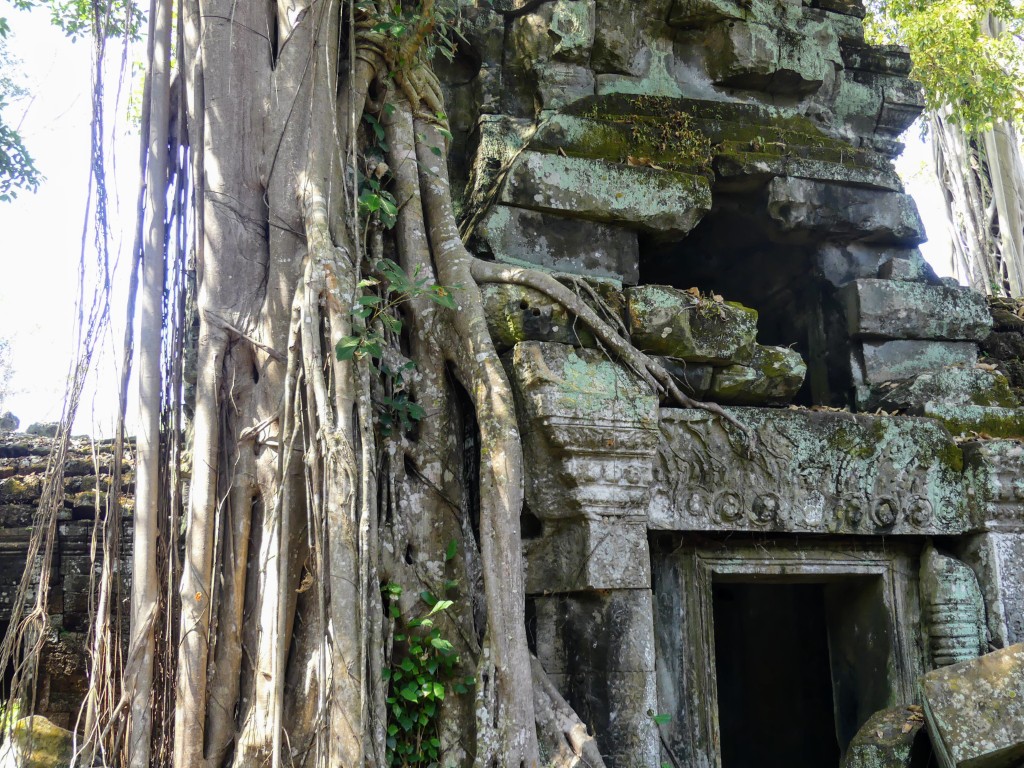
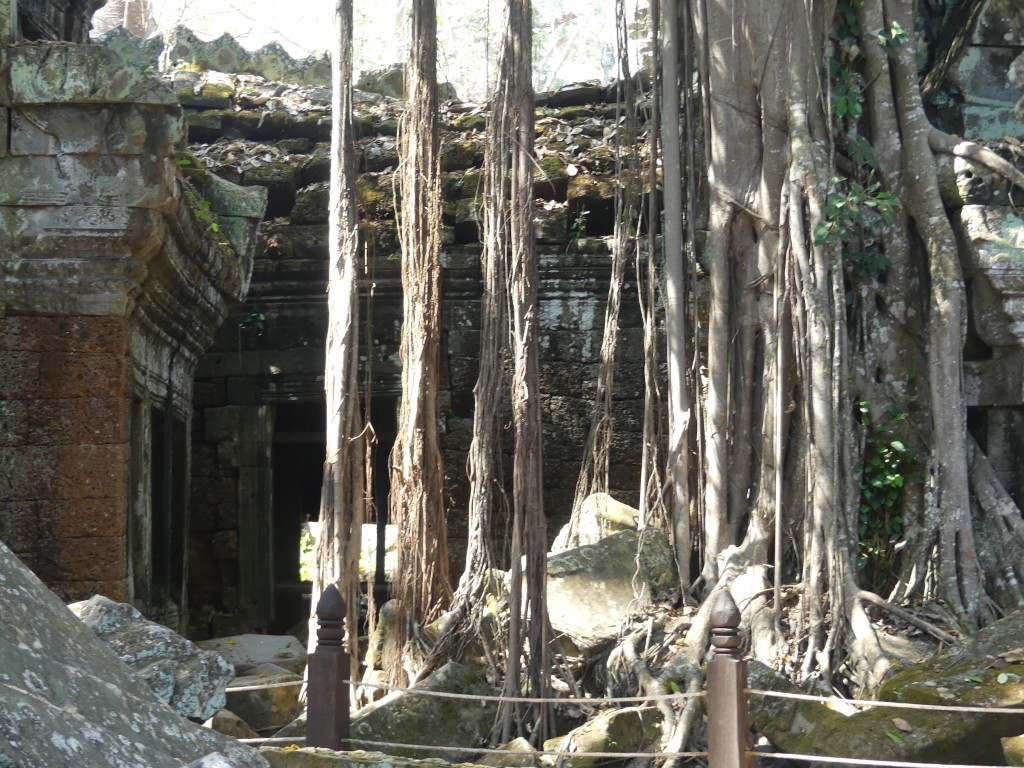
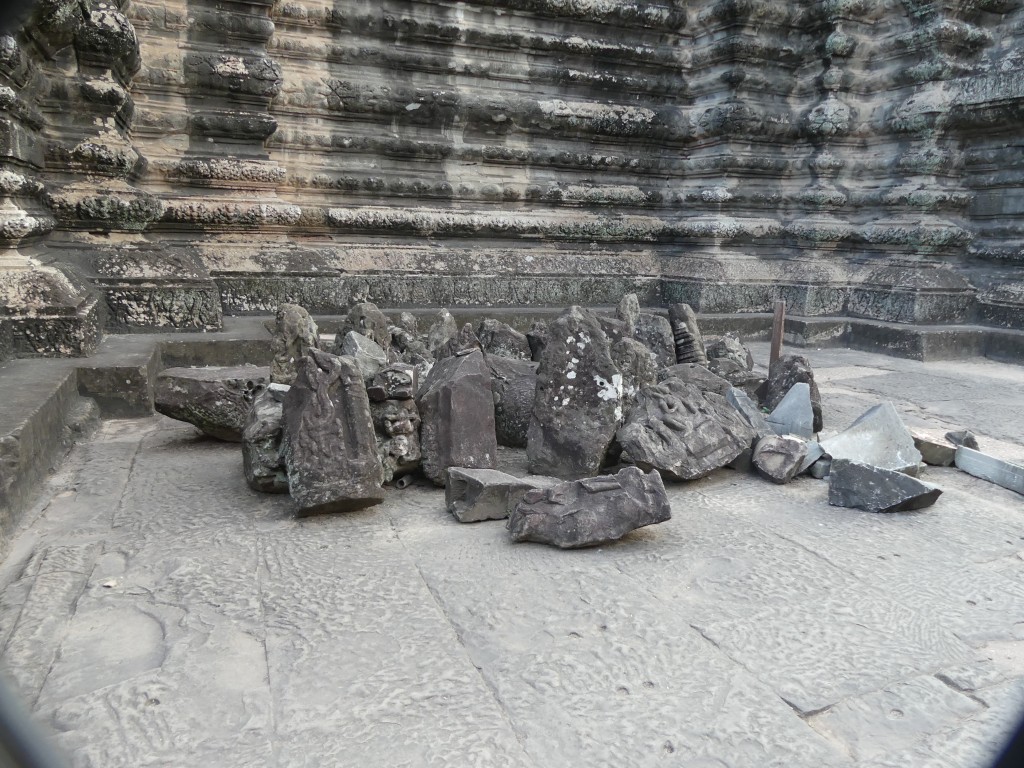
The next visit was to Ta Phrom, built in 1186 by the same king to honor his mother. This is commonly known as the Tomb Raider Temple. Restoration work is ongoing at all of the temples. Coconut husks were used initially, but this was found to be ineffective. Next, they tried bleach, but that damaged the stones. Now, they are using a chemical compound that is much more effective and does not do damage.
To get to the temple, you need to walk a short distance along a shaded path. There are musicians playing traditional music along the way; they are men that have been affected by land mines, and they use the money they collect to help other victims.
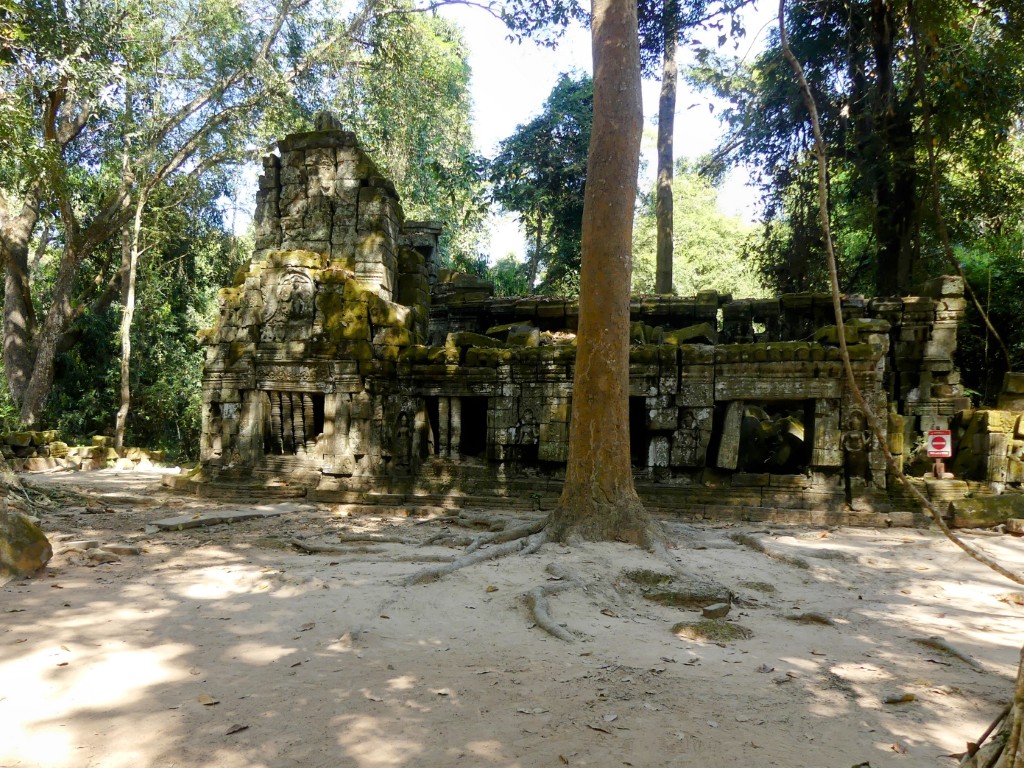
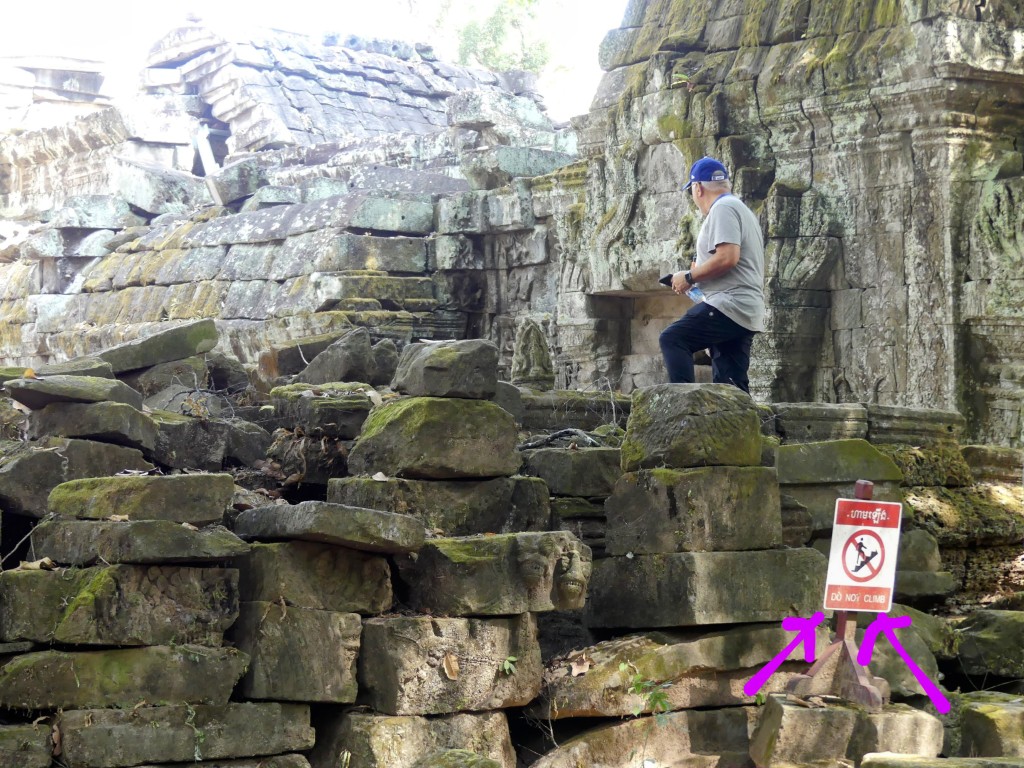
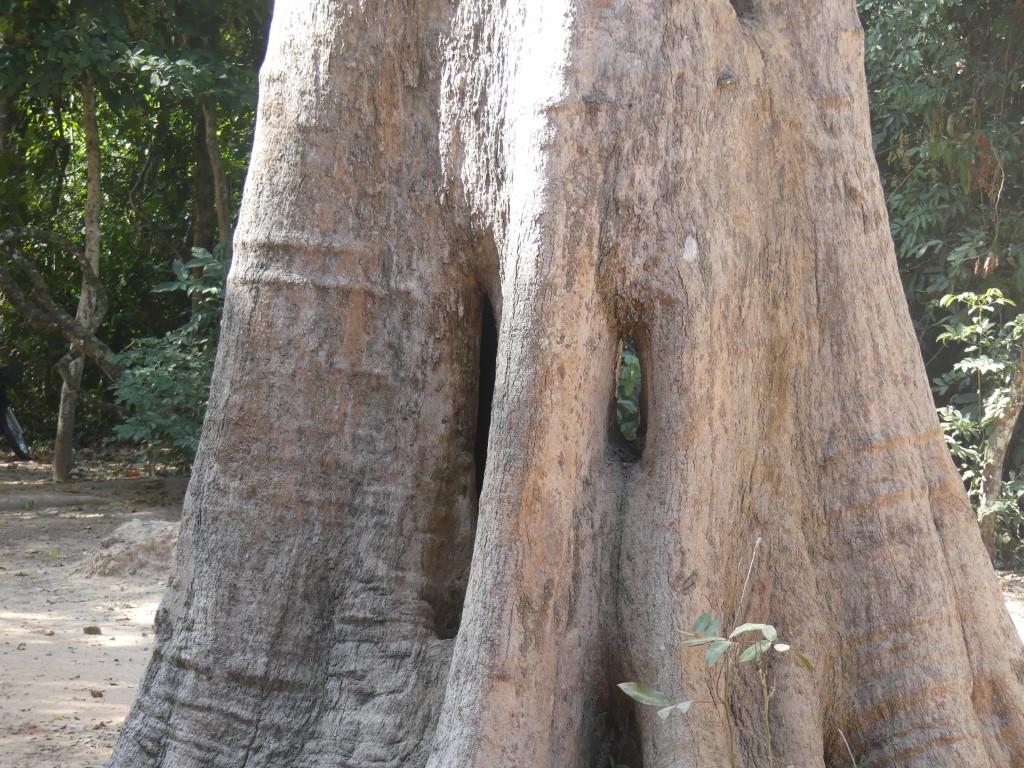
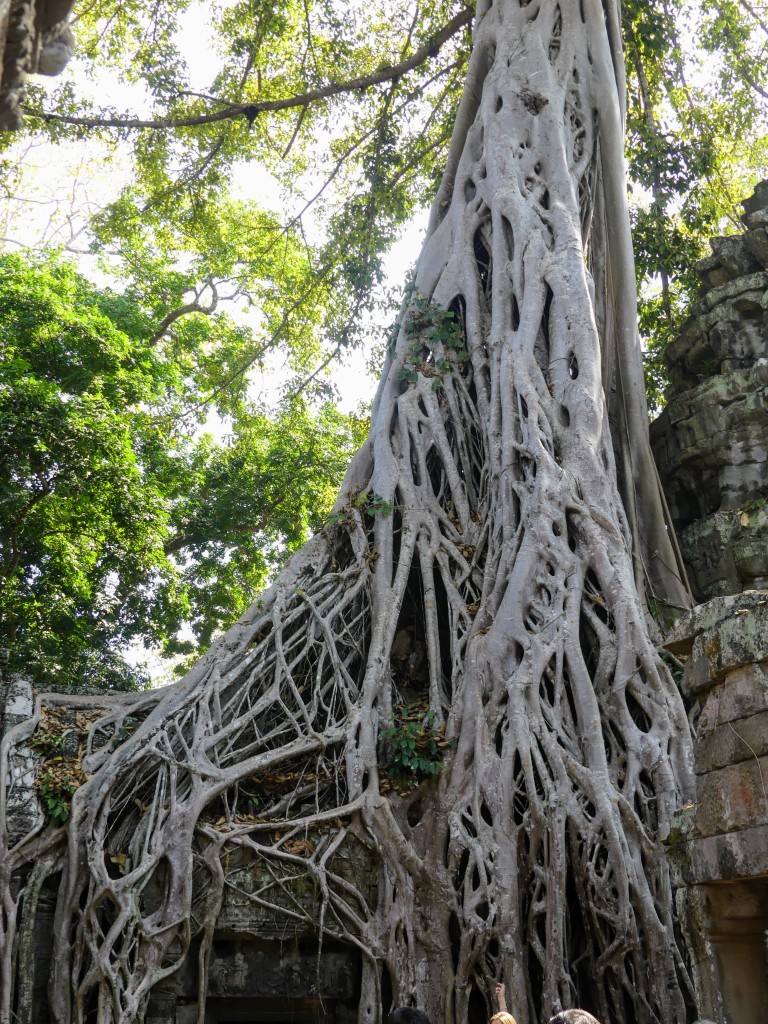
Buddha images within the temple were removed by Hindus. Both religions were practiced in Cambodia, which makes sense because of the ethnic composition of the Cambodian people. This was a very crowded temple, which made it a bit of a challenge to get decent pictures. Thank goodness for magic eraser! Obviously, the draw for the temple is the trees that have become part of the temple itself.


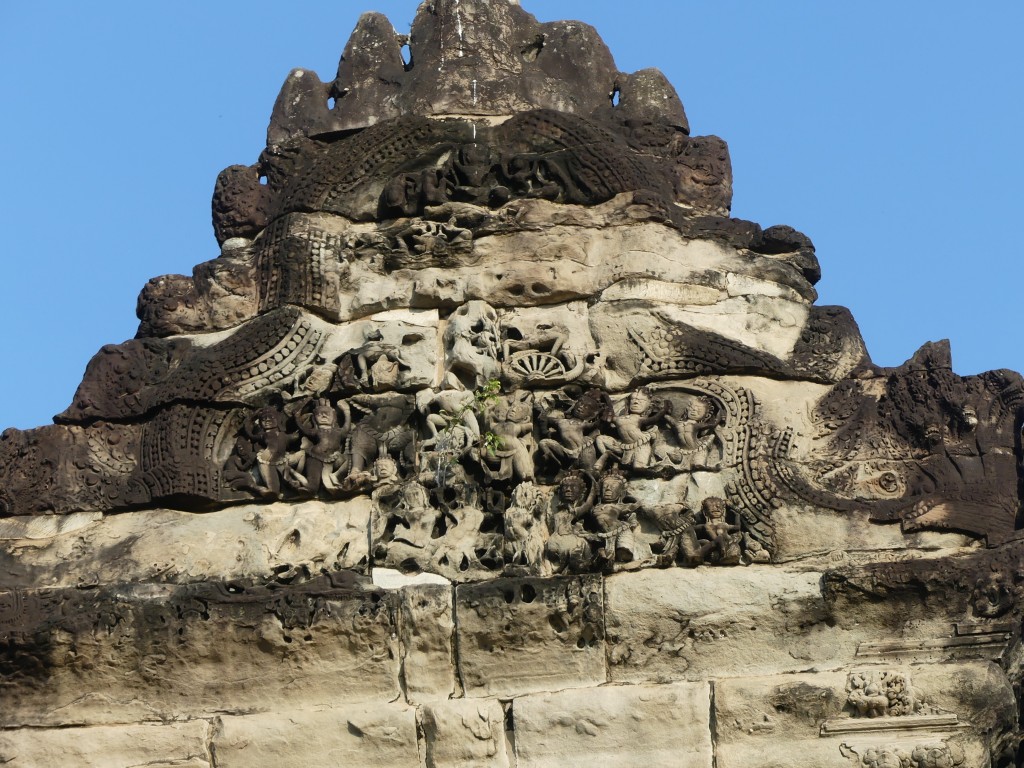
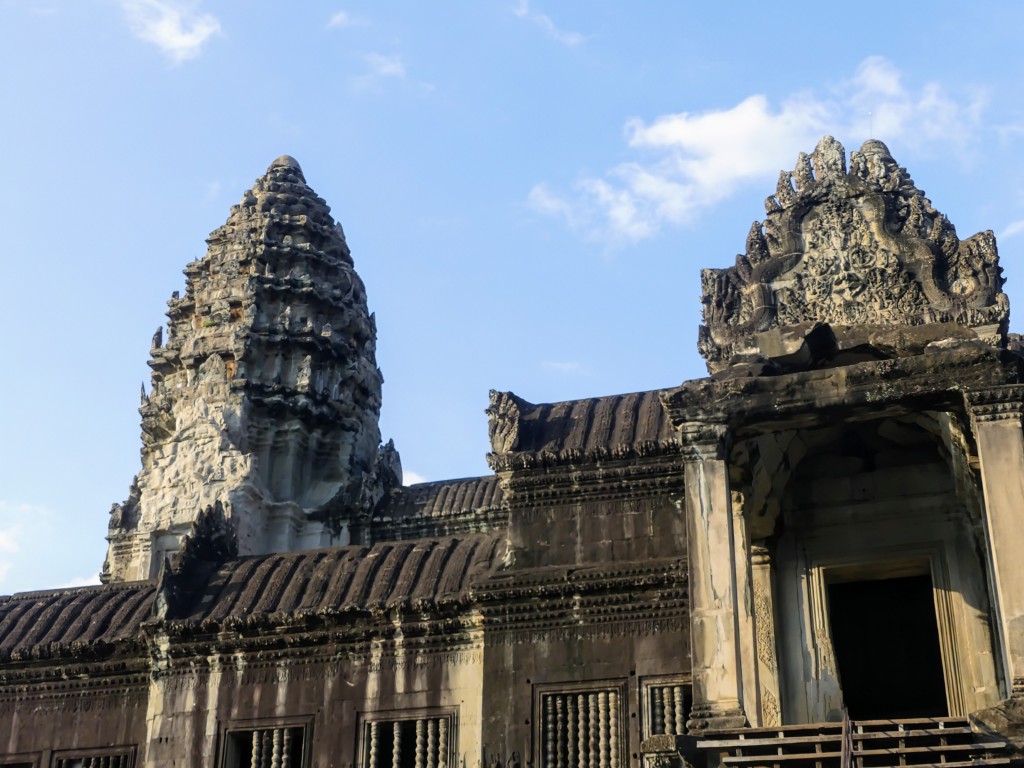
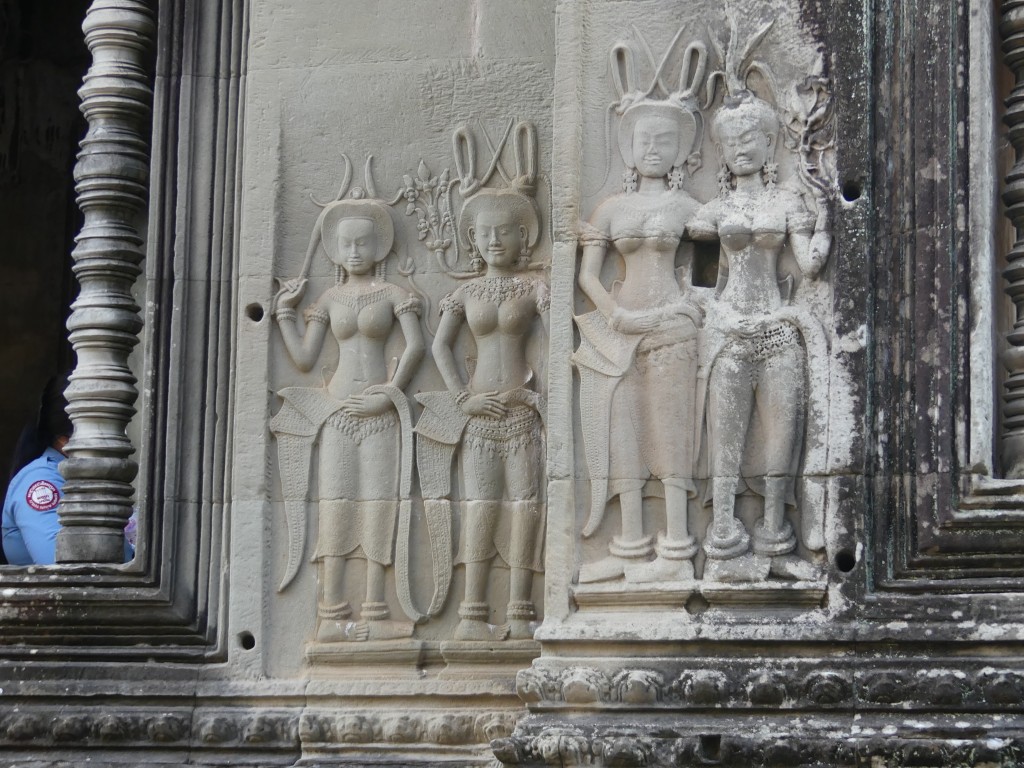
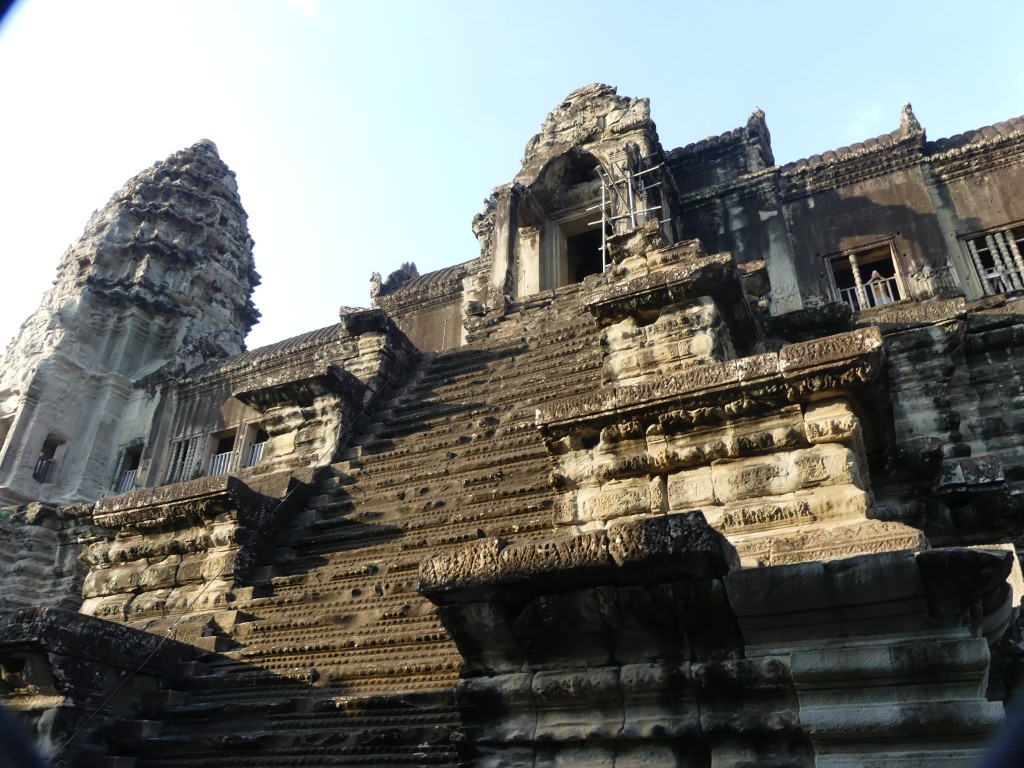
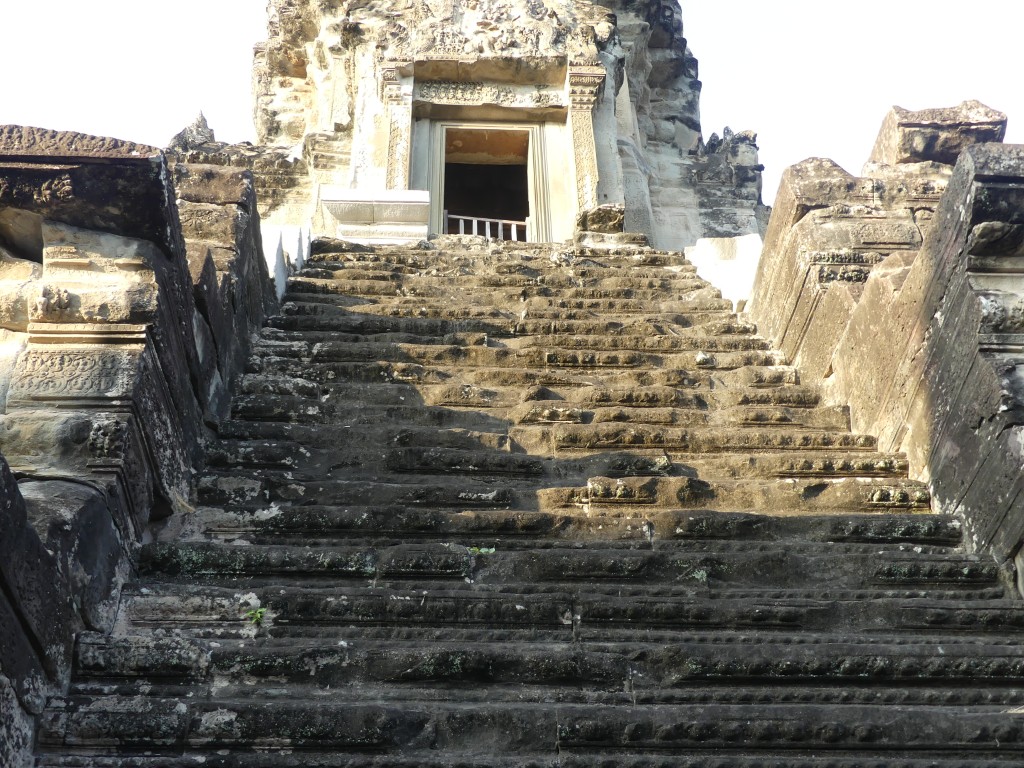
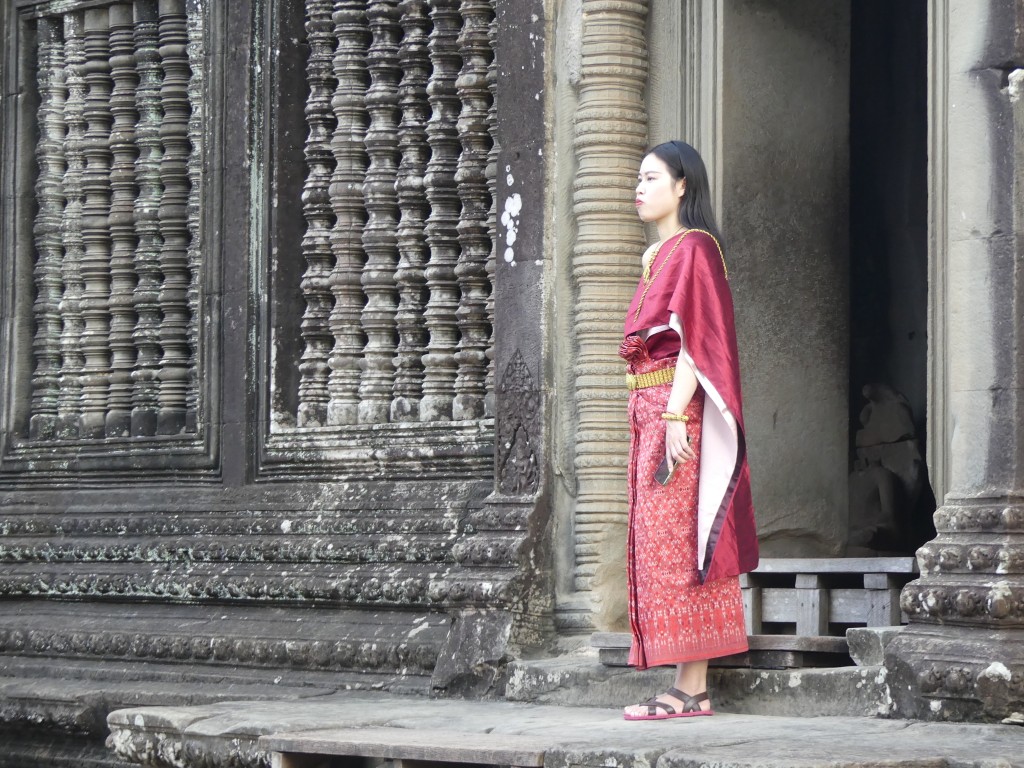
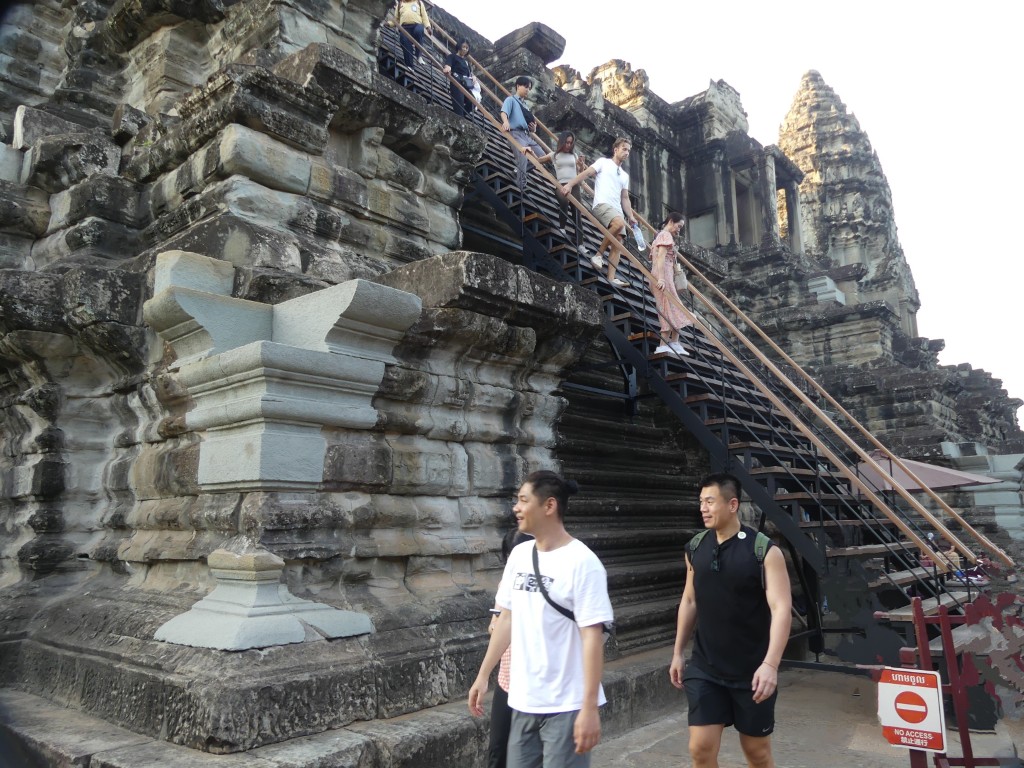
After viewing the temple, we stopped for lunch and then had a nice break at the hotel to rest up for our final stop on the tour, Angkor Wat. This temple was dedicated to the Hindu God Vishnu. It took 37 years to build, using a mere 385,000 workers, plus artisans and elephants.

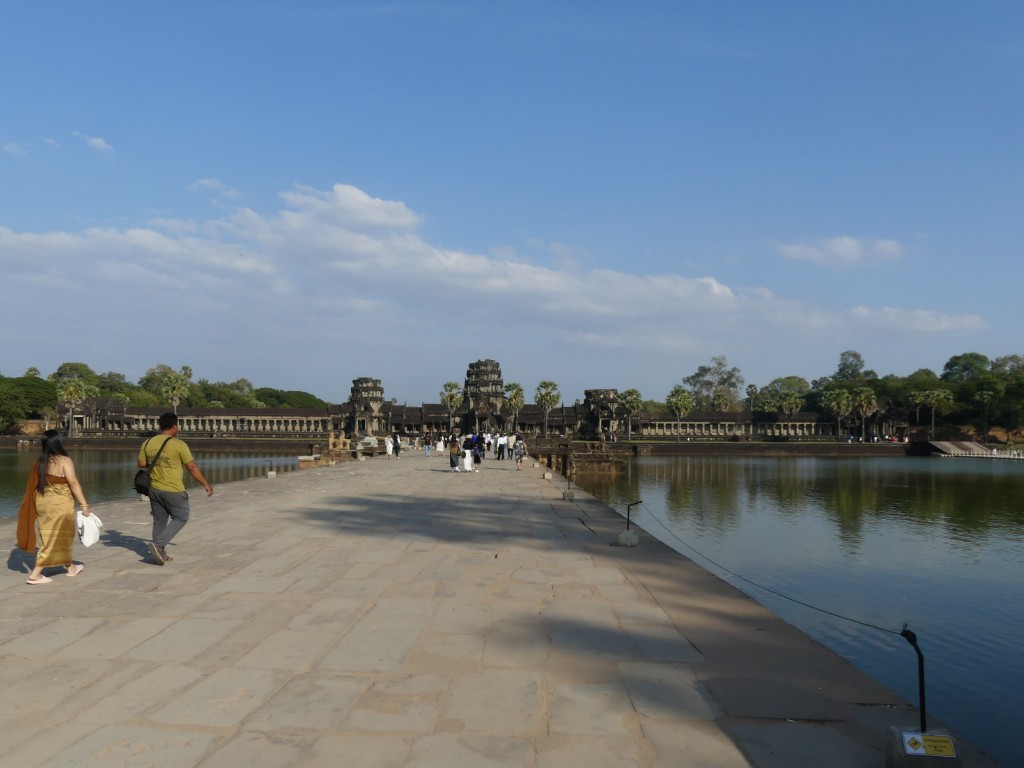
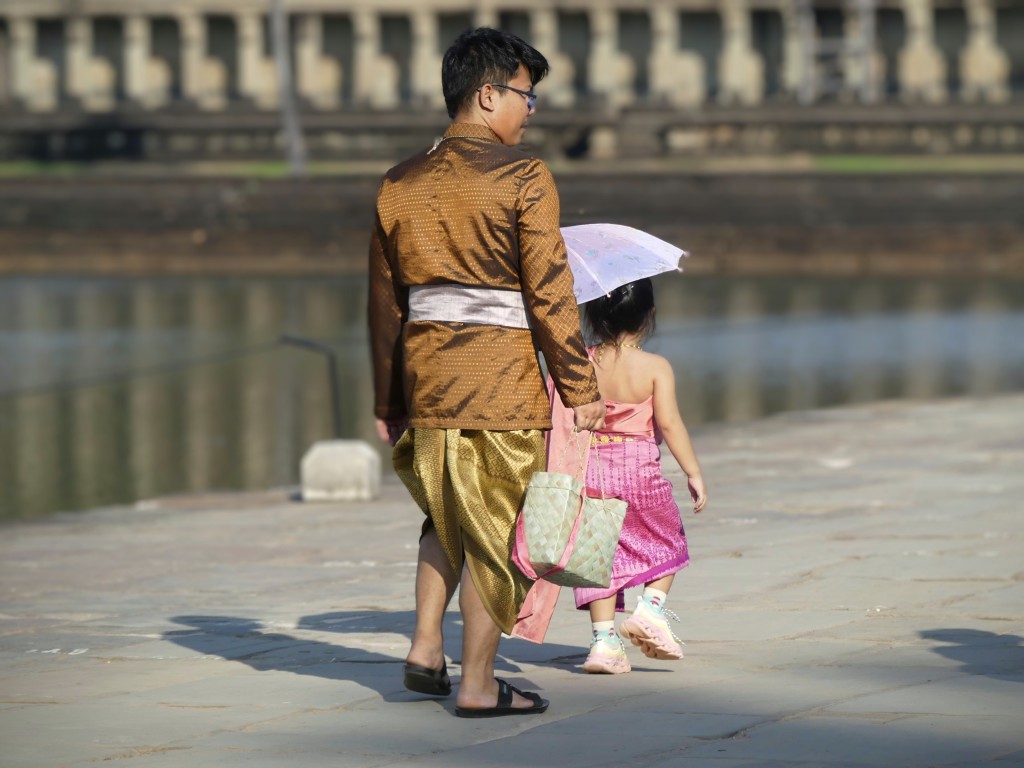

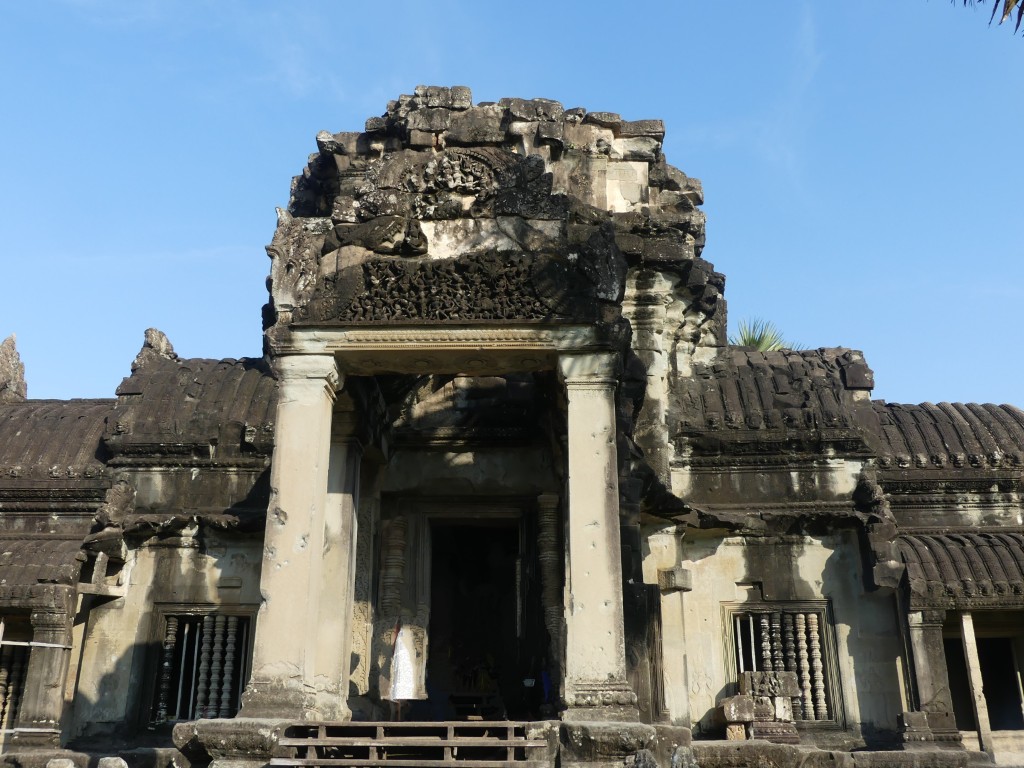


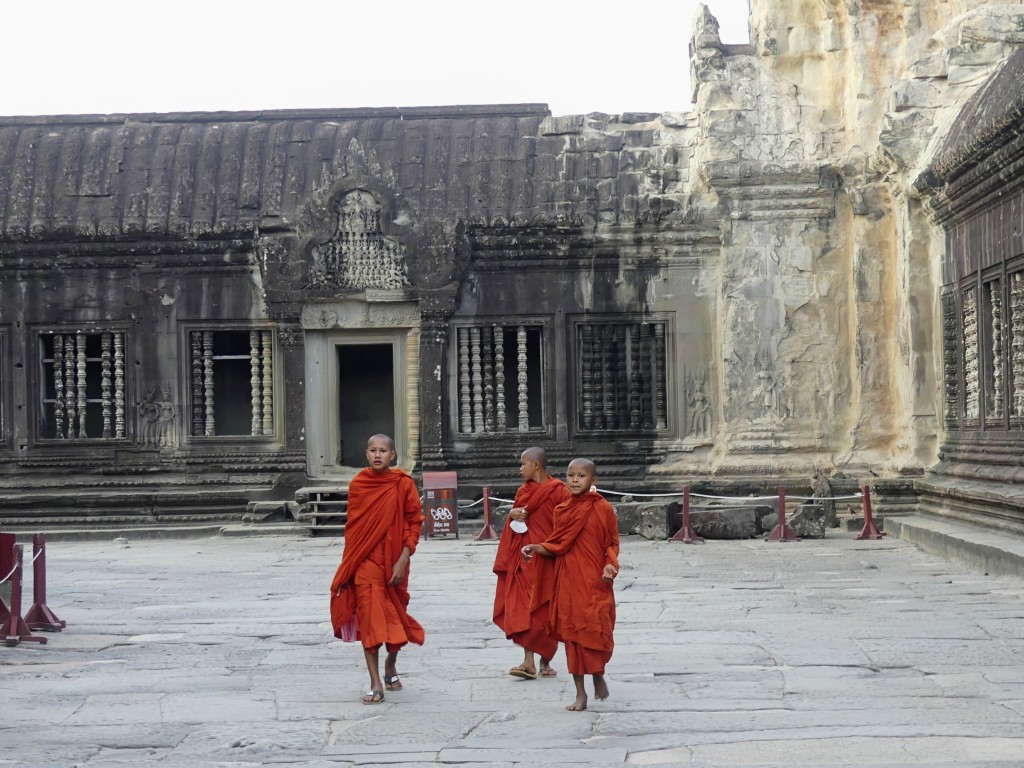
Monks can be tourists, too! Locals can enter for free; the rest of us pay $37 for a one-day pass.
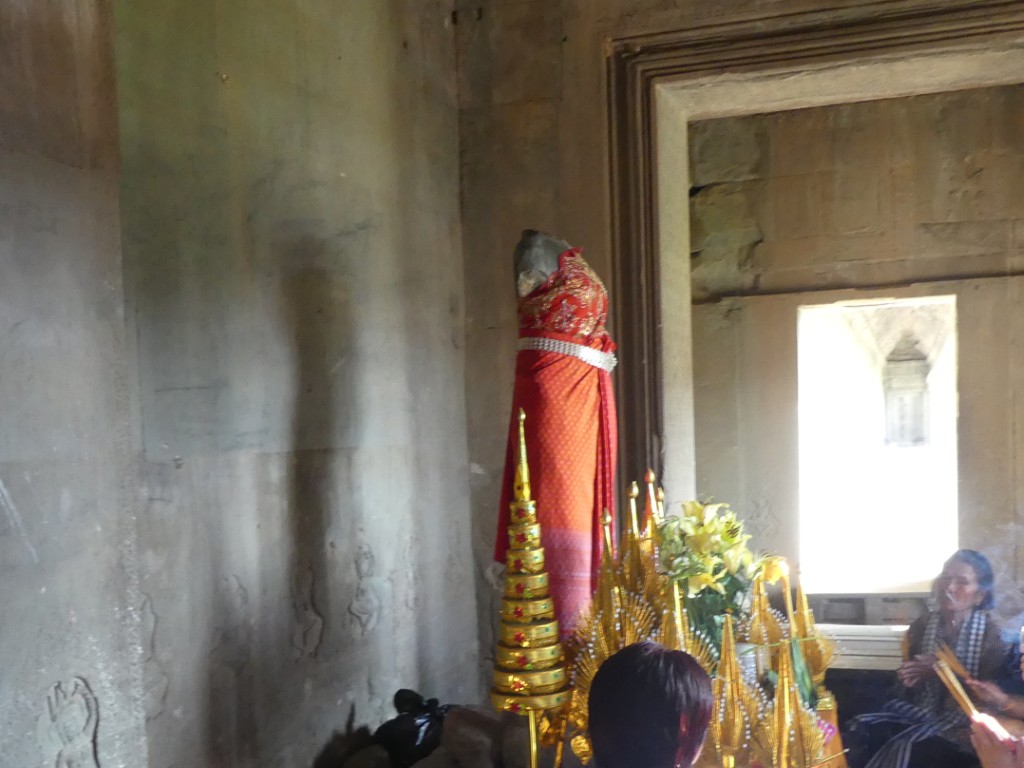
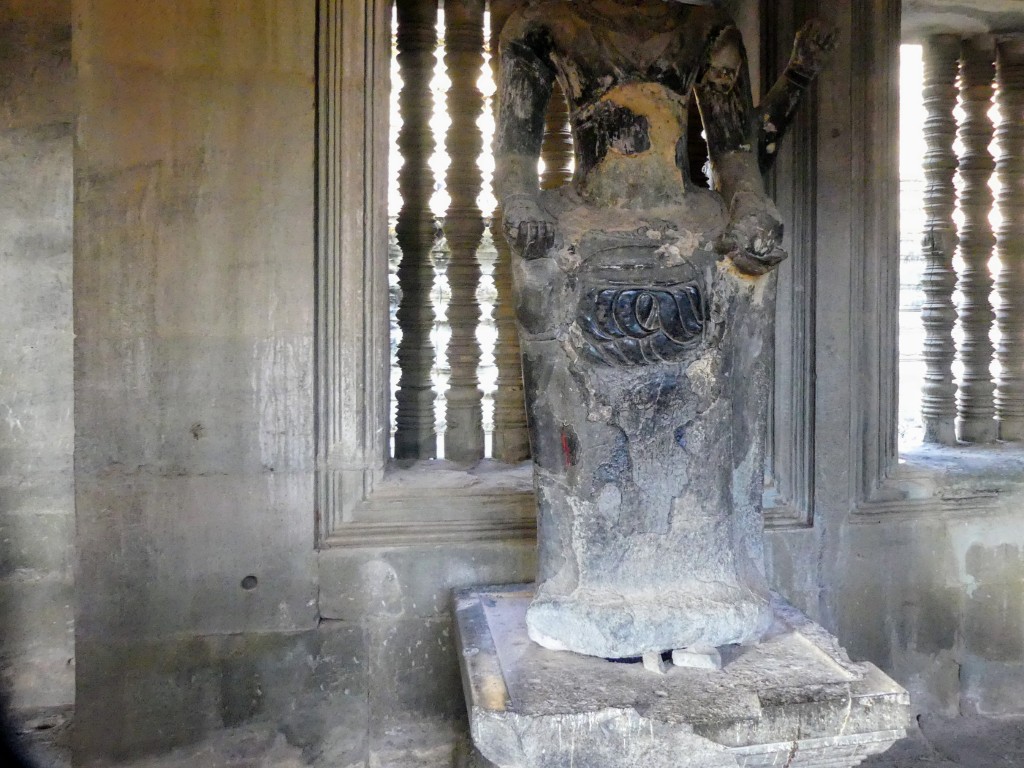
We entered at a place where one could worship (if you choose to). Those worshipping were required to take their shoes off.

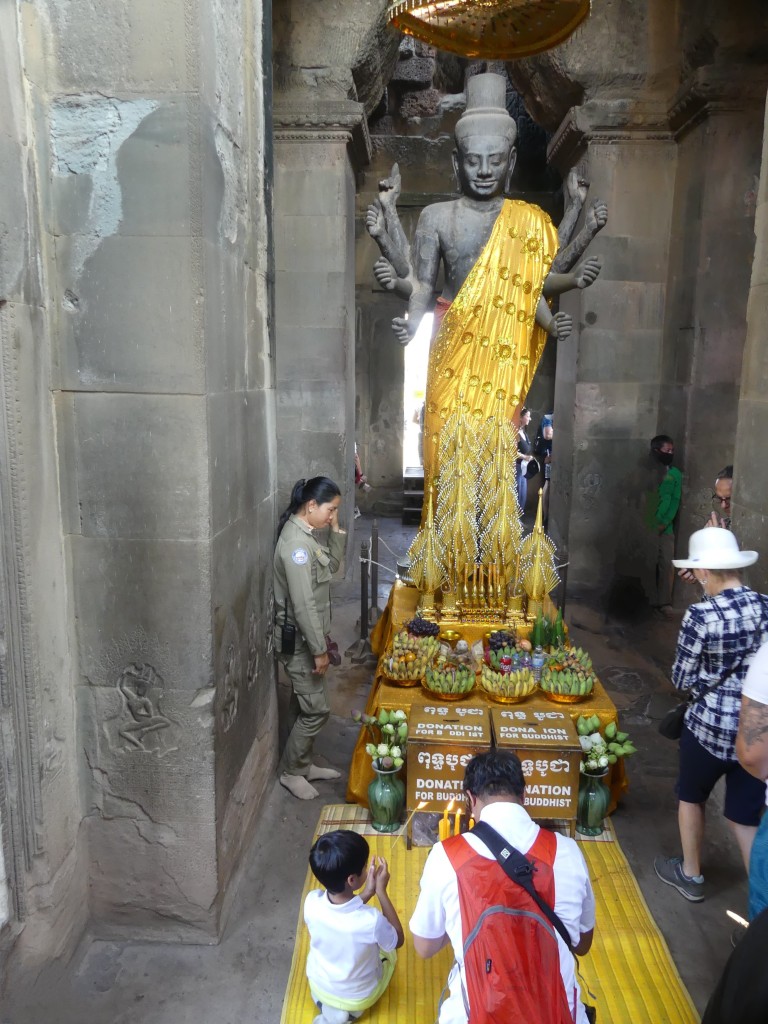
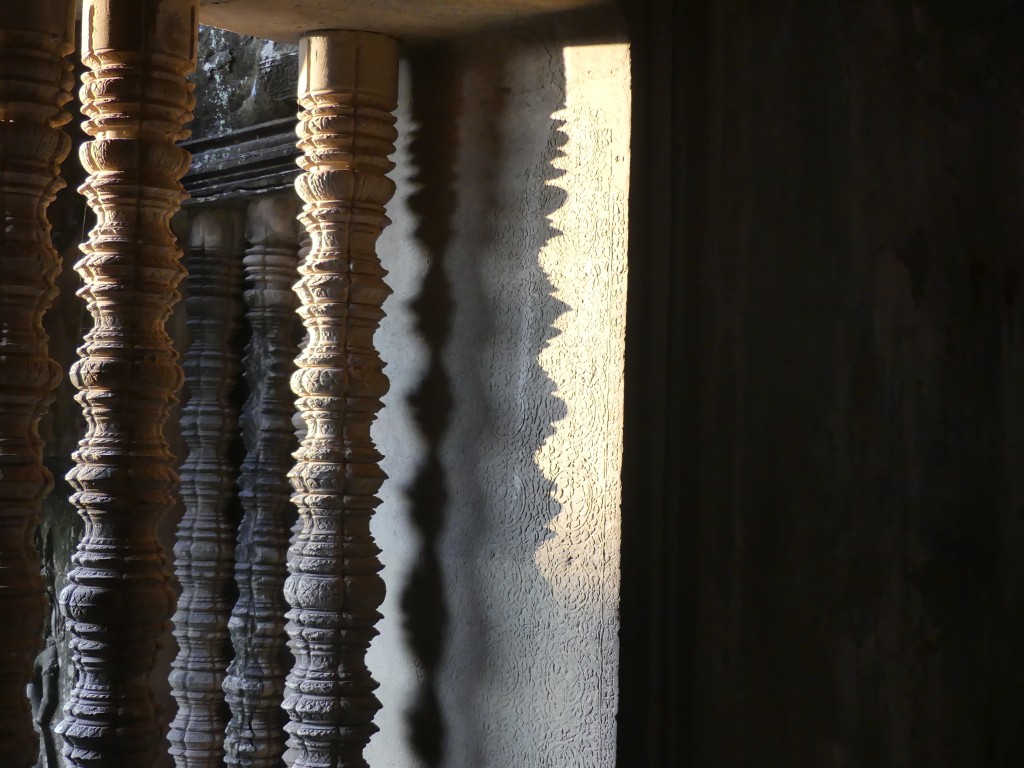
The rest of the visit was spent busily taking pictures.



 travelswithheather