We left Shimla in the morning and retraced our trip from Delhi. In other words, hours of mountainous winding roads, lots of nail-biting driving, and a stop for a buffet lunch before boarding the train. I must reiterate – this trip is not for those that are prone to motion sickness! After lunch, we were dropped off at the train station and continued to Delhi.
The train arrived around 6:30 pm and it was already dark. We had a very long walk from the train to where the bus picked us up. Our suitcases had been picked up and delivered to our hotel separately, but we all had an overnight bag to carry since the suitcases had been picked up the previous evening. Those that had roller bags had the most difficulty; the path to the bus was jam-packed with people and very uneven, hazardous to walk on. It was a relief to board the bus and be dropped off at the hotel. Due to our late arrival, dinner was scheduled for 8:30 pm; way past when we normally eat. Clayton and I skipped dinner and headed to bed early.
As usual, we were up with the chickens (so to speak) and had breakfast when the buffet opened at 7 am. The breakfast buffet was outstanding; so many choices! We boarded the bus at 8:30 to head out for a day of sightseeing.
On our drive to the Friday Mosque, our first stop, our guide reminded us that we are visiting during the 5 days of Diwali, the festival of dark night/lights. He talked about what is celebrated on each of the days. The previous day was the day when people bought expensive items, such as gold, cars, electronics, etc. The day that stuck out to me was day 4, when people make gods out of cow dung!
There are 22 million people in Delhi, it is the second largest city in India and was founded around 5,000 years ago. We learned that the city was divided into two parts – old and new. In 1911, the British king decided to move the capital of India from Calcutta to Delhi and so built a new section of the city, henceforth known as New Delhi. We were to visit Old Delhi in the morning and New Delhi in the afternoon.
We learned about the meaning of some common words, such as maharaja. Raj means rule, raja is a ruler, and maharaja is a ruler of rulers.
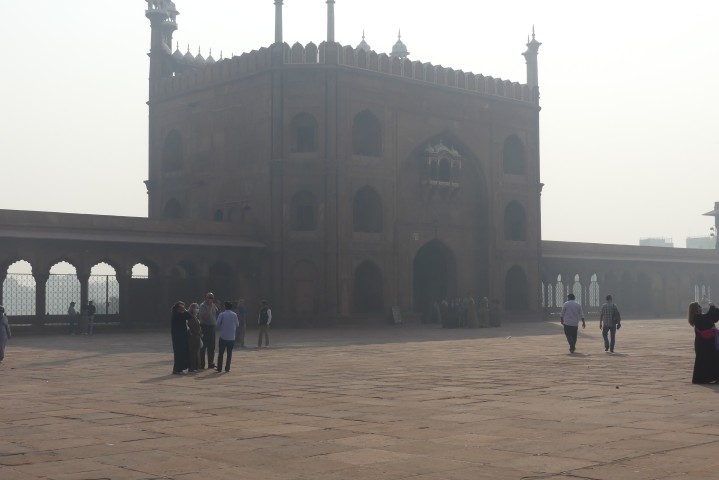
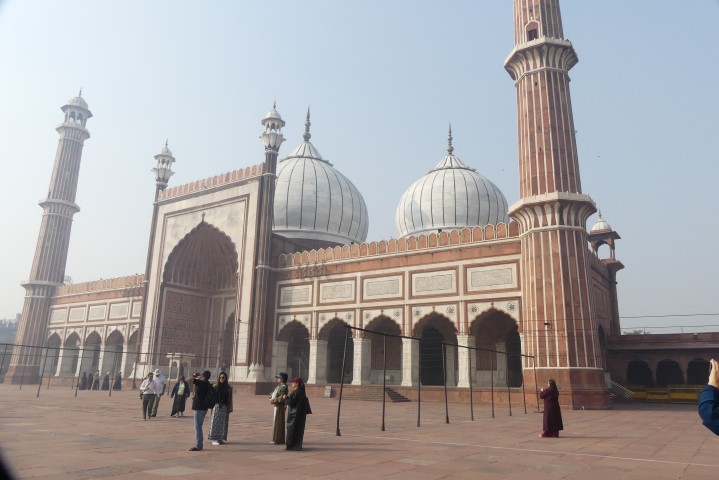
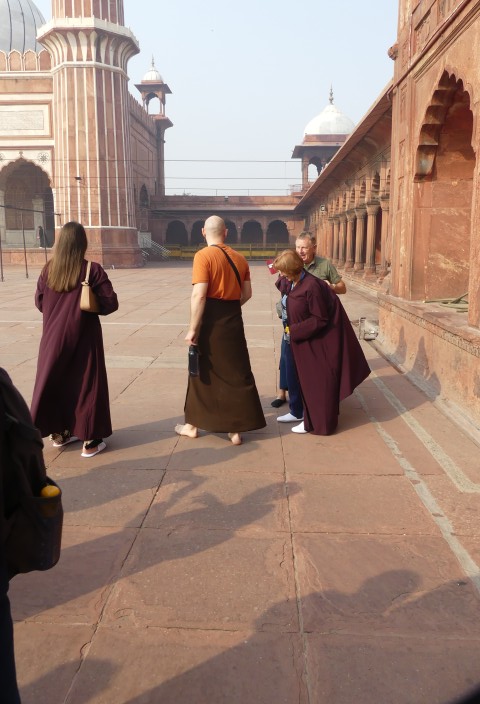
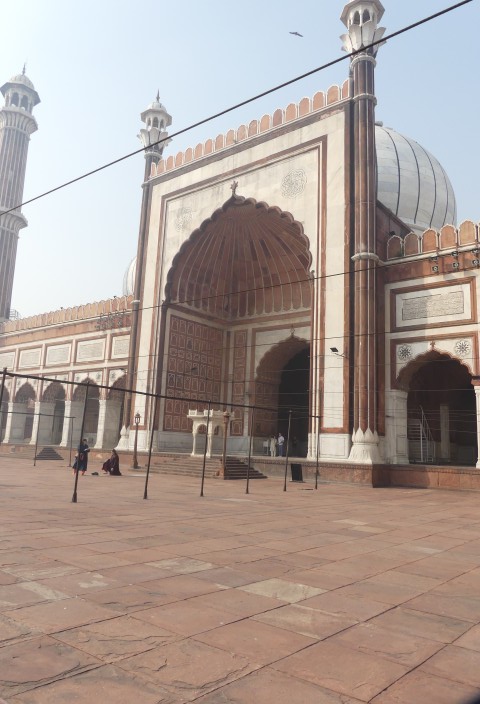
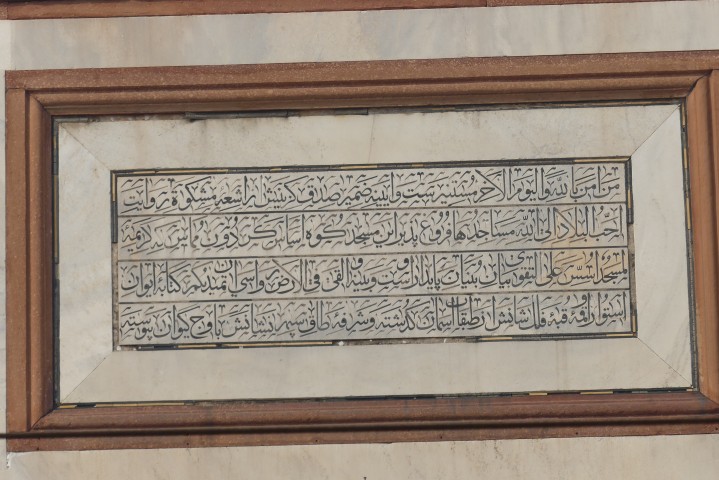
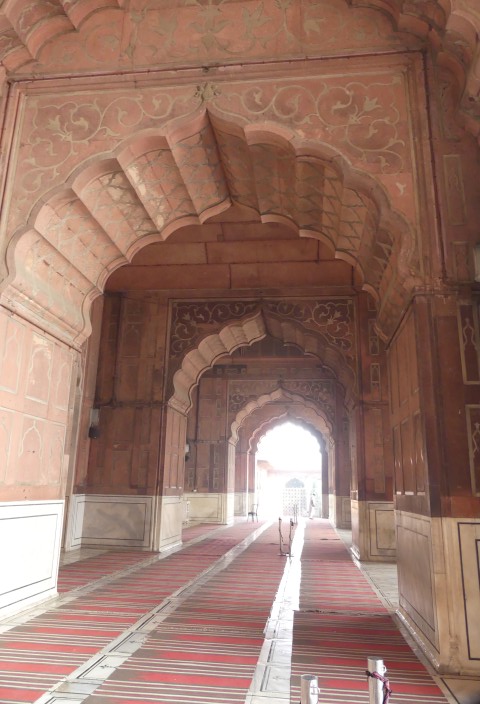
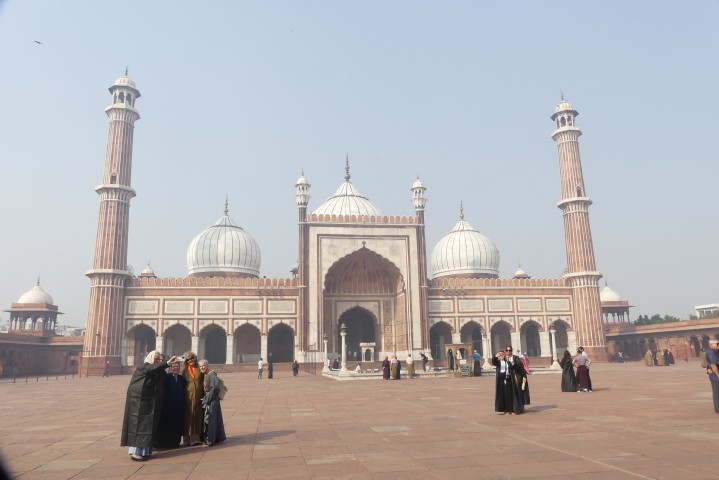
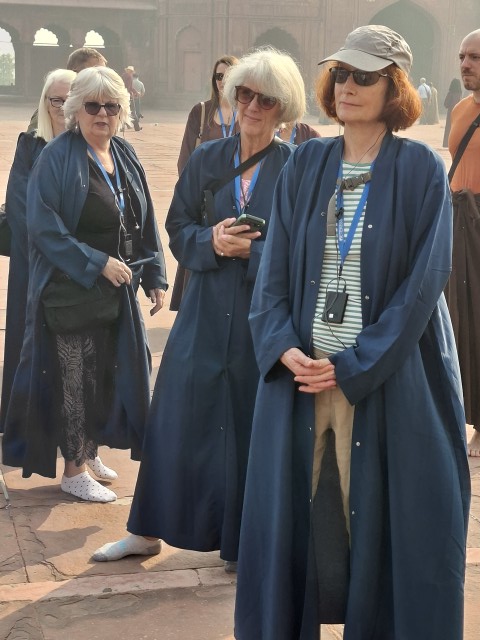
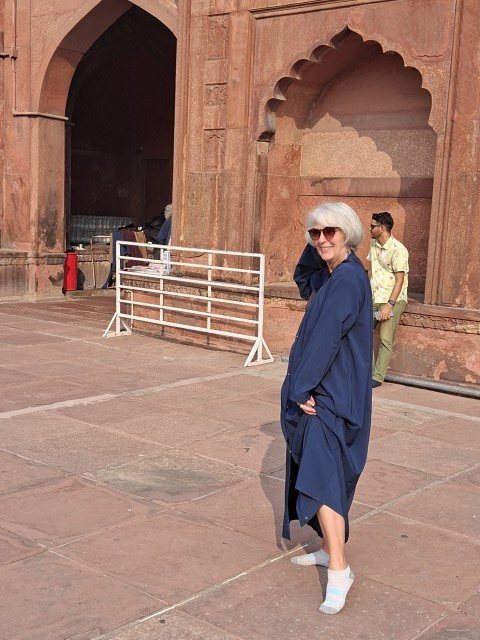
We arrived at the Friday Mosque, more formally known as Jama Jasjid. To enter, shoes had to be removed. Women were required to wear a gown (provided at the entrance), and men wearing shorts were given a sarong to tie around their waists. The mosque is known as the Friday Mosque because Friday afternoon prayer is supposed to take place at a mosque. On the other days of the week prayer can take place at home. It is rare to see women praying here; most pray at home. Apparently, it did not used to be this way. On a typical Friday, there are fewer than 500 men praying but during Eid (the end of Ramadan), there can be ten to twelve thousand. Praying must be in the direction of Mecca so there is an arch that people face that ponts them in the correct direction. In the arch is a platform where the imam leads prayer. The calligraphy and decorations in this mosque are made of inlaid onyx.
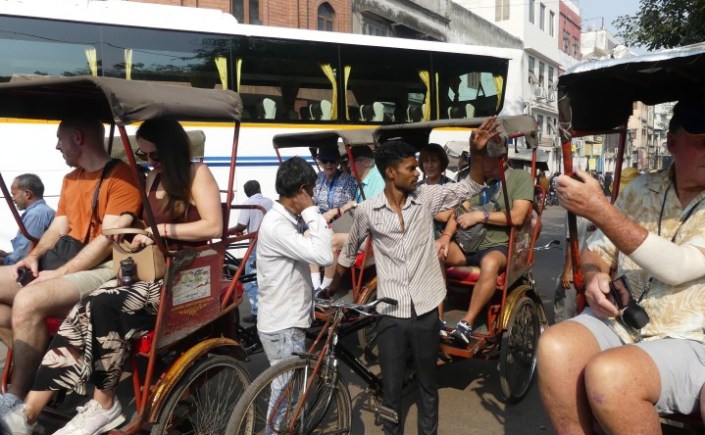
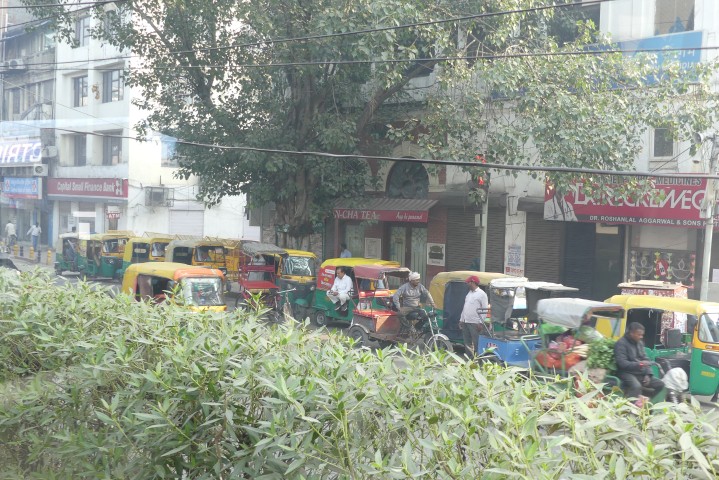
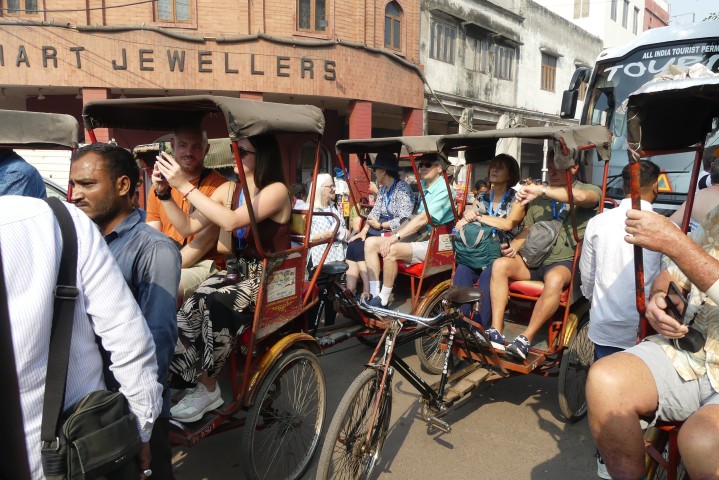
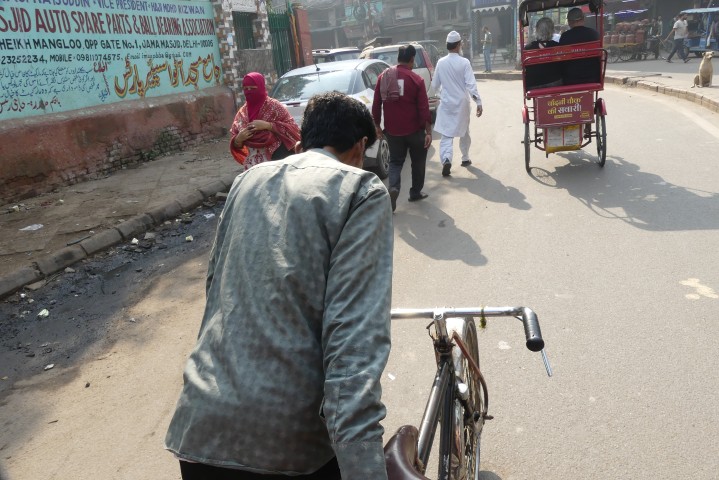
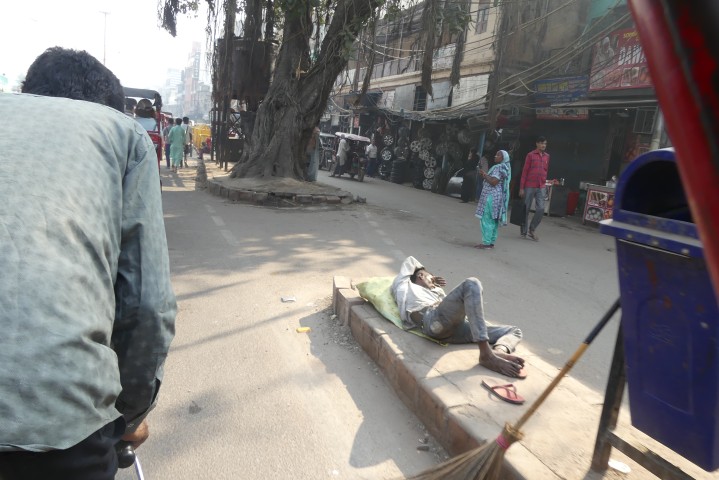
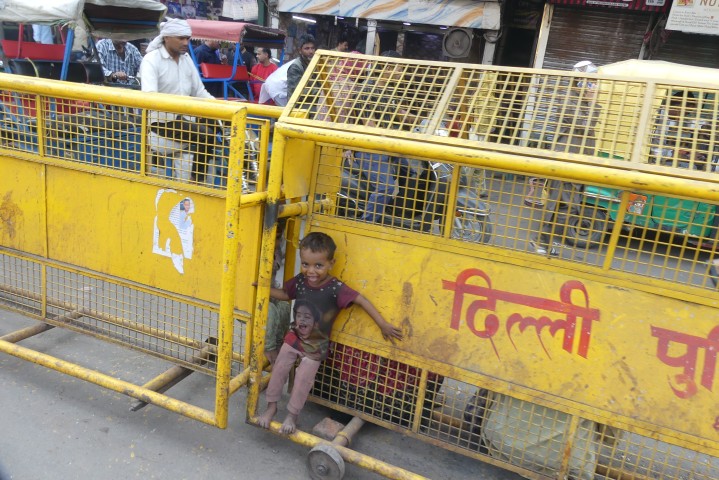
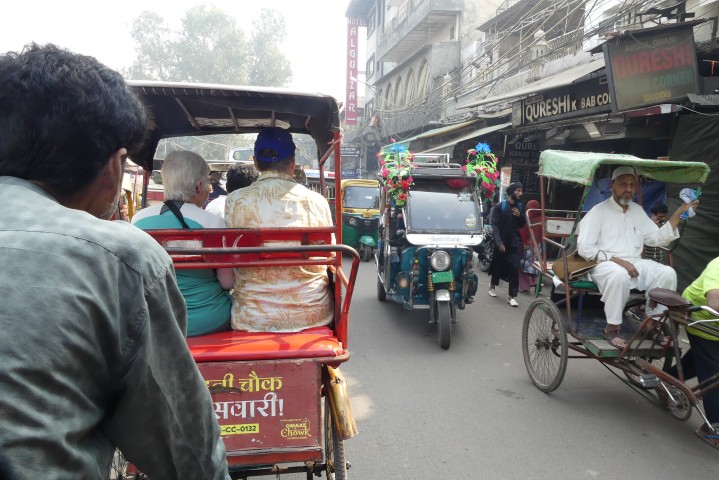
Following the mosque visit, we were given rickshaw rides around the old city. Our driver was definitely new to the game; he could not manage to pedal the bike, so pushed it most of the way. Of course, he wanted a tip at the end of the ride! Others in the group had a more enjoyable experience.
Our next stop was at Rajghat (riverbank), the place where Ghandi was cremated. Cremation returns elements the five elements in the human body to nature and the soul then goes to God. Humans are the top of the chain of incarnations, so a human’s soul will be incarnated into another human.
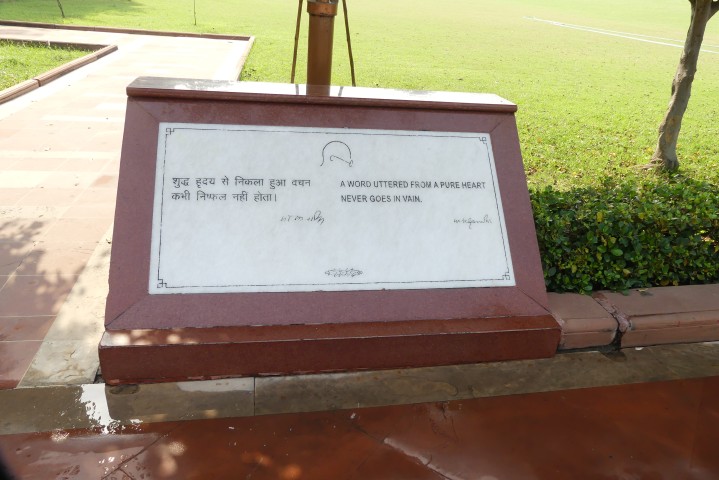
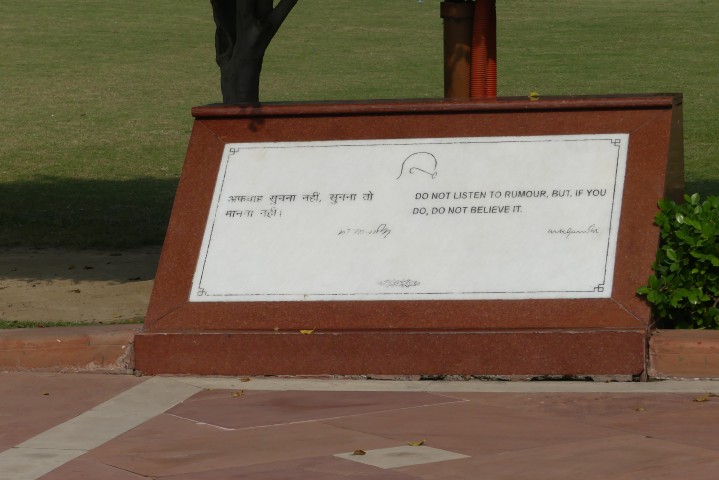
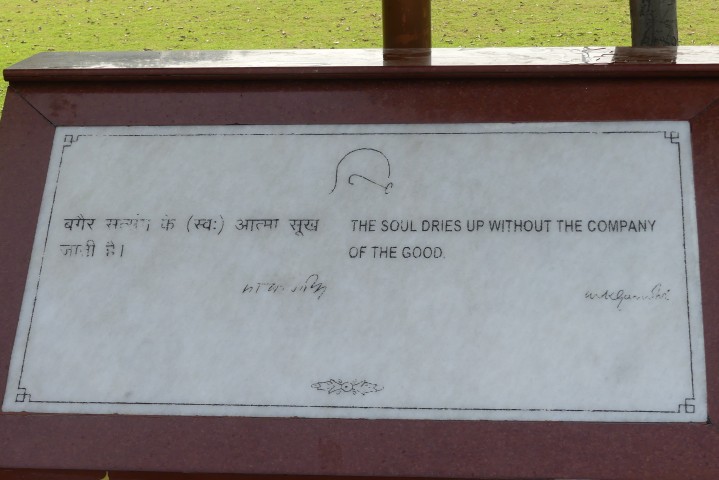
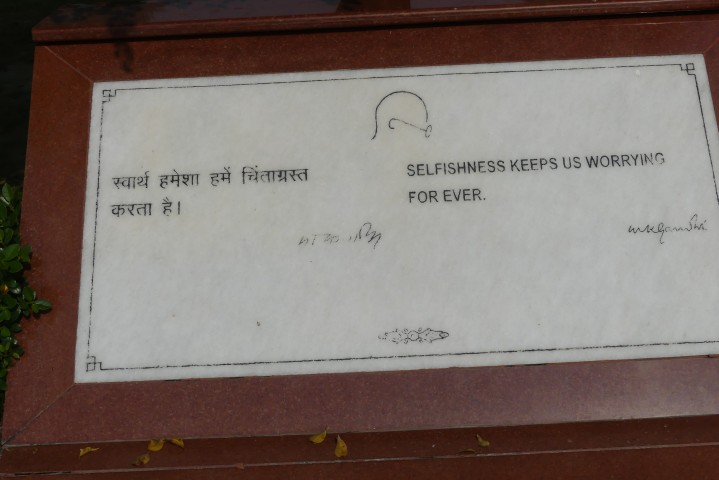
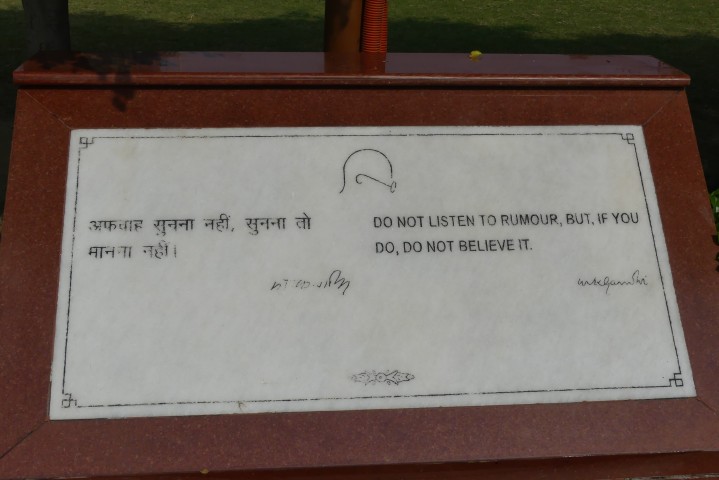
Hindus cremate their dead by placing the body on piles of wood. The eldest son lights the pyre and after three days, the family collects the bones and ashes to be returned to the Ganges River. Ghandi wished his ashes to be strewn in the Himalaya mountains instead. Typically, those in Delhi scatter ashes in the local river since it is a tributary to the Ganges.
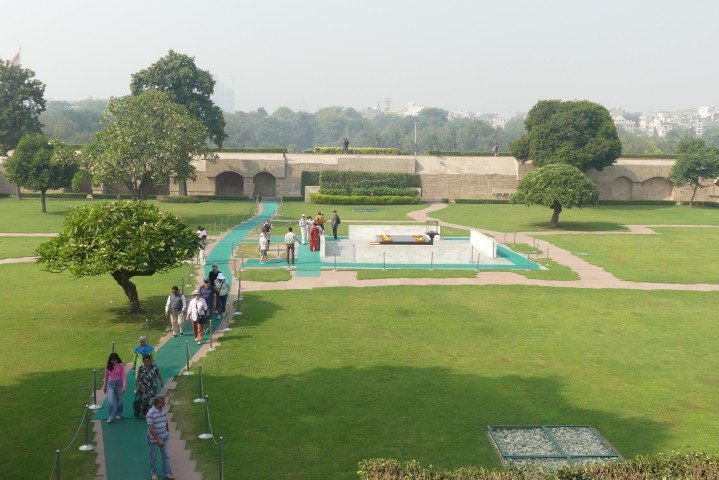
The Mausoleum of Humayun was next on the agenda. This was built during the 16th century by the third Moghul emperor. The tomb is surrounded by gardens (bagh). This philosophy came from the Persians who believed that heaven is having a beautiful garden. The gardens are intersected by four rivers, representing water, milk, honey, and wine. In this garden, the rivers are channels of water. Burial in the mausoleum takes place under the ground, with copies on top so as not to disturb the peace of the deceased.
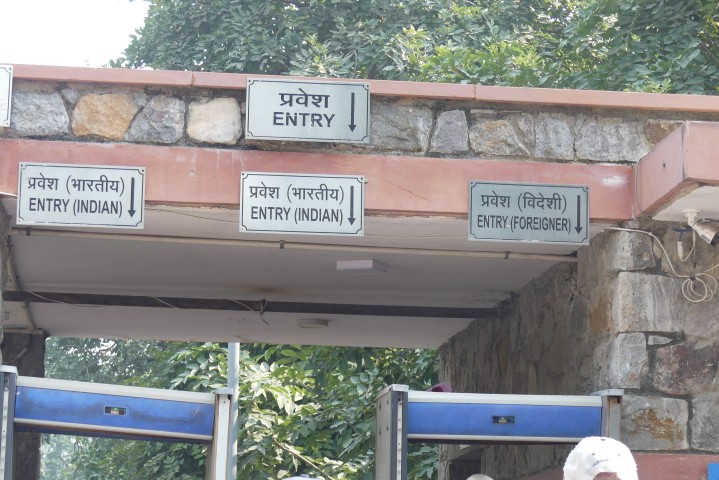
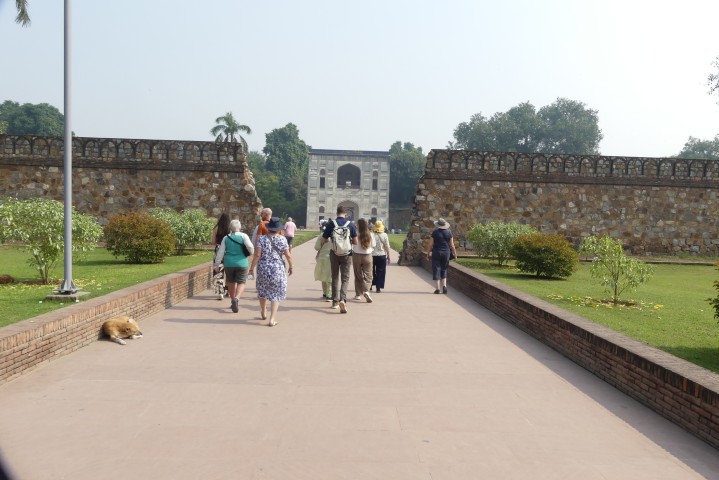
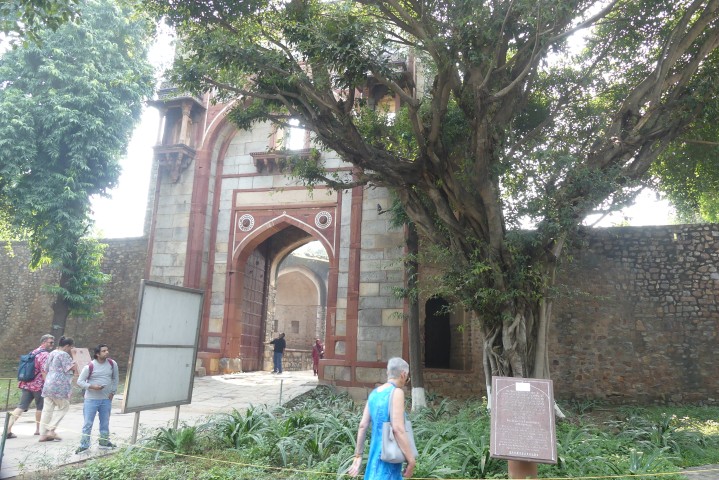
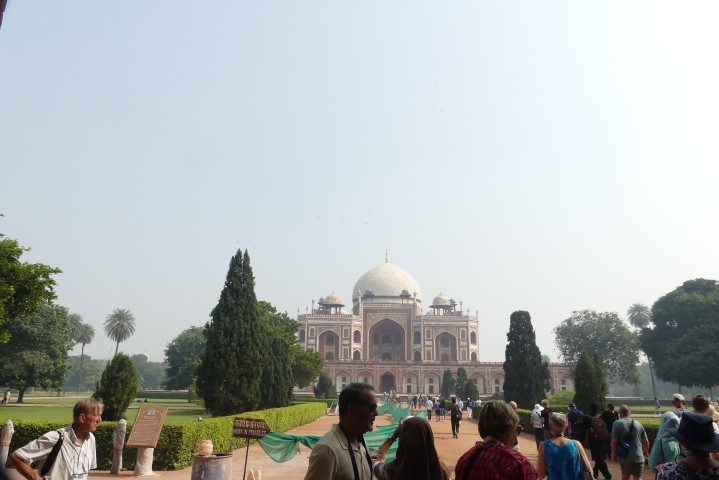
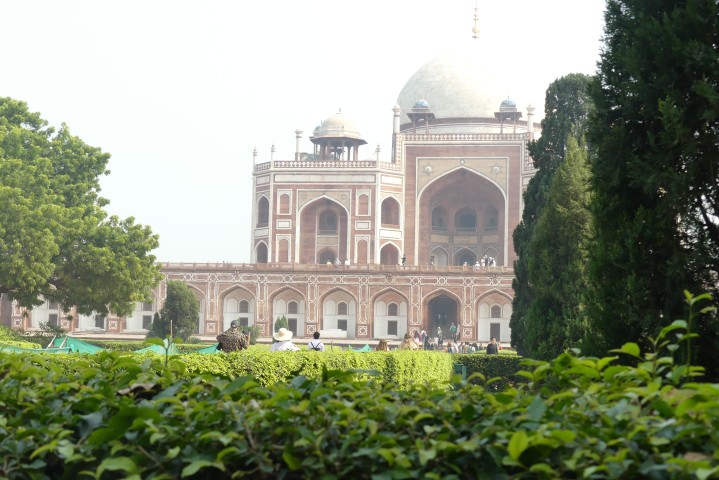
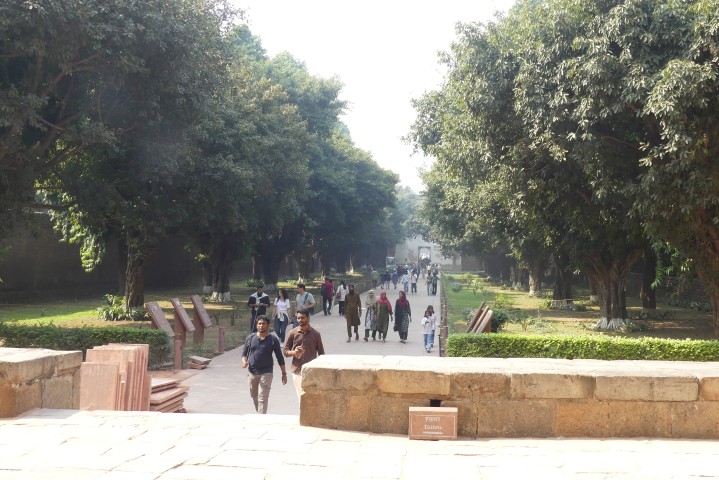
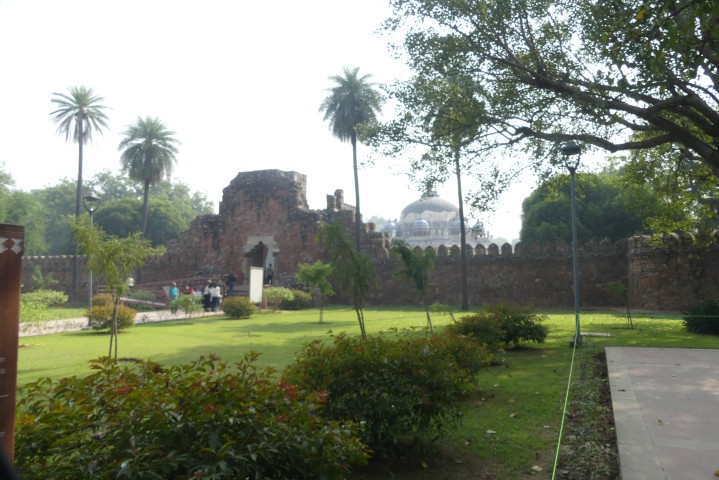
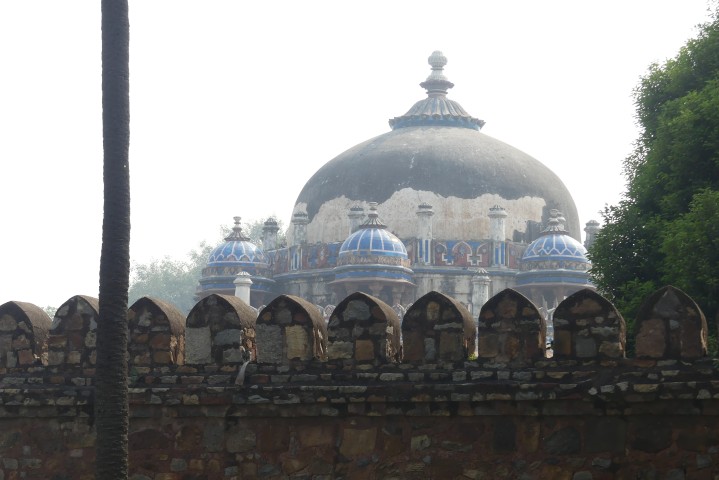
Seen on the walls are six-pointed stars which are two interlocking triangles which look much like the Star of David. The upper triangle represents the trinity of male gods; the lower represents three female gods. We were given some free time here to wander the gardens.
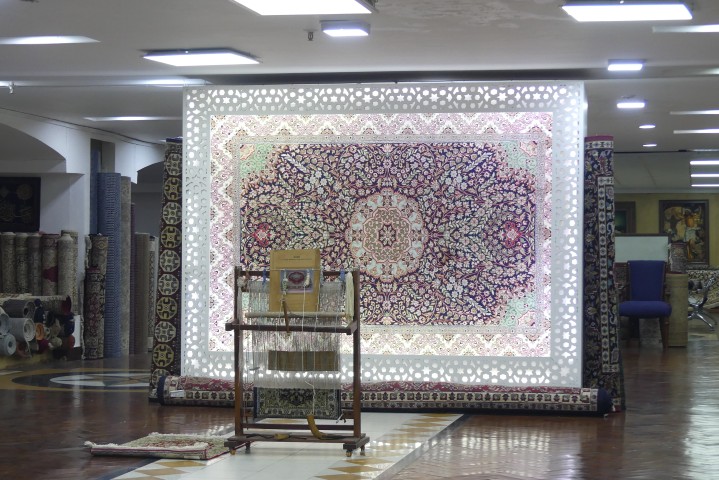
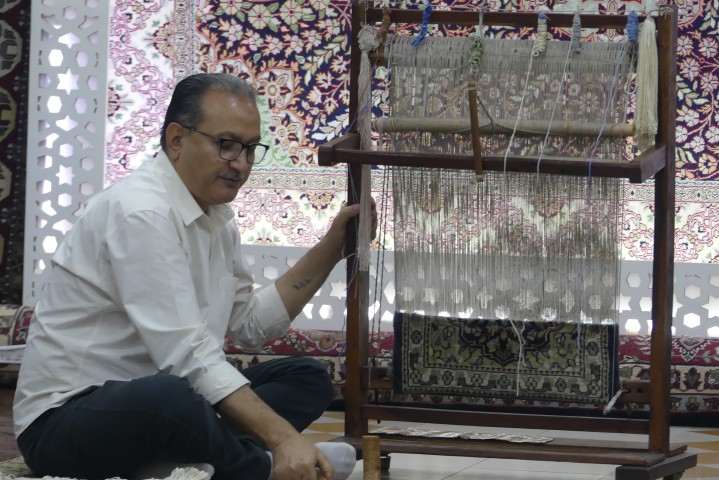
Like any group tour, we had a stop where we had the “opportunity” to shop. This one was a Kashmir carpet shop. We were fed (samosas, pakoras, potato chips, bananas) and given beverages (beer, coke, water) before the shopkeeper demonstrated how hand knotted carpets were made. He explained that these are virtually indestructible – they never fade, never crease, are easily cleaned with Woolite, and are a wonderful investment. He showed us a large carpet that took two and a half years to create as well as some smaller carpets. The carpets were quite beautiful and though not cheap, they did not cost as much as I expected. I think a few people in the group purchased carpets to be shipped to their homes. There was a gift shop upstairs that sold pashmina shawls and silk scarves. Again, beautiful products, but ones I have no use for.
We drove around New Delhi, and the guide pointed out important structures as we passed them. Traffic wasn’t too bad since it was Diwali; many people that would normally be commuting were off work for the holiday.
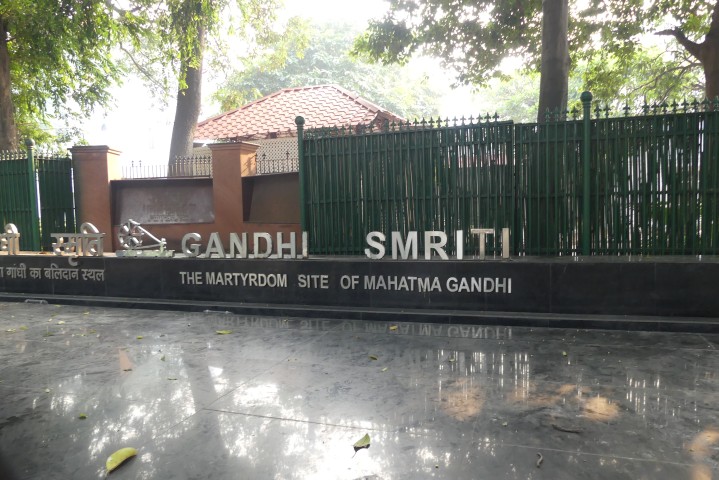
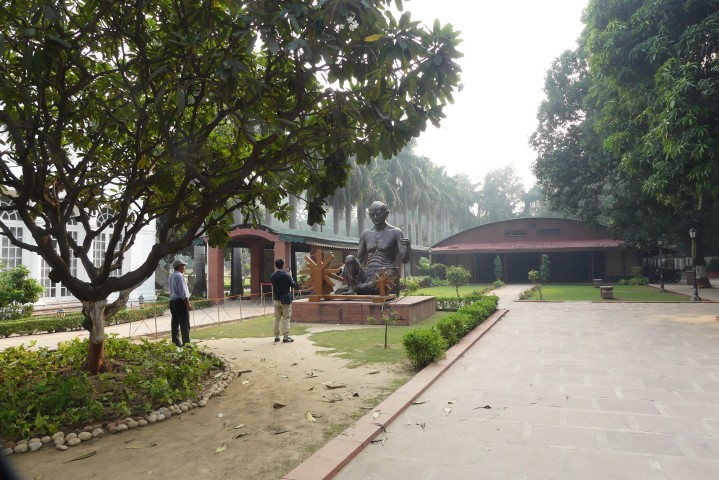
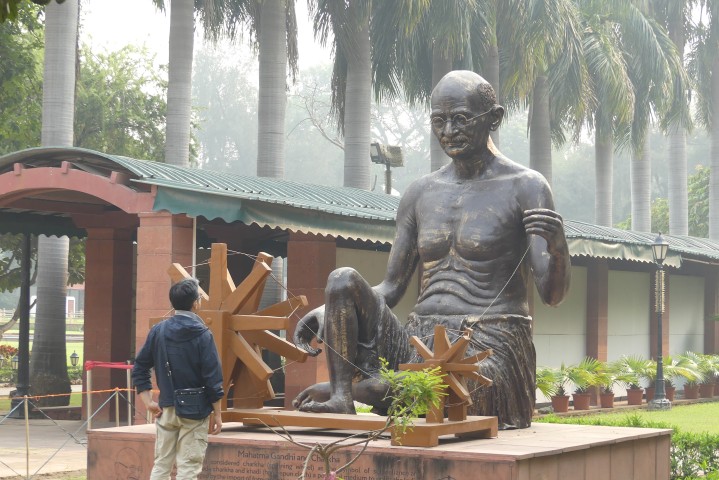
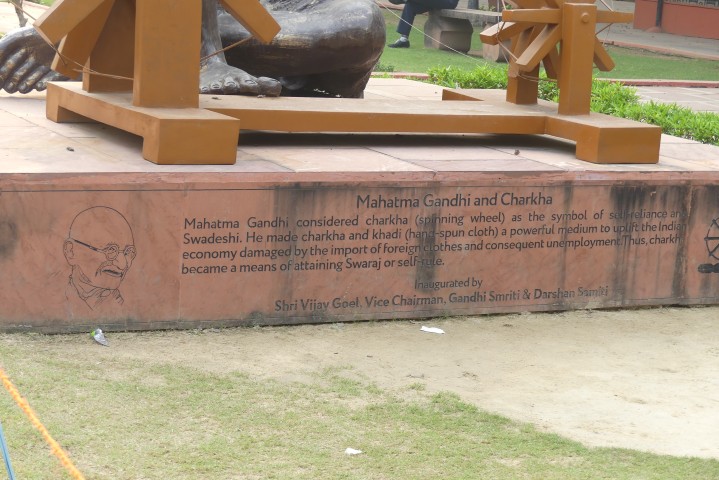
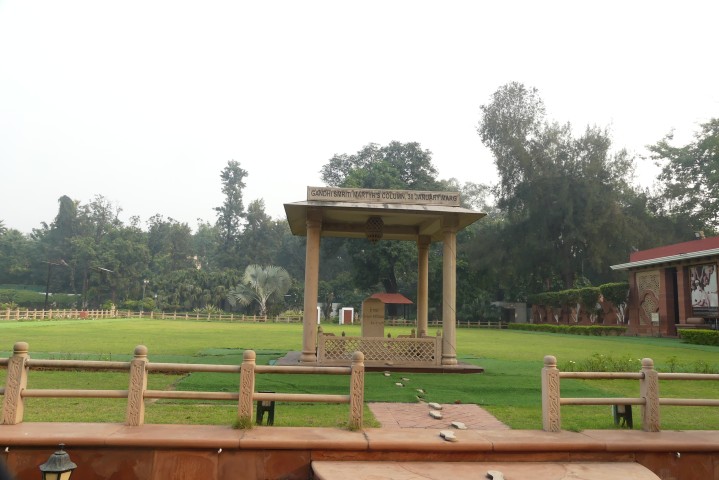
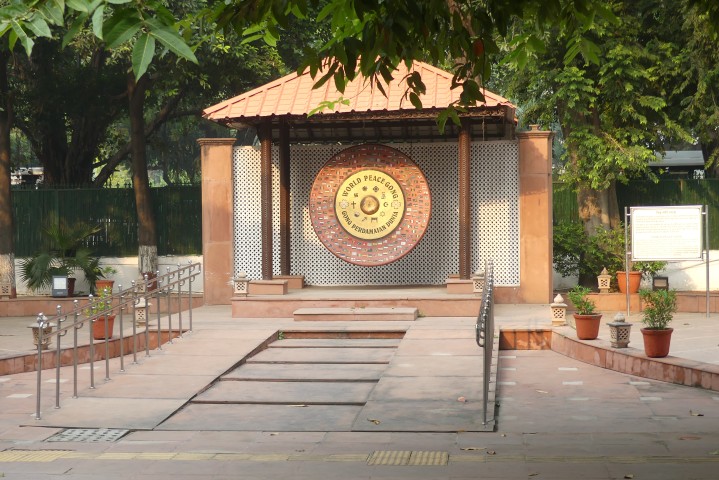
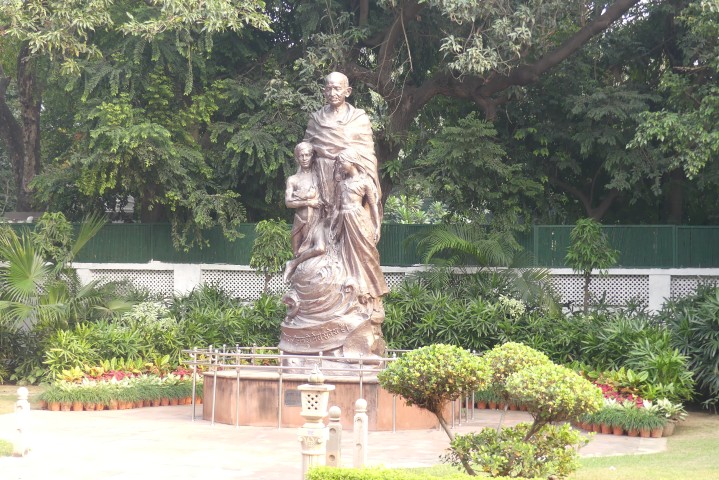
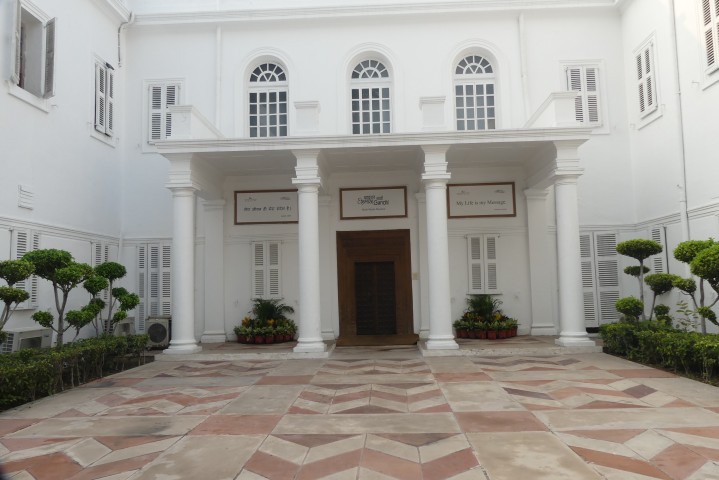
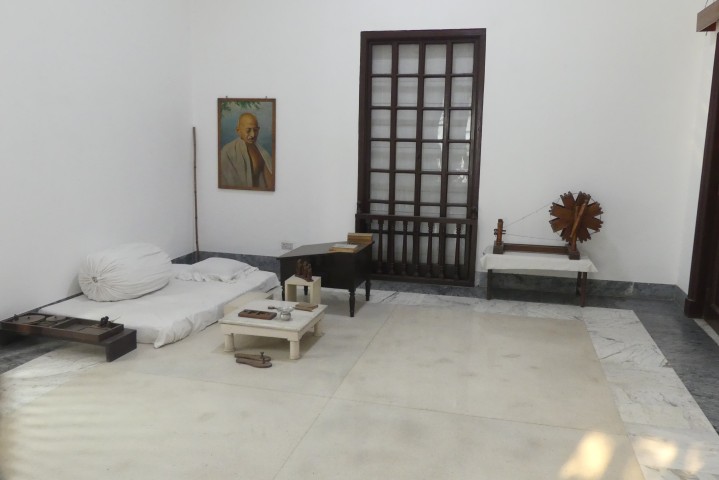
Our final stop of the day was the Gandhi Memorial. We were shown the place where Gandhi lived the last 144 days of his life as well as the place where he was assassinated. Our guide explained that in 1947, India was divided and the Muslims were sent to live in Pakistan. Pakistan itself was in two parts – east and west, which no easy way to get between the two. Over two million lives were lost during the partition as it was a very violent time. Gandhi went on a hunger strike to bring attention to the situation. His assassin thought that by killing Gandhi, he could prevent money being sent to Pakistan. Gandhi had a habit of singing prayers in the garden, surrounded by his followers. The assassin faked getting a blessing from Gandhi and shot him instead – three shots at point-blank range.
After our time at the museum, we returned to the Taj Palace Hotel. Next up, Agra and the Taj Mahal!

