
Our day begins with a group meeting with our tour guide, Don. Forty is the maximum number on a Gate 1 Tour; we will have 39 (one guy canceled at the last minute). Due to storms on the east coast of the US, five people have not arrived yet. Three arrive one day late (one of them sans luggage) and the final two arrive two days late.
Unlike our prior experiences with Gate 1 Tours, we will not be carrying around “whispers” to hear what Don is saying. I have mixed feelings since I am a bit hard of hearing but will not miss carrying the unit around my neck. He emphasizes being safe in our environment. Unfortunately, crime is common in South Africa, which is one of the reasons we chose to sign up for a group tour as opposed to seeing the country on our own. He immediately emphasizes to “Never, never, ever, ever let someone help you at an ATM!”. Unless, of course, it is Don. South African people are very, very friendly but I think anyone with common sense would not allow a stranger to assist them with taking money out. Nonetheless, it becomes a mantra of our group at each stop.
Our agenda for the day:
Cape Town City Tour (by bus)
Company Gardens
Signal Hill
V&A Waterfront
Normally, a visit to Table Mountain would be included but it is closed for renovations every August. As a goodwill gesture, Gate 1 is giving us each a debit card in the amount of what would’ve been the admission fee for the Table Mountain cable car. It must be spent at the V&A Waterfront which is where our tour ends.
Don is quite a historian and during all of our bus rides, filled us in on the history of the country. Today, we learned about the origins of Cape Town as we drove around.
Cape Town is the 2nd largest in South Africa (Jo-Burg is largest) but Durban is expected to take over the #2 spot when the next census is taken. It is known as the “Mother City” since it is the oldest city in the country.
Bartholomeu Dias was the first explorer to “round the cape” in 1488. At the time, the only human inhabitants were migrant tribes. By 1652, The Dutch East India Company had set up in Cape Town to provide provisions for sailing ships going from the far East to Europe. This is how Cape Town got its start as a thriving city.
We passed many green acacia trees (here and everywhere else we went). These were called fever trees, as the original inhabitants believed it was the trees that caused malaria. Tribal people here believed that the trees helped cure malaria. We also passed by a Woolworths. Oddly enough, in the US, Woolworths was a dime store. Here it is a high-end market and unlike in the states, is still in business.
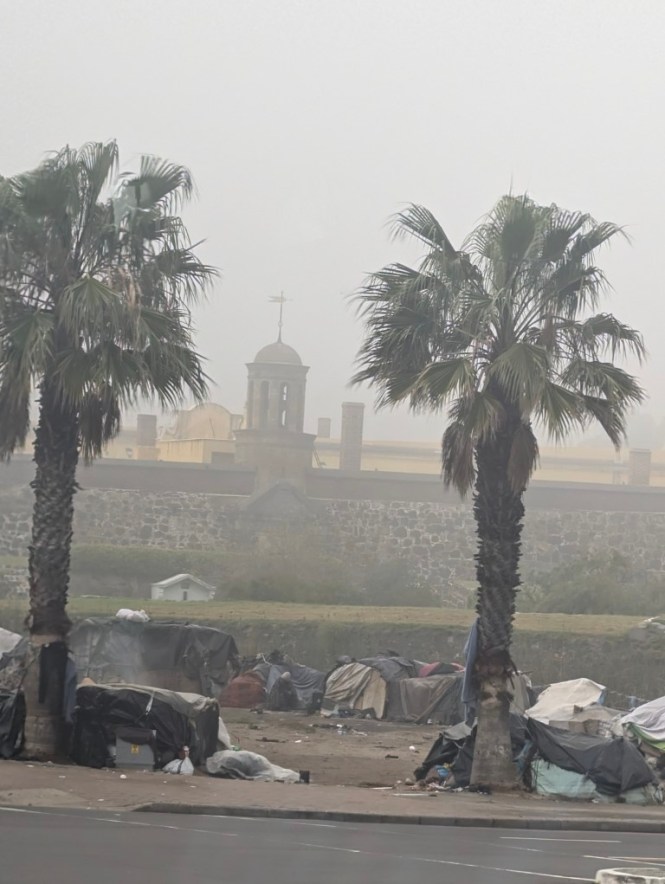
We passed by the Castle of Good Hope, the oldest building in Cape Town, built by the Dutch East India Company. As you can see, there is a homeless encampment in front of it.
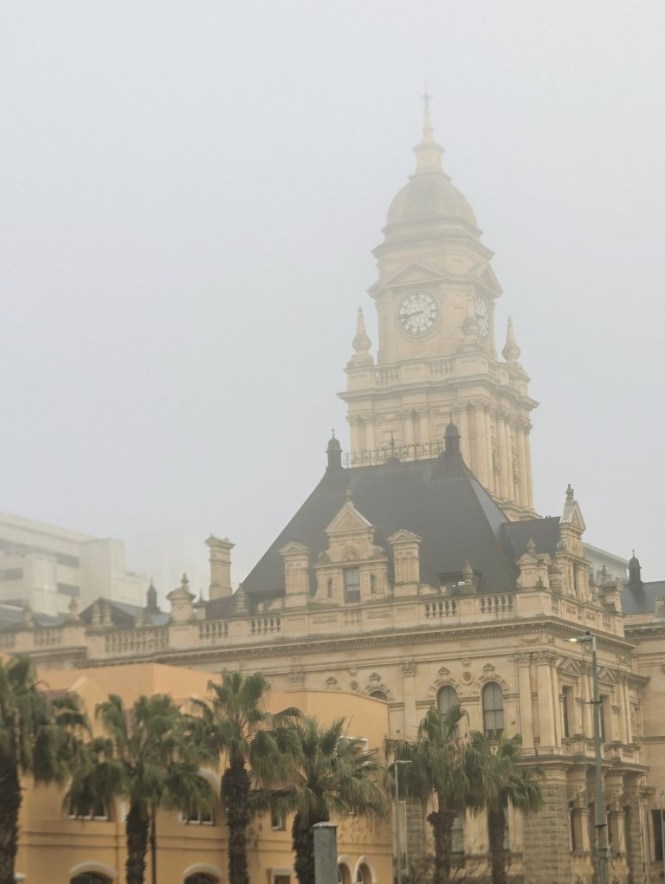
We also passed by City Hall, where Nelson Mandela gave a speech upon his release from prison.
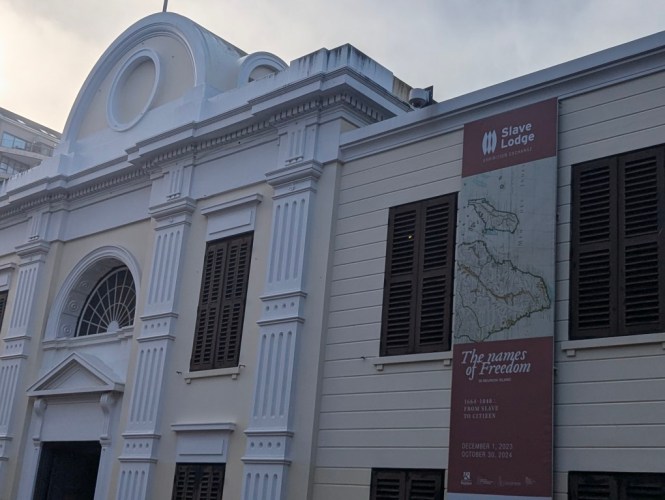
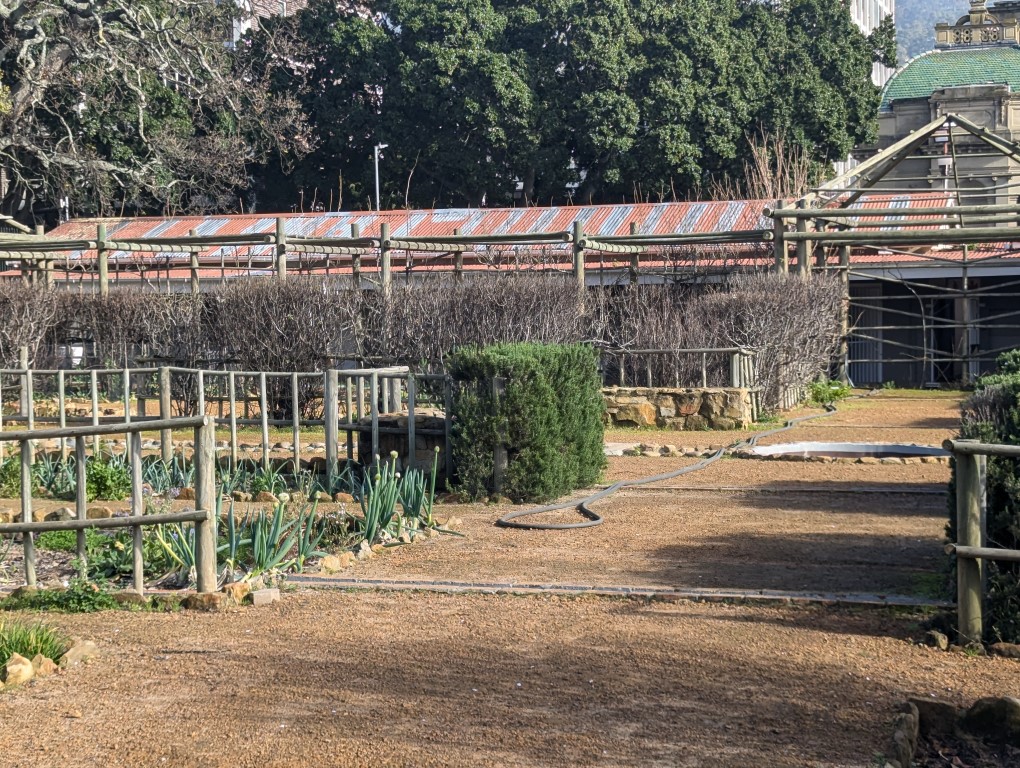
Our first chance to get off the bus was the Company Gardens, which was established by the Dutch East India Company with the goal of providing fresh vegetables to the settlement as well as to passing ships. Near the entrance is a Dutch Reformed Church; attached to it is a Slave Lodge. I guess the good Christians could go to church on Sunday and then trade slaves immediately afterwards.
We learned about the original 2000 Dutch settlers that had been brought by the Dutch East India Company to supply ships with fresh food on a 15-year contract. Many stayed at the end of their contract and became known as the Afrikaans, currently comprising 50% of white South Africans.
Most of the Dutch that settled in Cape Town were uneducated, illiterate farmers. When the British arrived and took over the Cape Colony, English became the primary language and children were supposed to be sent to school. Dutch farmers resisted.
During this time, Jan Smuts was born. Though he was Dutch, he was sent to school and ended up being a stellar student, so stellar that he was sent to Cambridge for college. He was one of the top 3 students ever: Lord Byron and Sir Isaac Newton being the other two. He had numerous accomplishments in his lifetime, including becoming prime minister twice, authoring the Treaty of Versailles, helping to create the League of Nations and also the United Nations. Unfortunately, he was also a proponent of racial segregation. His statue is at the entrance to the Company Gardens.
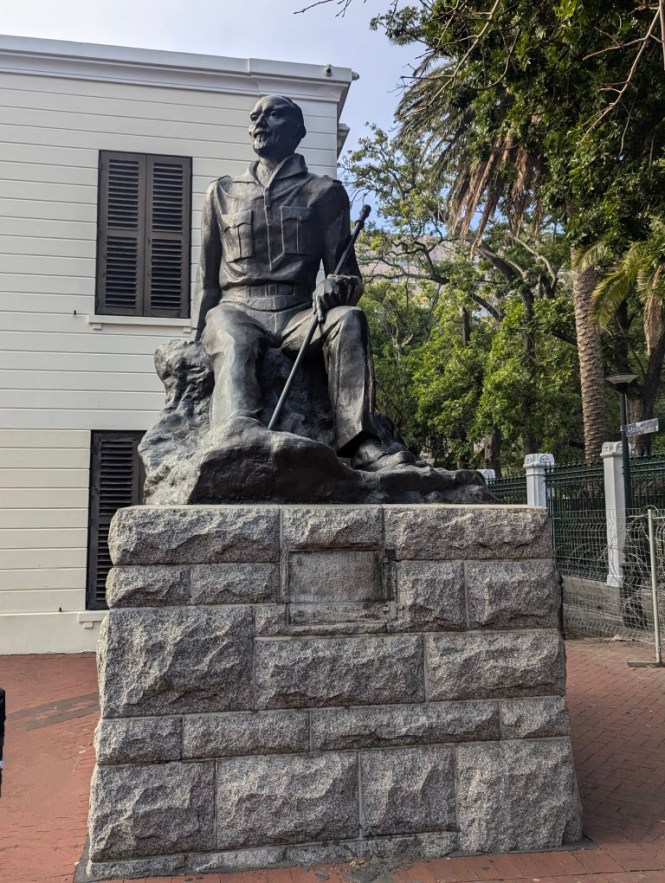
Just past the statue is the actual entrance, known as “The Arch”, named after the Archbishop of Cape Town, Demond Tutu. To the right of the arch is St. Georges Cathedral, the oldest Anglican Church here. Some of the plaques at the entrance have been stolen to be sold to buy drugs. The plaque on Smuts’ statue was also missing.
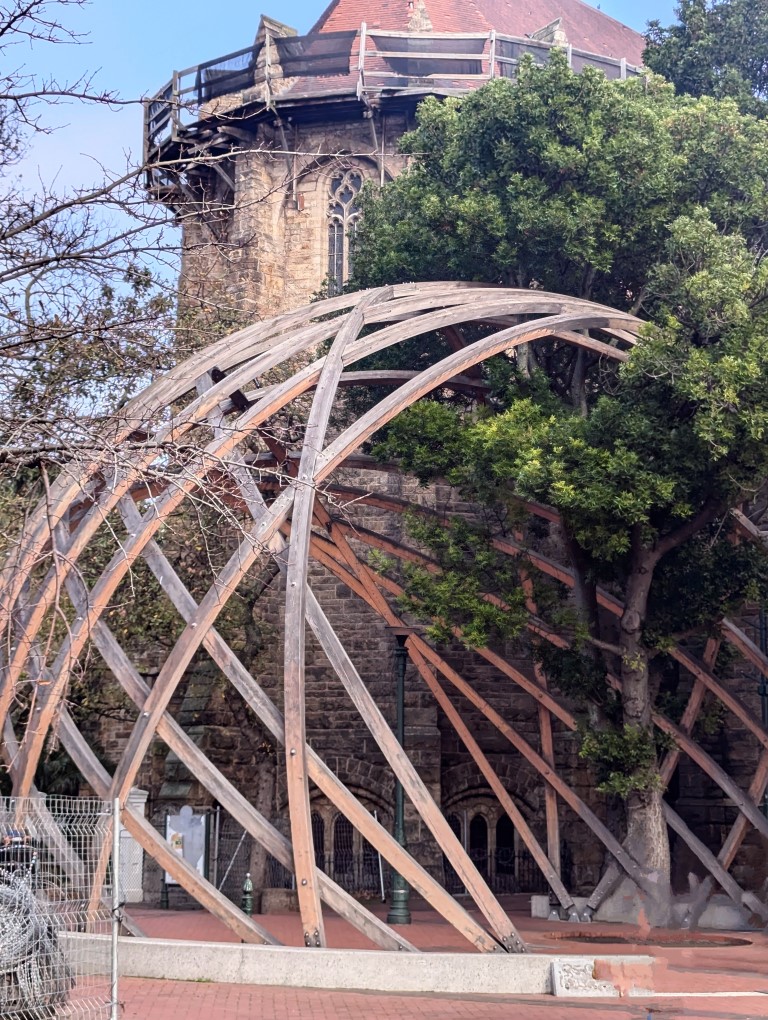

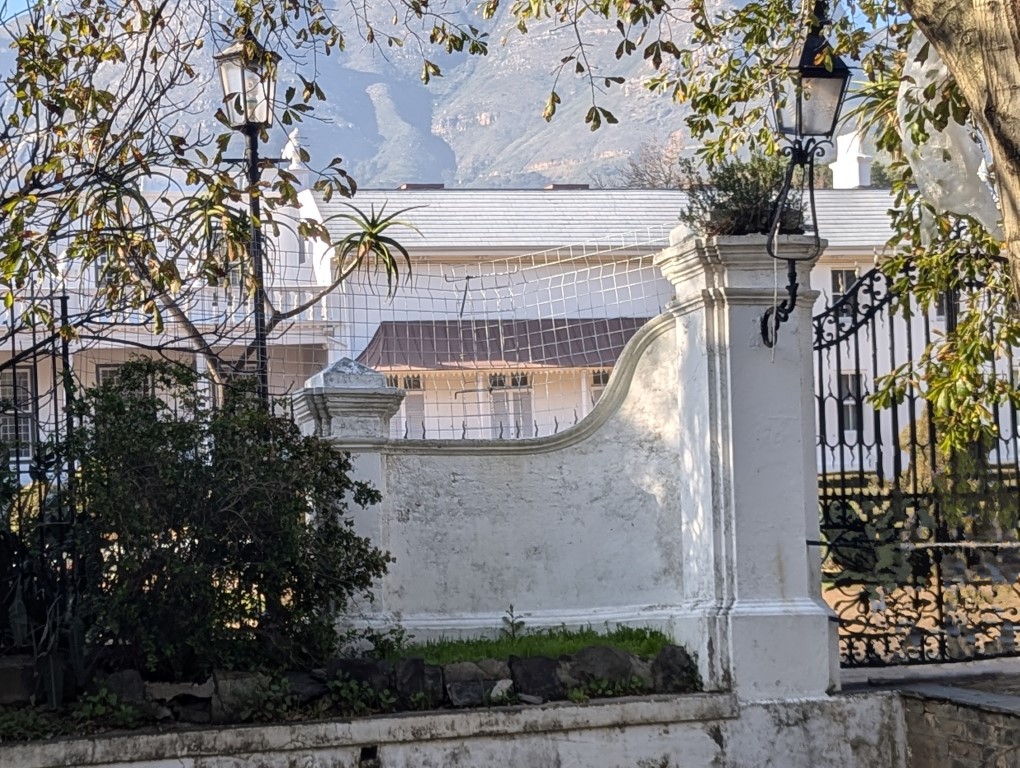
South Africa’s Legislative buildings are located in the Company Gardens. Did you know that South Africa has multiple capitals? Cape Town is the Legislative capital; Pretoria is the administrative capital; and Bloemfontein is the judicial capital. Don mentioned there were four capitals, but I did not write down the fourth and Google didn’t want to help me out! As you can see, there is extra fencing around the buildings for protection.
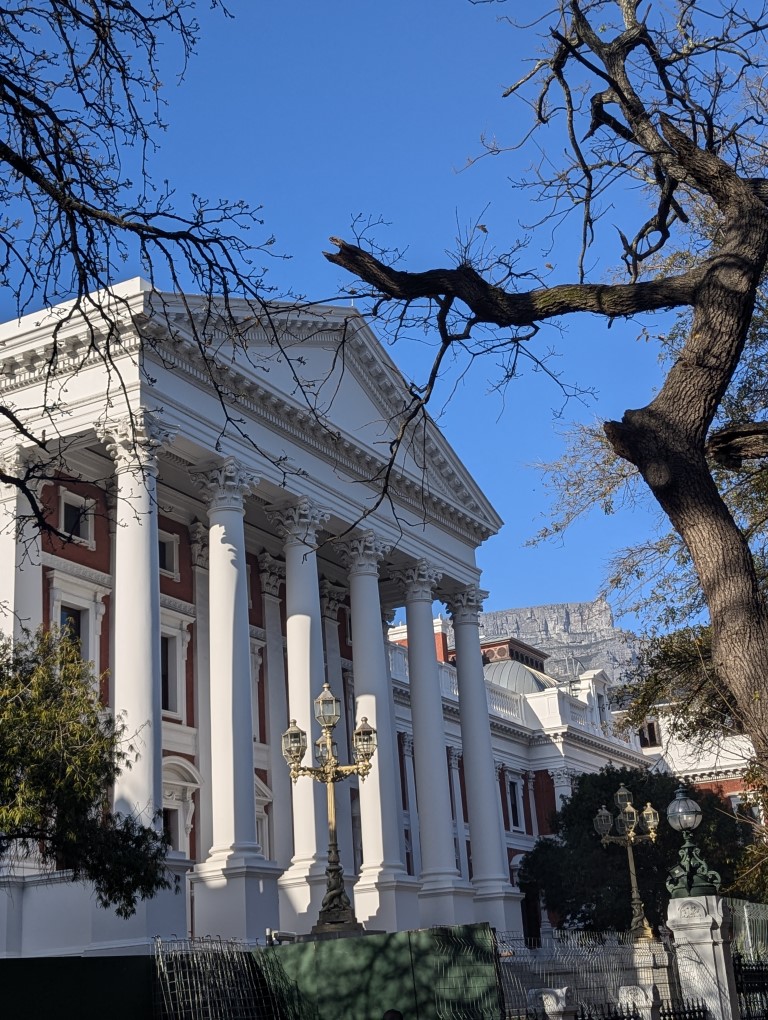
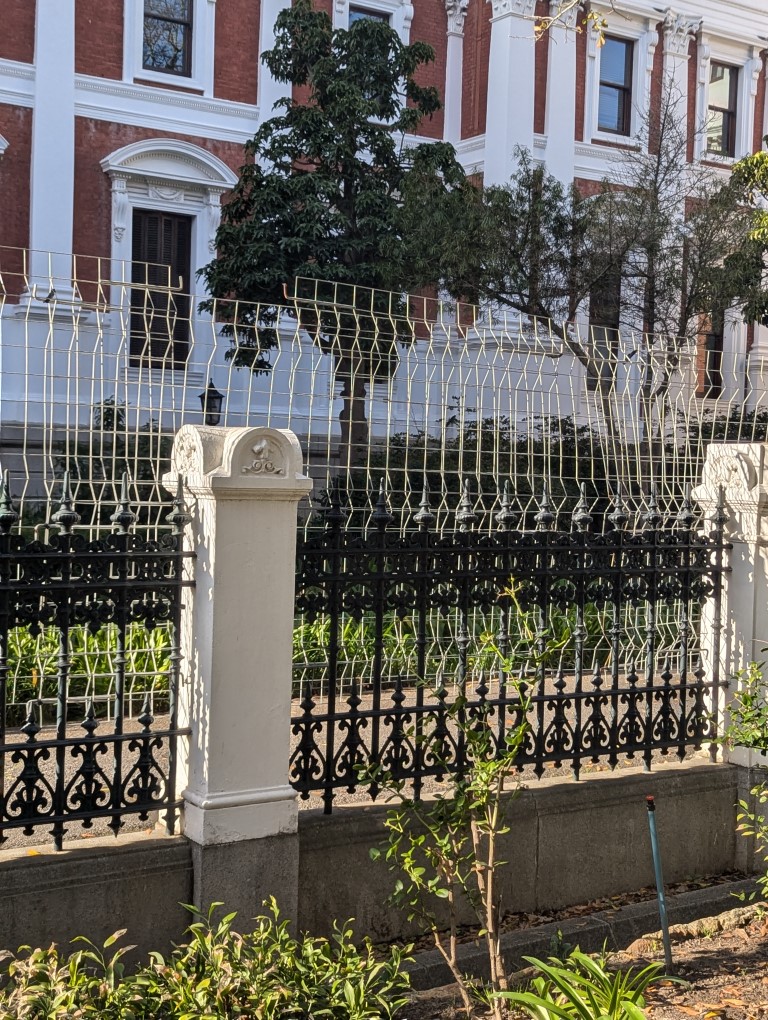
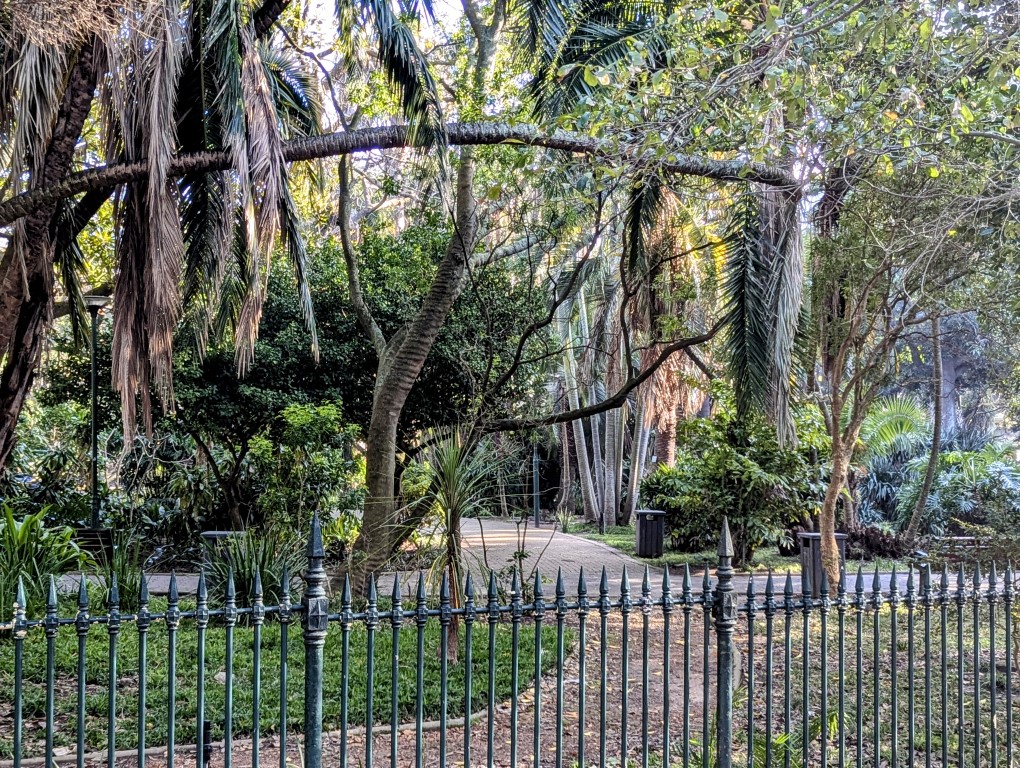
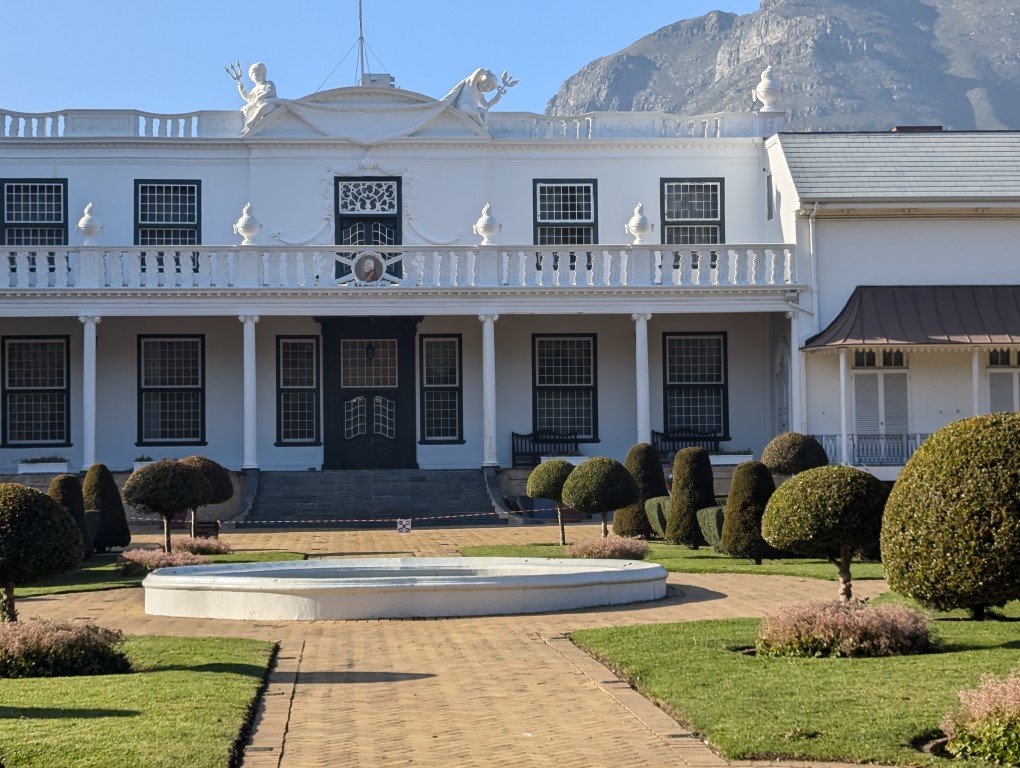
We walked past Tuynhuys which is where presidential dinners with dignitaries are held.
Ninety percent of the trees in South Africa are imported; few grow here naturally. Most of the imports are either pine or eucalyptus.
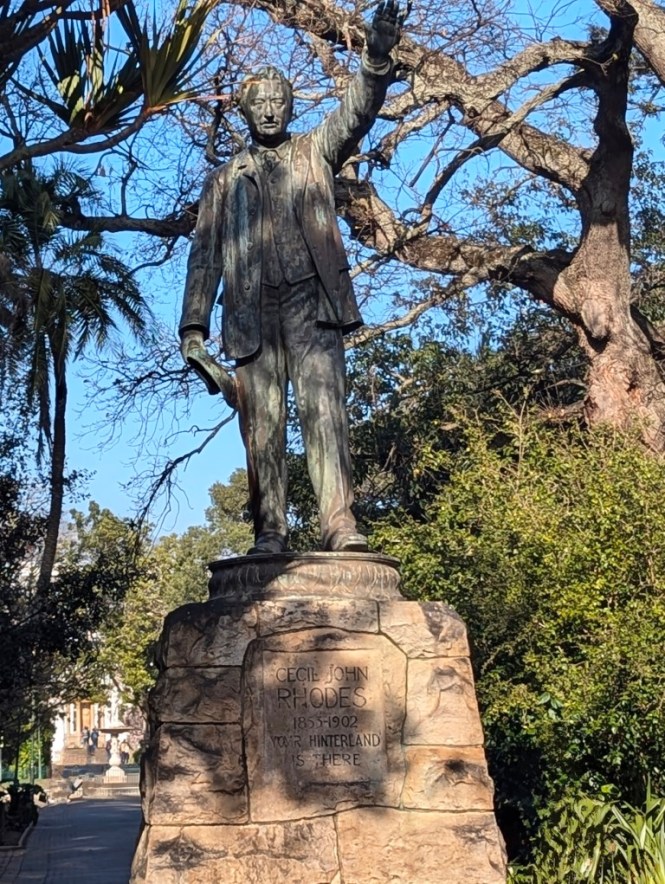
We also passed by a statue of Cecil John Rhodes, founder of Rhodes Scholarships. Also, not a good human being! He was sent to South Africa to live due to his poor health. He got into the diamond business and purchased a farm from the DeBeers family because he knew there were diamonds there. Rhodes became rich, the DeBeers, not so much. Did you know Rhodesia was named after him? He became prime minister of the Cape Colony in 1892 and led an unsuccessful coup in the Transvaal in 1896. He believed in the superiority of the white race, but he fine tuned that to “some” whites, not all. He set up the Rhodes Scholarship so that only commonwealth members and those from the US were eligible. Why? Because those superior whites could control the world. Not too surprisingly, his statue at Oxford is frequently the target of student desecration. His statue is in the Company Gardens because he left the land to the city upon his death.
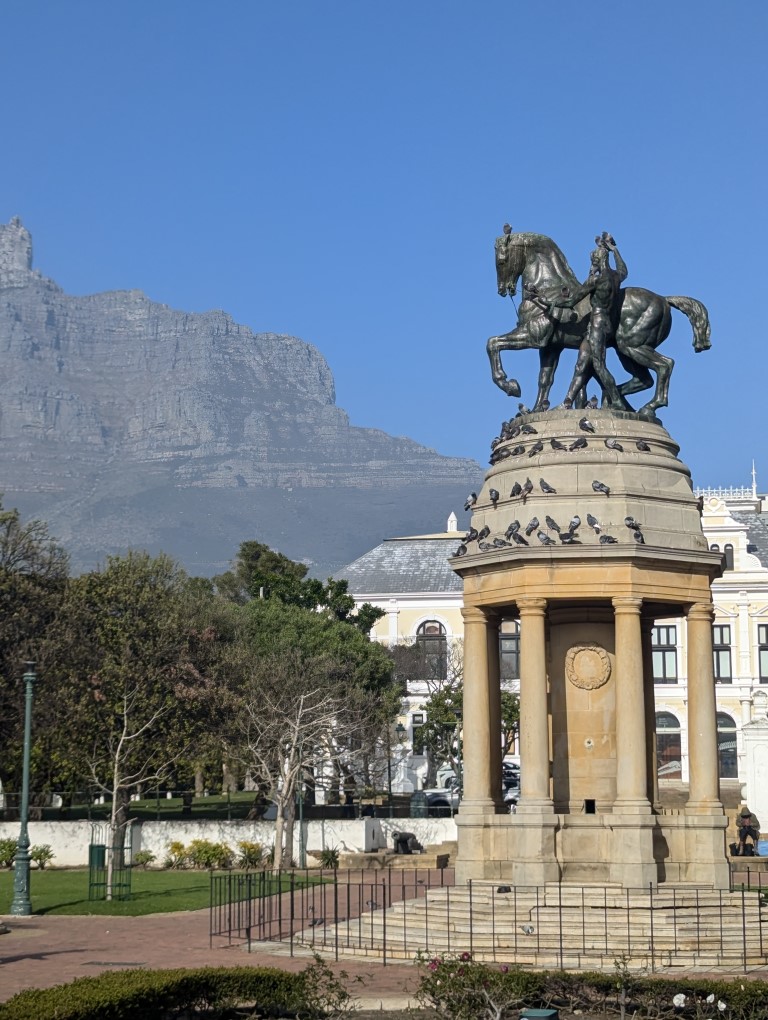
Past the main gardens there is a large statue of Castor and Pollux holding hands over a horse which symbolizes the British and Dutch joining together to fight a common enemy during World War I. The National Art Museum, a Holocaust Museum and a synagogue can also be found here. Most of the Jews left South Africa after 1990 due to anti-Israeli sentiment. Additionally, there are two high schools – one for girls and one for boys.
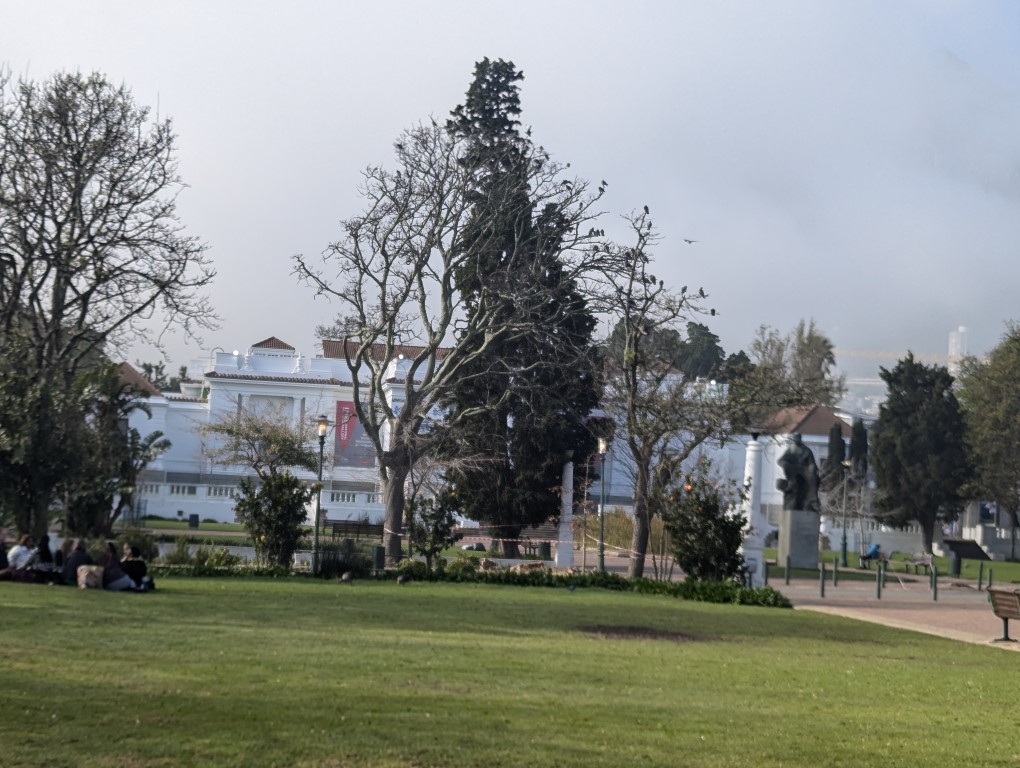
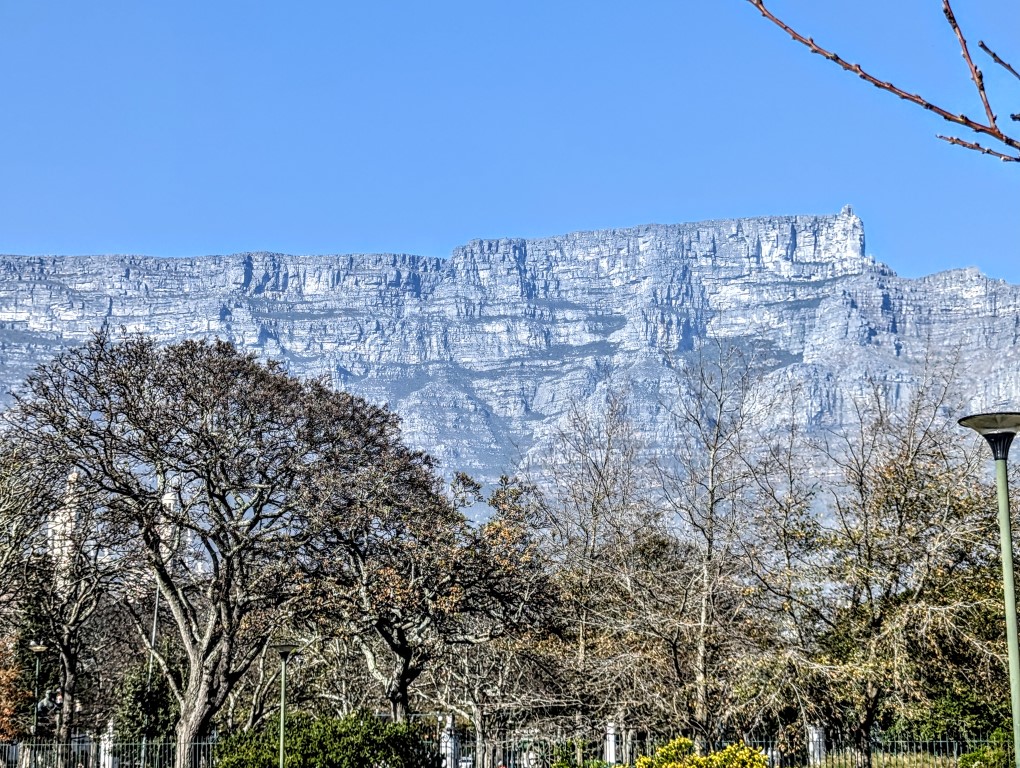
On to Signal Hill! As I mentioned earlier, the Table Mountain cable car is closed for renovation so instead, we are headed to Signal Hill (a mere 2195 feet in elevation) rather than Table Mountain (3560 feet). Often, Table Mountain is fogged in and so many visit Cape Town and are unable to go up the mountain. As the bus winds up the hill, fog starts to settle in. We pass by numerous houses with electric fences and concertina wire surrounding them for protection. Don informs us that we are the smallest of six floral kingdoms in the world, but the one that contains the most species.
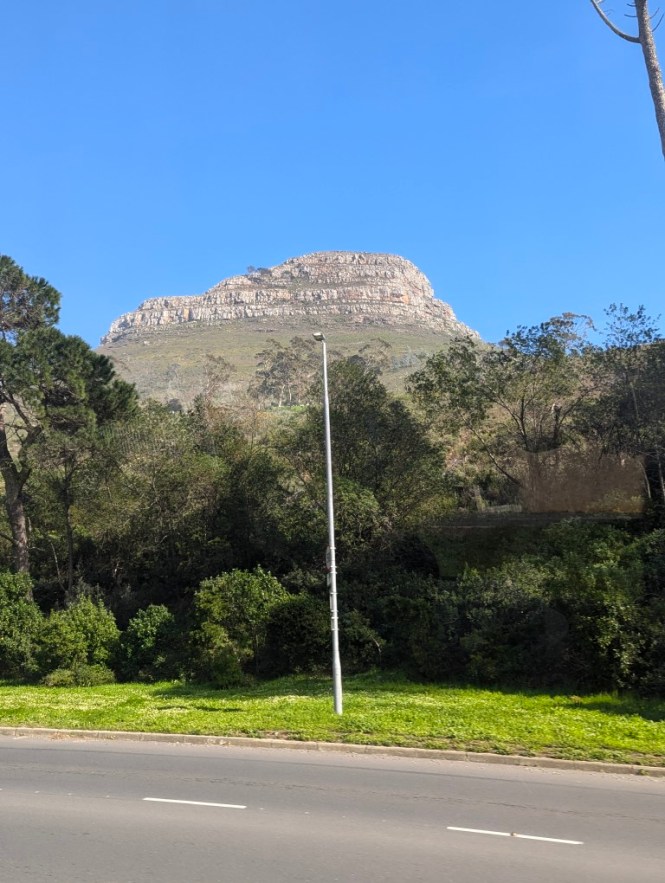
The view from the top? LOL! The paragliding company is getting set up; hope springs eternal.

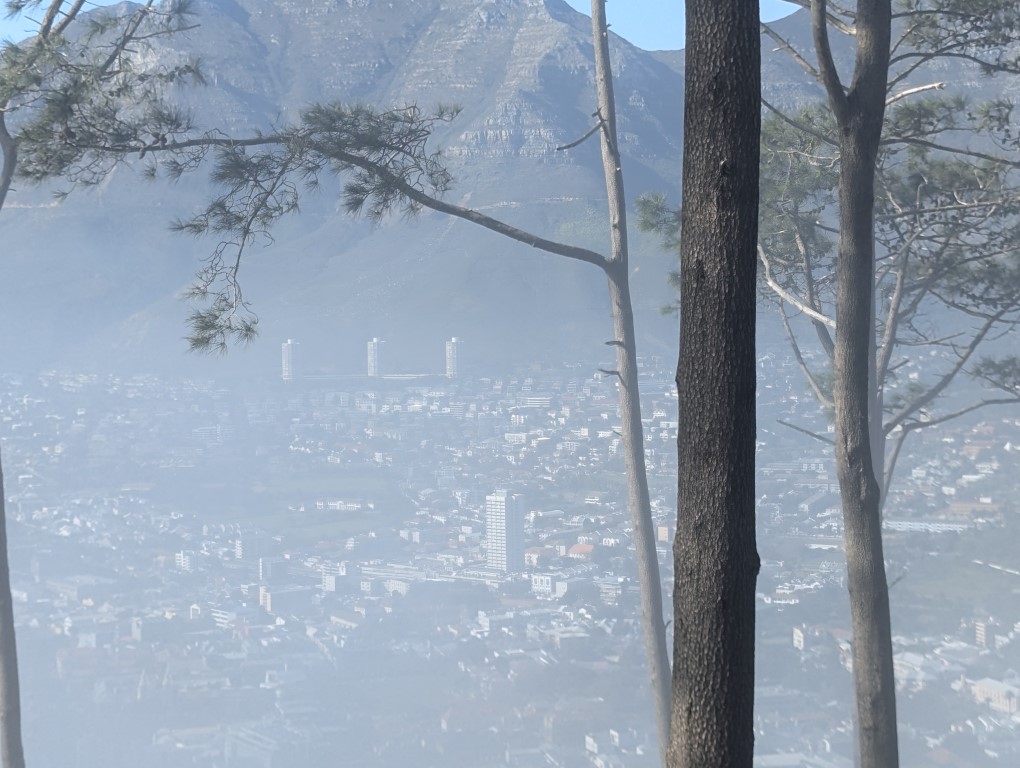
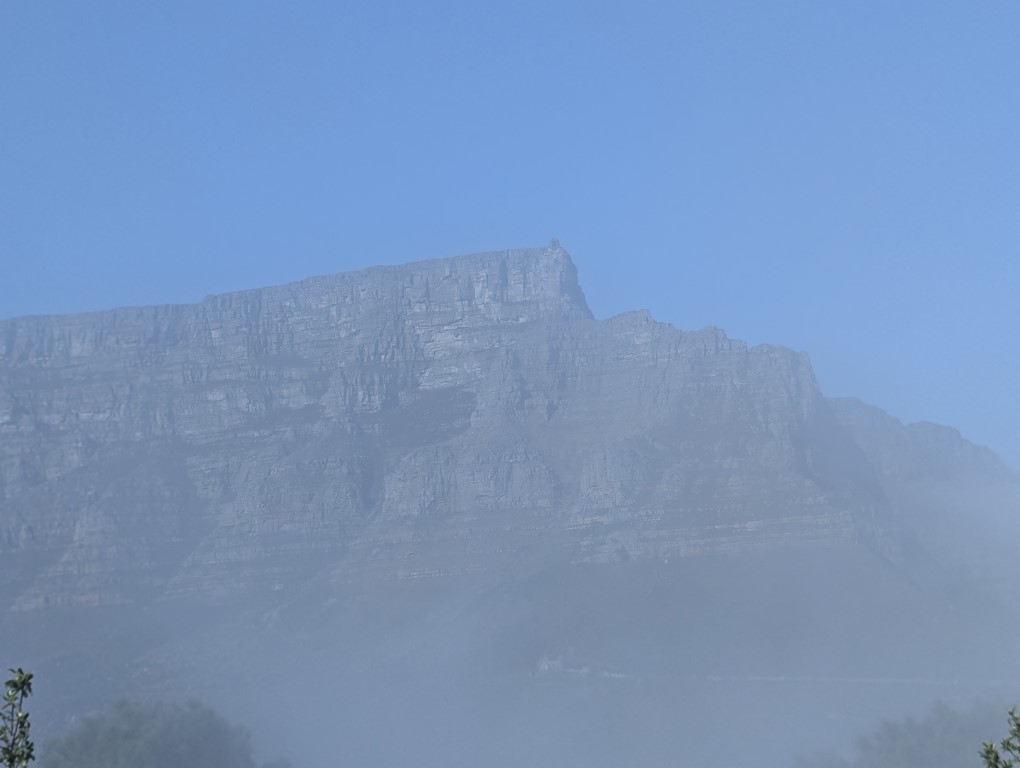
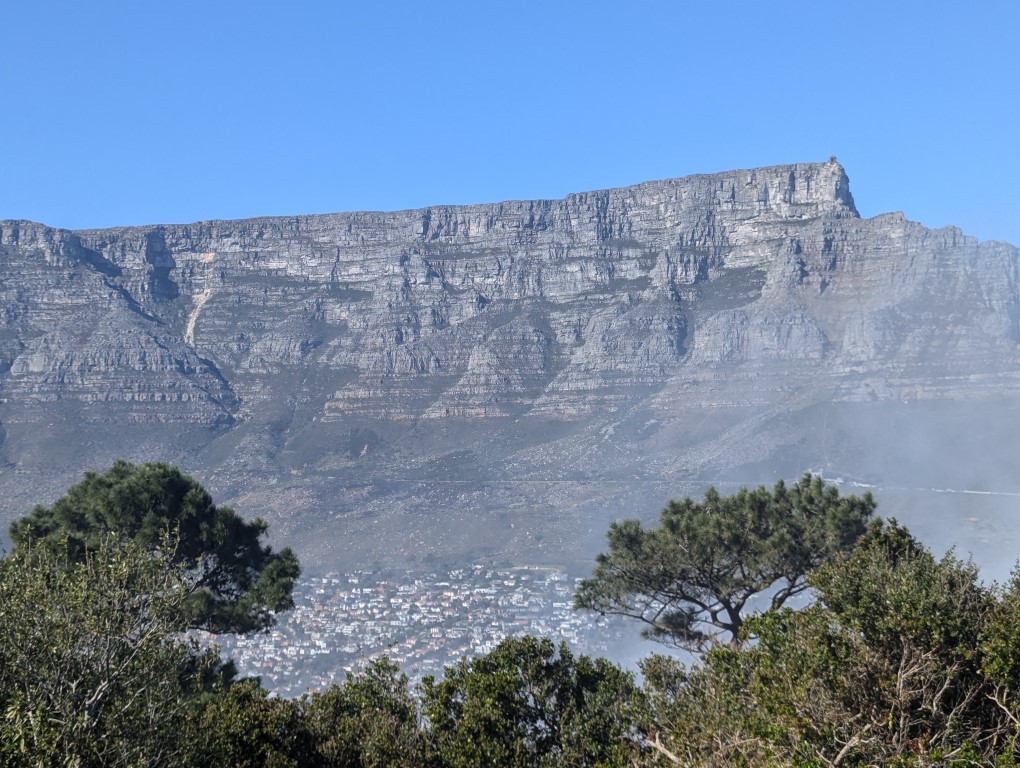
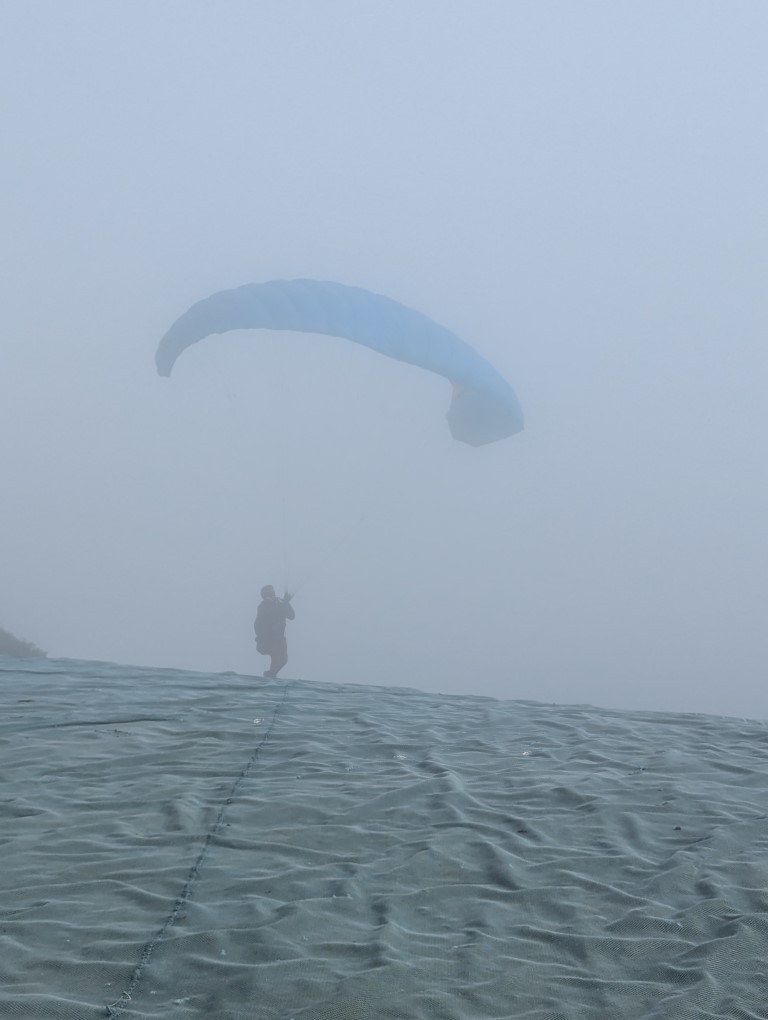

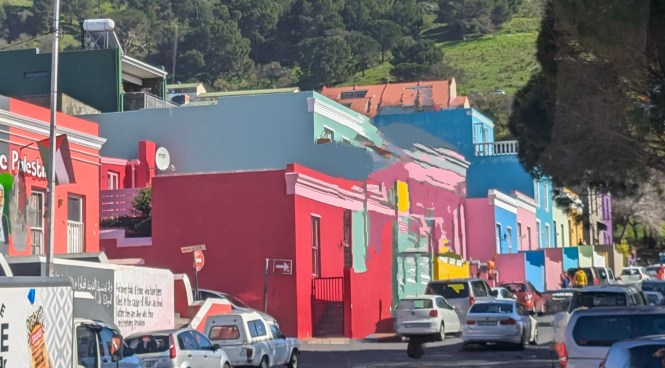
On the drive to the V&A Waterfront, Don fills us in on a bit more about the history of the area. As mentioned previously, the true indigenous people of the area are the bushmen or san people. They were hunter/gatherers who settled in the area and learned agriculture. They welcomed the Dutch who arrived in 1480. Unlike in other parts of the world, the new arrivals did not wipe out the population of indigenous people with diseases, nor did they enslave them. The Dutch brought slaves from other parts of the world, such as Malaysia, many of whom were Muslim. The British freed the slaves in 1834. Brightly colored clothing was worn to celebrate their freedom; now, the houses in the Malay quarter remain painted in bright colors for the same reason. You may notice from the pictures that the fog had now cleared.
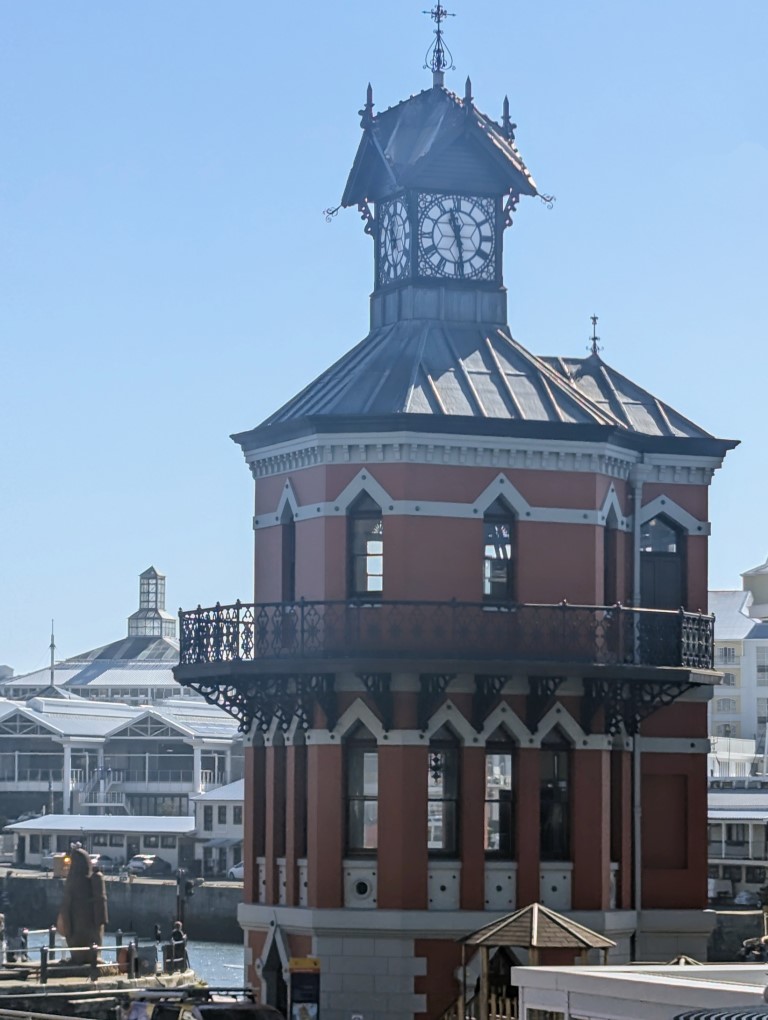
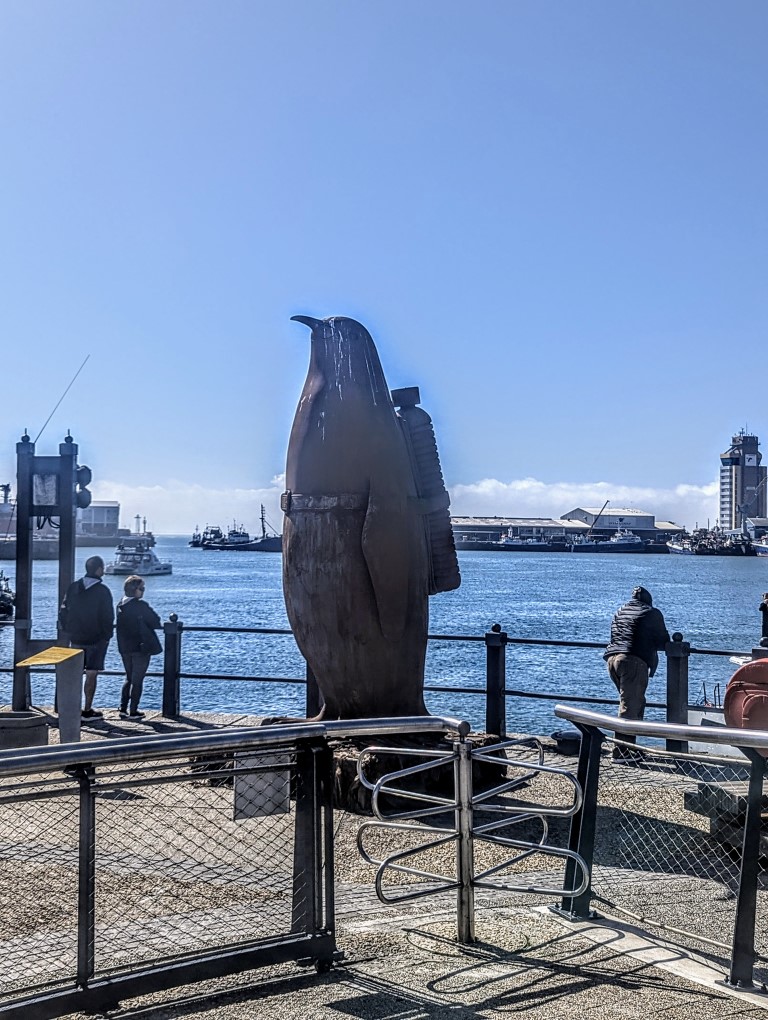
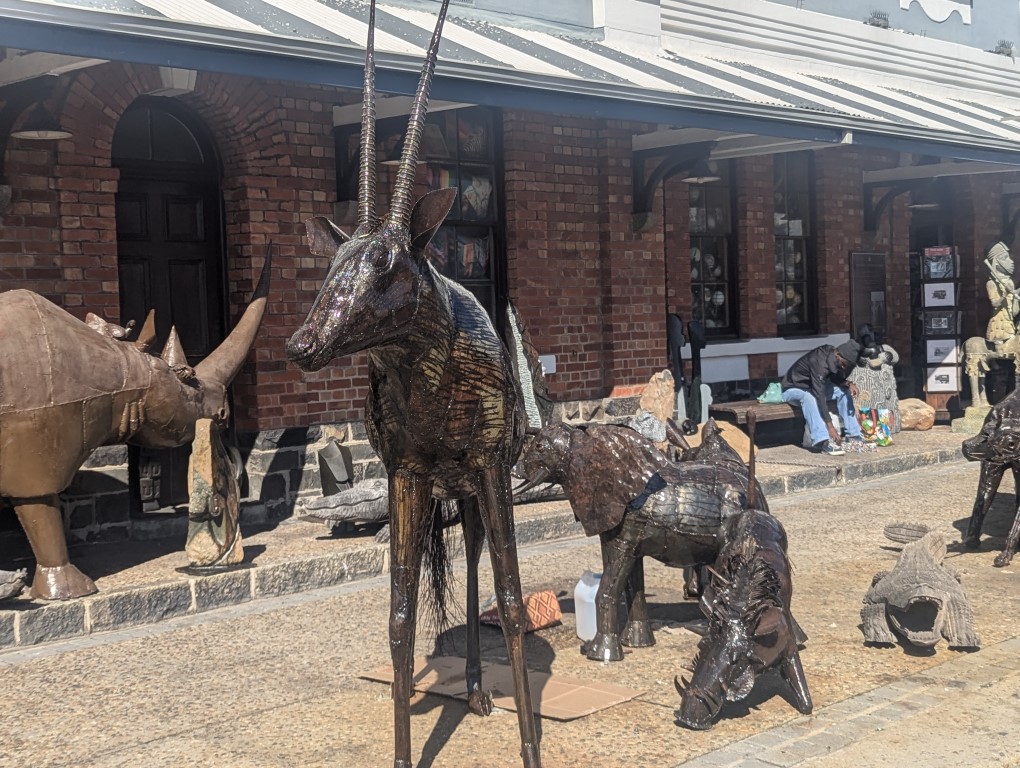
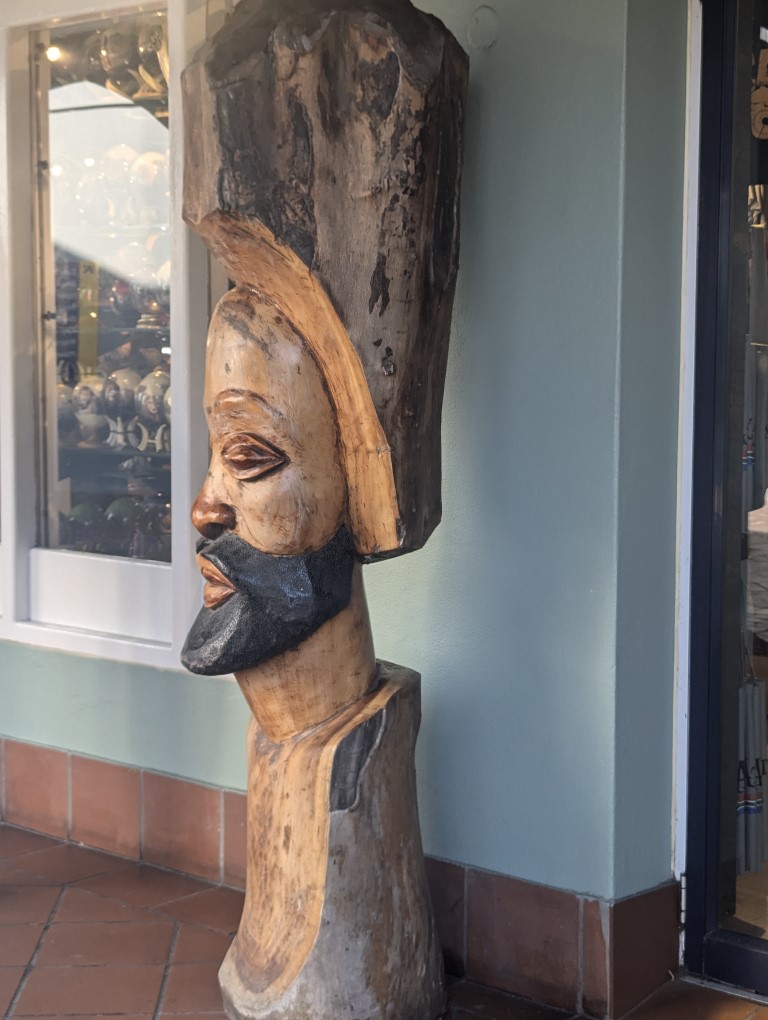
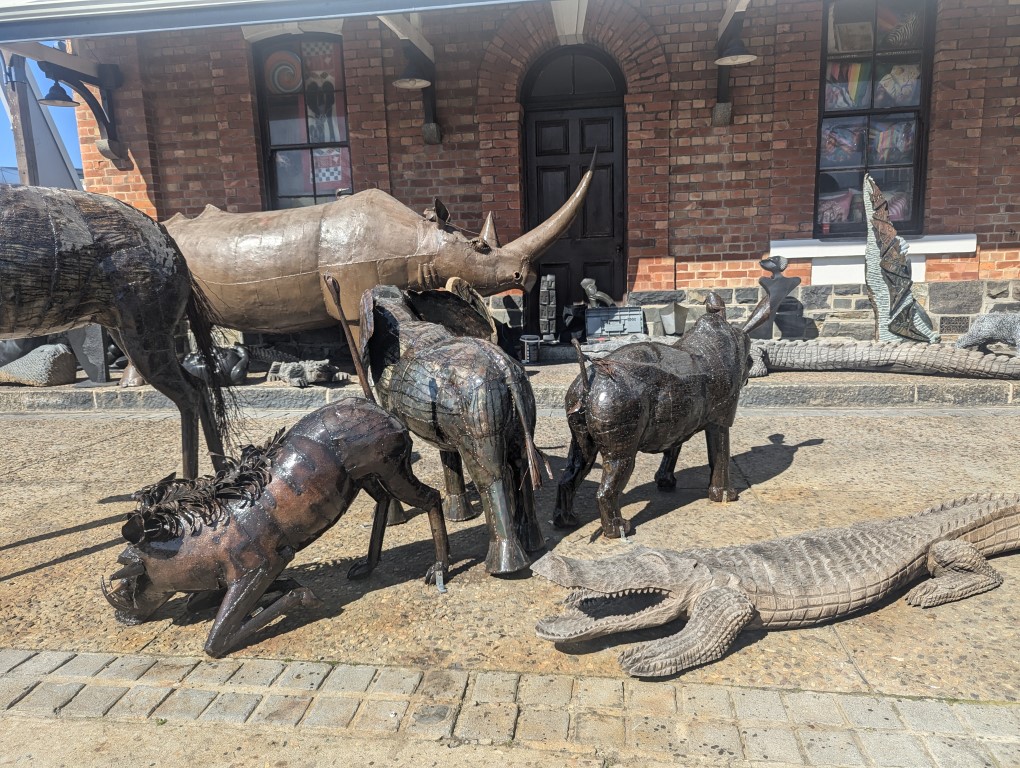
The V&A Waterfront is mistakenly known as the Victoria and Albert waterfront (Albert being her husband). The A actually stands for Alfred, her second son. Who knew? It is a large shopping area which includes a mall and many restaurants. The group stopped for a quick tour of a diamond factory/store; Clayton and I headed to the mall for lunch instead. The rest of the day was free time. We walked around for a bit after spending some of our debit card $$$ and then walked back to the hotel. There is also a free shuttle available, but the hotel is only a few minutes away by foot. Tomorrow we tour the Cape Peninsula.



 travelswithheather