Though we have been to Saigon multiple times, we have never been to the Cu Chi Tunnels. I am glad we waited. Apparently, there are two versions that one can visit – an authentic one (further from the city – a 2-hour drive), and one created for tourists, closer to the city and not authentic. The site we went to is the only historical relic remaining from the war, according to Yang. However, the “Hanoi Hilton” still exists so I am not sure about the veracity of that statement.
The Cu Chi Tunnels were dug to connect to the Ho Chi Minh Trail during the Vietnam War. Of course, in Vietnam, it is known as the American War. People and supplies could be transported through the tunnels. The tunnel system itself in total was 150 miles in length and had three levels. The top level was 3 meters (around 9 feet) underground and contained functional rooms, such as the kitchens. The next level was 6 meters (around 18 feet) underground and the lowest was 10 meters (around 30 feet) underground. Ten thousand Viet Cong lived in the tunnels, many of whom were women since they were smaller and better able to manage living underground for extended periods of time. Women were unable to enlist in the DRC army and so served as guerilla fighters instead.
American soldiers tried valiantly to find the entrances to the tunnels but were ultimately unsuccessful. Dogs were used to find entrances but were unable. Water was pumped in to flood the tunnels but that didn’t work because the water just flowed into the Saigon River after passing through the tunnels. Poisonous gas was pumped in but could only reach the top level so those living in the tunnels just relocated to the 2nd and 3rd levels. Carpet bombs dropped from B-52’s tried to destroy the tunnels but only succeeded in damaging the top level.
American soldiers known as tunnel rats would go into the tunnels with bazookas to try to destroy them, but the VC would just hide. Often the tunnel rats would get lost in the maze or caught in booby traps. If they did manage to damage the tunnels, the tunnels would be quickly rebuilt.
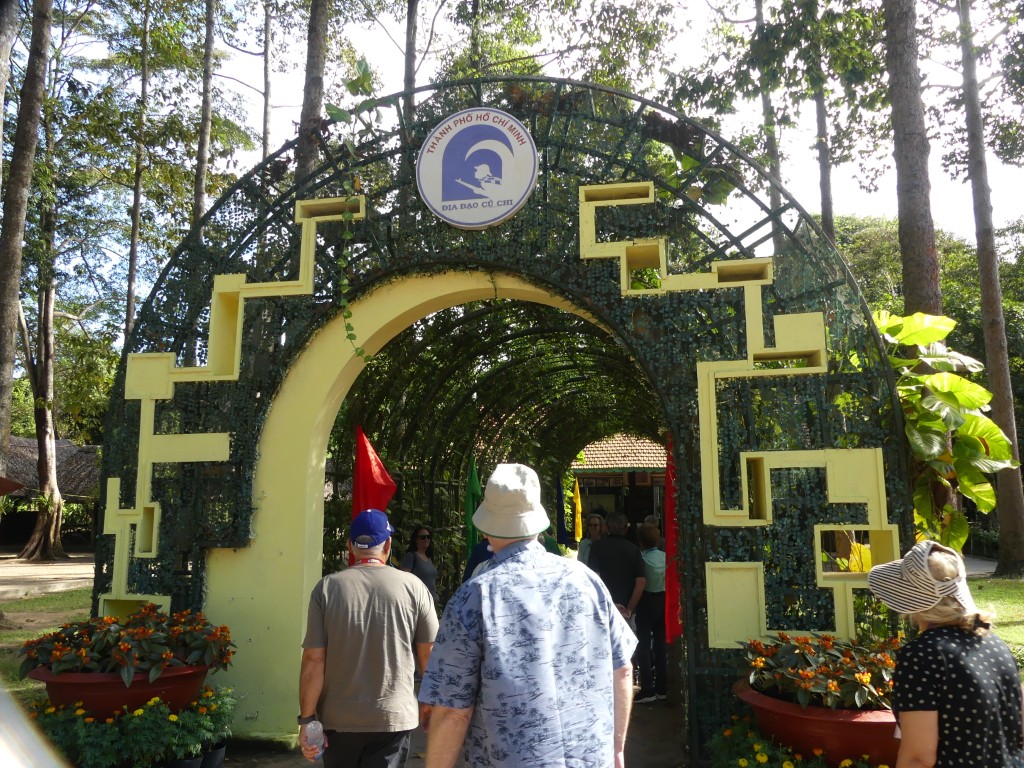
The entry:
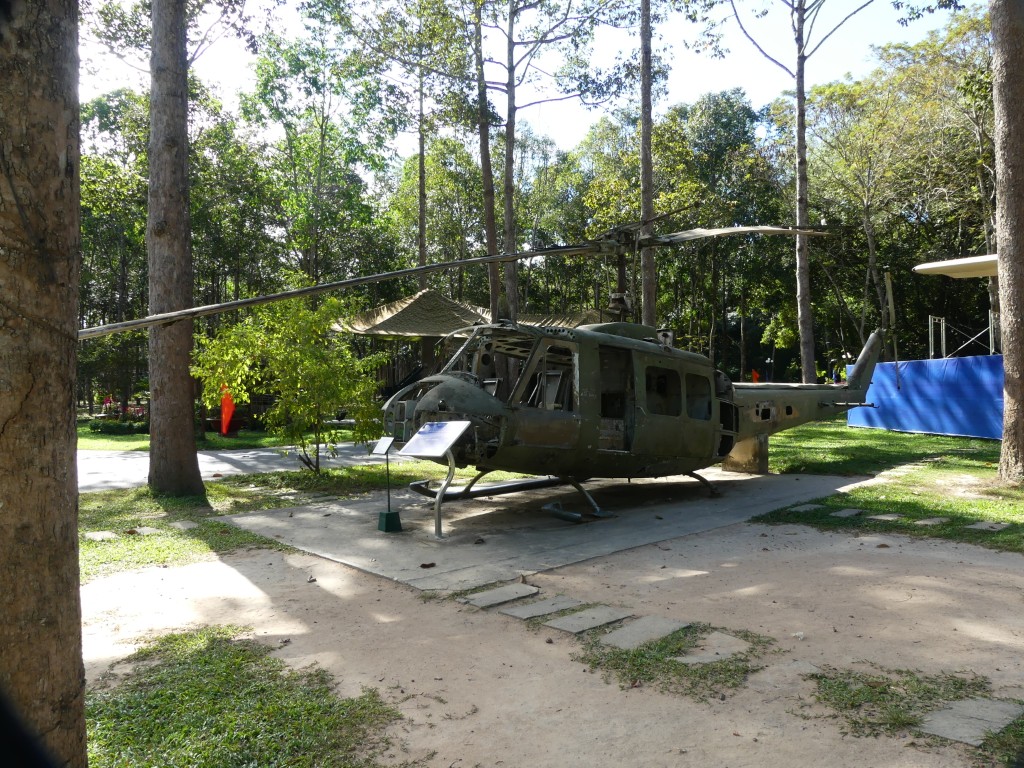
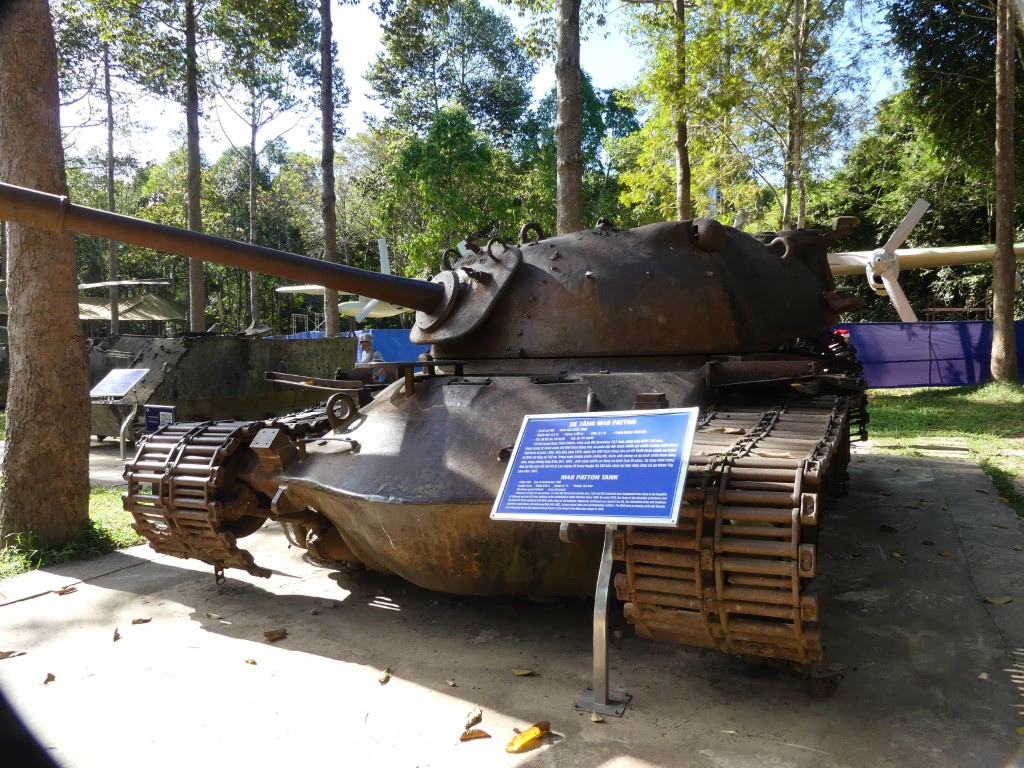

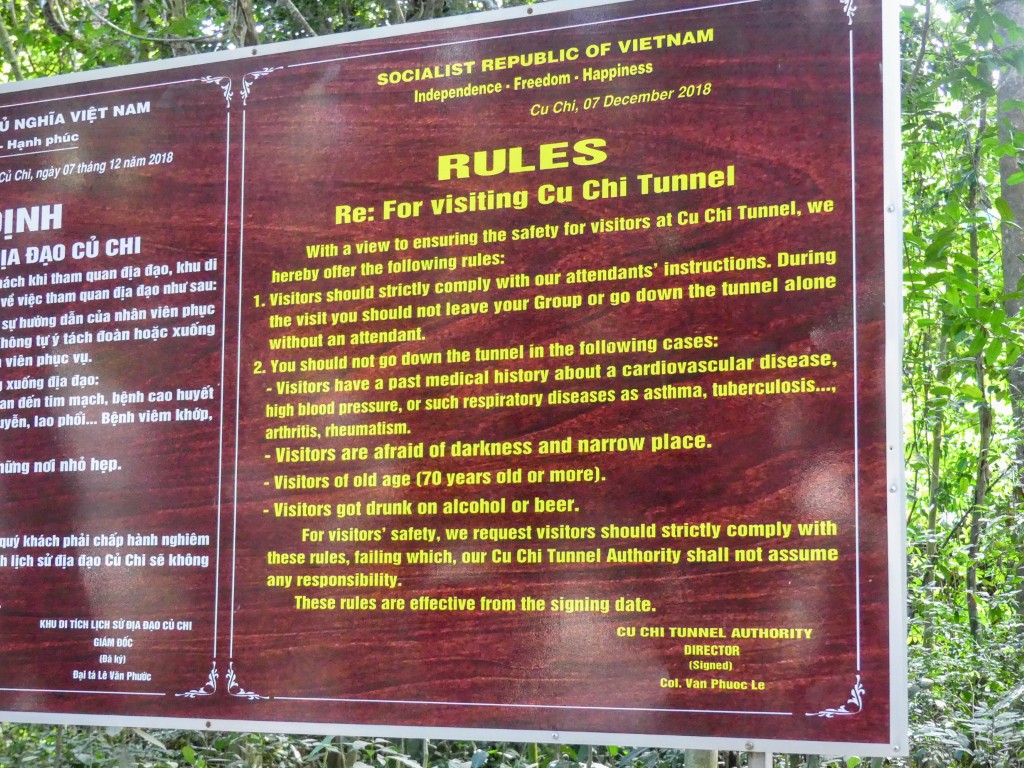
Before entering the first tunnel, Yang pointed out a few things to us:

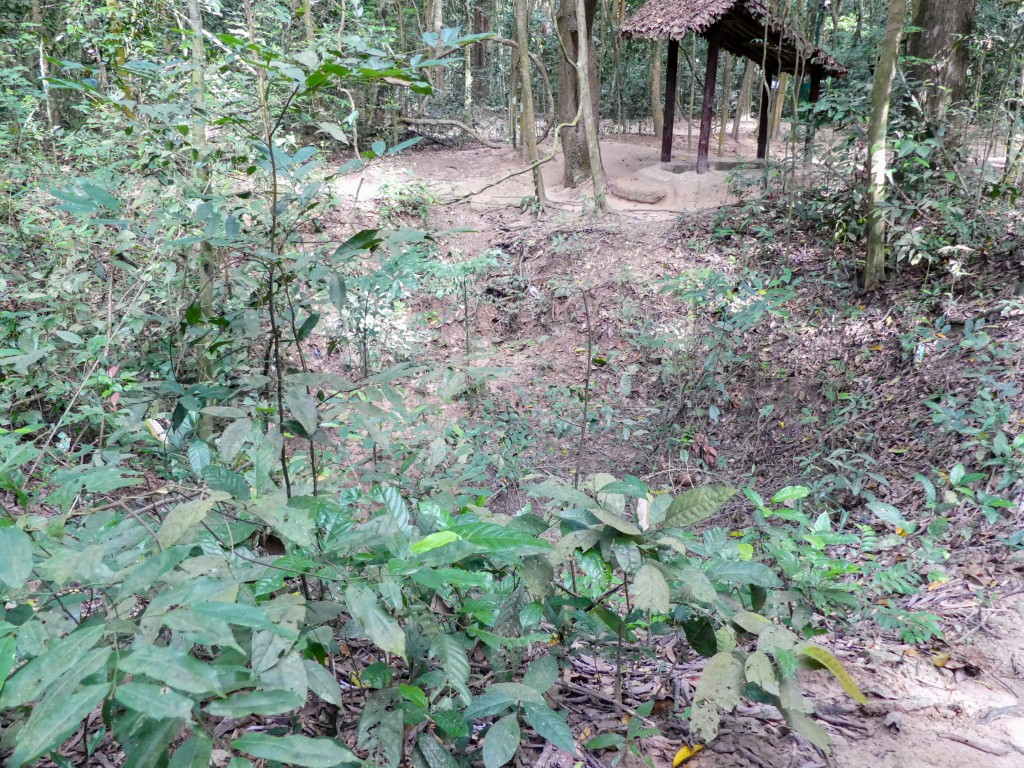
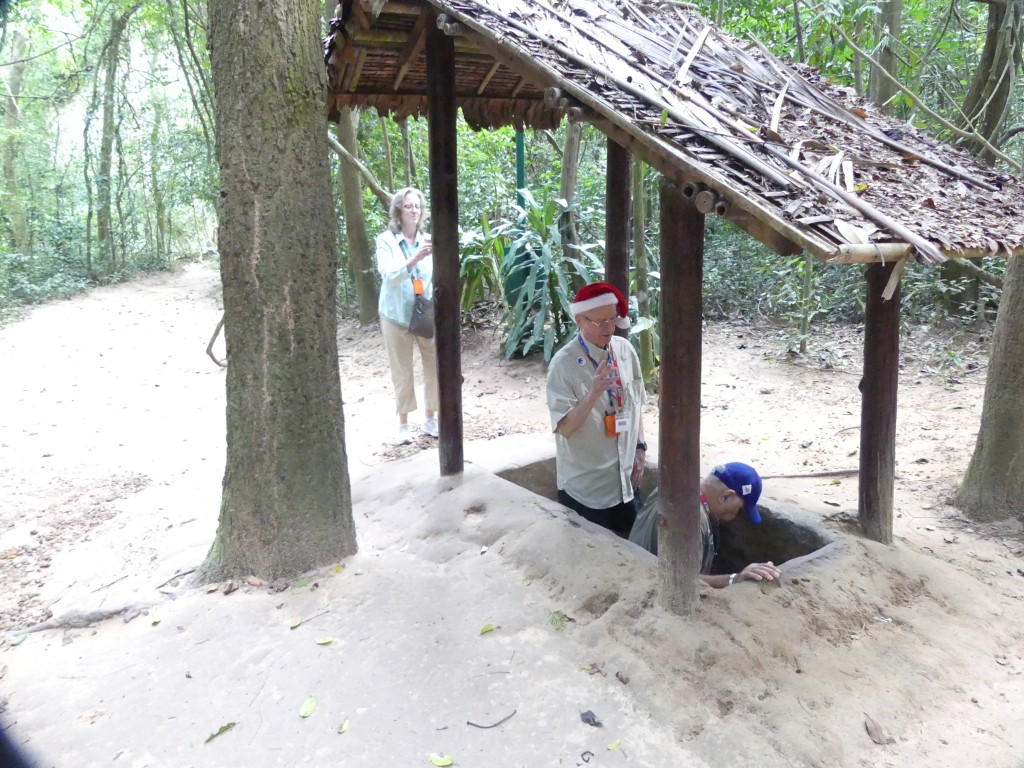
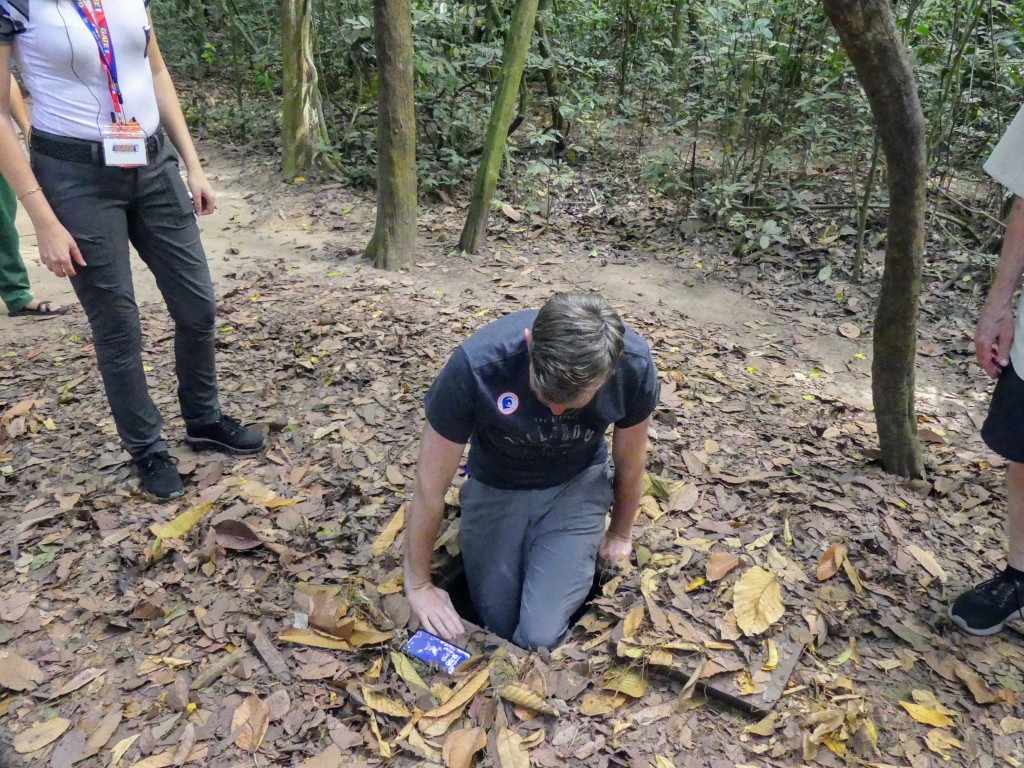
Our first (and for me only) entry into the tunnels involved going down a steep set of steps, going through a tunnel, and coming up the other side. The actual tunnels were only 20″ across. The tunnel we entered had been widened to 30″ so non-Vietnamese sized people could fit. What they didn’t tell us was the height of the tunnel. You had to go through hunched over; it was way too short to stand up in. Clayton’s shoulders got stuck when he went through.
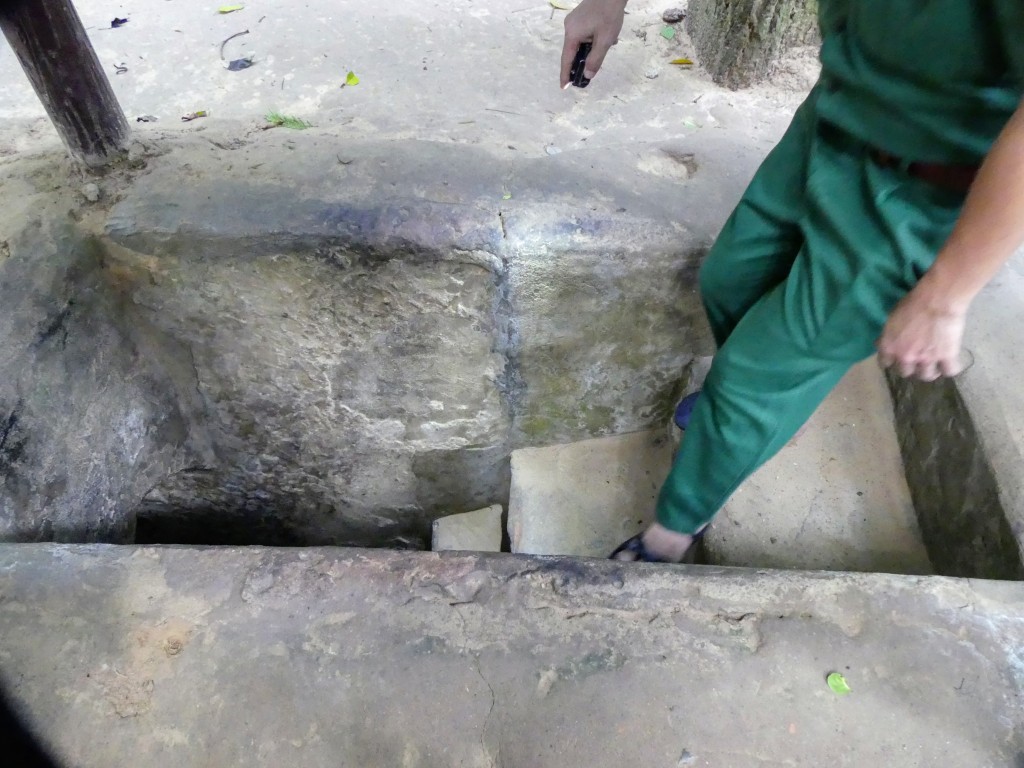
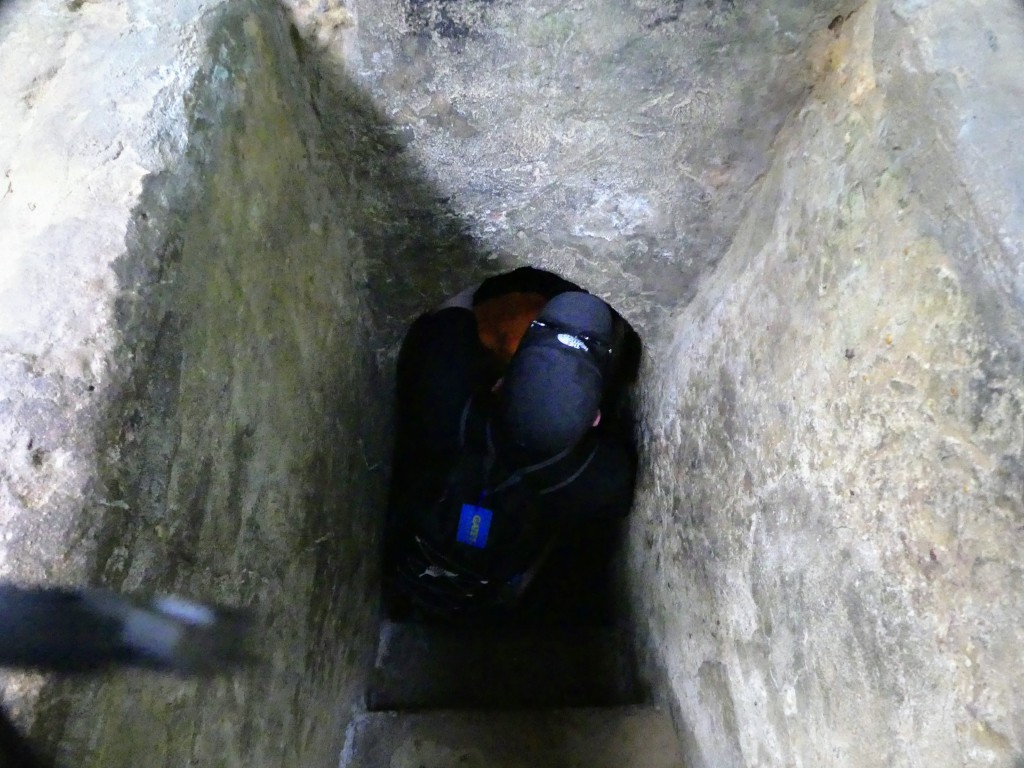
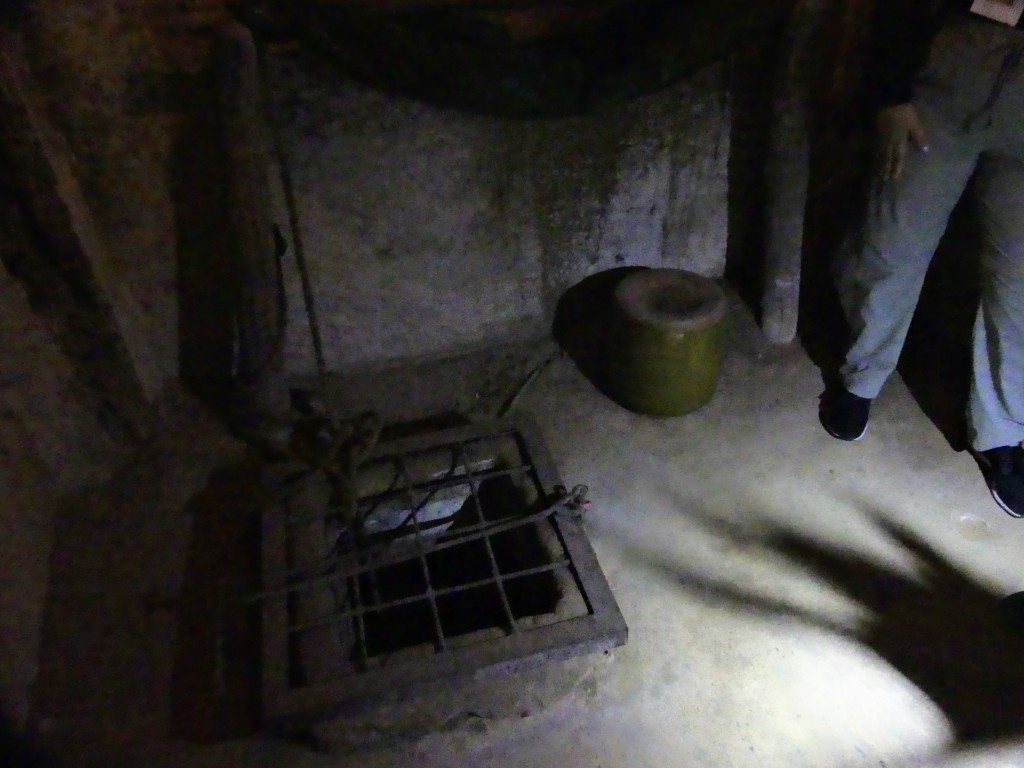
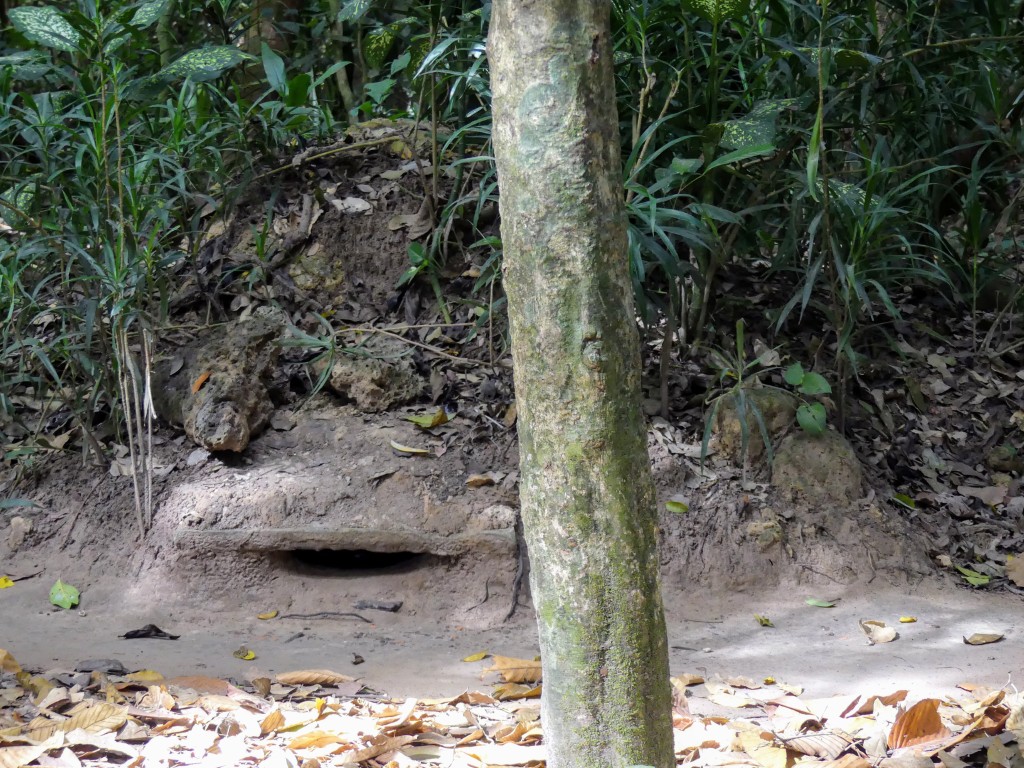
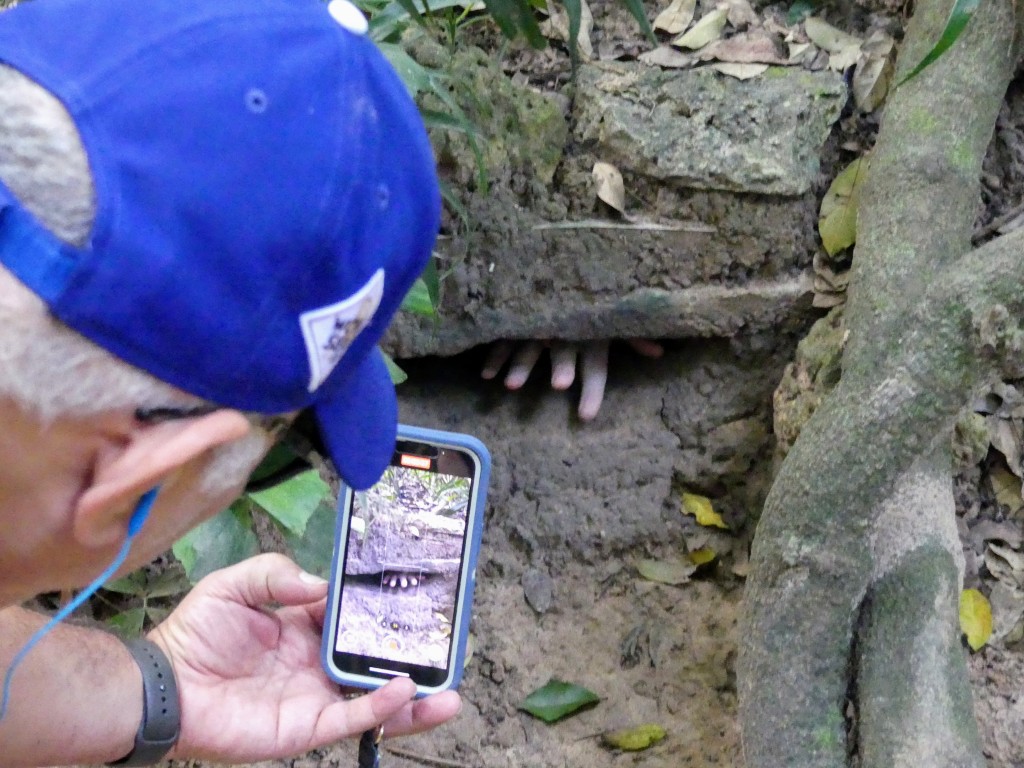
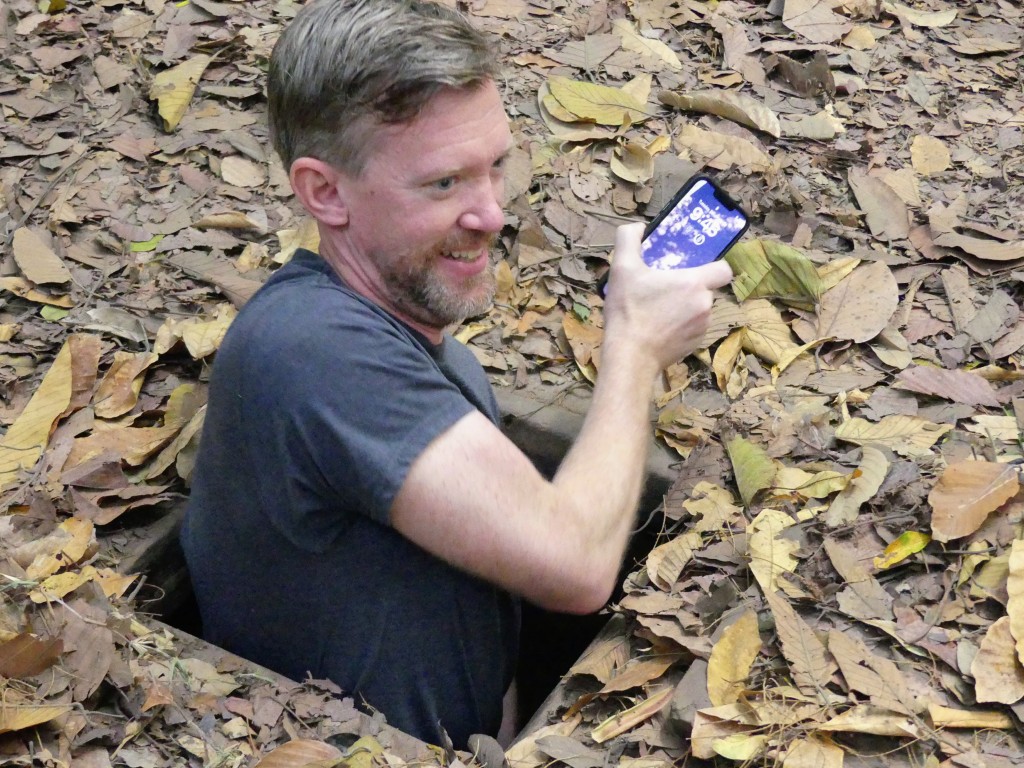
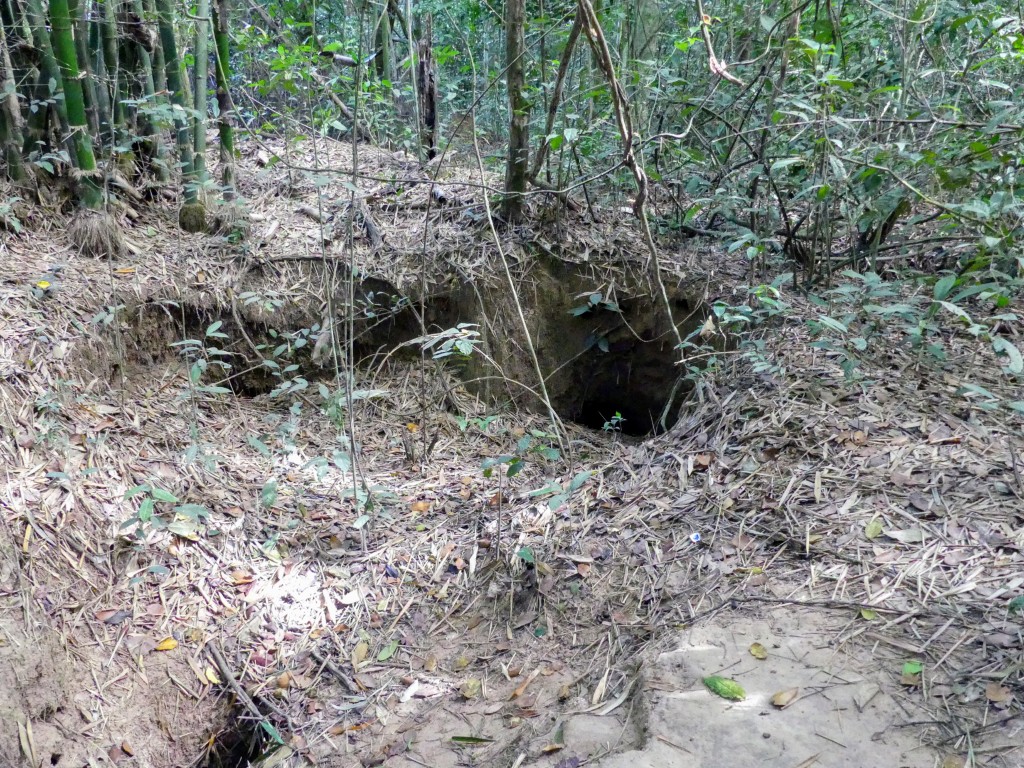
Next, we were shown a mound and the guide pointed out the small slit in the side. These were used for pointing rifles at the enemy. There was a second tunnel entry here, but it was hidden from view. Watch the video to see just how difficult it was to get in and out!
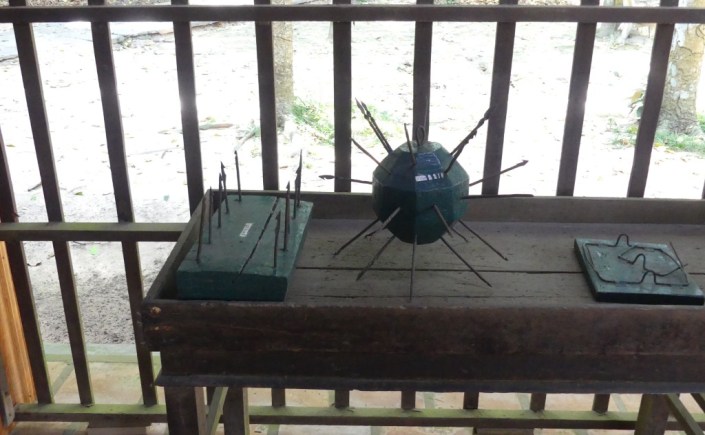
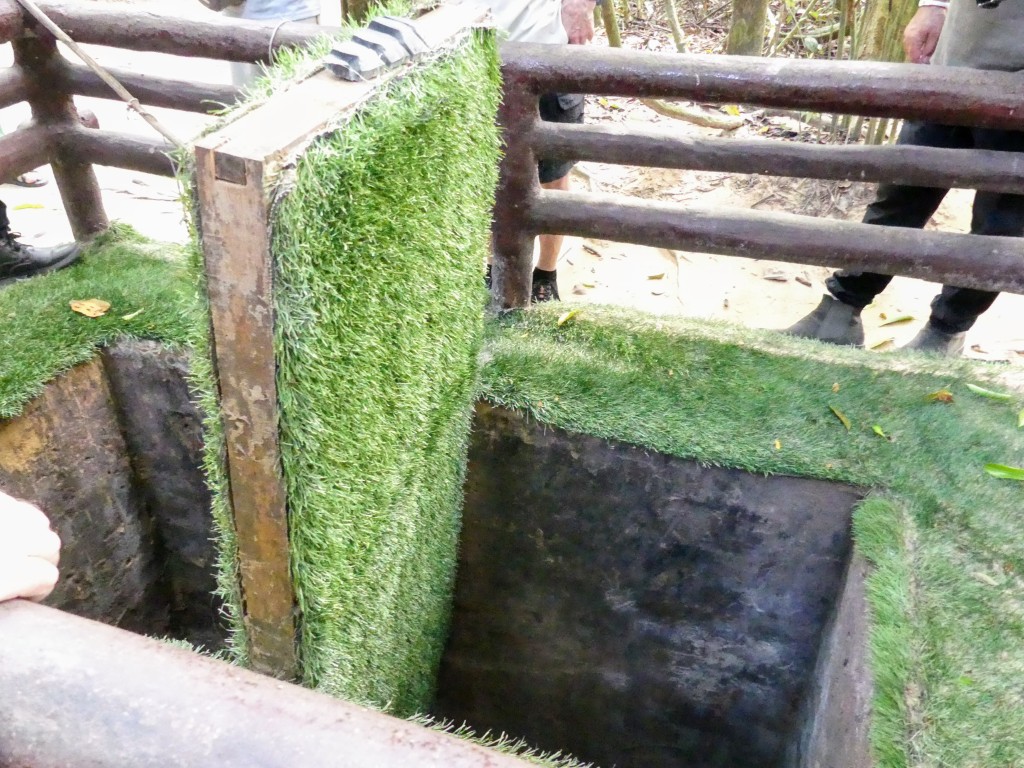
Next up was a demonstration of how soldiers got stuck in traps. The pointed sticks would be smeared with manure in order to cause maximum damage. If a soldier was impaled, the only way to save his life was to have the spikes surgically removed. There are more gruesome traps. We saw a few later in the tour.

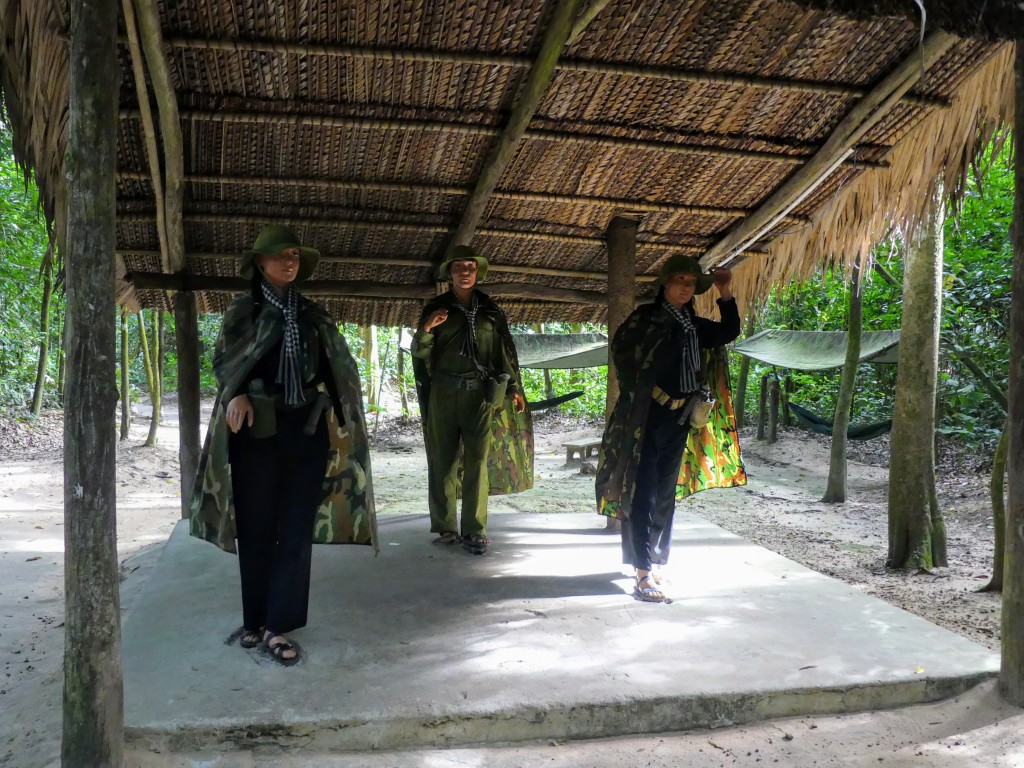
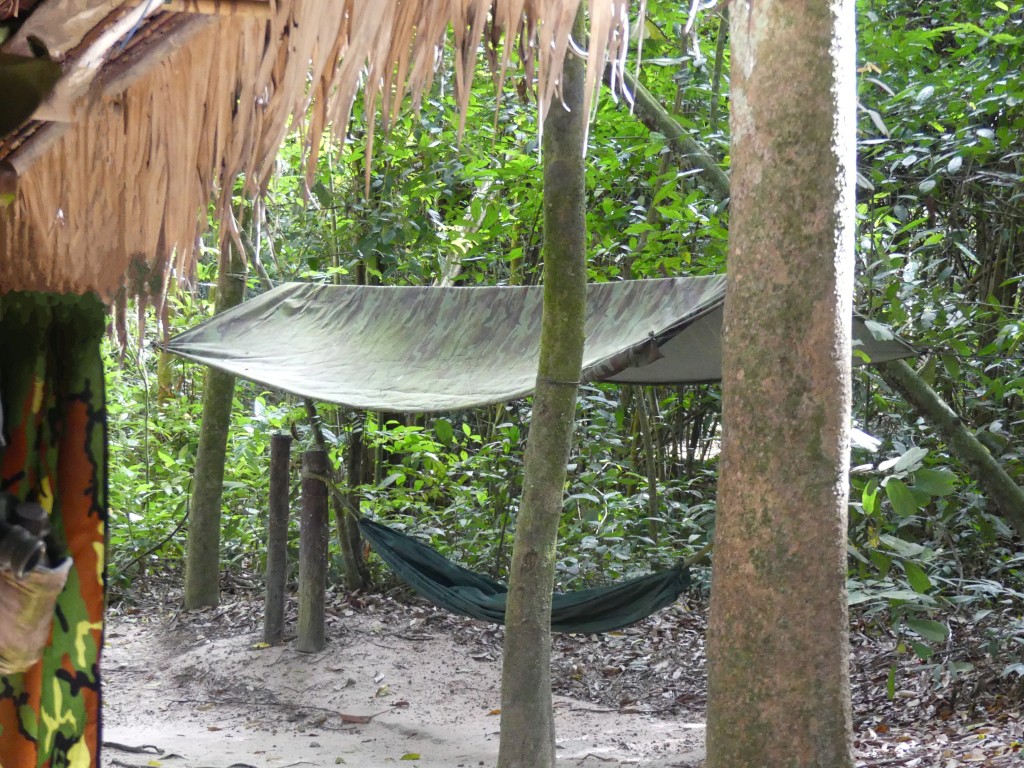
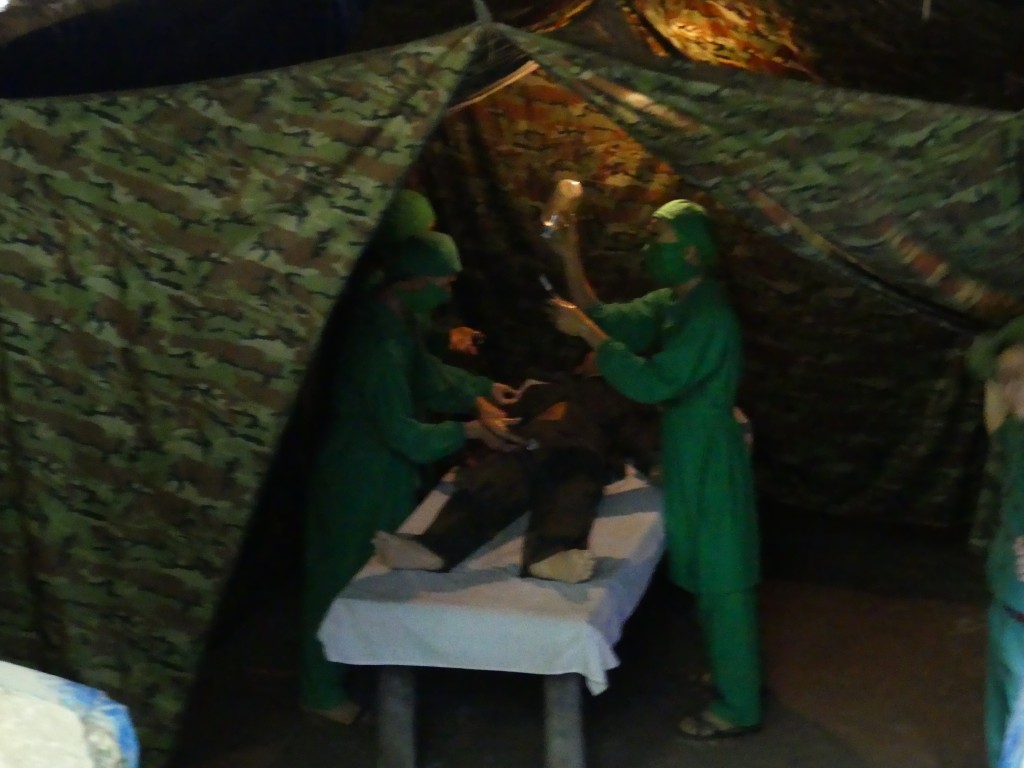
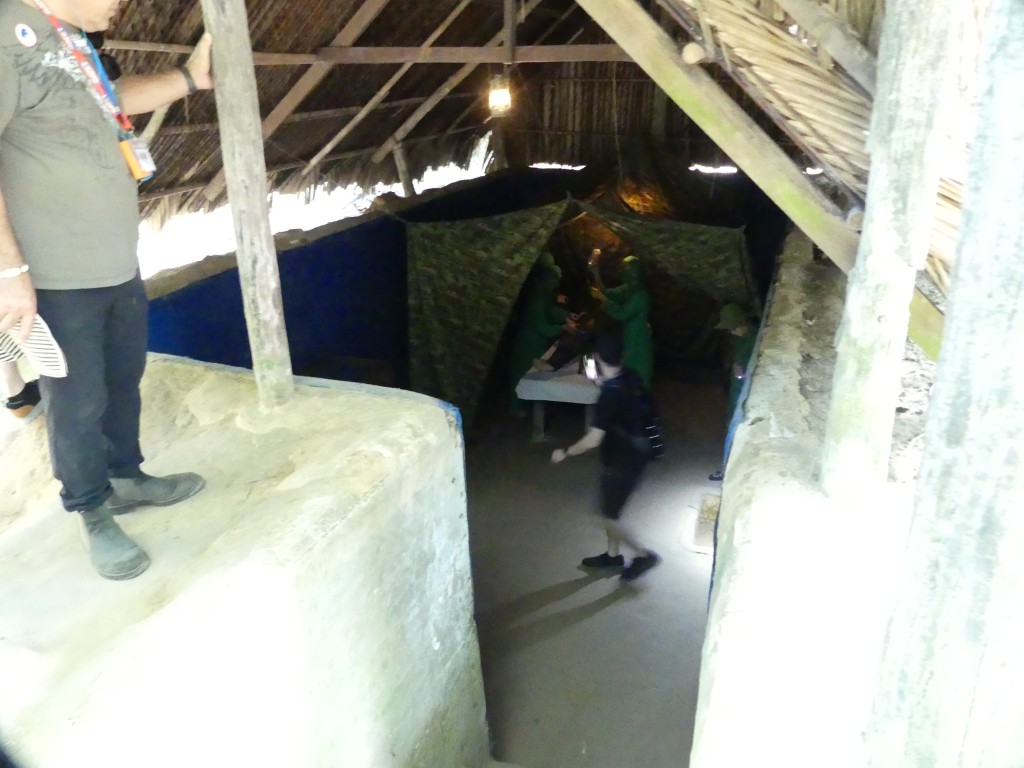
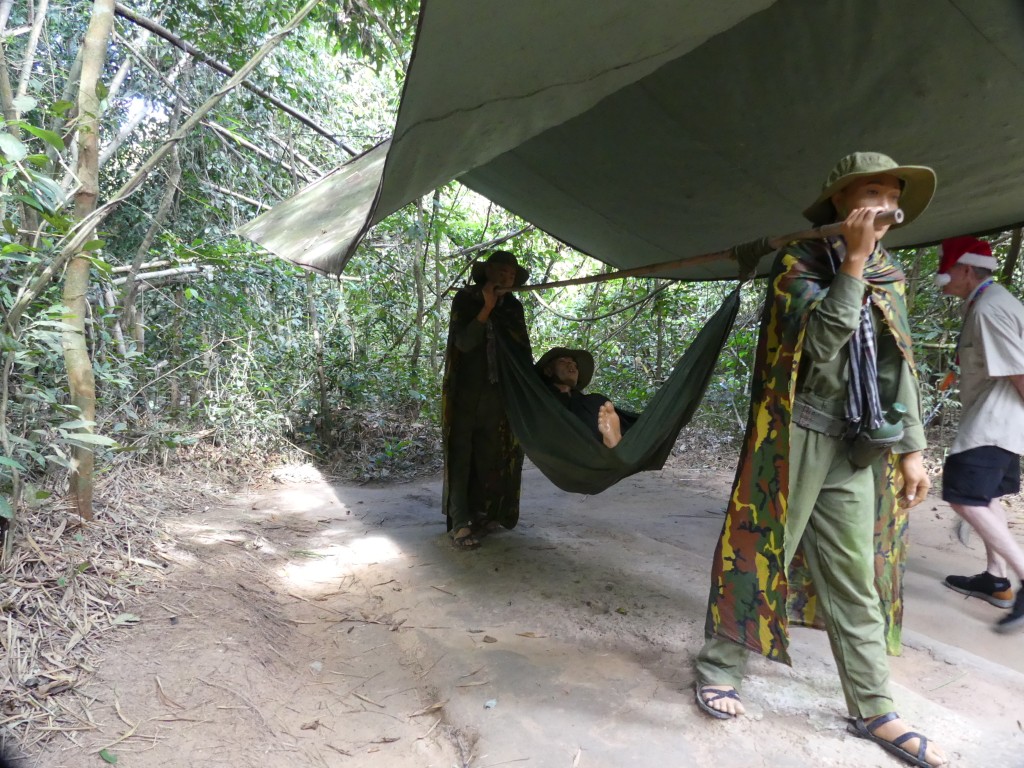
There were some displays to depict how life was in the tunnels.
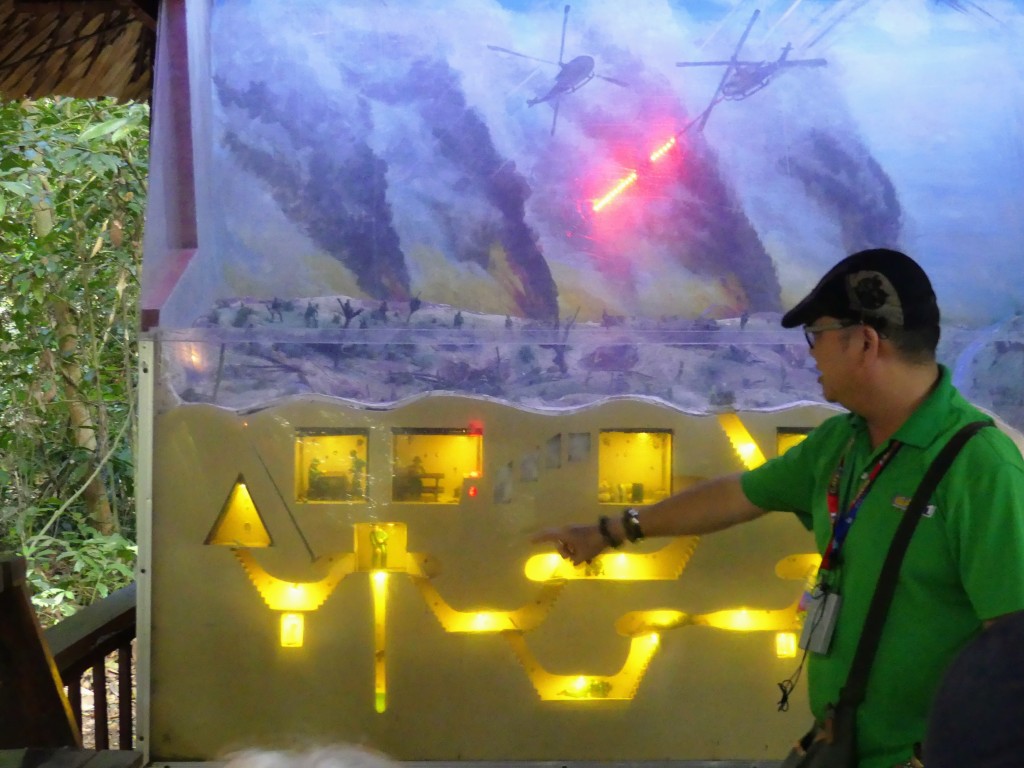
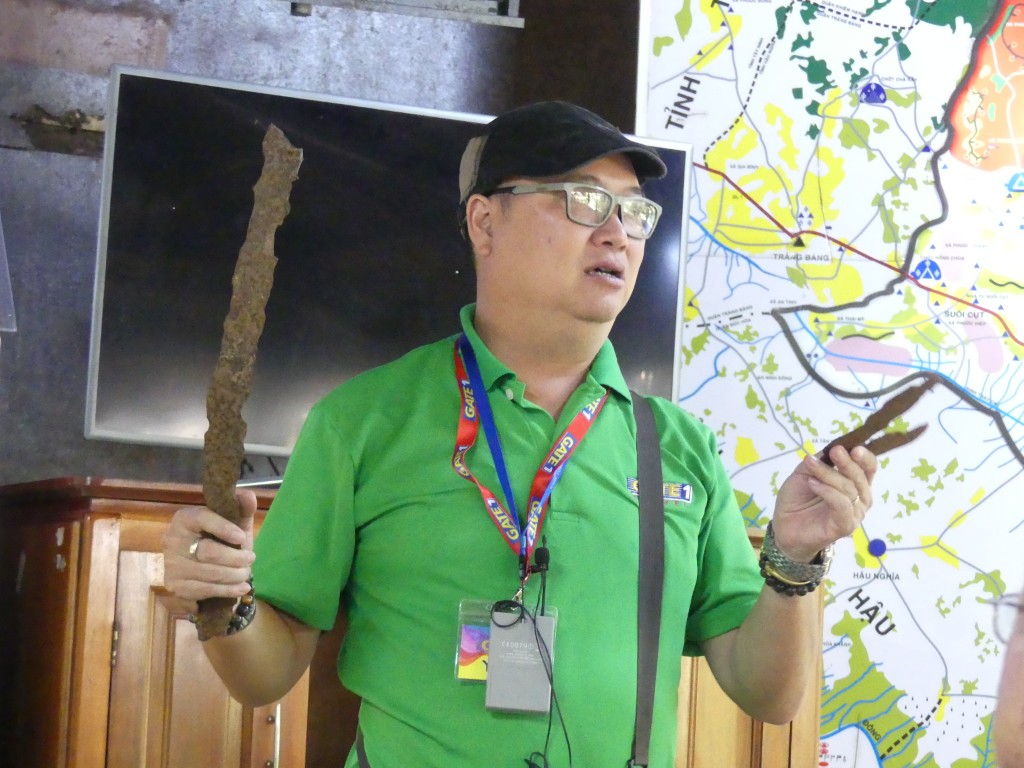
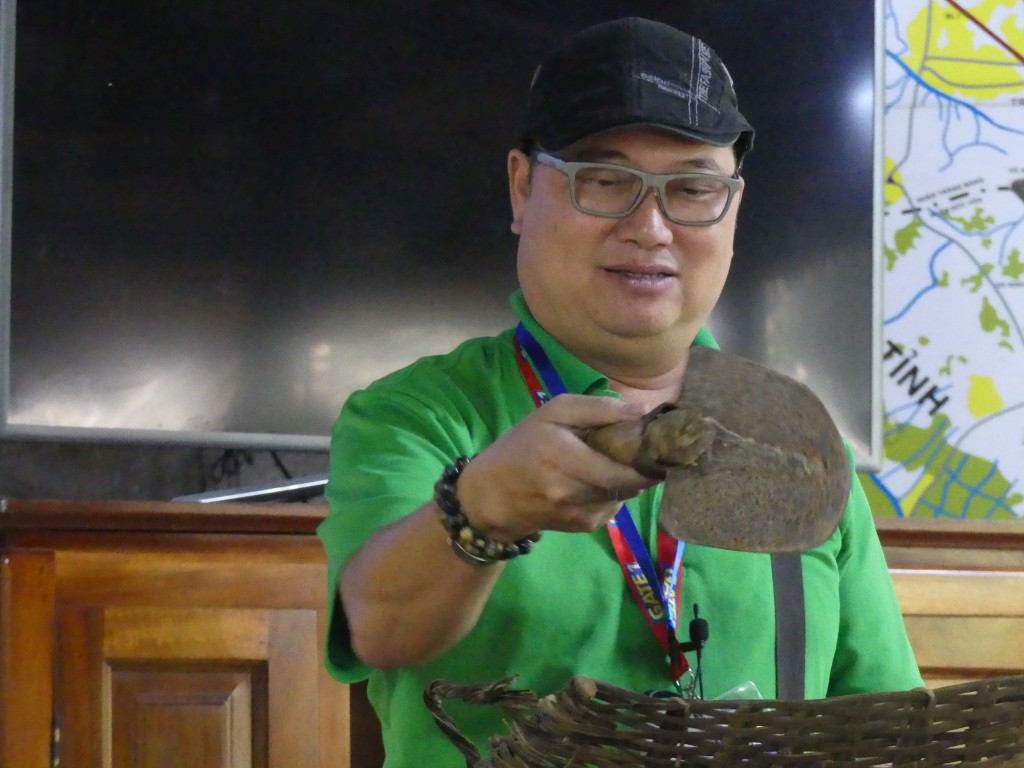
Yang gave us some additional information about the tunnels. He showed us a 3-D model of the tunnels and pointed out that there were some sections where the tunnels had been narrowed to prevent tunnel rats from being able to get through. The narrow sections were large enough for a small Vietnamese person to traverse, but too small for an American GI. The map shows how extensive the network was as well as color coding that showed which areas were “liberated” (red), which were half-liberted (pink; safe to be out only at night), and blue (below American controlled areas). During the night, VC soldiers would raid the American camps to steal shampoo. Why shampoo? So that when they washed their hair, they smelled like American soldiers and could not be distinguished as Vietnamese when they were out at night.

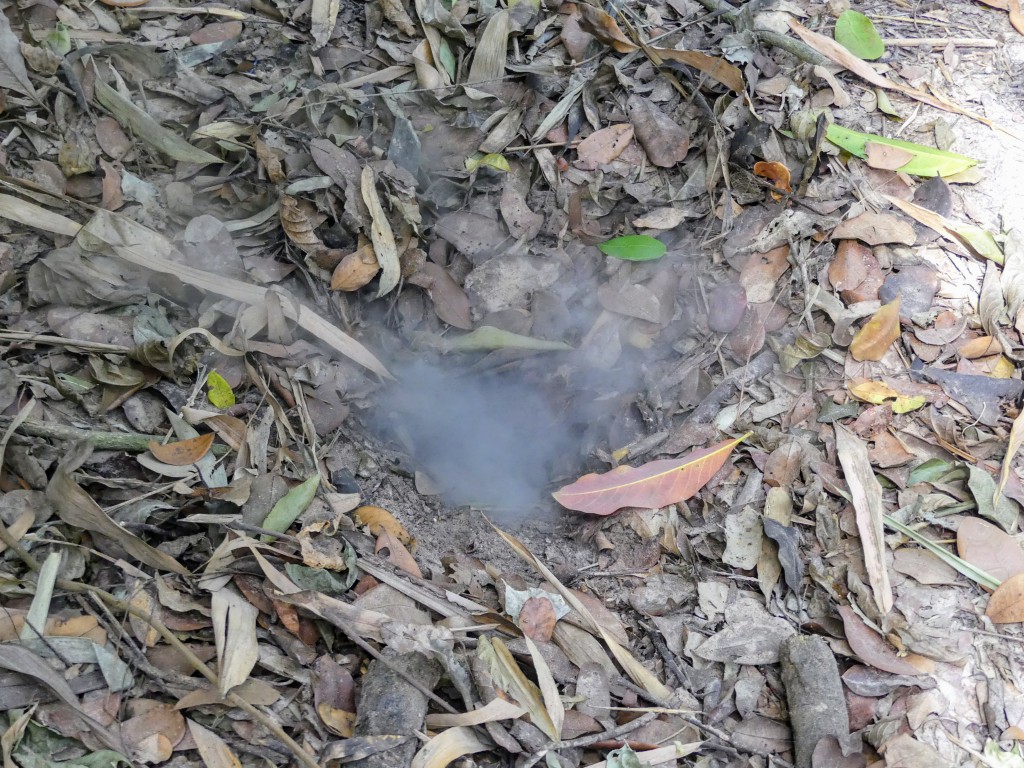
We were given steamed tapioca root to taste, which was what the Viet Cong ate while living in the tunnels. The kitchens were vented to the surface, but the vent could be up to 1000 feet away from the actual kitchen in order to hide its location. The tapioca root was much like baked potato in texture, but more bland in flavor.


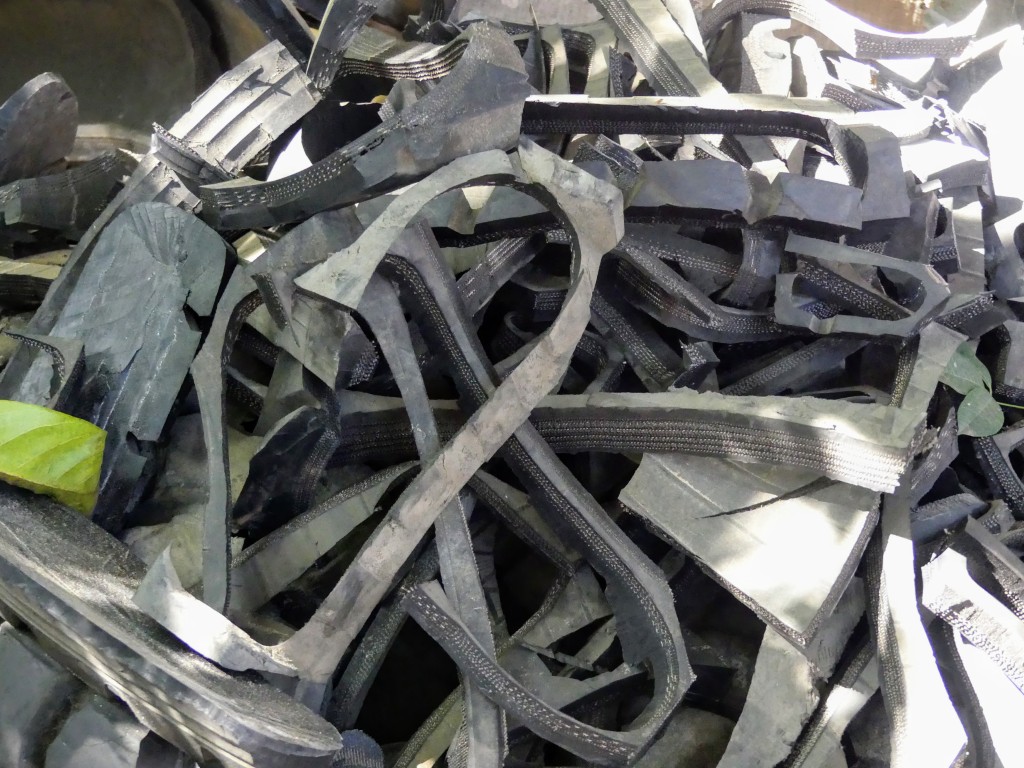
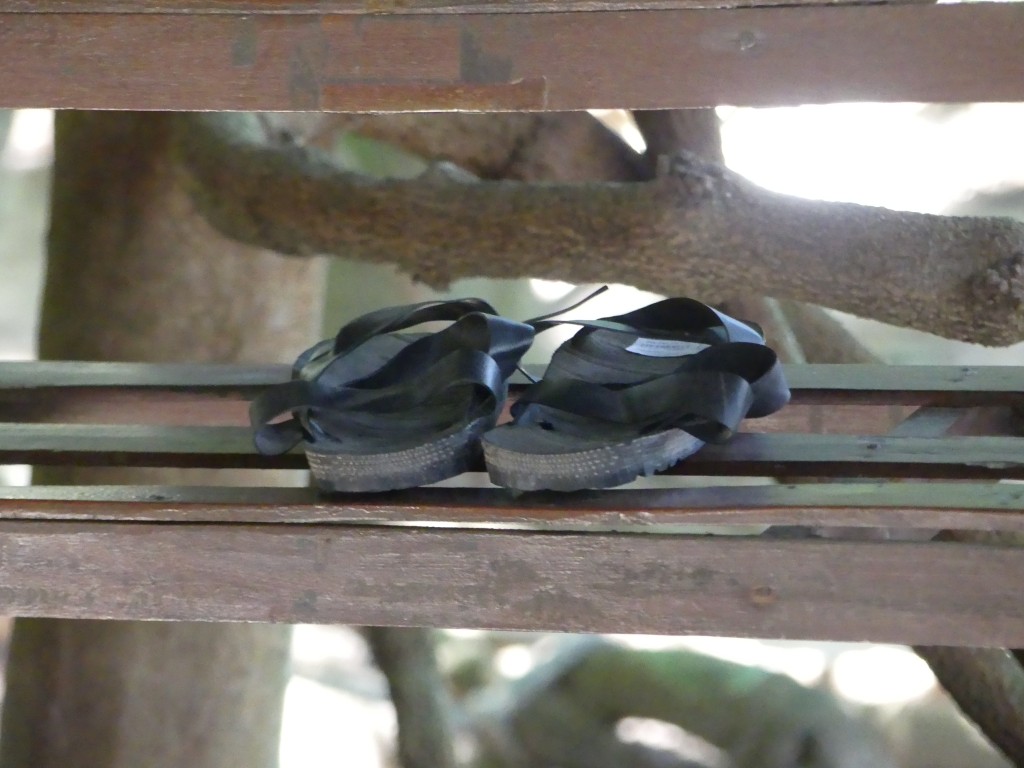
Viet Cong soldiers wore “Uncle Ho sandals” which were made out of used tires. Some of the men in our group purchased a pair as a souvenir ($4 US).

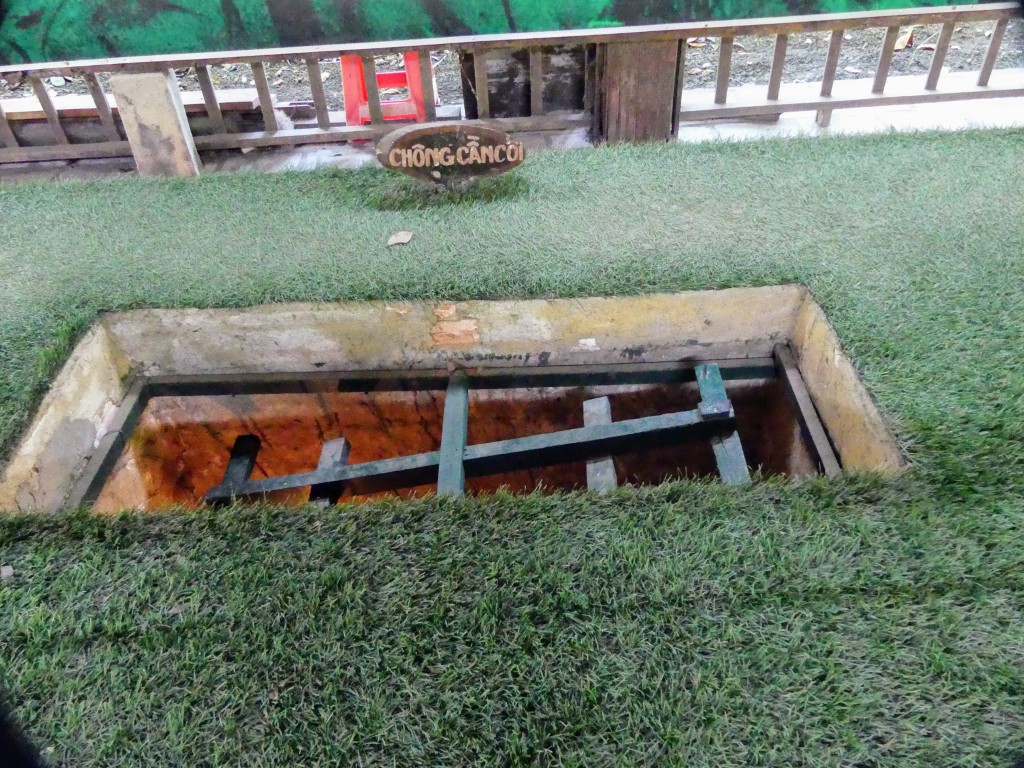
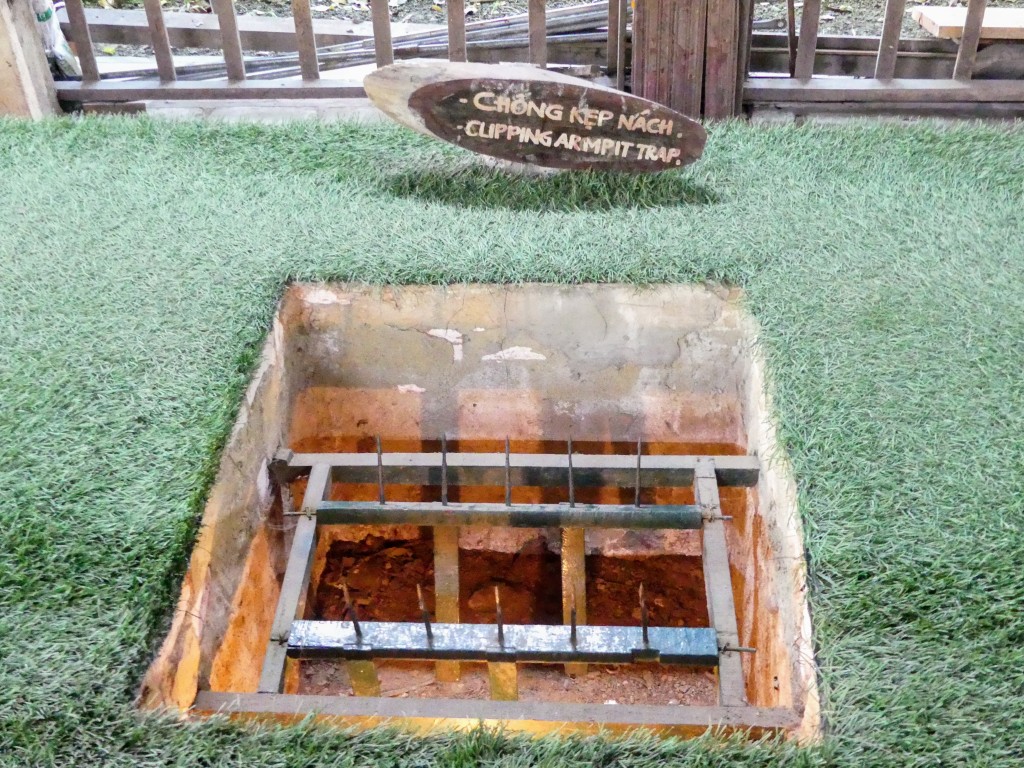
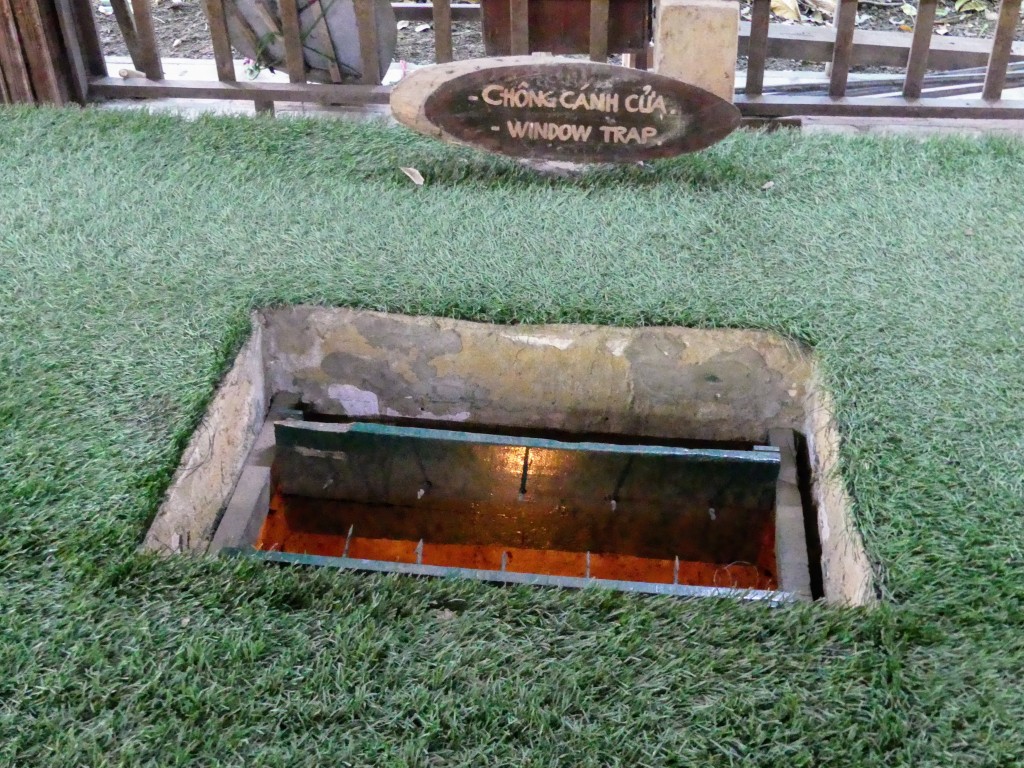
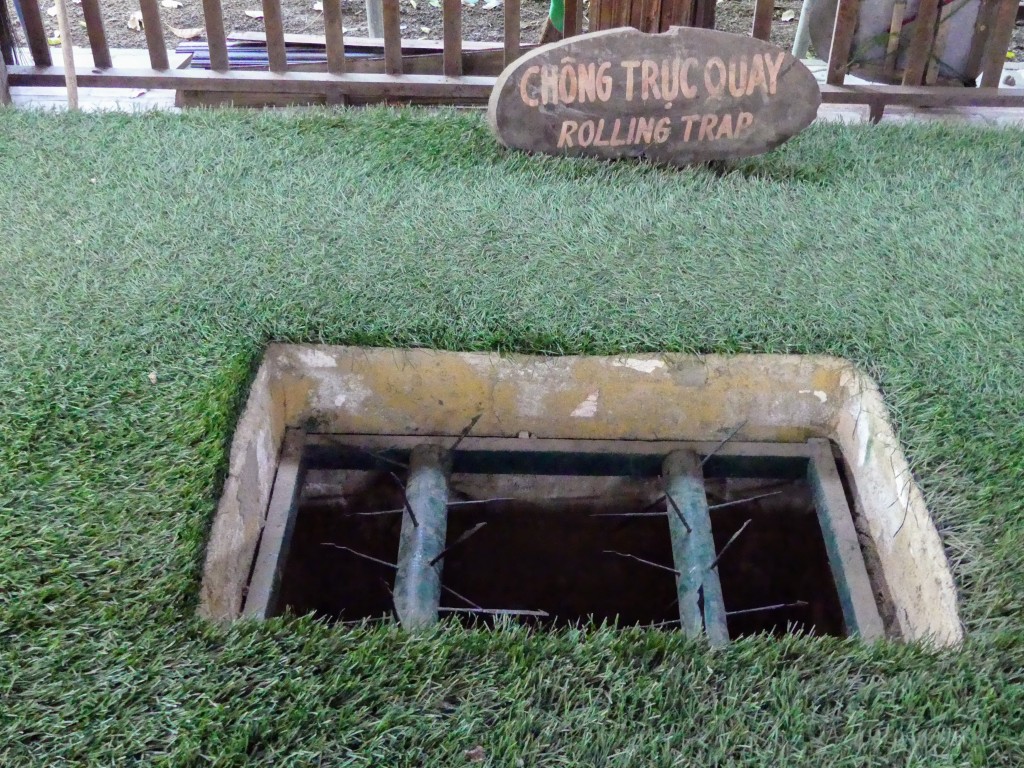
We passed by displays of the traps used to trap and kill American soldiers.


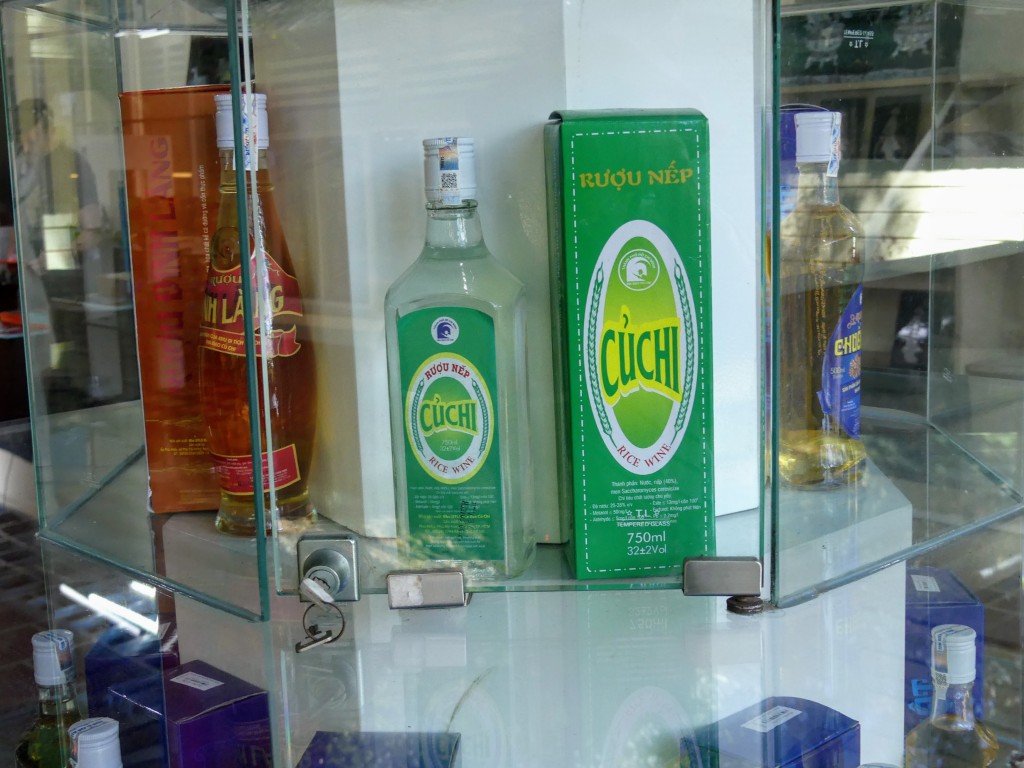
Of course, the visit ended with us walking through a gift shop. What better souvenir than some Cu Chi rice wine?
 travelswithheather