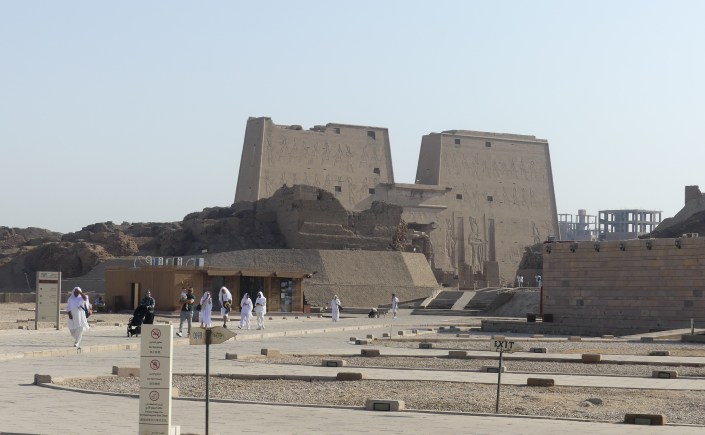
Another day, another temple! This one is dedicated to the god Horus, the falcon-headed god. It took 180 years to build this one due to political upheaval (the date construction started is engraved in the rear of the temple, July 23rd 237 BC). The work started from the holy of holies and continued outward. This is apparent given that the cartouches inside the temple have the rulers’ names engraved in them; those outside the temple do not. King Ptolomy III to XIII (husband of Cleopatra) ruled during the construction.
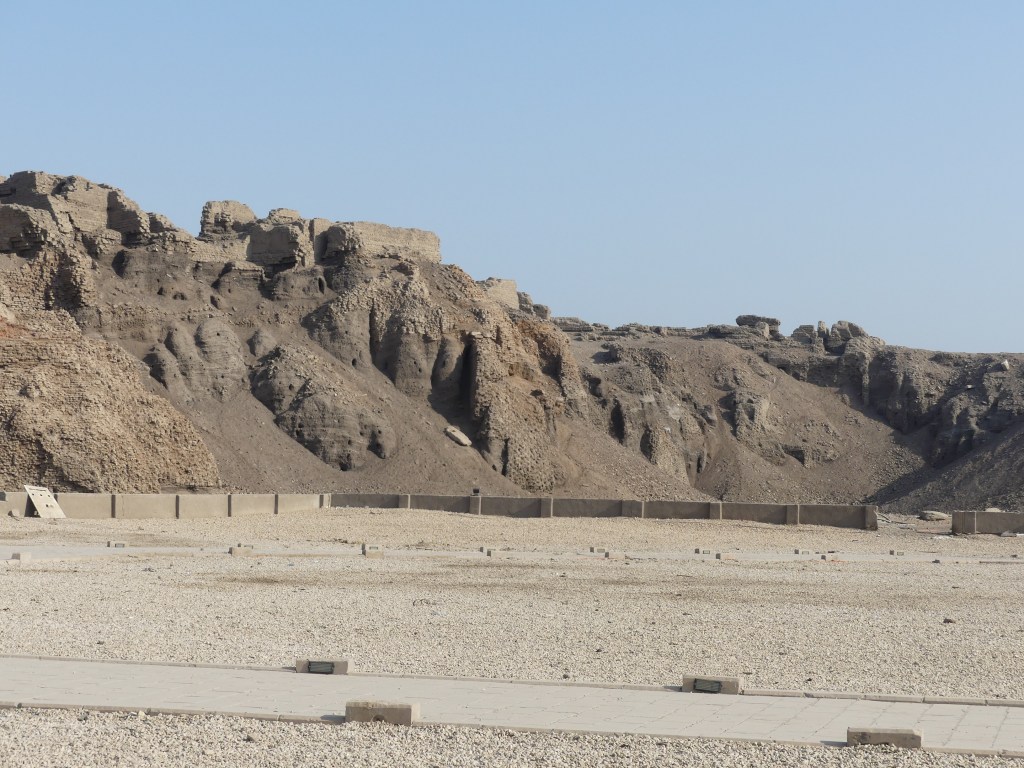
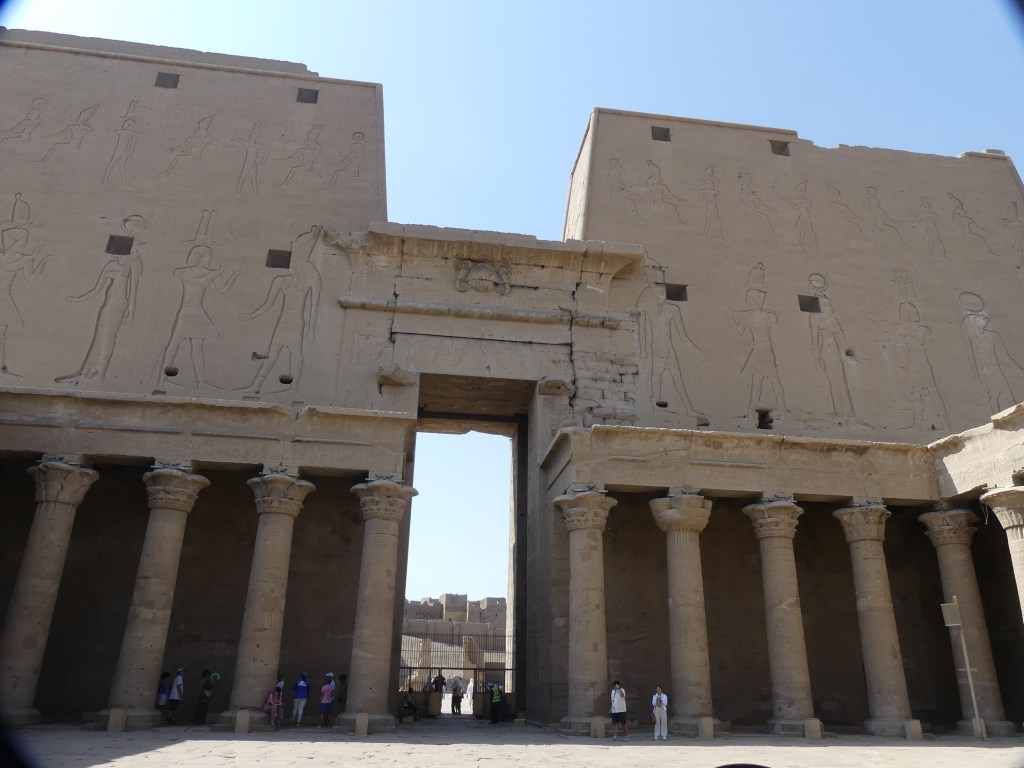
Edfu Temple is the most preserved temple in Egypt today. Like all temples, it is constructed close to Nile with an enclosure to protect from flooding. Pylons were used (like at Karnak) and will stand even during flooding. It is also built to withstand earthquakes.
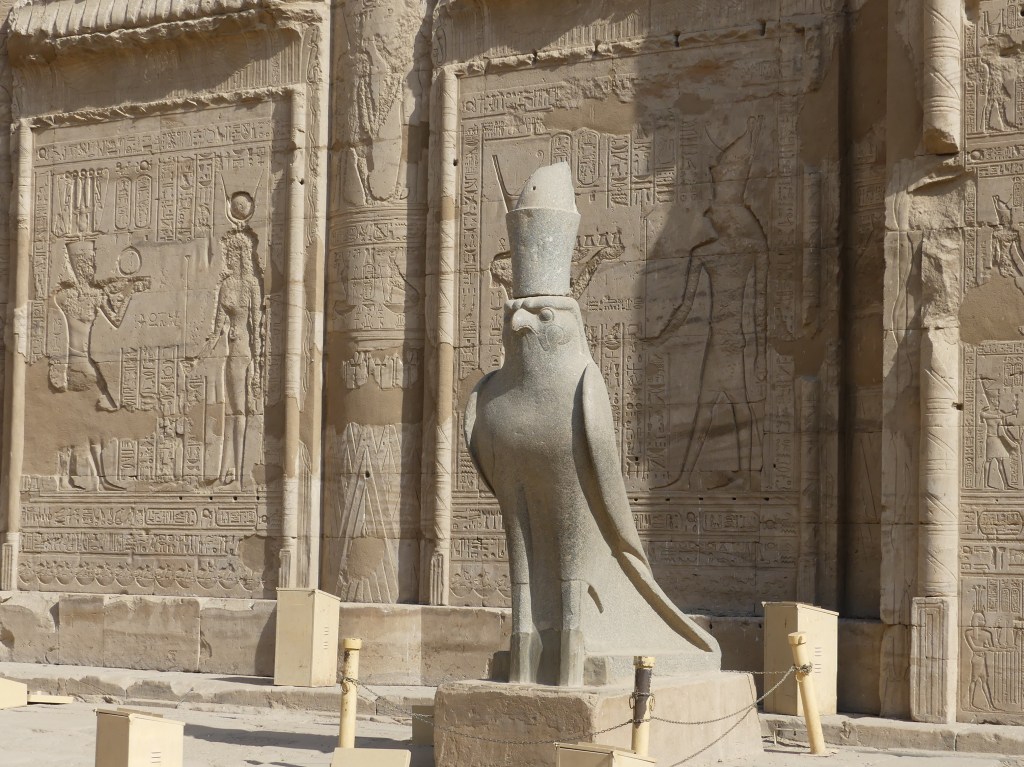
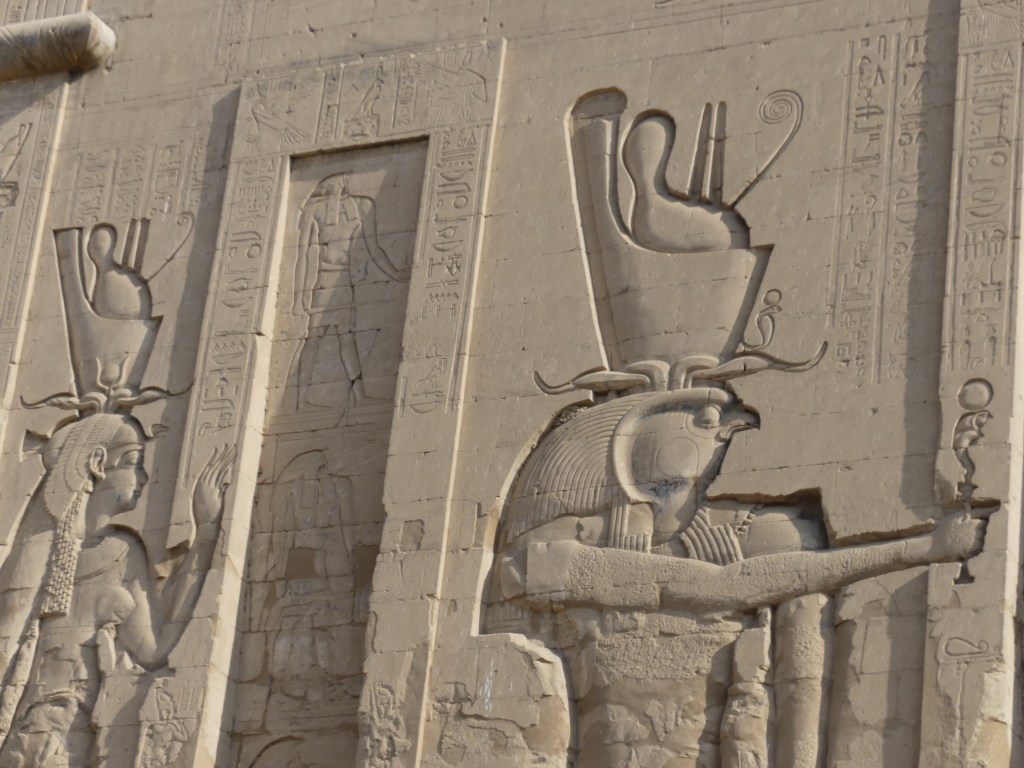
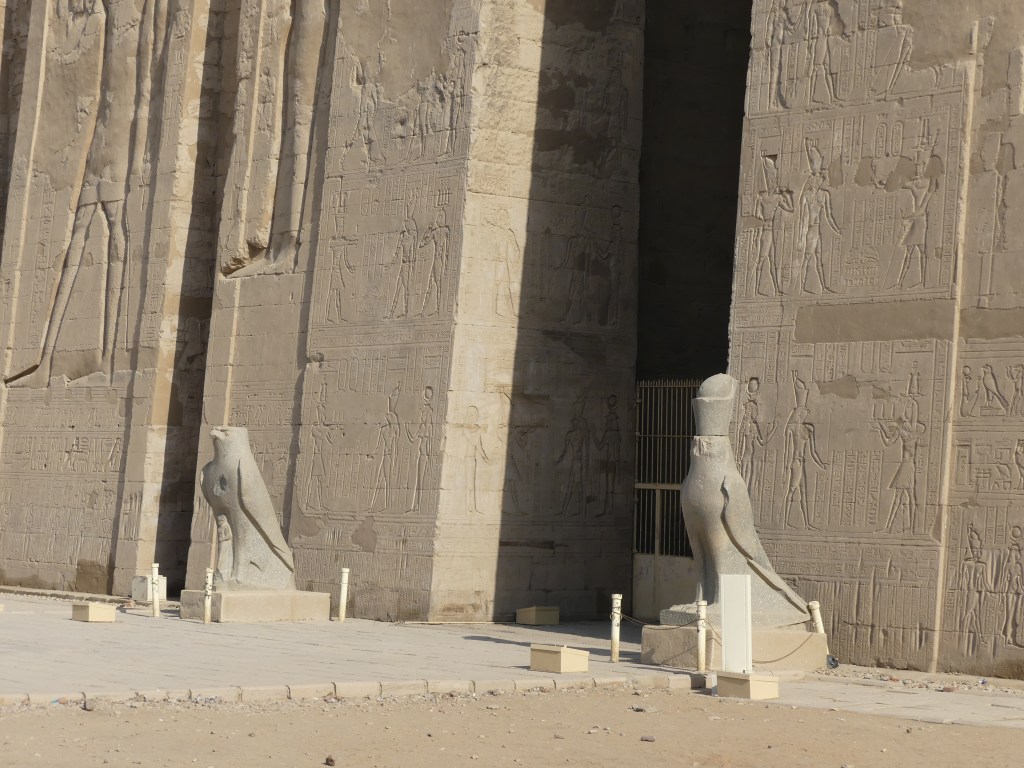
Both to the right an left of the main entrance are images of Horus along with his wife, Hothar, and child. There used to be obelisks at the entry, but those have vanished over time. On the image of Horus to the left of the entry, he wears the crown of lower Egypt; on the right, upper Egypt.
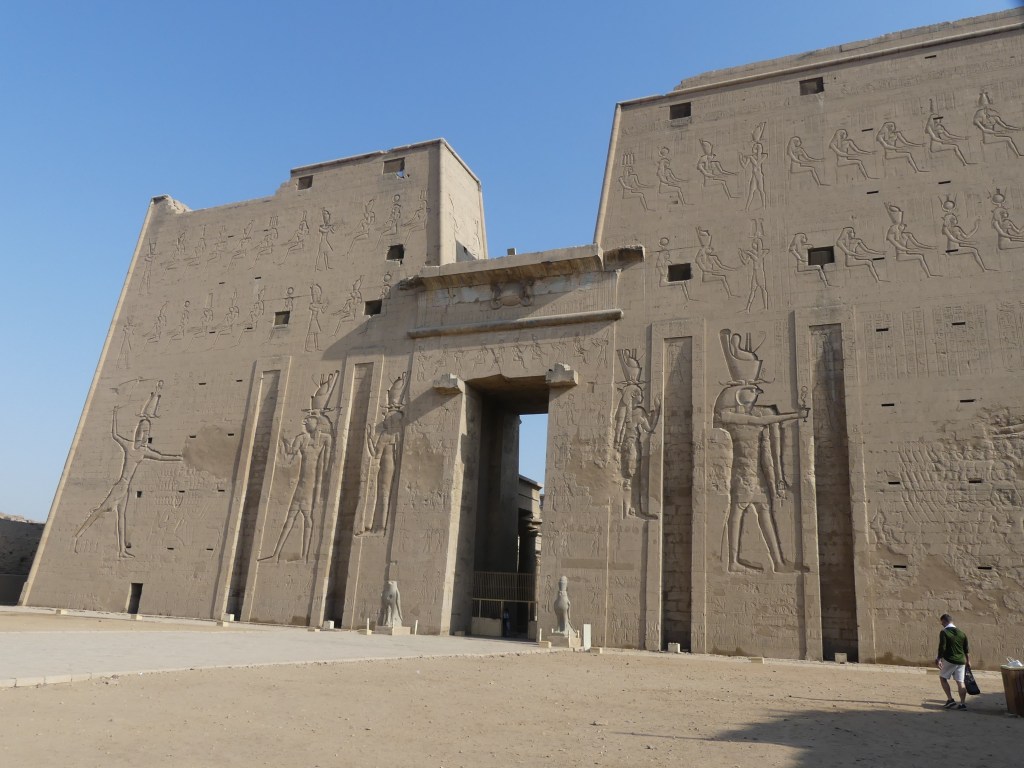
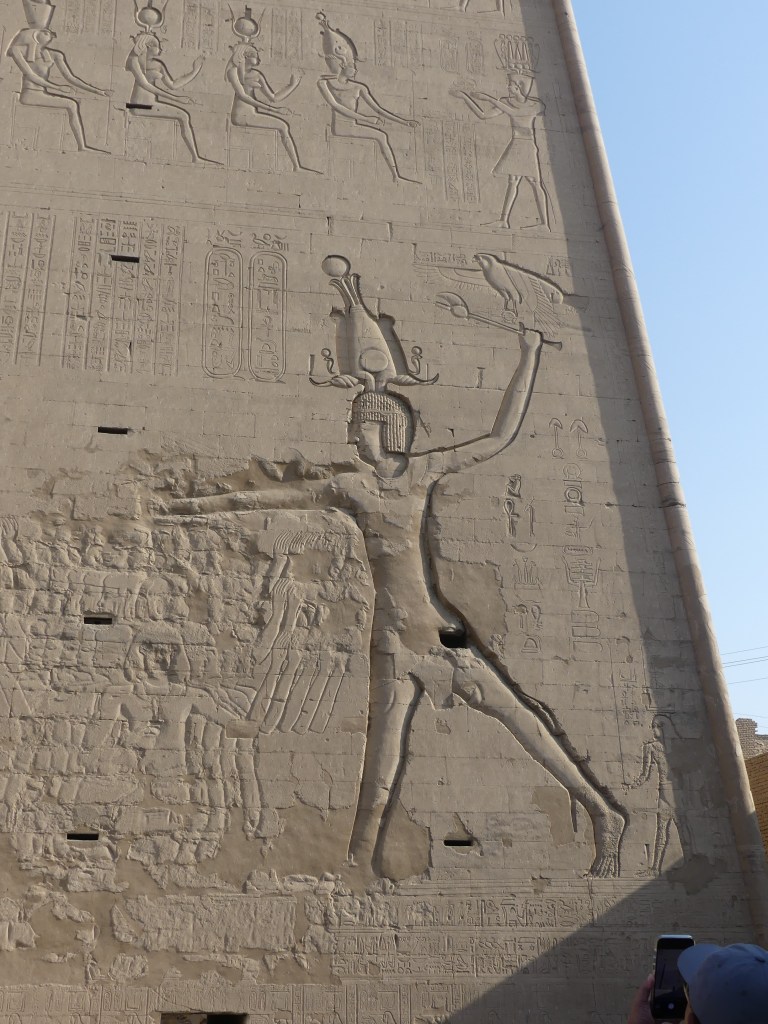
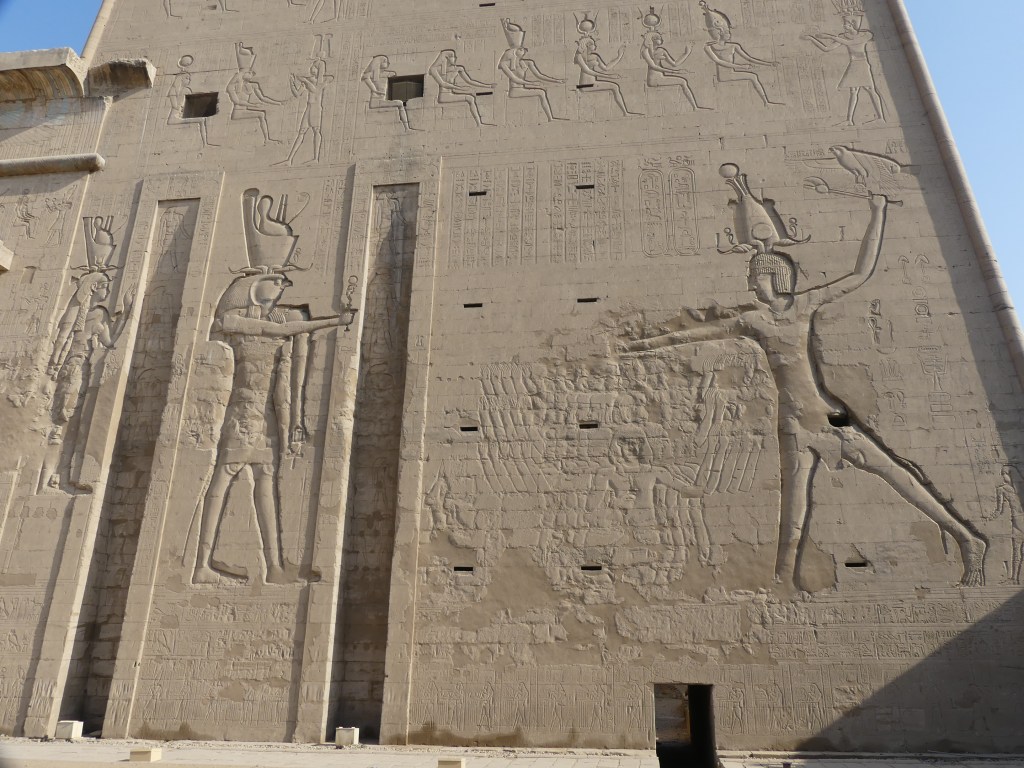
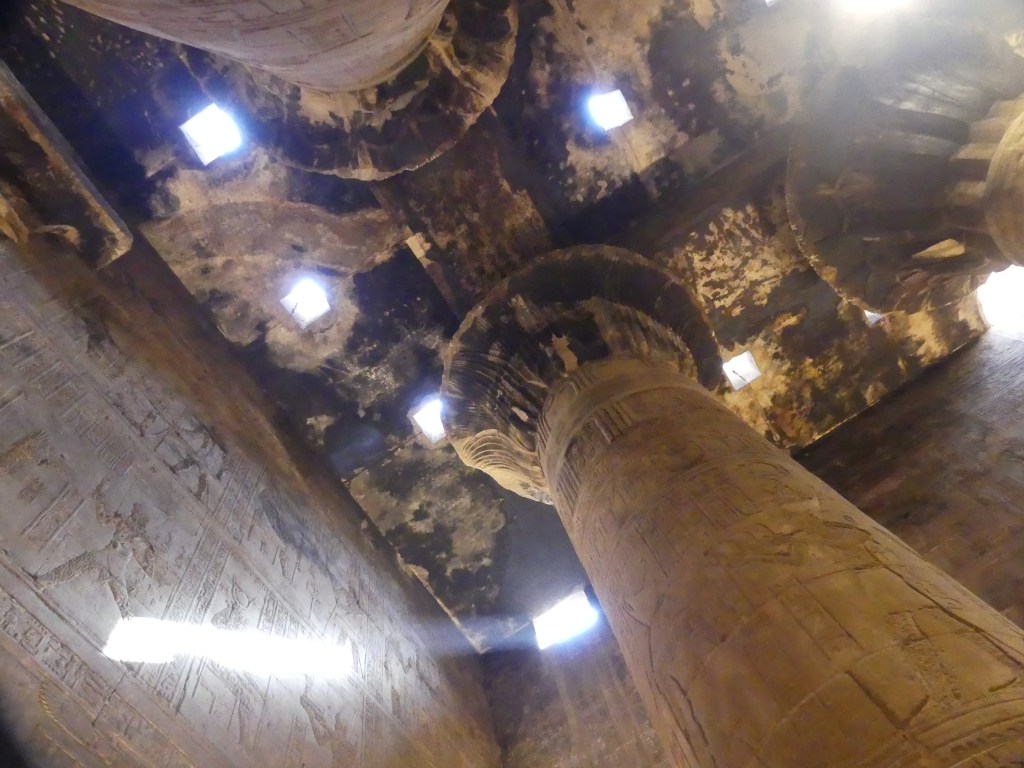
The rectangular window slits have several purposes: the high priest used them to keep an eye on the stars to predict the start of flooding; oil jars were kept in the windows to provide light; and flags were inserted to notify those outside what was going on inside and as a call to services.
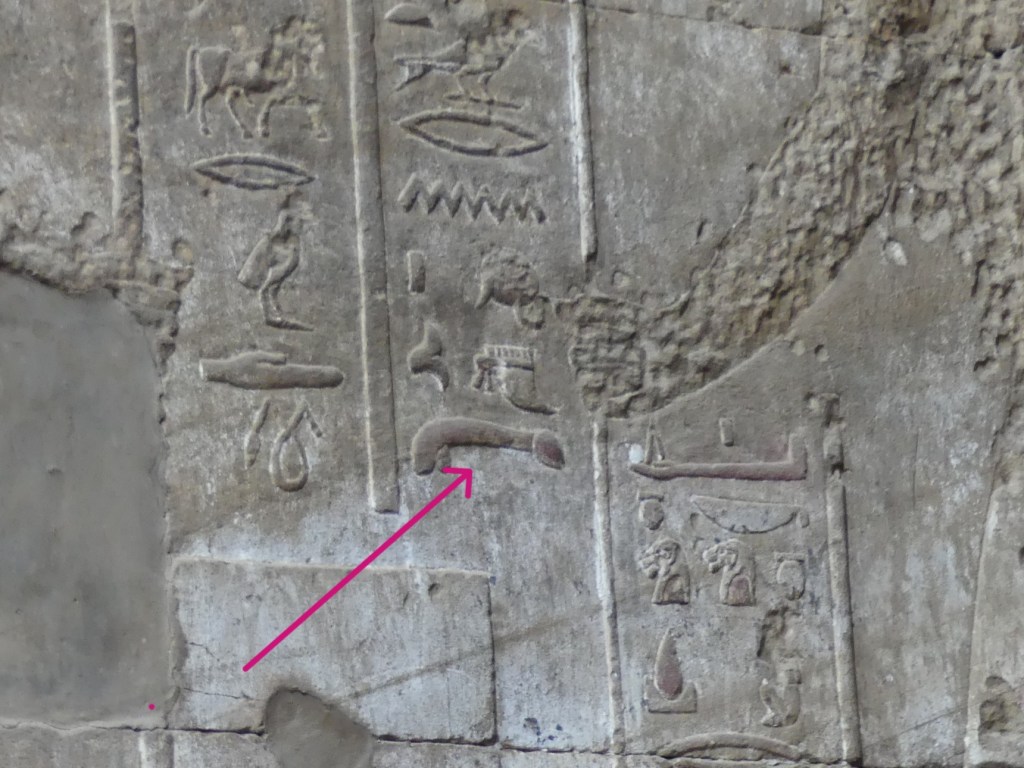
While we were outside, Walid told us about Osiris, who married his sister, Isis. The god Set also married his sister. Set wanted to have Osiris’ wife, so plotted to kill him. A party was held. Seth had a golden casket made to fit Osiris. He had several gods try to fit in the casket, but just like the story of Goldilocks, the only one that was “just right” was Osiris. The casket was floated down the Nile River. Isis was heartbroken and searched high and low until Osiris was found. Magically, she brought him back to life. Seth was not pleased, so the next time he killed Osiris, had him chopped into 14 pieces and scattered throughout the land. Again, Isis was heartbroken and set out to find all parts of Osiris. She managed to find only thirteen; one key piece of Osiris was missing – his penis. No problem: she had one made from brick, and it worked so well, the god Horus was born. There was more to the story, involving a hippo being created using black magic. There was also a spear or harpoon that Horus used against Seth, but the basic idea is the struggle between good and evil as Horus wins in the end.
There are 360 days in the Egyptian calendar; the remaining 5 days are days dedicated to gods. Baby boys are circumcised on the day honoring Osiris! From all of this mythology discussion, a person might believe that ancient Egyptians worshipped multiple gods, but Walid told us that they only believed in one god and that all of the rest were representing different aspects of that god.
Back to the actual building…golden ankhs were discovered buried beneath the four corners of the building. Ankhs represent eternity. Like other temples we have visited, vultures and the sun goddess decorate the entry ceiling.
In the outermost room, there is a storage room for alabaster containers of oil used to clean before entering the temple. As in all Egyptian temples, every surface is adorned with carved figures, each of which has meaning. The upside-down hippo symbolizes evil. Salt being scattered is used to protect the evil eye. Some local people still start their day by scattering salt.
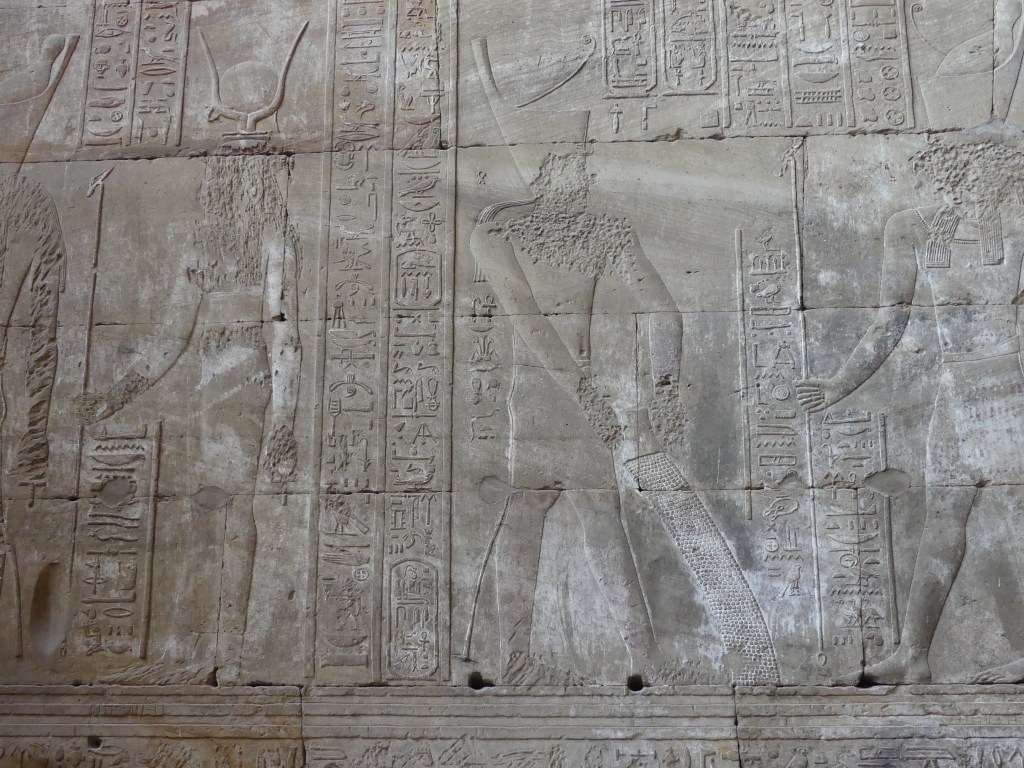
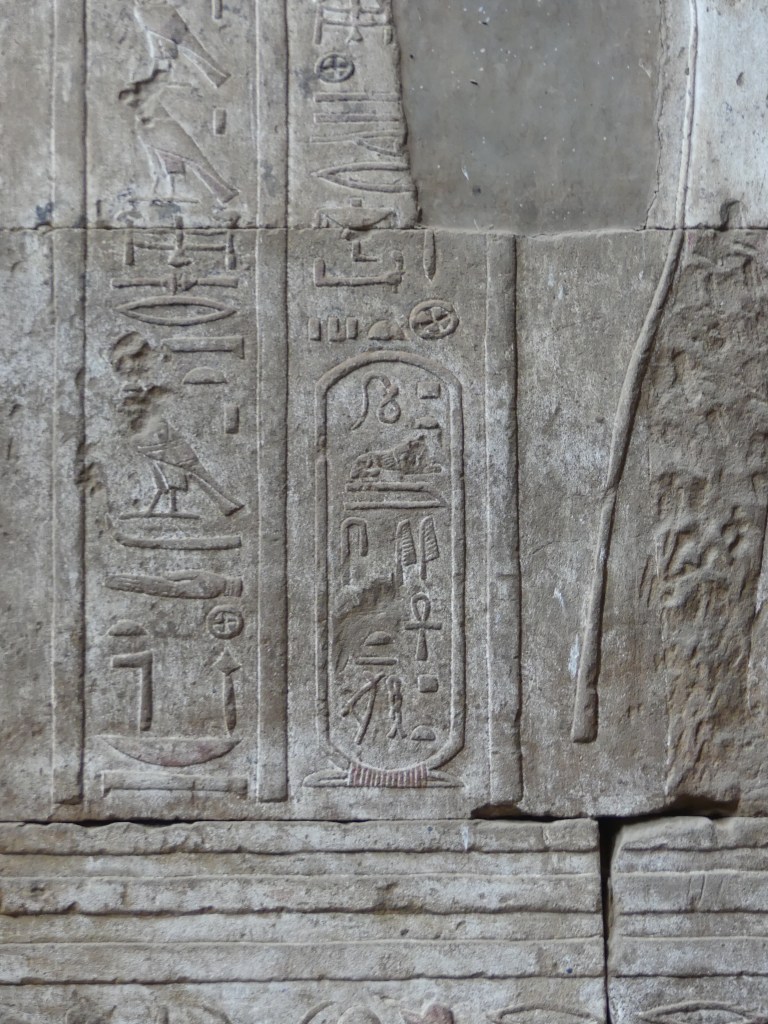
And the best news of all? We found Osiris missing penis on the wall!
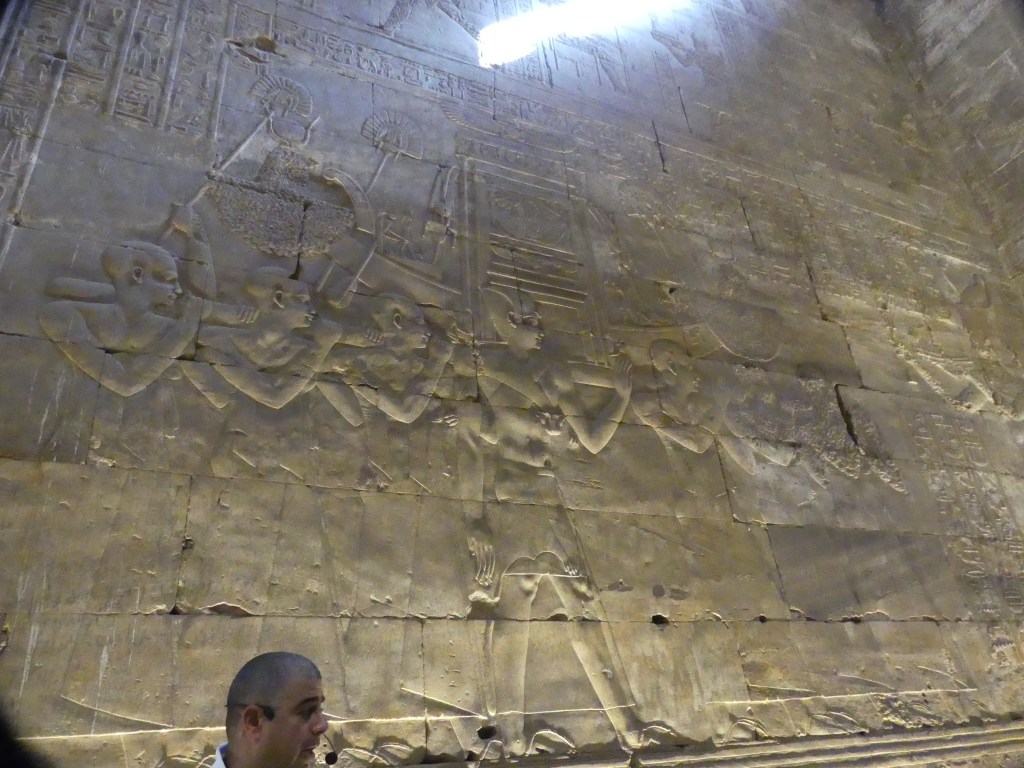
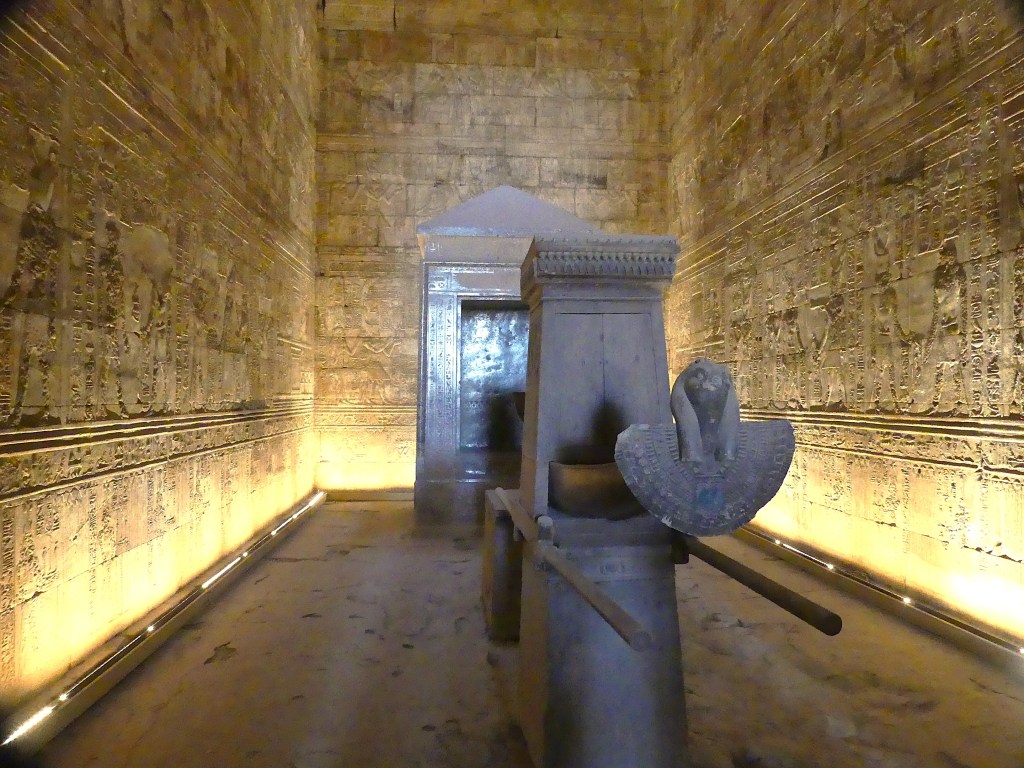
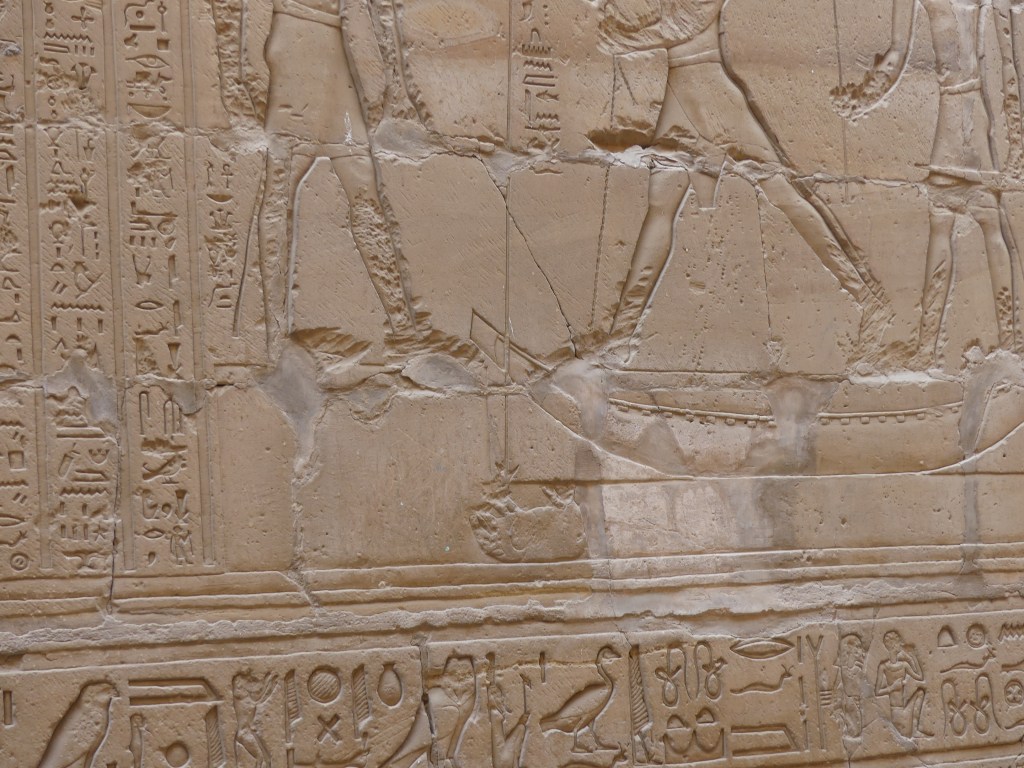
Continuing on, some parts of the ceiling are still black due to burning incense. These will eventually be cleaned. Walid told us about the image of the boat of Horus. He is seen wearing cheetah skin, which represents high priest makes decisions fast, with no mistakes. Though it looks like there are 3 men on either side of the high priest, if you look carefully, you will see that there are actually 5 men deep depicted by looking at their skirts. This is why the majority of Egyptian images are carved in profile, so that you can give the illusion of depth.
The final room is the holy of holies. Walid finally explained by the ceiling drops and the floor rises leading to this room: the narrowing of space creates megaphone for high priest so that everyone can hear him. The boat is a replica; the original is in the Louvre. The shrine is made of granite; the rest is sandstone.
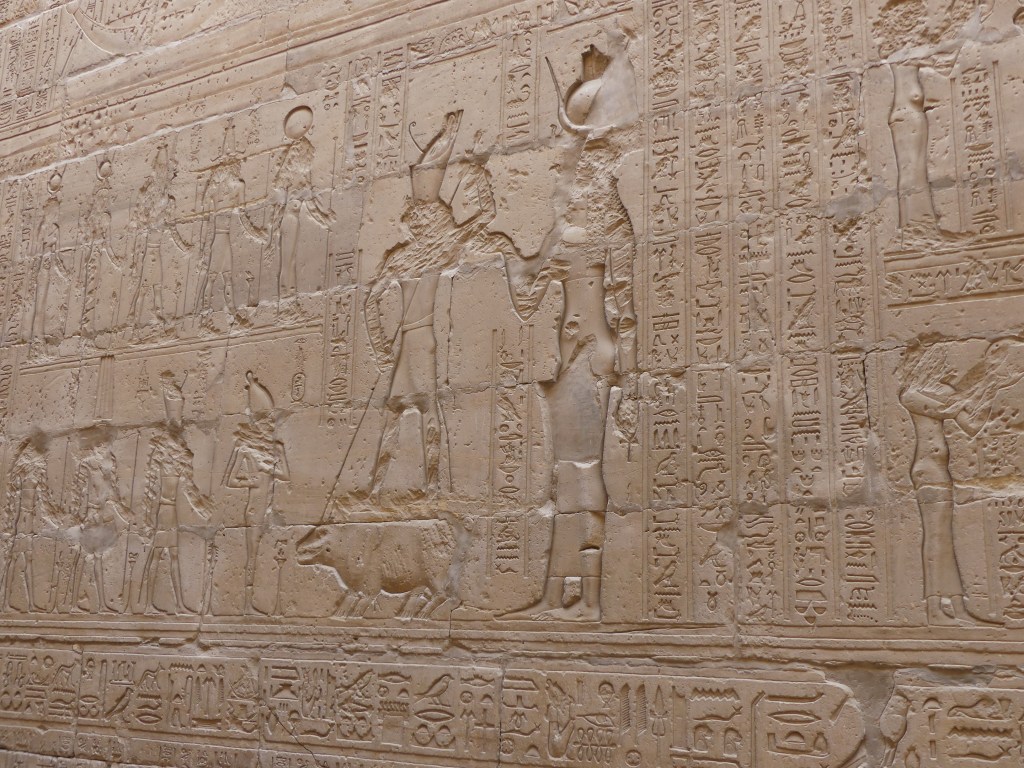
Our final stop was outside the building, where Walid pointed out the images of the hippo. Hippos can stay underwater for large lengths of time, so a falcon (such as Horus) can’t reach them. In the image on the wall, Osiris is seen punishing the hippo.
In order to exit, we passed through another “Valley of the Vultures”. We had passed through it on the way to the temple and so the vendors were ready for us when we left. They were more assertive here than other places we have visited. One tried to give me a “free” bracelet. No such thing, right? He refused to take it back, so I placed it on his shoulder. He then tried to guilt trip me into paying for it.
We headed back to the boat for another fabulous lunch and a relaxing afternoon. I should note that there was an evening tour of Kom Ombo which I opted out of due to the heat. I had reached my saturation point with temples (at least for the day)!
 travelswithheather