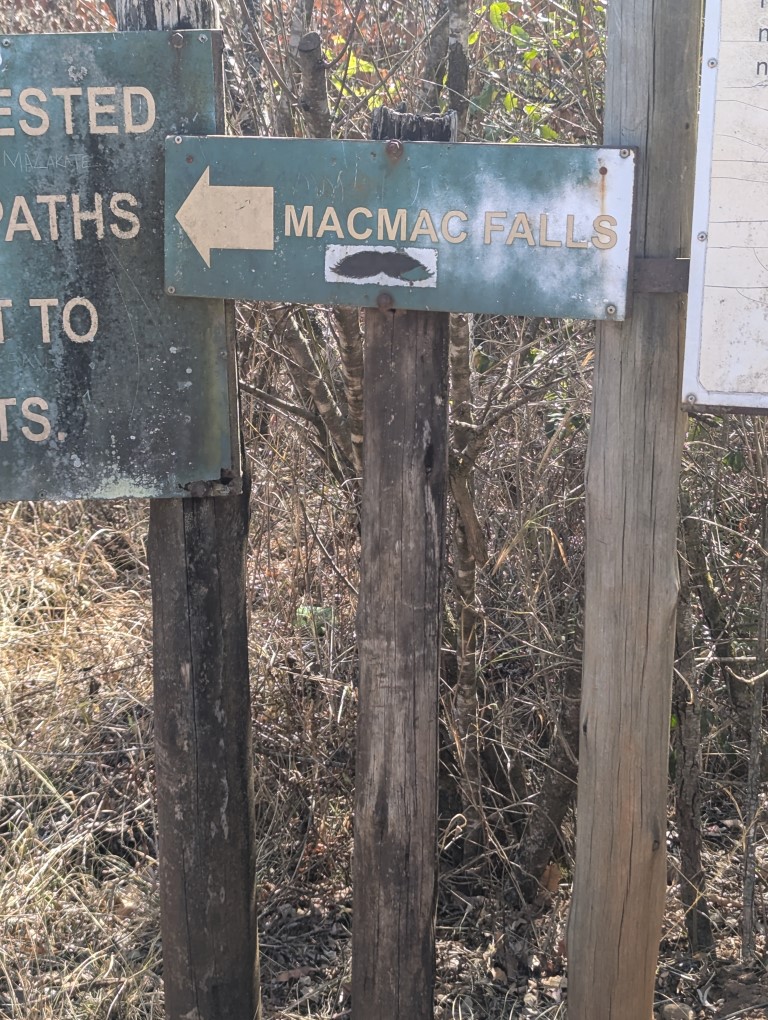
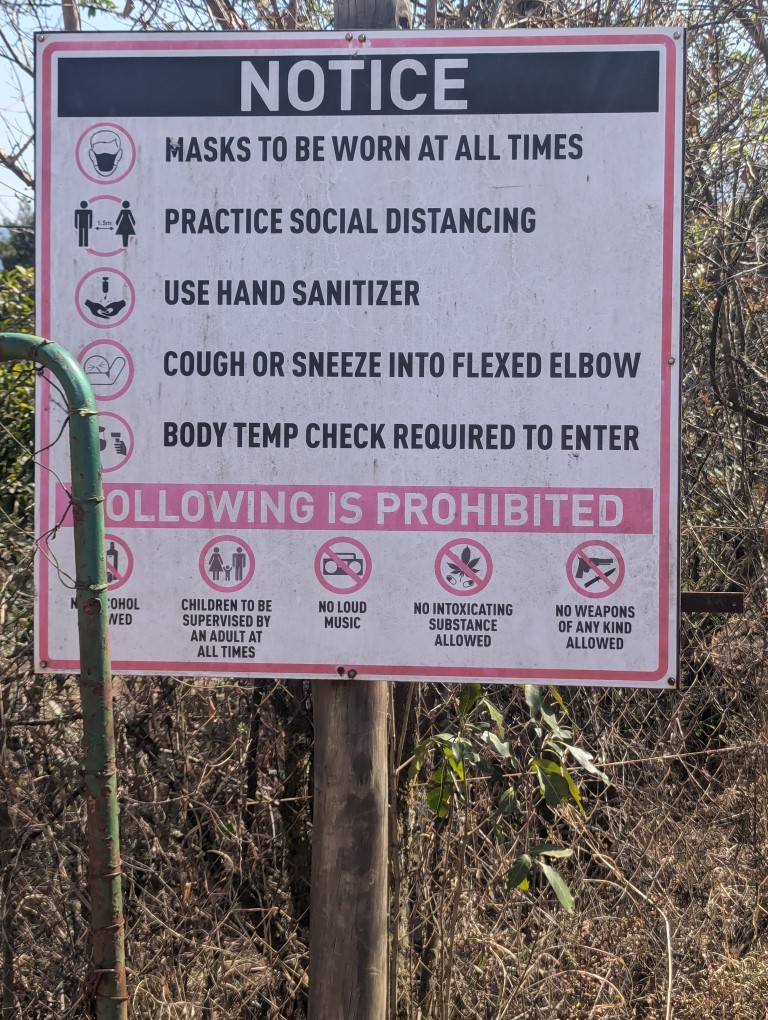
In order to reach Johannesburg, we had a long day on the bus. We stopped at Mac Mac falls and at a cool rest stop for lunch. There was a surprise awaiting us at the rest stop, but I won’t give it away since I know a couple of my friends are planning to take this tour!
During the ride, Don filled us in on more history. I am skipping the majority except for the apartheid information since the city tour in Johannesburg included a visit to Nelson Mandela’s house and the Apartheid Museum.
In 1948, the Afrikaner National Party won control of South Africa in an election. They had three goals:
- introduce apartheid
- withdraw from the Commonwealth
- Turn South Africa into a republic
The population registration act required whites, blacks, colored (not a derogatory term here; it means mixed race), Indian, and other (mainly Asian) to register. Previously, the Land Act of 1910 gave 85% of the land in South Africa to whites. The remaining 15%, all rural, was given to blacks, who were not considered to be part of South Africa.
The Group Areas Act forced people to live by race. The “other” group had no area to live in so normally lived in white areas.
The dompas was a passbook that blacks were forced to carry that stated where you were from and where you were employed. A cop could stop you at any time and ask to see your passbook. If you were Zulu by heritage but lived elsewhere, you would be forced to return to Zulu land.
On March 21, 1960, 69 protestors were killed which put apartheid in the international spotlight. The UN Security Council created a resolution against apartheid. This prime minister of South Africa then withdrew the country from the Commonwealth in order to prevent being expelled.
South Africa was banned from participation in the Olympics from 1964 until 1988.
Prior to this time, Nelson Mandela and Oliver Tambo opened the first black law firm (1952). They became active in the ANC (African National Congress) and became more militant over time, fighting against apartheid. He eventually would be arrested in 1963 and given a 5-year sentence. This turned into a life sentence when the authorities raided the ANC headquarters and found additional evidence used against him.
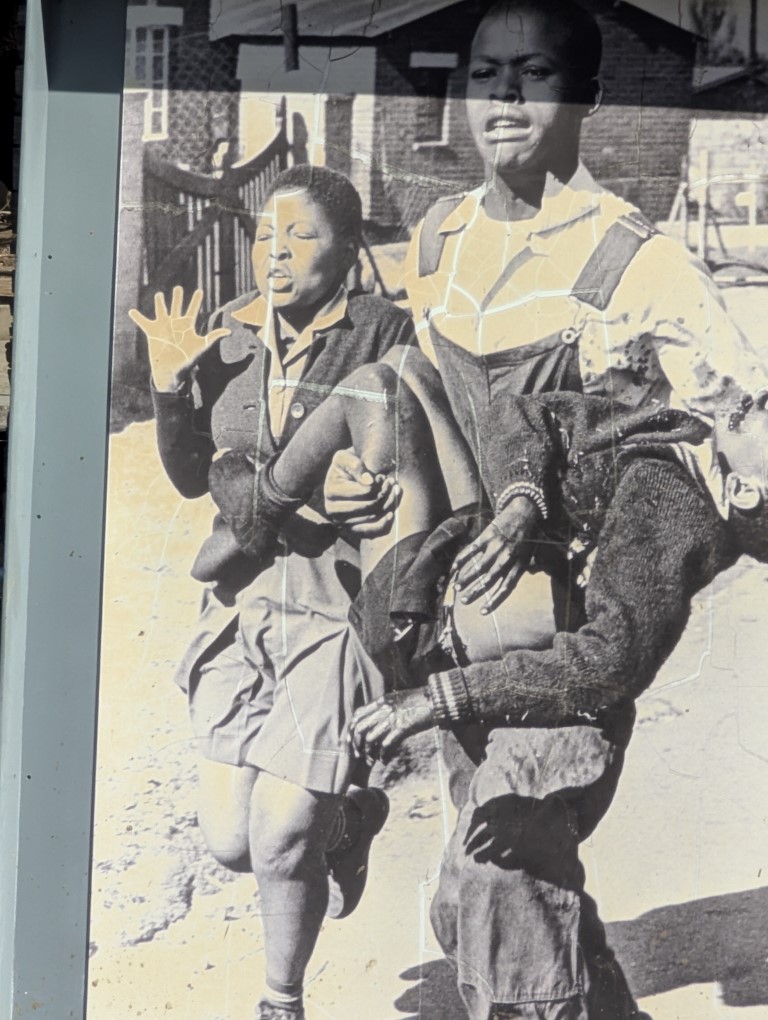
In 1976, Afrikaans became the language of instruction, even though most teachers did not speak the language. During a peaceful protest march in Soweto, Hector Pieterson, a young student, was killed by police. In the next three days, another 300 were killed.
The US finally imposed sanctions against South Africa in 1986 as additional restrictions were placed on blacks. The country was headed toward civil war. In 1989, F. W. DeKlerk was elected president; in 1990, he made a totally unexpected move and announced the unbanning of the ANC and release of all non-terrorist political prisoners. Several days later, Nelson Mandela was released and addressed the world from Cape Town. This was the beginning of the end of apartheid. Mandela became president on April 29, 1990.
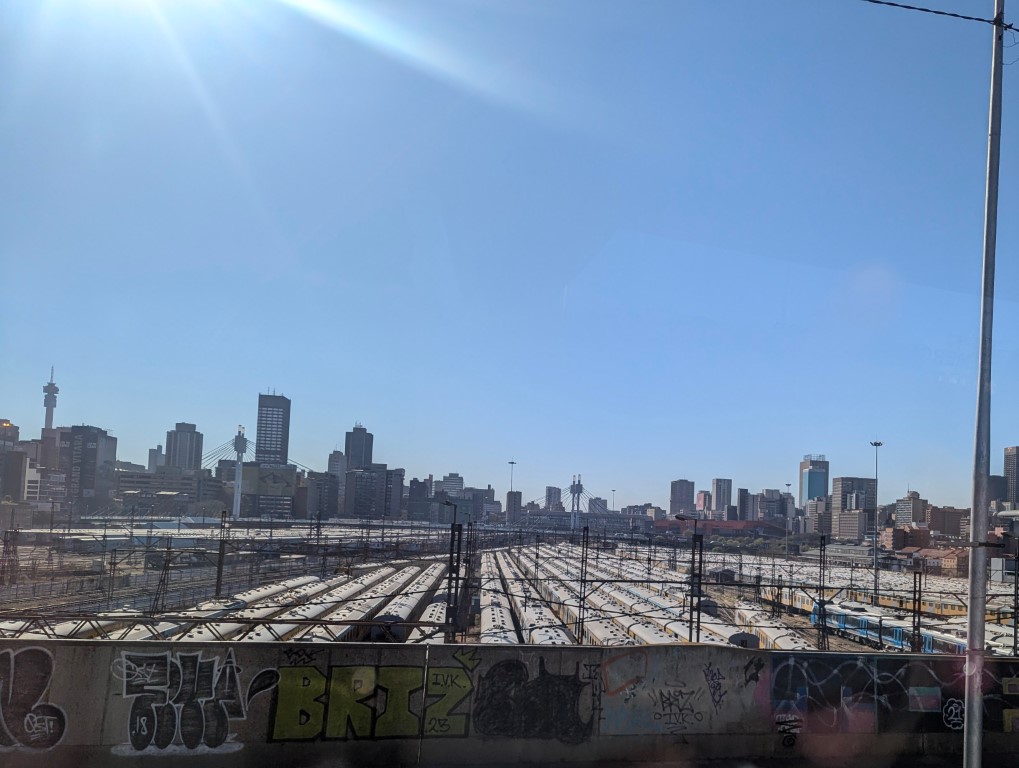
Whew! Enough history for now! As we arrived in Johannesburg, we saw unused train cars as far as the eyes could see. Johannesburg became a thriving metropolis due to the gold rush. At the time, South Africa provided 80% of the world’s gold; now China and Russia have overtaken it. Here, as in the rest of South Africa, the police are very corrupt; crime is rampant. Many are unemployed. Homeless people often direct traffic (for tips). The highway used to separate black and white areas of the city. The former downtown core is mostly deserted now; the business district has moved to Sandton which is where our hotel is. The main fights against apartheid took place here. Now, it is known as the friendliest city in the country.
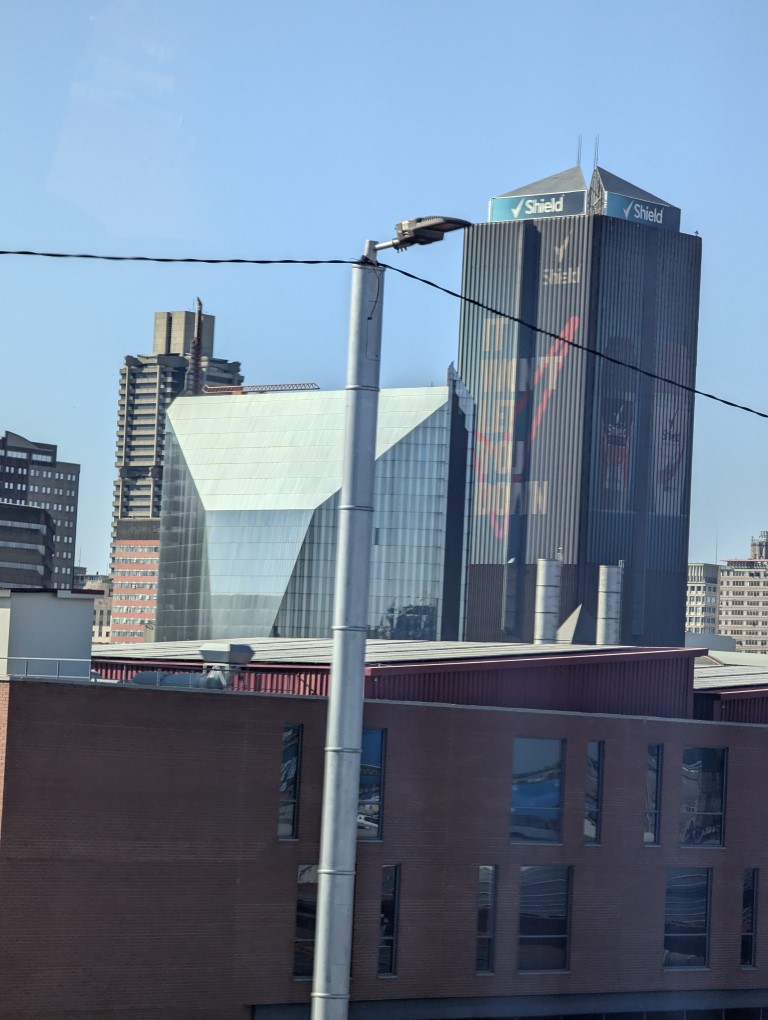
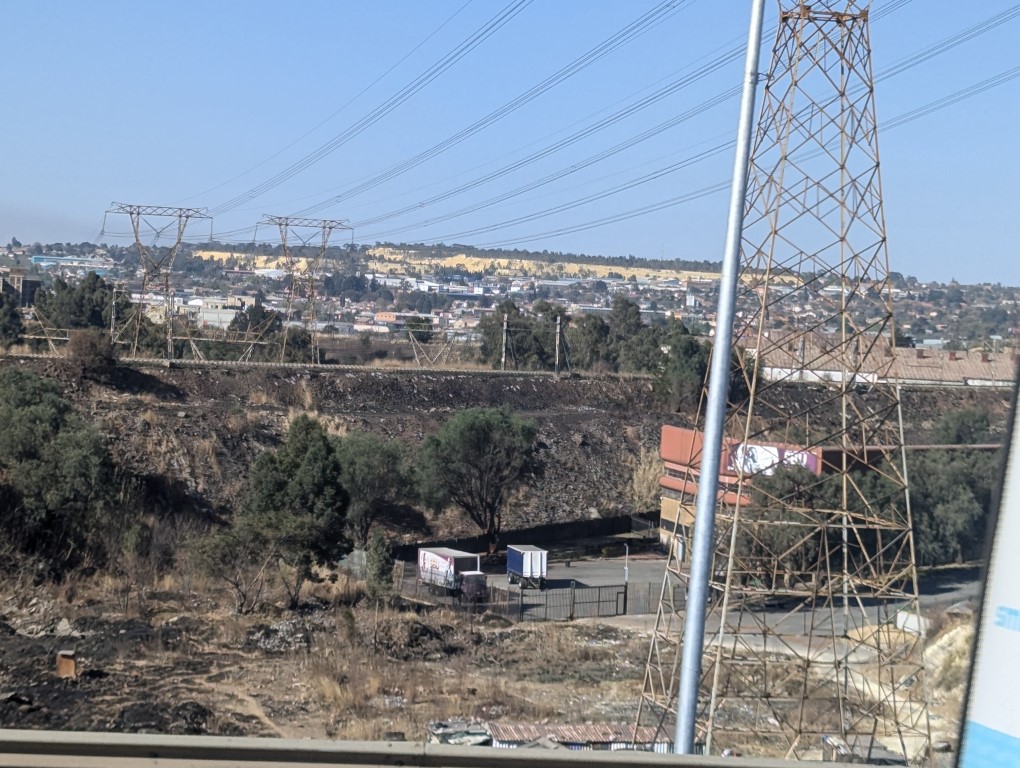

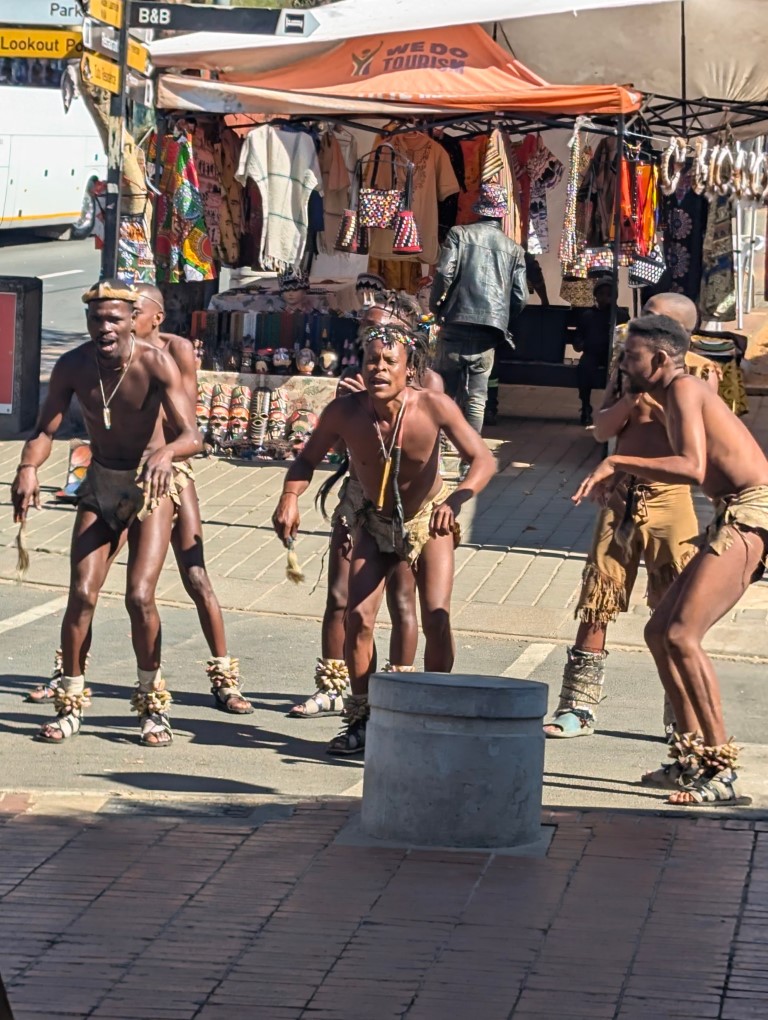
Our first stop was Soweto, formerly a shantytown for blacks, now a thriving community. Soweto is an acronym. It stands for SOuth WEstern TOwnships. Andani was our guide for our time in Soweto.
As we drove through Soweto, we saw the largest hospital in the world, large shopping malls, nice homes and of course, shanties. There is free government housing available for the poor; they pay only water and electricity. Apparently, those that install the meters ask the tenants whether they want them to run fast or slow. Some of the free housing is from converted hostels that miners used to live in. Andani pointed out a BMW dealership. He told us the meaning of BMW here: Black Man’s Wish, Be My Wife, or Big Money Wasted😂.
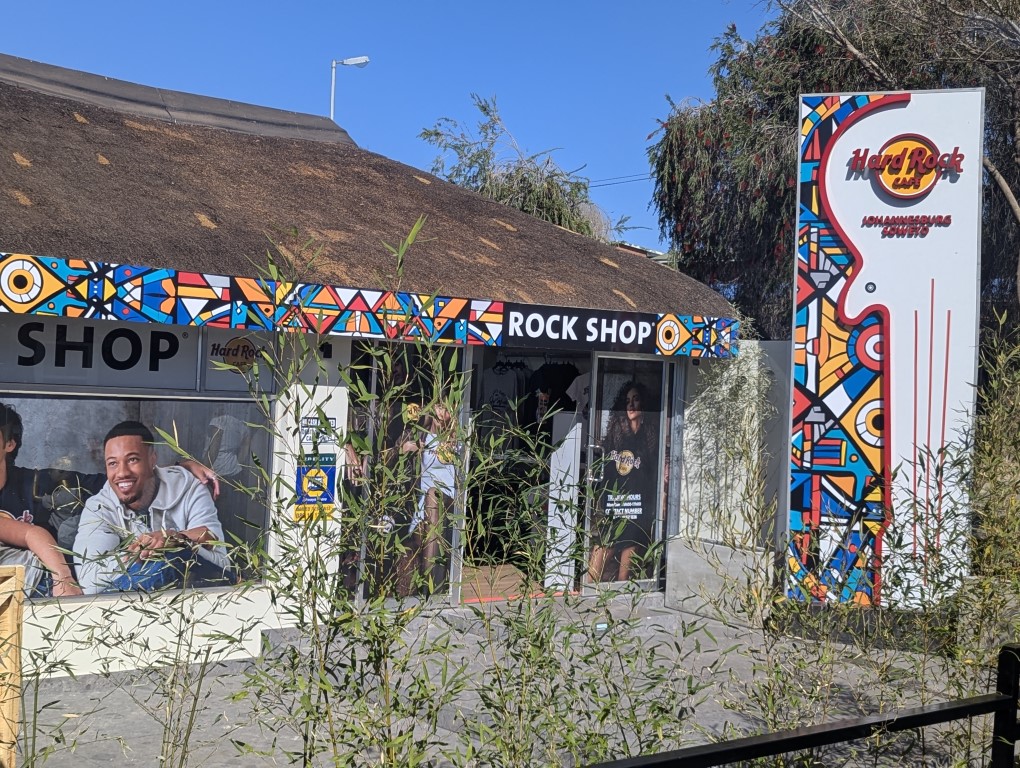
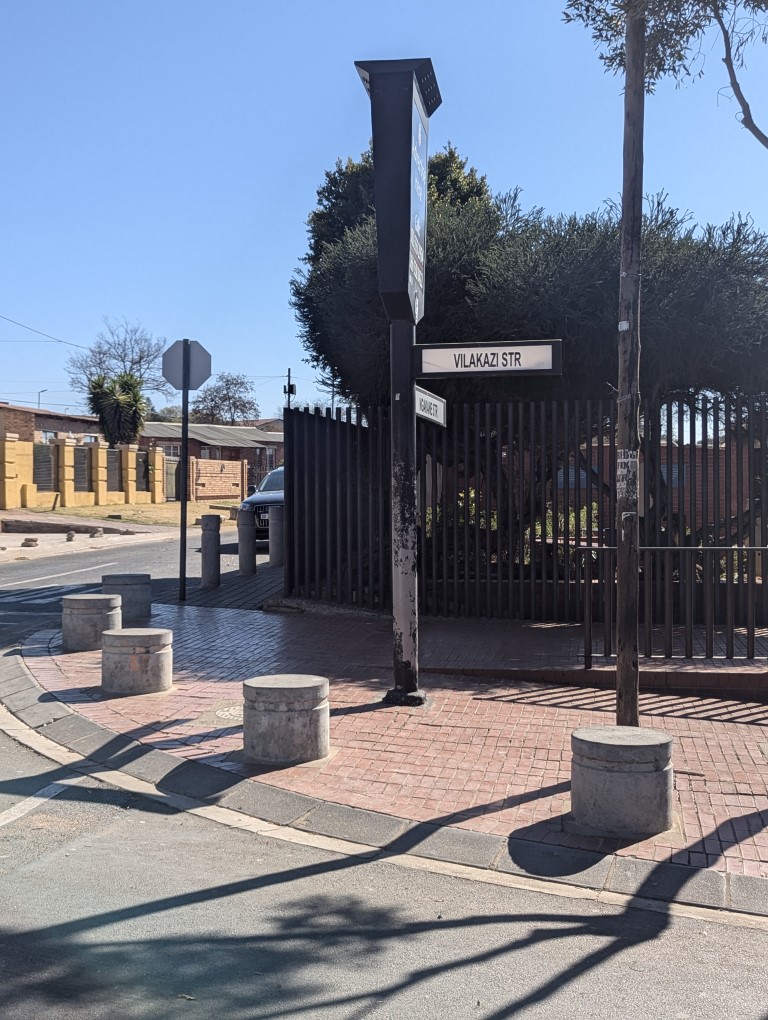
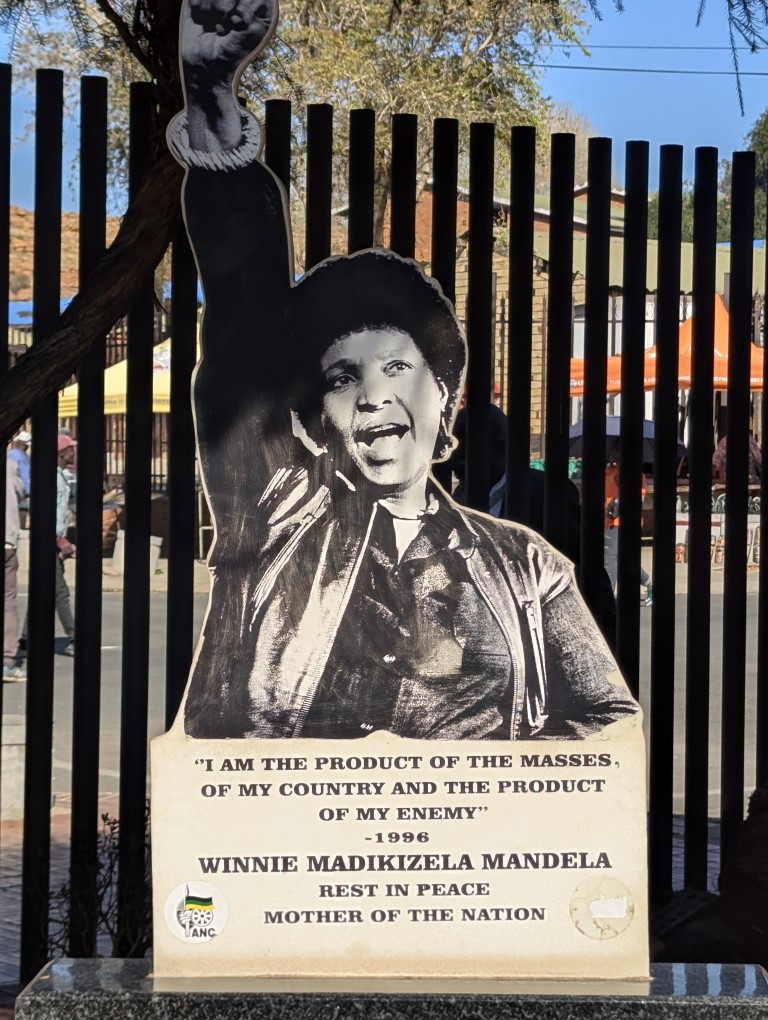
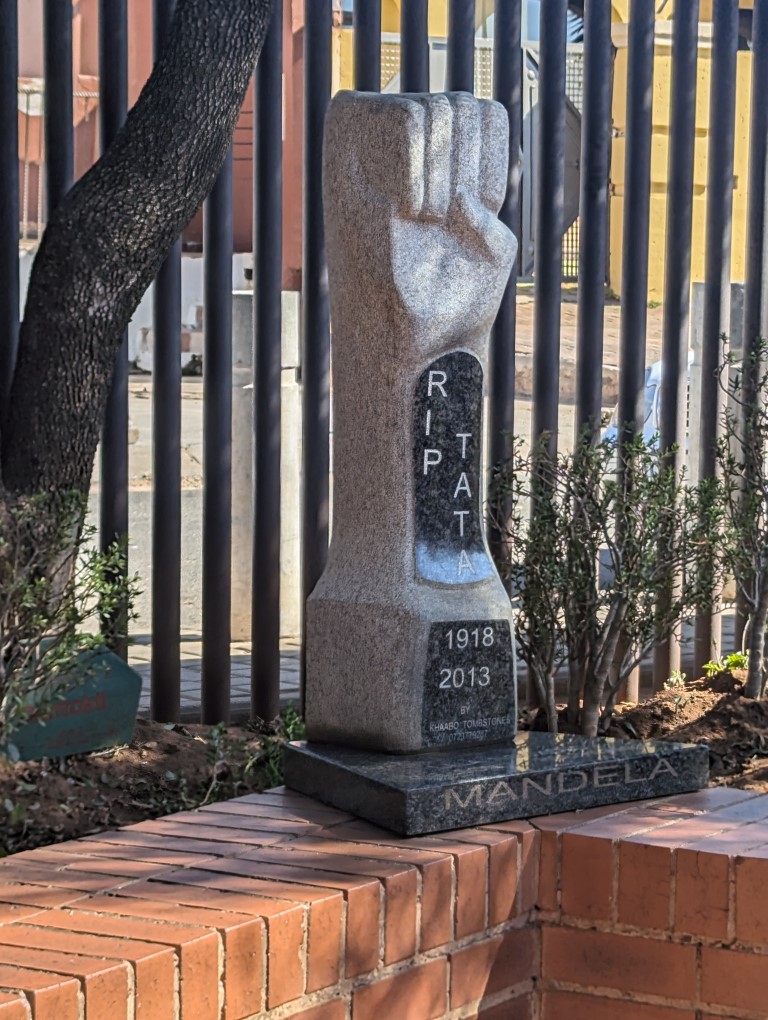
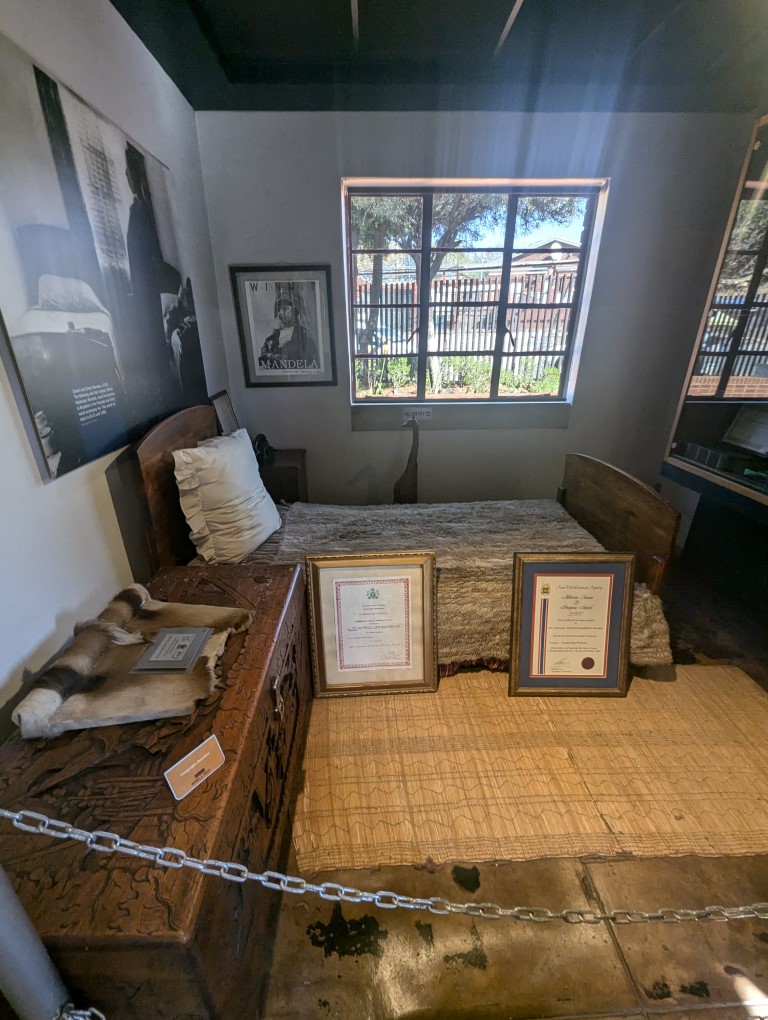
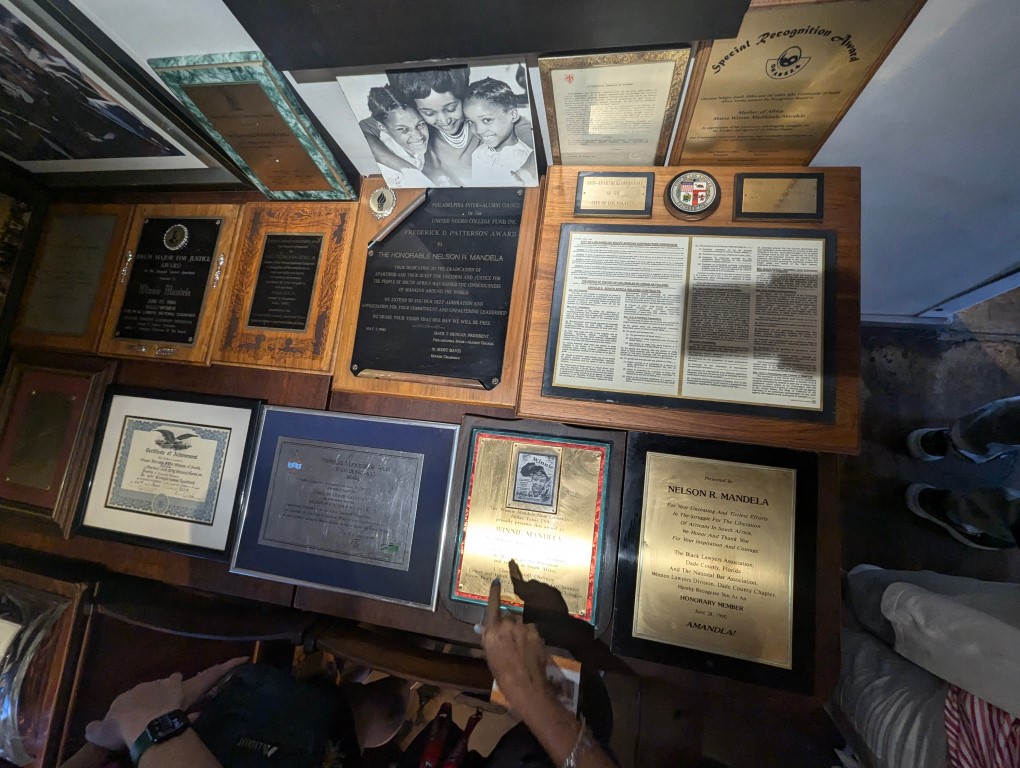
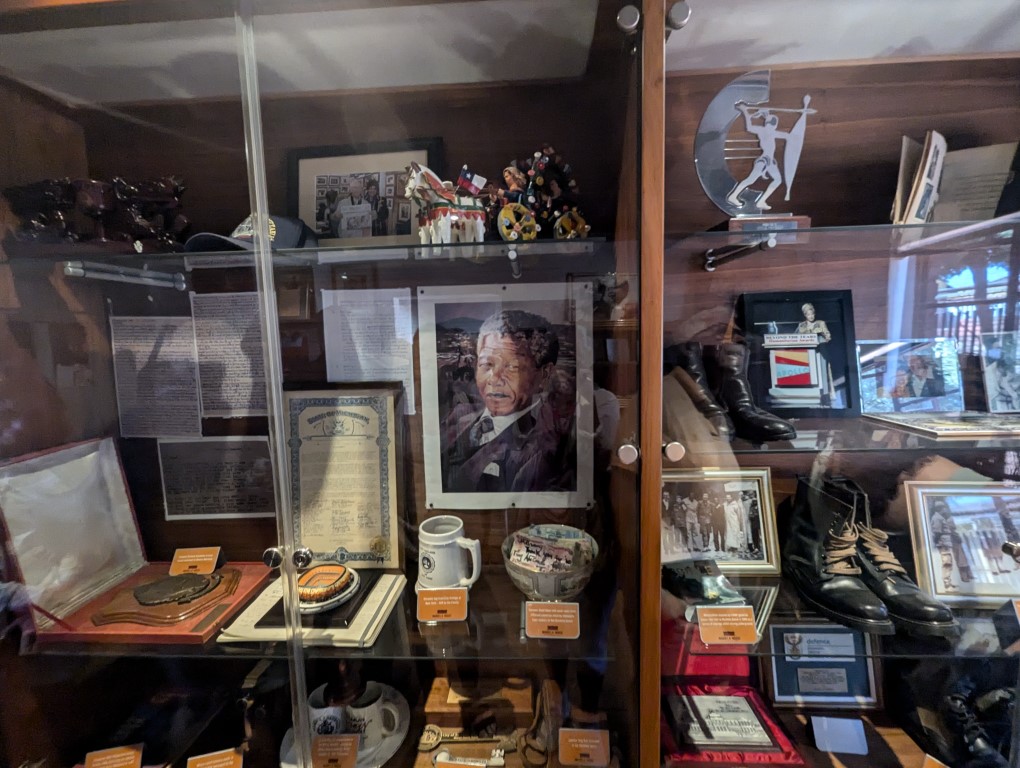
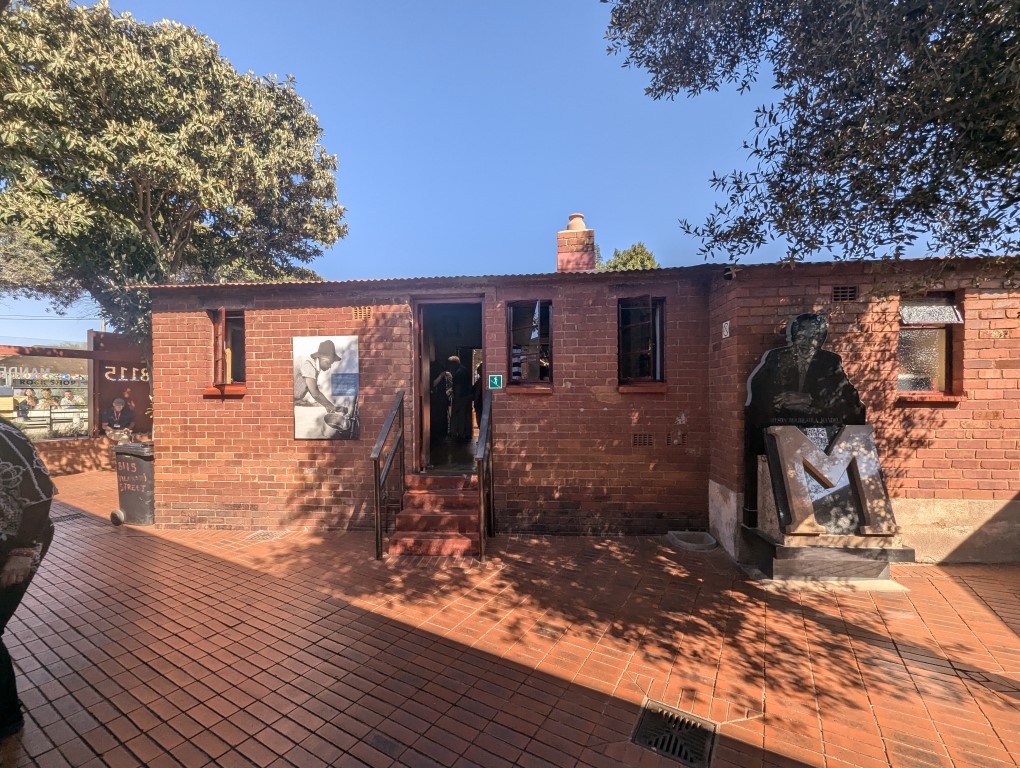
We stopped at Vilakazi Street, home to Desmond Tutu’s house (his son still lives there), Nelson Mandela’s house (now a museum), and the Hard Rock Café. We were given a tour of Mandela’s House.
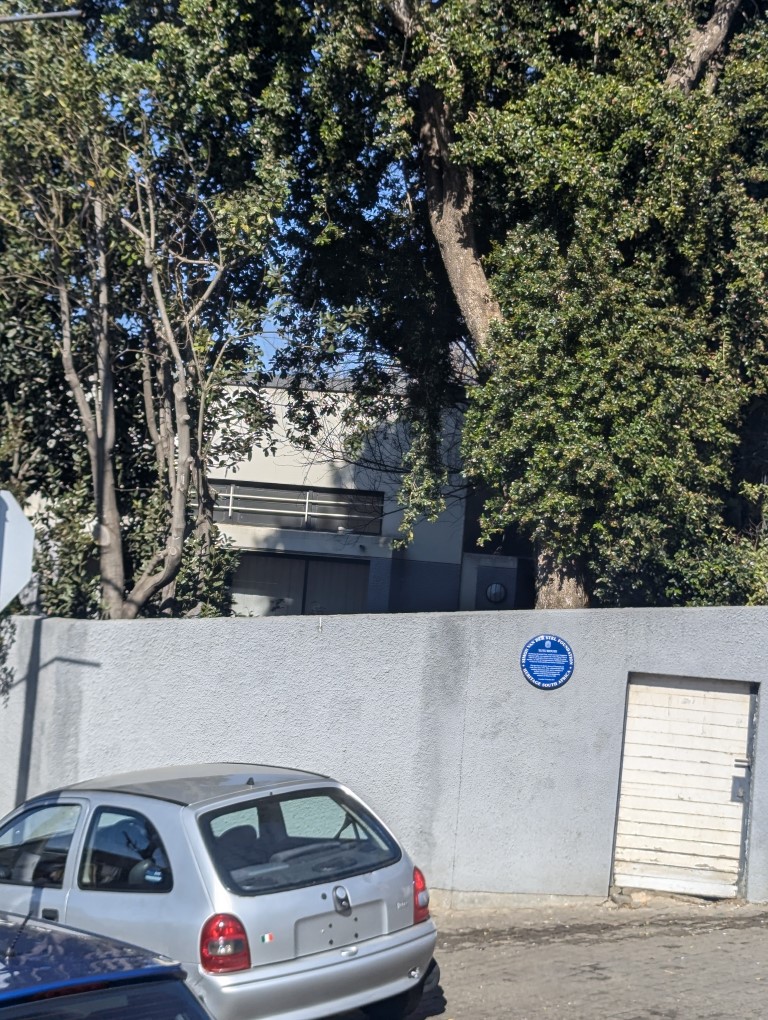
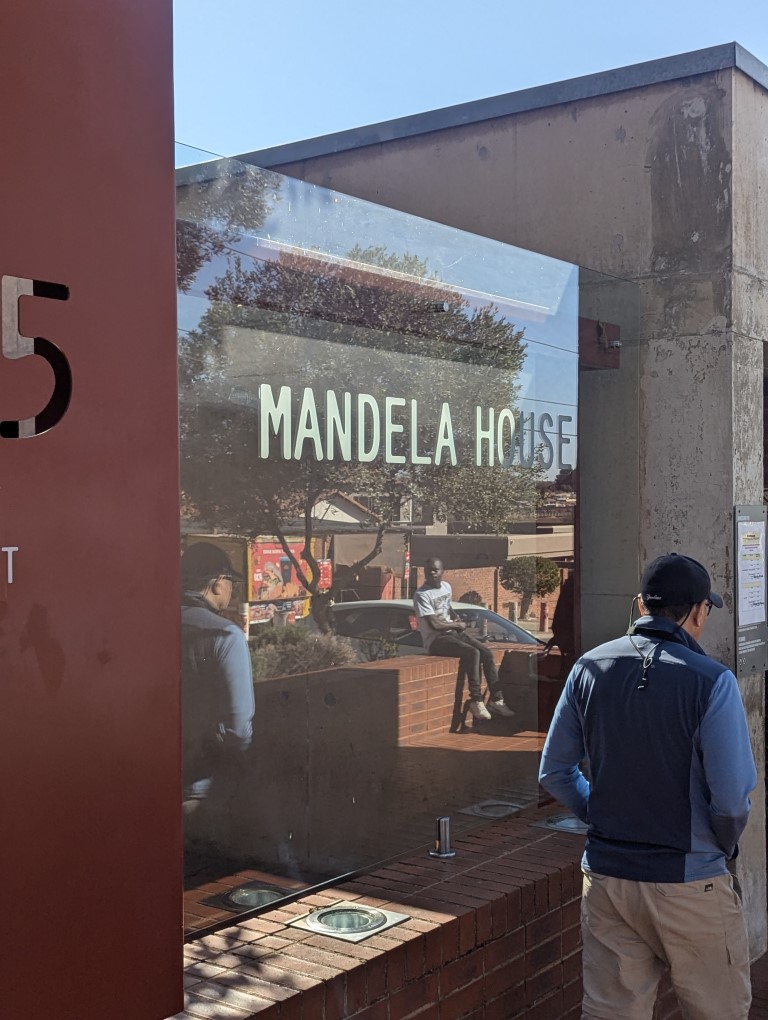
Our guide for the museum gave us a brief history of Mandela’s life. He was not named Mandela at birth (he was Xhosa); that name was given to him by the school he attended. He was expelled from college and returned to his home in eastern Cape Town. His parents threatened him with an arranged marriage; instead he made the choice to return to college where he earned his law degree. He married his first wife and had four children; only one is still alive. He and his wife divorced in 1956; she was a devout Jehovah’s Witness and they could not reconcile their beliefs. He married his second wife, Winnie and had two daughters, one of which died during the Covid pandemic. They divorced in 1996 and he remarried a third time. The rest of the information given us had to do with his involvement in the ANC, political activism, and imprisonment. After his release from prison in 1990, he went on to become the president of South Africa from 1994 to 1999.
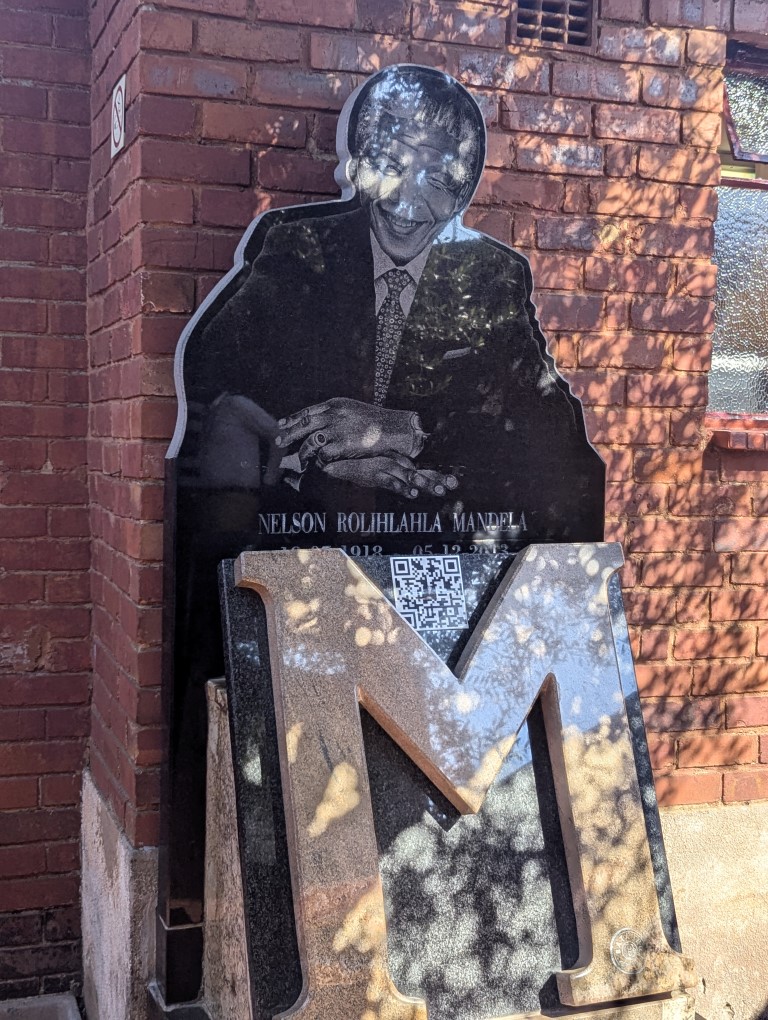
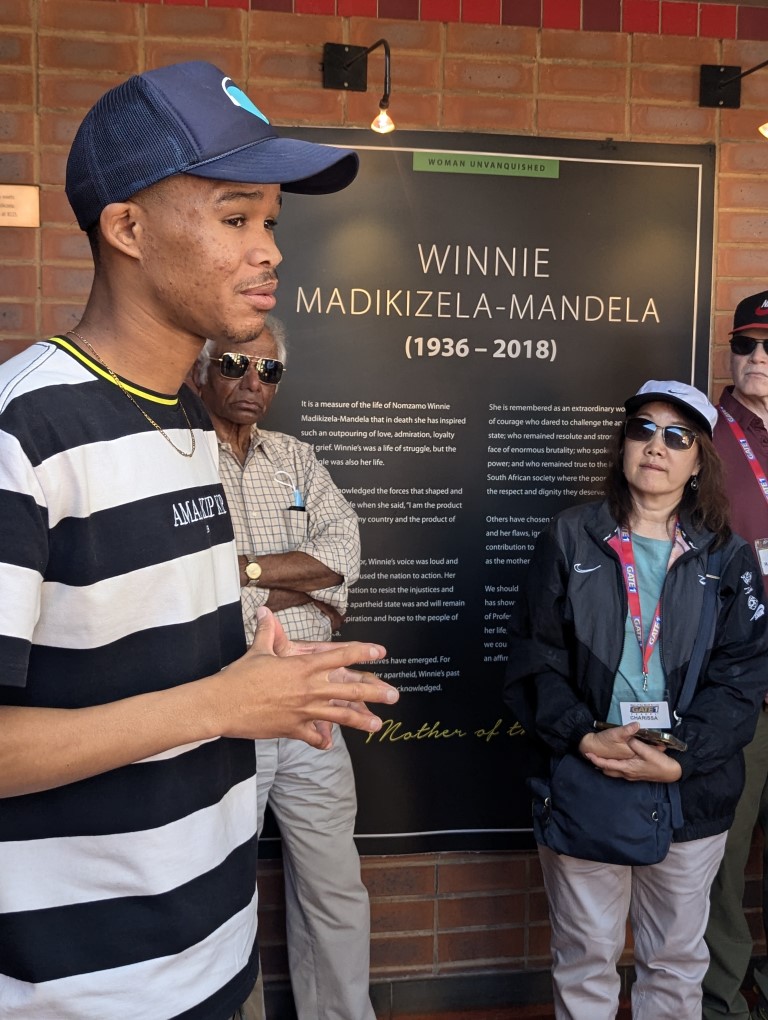
We had a surprise visitor on our next stop. We drove a short distance to the Hector Pieterson Memorial. Our guest? His sister who took us through an emotional account of the events of the fateful day that he was shot and killed by police. His sister was 17 at the time. Black students were protesting the imposition of having to have their education in the Afrikaans language. As she pointed out, even the teachers did not know the language. The day started as any other school day with an assembly. Loud sounds were heard as groups of students processed through the school grounds, singing and praying. Antoinette knew that the protest was to take place; students had been instructed to NOT tell their parents about it. She and many others joined the procession. By the time they reached Orlando West High, there were 20,000 protestors.
Though it was a peaceful protest, police were there with dogs and shot into the crowd without provocation. Antoinette spotted her brother and called him over. She told him she would protect them. When the second shot rang out, they separated. When she came out of hiding, she could not find her brother.
She saw a group of students but did not go over to investigate. Then, she saw a man running towards the students, pushing them out of the way. Antoinette spotted her brother’s shoe and some blood. She caught up with the man who was carrying Hector to a clinic, but Hector was already dead. The photo that captured the moment is famous. The man who carried Hector had to leave the country for his own safety. Days of bloody conflict between protestors and police followed the incident. The day of the incident, June 16th, is now celebrated as Youth Day in South Africa.
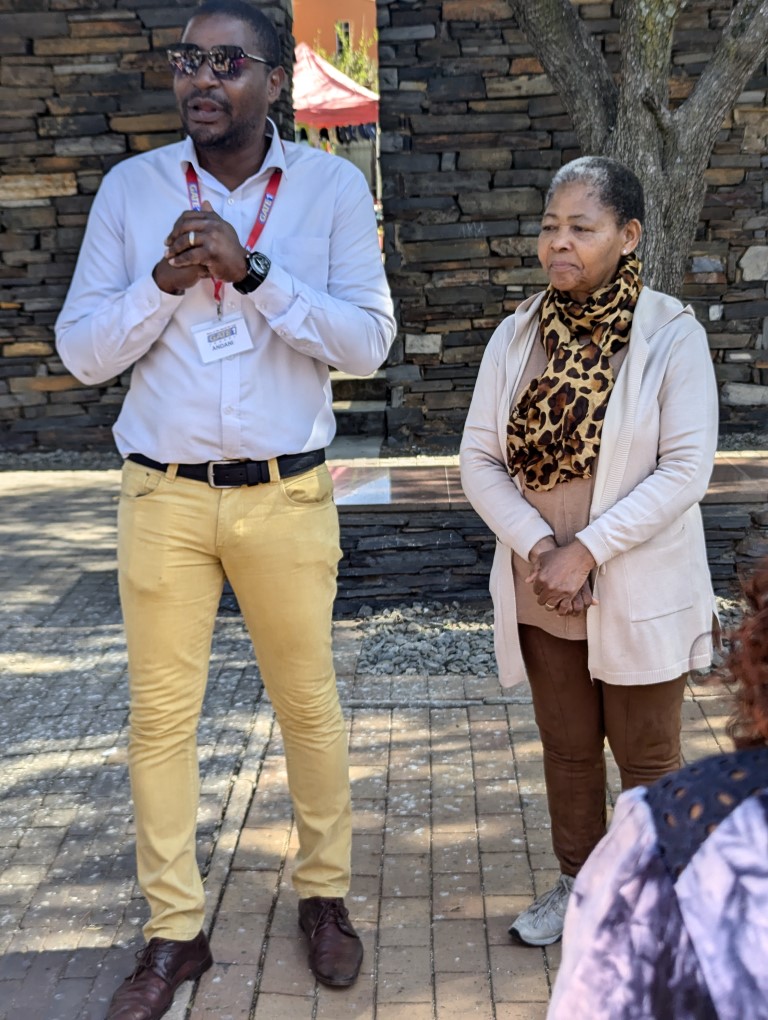
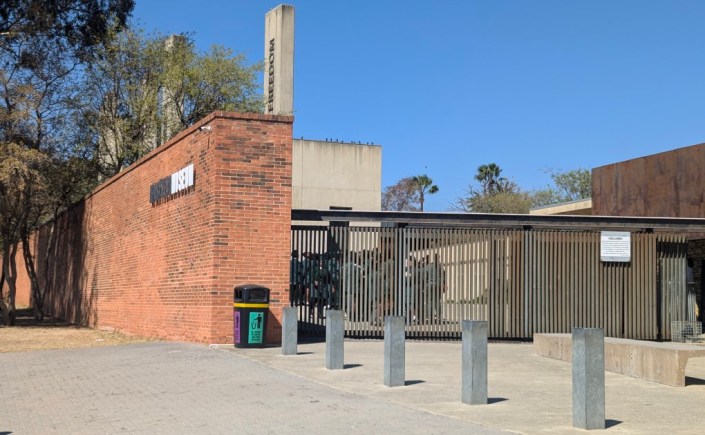
Our next stop on the tour was the Apartheid Museum. No photos were allowed inside (though I saw plenty of people taking them) so most of my pictures are of the exterior and entrance.
We were randomly given tickets – white and non-white and then were separated into corresponding groups to enter.
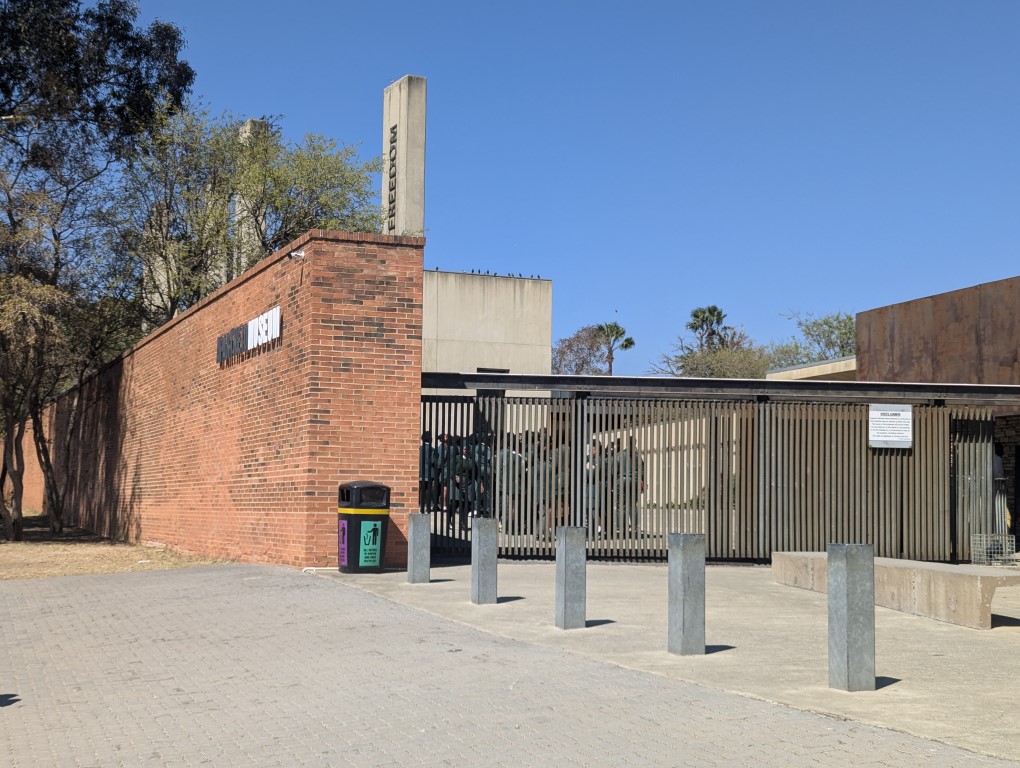
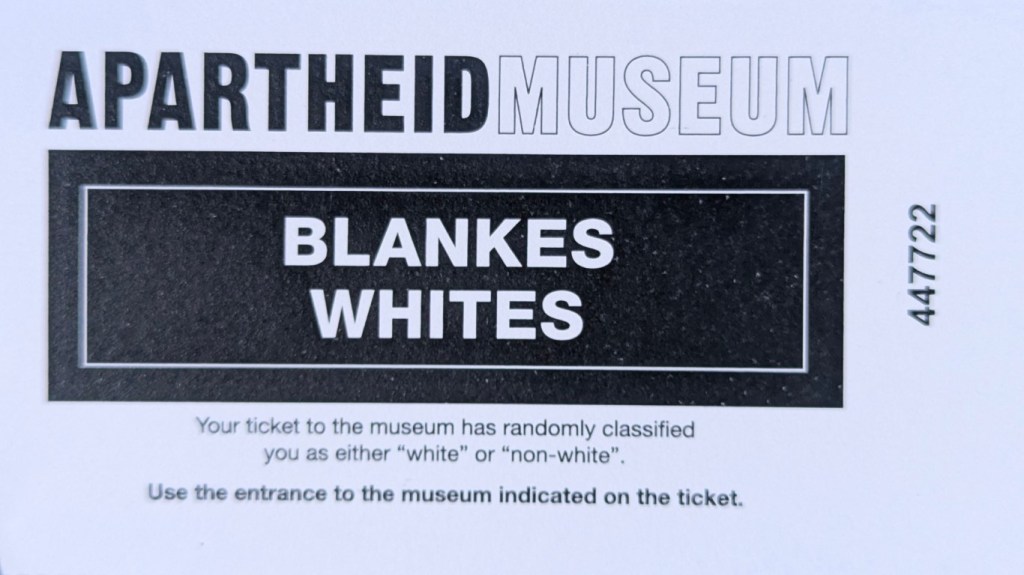
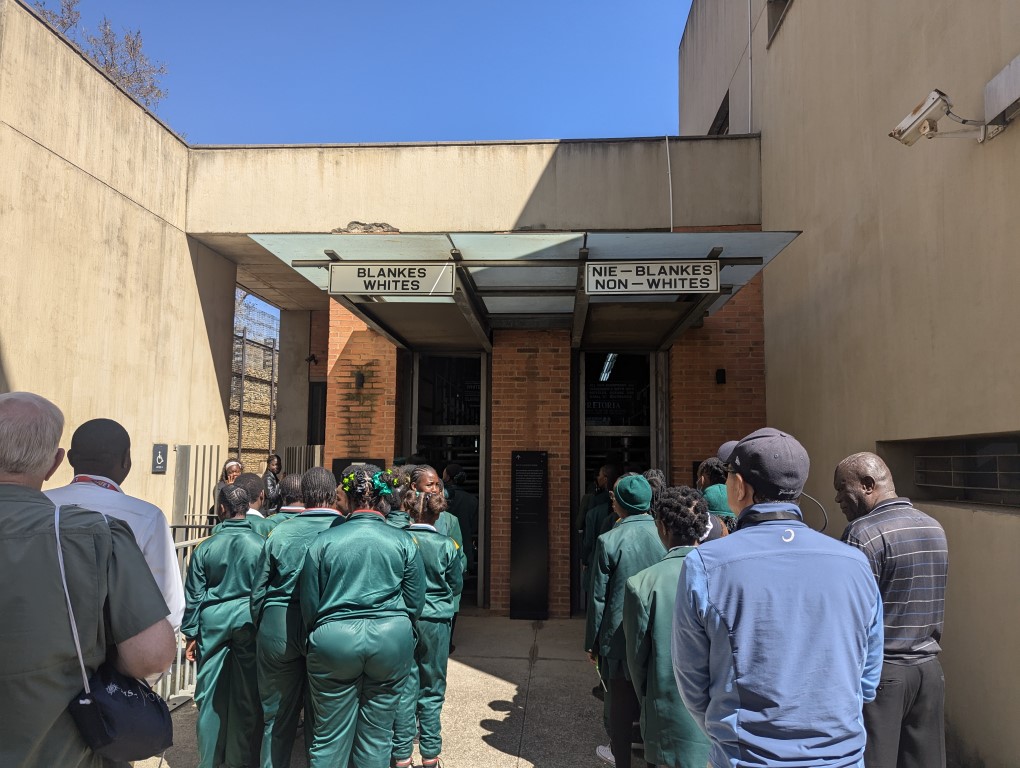

Andani discussed some of the ways of determing race before we entered the museum such as putting a pencil in your hair and shaking your head, thickness of lips, and asking how tall you were at twenty years old. That last one confused me until he explained that Europeans and black Africans use different hand signals to indicate height.
We walked up a corridor that narrowed. The stones in the wall represent the hardship of the gold miners. There are also mirrors have images of the great-grandchildren of the miners.
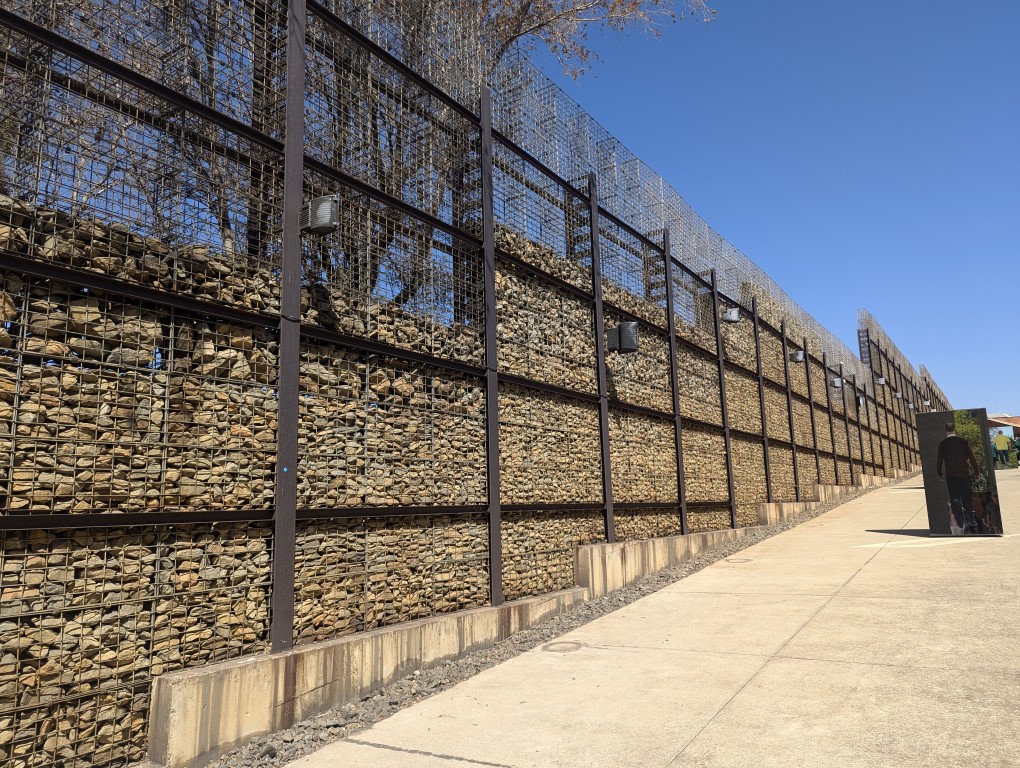
Touring the museum was an incredibly moving experience. There are numerous photographs and videos that help capture the horror of the blacks during the era. I didn’t take many notes, preferring to just take it all in, but a couple of things stood out. One of the displays showed blacks lined up at the hospital. It took a week of waiting in line to see a doctor. There was no furniture in the schools. Teachers would see one hundred students at a time, twice a day. One principal ordered 60 readers and only received two. Townships had to raise half the cost of building a school; this is from people living in extreme poverty. One school opened with 700 students and 3 teachers. Lack of education is one way of oppression. How do you lift yourself out of your circumstances without it?
Our tour came to an end with, you guessed it, a shopping stop. Granted, the shop was pretty good. It had a wide variety of souvenir items and jewelry for sale. Clayton and I actually browed with the intention of buying (we hardly ever purchase souvenirs) but didn’t find anything that we couldn’t live without. So, we had some coffee and chatted with Don until it was time to head back to the hotel.
The next day, half of the group flew on to Victoria Falls. We did not choose that option so flew home to Thailand. The flight was only 15 hours, including layover; much better than the 30 it took us to get to Cape Town.
This was a fabulous tour (12 day Classic South Africa with Gate 1 Travel) and I highly recommend it. If you are lucky, you will get Don Louw as a tour guide. He has an incredible depth of knowledge and made the tour very enjoyable.
 travelswithheather