
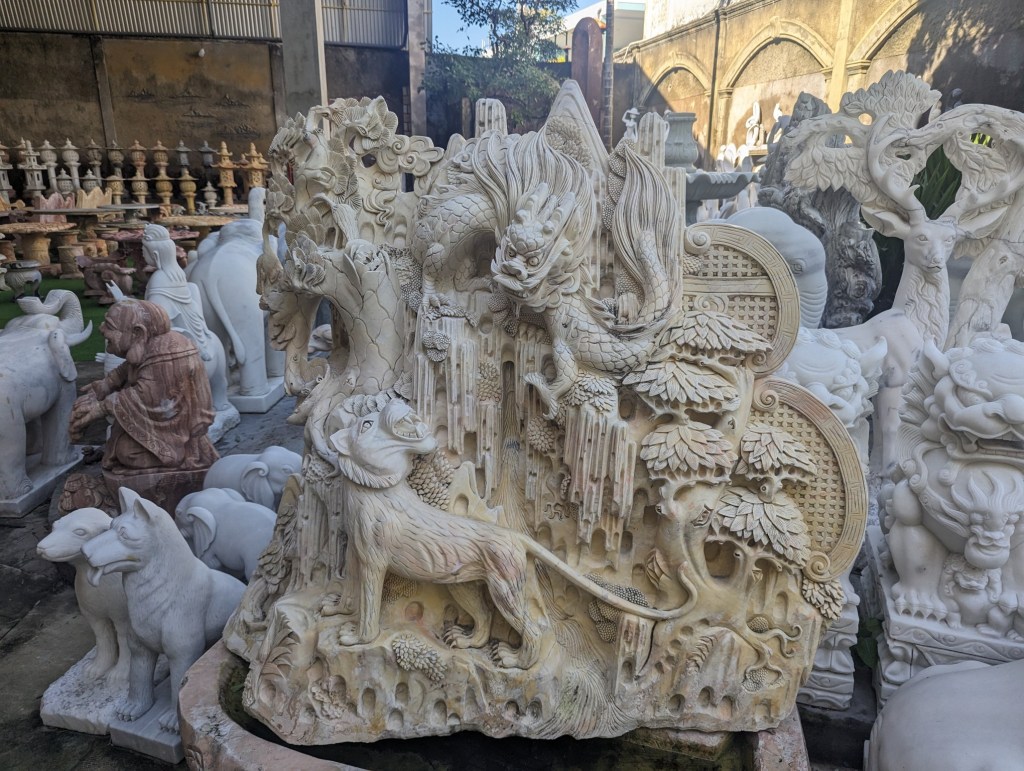
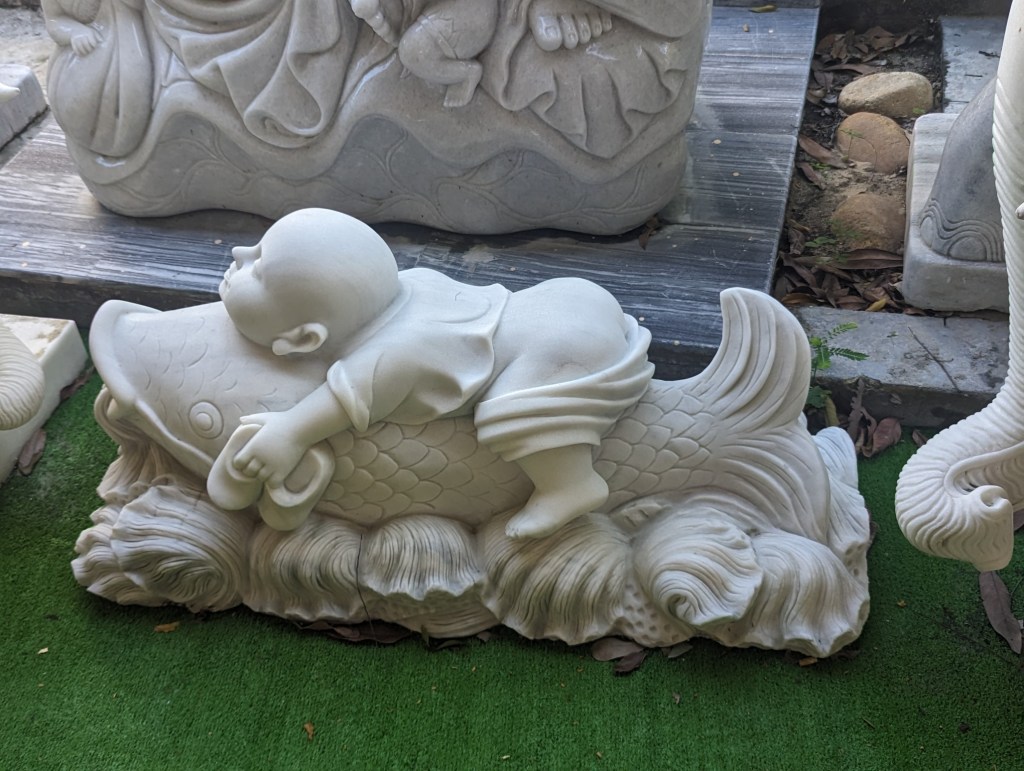
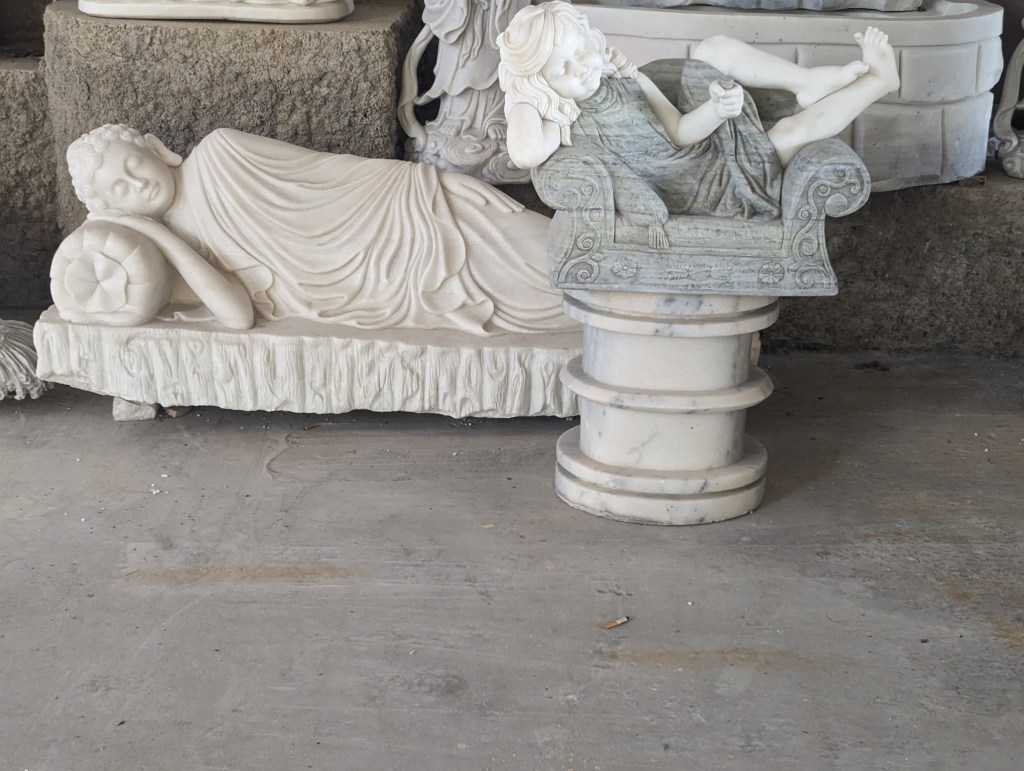
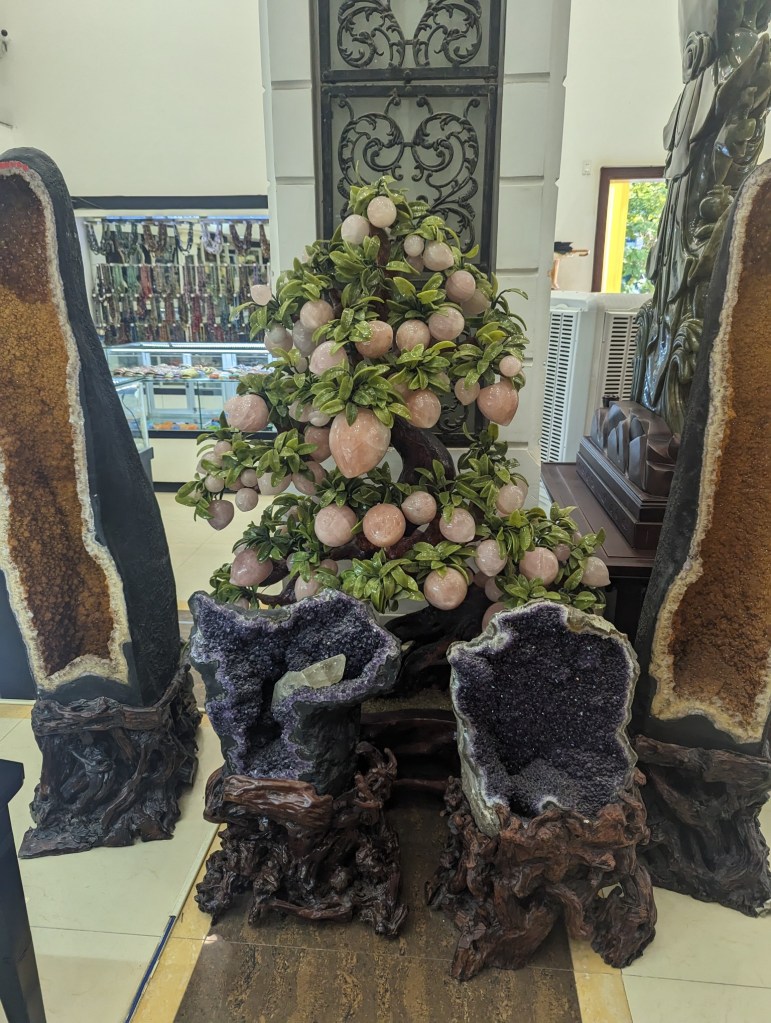
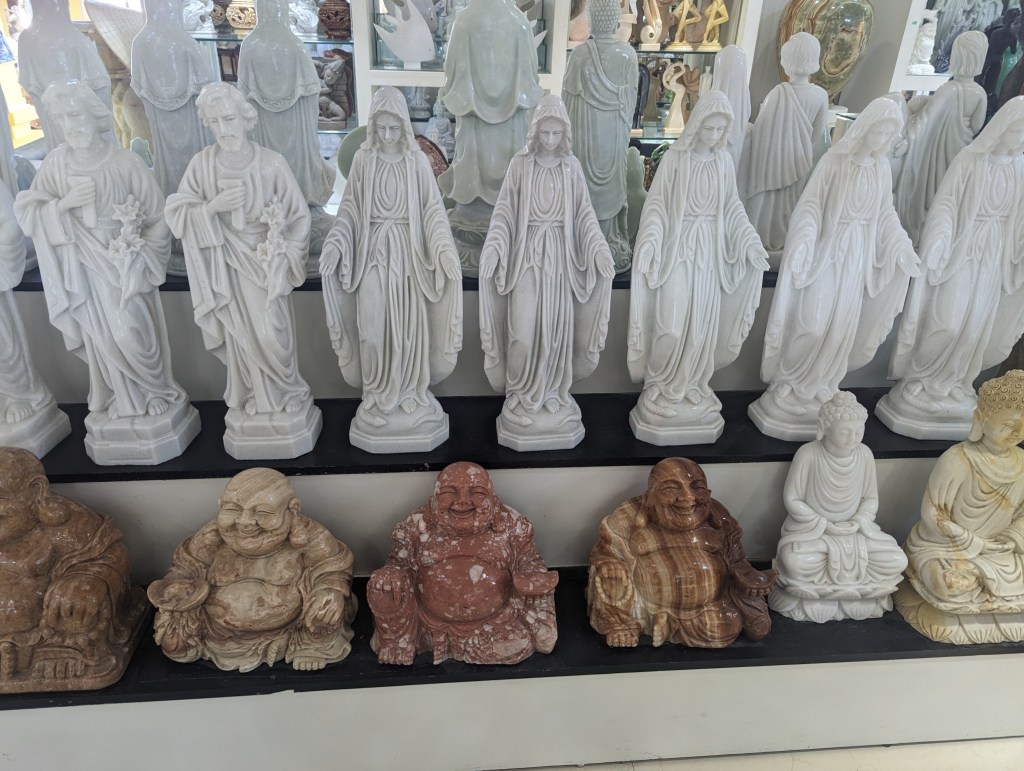
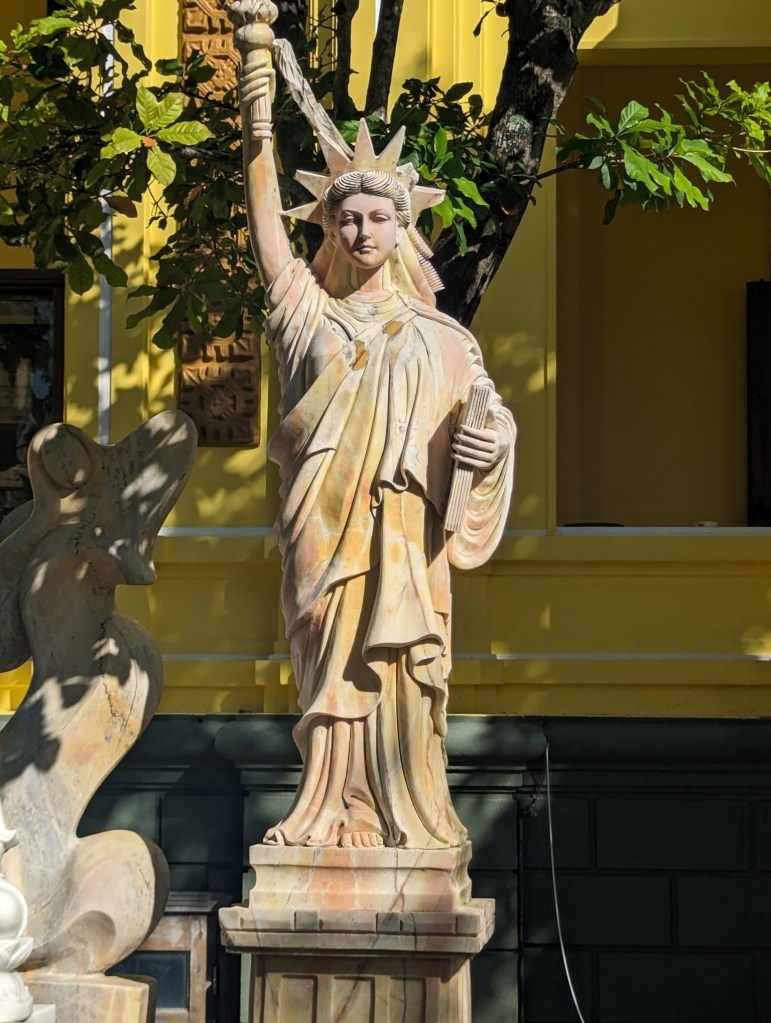
We left Hoi An in the morning and took a leisurely drive through Da Nang to Hueʹ. Unlike the last Gate 1 tour we took (China), we have not had multiple stops at designated shops. We did have one today, though at a marble shop. This one was located near the Marble Mountains. Mining of marble is no longer allowed, so the stone used to create the statues is all imported from other countries. There are 5 mountains, representing the 5 elements: gold/metal, wood, water, fire, and earth.
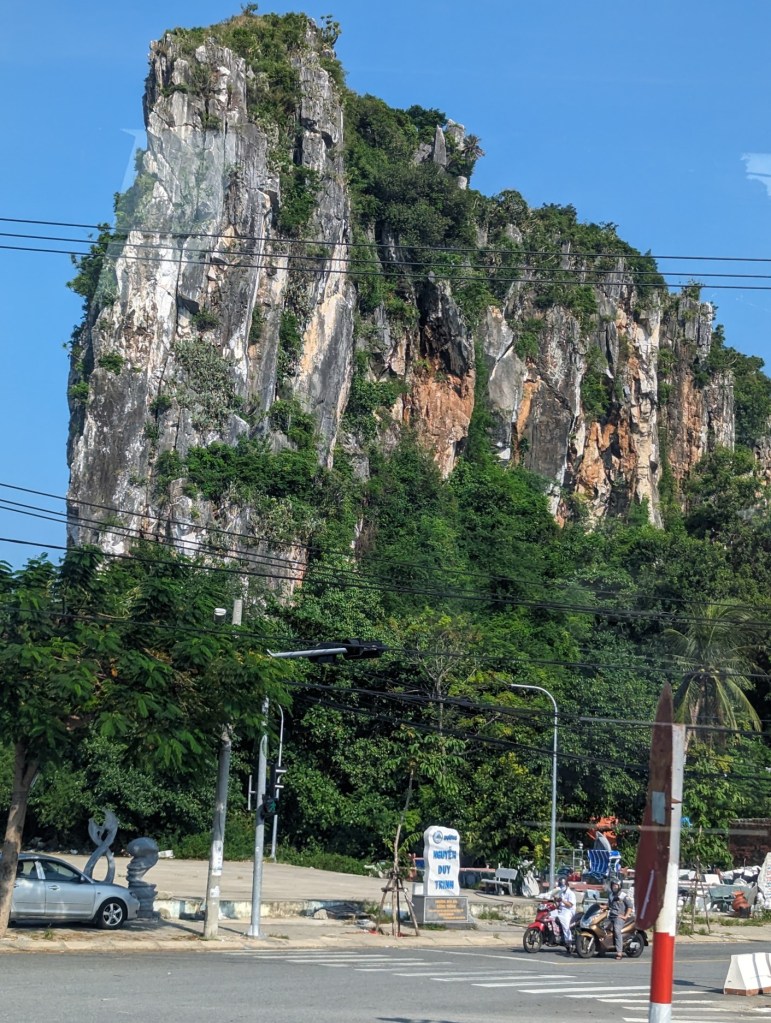
There were plenty of statues to choose from. I didn’t see anyone in the group buying one to have shipped home!


As we approached Da Nang, we passed by a large casino; the only one in town. It is illegal for Vietnamese to gamble, but not for foreigners. Vietnamese go to Cambodia to gamble, according to Bi.
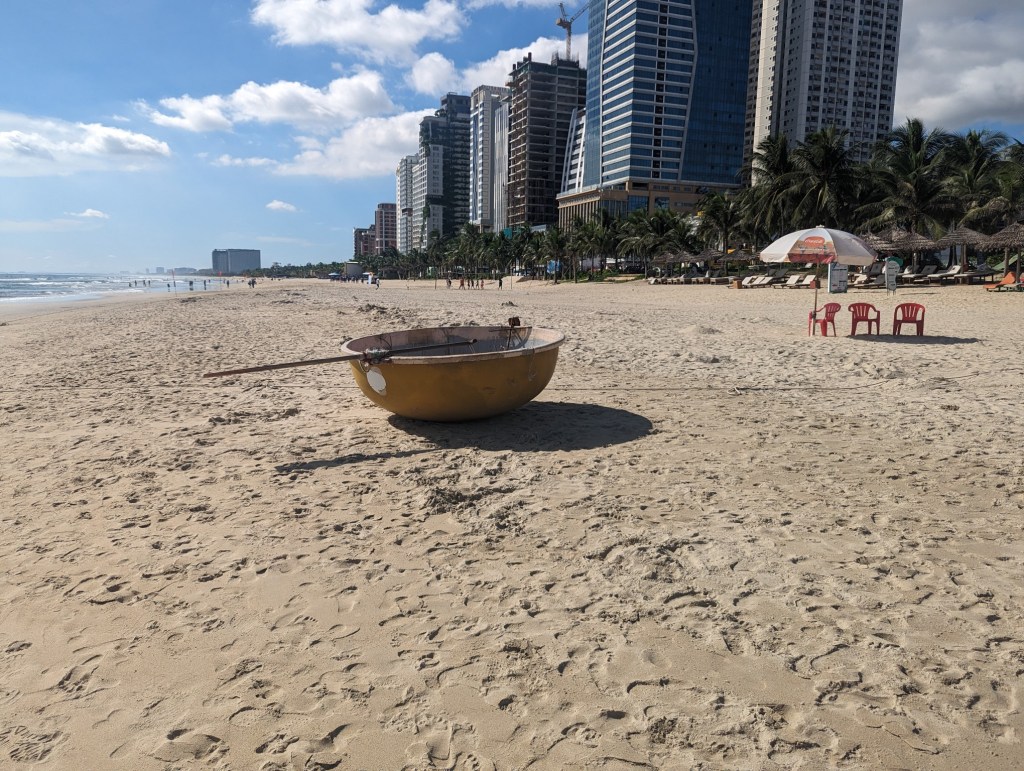
During the Vietnam War, American GI’s visited Da Nang for R&R. We stopped at My An Beach which is now a popular destination for tourists. There was a basket boat parked on the beach. The upside to these boats is that they are unsinkable; the downside is that they are hard to steer. With one paddle, one would simply spin in a circle! That is why steering takes place from the front of the boat.

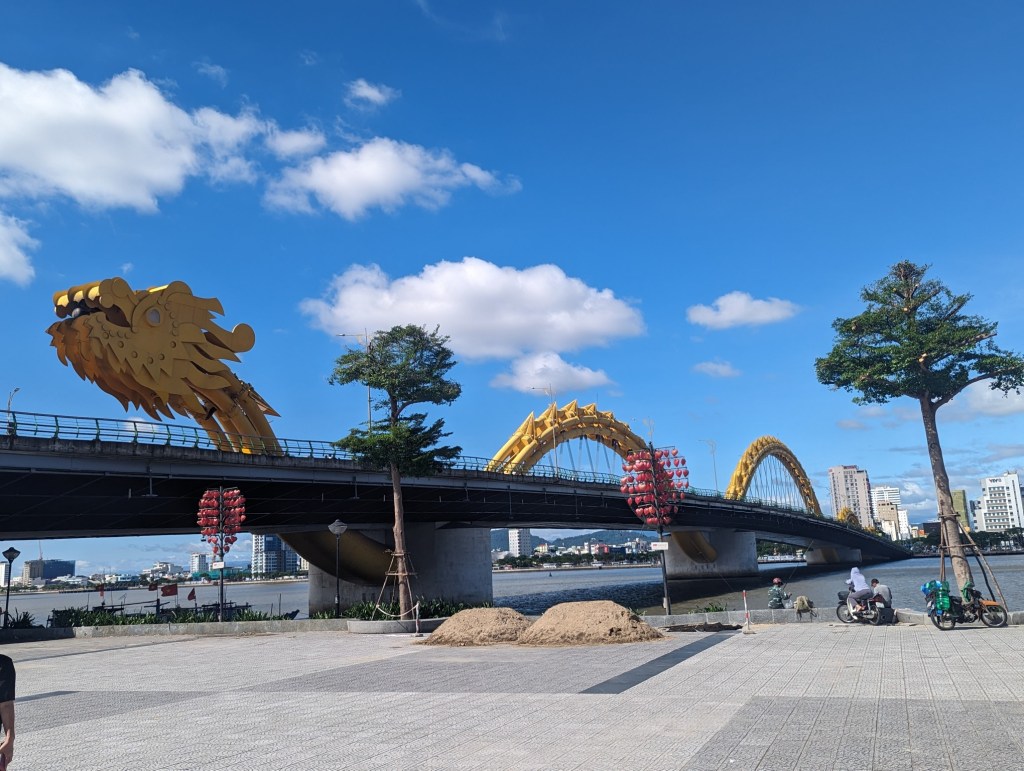
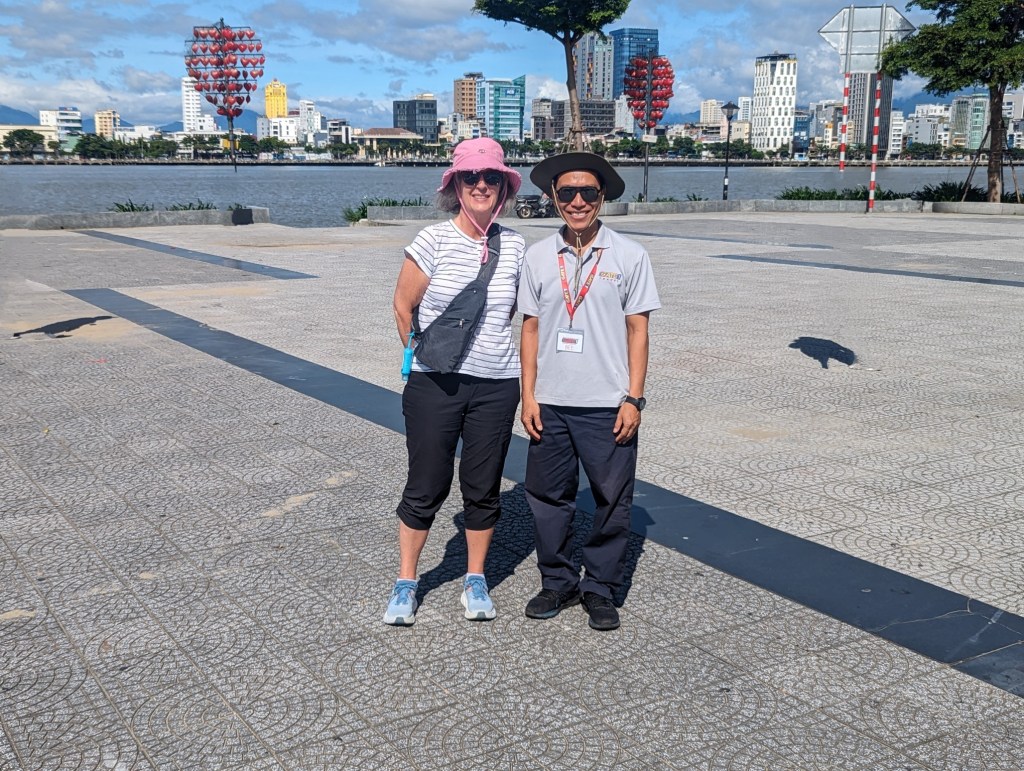
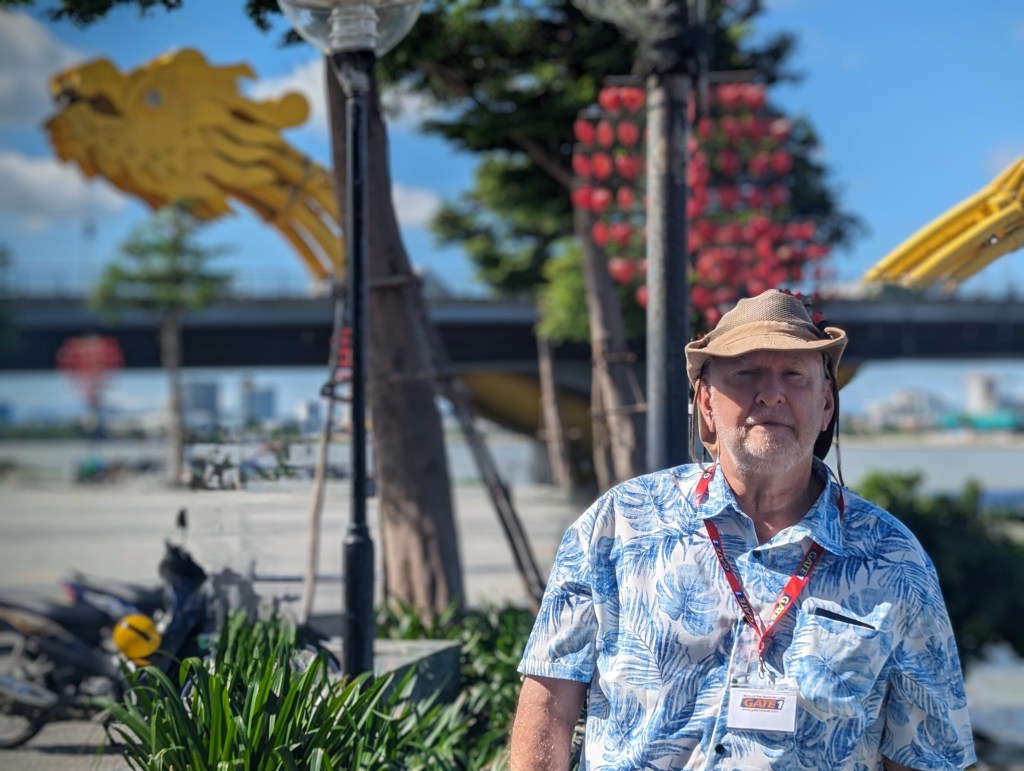
The next stop was at the Dragon Bridge. On weekend nights at 9 pm, the dragon breathes fire and steam.
As we left Da Nang to head north to Hueʹ, Bee talked about coffee in Vietnam. This was some important information, given how much trouble we have had ordering! Surprisingly, Vietnam is the second largest coffee bean producer in the world; behind Brazil which is the largest. The majority of the beans grown here are robusta (about 90%), which are grown at lower elevation than arabica beans, the most common used in the United States. Altitude affects flavor; arabica is a lighter tasting coffee. At lower elevations, there are more insects that like to feed on the plants. To counteract that, robusta coffee has more caffeine, which deters the bugs (robusta has 2.2% caffeine; arabica has half of that). Brewing coffee here is usually done with a contraption that is similar to French Press, except that only one cup is brewed at a time. As we have discovered, since Vietnam has a tropical climate, coffee is typically served with ice.
In Hanoi, egg coffee was created in the late 20th century. I thought it was a by-product of shortages during the war, but I was wrong. During the late 80’s/early 90’s, espresso machines were very rare in Vietnam. Only high-end hotels had them. A barista at one of them decided to try to find a way to mimic the steamed milk in a cappuccino without having a steamer. He experimented and found that using egg yolks (raw), sweetened condensed milk, a little vodka and a touch of cinnamon powder could be blended together to give a similar texture. Voilà, the egg coffee was born!
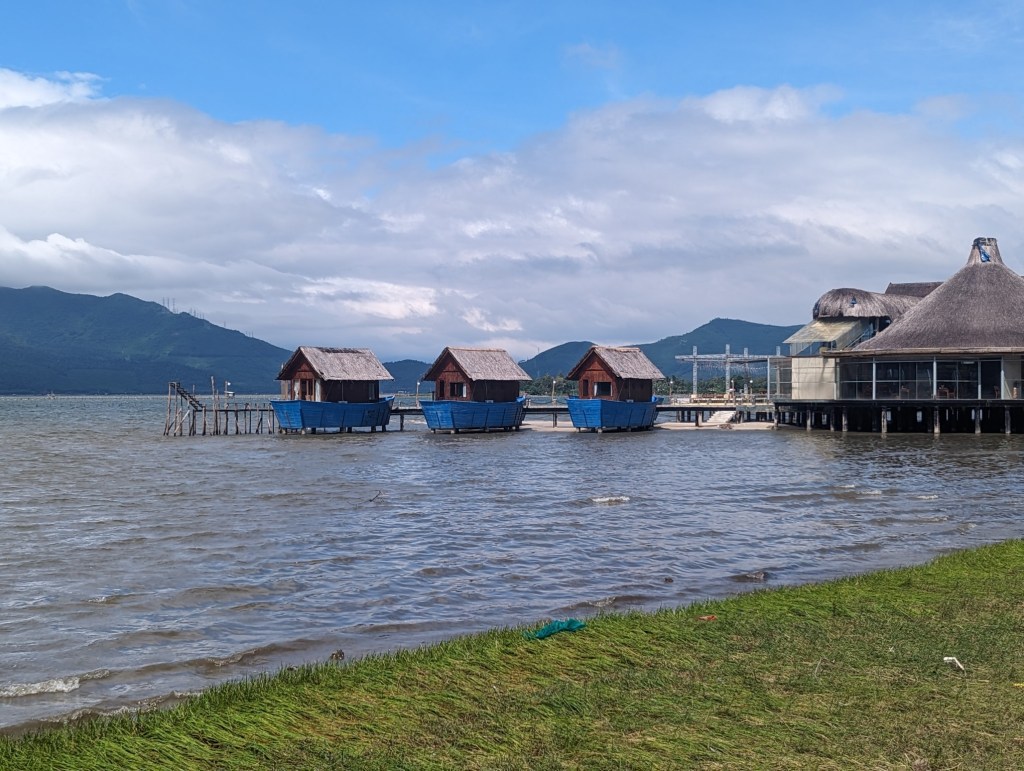
We had a restroom break where there was an opportunity to have coffee or buy pearls. We opted to just enjoy the view instead.
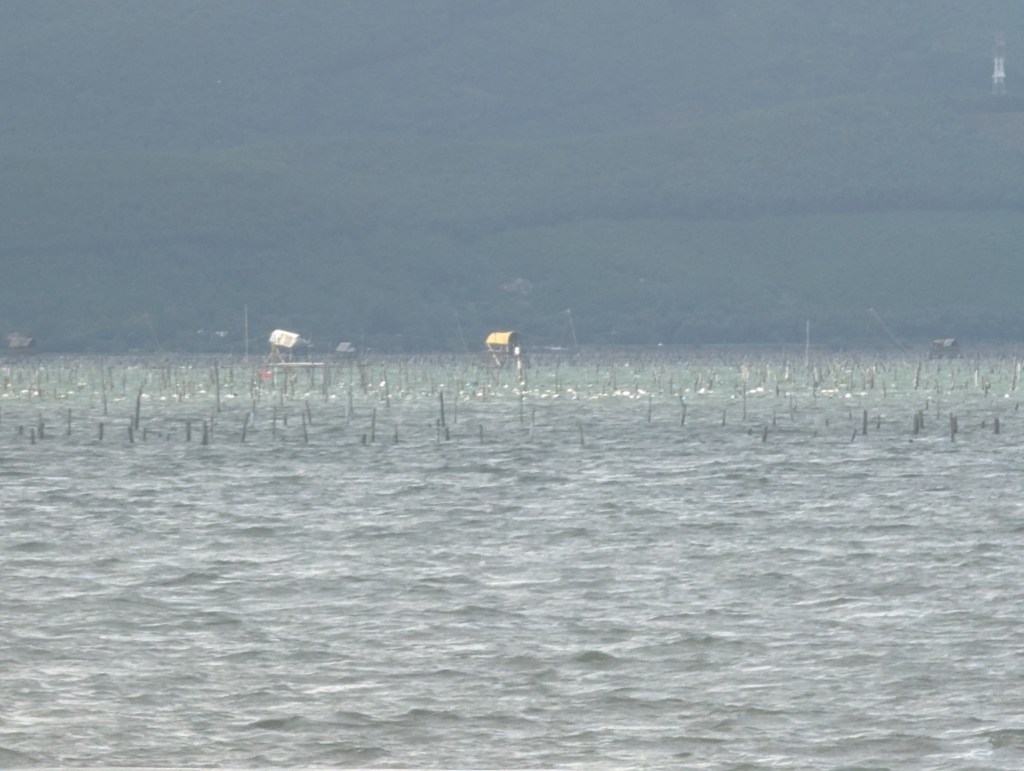
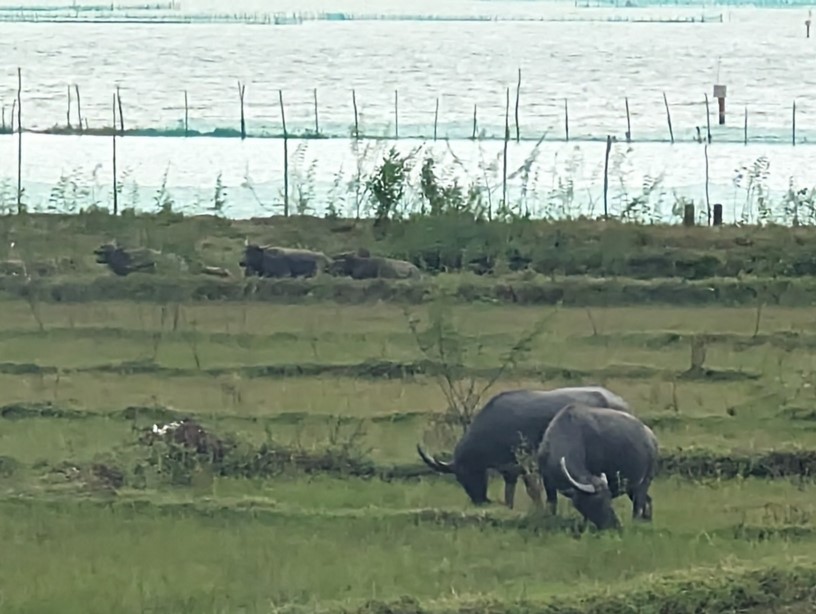
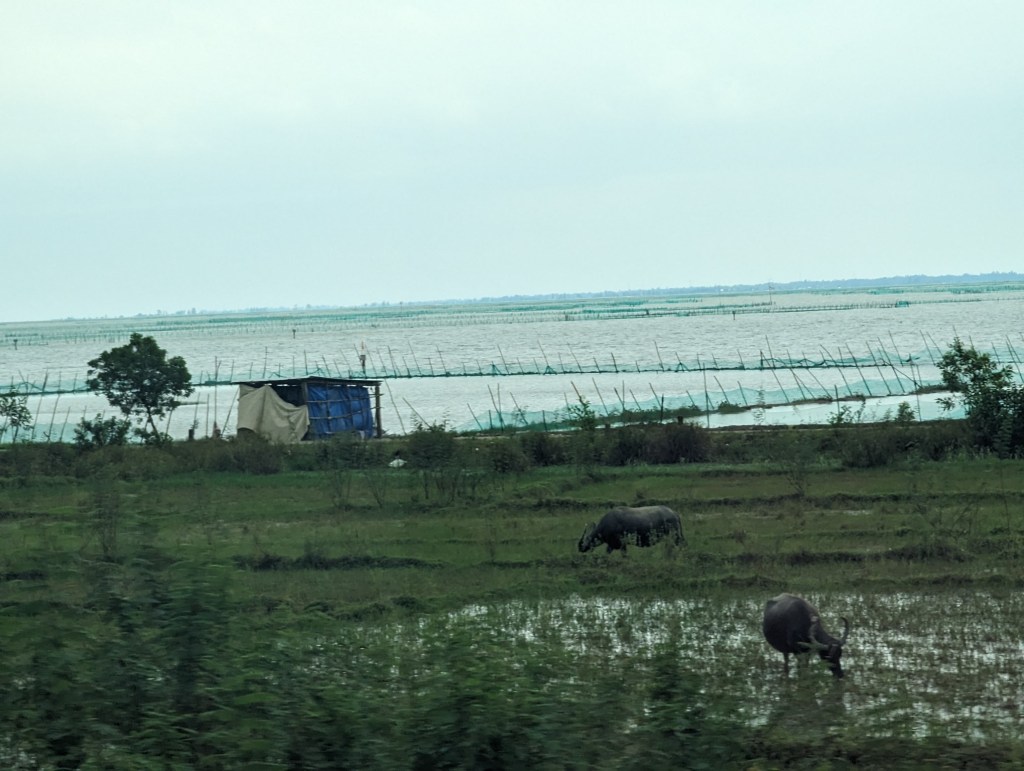
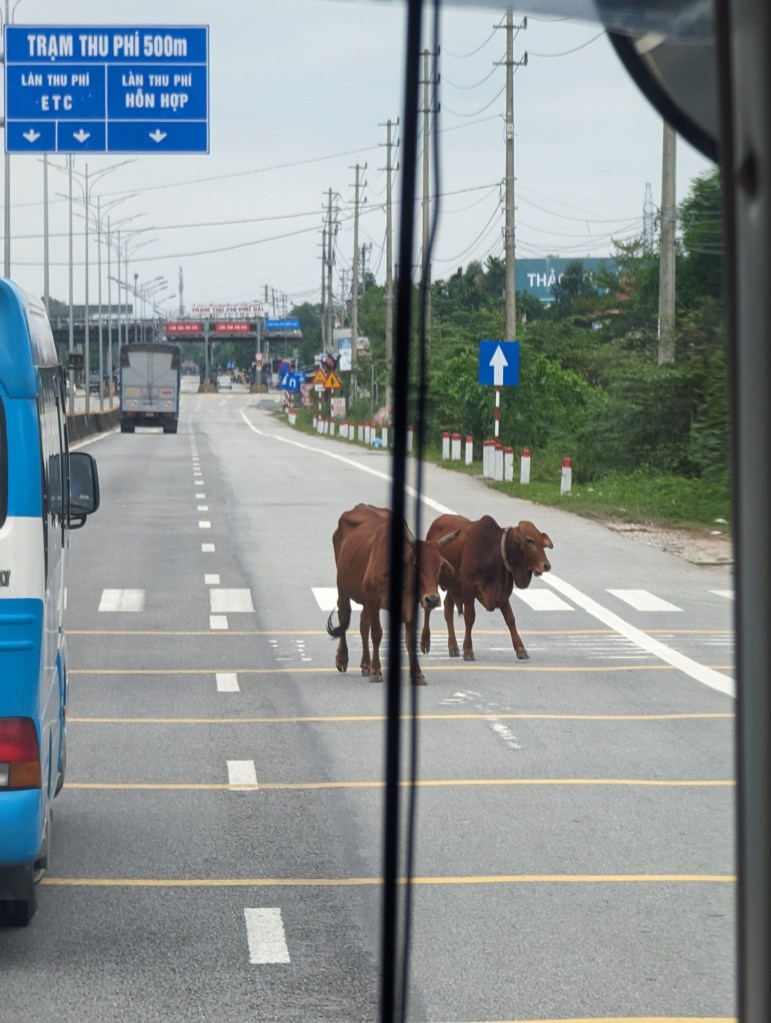
The drive from Da Nang was about 1.5 hours. We passed through lots of small towns and saw some water buffalo hanging out in the fields by the side of the road. One confused cow didn’t limit herself to the fields. There are many eucalyptus trees in the area. The Australians helped the reforestation efforts following the war since this area was heavily bombed. The oil is used to treat many minor conditions, such as headache, runny nose, and sore throats and is used in massage oil. It is very flammable and so you cannot take any out of the country if you are flying. It’s best to buy some tiger balm which uses the oil as its active ingredient.
We eventually reached Hueʹ. Before arriving at our hotel, we stopped for lunch. We could choose from Vietnamese or Western food. Clayton wanted Western, so we ate at a place called the DMZ Zone. It is a very popular night spot from what we were told.
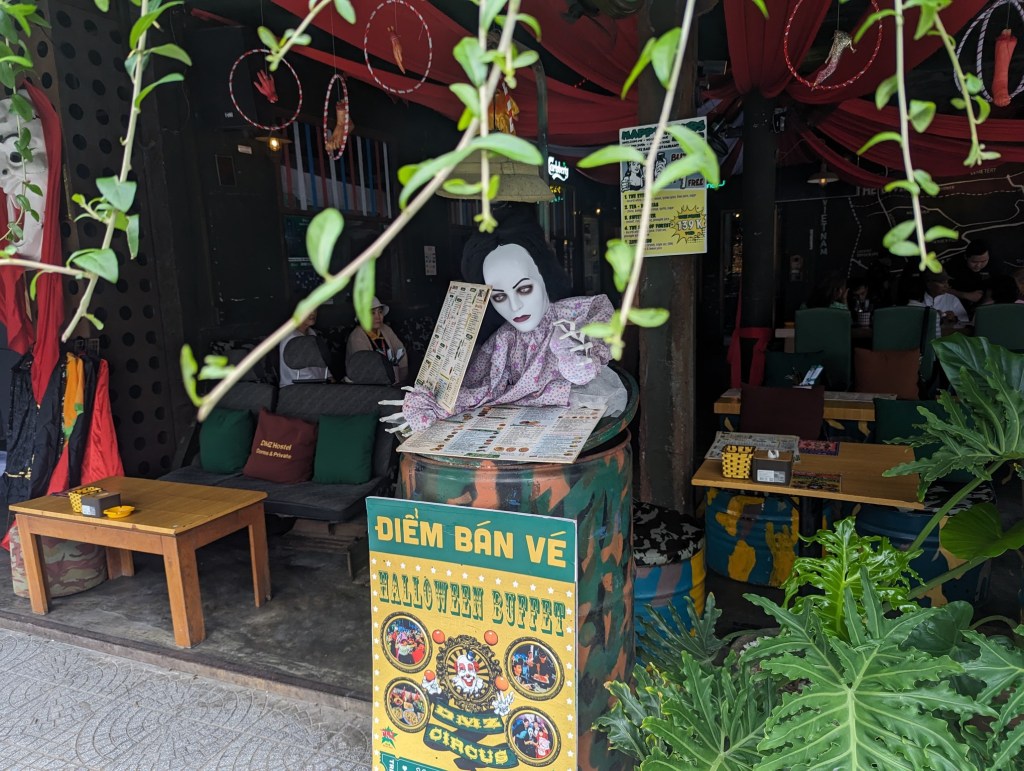
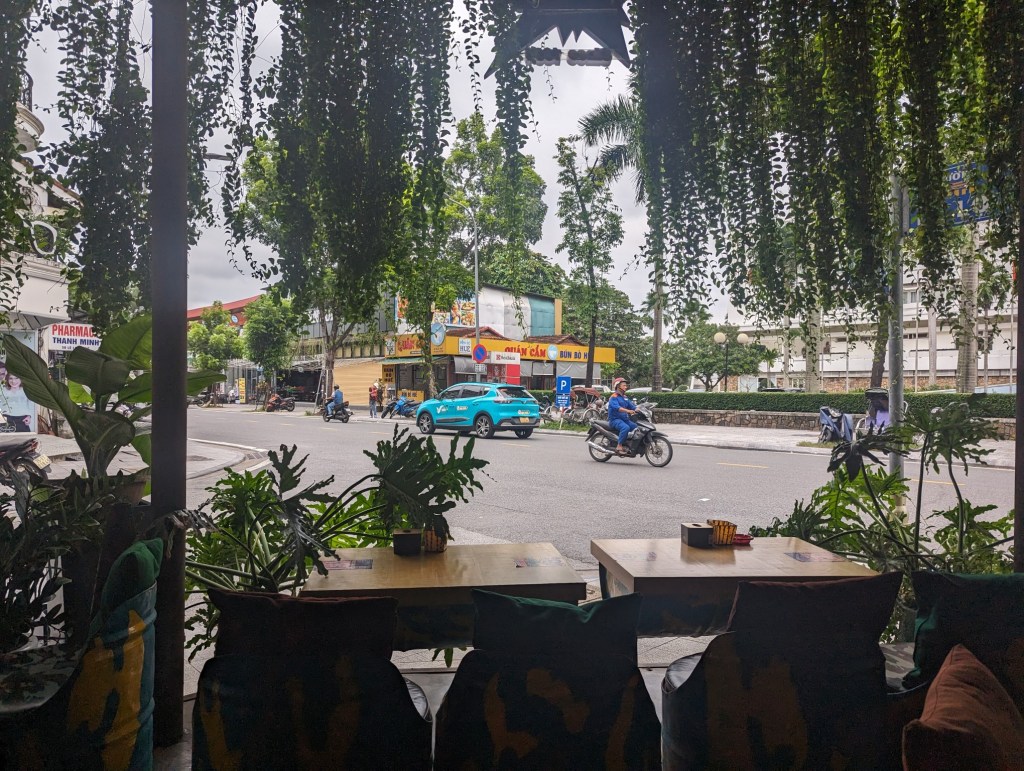
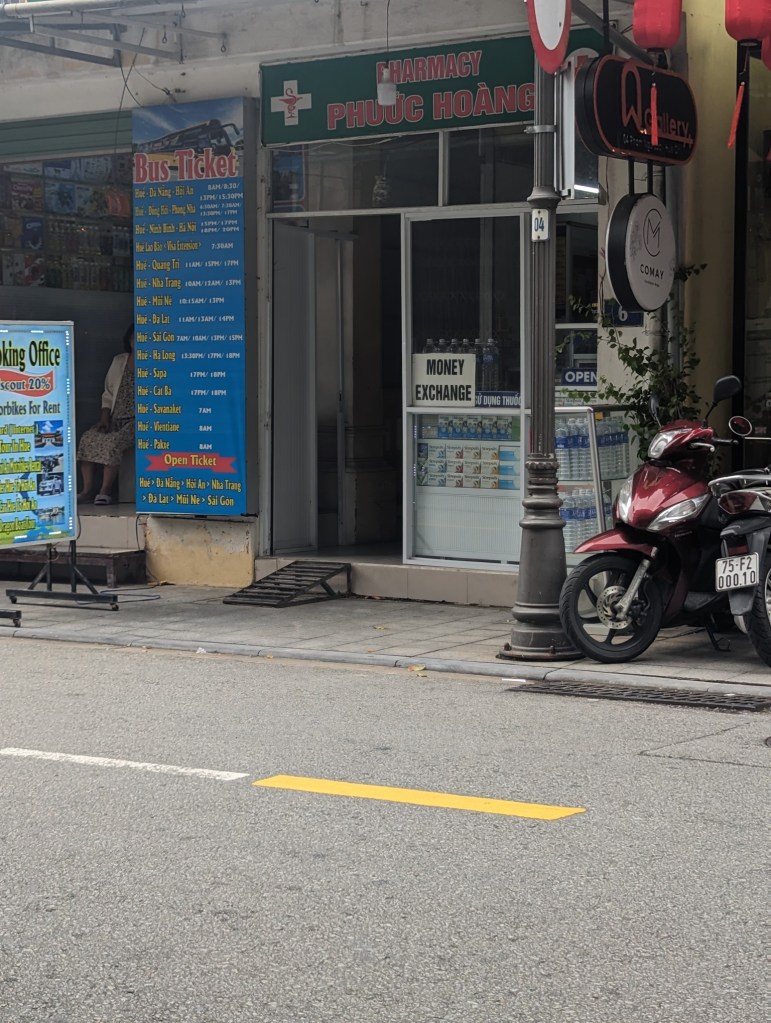

Onward to tour the Citadel and Imperial City. When we passed through the mountains (actually, we drove in a tunnel under the mountains), we entered a new climate. The mountains keep Da Nang relatively dry and hot. Now that we were north of the mountains, we would experience a change in weather.
The Citadel was created for the Nguyen Dynasty, which was in power for 143 years, from 1802 to 1945 when emperor abdicated, and the Viet Mien launched the August Revolution where Ho Chi Minh declared the independence of the Democratic Republic of Vietnam on September 2nd, 1945.
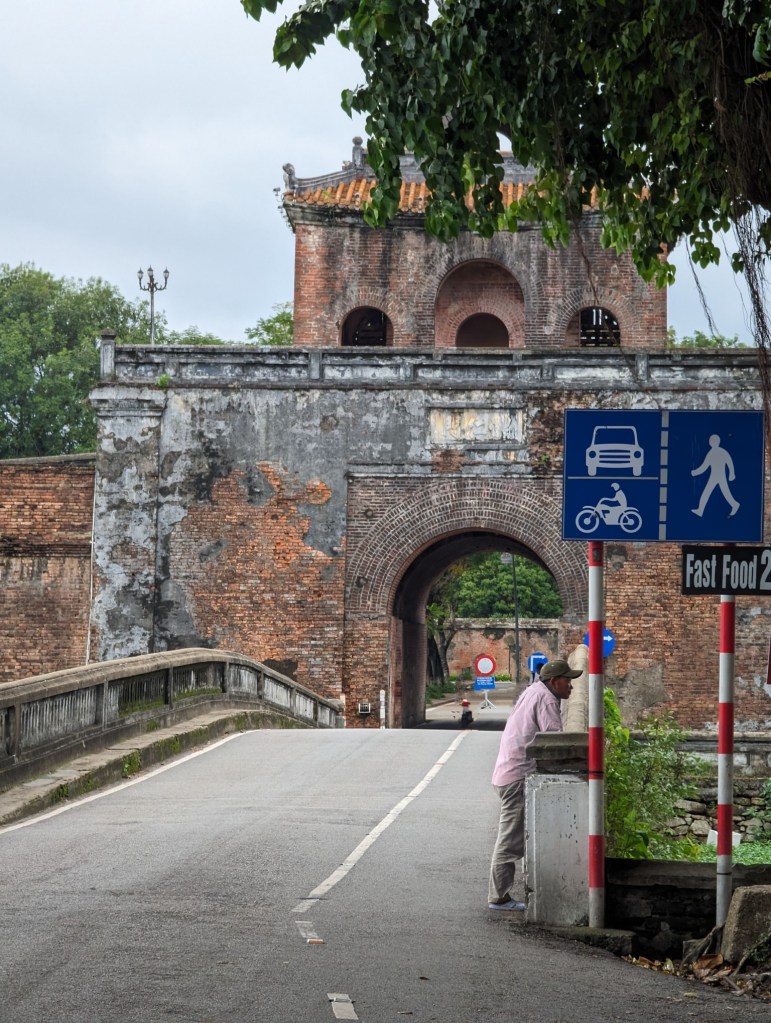

The exterior has ten gates. There is another interior wall which has five gates. The gate we entered through had three gates in the middle and two on the side. Only the king could enter through the center gate. The other two main gates were for military officers and politicians. The side gates were for soldiers and elephants! We entered through one of the side gates.
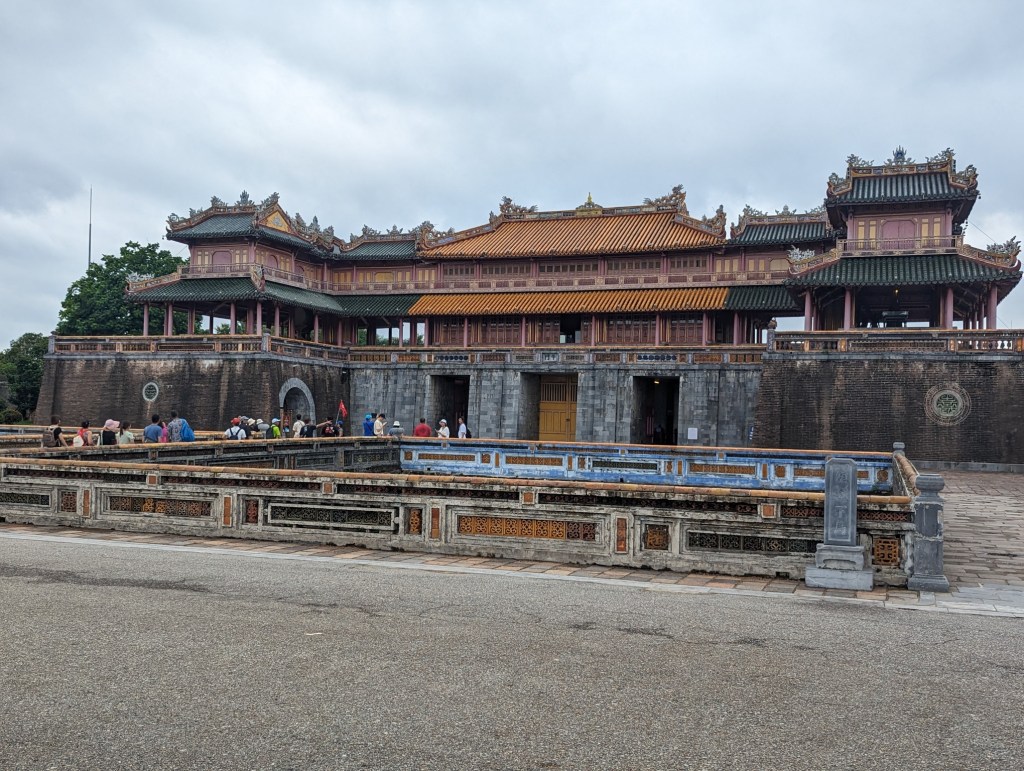
The Thai Hoa Palace is directly in front of the gate and is currently being repaired due to structural issues with the roof. Instead, we entered through the Pavilion of the King, the tallest building in the Imperial City.


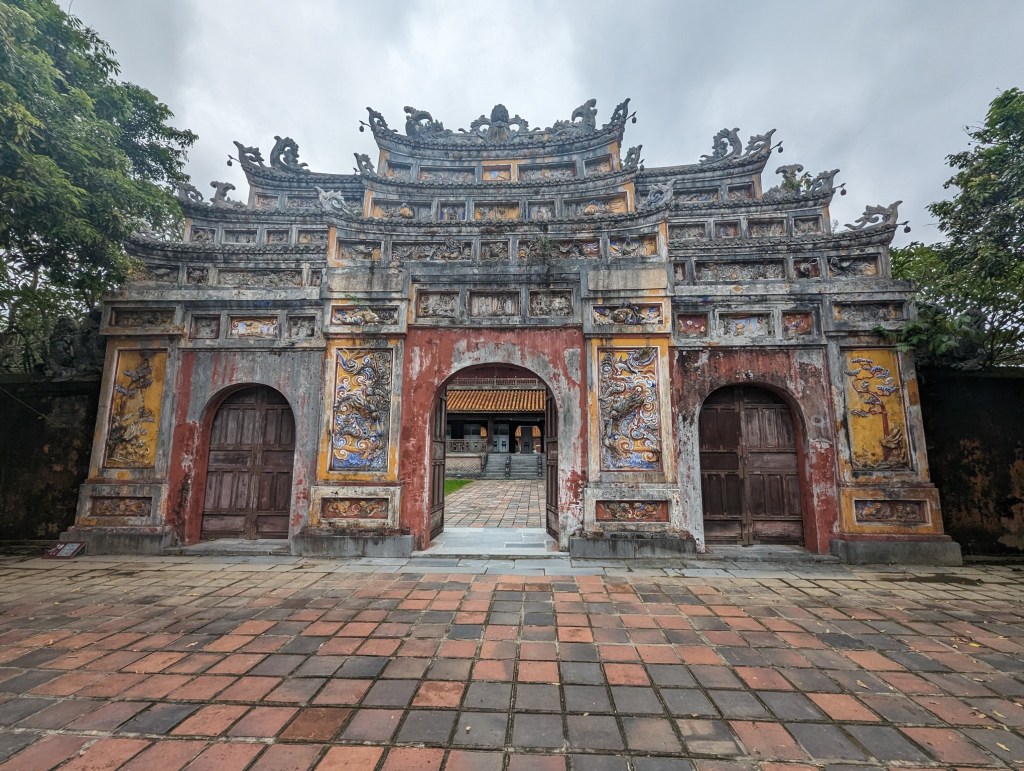
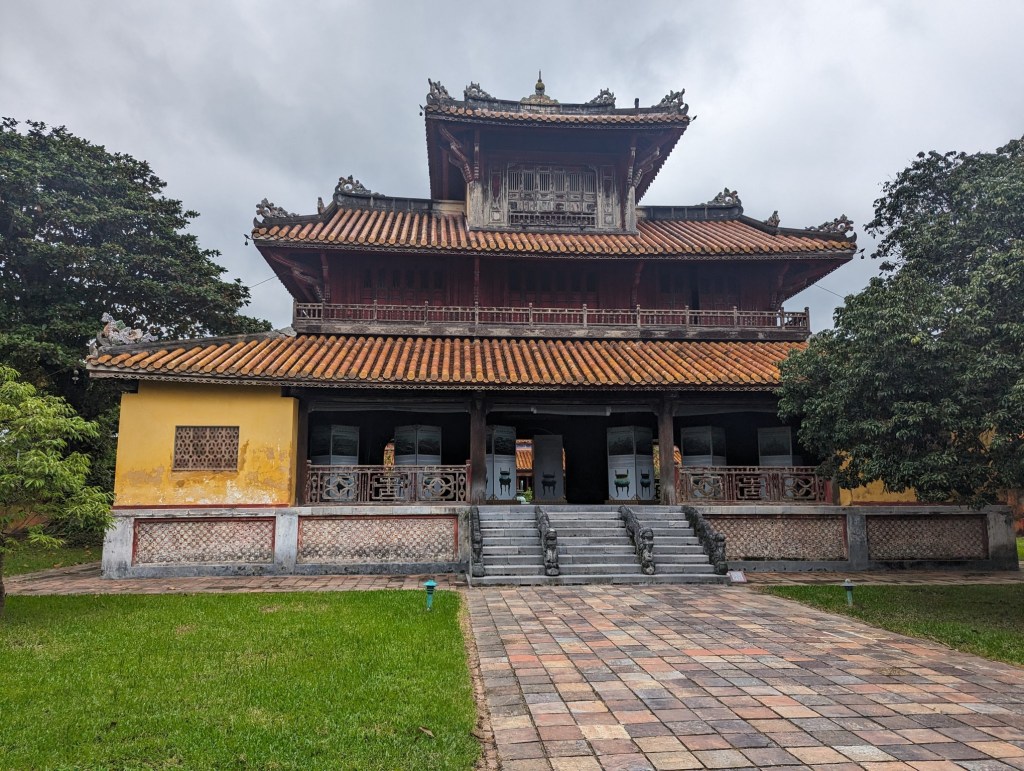
Have you ever wondered why so many Vietnamese have the last name of Nguyen? Could it be because of the Nguyen Dynasty? Apparently not. When the French ruled Vietnam, there were many in the country that had no birth certificate, nor could they read or write. To make things simple, the French assigned Nguyen as the last name of all these people. Another important reason is that people didn’t want the rulers in the Nguyen Dynasty to think they were enemies, so they adopted that name to be thought of as allies.
Across from the Pavilion of the Kings is the Temple of the Kings. Ten kings are honored here, though there were thirty total. Not everyone was important enough to make the cut! One cannot take pictures inside this Temple. You must dress appropriately and remove your shoes out of respect. There are bullet holes in the side of the temple from various conflicts, including the Tet Offensive in 1968.
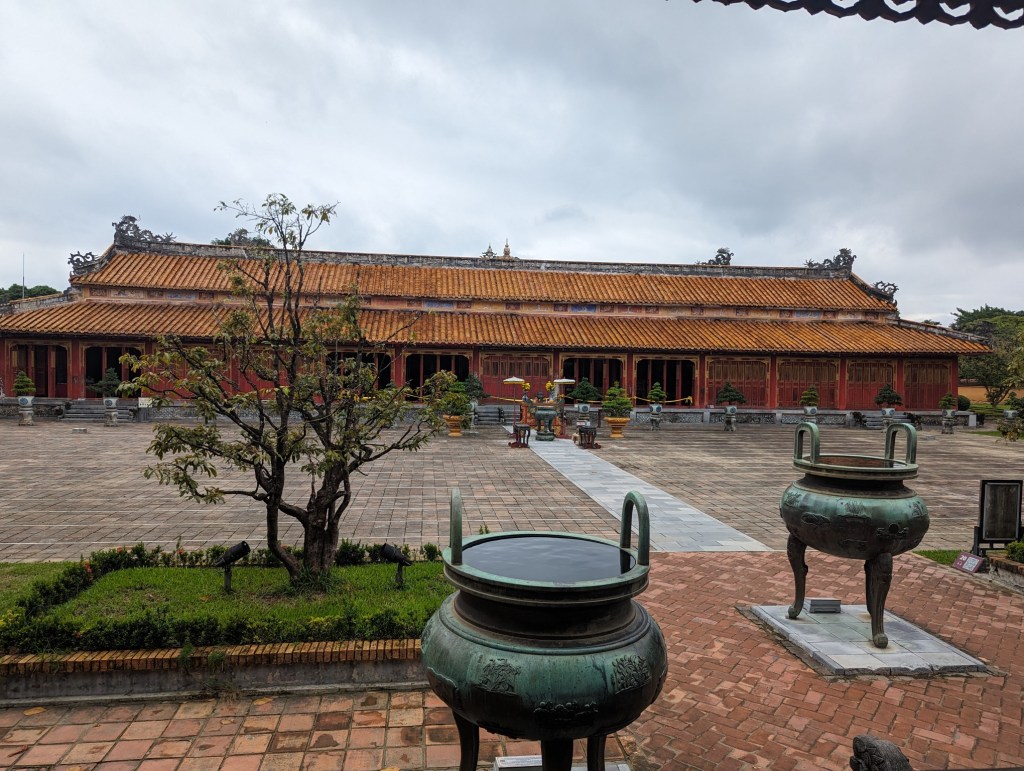
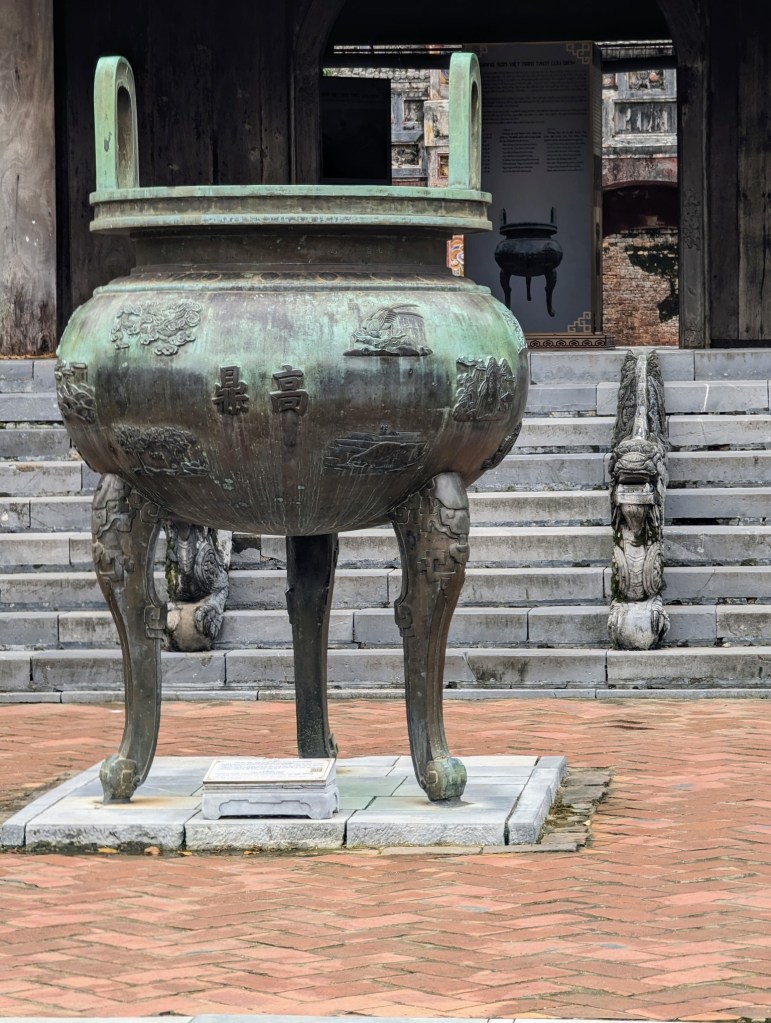
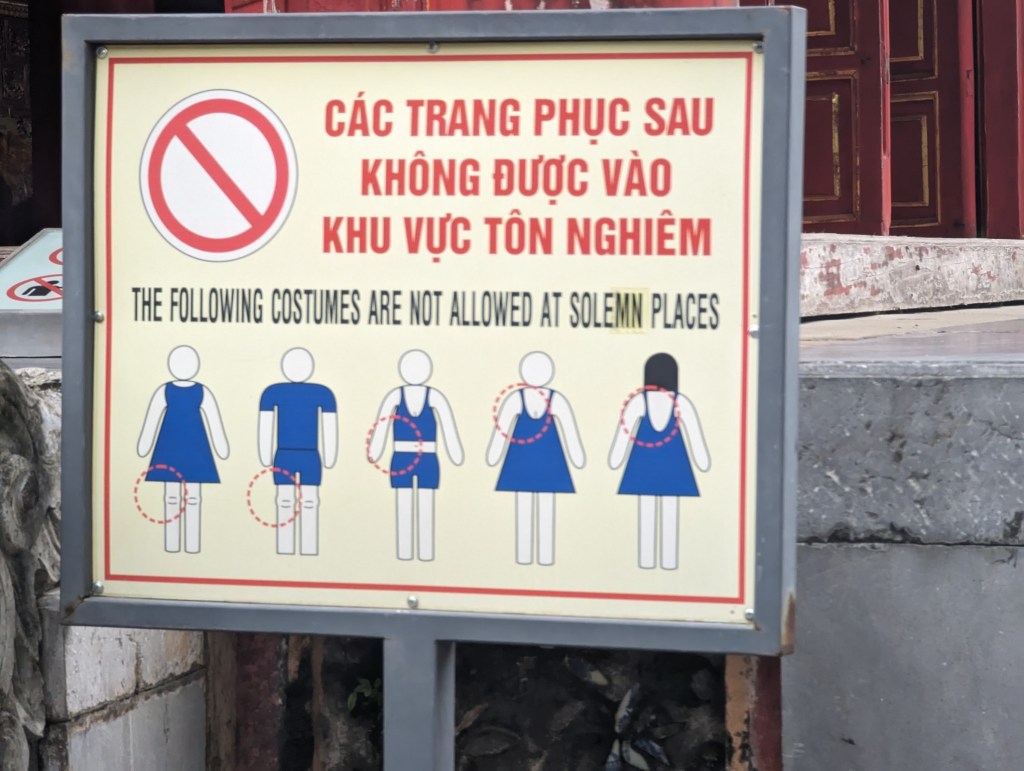
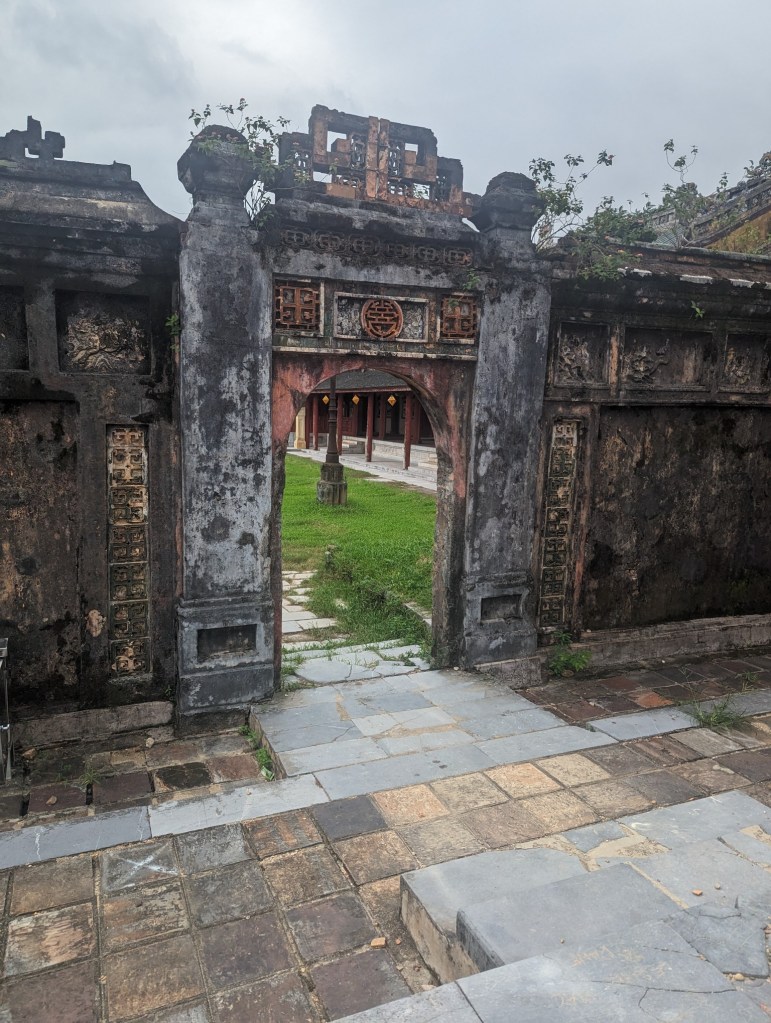
The Purple Forbidden City is where the royalty lived. Only the king, women, and eunuchs were allowed inside. Besides the queen, the king had up to 500 concubines, making him a very busy man. Keeping other males out protected his bloodline. Even royal relatives were not allowed to visit; there was too much chance of assassination.
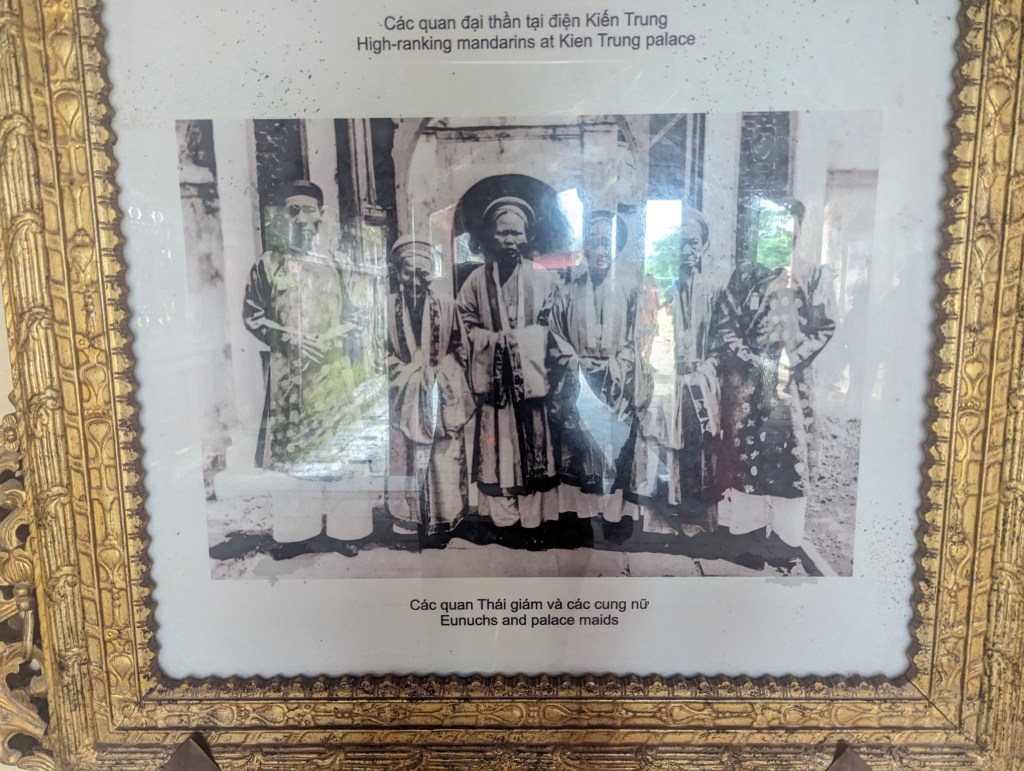
We passed by some photographs depicting life during the Nguyen Dynasty. We also saw a depiction of what the Imperial City used to look like. Many of the buildings were destroyed by bombing during the war.
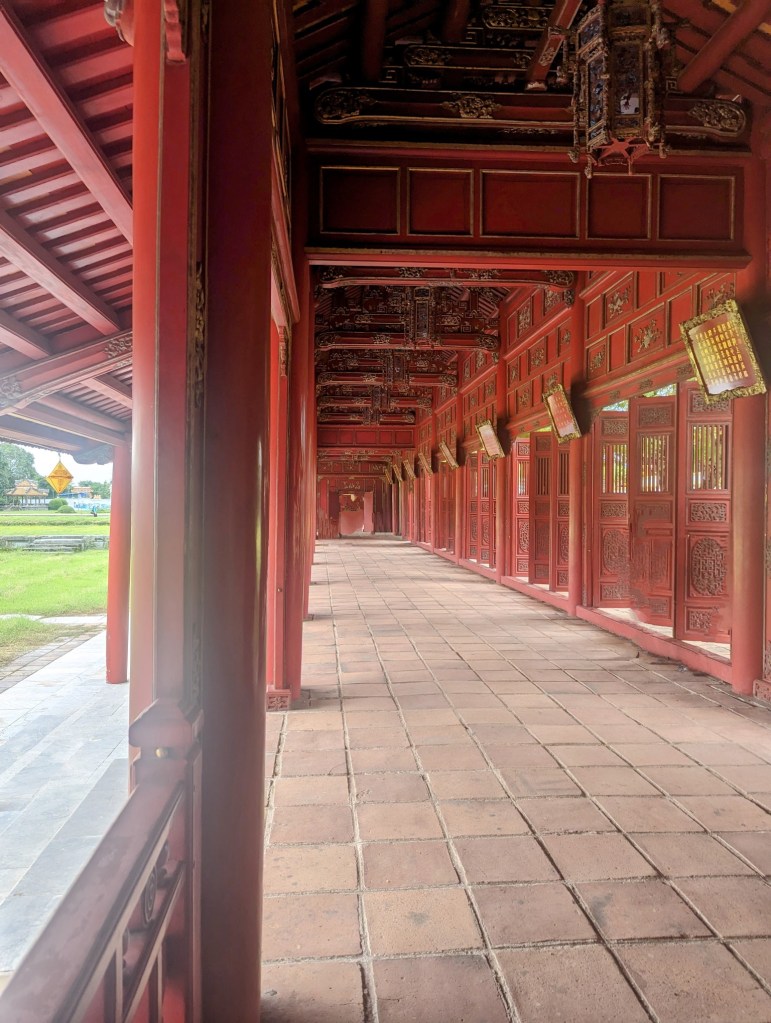
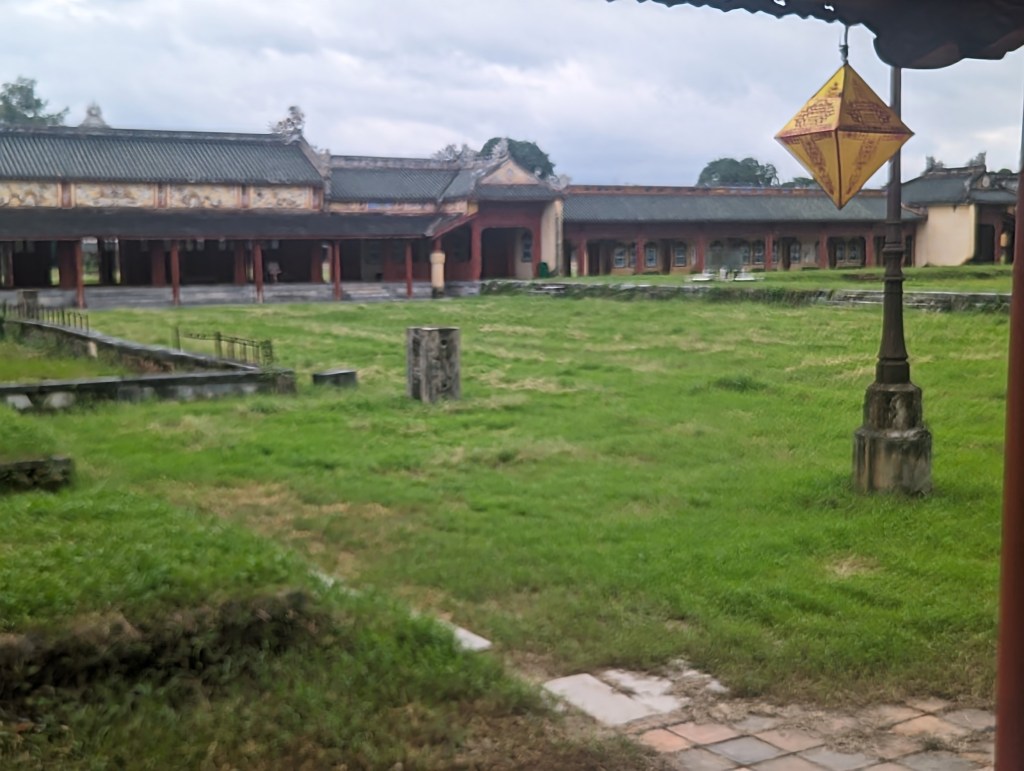
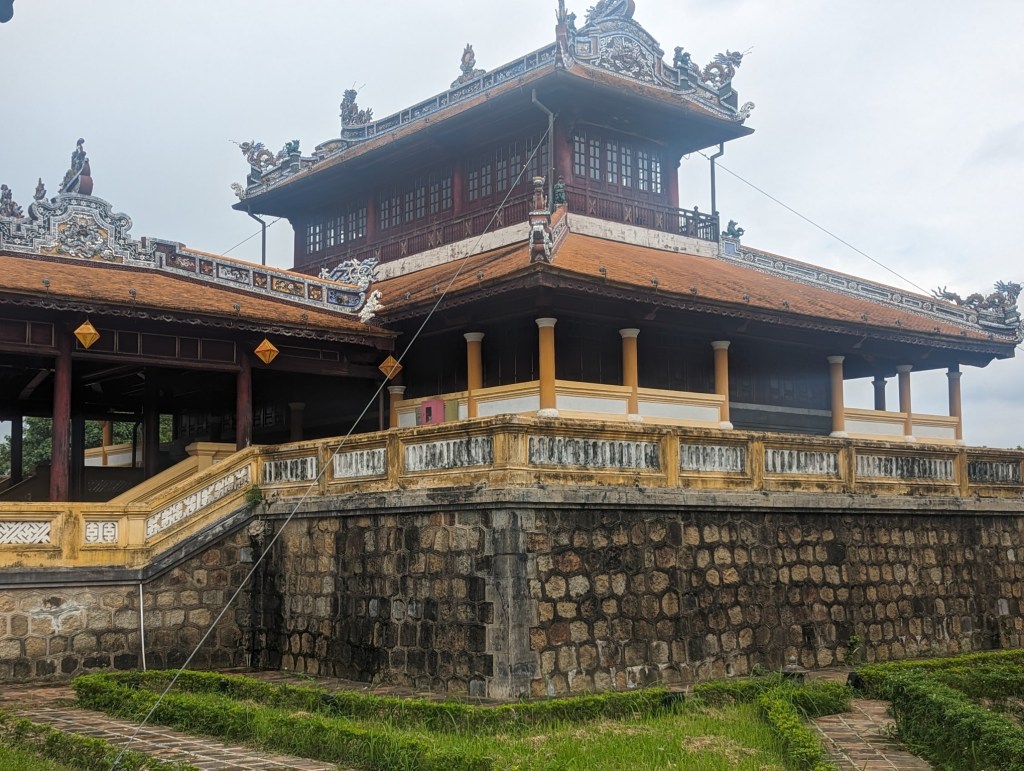
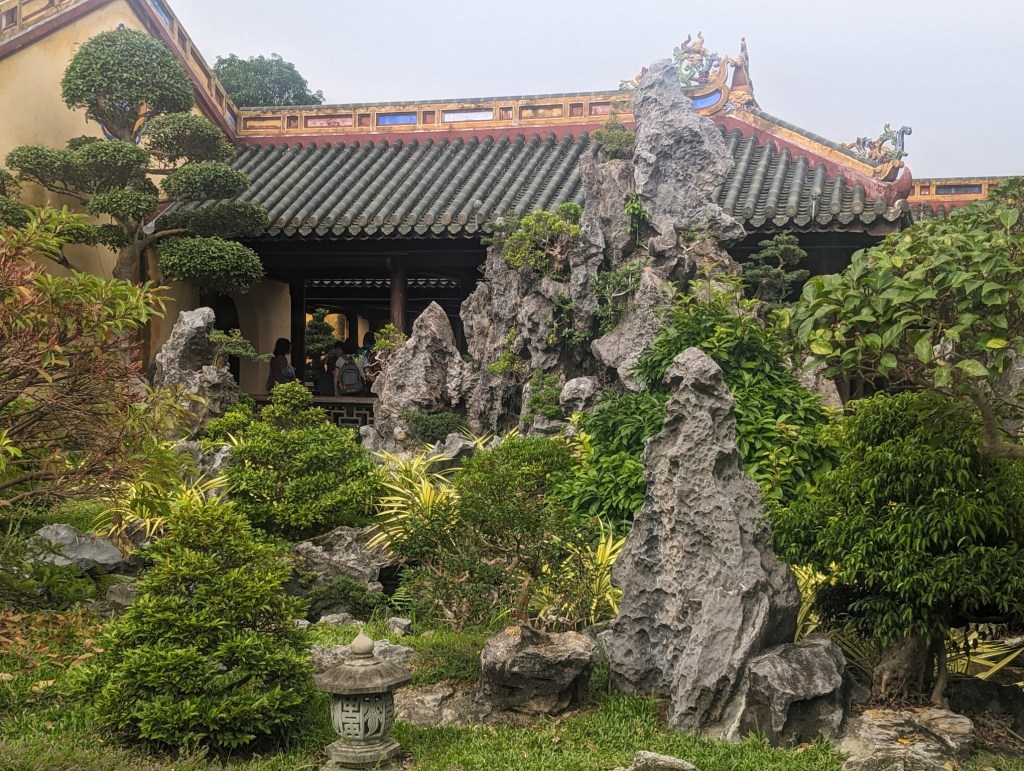
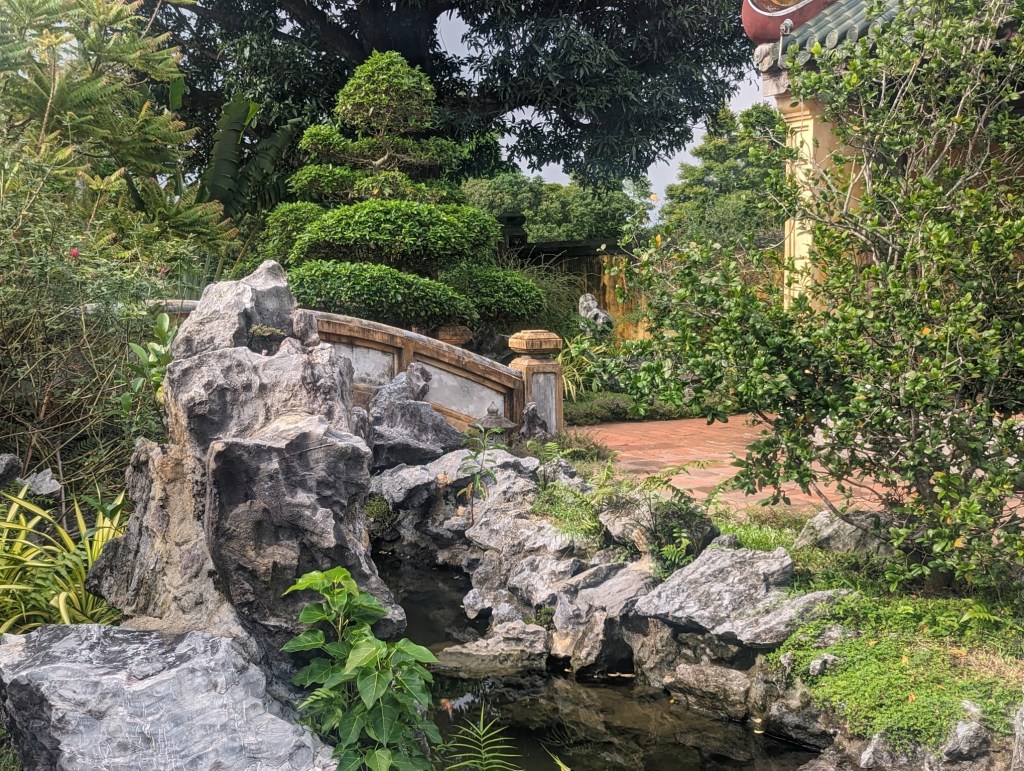

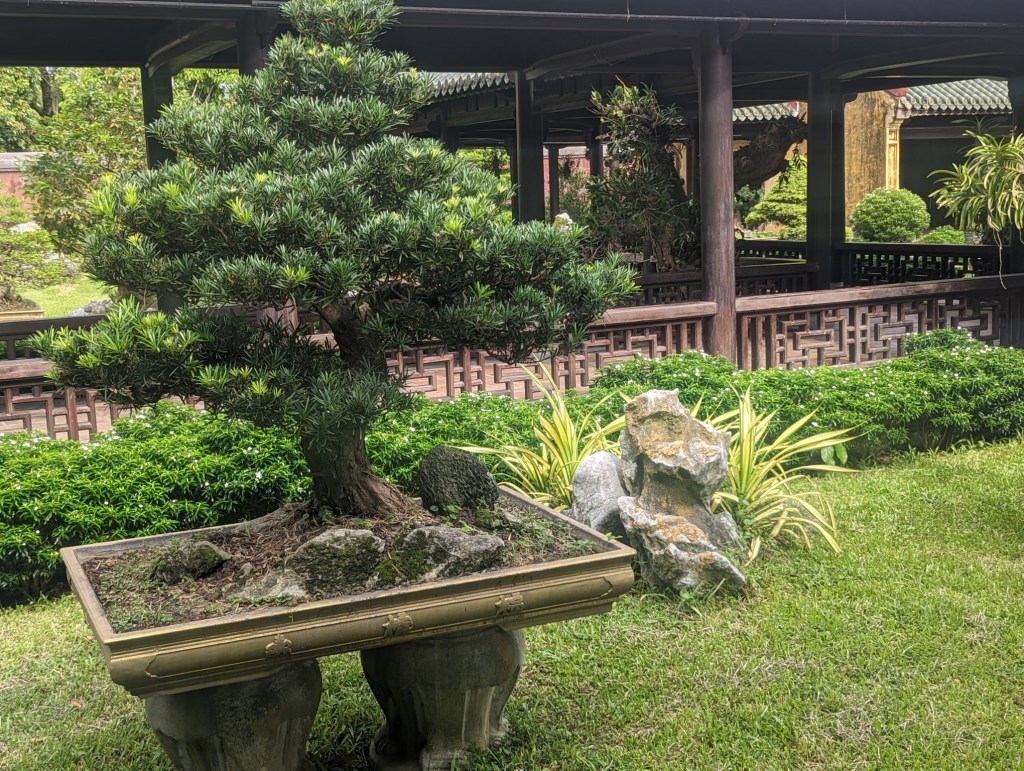
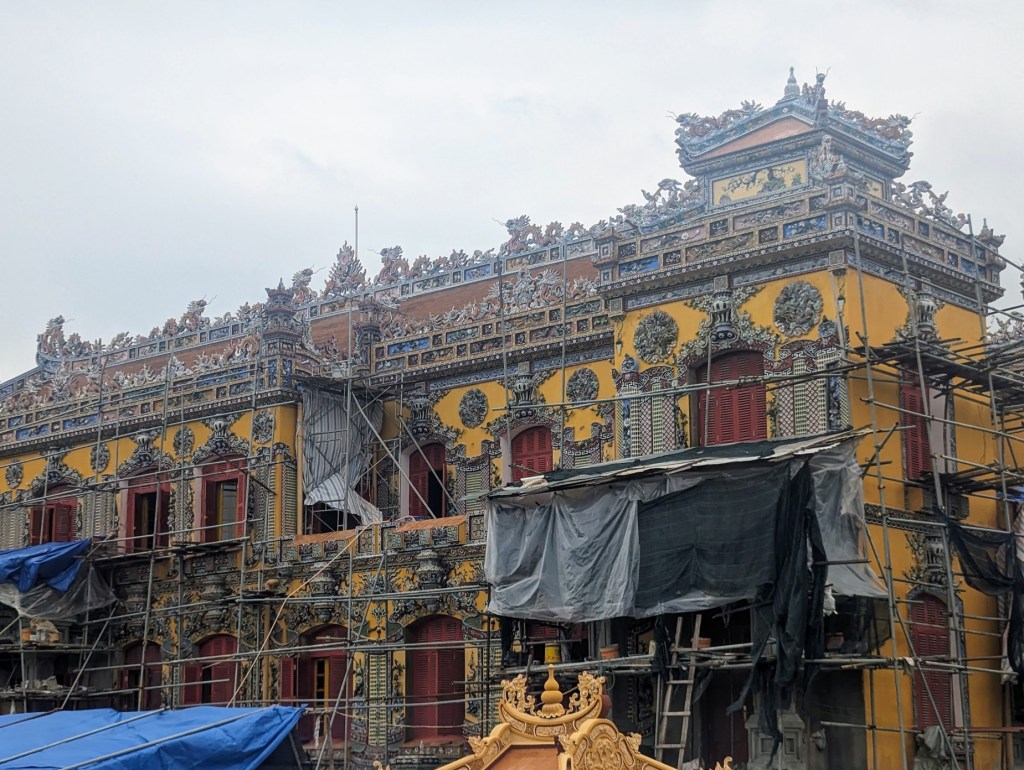
As we exited the Imperial City, the rain started. Fortunately, it was a quick, light sprinkle, so we didn’t get drenched while returning to our bus. Nothing else was planned for the day, so we were able to check in and relax at the Eldora Hotel. The rooms are very elegant and large but lack many outlets since it is an older hotel.
When I said that nothing was planned for the evening, that was not totally accurate. There was an optional tour that involved a one-hour cyclo ride around Hueʹ followed by a dinner composed of dishes enjoyed by the royal family. We have done cyclo rides before and so opted out. By the time the tour started, the rain had started, and it was a tropical rain – very heavy. People got drenched and the visibility was poor.
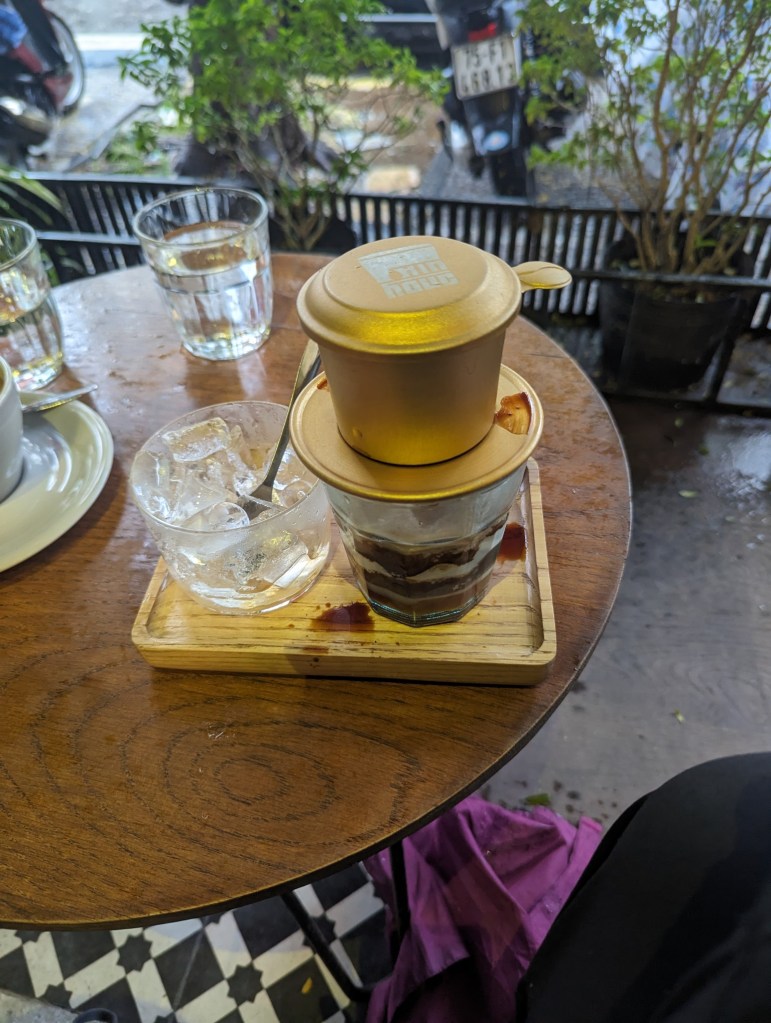
The next day, we awoke to heavy rain. There was another optional tour today, but it replicated a tour we took last time we were Hueʹ. We had another spectacular breakfast at the hotel (all the places we stayed at had amazing breakfast spreads). We decided to go for coffee at a coffee shop across the street. Clayton managed to get a hot Americano and I decided to be bold and try the Phin Phô mai Caramel, which is described as cheese caramel coffee. Fortunately, the cheese is cream cheese. The drink had cream cheese and salted caramel in the cup. On top of that was the gadget used to brew coffee and a cup of ice was provided on the side. It took me a while to figure out how to put it all together, but it was worth it. What a delicious cup of coffee! It tasted more like a dessert than a cup of coffee, but who am I to complain? We had a nice view of the street and stayed dry while everyone outside was getting soaked due to the downpour. Even wearing a raincoat and using an umbrella, we both got wet just crossing the street to return to our hotel! We found a nice table outdoors at the hotel overlooking the street and were surprised to see our tour bus pull up since it wasn’t expected to be back until 2:30 in the afternoon. About half of the people on the bus got off and went into the hotel. Their tour today (optional) was to take a boat trip down the Perfume River, stopping at a Pagoda to have lunch prepared by nuns. People got so drenched during the first part of the tour that they asked to be returned to the hotel rather than be soaking wet for the next 4.5 hours. There were some that decided to stick it out. Glad we opted out of this one!

 travelswithheather