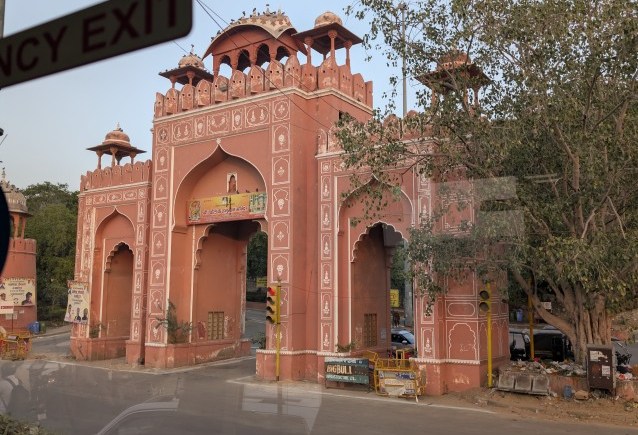
Jaipur was our final stop on our tour. We spent the better part of a day driving from Ranthambore to Jaipur. We were given box lunches by our hotel which contained half of a mayonnaise sandwich on white bread, a banana, a bag of “American” potato chips, two hard-boiled eggs and a couple of teeny, tiny muffins. I made the sandwich more palatable by putting my chips between the slices of bread. At least it had some crunch that way! We ate our lunches at the same tourist souvenir shop we stopped at on the road to Ranthambore.
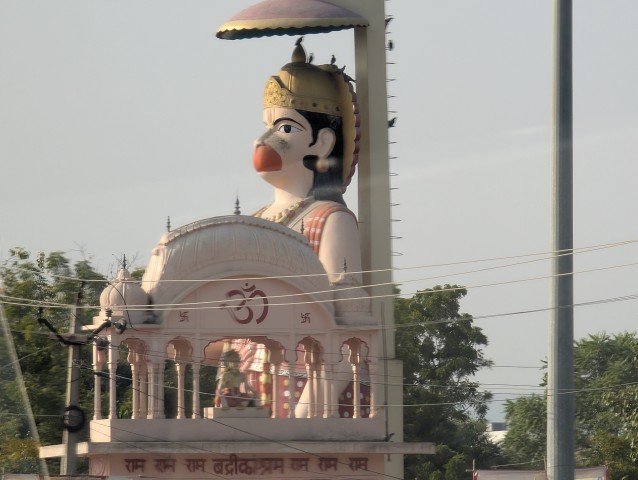
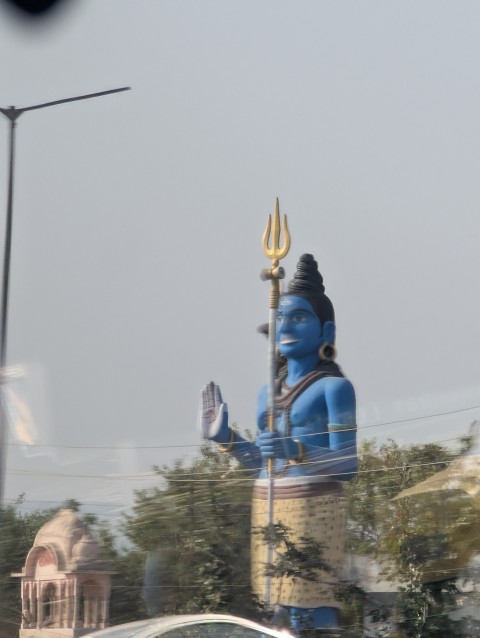
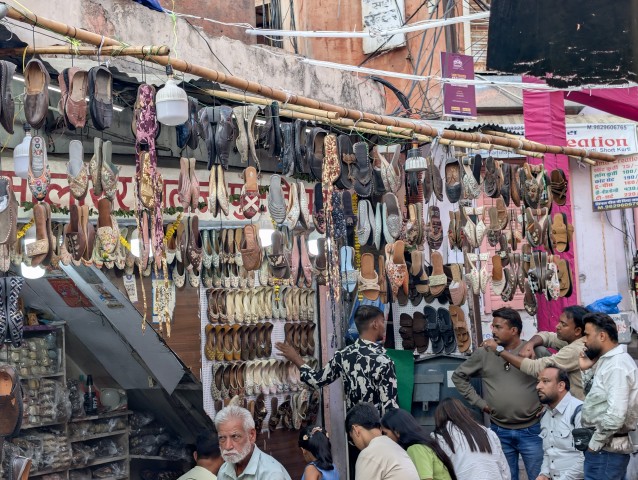
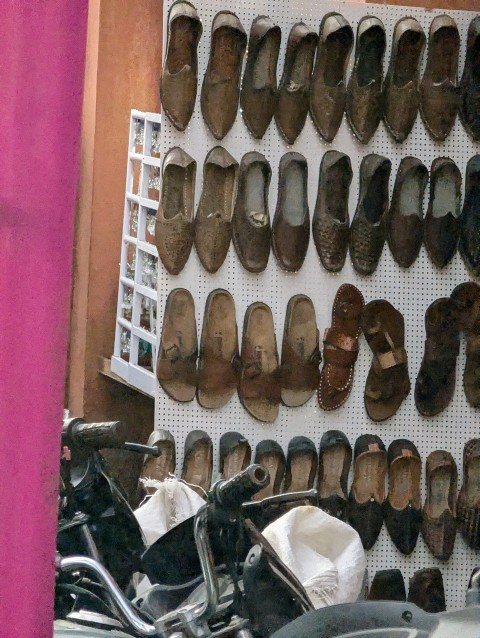
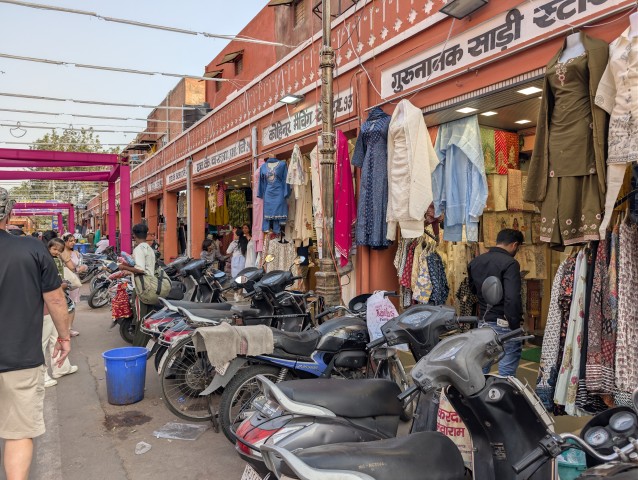
We reached Jaipur late in the afternoon and had the chance to visit the local bazaar. I bought some earrings after bartering with the vendor. I paid a whole 250 rupees ($2.50) and felt bad that I couldn’t barter the vendor any lower, lol. Lots of shoes and scarves were for sale, as well as bangles and earrings. I think the biggest part of the adventure was crossing the street to reach the bazaar!
We spent the night at another spectacular Taj hotel. All of the Taj hotels have been exceptional; this one was no different. The next day we had a tour of the city.
Jaipur is also known as the “pink” city, though I personally would call it more of a salmon color! It was built in 1752 by the emperor Jai. Pur means city, so therefore, Jaipur is the city of Jai. It is the first well planned city in the state of Rajasthan; actually, in all of India.
In 1876, the Prince of Wales was to visit and so it was decided to paint the town saffron pink for it to stand out. There are other colorful cities in India as well – blue (Jodhpur), gold, yellow, etc. It used to be illegal for buildings to be any other color than pink, but when India became independent in 1947, it was no longer required.
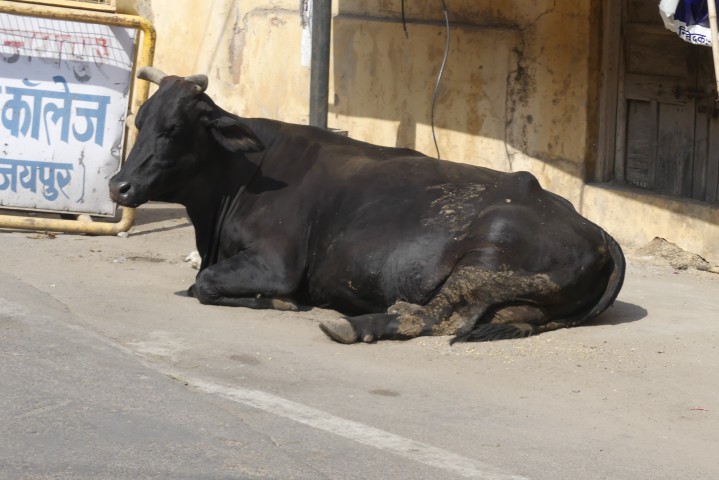
A side note: as I was taking notes on the ride into the city, an elephant casually strolled down the highway! I wish I could have reacted quickly enough to get a photo. There was so much rubbish on the streets. Our guide said it was because during the Diwali holiday, no one cleaned up, but I think it is more likely that there is always garbage piled up.
Our guide noted that milk is delivered daily, fresh milk, as in unpasteurized. Therefore, the first thing one must do is boil it to make it safe to drink or use in cooking.
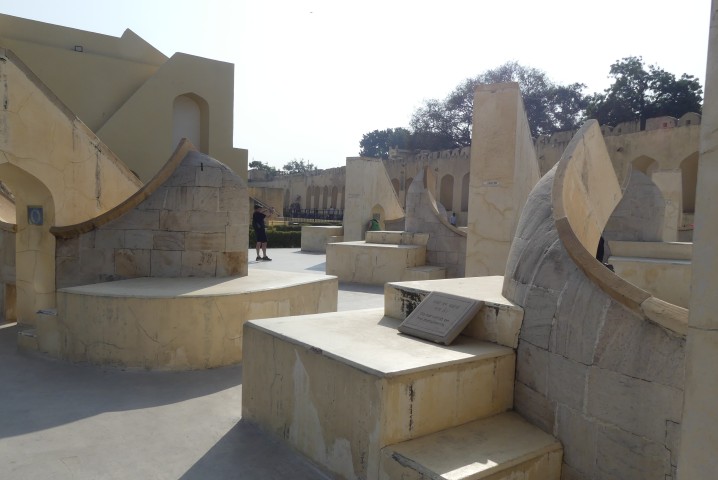
Our tour began with a stop at Jantar Mantar, a place where astronomy and astrology were calculated using large instruments. These were used to get readings from the sun and moon in order to make predictions for people.
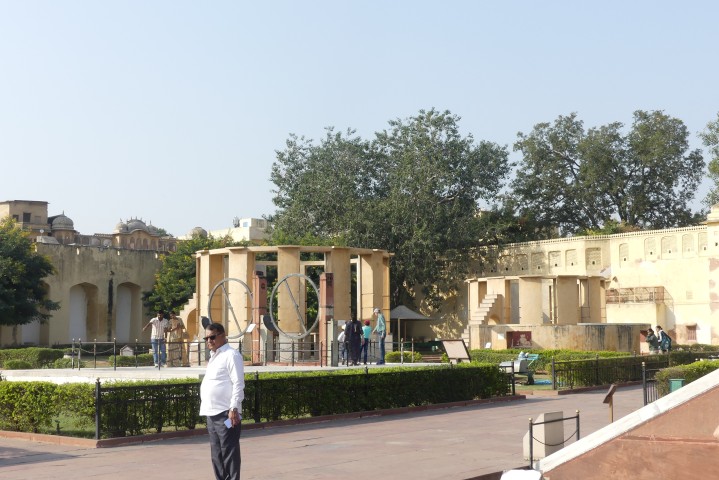
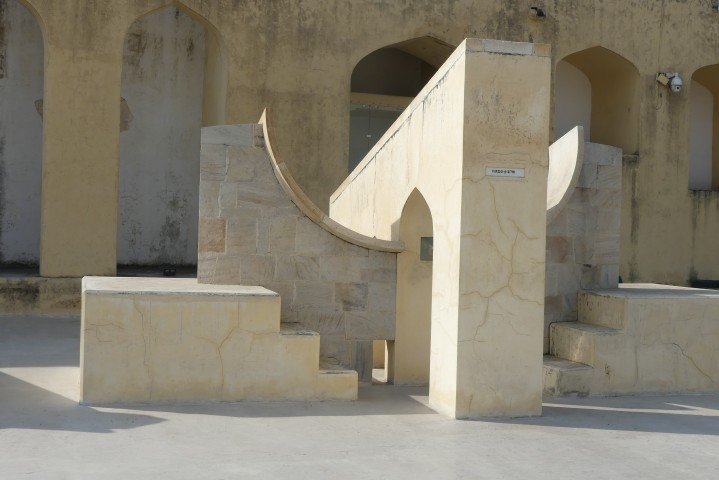
Our guide pointed out several of the implements used. The first was a small sundial, accurate to within 20 seconds. There was a staircase with measurements marked and a large sundial type structure. He showed us how to measure the time using the sundial. There is a larger sundial on the property as well. The large round instrument was used to keep track of the season.
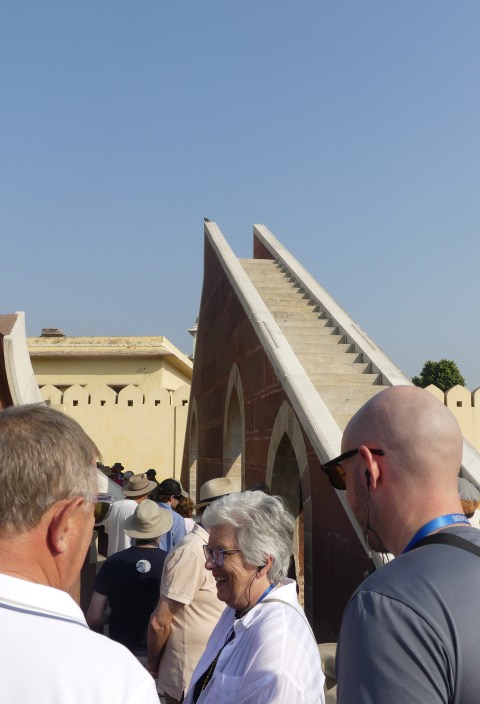
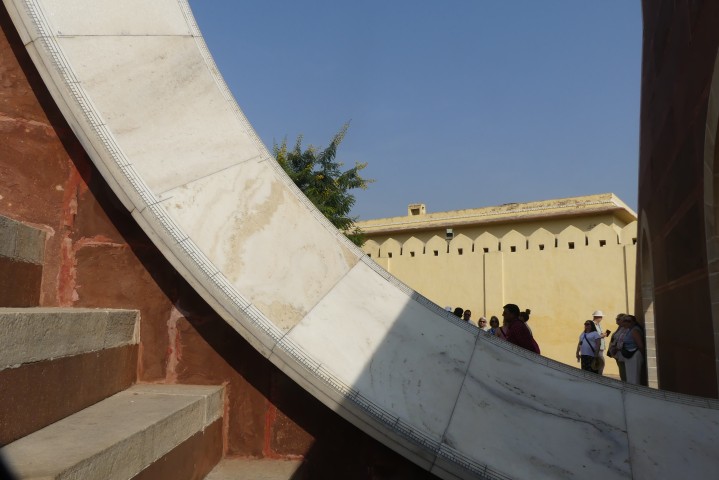
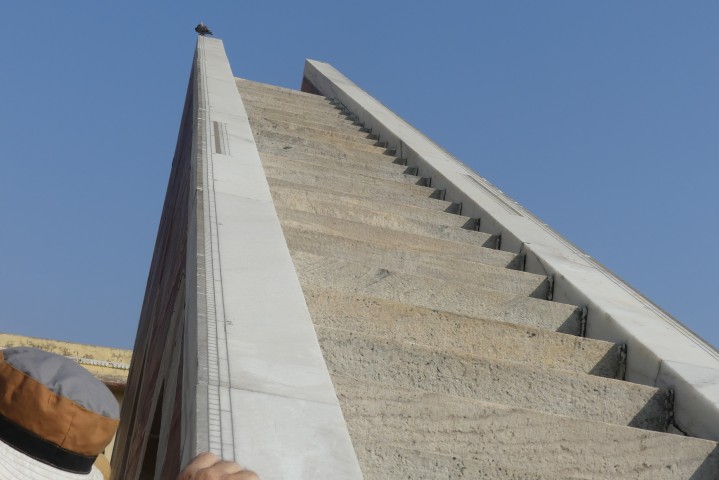
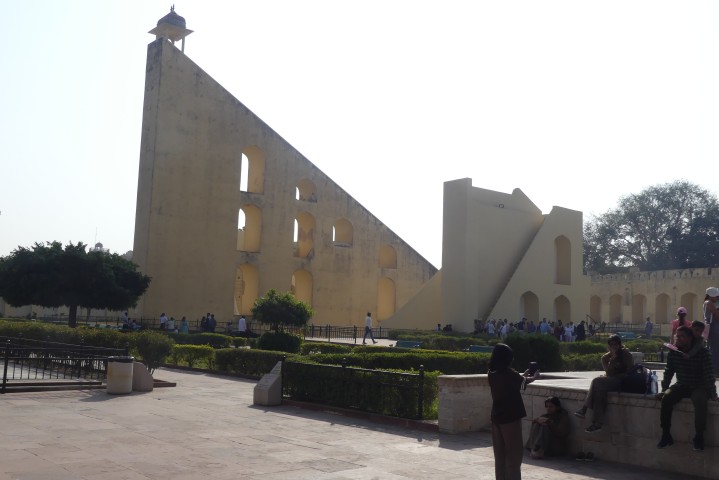
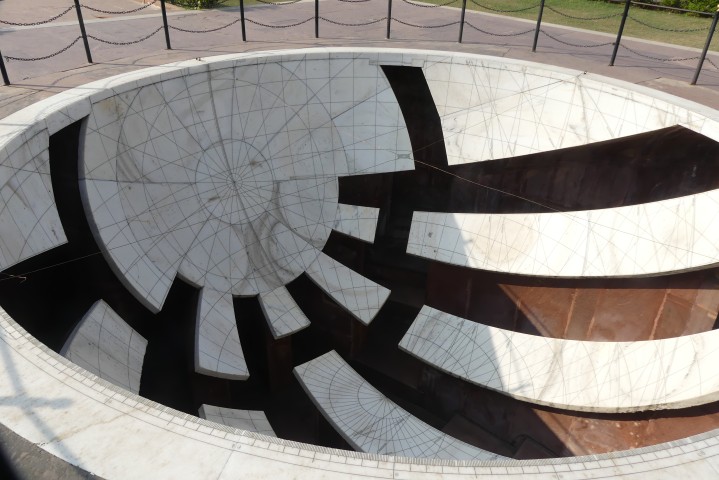
Next up was Jai Prakash Yantra, the bowl-shaped pair of which were used to give the astrological house for babies. The two together can provide a complete horoscope. Astrology is still used in India to make predictions and important life decisions.
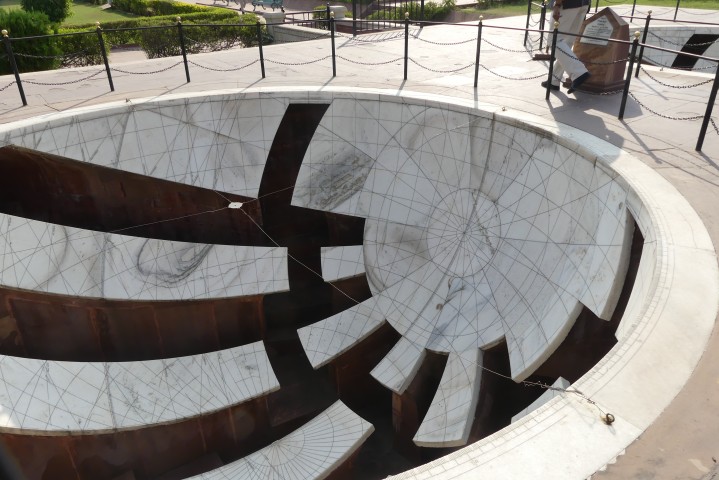
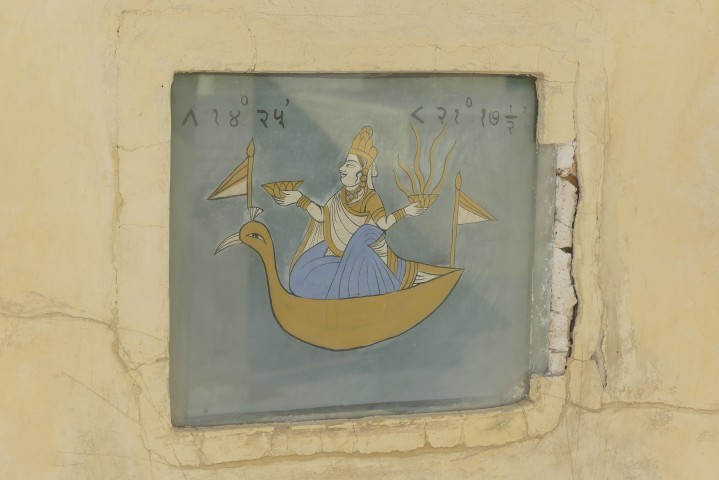
Each of the twelve signs of the zodiac had its own structure on the property.
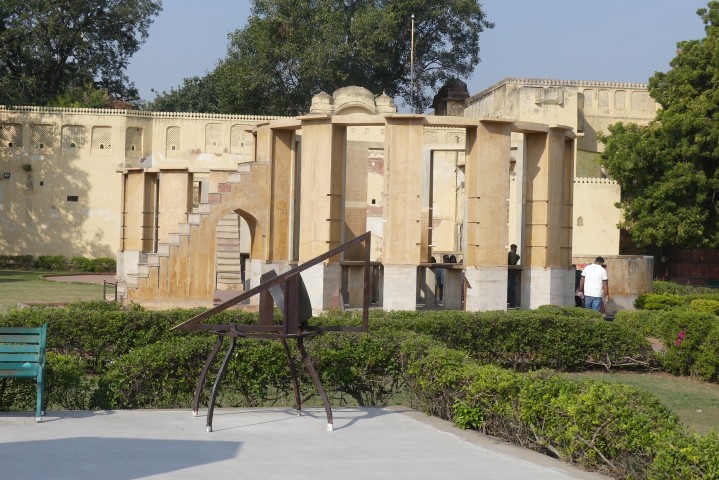
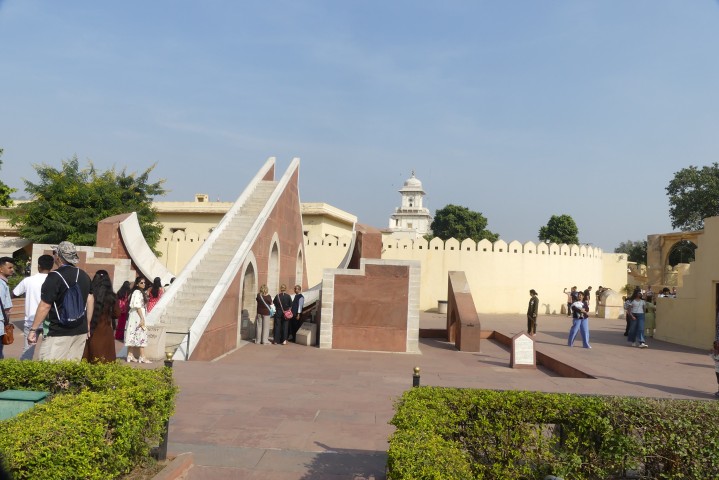
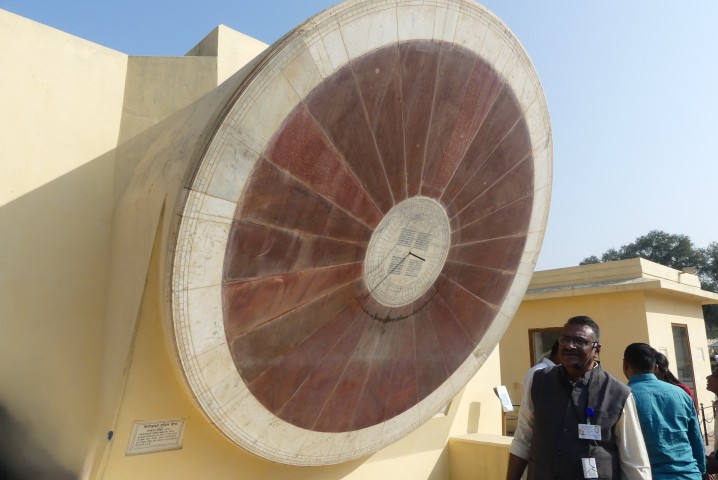
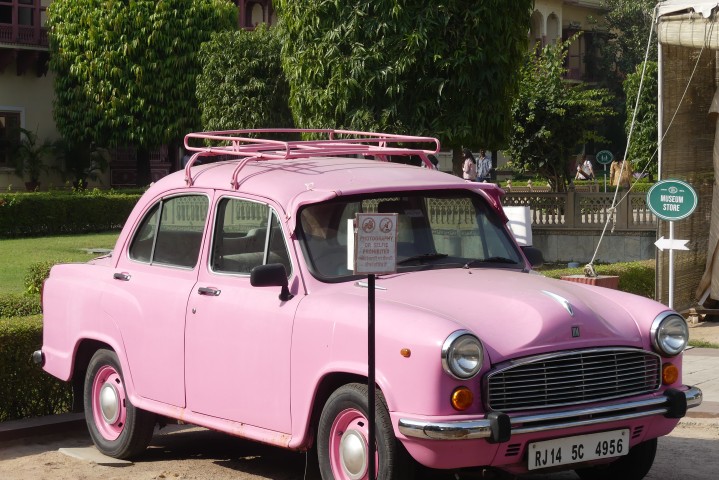
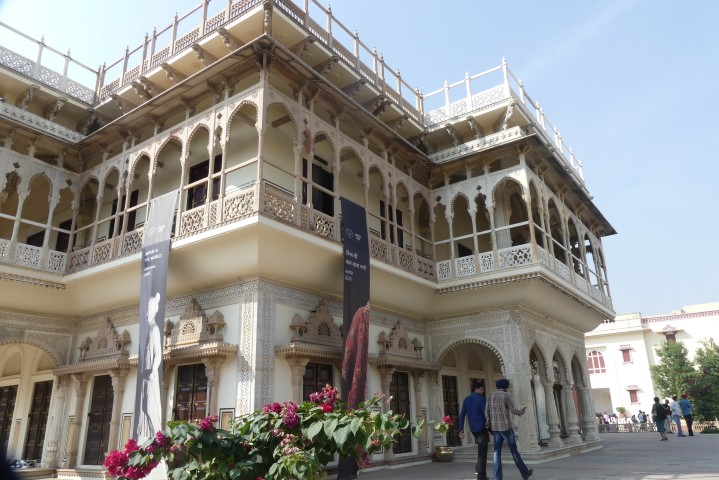
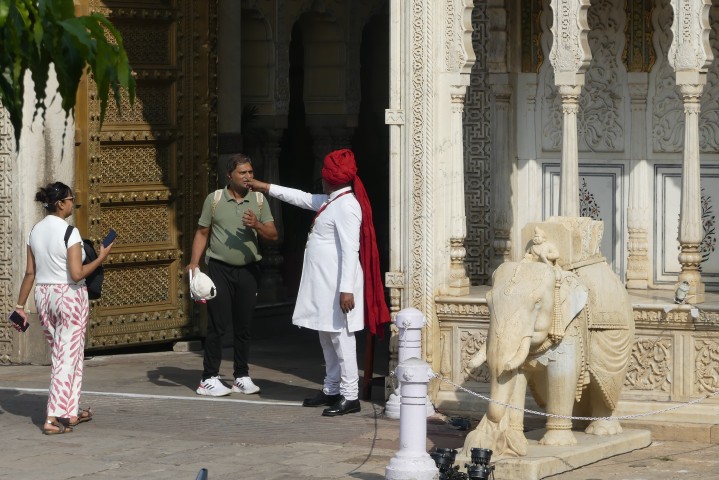
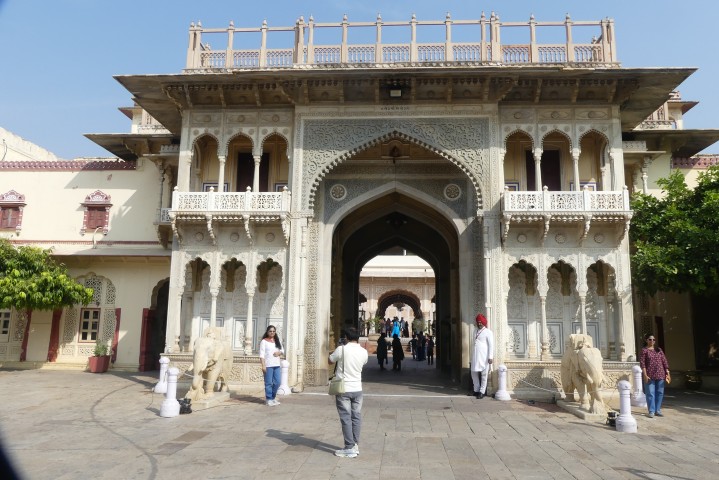
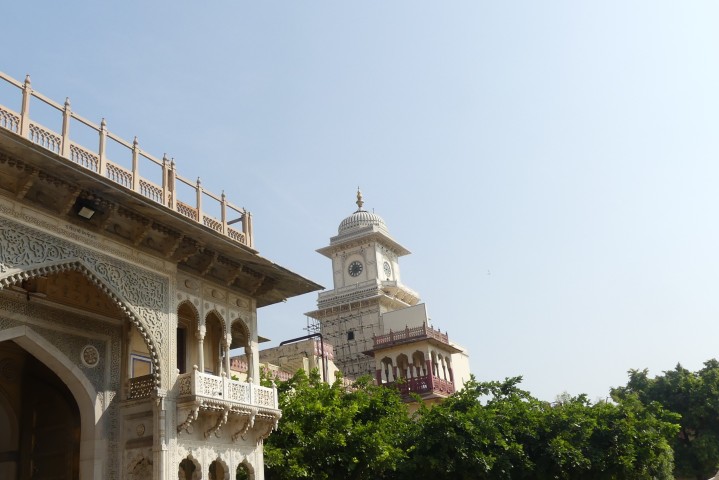
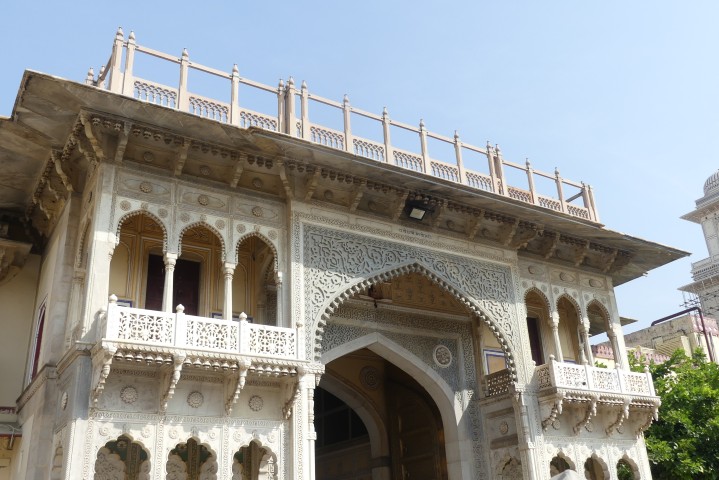
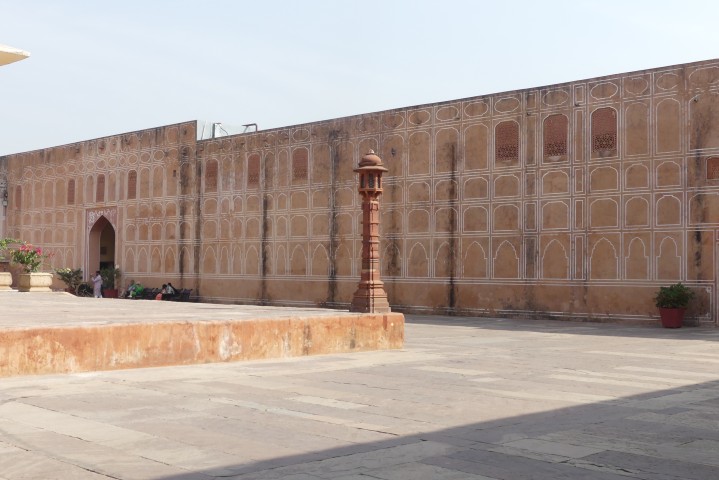
Adjacent to Jantar Mantar is the former maharaja’s palace. Parked just inside is a lovely pink Morris, one of the most reliable cars of its time. I love pink, and this car was pretty cute! I didn’t notice until we entered the courtyard that there was a no photography sign by the car.
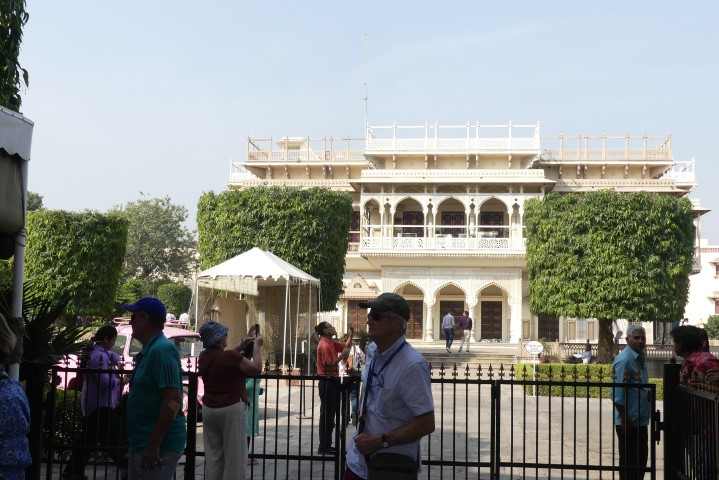
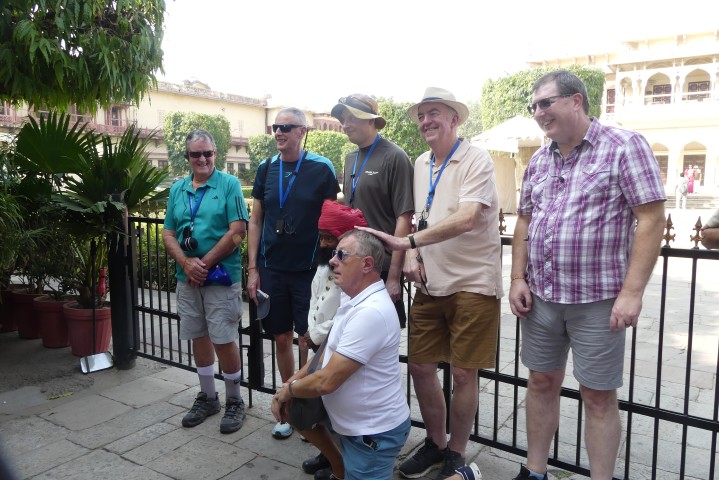
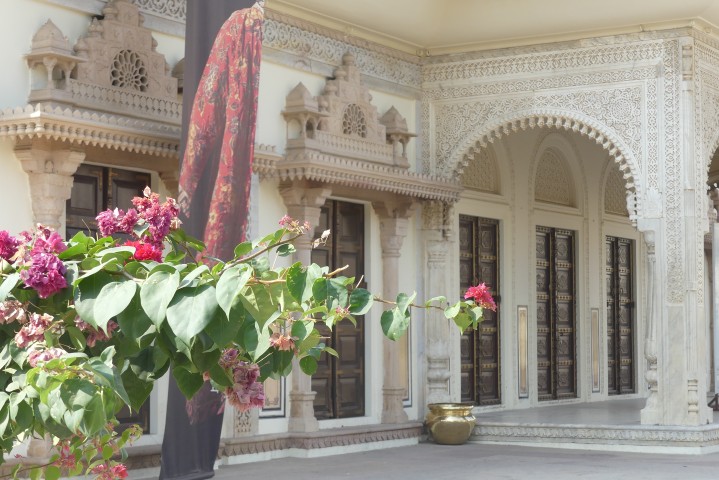
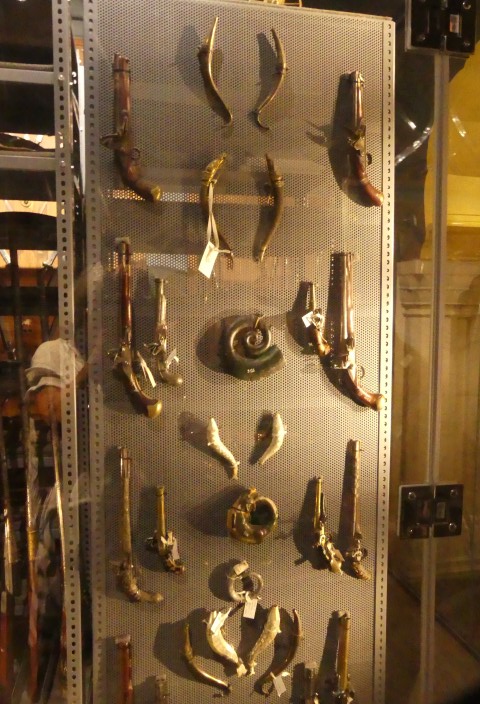
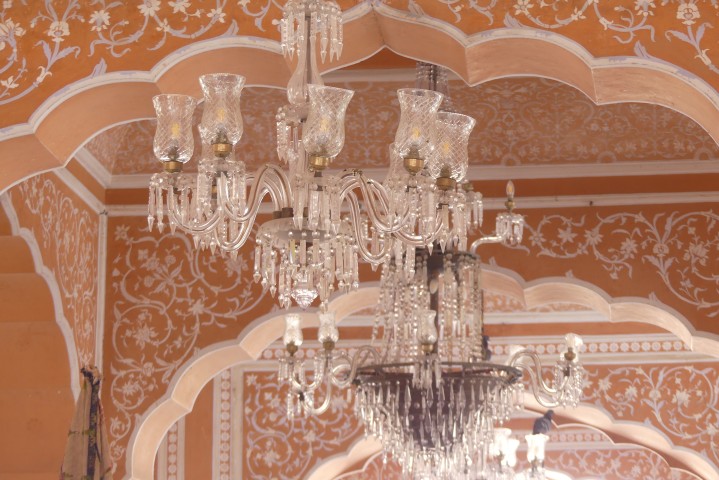
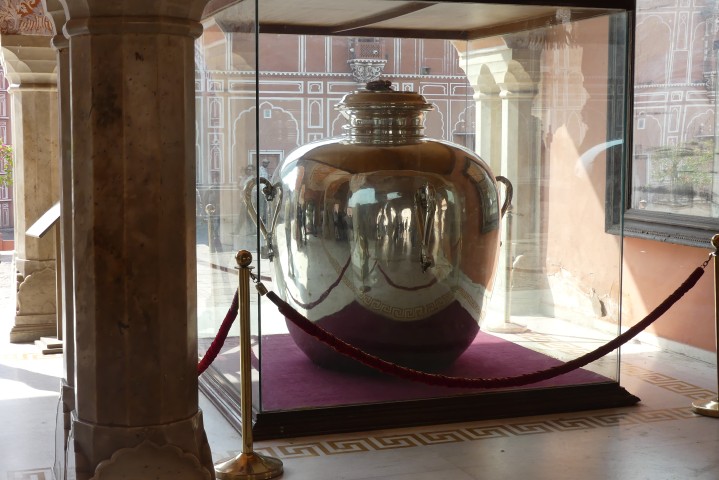
Unfortunately, the first gallery was closed for renovations. In it were the clothing of the maharaja’s which would’ve been interesting. We were able to go through the armory, though. After viewing the weapons contained there, we went through to the Hall of Public Audience. There were two large silver water urns, each weighing 350 kilograms empty. They were used to transport water from the Ganges River.
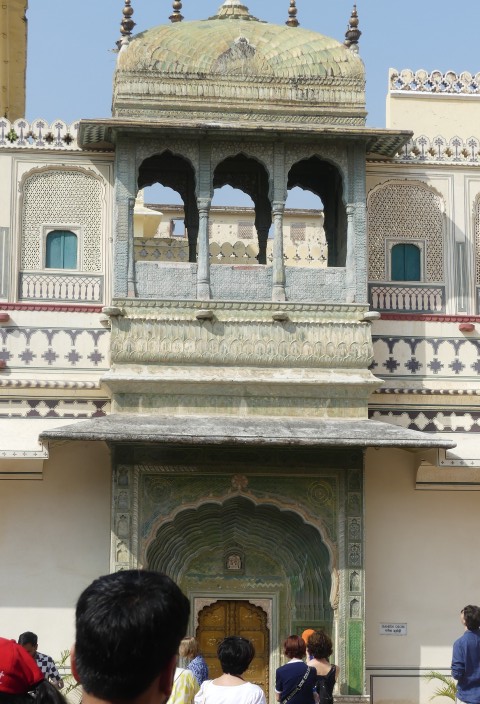
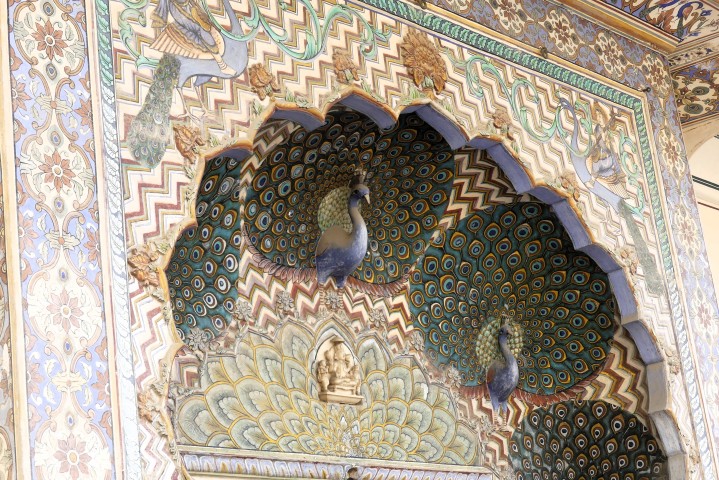
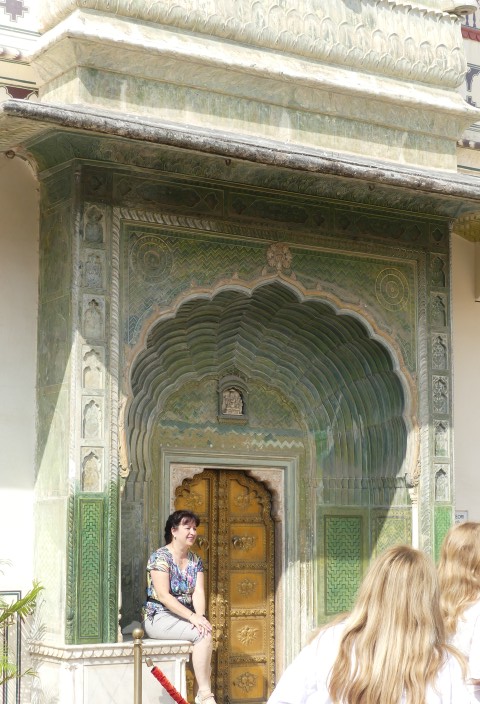
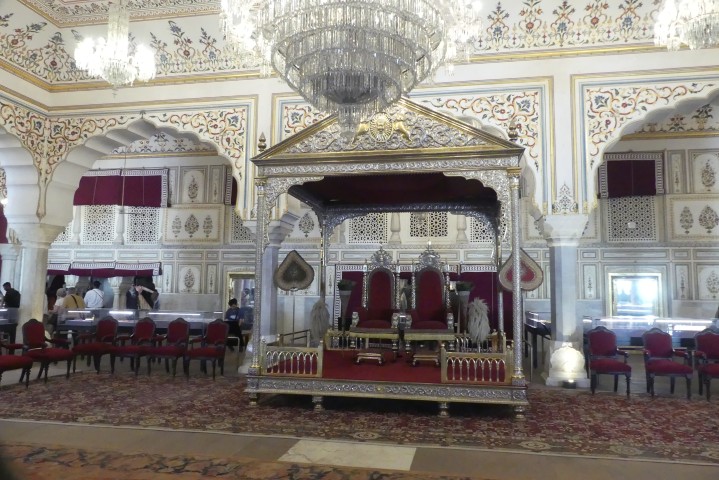
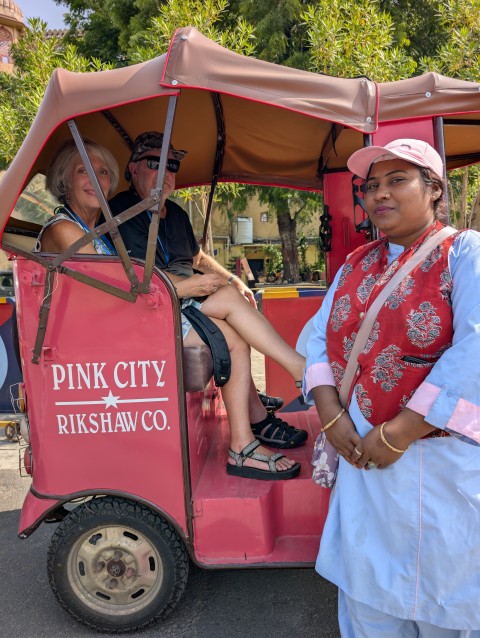
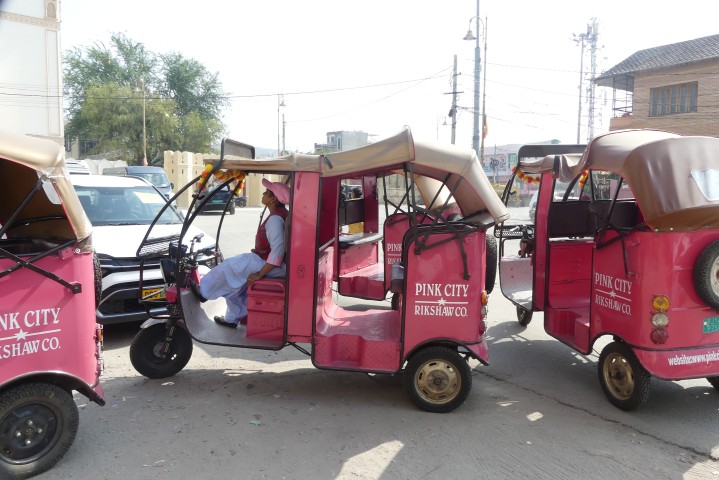
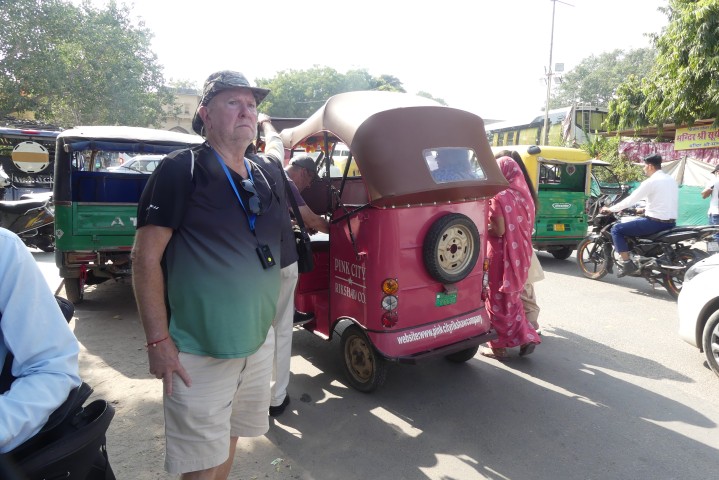
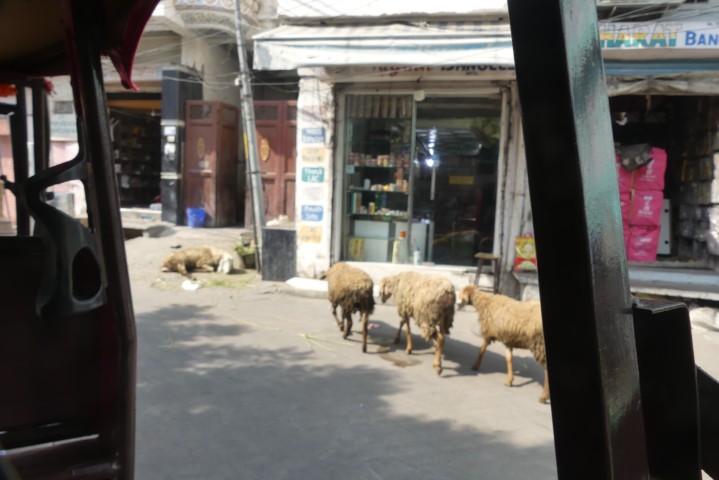
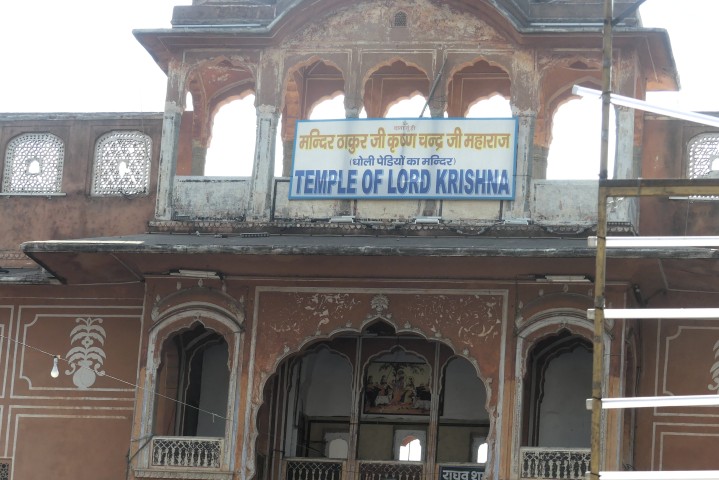
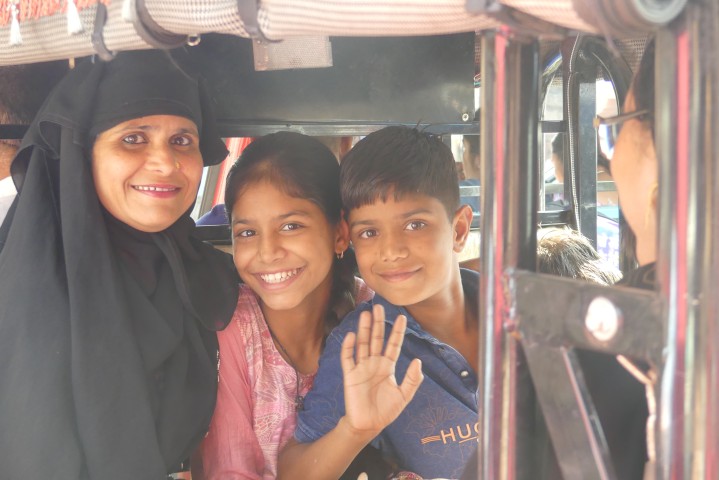
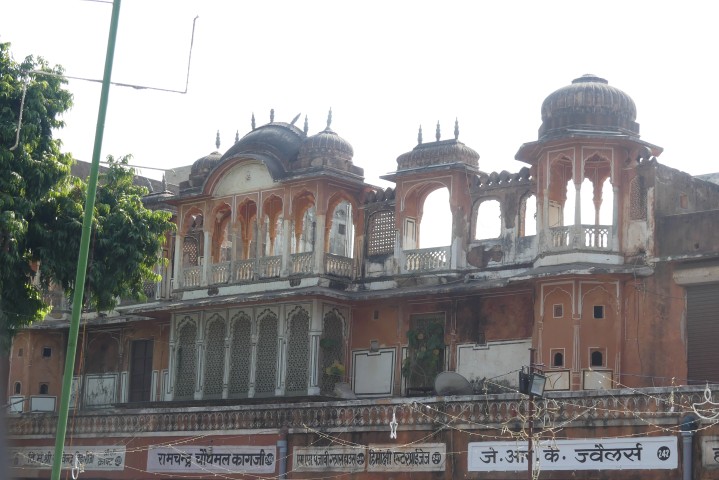
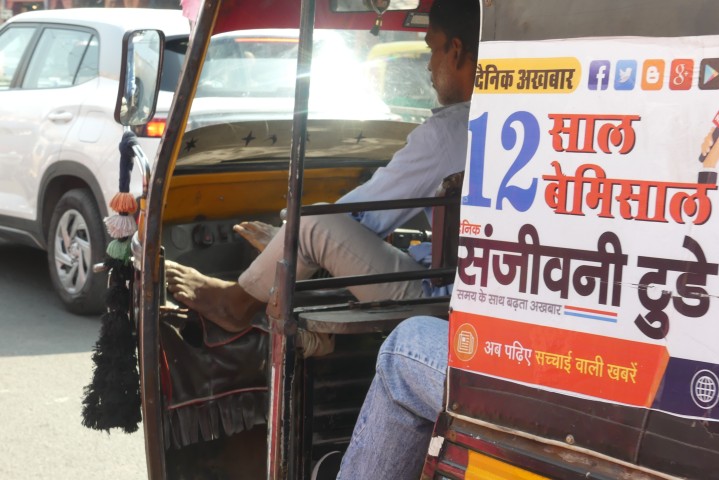
After viewing the palace, we were loaded onto pink tuk-tuks for a wild ride around the old city. These particular tuk-tuks are all driven by women. It was nice to see that, since I have noticed throughout the trip that India is a very male-dominant society. It is rare to see women at all, unless they are out with their husbands. On the other hand, men are everywhere all the time. I think I only saw two or three women driving motorbikes over the course of our trip. The drive was bumpy and loud – constant horn honking and uneven ground. I think we drove around the block but because traffic was so backed up, it took a half-hour! We waved at the other people in tuk-tuks; the local families were very friendly.
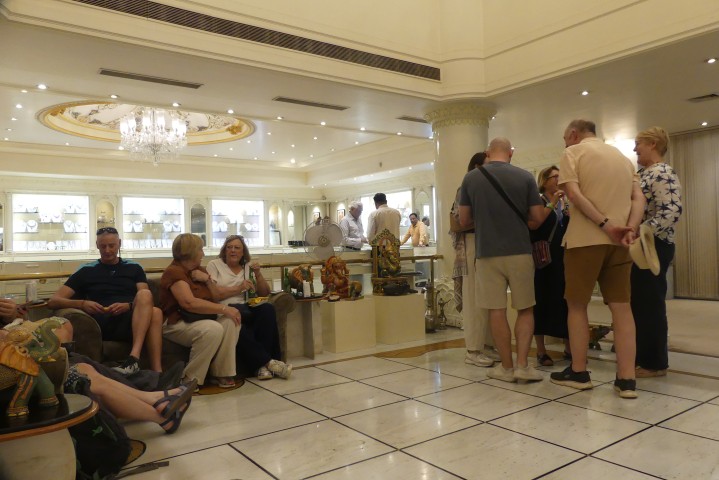
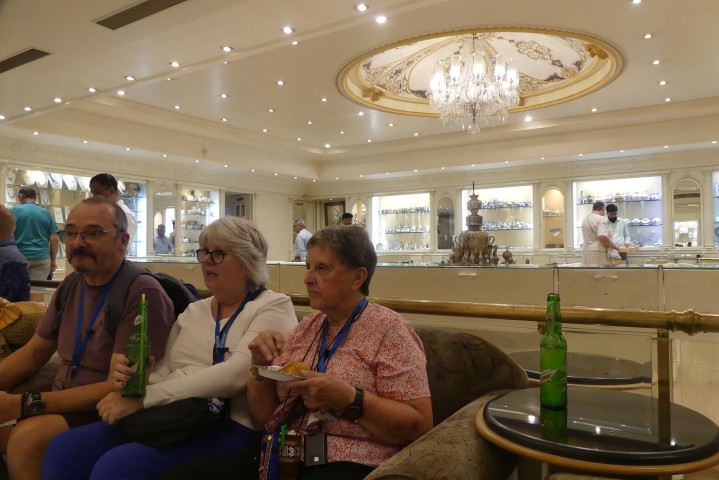
Instead of stopping for lunch, we were taken to a gem shop. Unlike most of the shopping stops, there was minimal introduction to the skills behind the jewelry; we were hustled into a large gem shop with very expensive prices. I was given a rum and coke to drink; I don’t think I have had one of those in over forty years! It can be another forty before I have another; they are too sweet for me. If I want rum, I want it in a mai tai or pina colada. There were some samosas and bananas out which ended up being our lunch. A few people in the group made purchases, but I was not at all tempted.
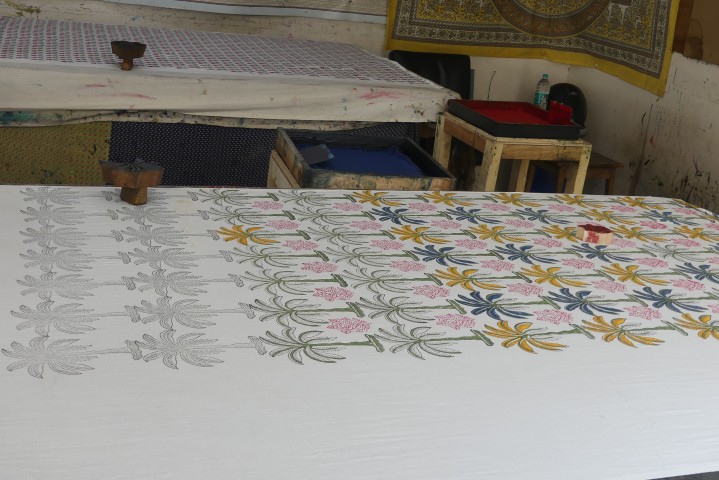
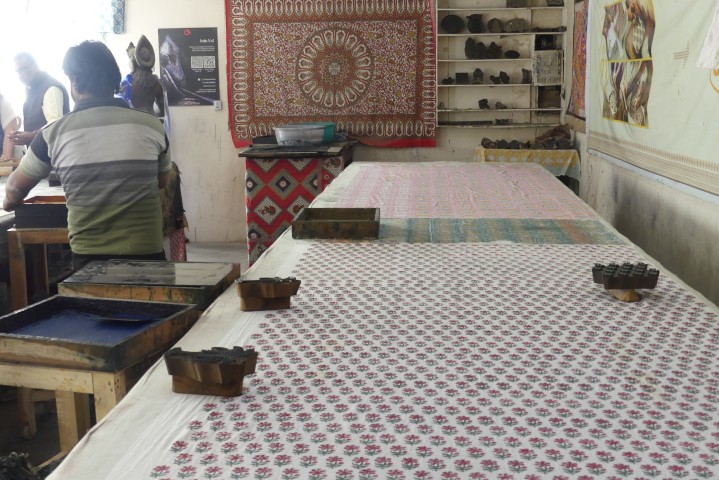
Finally, we had one more shopping “opportunity” at a textile shop. We were shown block printing outside the shop and then were led inside. The proprietor showed us various fabrics and gave us the prices. At this shop, one could have custom made clothing made and they promised to deliver the completed item to the hotel that evening. I was hoping to find something I liked but was disappointed. There were lots of scarves, purses, ties, pillow covers, and so on, but I didn’t need any of those. I didn’t see any clothing that I liked enough to pay to have someone make something for me. Oh, well!
We returned to the hotel for the afternoon. There was an afternoon tea served along with traditional music and dancing. And, amazingly enough, there were items for sale as well! Imagine that! Shoes, scarves, bags, the usual stuff. We spent another night in the luxurious Taj Amer Jaipur before heading back to Delhi to complete our tour.

