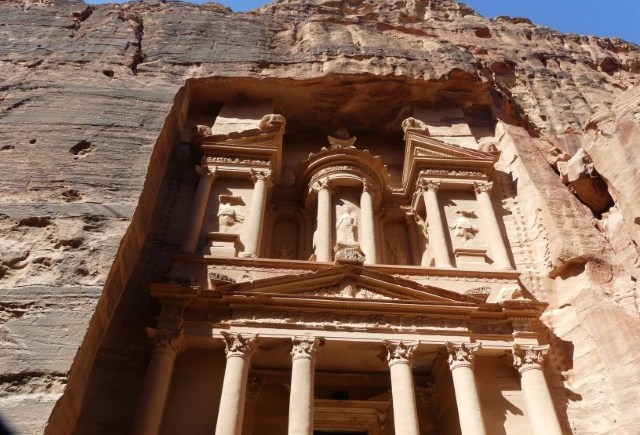
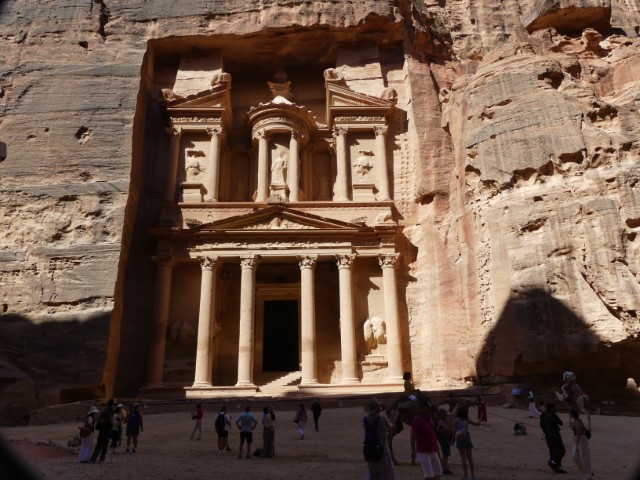
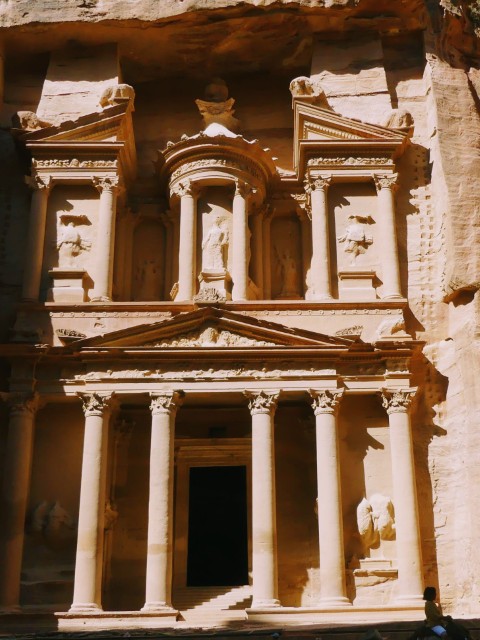
Petra (which means rock) is one of the 7 wonders of the modern world. The treasury (which is not really a treasury) is easily recognizable if you have watched, “Indiana Jones and the Last Crusade.” We visited there in 2016, so this would not be our first viewing.
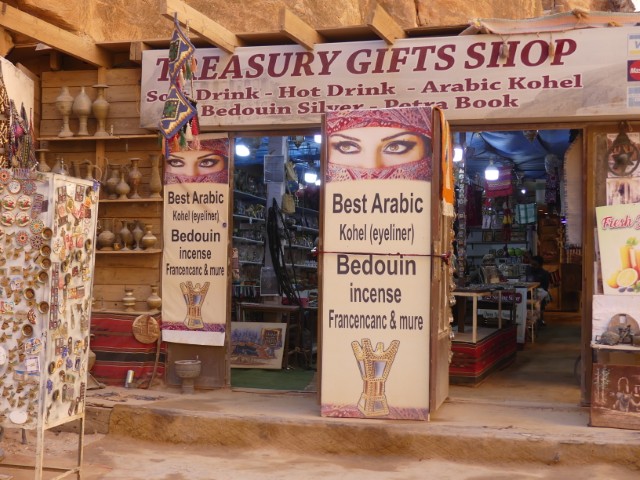
The Nabataeans founded the city of Petra in 500 BC. They were nomads and Bedouins, but by 320 BC, had started carving the city into the sandstone. The unique color is due to the mineral composition of the rock. They discovered frankincense and myrrh and sold it to become rich. During that era, people burned these substances to get into the next life. One gram of frankincense cost the same as two grams of gold!
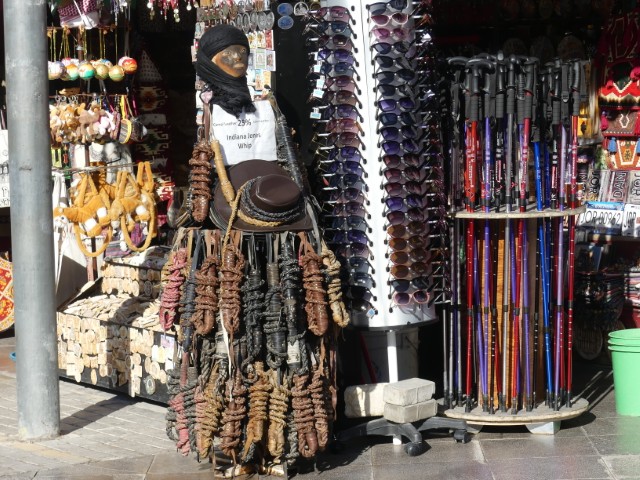
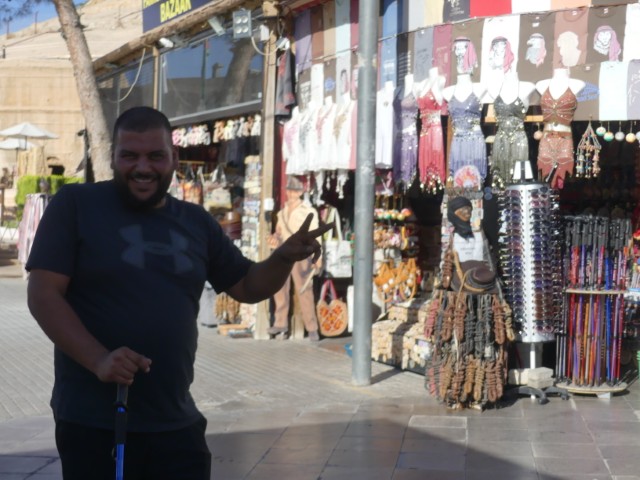
The Romans conquered the city in 106 AD. After the Roman empire fell, the city was converted to Christianity. By 1200 AD, it had become a lost city and was not rediscovered until 1812. In 1984, UNESCO declared it a World Heritage site. Sadly, that meant removing the 6,000 local people that lived in caves within the area. They were very unhappy to be moved. They now live in a nearby village and sell trinkets to tourists to survive.
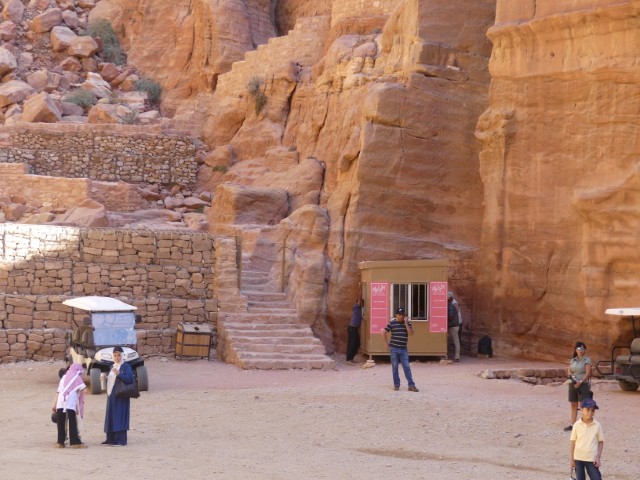
A word of warning: it is very hot in Petra (mid 90’s first thing in the morning). If you go as far as our group did, it is a 5-mile trek roundtrip. The walk down isn’t too bad since it’s all downhill. The walk back? For those that choose to, there are options available: from the treasury, you can pay 15 Jordanian dinar for a ride back in an electric golf cart. US dollars are happily accepted, here and pretty much anywhere in Jordan. A couple of women in our group took a side trip to the monastery, which is 900 steps up, but they did it the smart way – by riding mules. They were able to ride the mules all the way back to the entrance! I am not sure what they paid, but I am sure it was worth every cent.
Did I mention that there is a marathon in Petra today? Running 26.2 miles in the desert heat? No thank you!
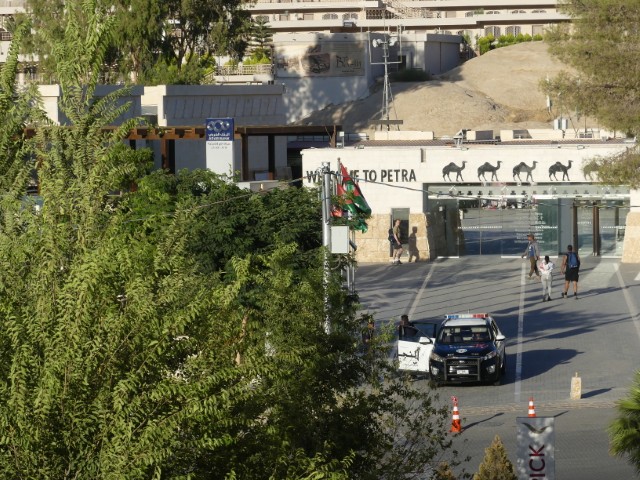

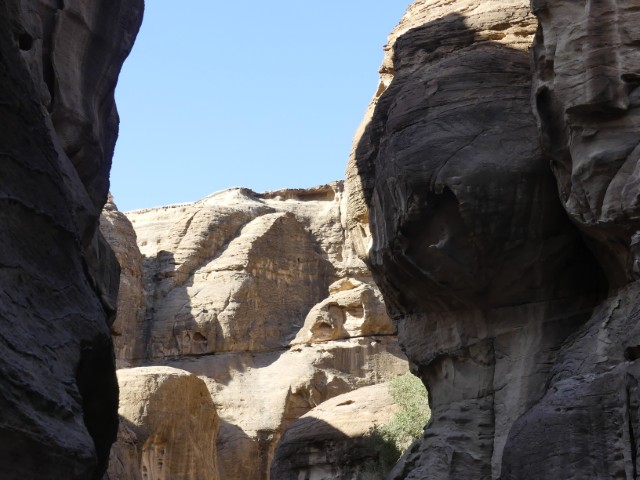
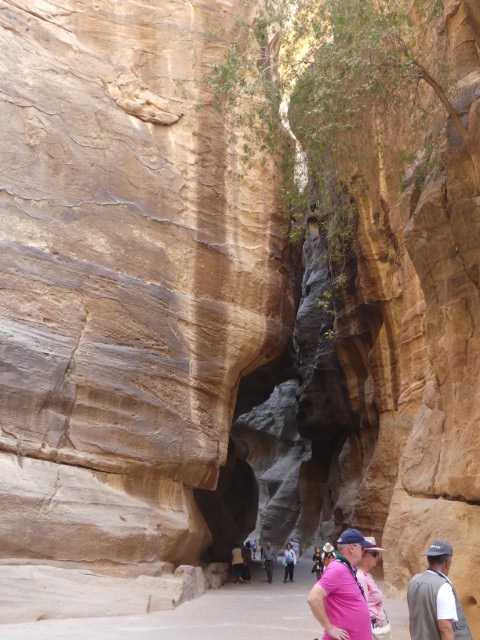
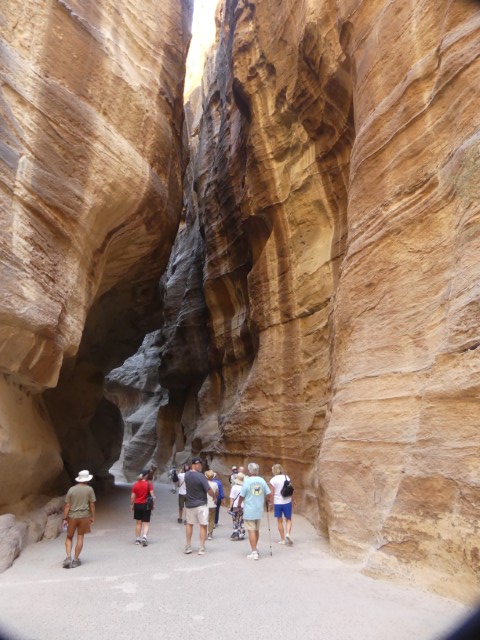
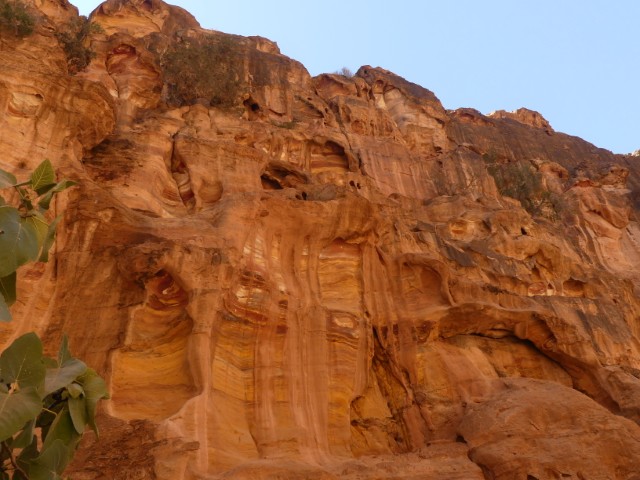
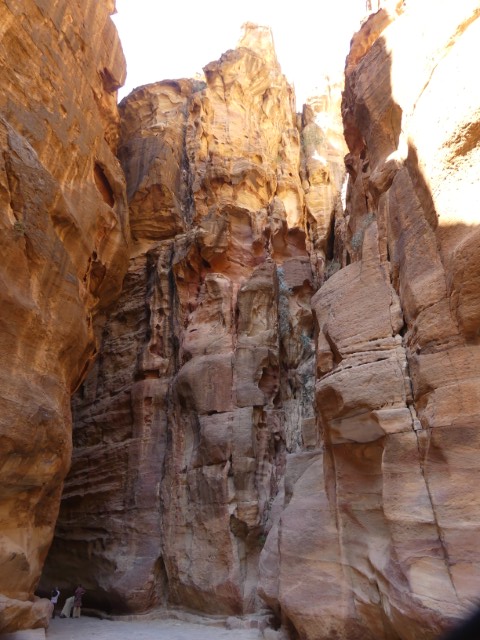
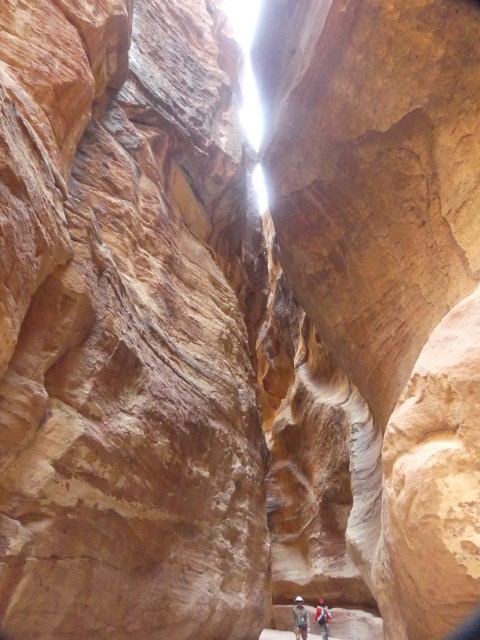
On the way to the siq (a narrow gorge that leads you to Petra):
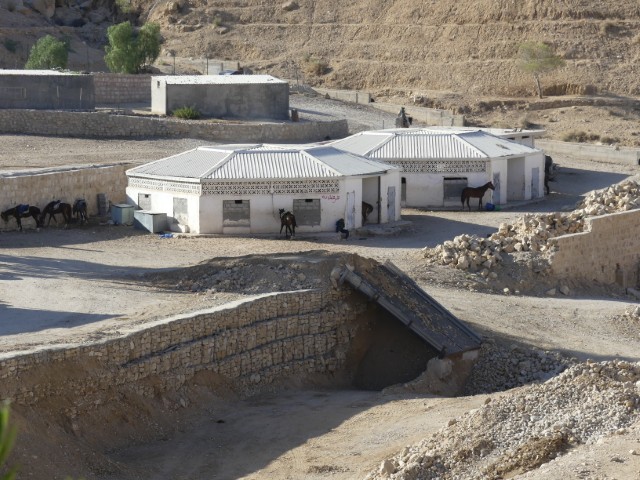
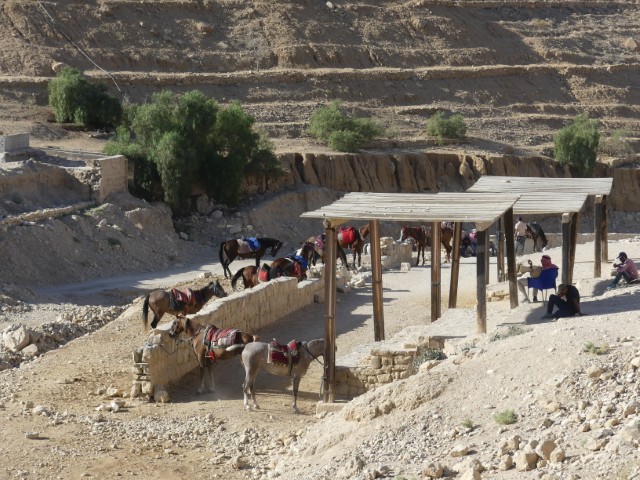
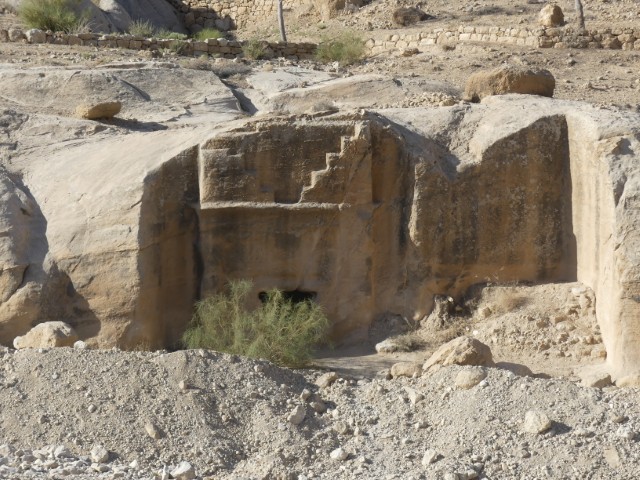
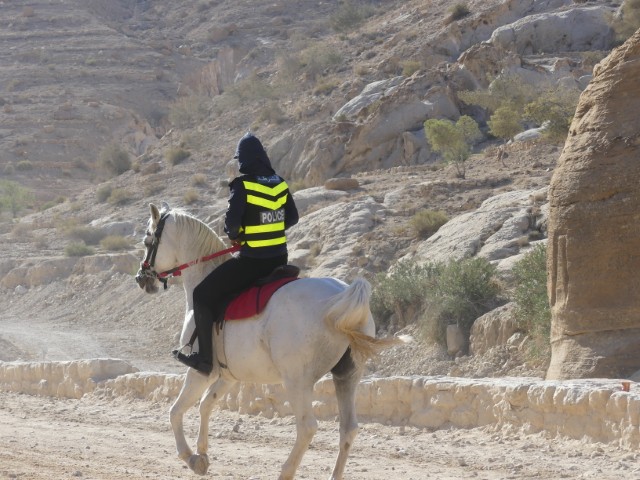
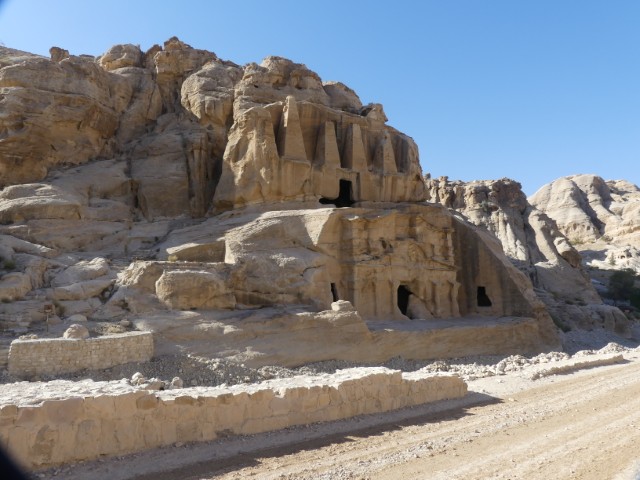
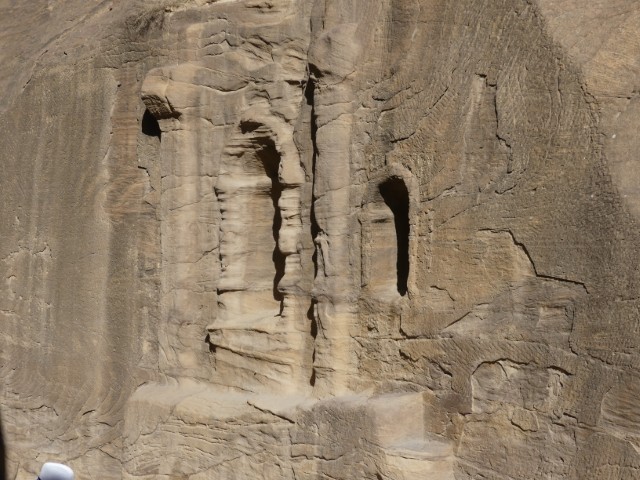
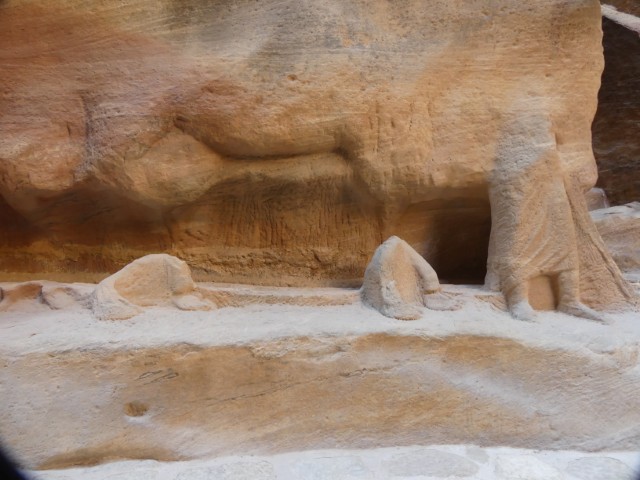
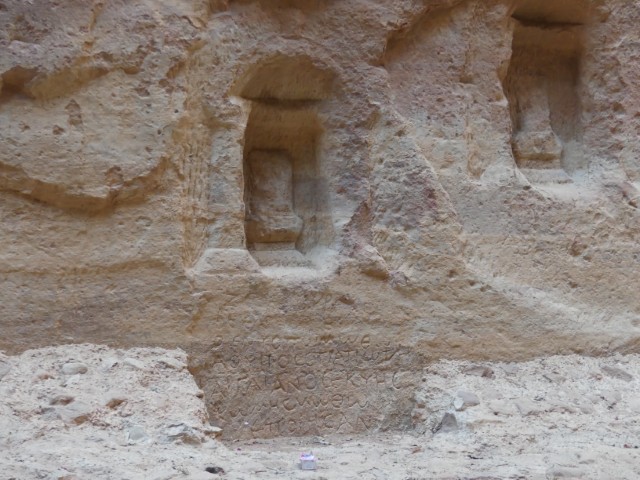
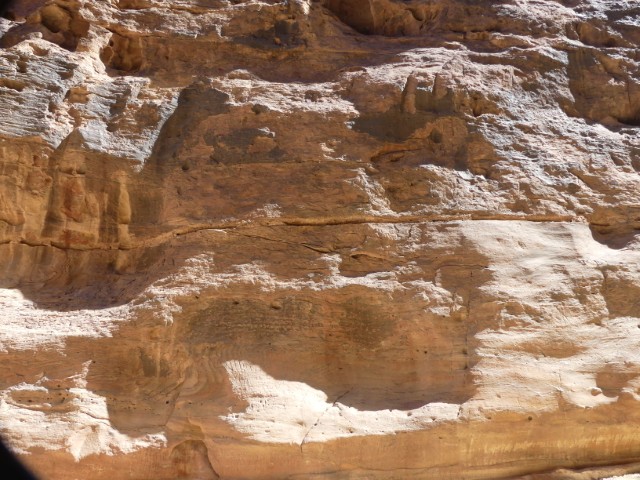
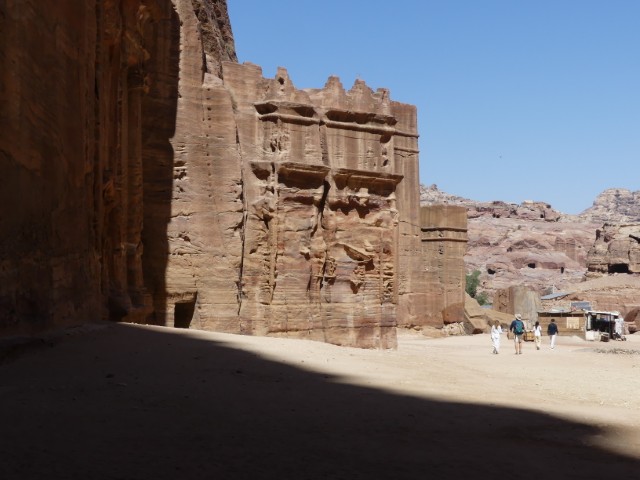
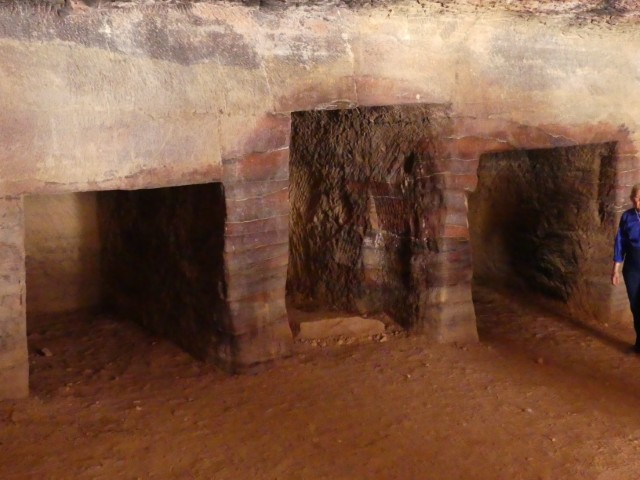
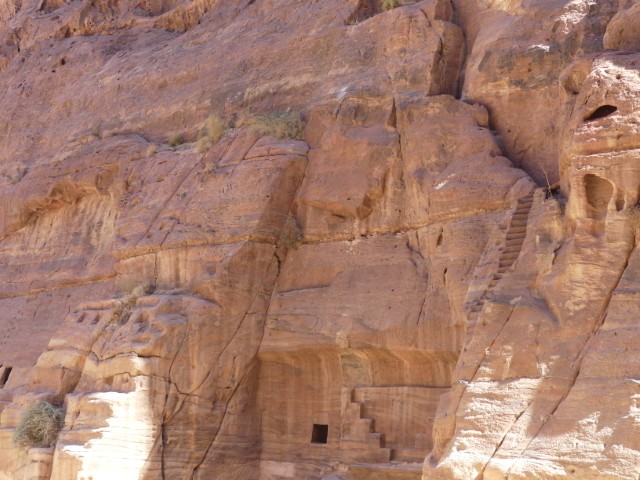
Lots of beautiful formations along the way:
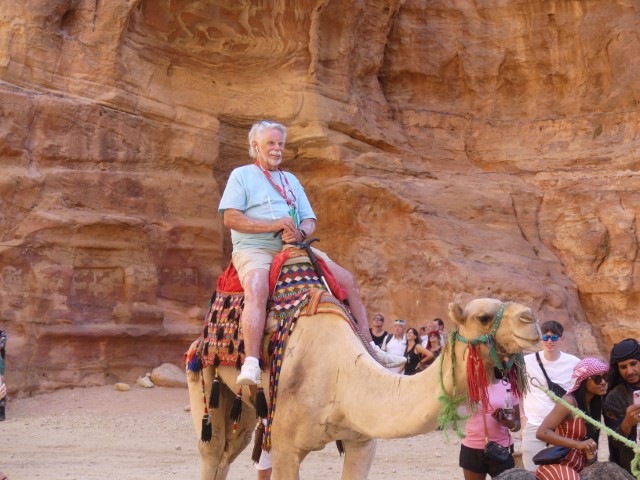
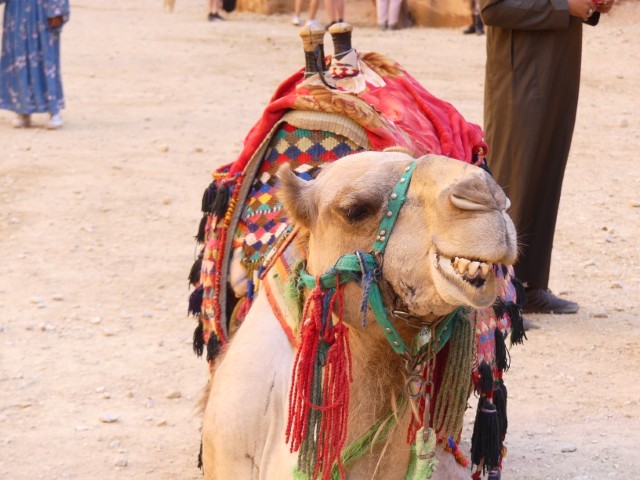
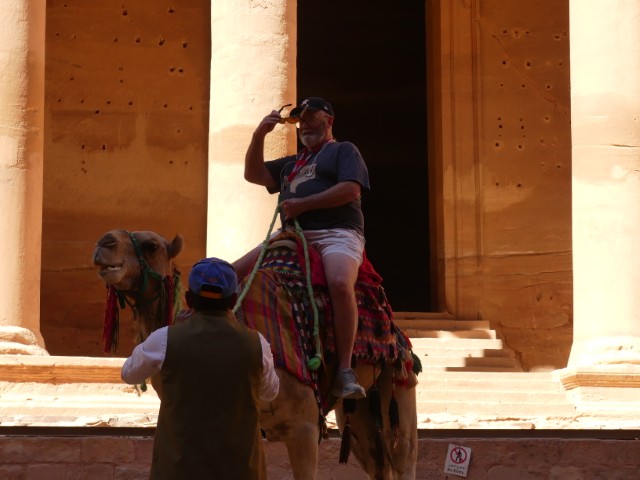
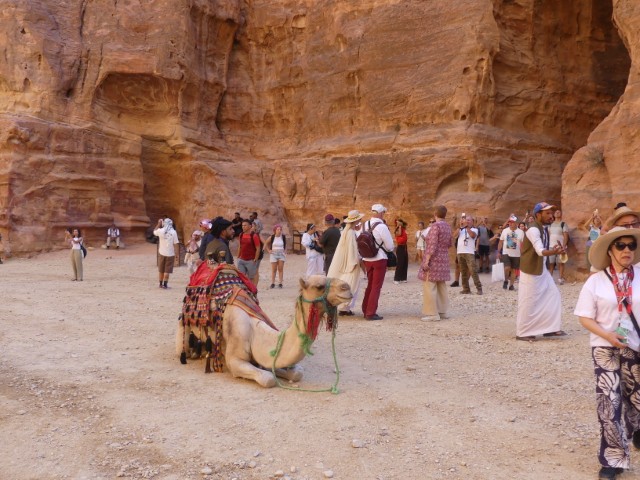
And finally, we entered the area where the Treasury is located. Depending on the time of day, it may be in the sun, it may be in the shade, it may appear pink, or it may not! Camel rides can be had; a few in our group tried it out. You can also pay to enter the treasury, but it will set you back $1000 JD ($1400 US). Treasury indeed! The name for the Treasury may have come from a figure holding an urn, which was thought to contain gold. It is actually a Royal Tomb.
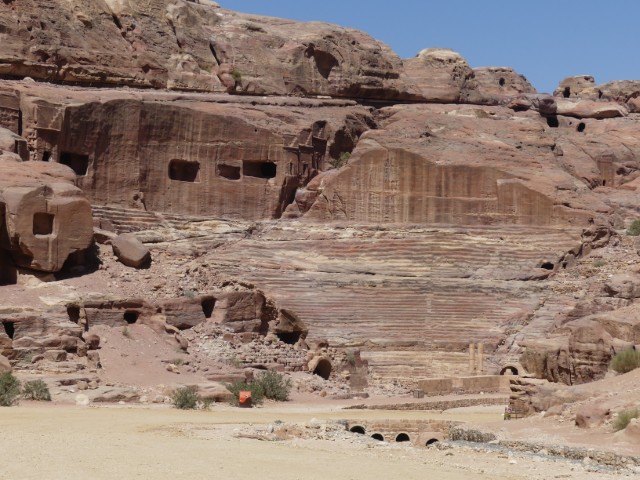
We continued to the Amphitheater. Waleed told us that only 10% of tourists go past the Treasury. Clayton and I opted to turn around here; I was getting overheated and so decided to play it safe and pay the big bucks for a ride back up to the entrance. Over half of our group not only completed the tour but made it to the monastery and back; a total of 8 miles. I am impressed!

 travelswithheather