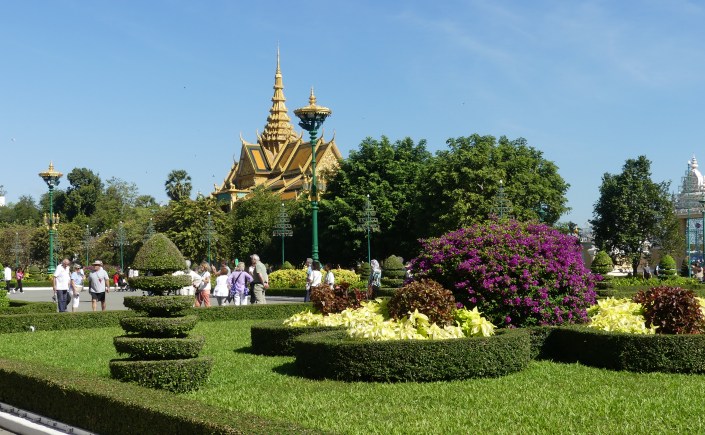
This would be our third visit to Phnom Penh, but we had not ever taken a tour, so were hoping to learn a bit along the way. We would visit the Royal Palace, National Museum, and Killing Fields. Phnom means mountain in Cambodian; Penh was the name of a rich widow that built the city. When Angkor was deserted as the capital city, it was moved here.
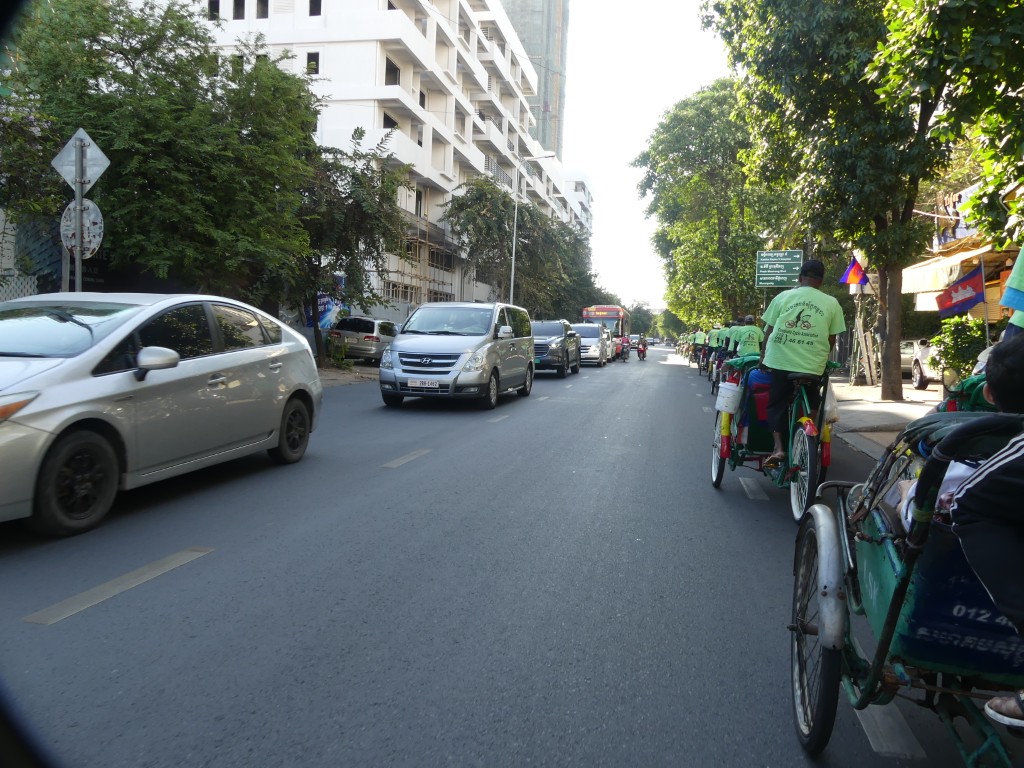
We were treated to another tuk tuk ride around the city before arriving at the Royal Palace.

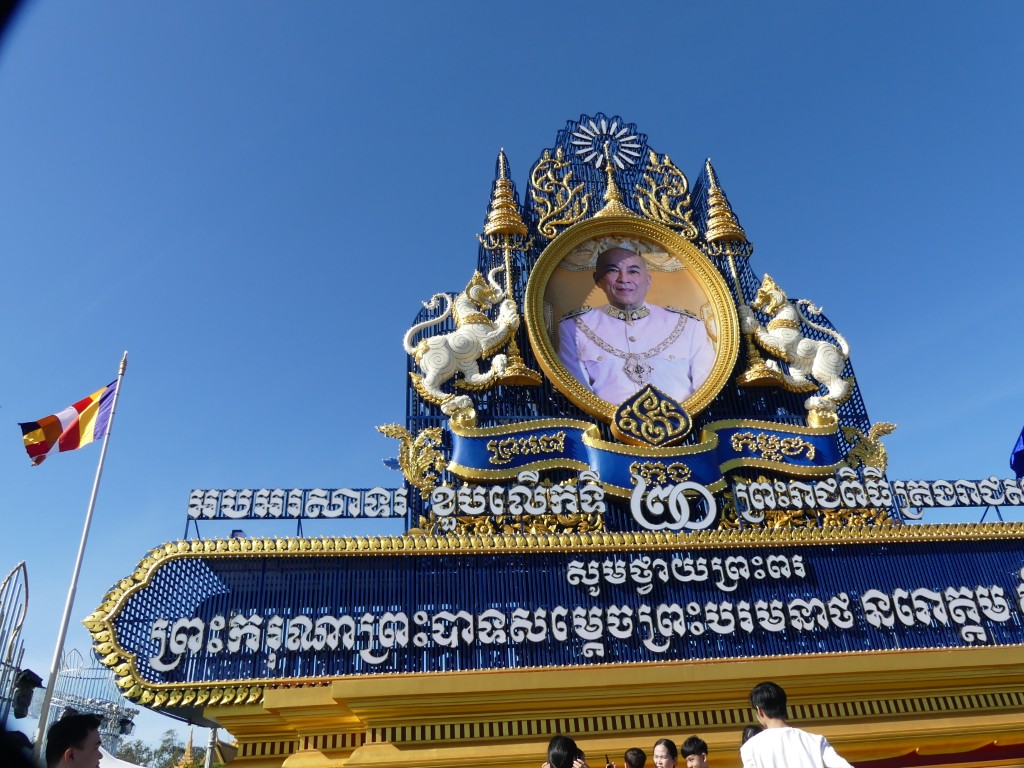

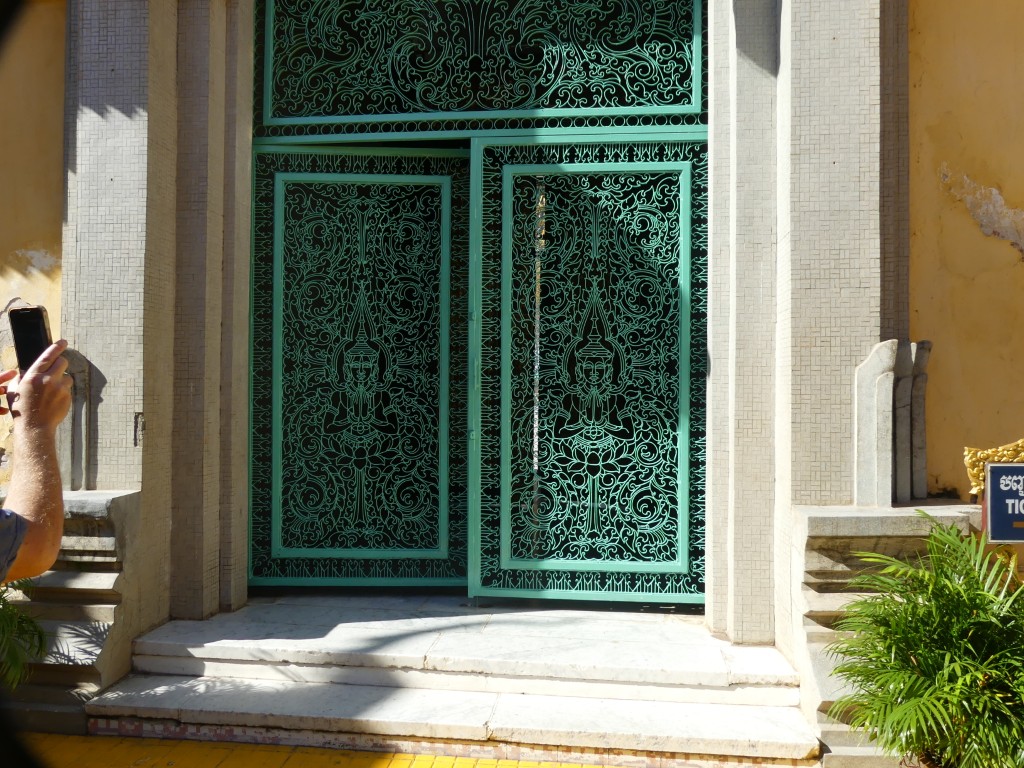
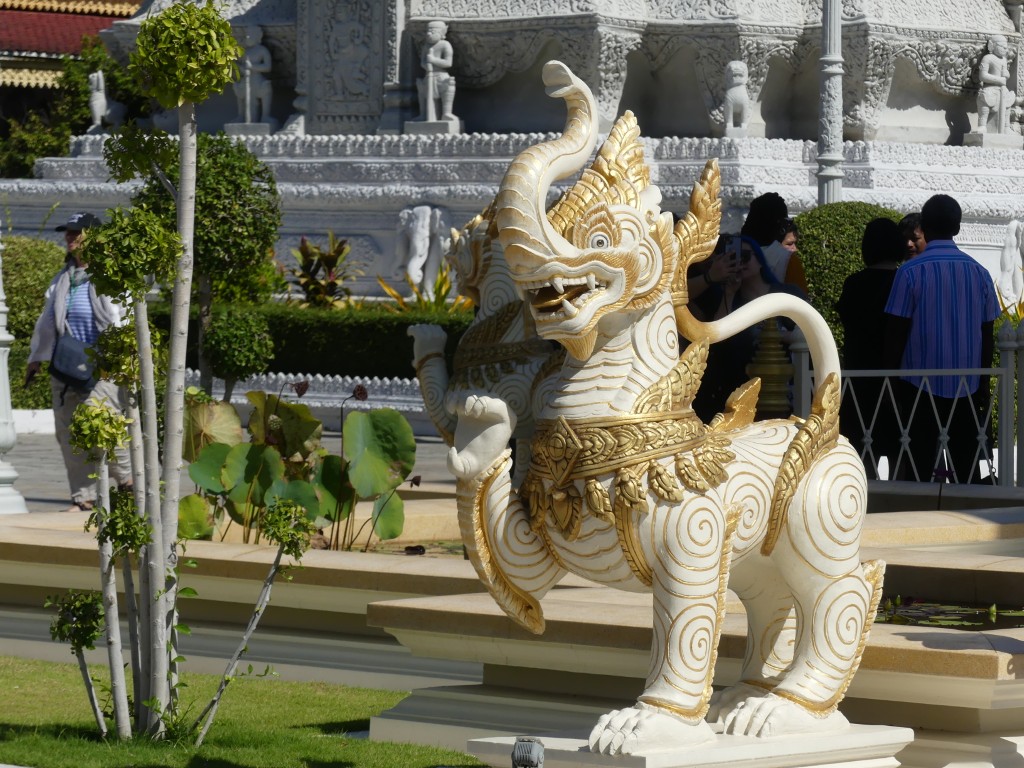
The palace was built where four rivers meet. The style is quite similar to that of the Grand Palace in Bangkok. Apparently, it was patterned after the Angkor Thom temple. We were given some time to wander around and take pictures, although photography was not allowed in many of the buildings.

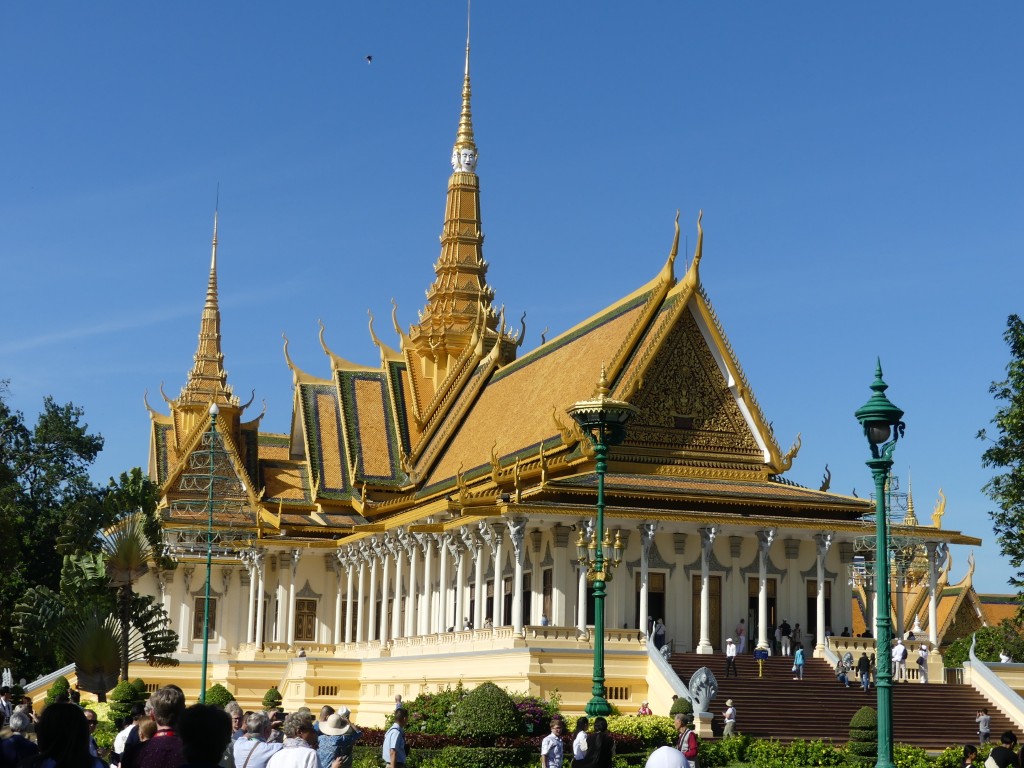
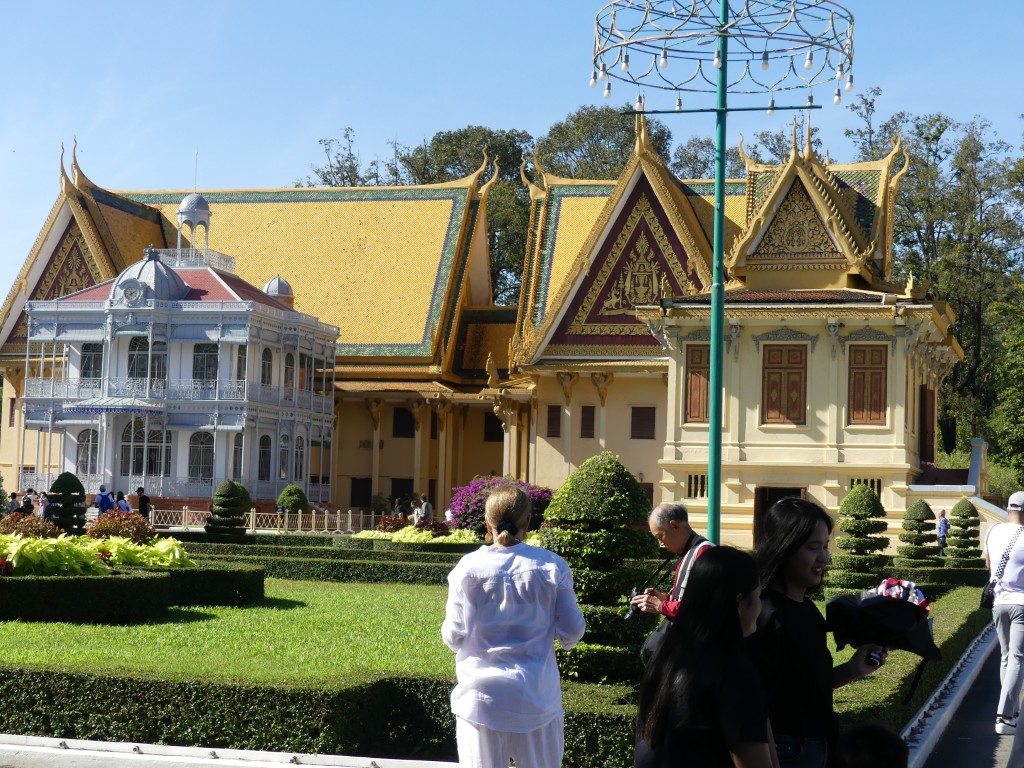
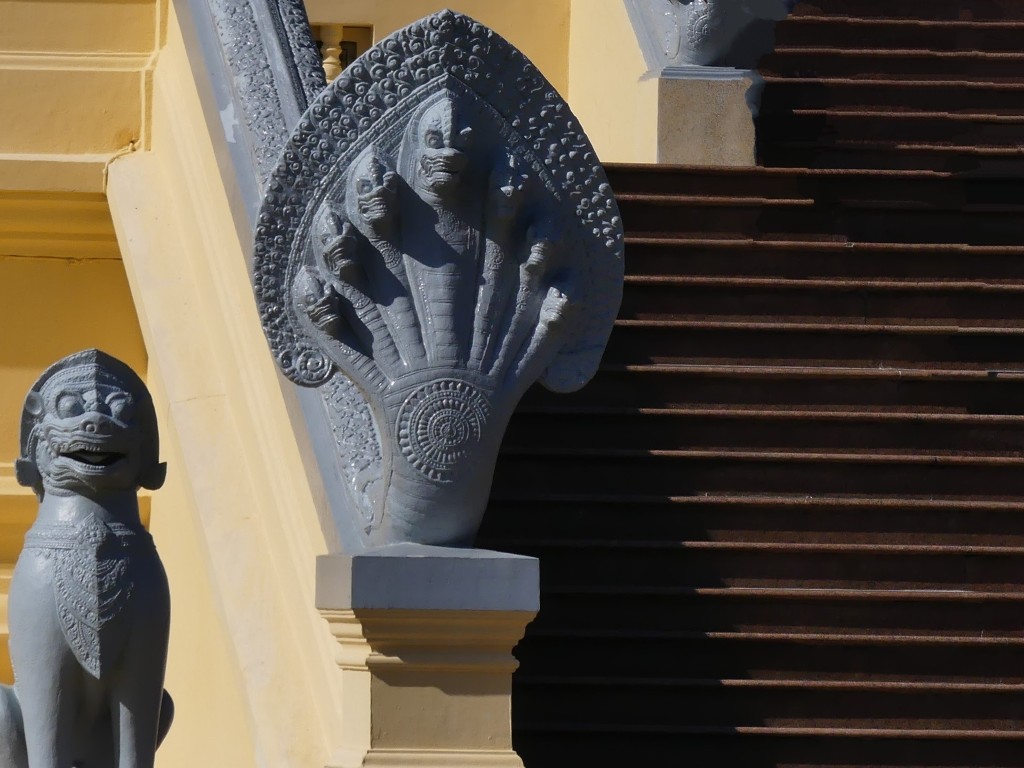
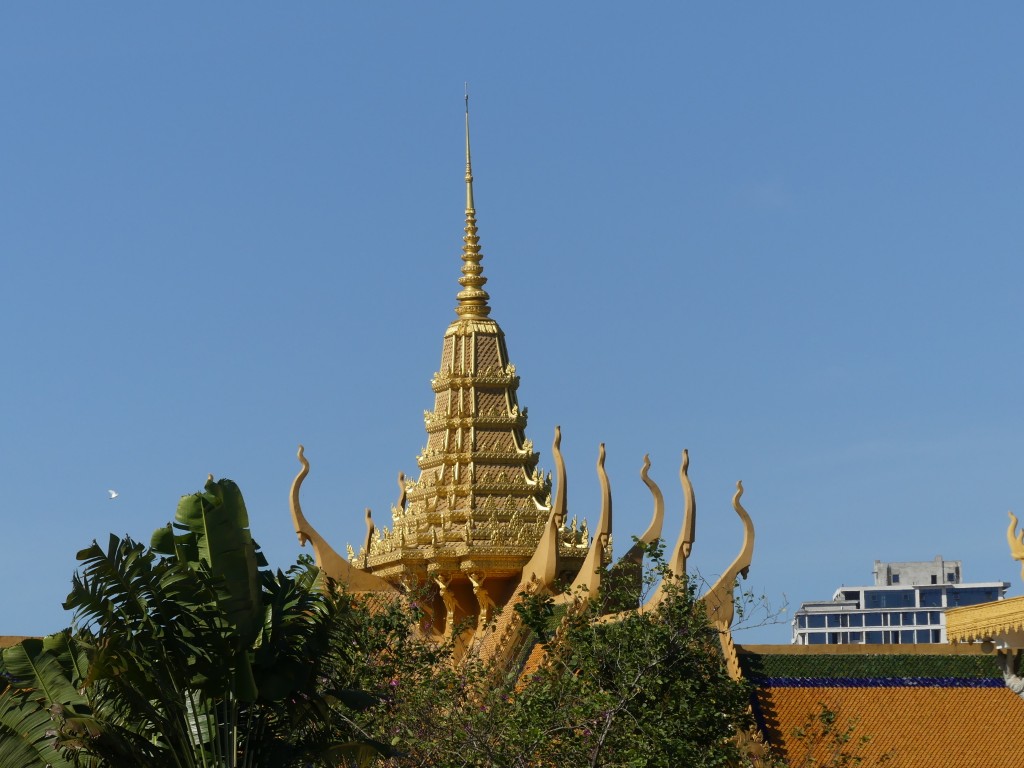
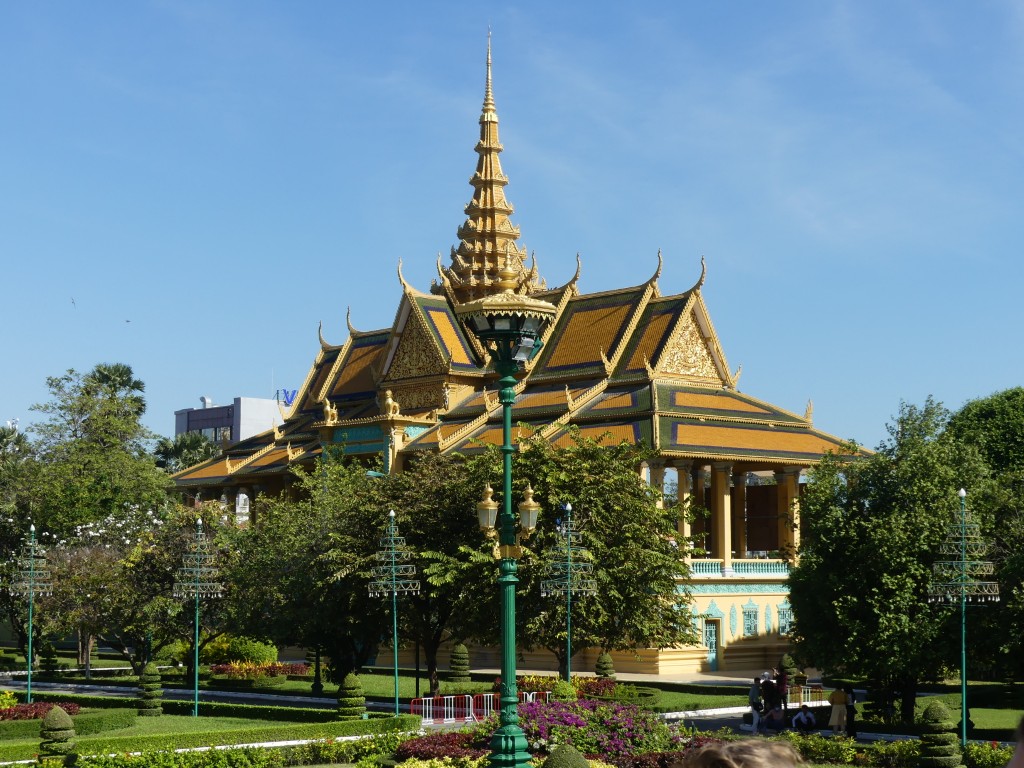

If the king is at home, a flag flies in the courtyard. The king was in while we visited, but we didn’t get a royal glimpse. However, the previous evening, some in our group saw his motorcade and the king waved to them.
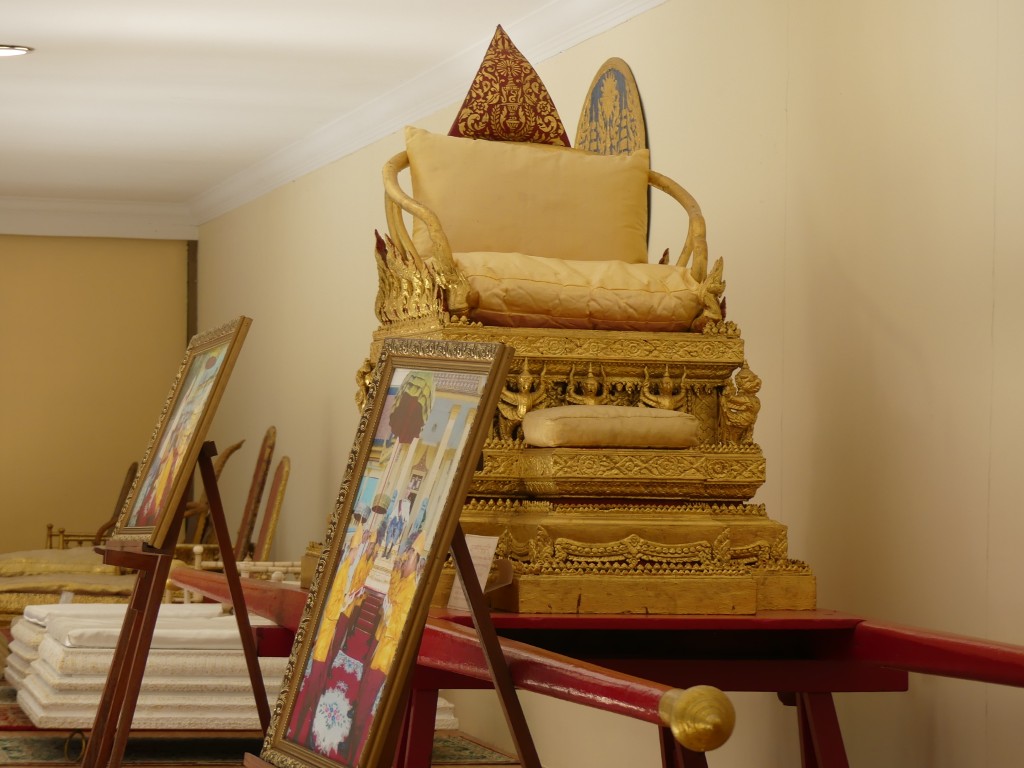
Within one of the buildings were some royal outfits. It is traditional here to wear clothing according to the day of the week (the same is true in Thailand, though not often practiced).

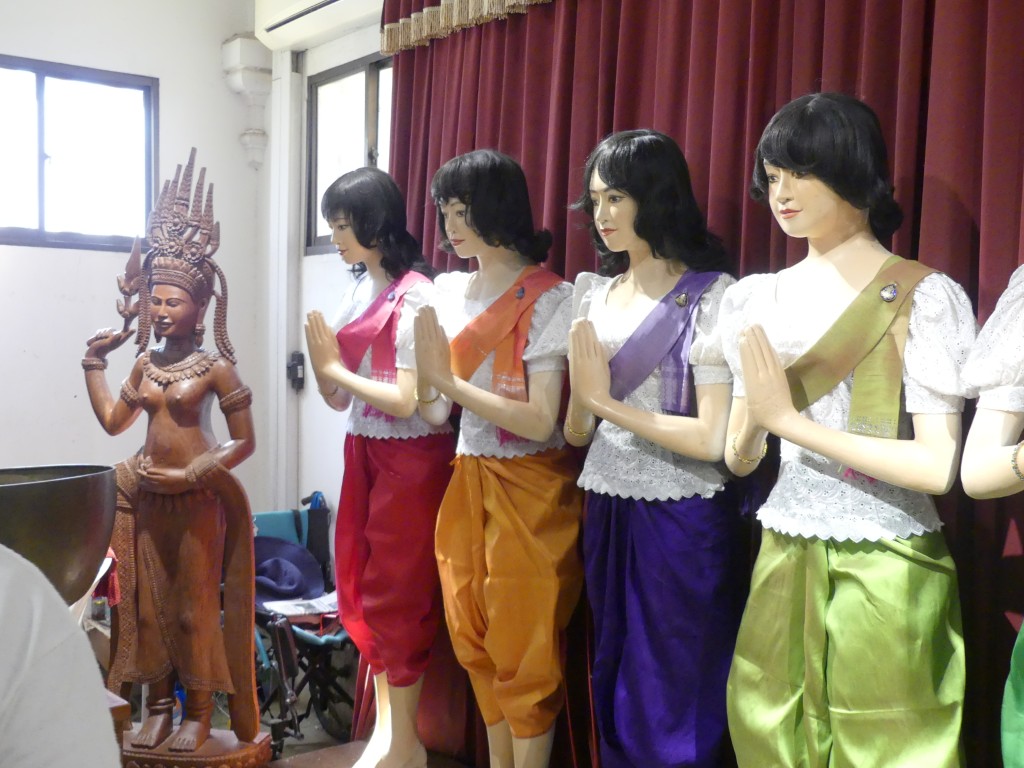
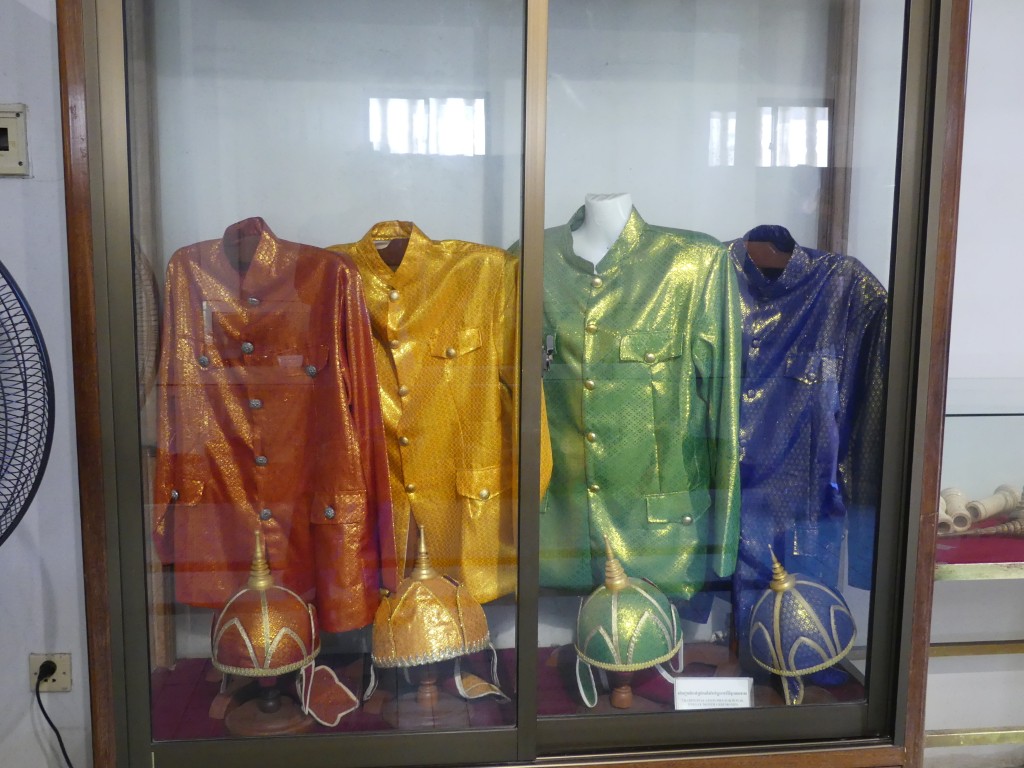
We wandered around more of the grounds, taking pictures of the exterior of buildings. We were able to enter the silver pagoda, but no photographs were allowed inside. Tourists named the pagoda because the floor of it is composed of 3,529 silver floor tiles (covered by rugs), each weighing 1.125 kg. They click as you walk over them. There are many royal treasures contained in the pagoda as well as an emerald Buddha statue. There is a 90 kg (nearly 200 pound) gold statue, encrusted with 2086 diamonds, the largest of which is 25 carats. There used to be seven thousand, but many have been stolen over the years.
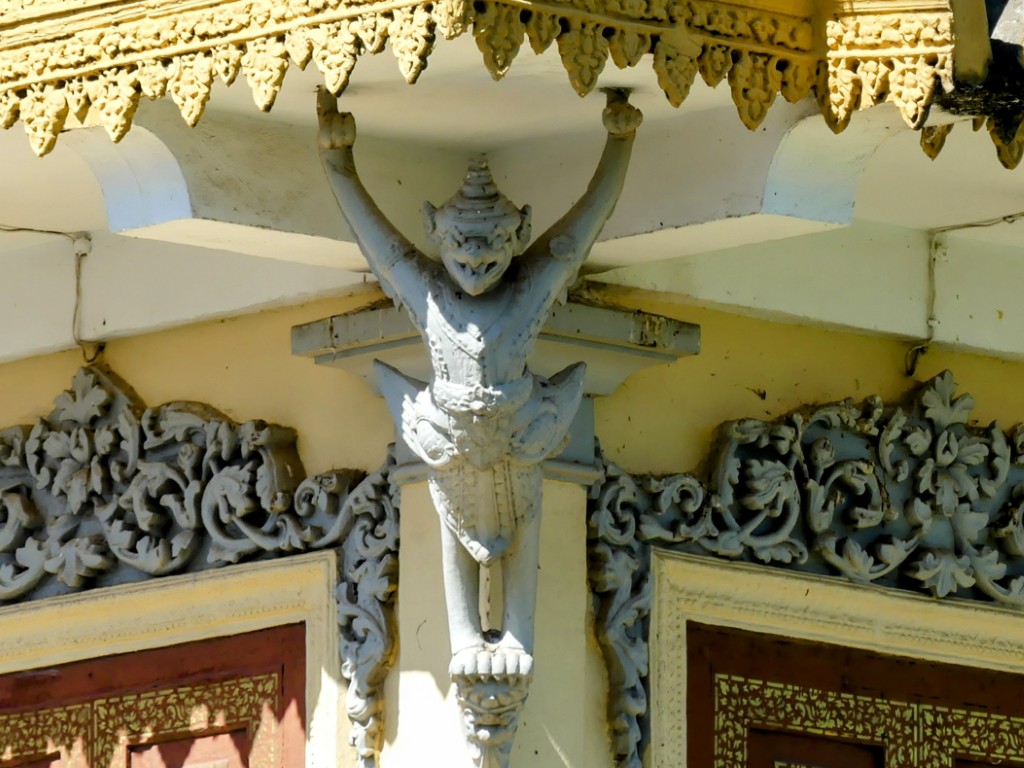
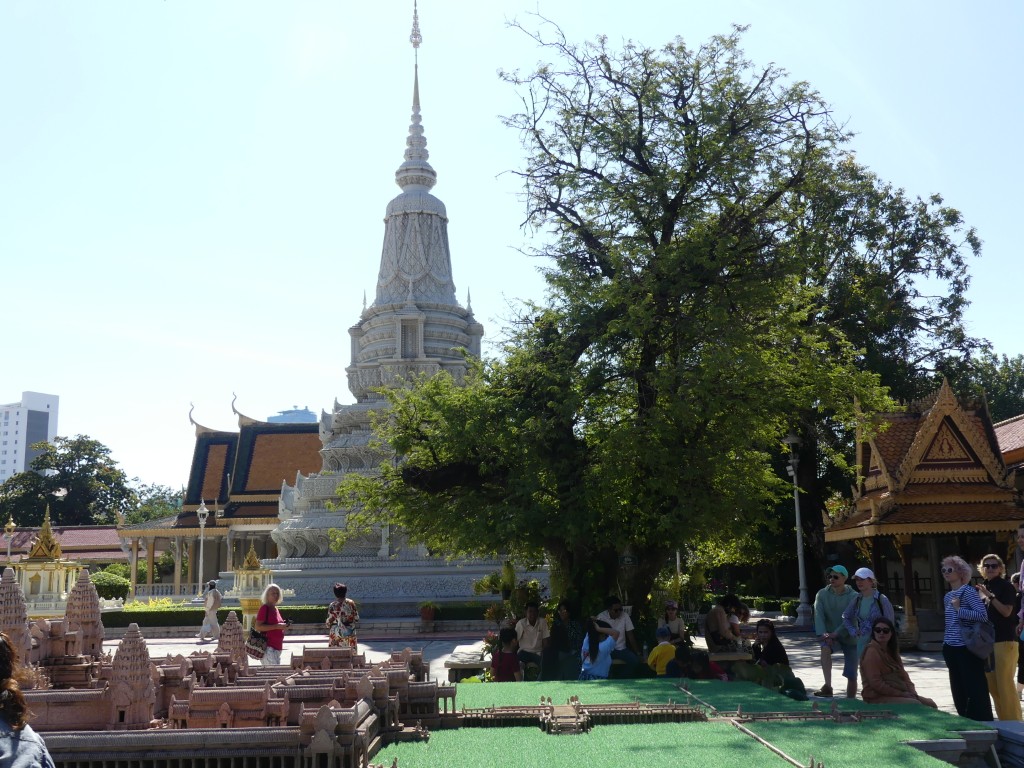
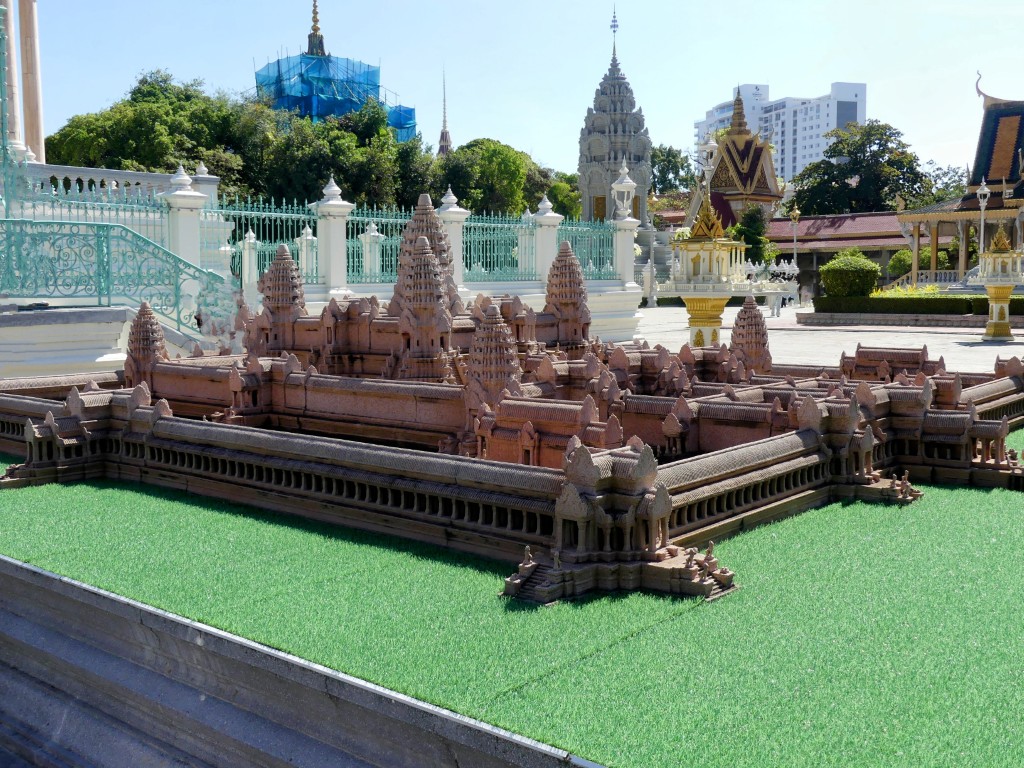
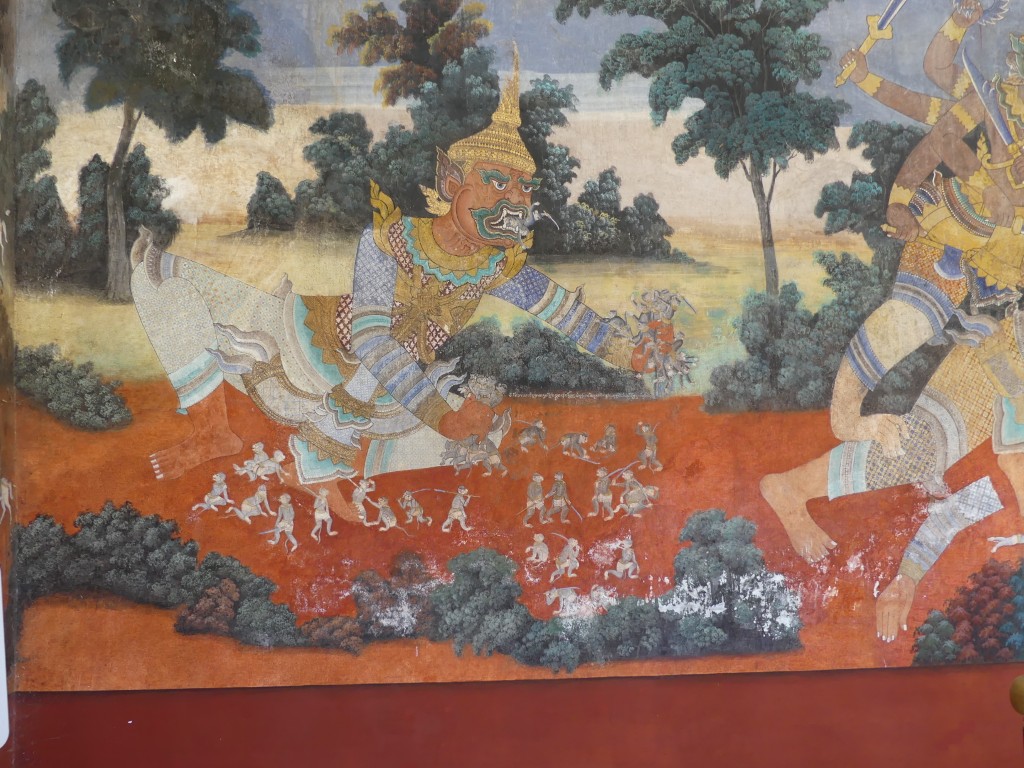


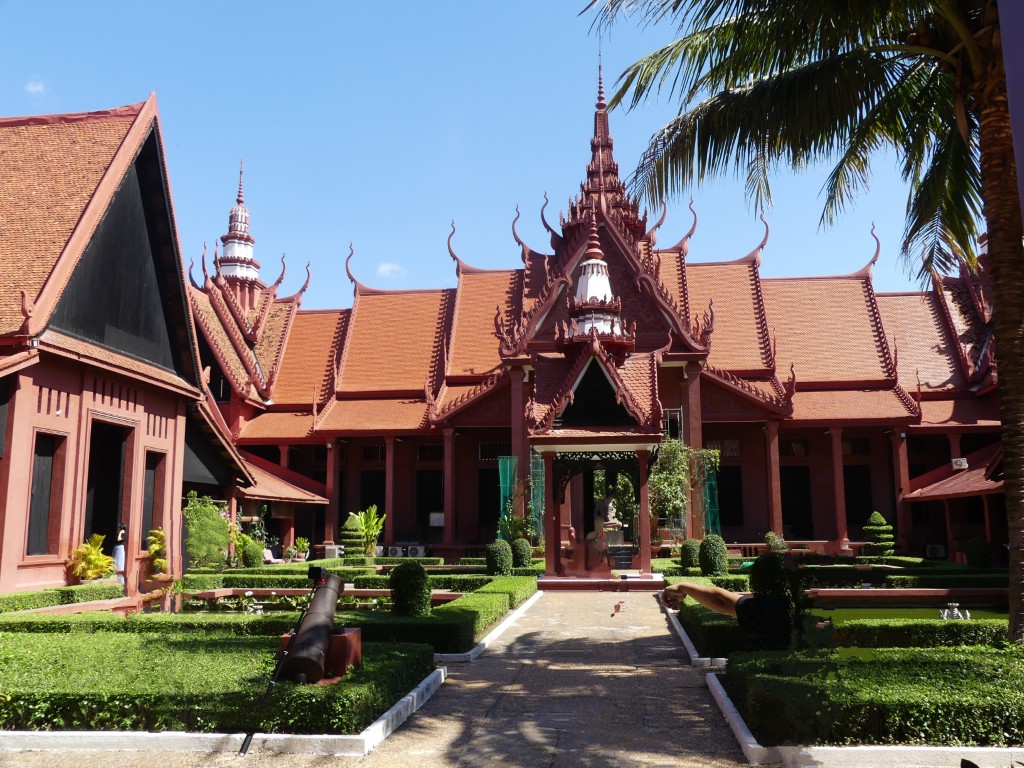
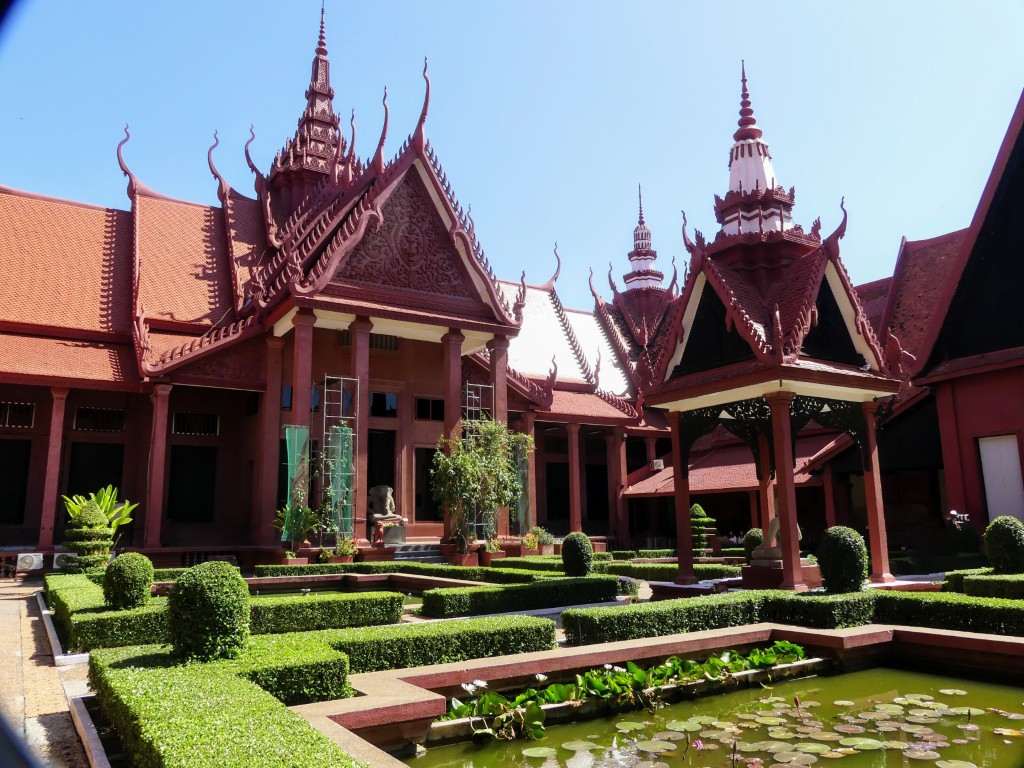
Next up on the tour was the National Museum. After the Pol Pot regime, over one-thousand sandstone statues were found buried in fields. During those years, many artifacts were stolen to sell overseas. The heads were smashed to make them lighter to steal. Some have now been returned to Cambodia and are housed in the museum. Photos were not allowed inside, so I just have a couple of pictures from the exterior.
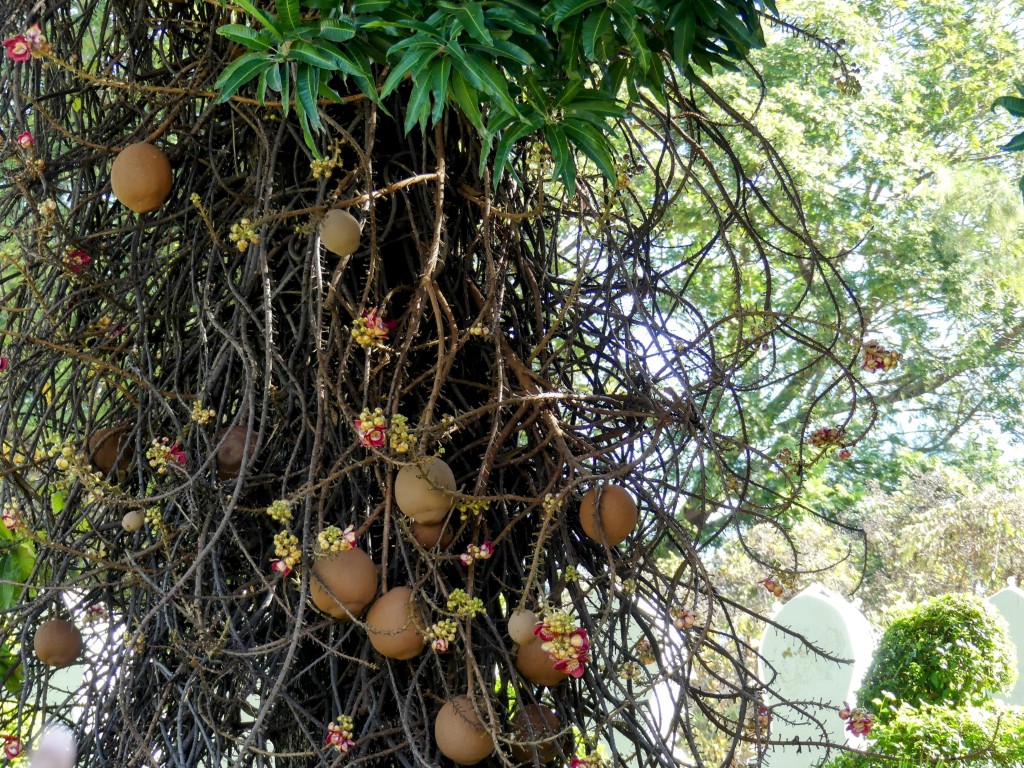
After a fabulous lunch served at a local restaurant, we headed to the Killing Fields. This is but one of over two hundred killing fields, the largest of which is in the Battambang province. This one is located on a former Chinese graveyard and longan farm. Upon entry, our tour guide told us a brief history of the Pol Pot regime. It was originally thought that Pol Pot would bring peace to Cambodia. That lasted all of one day. By the time he went into hiding in the jungle, he had killed about half the population of Cambodia. He targeted the educated, governmental officials, and monks. If you wore glasses, you were executed. If you were bald, you were executed. Police and soldiers were his biggest enemies. A cop and a teacher from each village were tortured to point out others that were “enemies of the state”. Groups of up to fifty were then taken by truck to the killing fields, often forced to dig their own graves before being murdered. Bayonets were used to ensure that they were dead before removing their blindfolds and ropes to be reused on the next set of victims.
Many fled the cities into the country and existed as farmers; others found their way to refugee camps along the border with Thailand. Pol Pot died of a heart attack in 1998 (he came into power in April of 1976). He was so detested that he was burned on a pile of old tires. Many came to urinate on his grave.
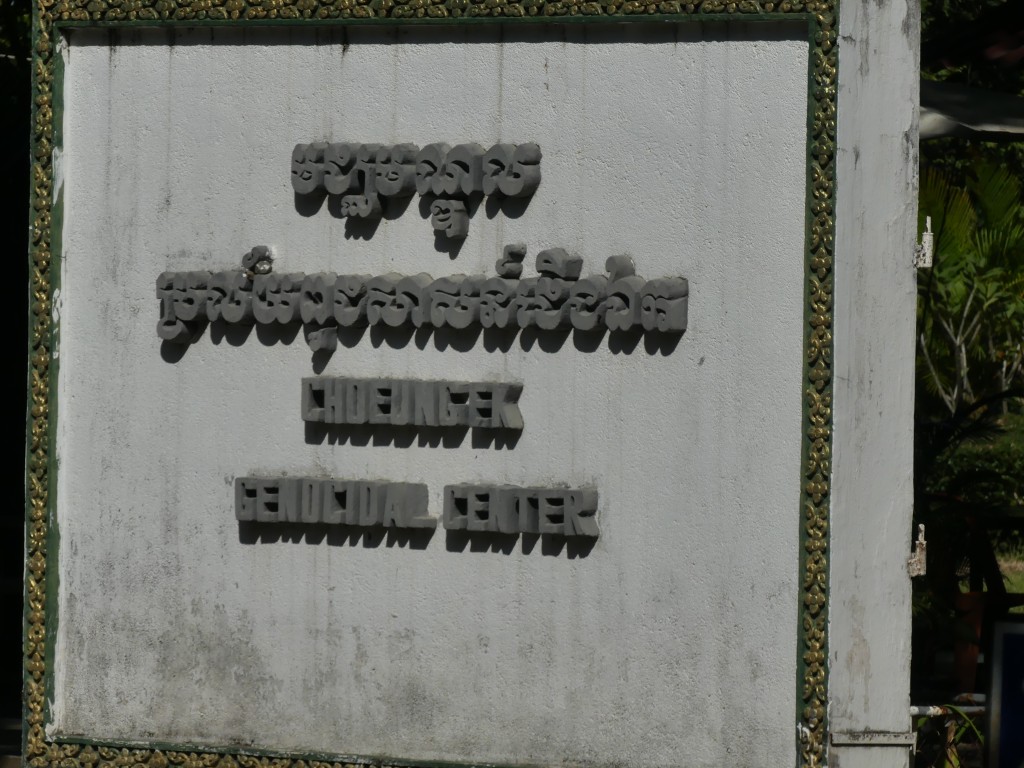
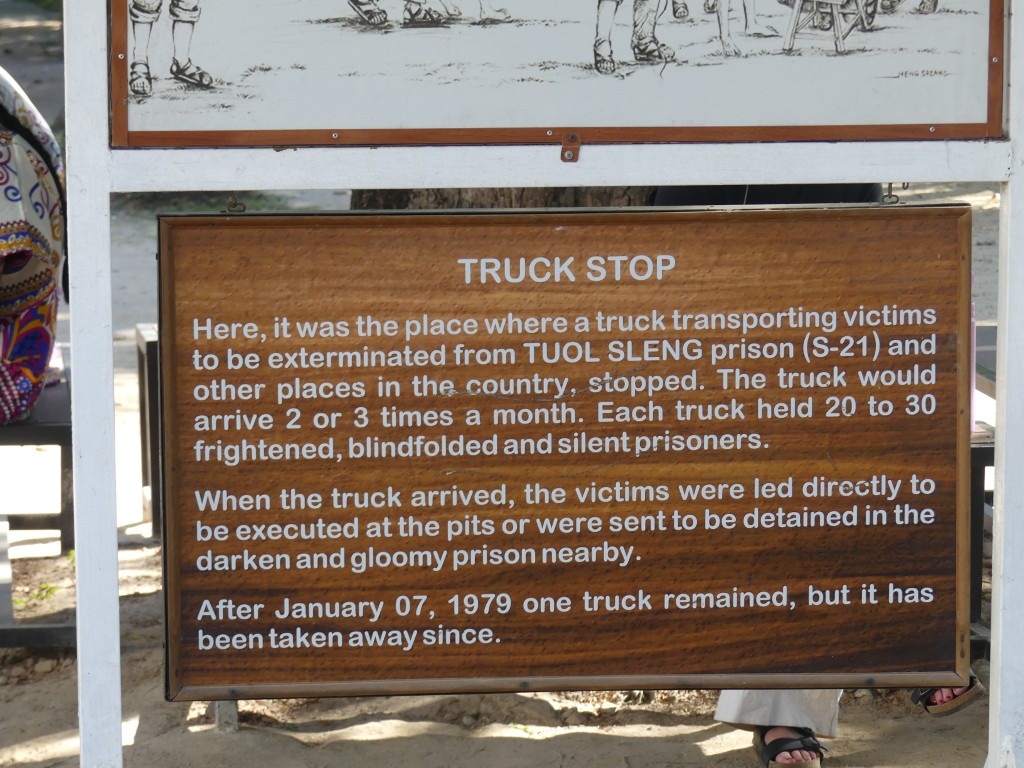
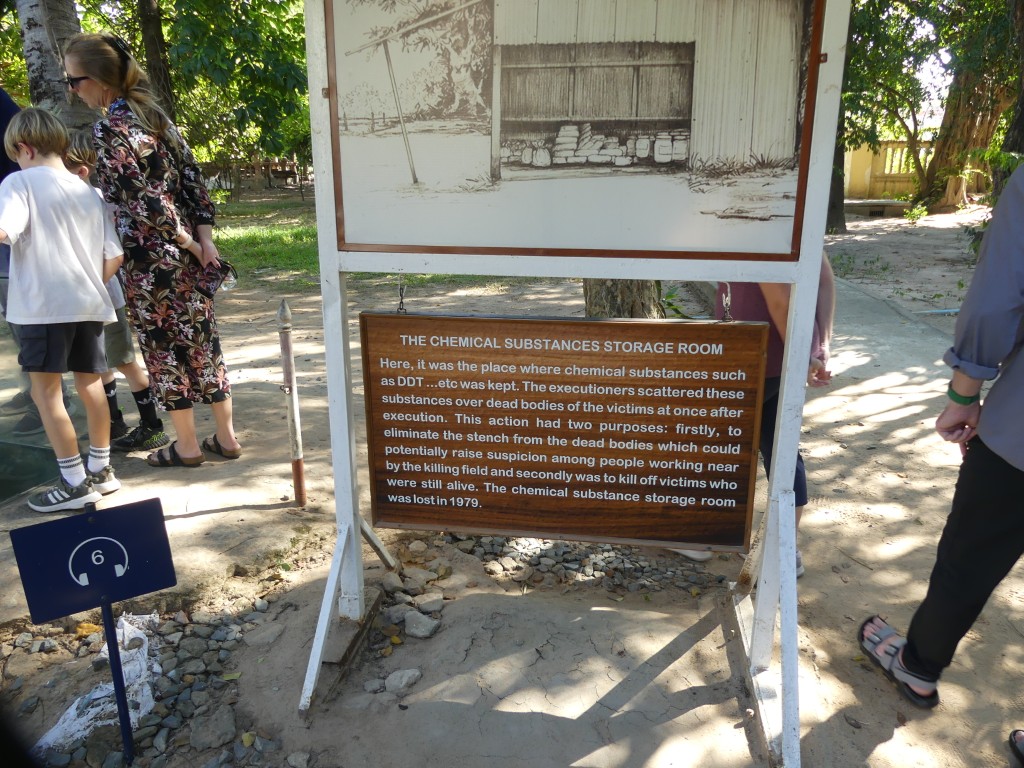
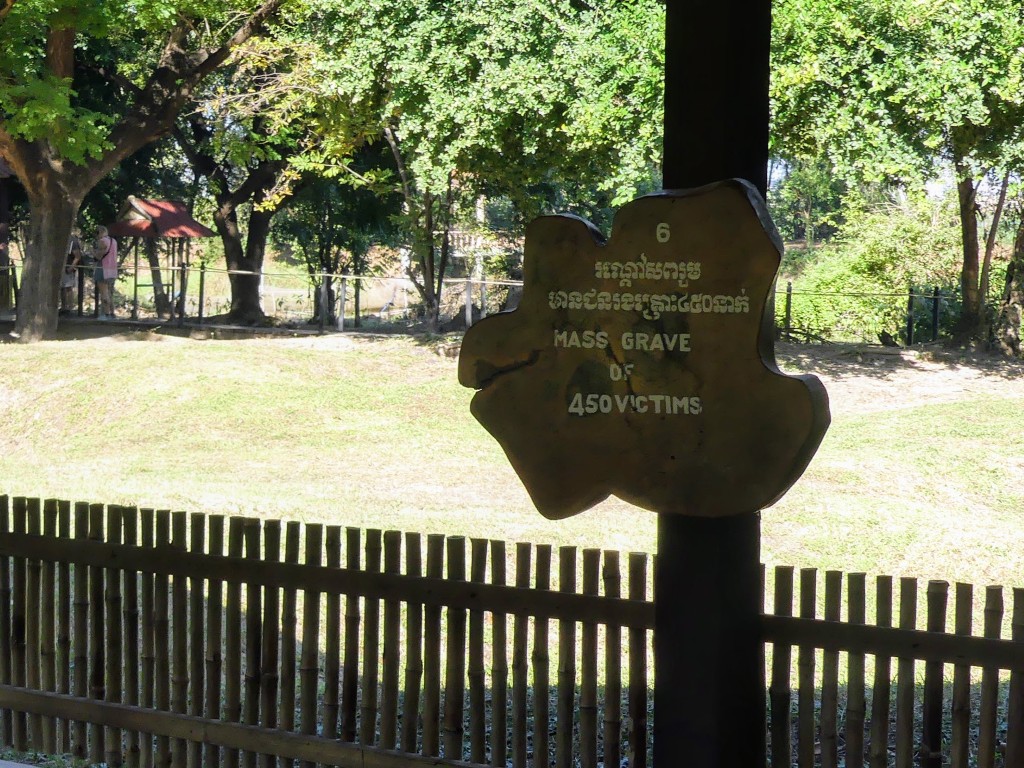
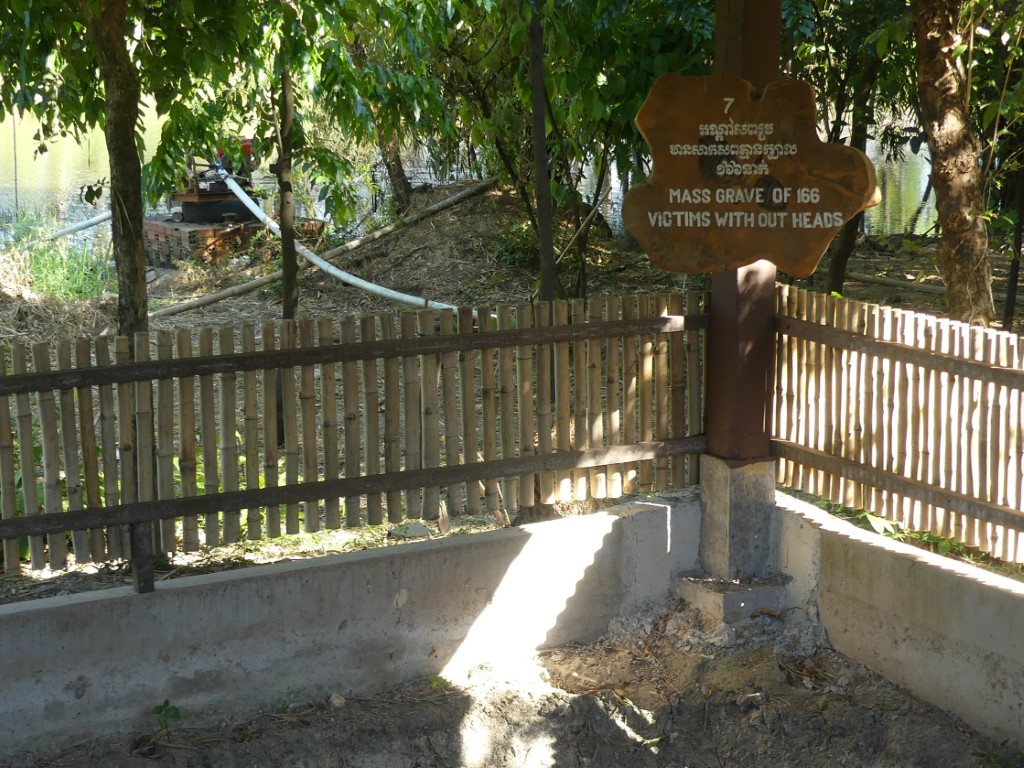

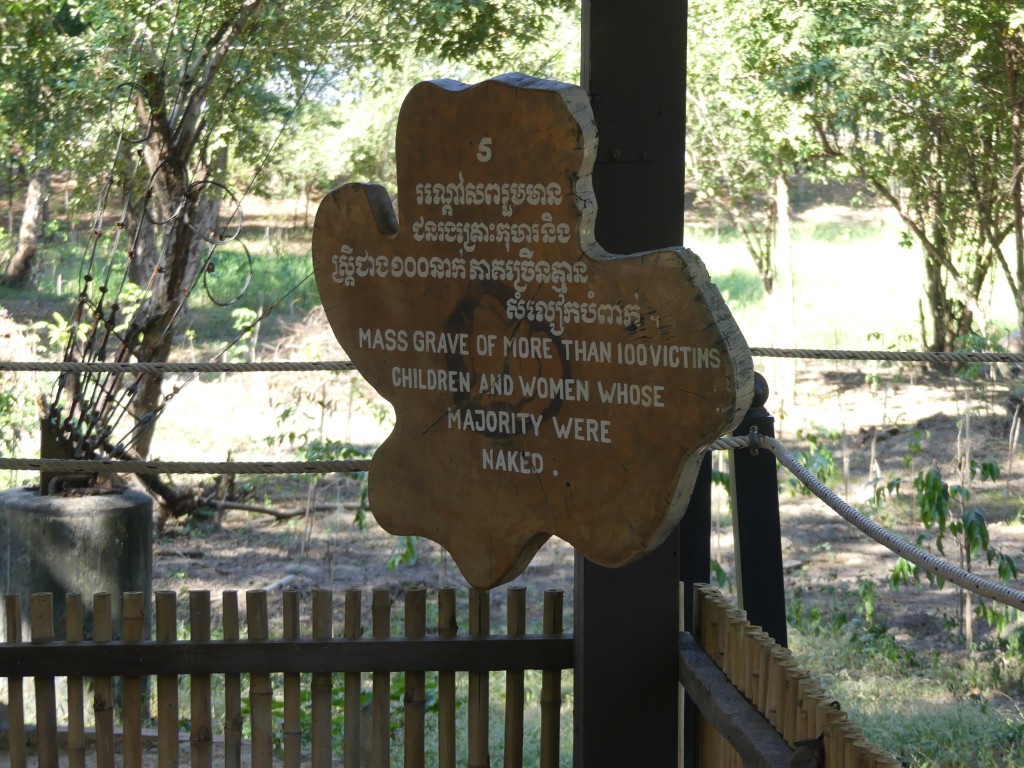
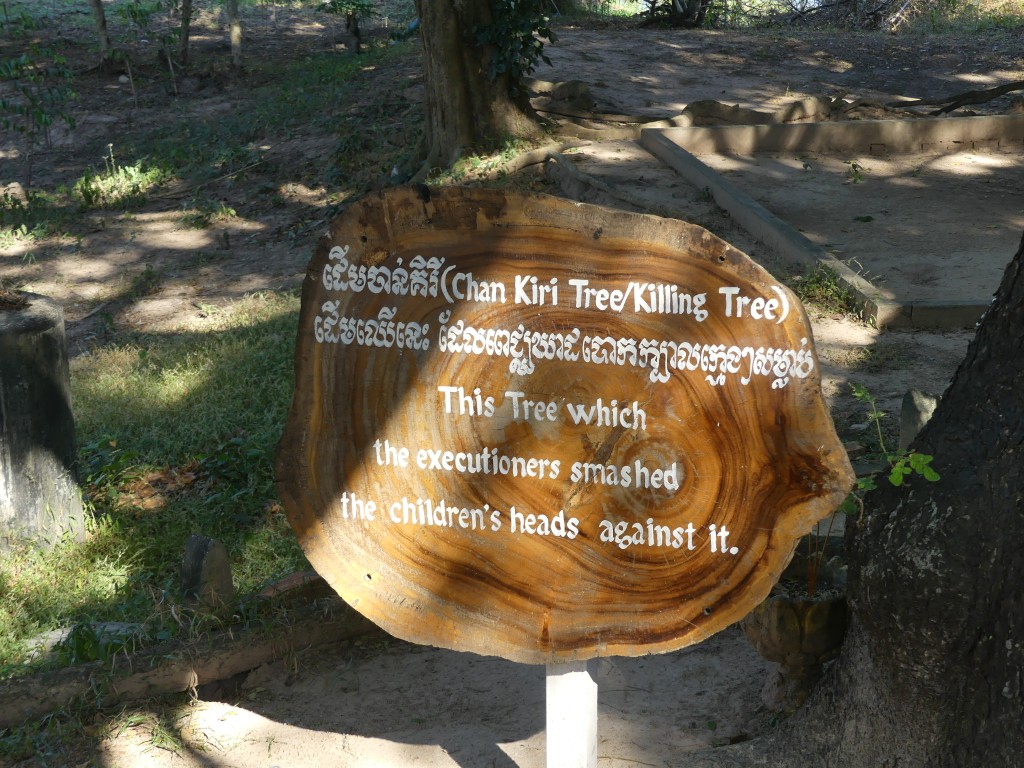
The most difficult place for me (and many others is the tree where babies were killed. Toys and jewelry are placed here in memoriam.

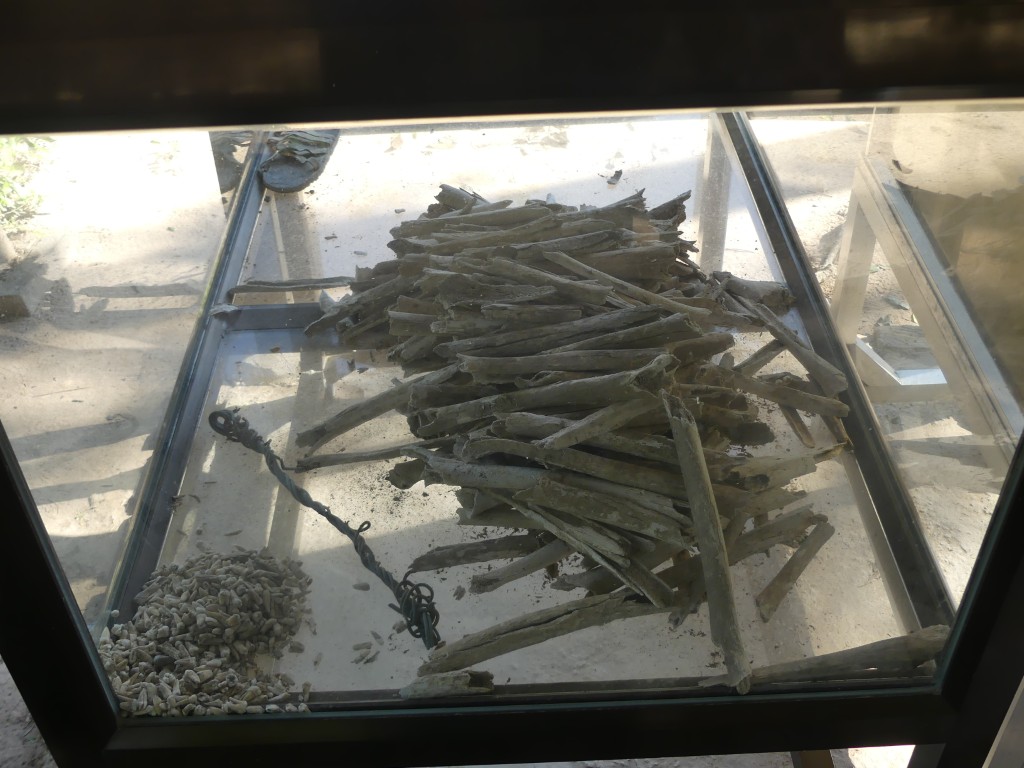
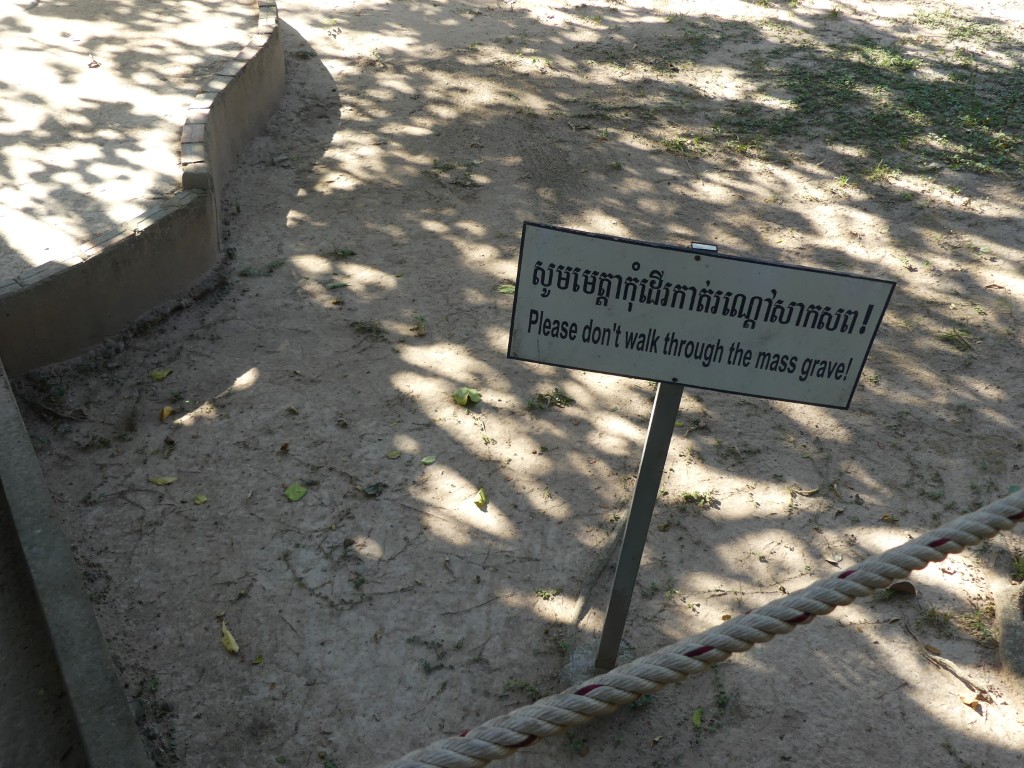
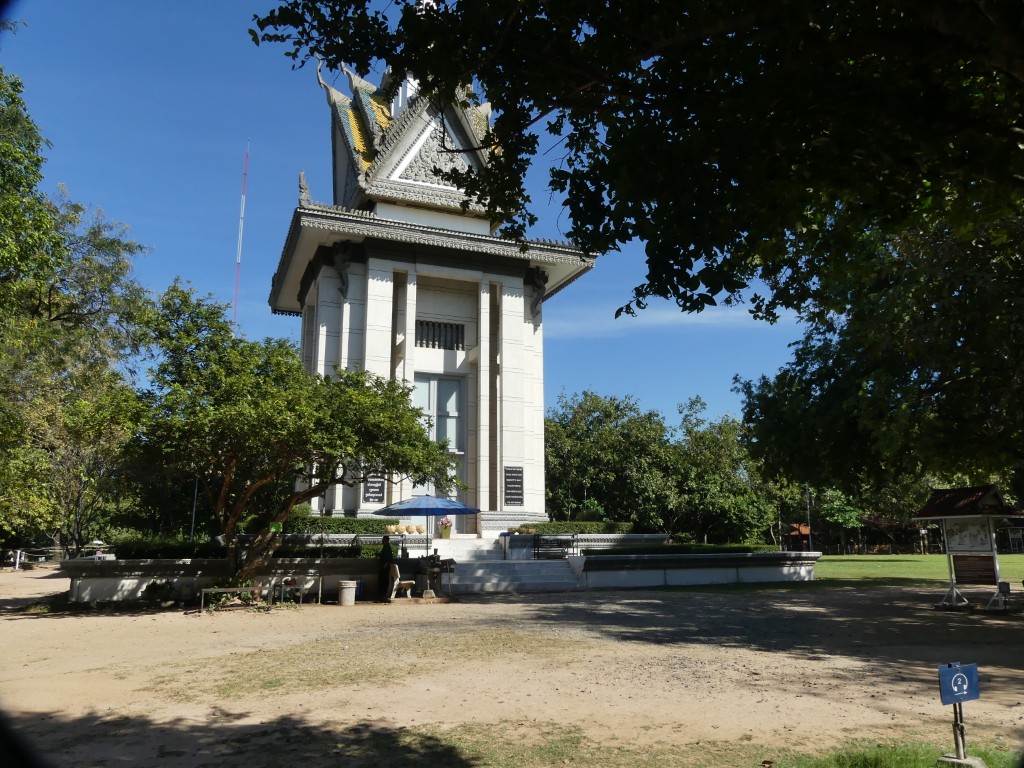
A few photos of the stupa. Shoes and hats are removed before entering the area out of respect for the dead.
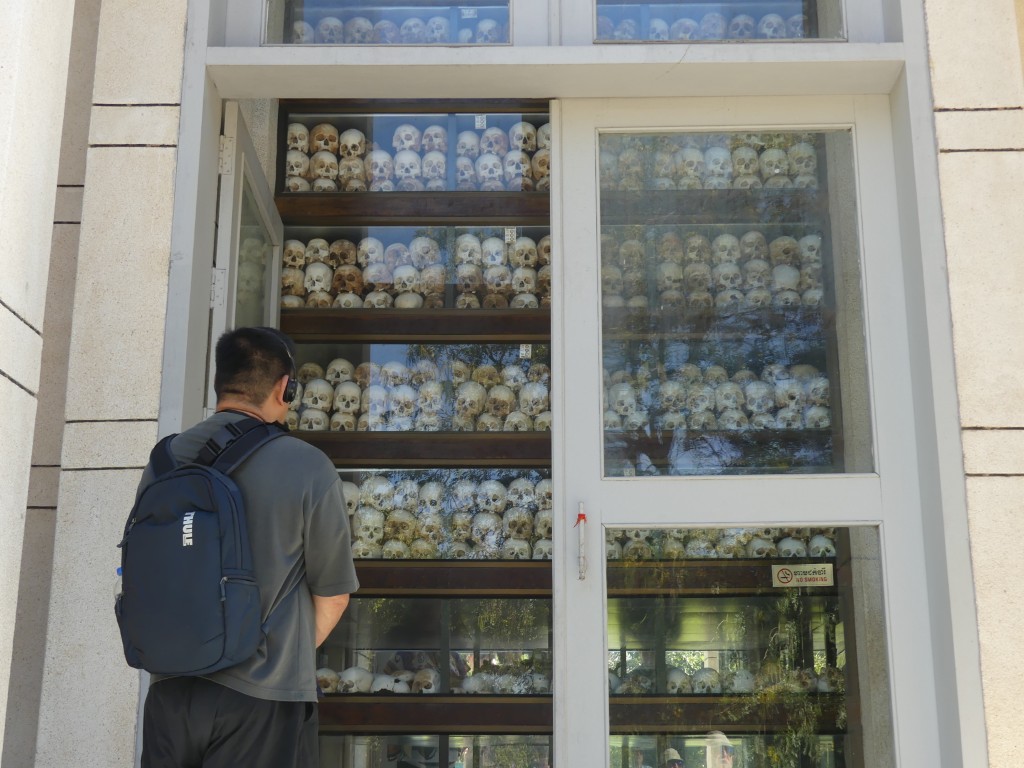
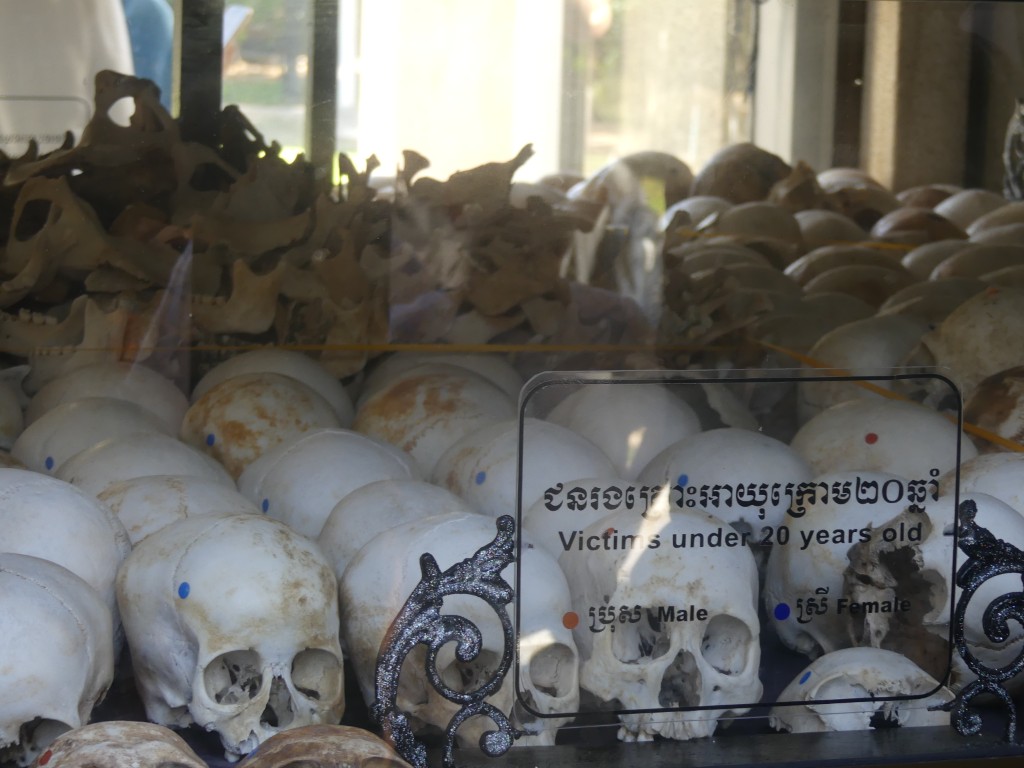
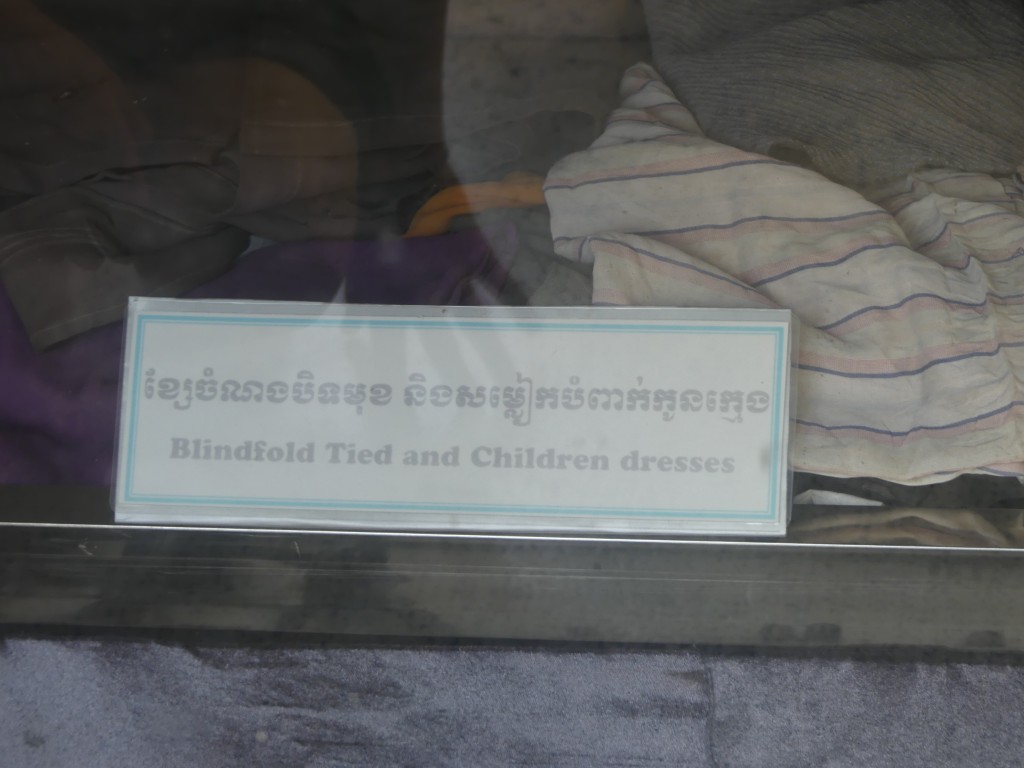
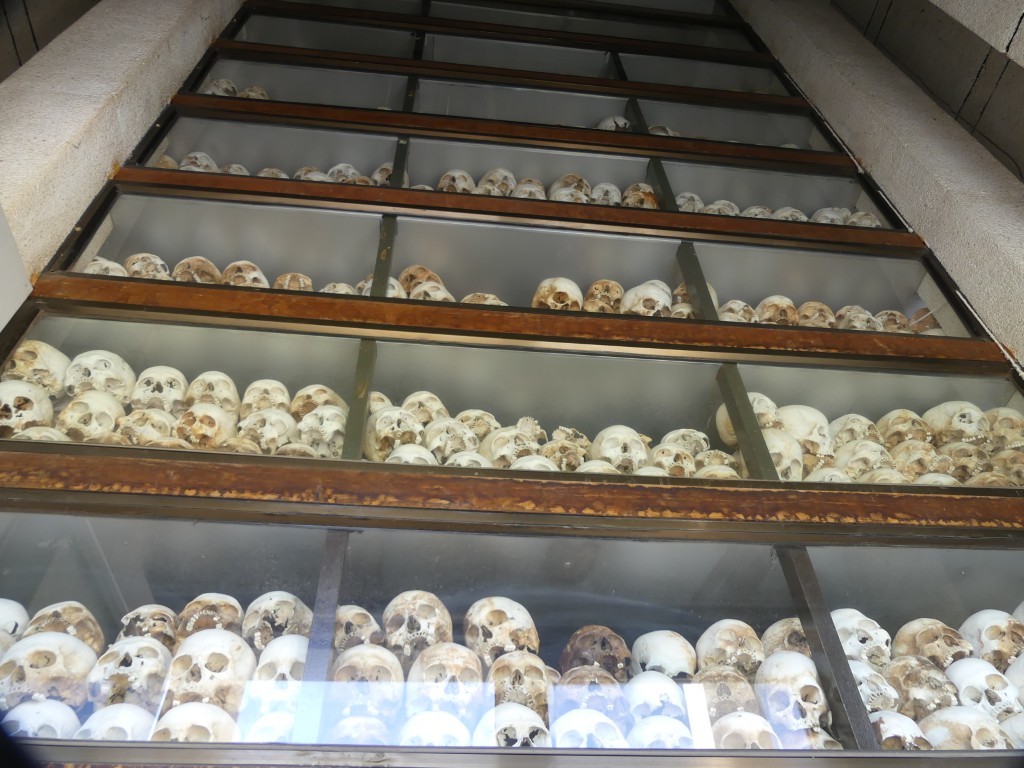
A sobering visit, indeed.
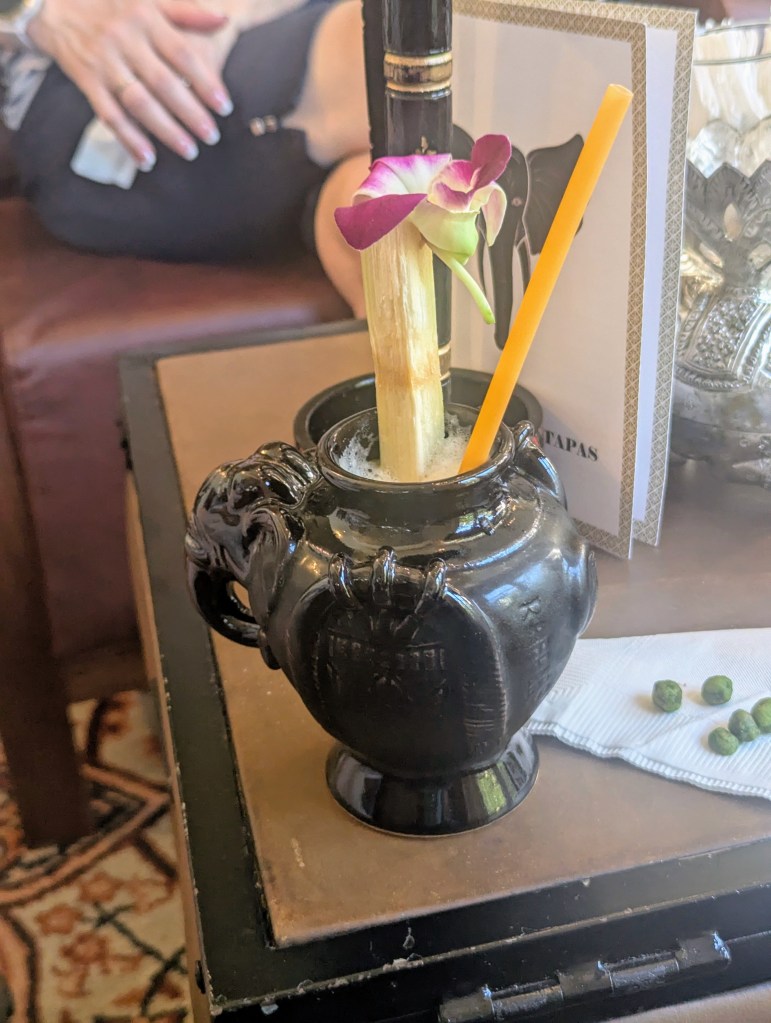
Our day ended with cocktails at the Phnom Penh Raffles Hotel. The most famous is located in Singapore, but each major city in Cambodia seems to have one as well. I don’t remember what was in it, but it was tasty!
 travelswithheather