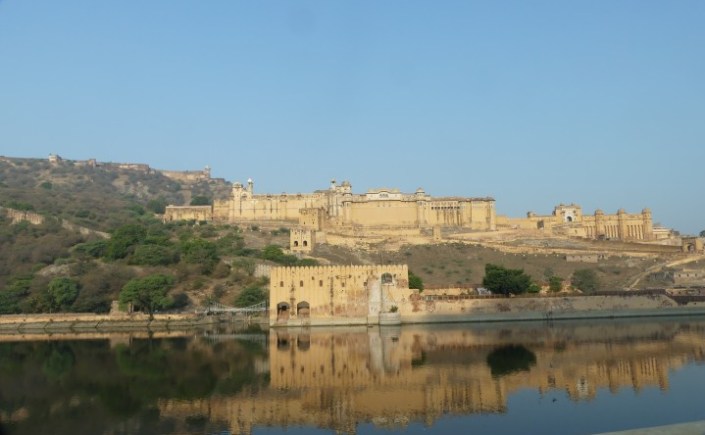
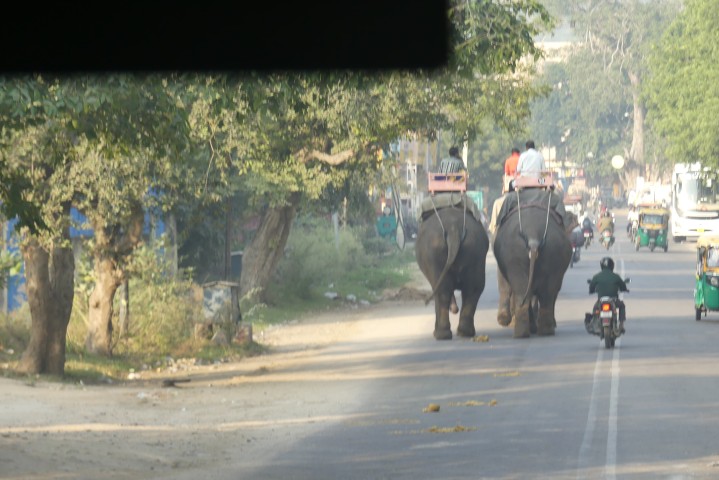
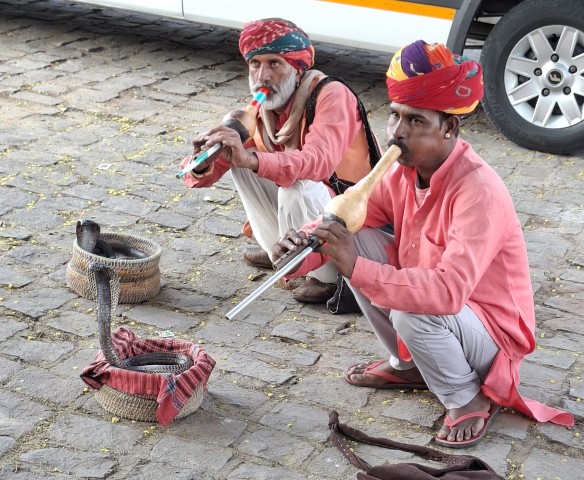
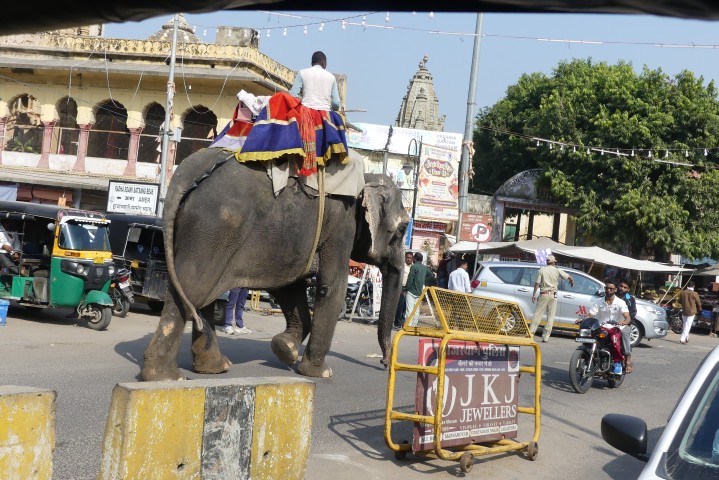
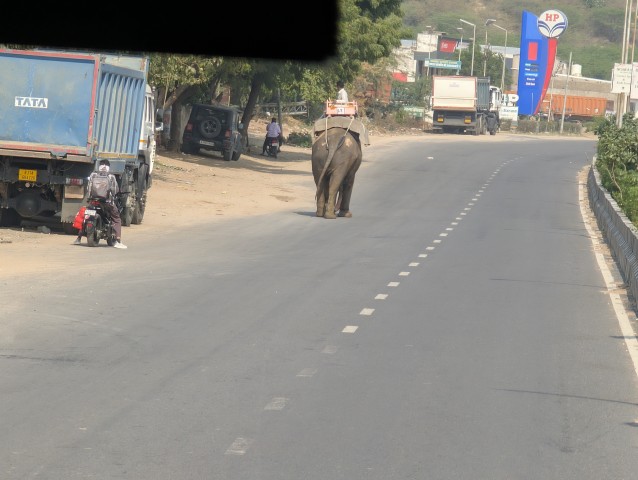
It’s quite a long drive from Jaipur to Delhi. We had one early stop at the Red Fort, located in Jaipur. It was fascinating to see elephants strolling down the road, on their way to work. What is their job? They ferry tourists up the hill to the fort. Each elephant is allowed to make three trips per day. Our tour group would be taken up in jeeps rather than elephants, which was fine with me. As usual, there were pushy vendors in the parking lot, as well as a couple of snake charmers, charming their cobras for tips.
It was another bumpy ride up the hill. We disembarked from our jeeps and entered the main courtyard of the fort.
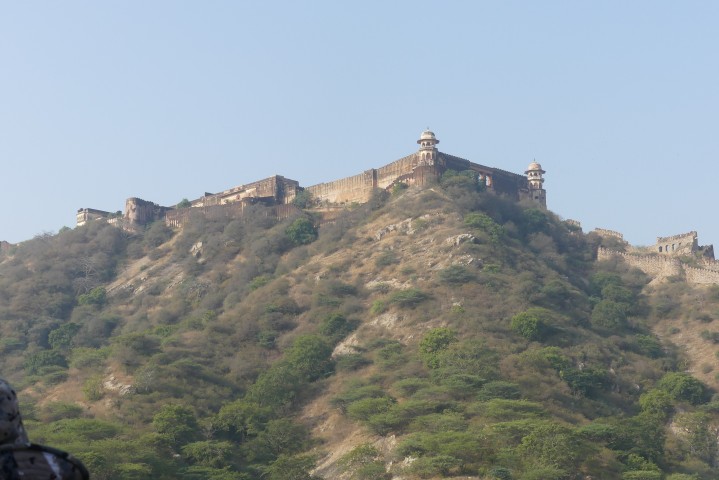
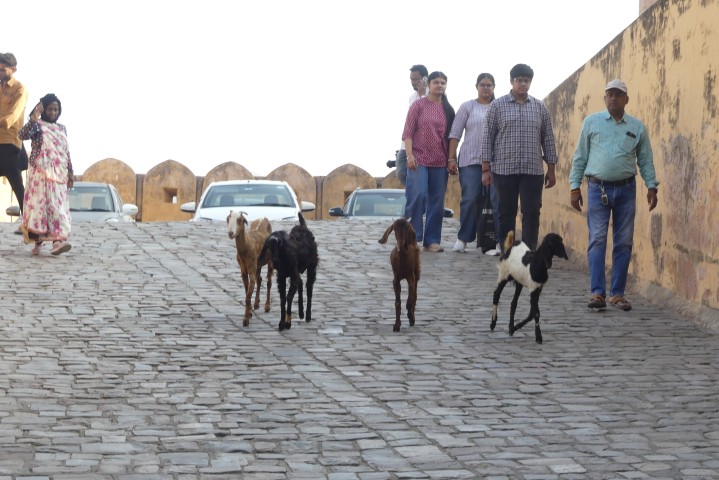
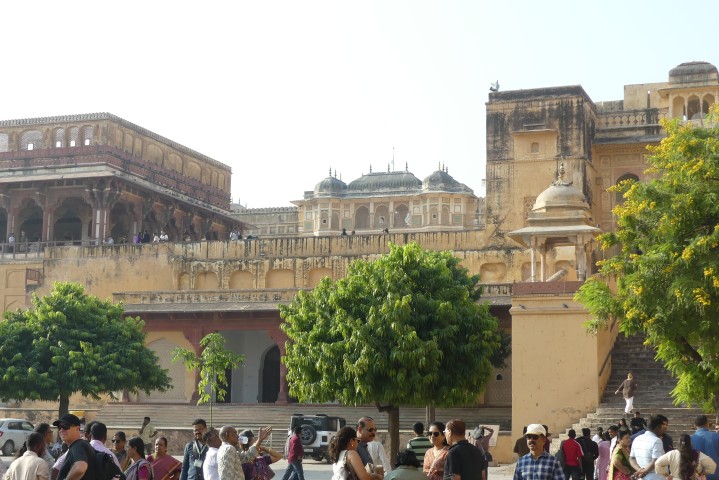
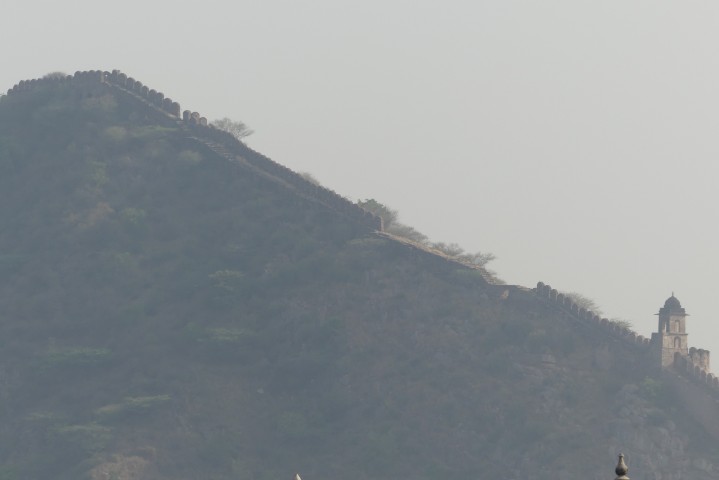
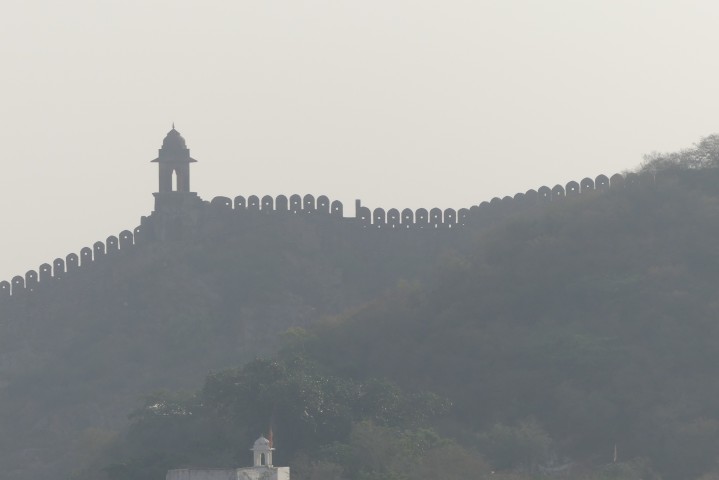
From there, we entered a second courtyard through the lion gate (singh pol). From here, we could see the “Great Wall of Amer” 16.5 km in length and used to guard the fort.
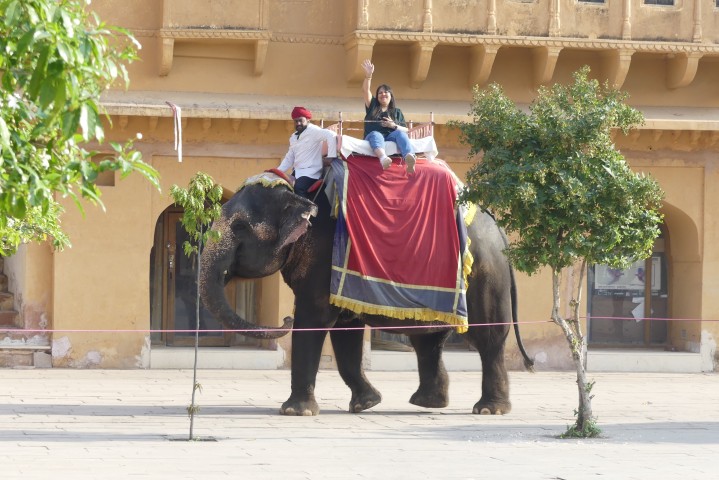
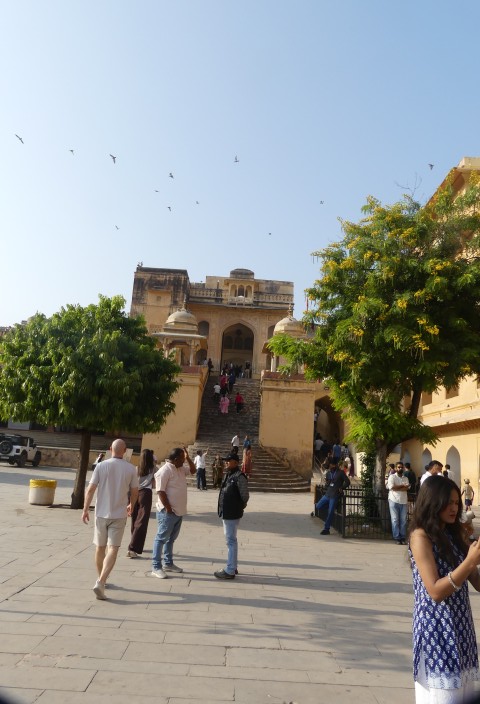
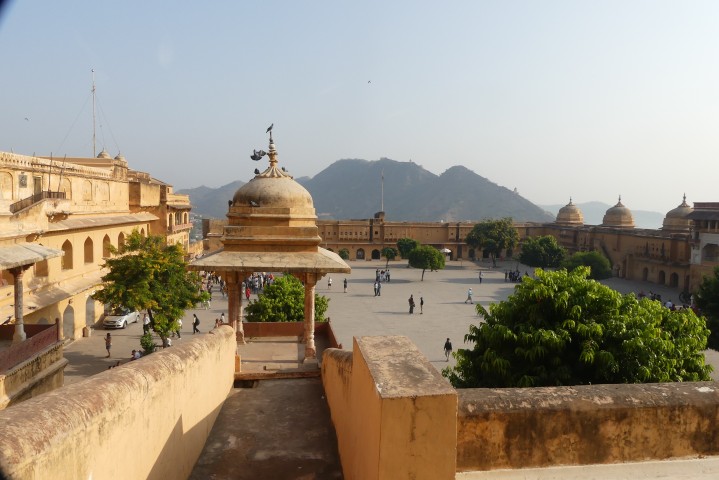
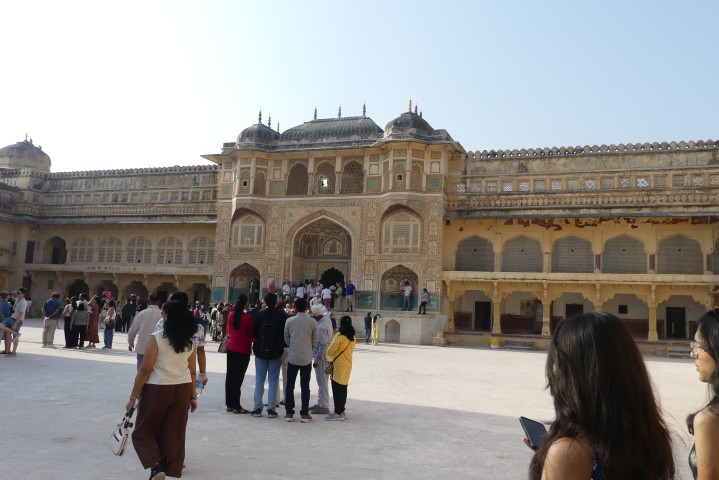
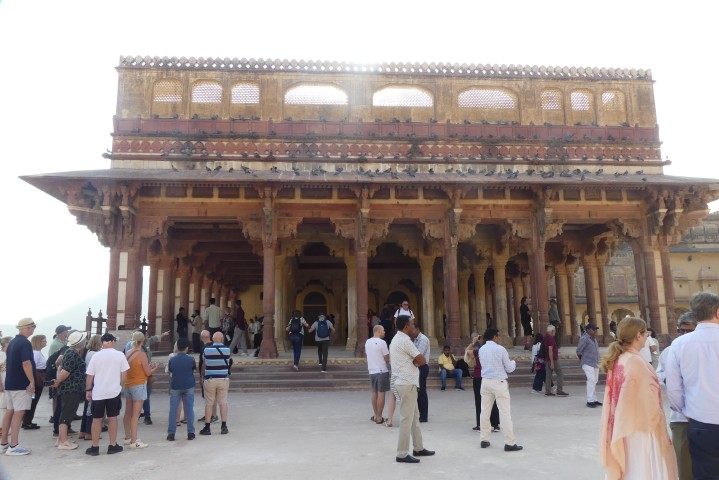
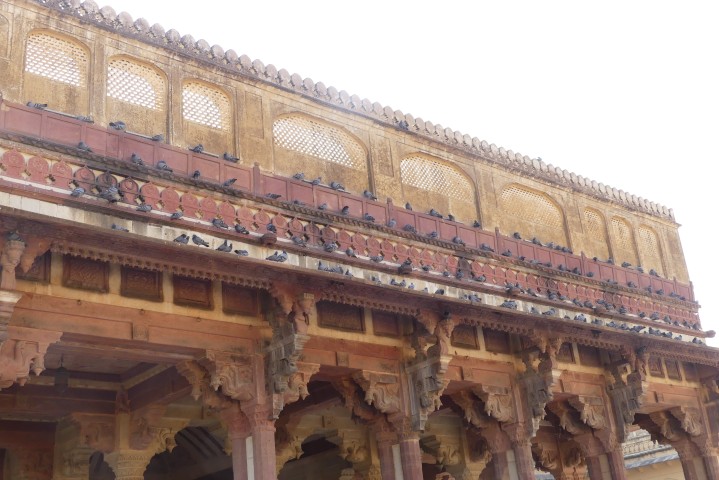
Contained in this courtyard was the Hall of Public Audience.
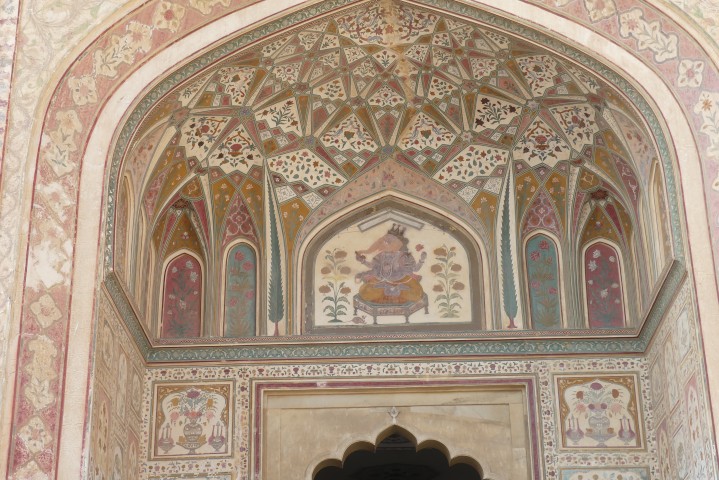
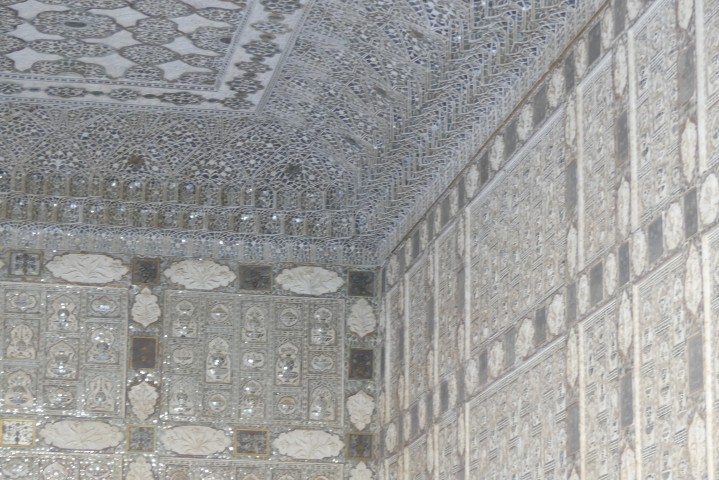
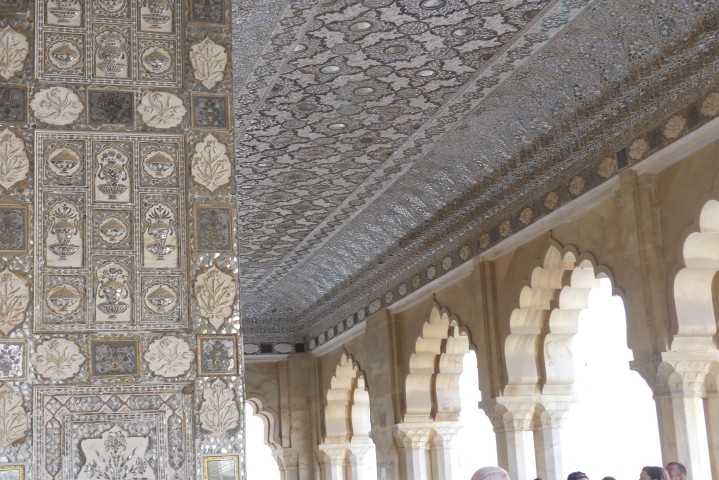
We entered the King’s courtyard through an entrance decorated with Ganesha, the Hindu elephant god. It is used at the entrance to protect the house and leave your problems at the door. The walls were decorated with frescos. Fresco is used to make natural dyes last longer – three layers are used for royalty to make it last longer. Otherwise, the natural dyes fade quickly in the hot Indian sun. In the interior, dust from gem cutting was used to create the designs.
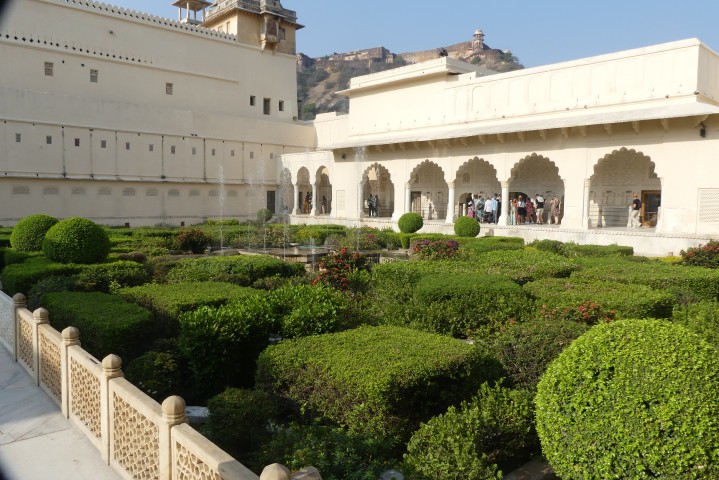
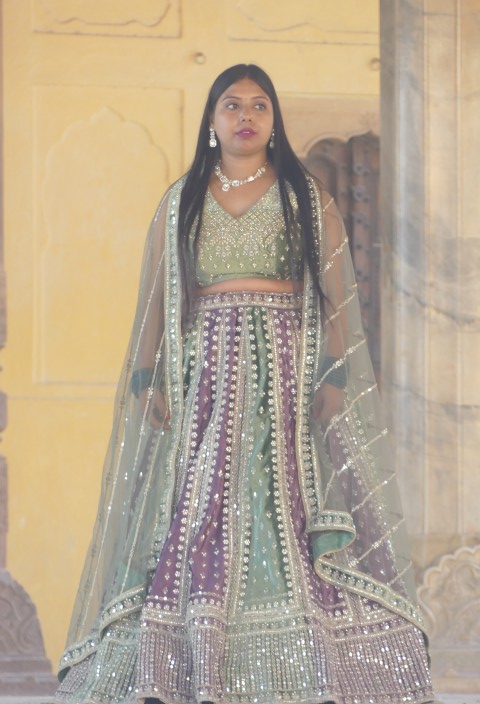
The last courtyard we entered was for the maharaja’s twelve wives so there are twelve apartments contained here. There is an area in the middle where entertainment took place. Now, it seems to be used for having professional portraits taken! We saw many local people having their photos professionally taken all around the fort.
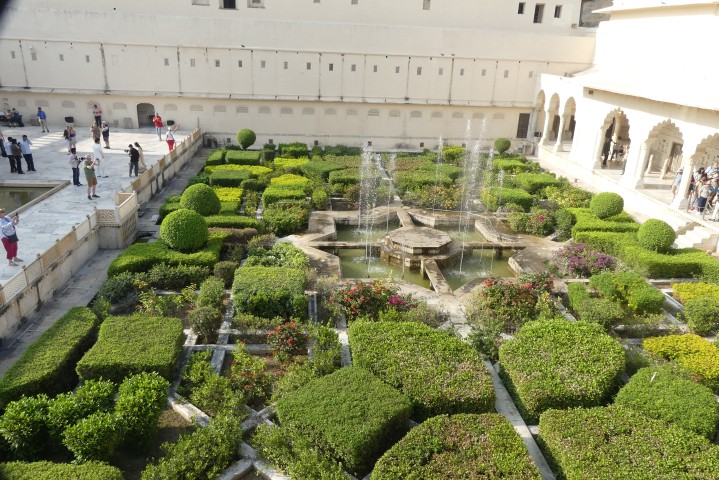
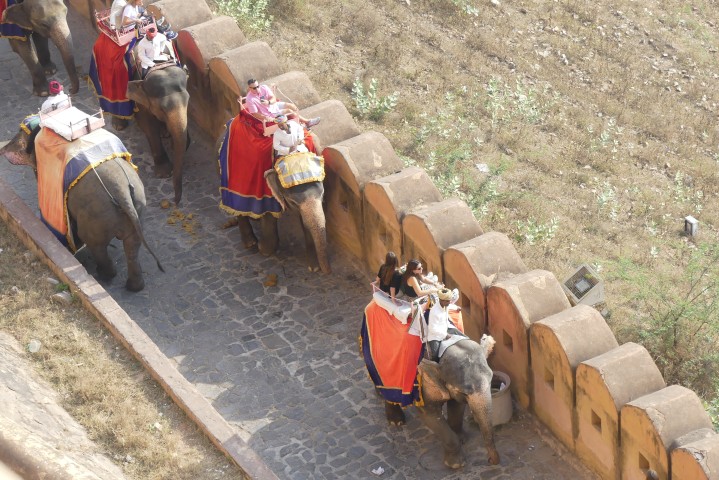

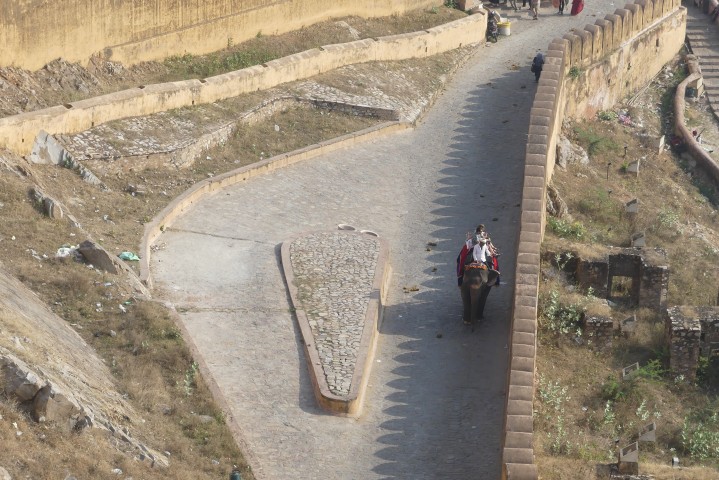
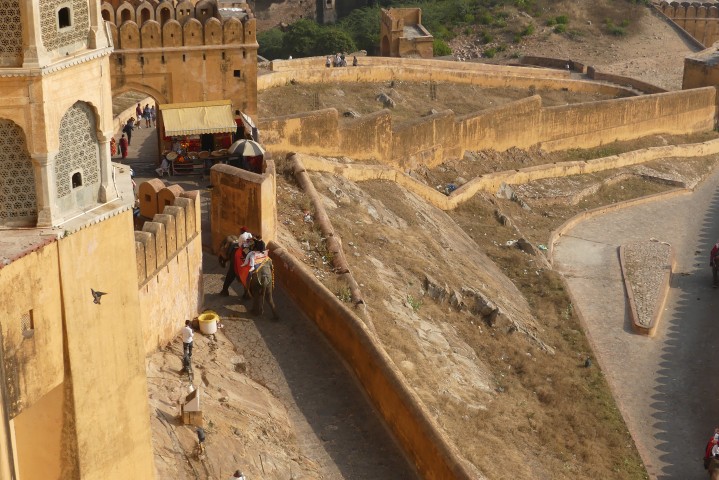
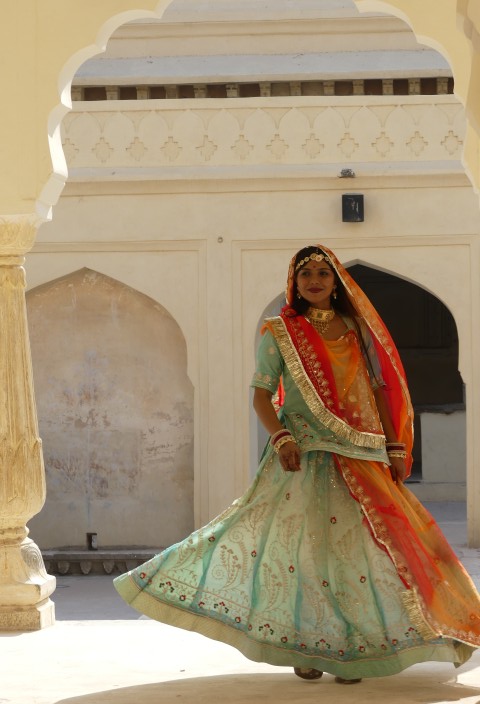
The ride back down the hill took quite a while; there seemed to be a traffic jam. I believe it was caused by elephants! We had one last opportunity to buy trinkets from the vendors that came to the bus to sell their wares before starting the long drive back to Delhi.
Along the way, Sudhir, our local guide, explained the caste system. There is a dramatic difference between its original use (showing which job category you fit into) and its modern use. Even now, marriage can only take place within one’s own caste. Speaking of marriage, he told us that 85% of marriages in India are arranged marriages, and that 100% of people in arranged marriages never divorce. I don’t know the veracity of his statistics. He did make it very clear that family takes care of family here. People live in large, multi-generational households and help each other out. If one rejects the arranged marriage, they are cast out of the family and lose the support, making it a very difficult choice to make.
He also said that every person in the country has a cell phone; in many cases multiple cell phones. Service is only 300 rupees/month (a little of $3 US). Just like where we live in Thailand, people use QR codes on their cell phones to purchase items. Cash is not used as much anymore – over 70% of transactions are now digital. Much of this change took place due to Covid.
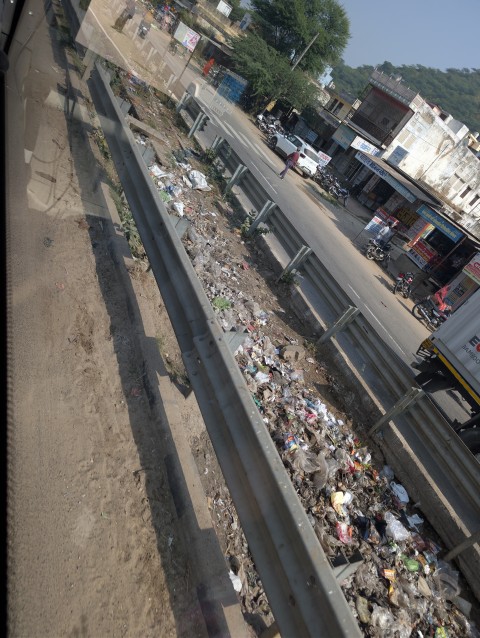
We finally reached the Taj Palace in Delhi prior to dinner. The roads were much smoother, though there was still honking, passing slow vehicles, cows in the road, and all the other excitement we had become used to. We had the evening to pack and prepare for our flight back to Thailand the next morning.
One note on the airport before ending my post – the Delhi airport is the only airport we have ever been to where one must show their boarding pass and passport before being allowed in!

