
Ho Chi Minh City
Our hotel (Liberty Saigon City Centre) had an incredible breakfast spread. The only issue had to do with coffee – it was served black and no milk or cream was provided. I asked one of the helpful wait staff for cream. They looked at me blankly. I tried asking for milk. They conferred with a couple of other workers and told me they had two kinds of milk. I think they said one of the kinds of milk was condensed. I said I would like some. More confused looks. Eventually, one of them walked me over to the buffet and pointed me towards the cheese. Gotta love those language barriers! I sucked it up and drank my coffee black. No problem, we could go out for coffee later. There are so many coffee shops all over the city; I knew I would be able to find a good cup of coffee.
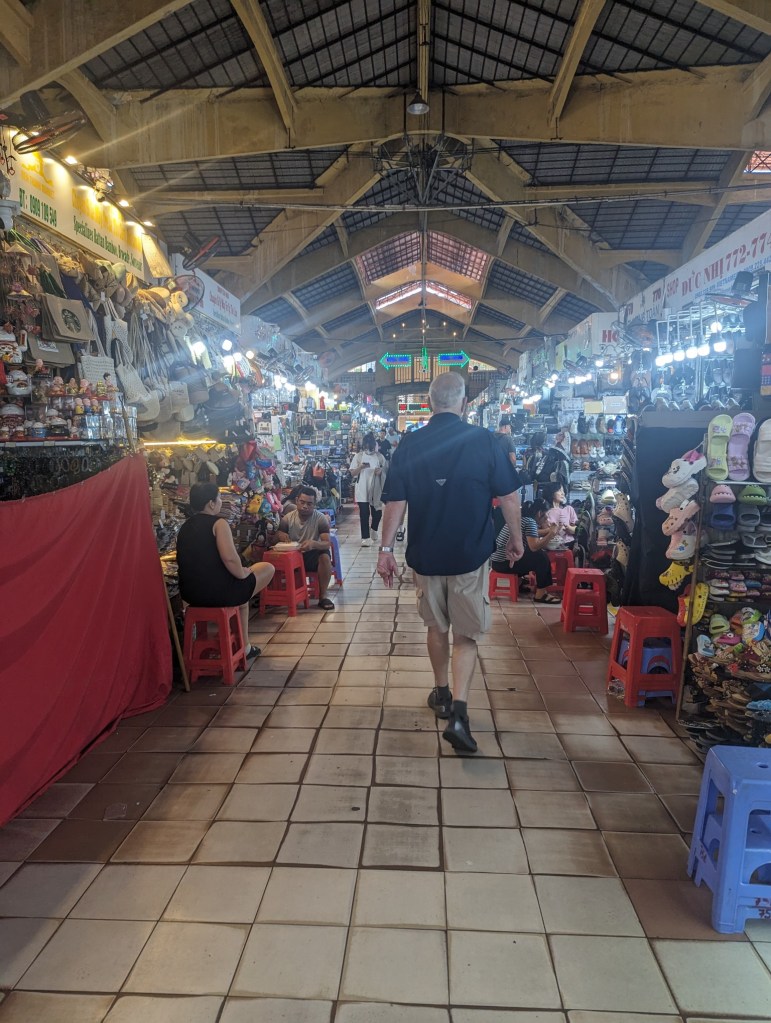
We started out by walking to the Ben Thanh Market. It is the largest in the city, other than the market in Chinatown (which only sells wholesale). We had been before but figured we would get there early before the hordes of tourists arrived. If you want fake luxury goods, Ben Thanh is your place! Be prepared to bargain. The first prices quoted will be grossly overinflated. Do not visit if aggressive sellers annoy you. This place was on a par with Egypt! Every single salesperson was in our face as we passed by their stalls. It was too much for us, so we left.


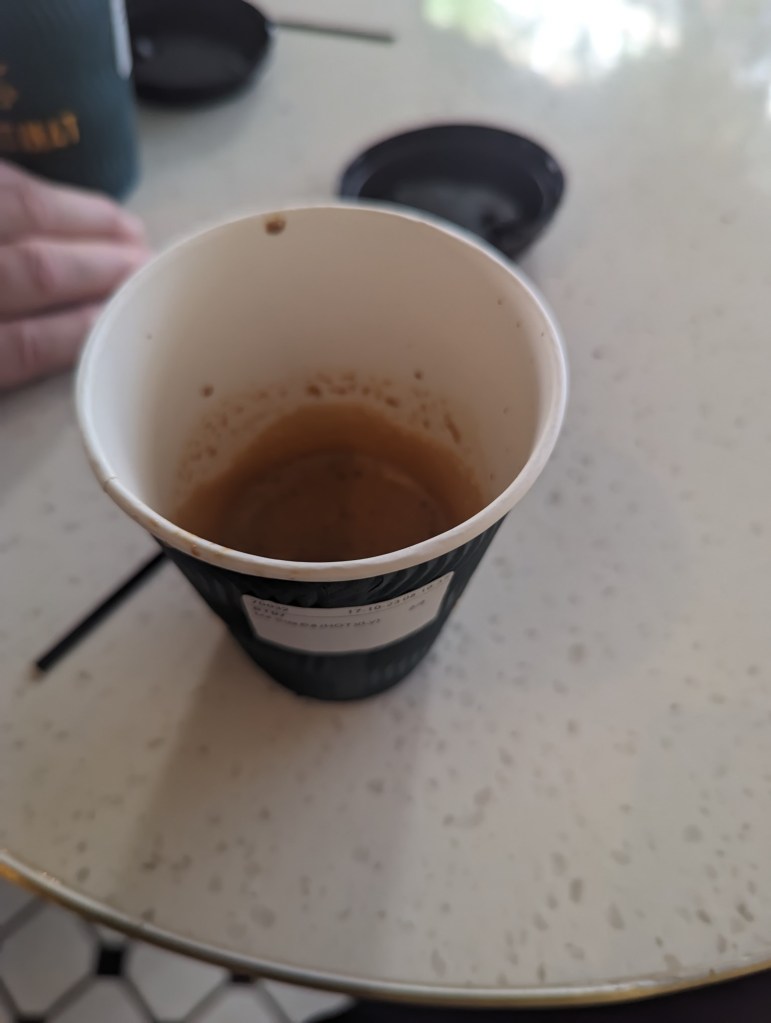
We found a lovely coffee shop across from the market. I wanted a cappuccino but didn’t see it on the menu. I did see a Vietnamese white coffee and incorrectly assumed it would be similar. When I picked up the cup, it felt awfully light. Removing the lid, I now understood why…From what I read later, most Vietnamese drink their coffee cold. If I had ordered the same drink cold, it would’ve come over ice and looked a bit more substantial. Coconut coffee is the one I want to try. I have had egg coffee in north Vietnam and will be drinking that again as we work our way north.
We meandered around the neighborhood for a bit before returning to the hotel. The tour group wouldn’t be arriving until evening, so we had the day to ourselves. We spent a relaxing day. Again, this was our third trip to this city, and we would be touring with the group, so didn’t really feel compelled to do much sightseeing. The rest of our group was arriving that evening, and the first tour was an optional tour to the Cu Chi Tunnels the next day. We will be in Vietnam on a cruise in December and will be touring the tunnels then, so passed on the tour. Our first tour with the group would be a city tour that afternoon.
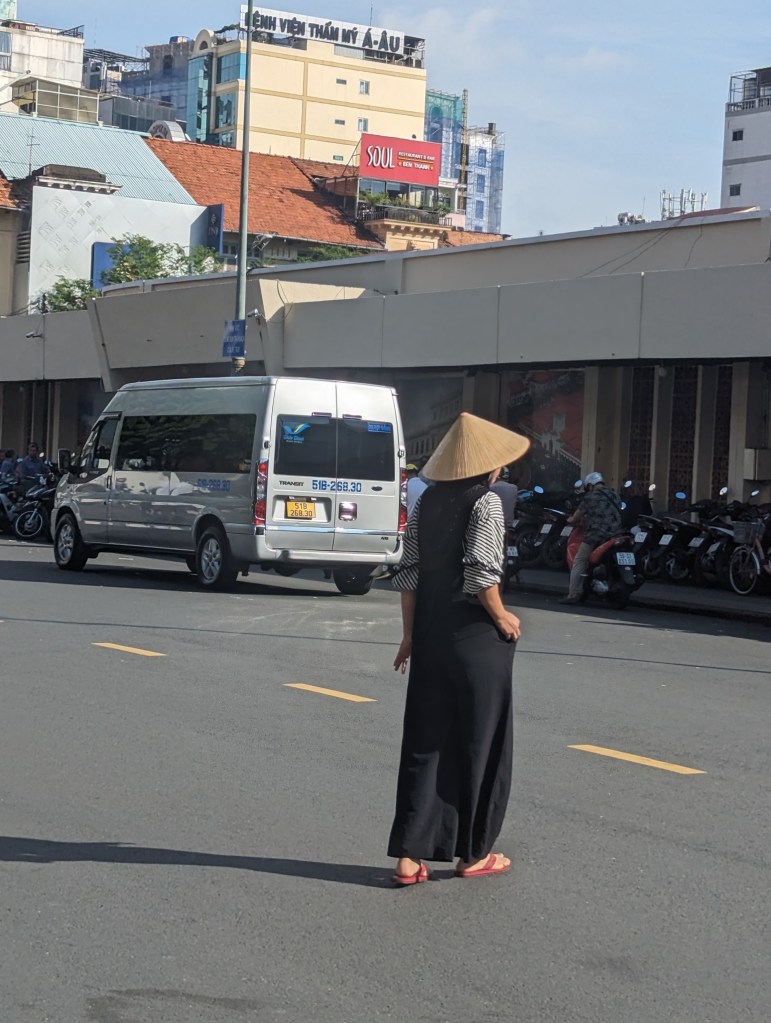
One place we did want to revisit was the War Remnants Museum. It opens at 7:30 am and the tickets cost only a little over $1 US. Quite the bargain. It was only a little over a half mile from our hotel, so we walked there. If you have not been to Vietnam, it’s hard to describe how difficult it can be just to cross the street. There are hordes of scooters that don’t stop for pedestrians. A person needs to walk slowly across, and the scooters will go around (hopefully). It is rainy season right now and very humid. Of course, I believe it is humid in Saigon year-round! The temperatures have been in the upper 80’s to low 90’s so come prepared.
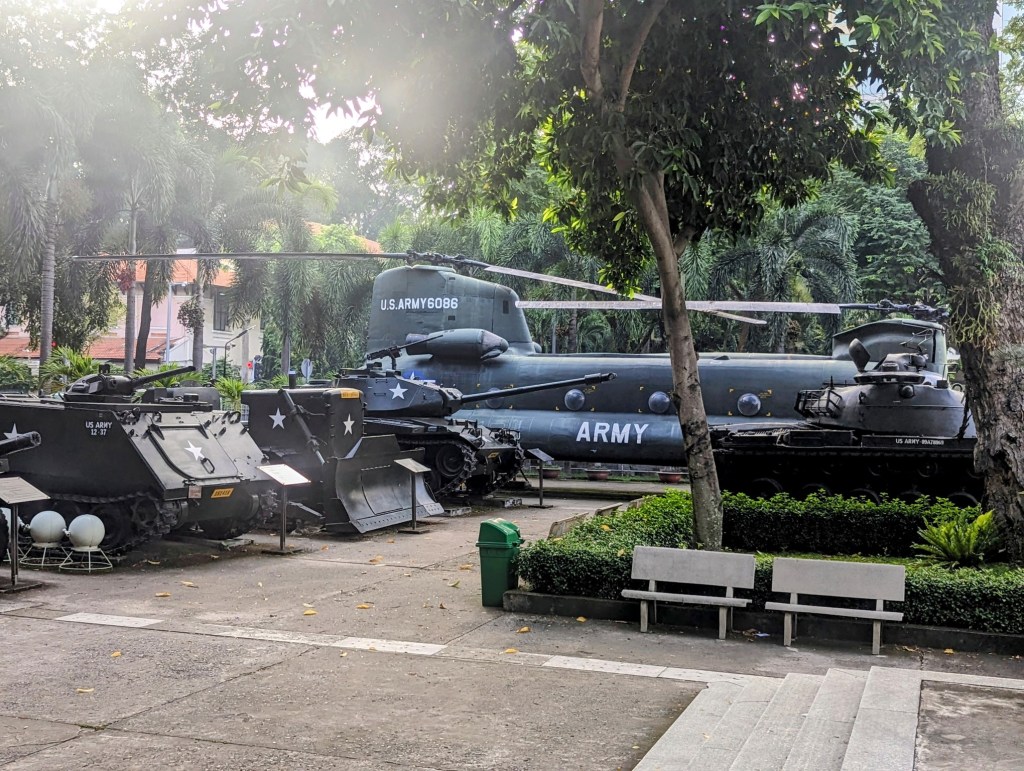

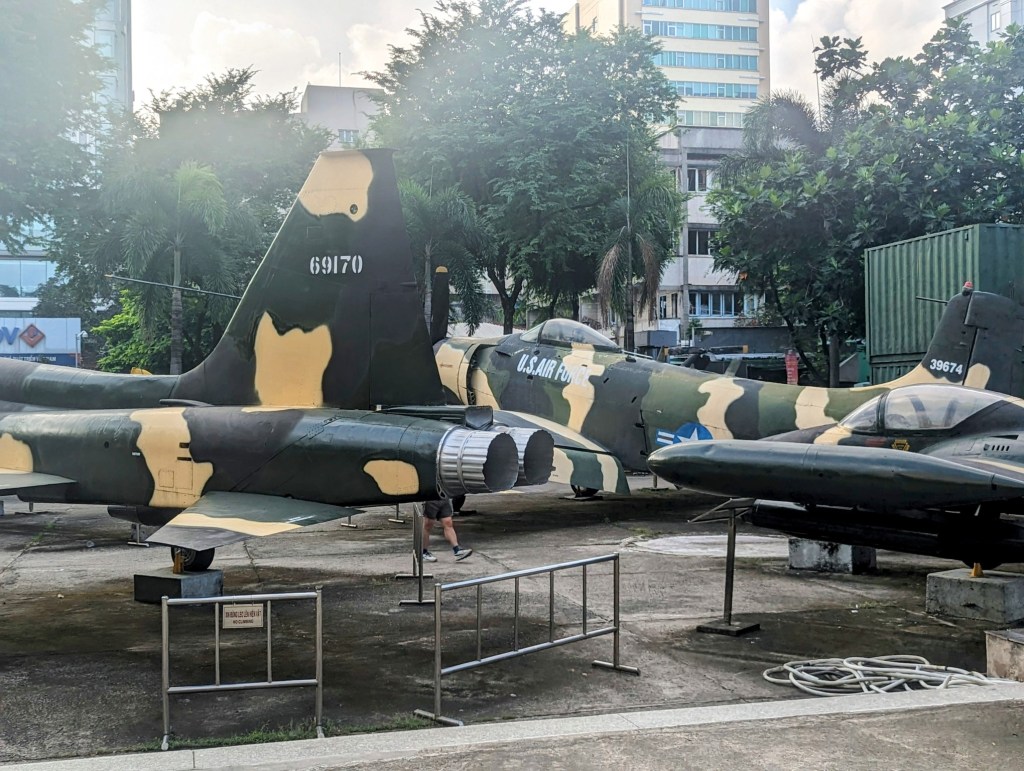

The War Remnants Museum is not for the faint of heart. The purpose is to show the effects of war to prevent such atrocities from happening again. The exterior has a variety of US planes, bombs, and other remnants of war on display. Inside, the displays are spread over three stories and each room has a theme. The focus is most definitely on what the Americans did to the Vietnamese, especially to civilians. The Agent Orange room was the most disturbing to me. I had learned on a previous visit that the effects have spanned four generations. As you can see from the pictures, agent orange had devastating effects on innocent people. One of the rooms traced the history of the events leading up to the war. Though the United States joined the war in the mid-60’s, the roots of the conflict were sown in the French Colonial period during the late 1800’s.
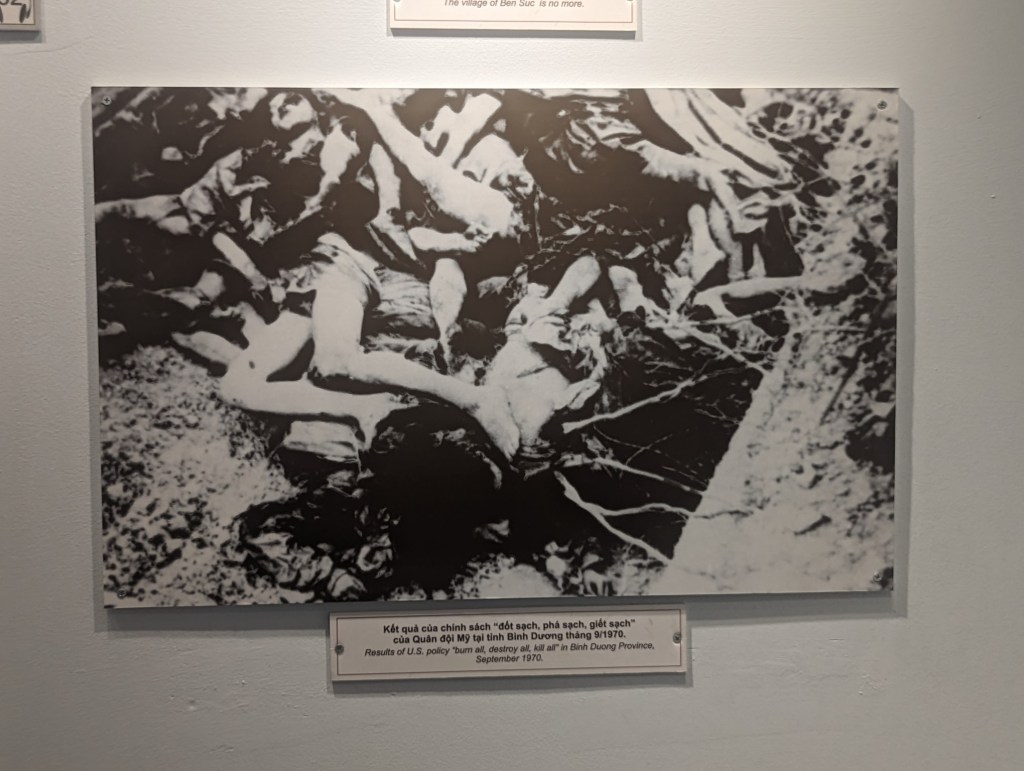
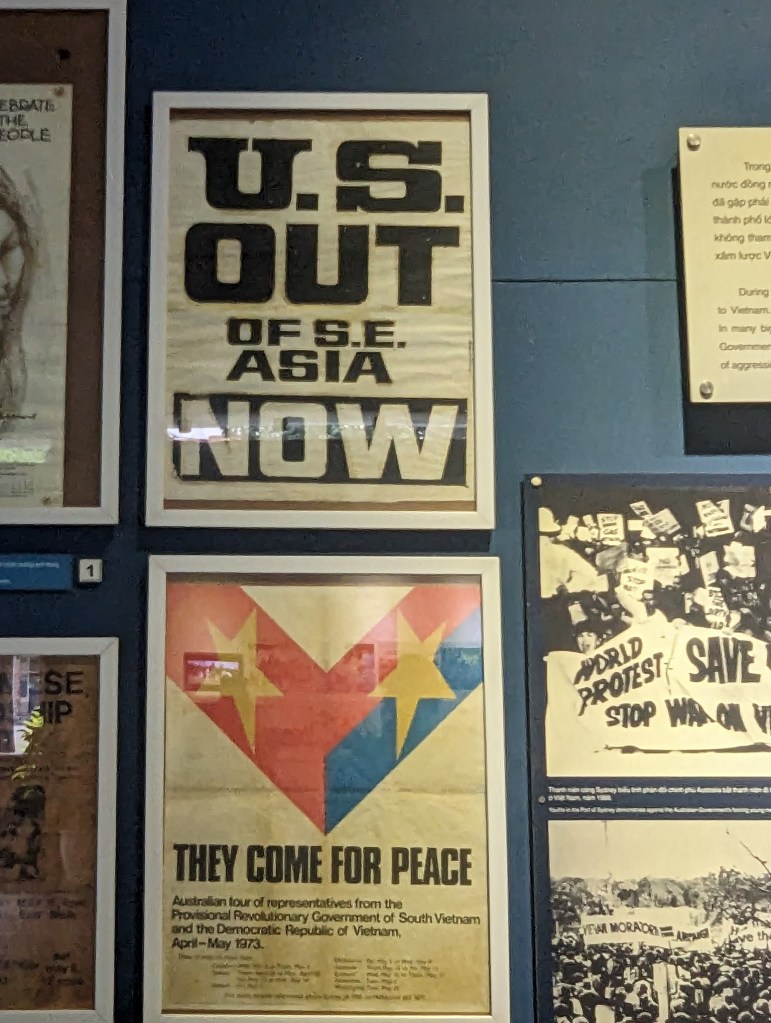
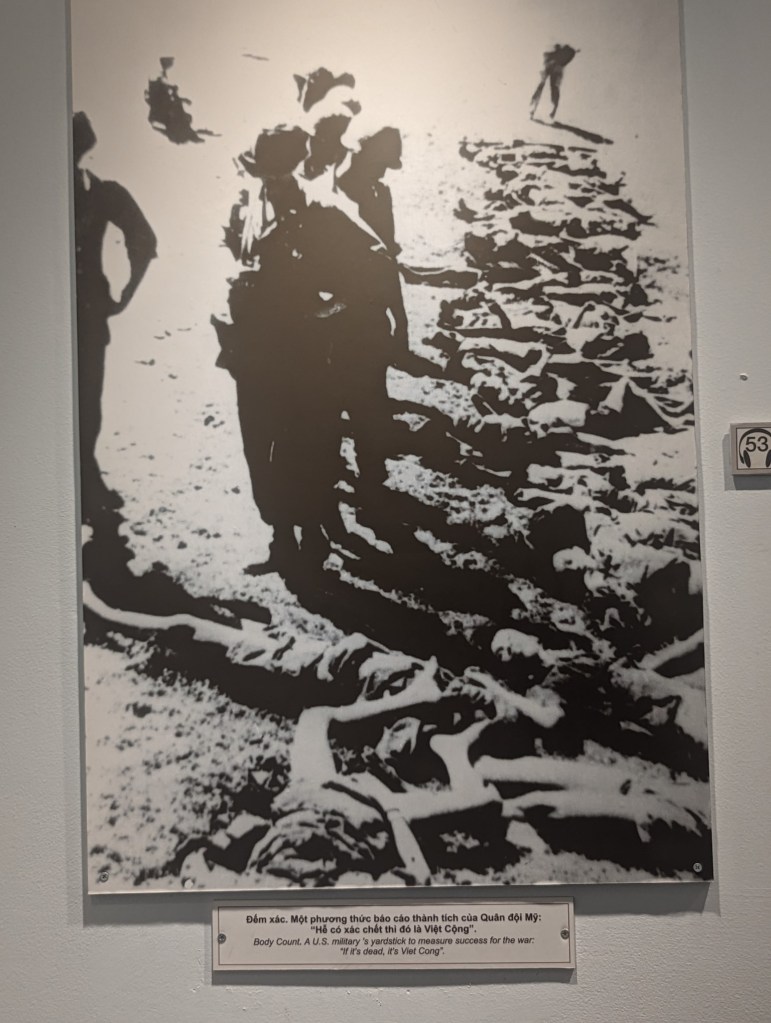
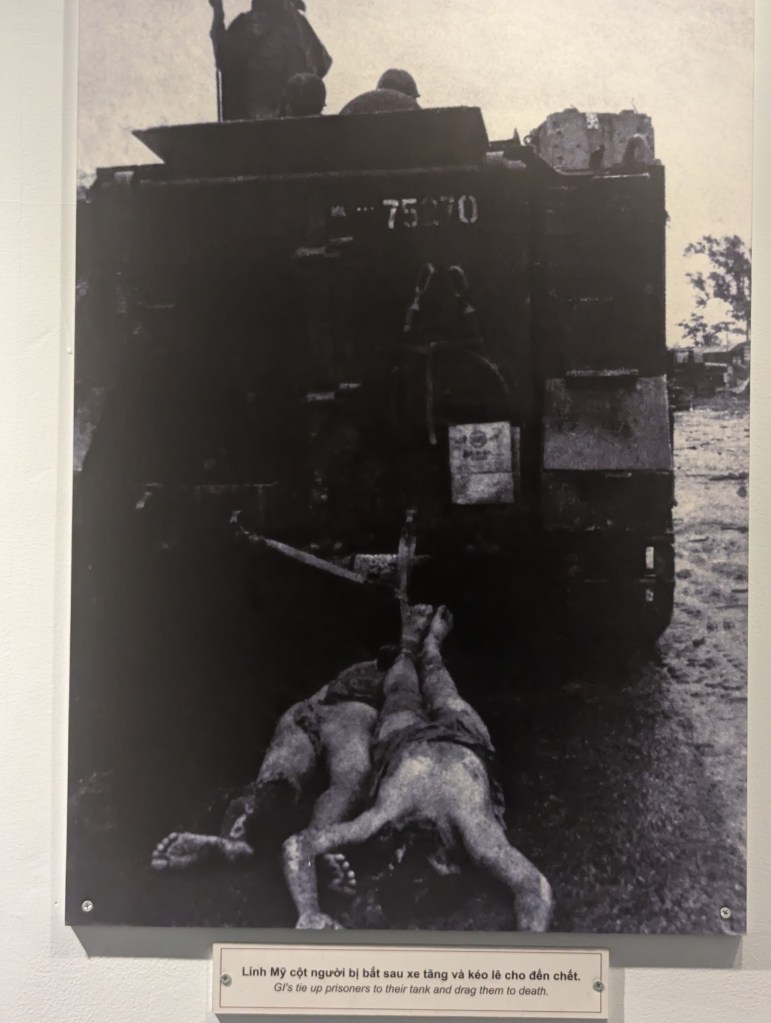

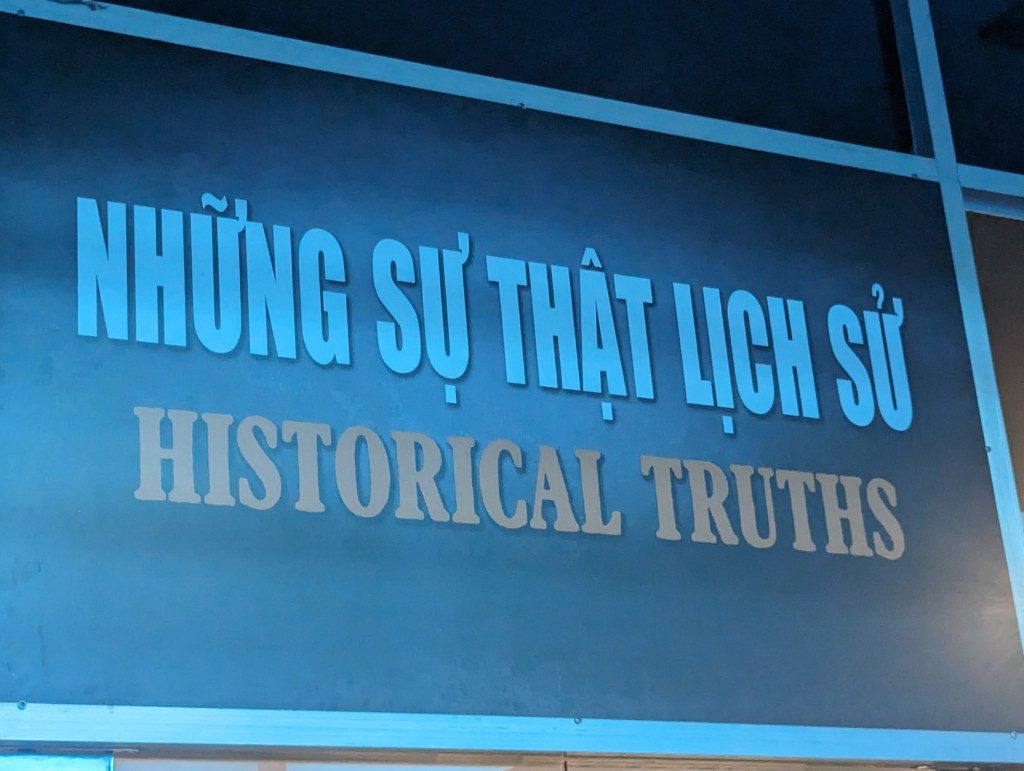

Interestingly, the displays referred to it as the Vietnam War. In the north, the museums we visited previously referred to it was the American War.
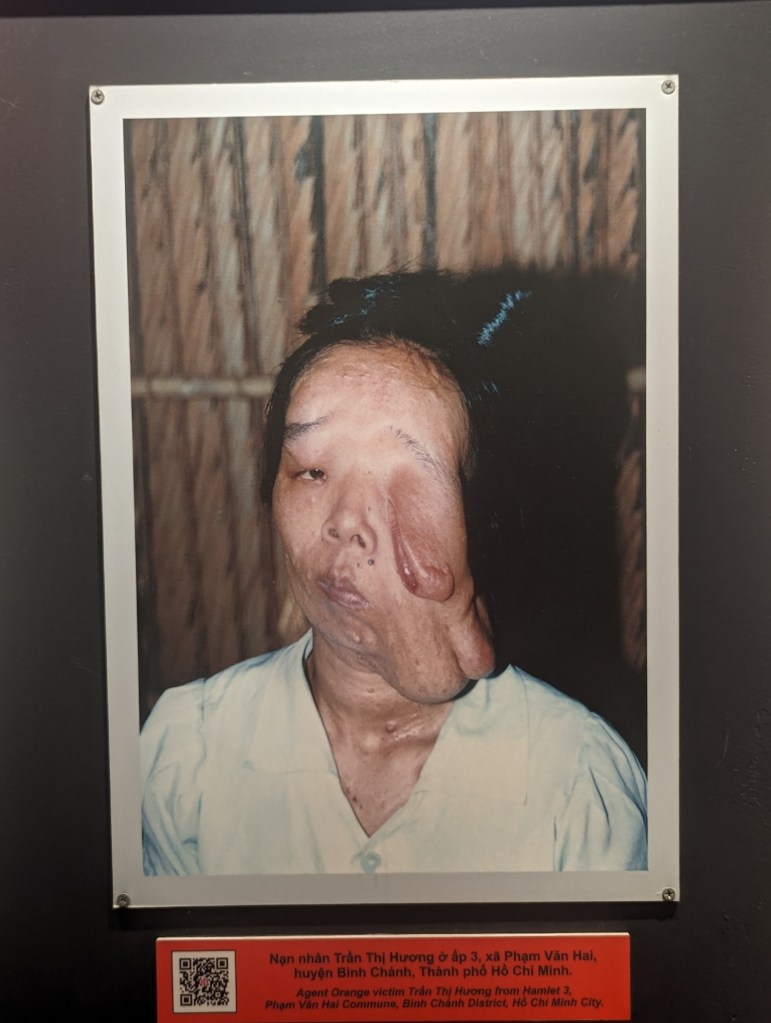
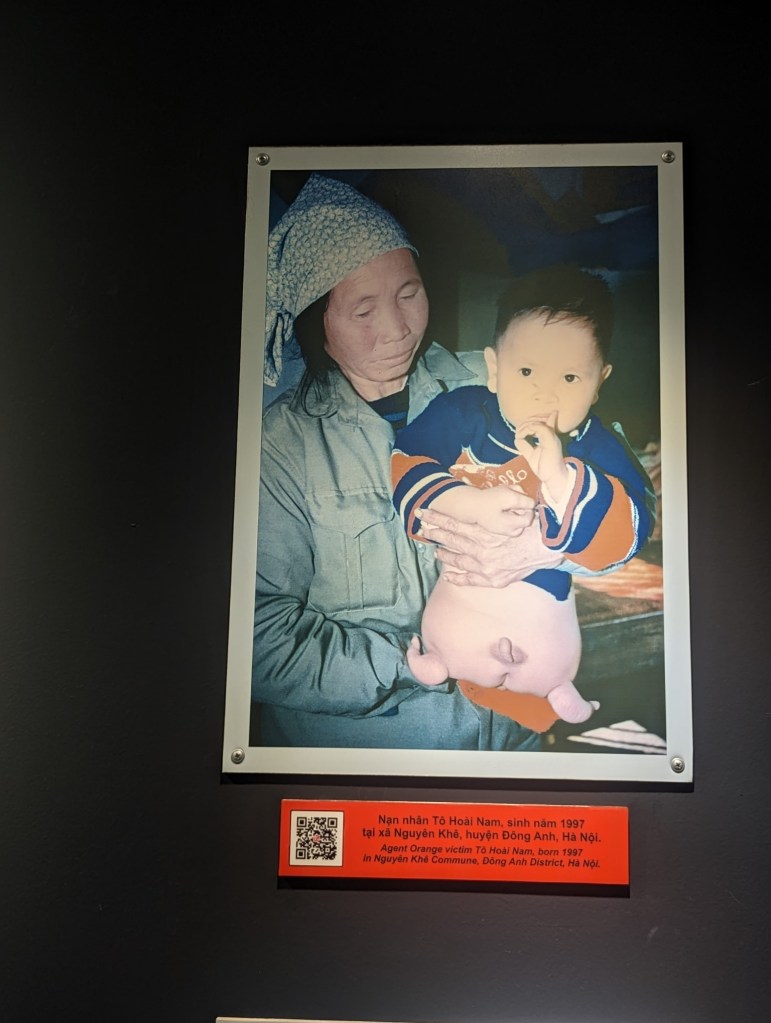
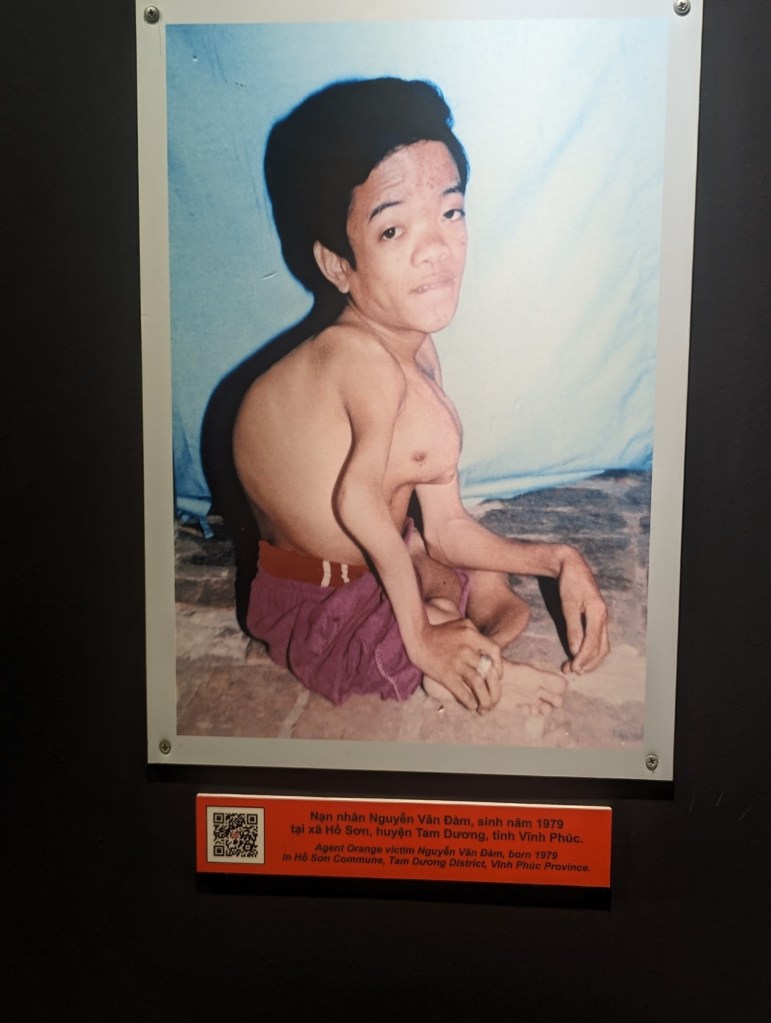
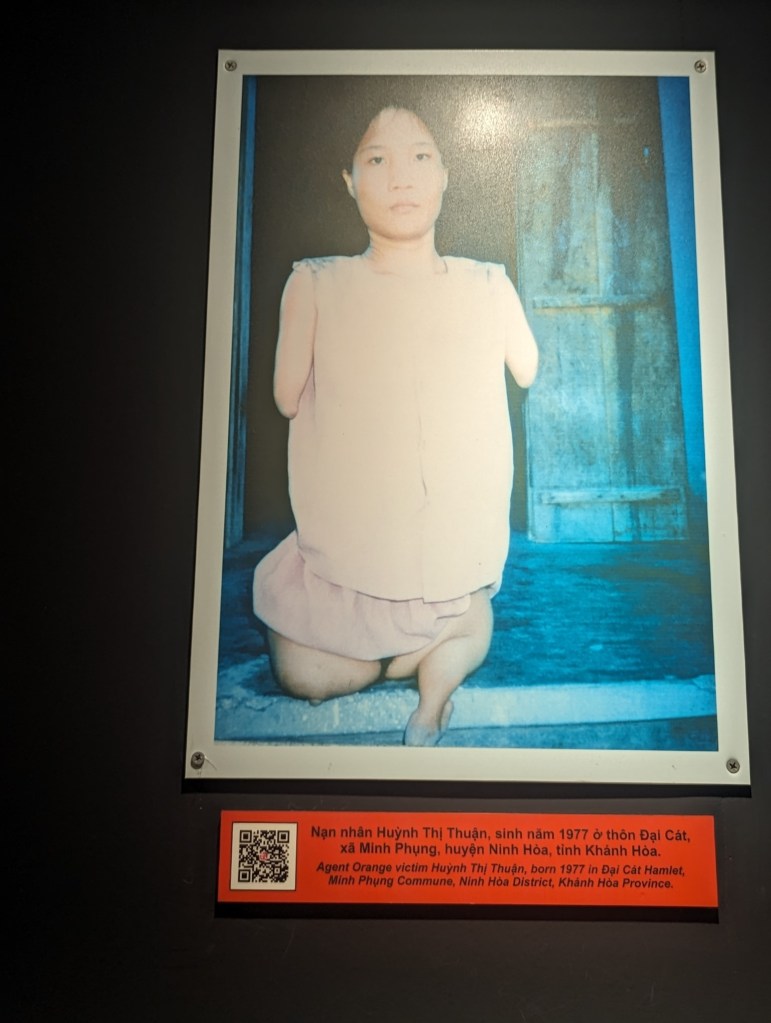

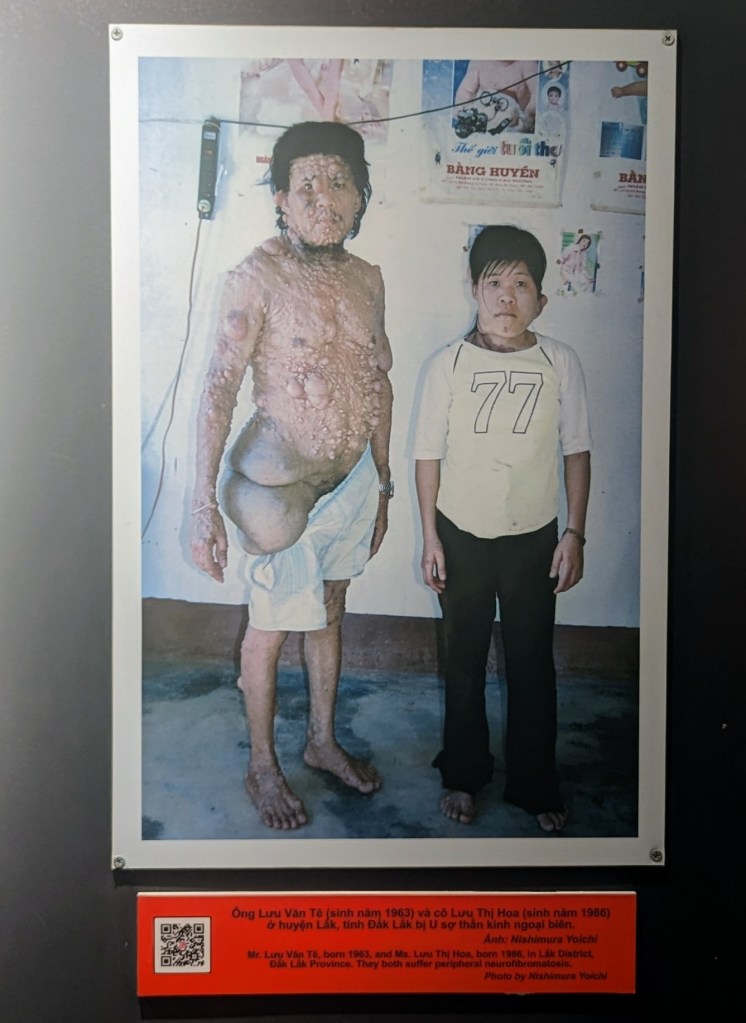
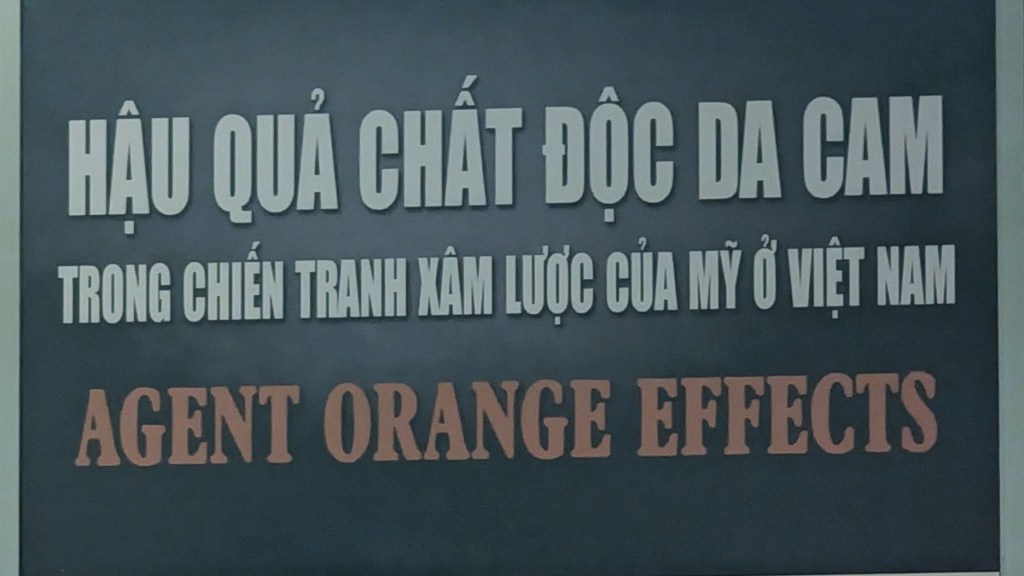
If you are interested in learning more about what lead to the war and life in Vietnam afterward, click here: Vietnam War
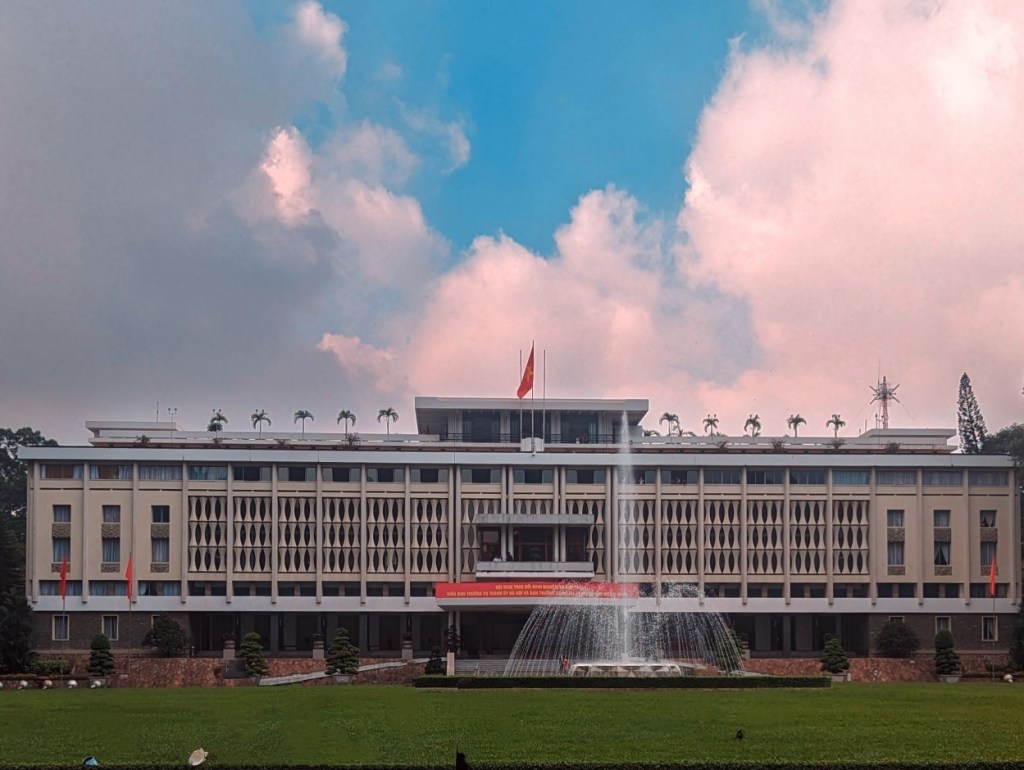
On our walk back to the hotel, we passed the Presidential Palace. We did not go inside (we had done so on a previous visit). Unlike the beautiful French colonial style architecture found around the city, this one has a decidedly 60’s feel to it.
After a delicious banh mi sandwich for lunch, we met up with our tour group. Our tour leader is Bi (pronounced Bee) and there is a total of twenty-four of us. Eighteen of the twenty-four had started the tour in Cambodia and already knew each other. We loaded up the bus for a brief drive around town. The first destination was Chinatown. We just drove through rather than stopping to look around since virtually all the commerce there is wholesale. There is no Chinese architecture as is typical in most Chinatowns that we have seen. We did pass by a park that had a dragon statue, but other than that, the area looked just like the rest of Saigon! As we drove, Bee shared information regarding the city:
Saigon (most locals still call it that) has a population of 12 million! Vietnam has a total population of 100,000,000 and this is the largest city. The population is composed of 54 different ethnic groups, but the top four are Viet (80%), Chinese, Khmer, and Hmong. According to Bi, the Hmong were spies for the US during the war and so were none too popular in the north afterwards. Many moved to the United States for that reason. The Khmer Kingdom was in the north, but there was not much land available because the area is bordered by China, so moved south to the Mekong Delta region. There is a large Khmer population in Saigon for this reason.
Chinatown in Saigon is not your traditional Chinatown. The people are not distinguishable from other Vietnamese, but they do have a different accent. Commerce is king in this part of the city. The largest market is located here but it is a wholesale market so not one that we would stop and visit. This is “the place” to buy luxury goods. Of course, they are all fakes, but have the big names embossed on them! Like the rest of the city, the streets are lined with stalls selling a variety of goods, but these are also predominately wholesale goods.
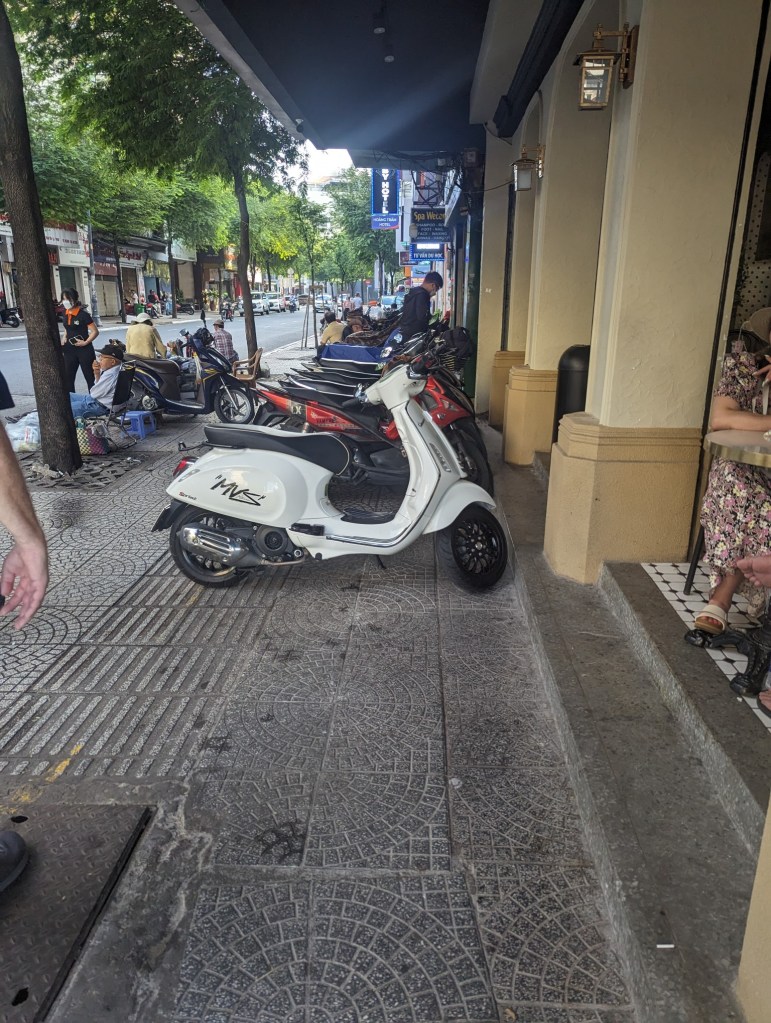
The traffic here is very heavy, as you can imagine. There are around six million scooters, Honda being the most common brand. In fact, most people call their scooters Hondas rather than scooters because they are so common, like in the US, we call facial tissue kleenex! The cost of gas here is around $4 US per gallon which is quite a bit considering the wages are low. There is a hefty tax on cars; gas is expensive; therefore, most ride scooters which can get up to 120 miles per gallon. Two adults are allowed per scooter, but children up to age 18 can ride, so you can see up to five per scooter. Unlike Thailand, virtually everyone here wears a helmet. Like Thailand, scooter drivers are fearless and weave in and out of traffic. A subway has been built but the trains have not yet arrived. Hopefully when that opens, it will ease some of the traffic woes.
As I am sure you know, Vietnam is a communist country. Other than seeing the occasional propaganda poster and communist flag, it is not obvious. According to our guide, there are local elections, but he doubts that the votes mean anything. The powers-that-be dictate who is in office (the Prime Minister, President, and their boss, the General Secretary of the Communist Party). School is compulsory, but not free. If someone does not send their child to school, they get “visited”. If they are extremely poor, money may be provided for their child’s tuition. Otherwise, the parents must pay up. School runs from 7:15 until 10:45 in the morning, and then from 1:30 to 4:15 in the afternoon. Those that live too far away from school for their child to come home for lunch must pay additional fees so their child can stay at school during that time.
The French came to Vietnam during the 18th century, so many of the buildings in the downtown area reflect that style of architecture.


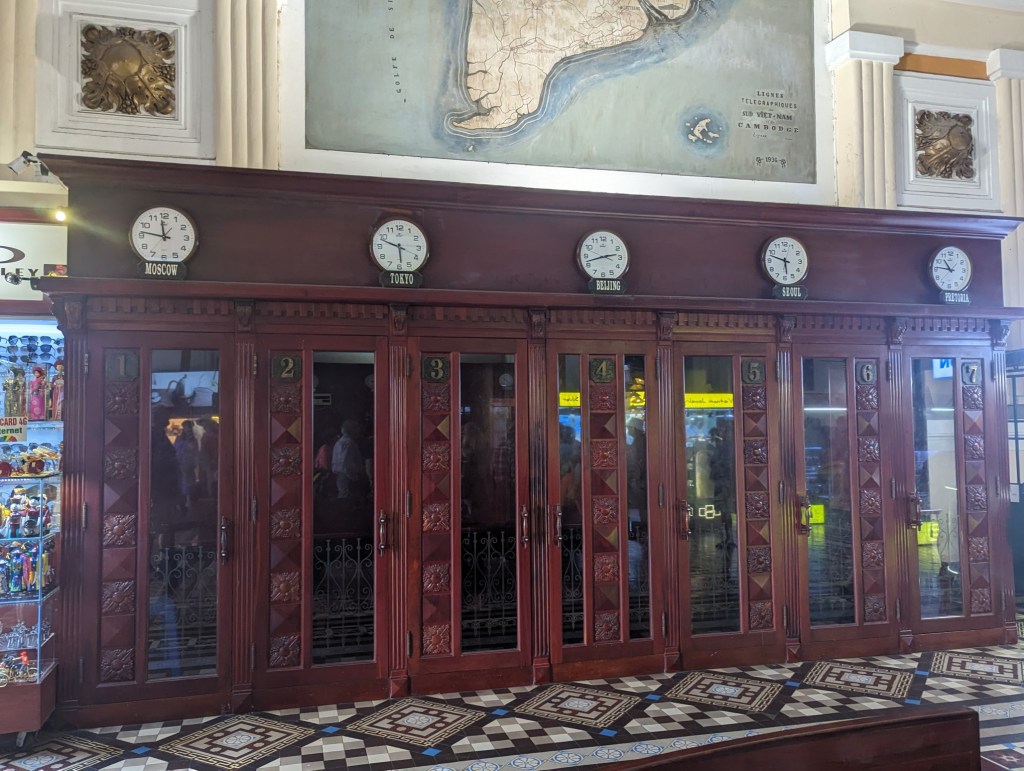
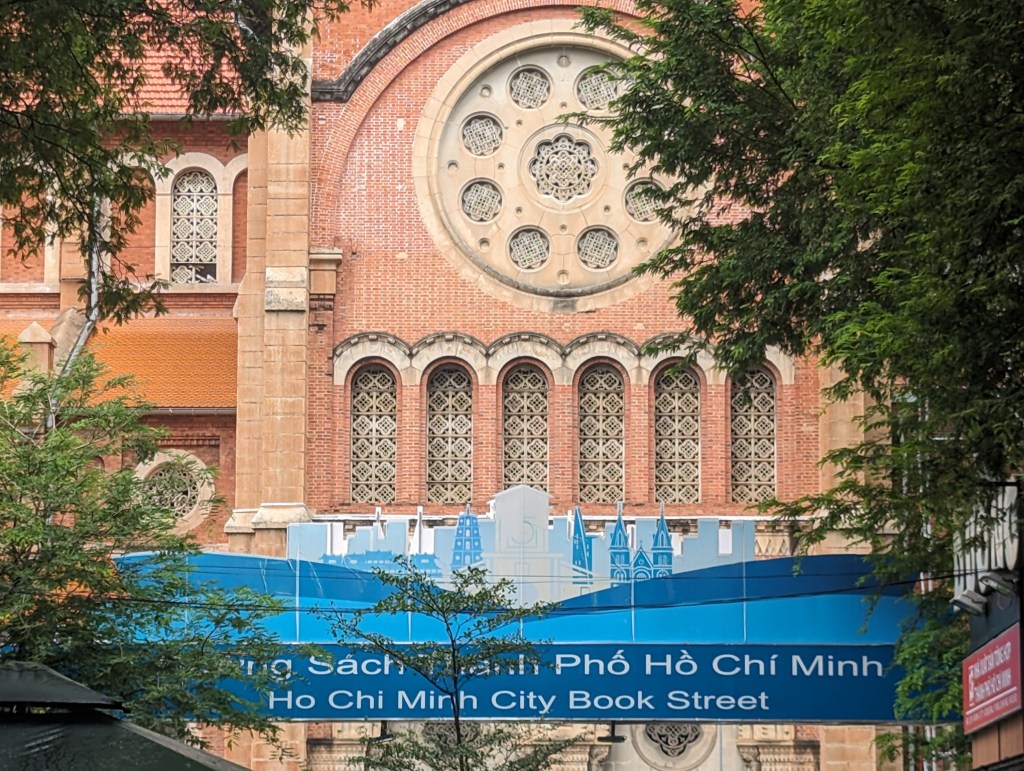
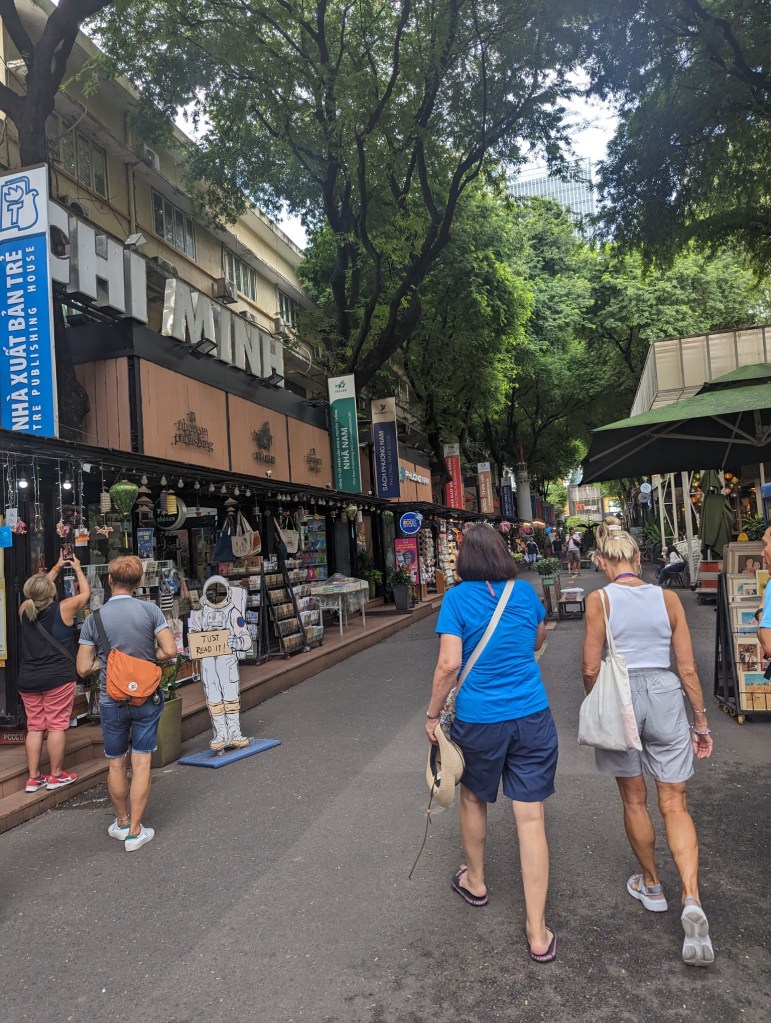
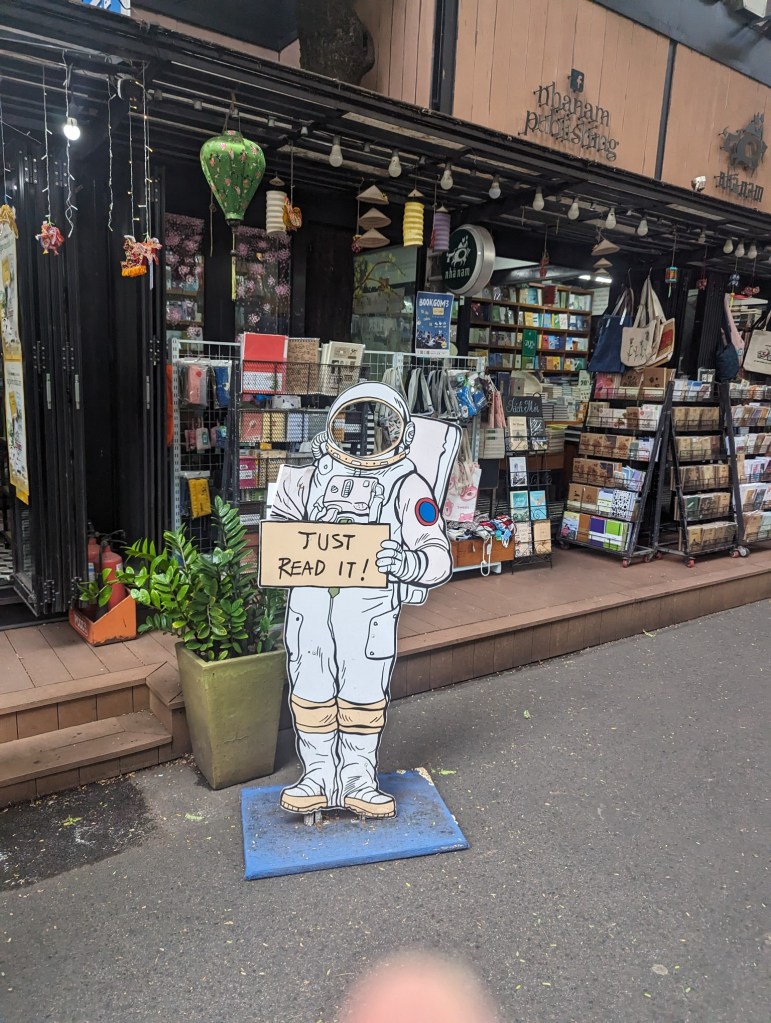
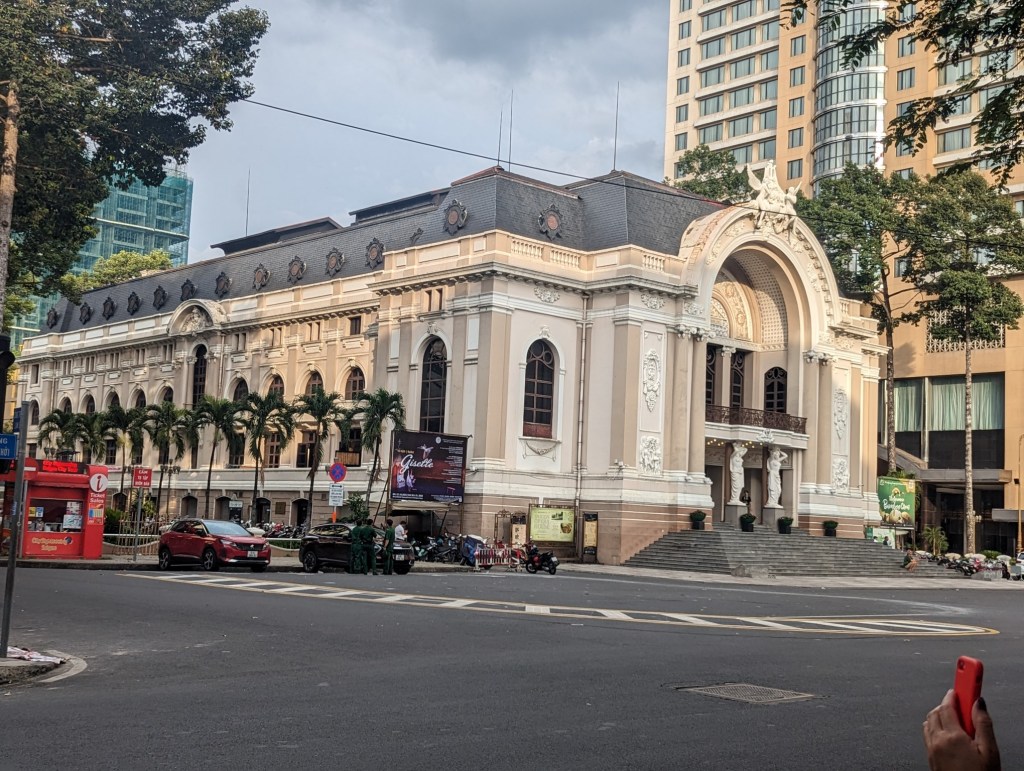
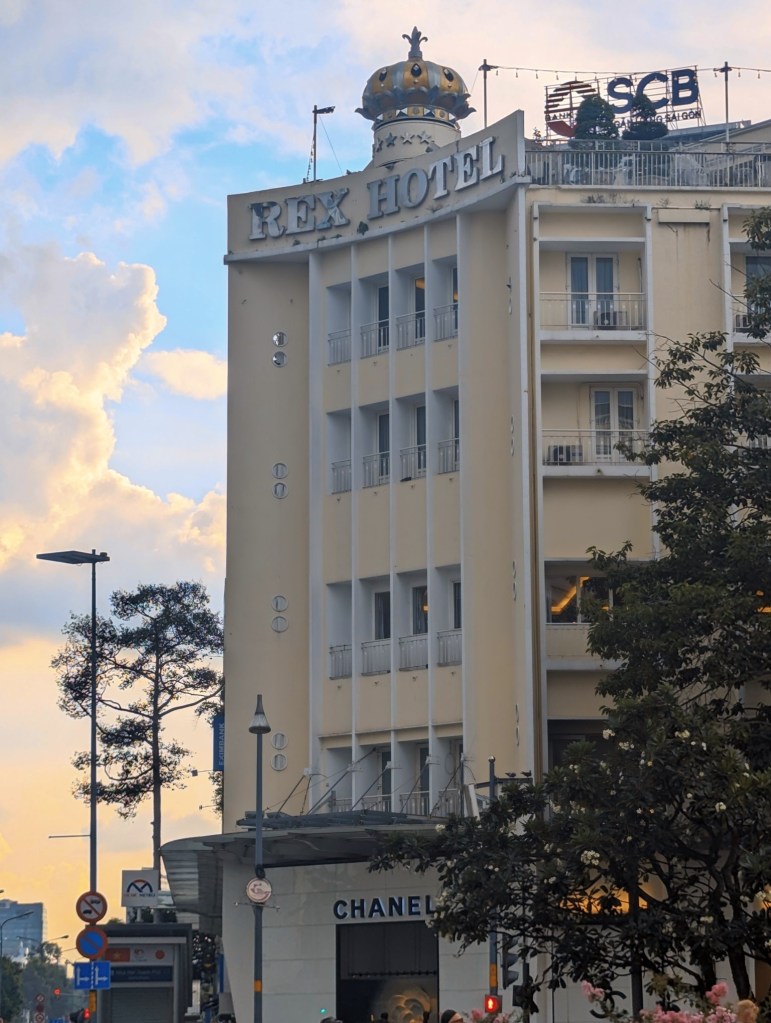
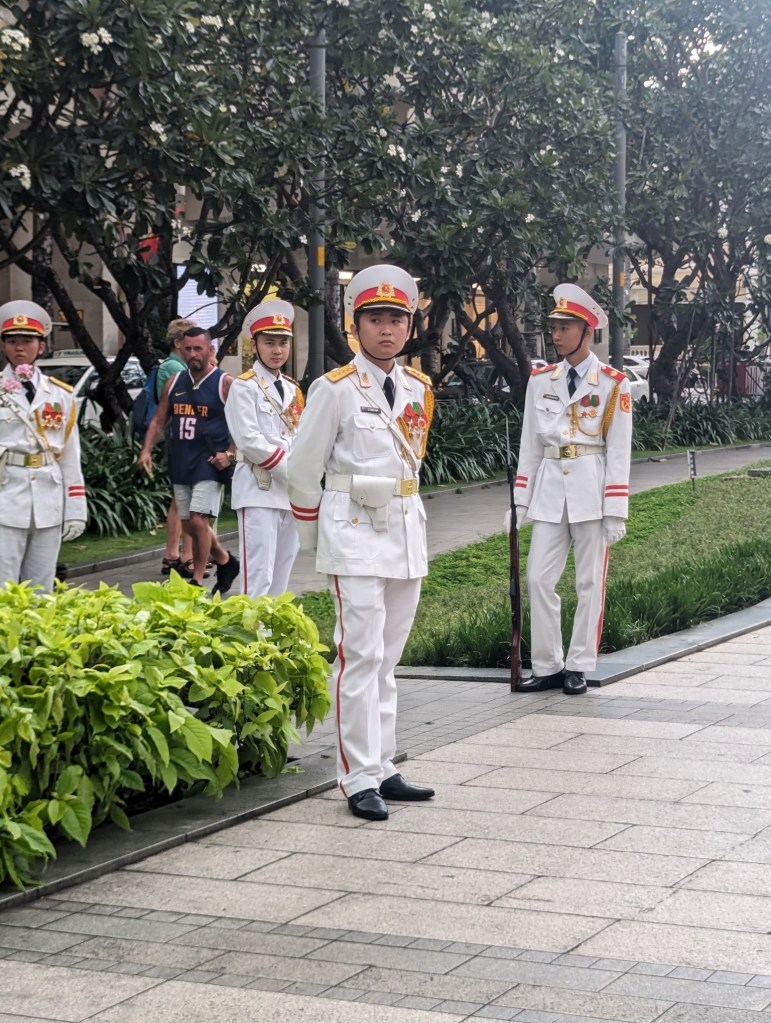
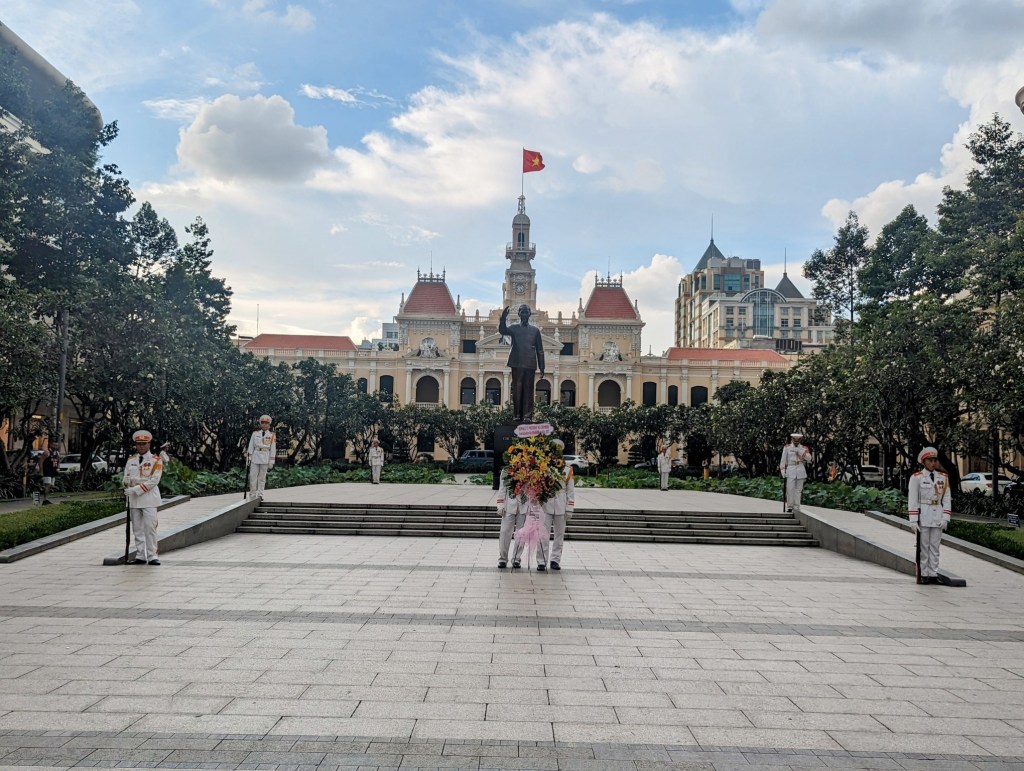
After making the photo stops, we headed back to the hotel and then walked to dinner. We were served a delicious multi-course meal. I am quite sure that no one left hungry!
 travelswithheather