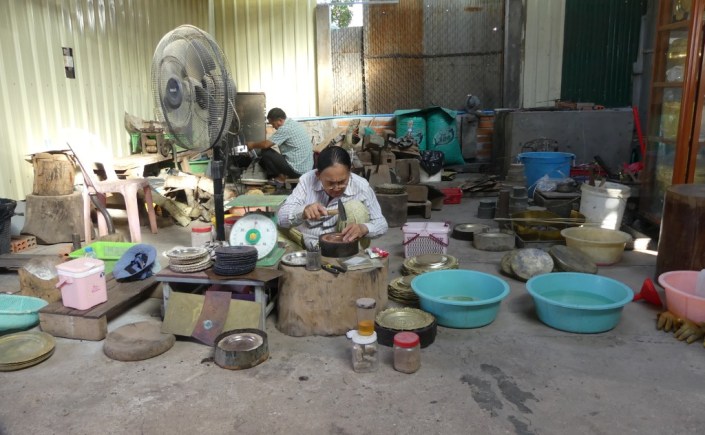
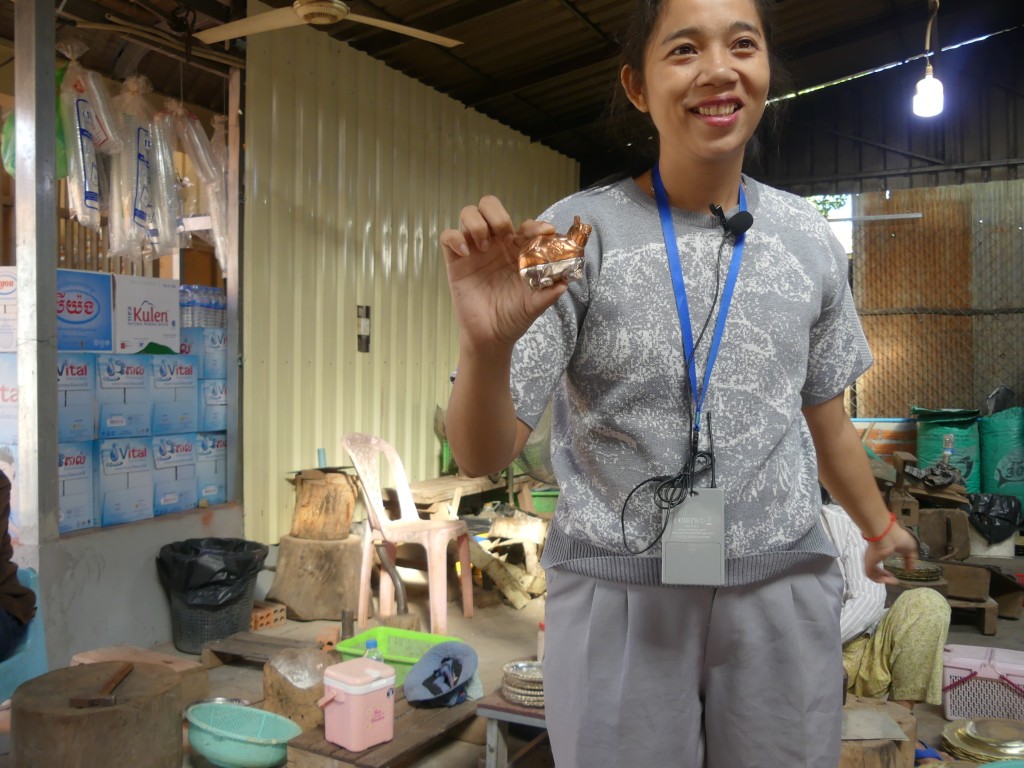
Our morning excursion was to stop at a village where copper, brass, and silver are turned into objects to sell. As we exited the boat by climbing up a small embankment, we were met by local women with trays of jewelry that they wanted us to buy. We passed on the opportunity and crossed the road to a workshop.
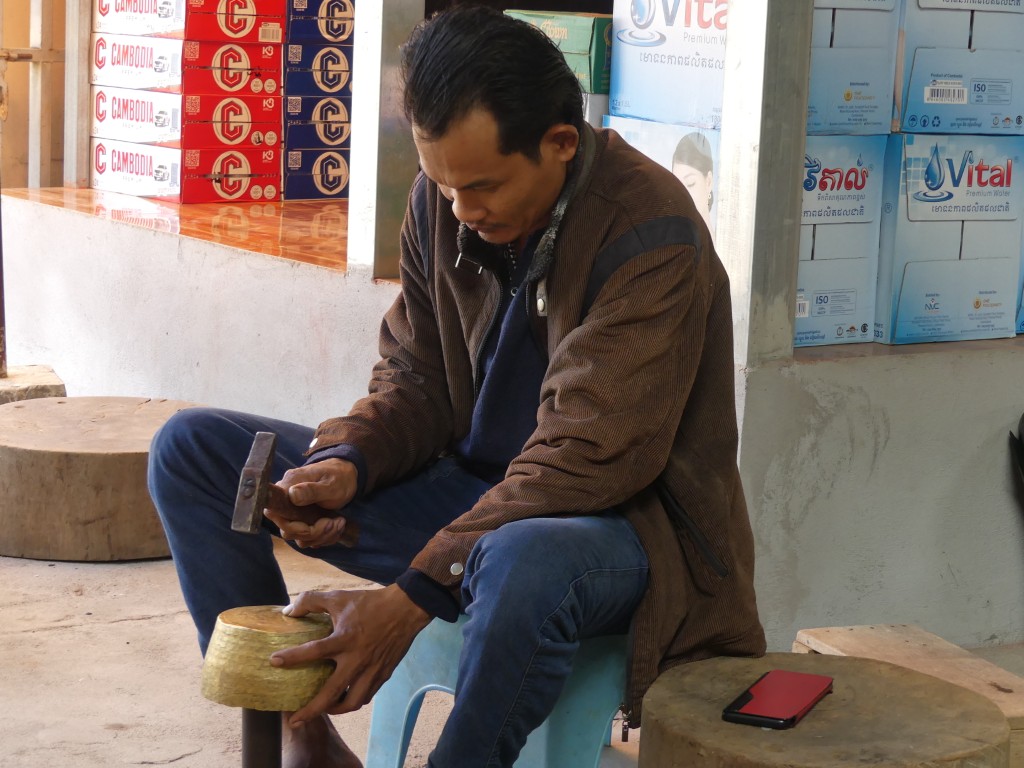
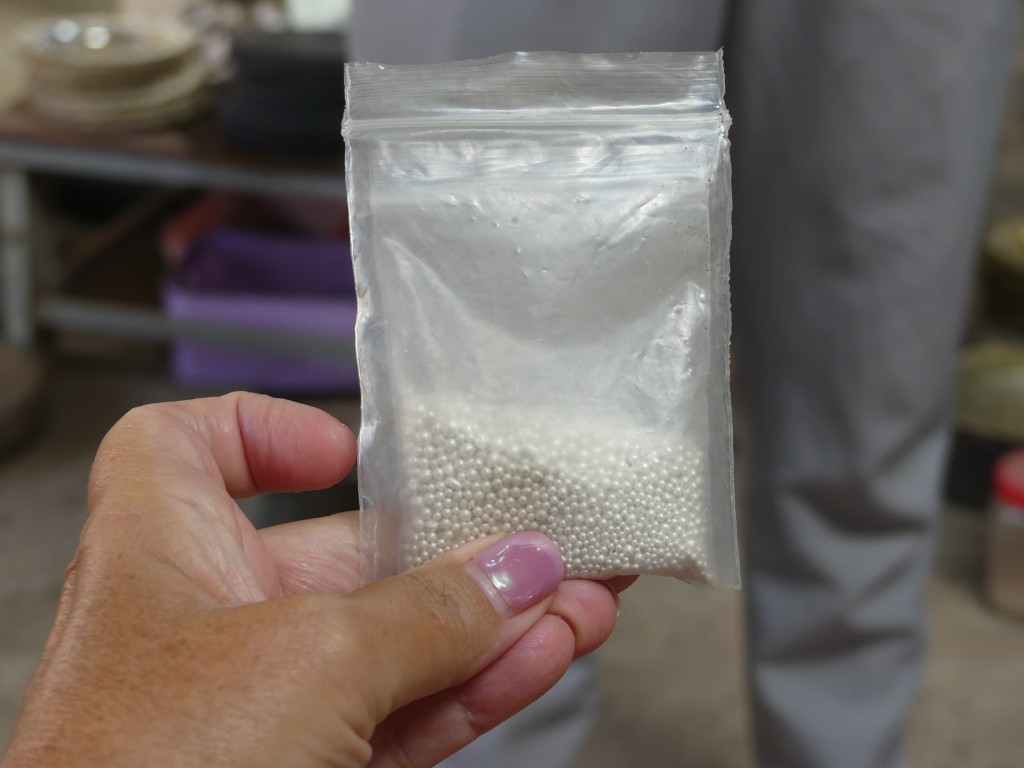
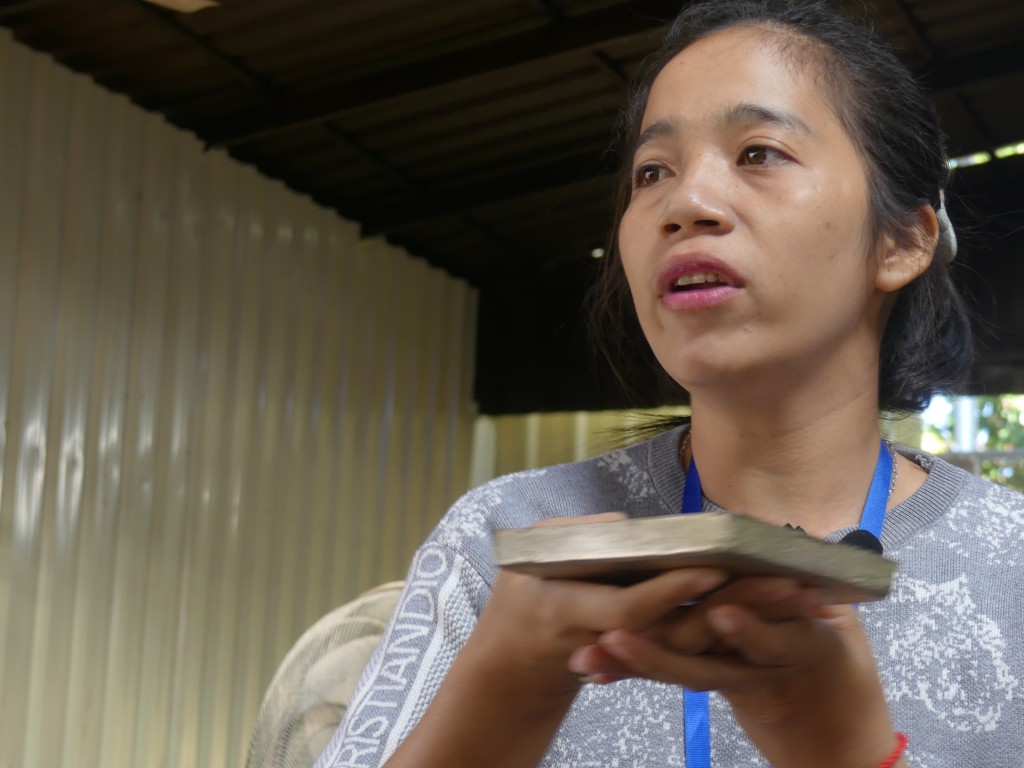
We were given a brief introduction to the work of creating silver bowls, plates, and jewelry. Here, men do the pounding of the silver and women do the carving. We were shown one plate that took one and half months to complete. We were also shown how silver plating is done, and how to tell if something is pure silver or silver plated (hint: use silver polish). And, of course, we were given some time to visit the shop. I wanted to buy earrings there, but $50 US seemed excessive for something that I could get for half of that at home. I didn’t see anyone else purchasing anything, either.


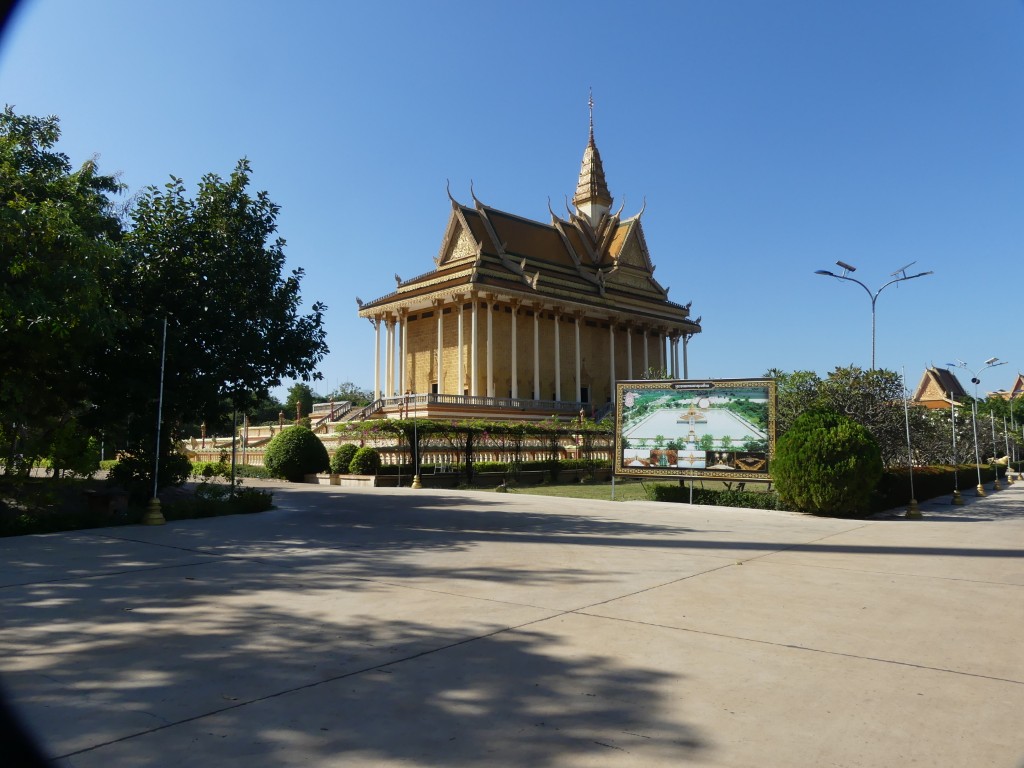
We hopped on a bus after being given sufficient time to shop and were driven to the Oudong Meditation Center, a large Buddhist temple. It is worth noting that many of the places we visited required wearing pants that were below the knee in length, as well as having shoulders covered. Hats must be removed as well.
Anyone can stay here for up to a month for no charge; meals are provided. It is kept running by donations. Translation services are provided for free as well. The abbott speaks five different languages.
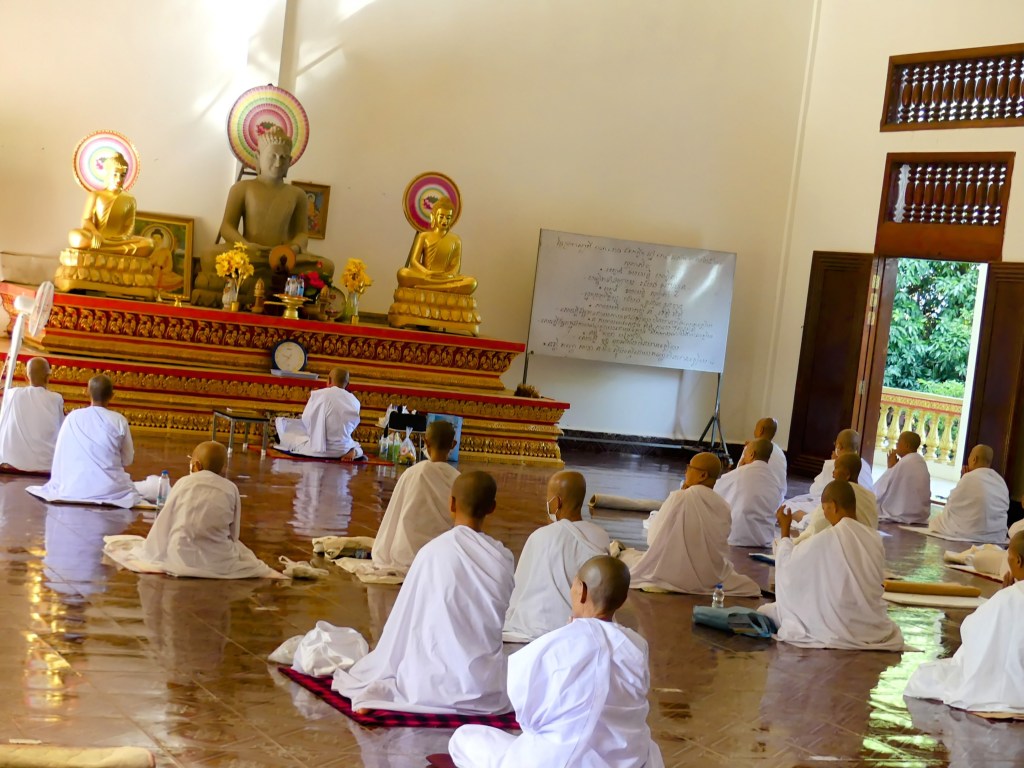
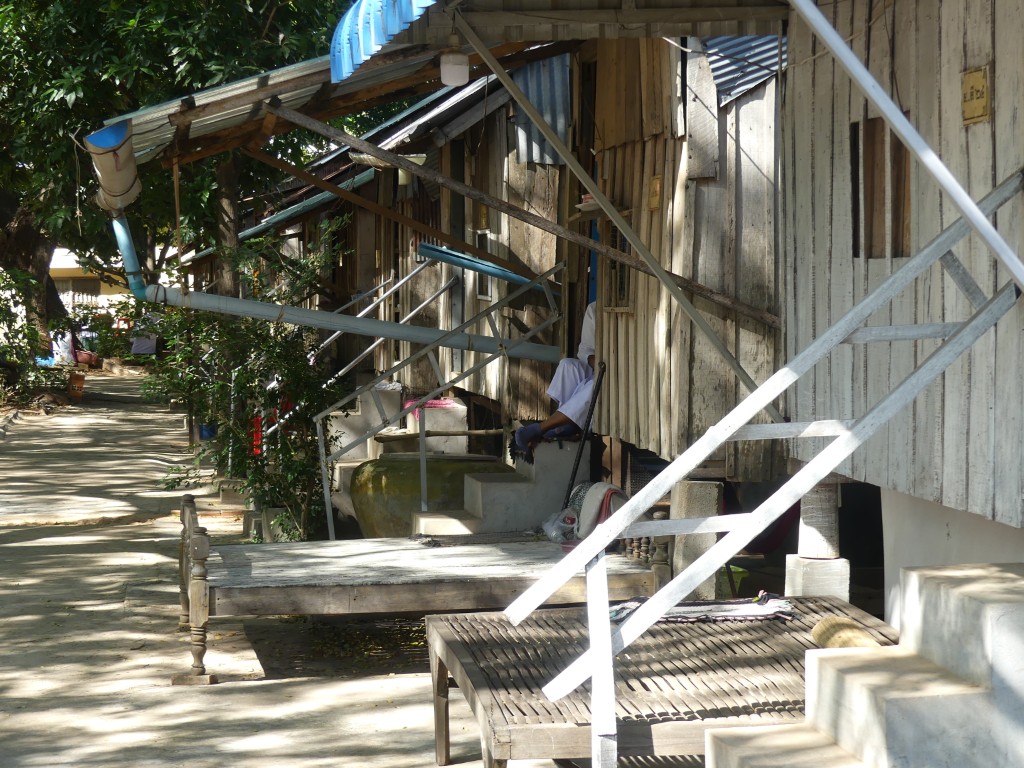
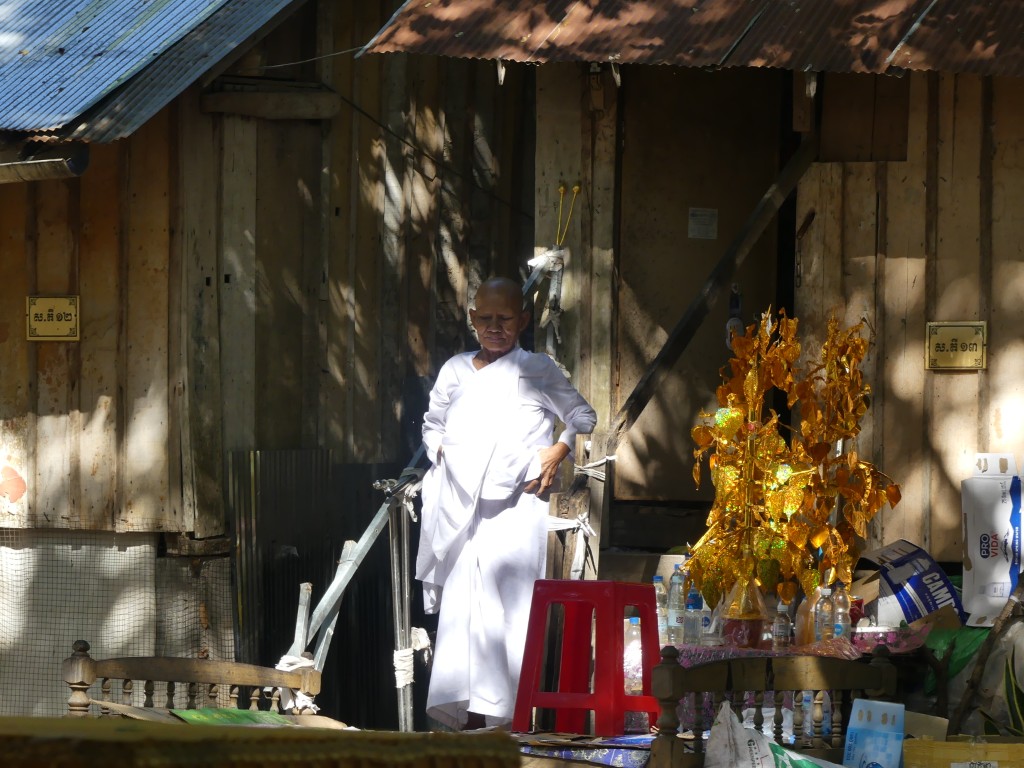
The site is situated on a 400-acre site. Six hundred nuns and monks live there. There are twice as many nuns as monks. Perhaps this is because there is no social safety net in Cambodia and if a woman becomes widowed, she doesn’t have many options? Just my humble opinion. The nuns cook for the monks and live in much shabbier housing. Only two meals per day are served, the first being after the sun rises and cooked by the nuns. Lunch is the final meal of the day and is made up of food donated by local people giving food as alms.
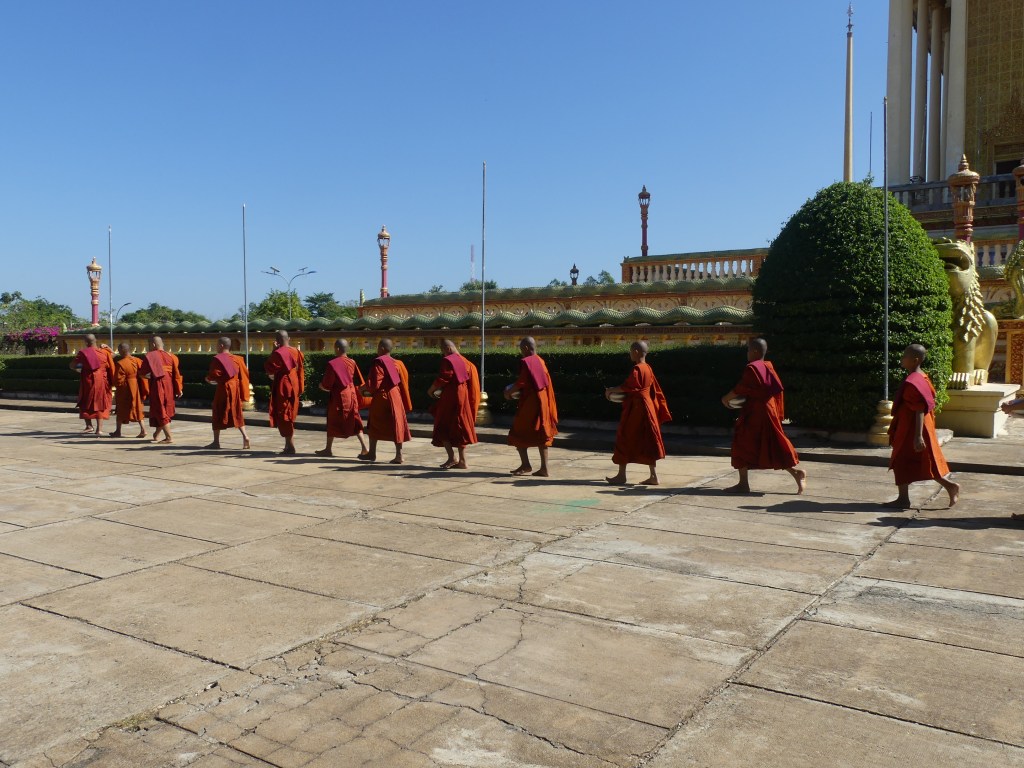
Many children are sent to be monks. Some are naughty children in need of retraining; some are from poor families that cannot afford to feed them, and some are orphans being sent to provide a better future for them (age 7 and up). The young monks are trained and supervised before they are allowed to go out and collect alms and give blessings.

Nuns housing:

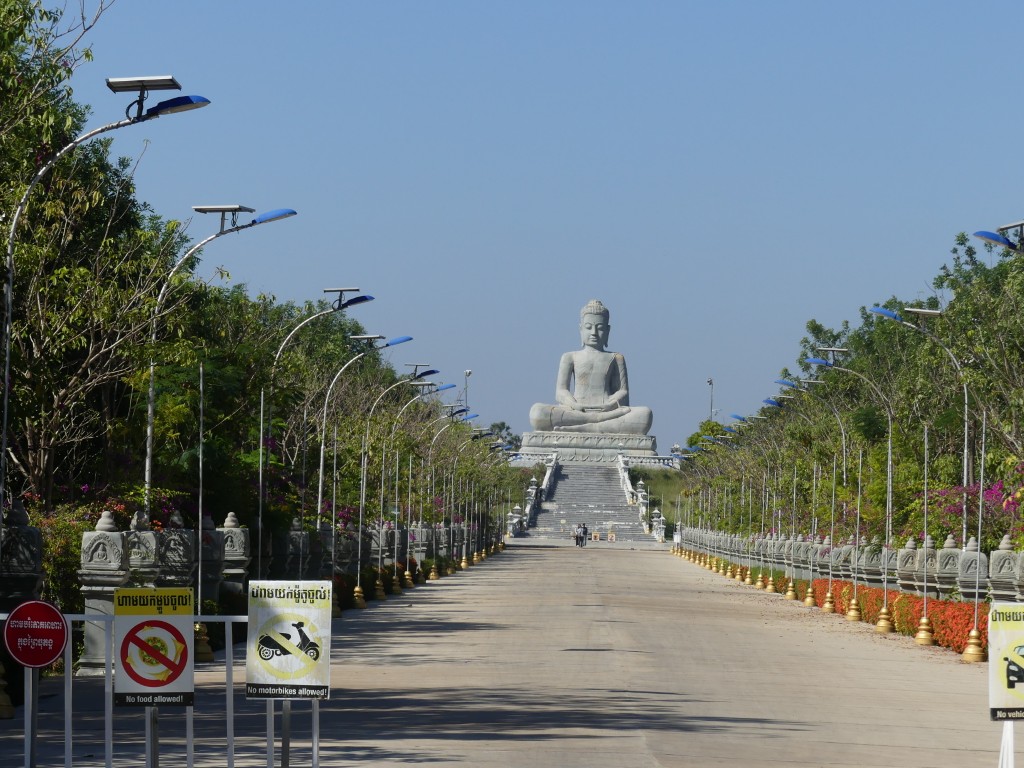
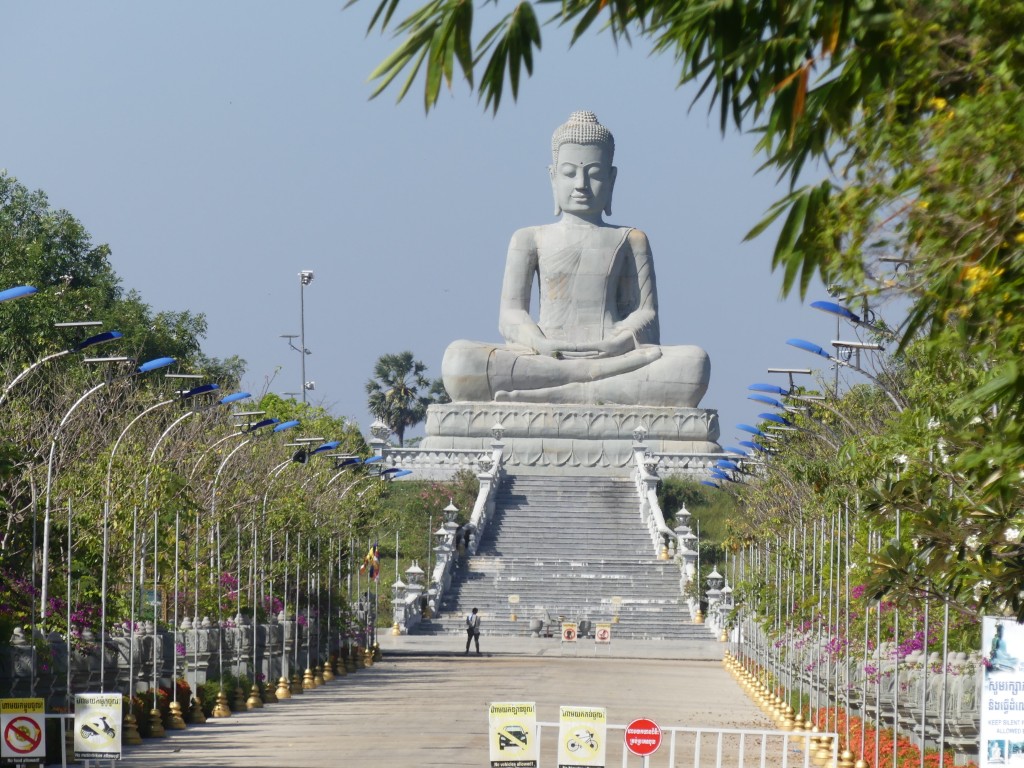
The Big Buddha:
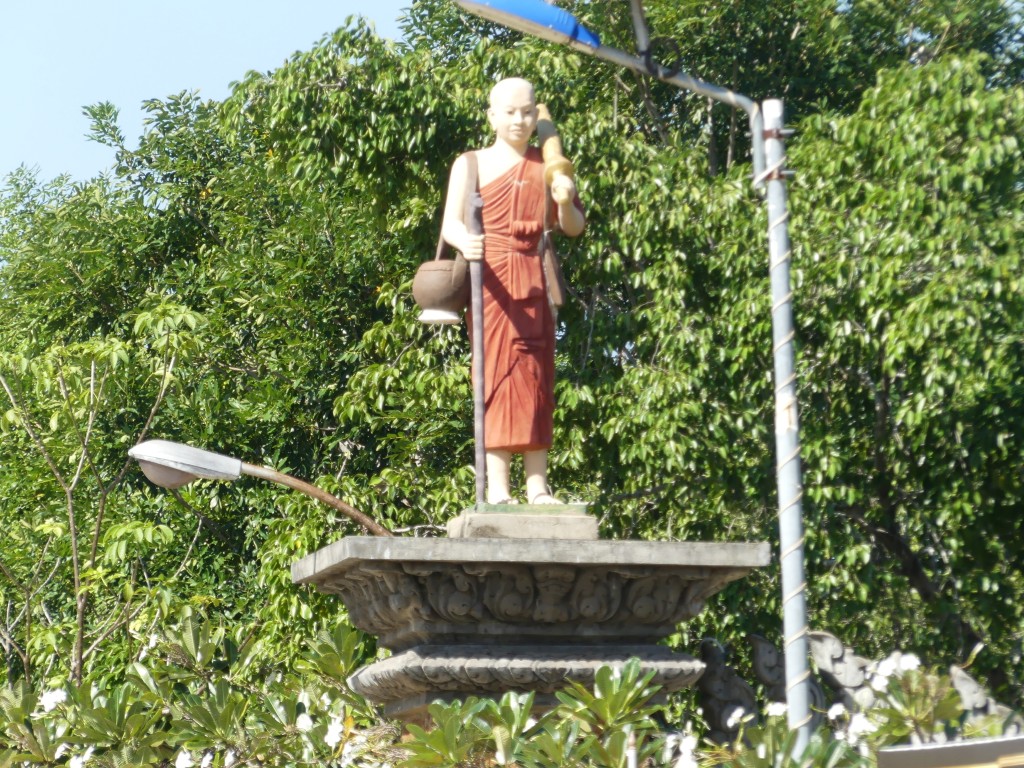
Young monks off to collect alms:
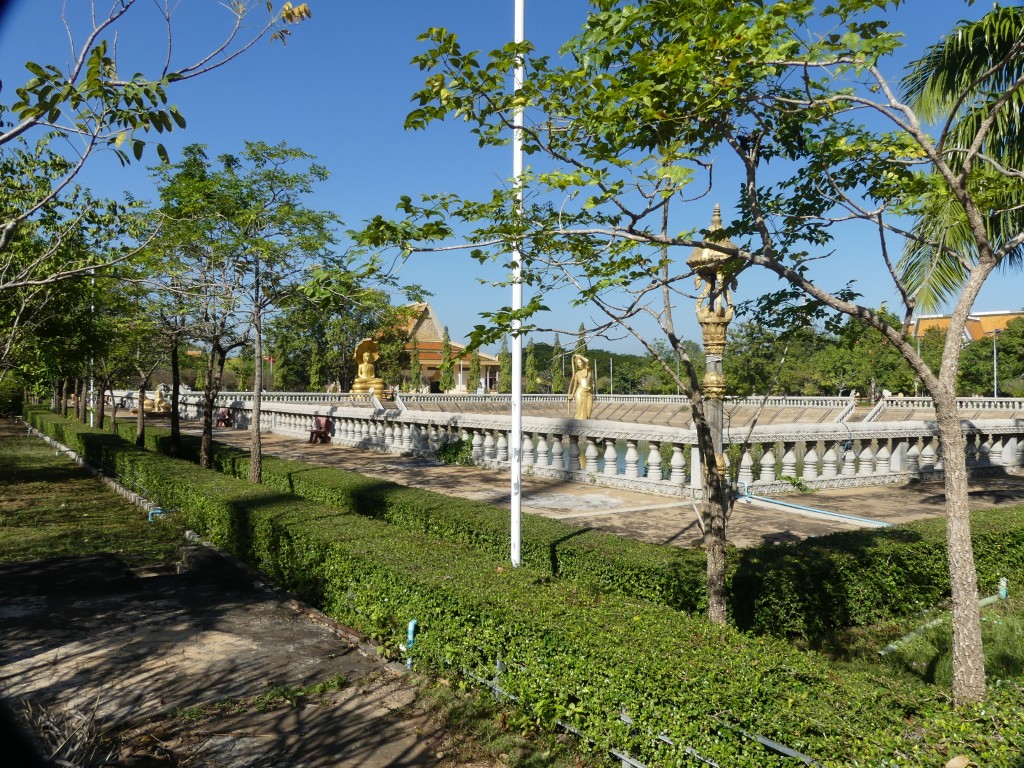
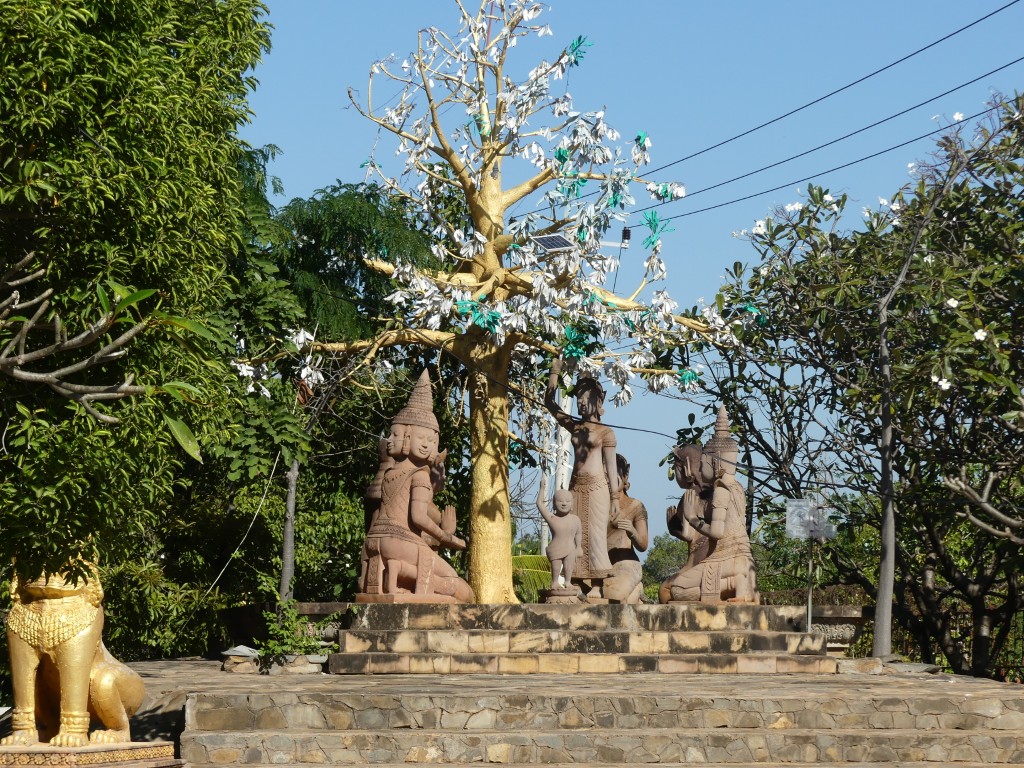
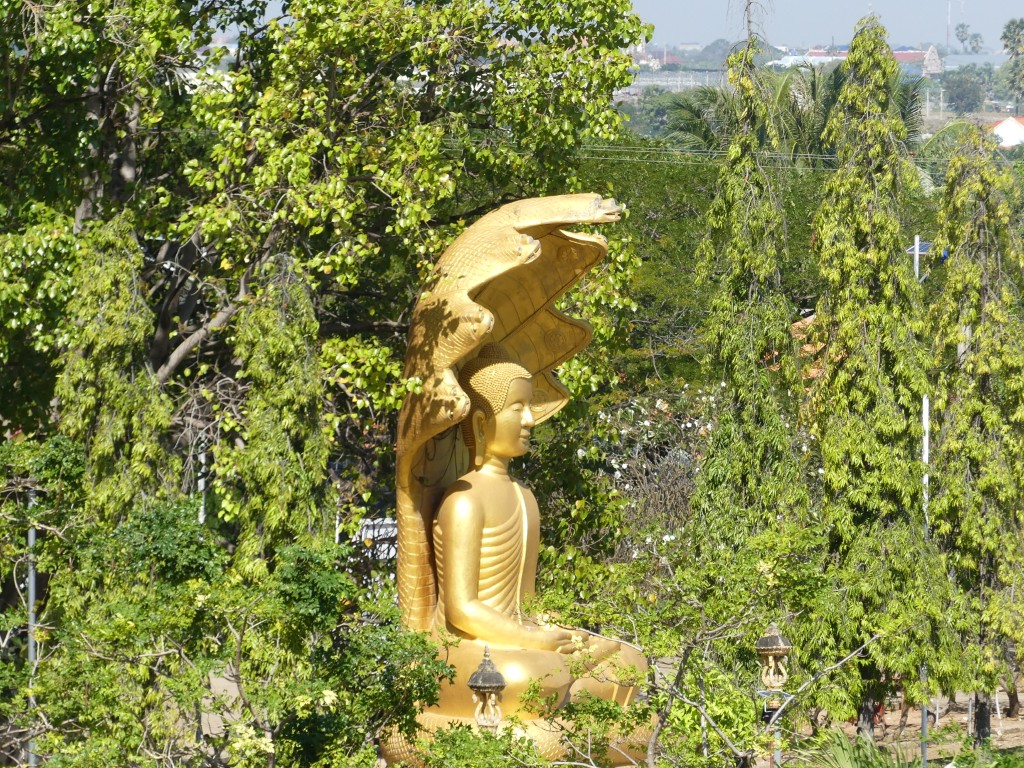
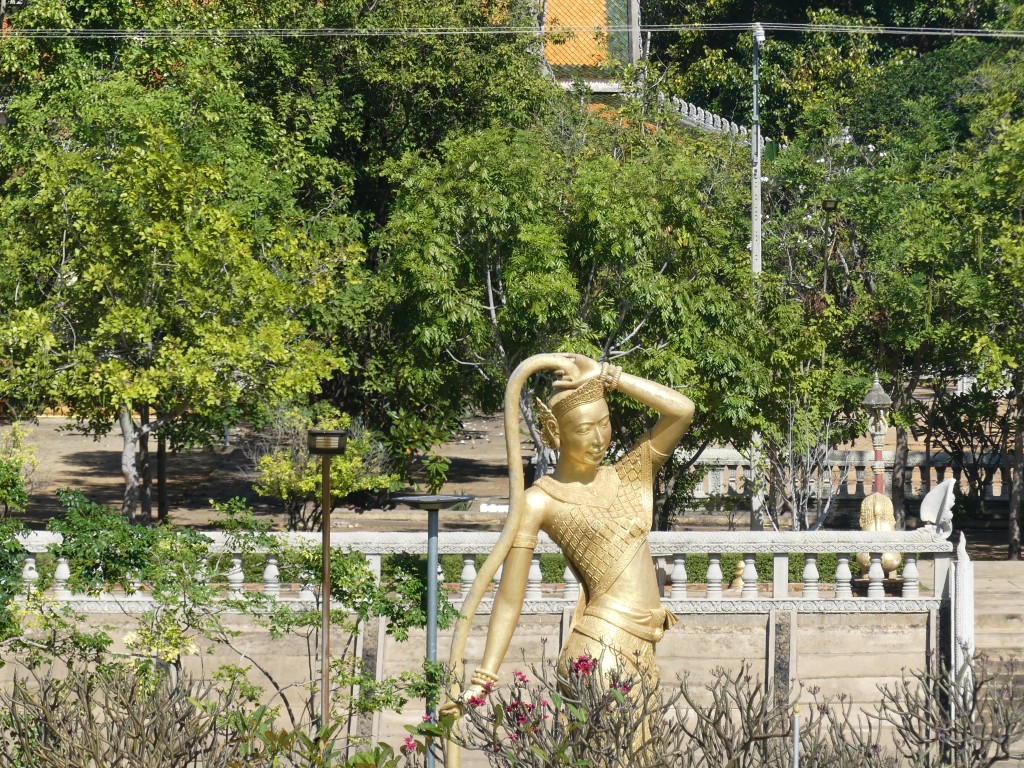
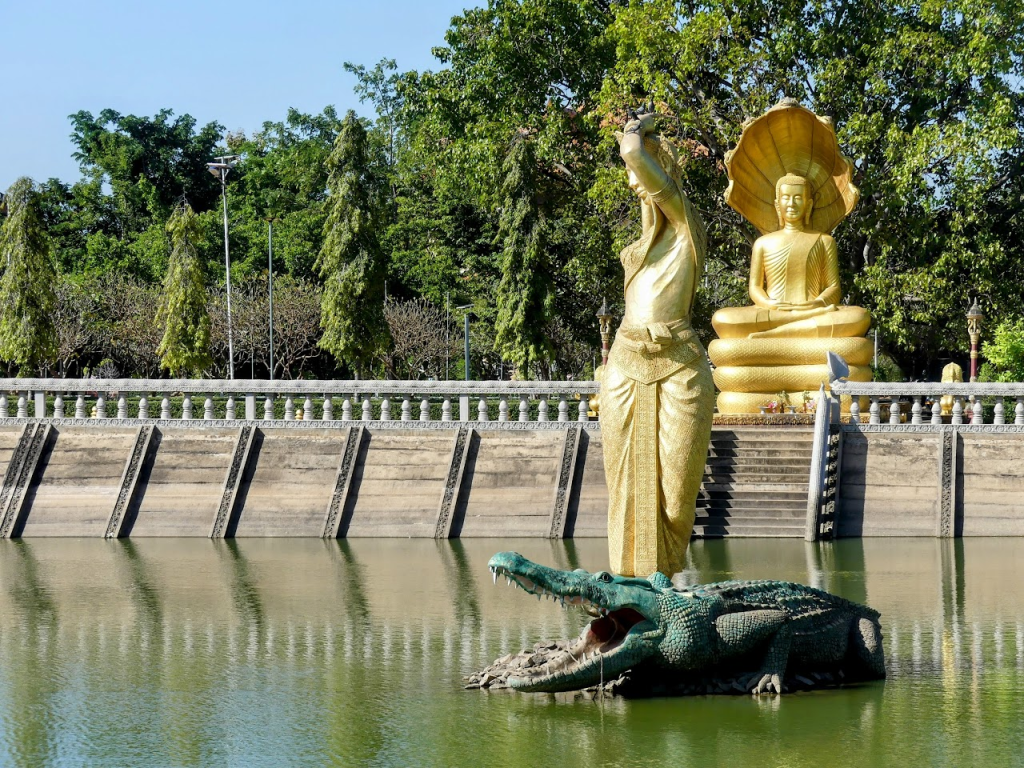
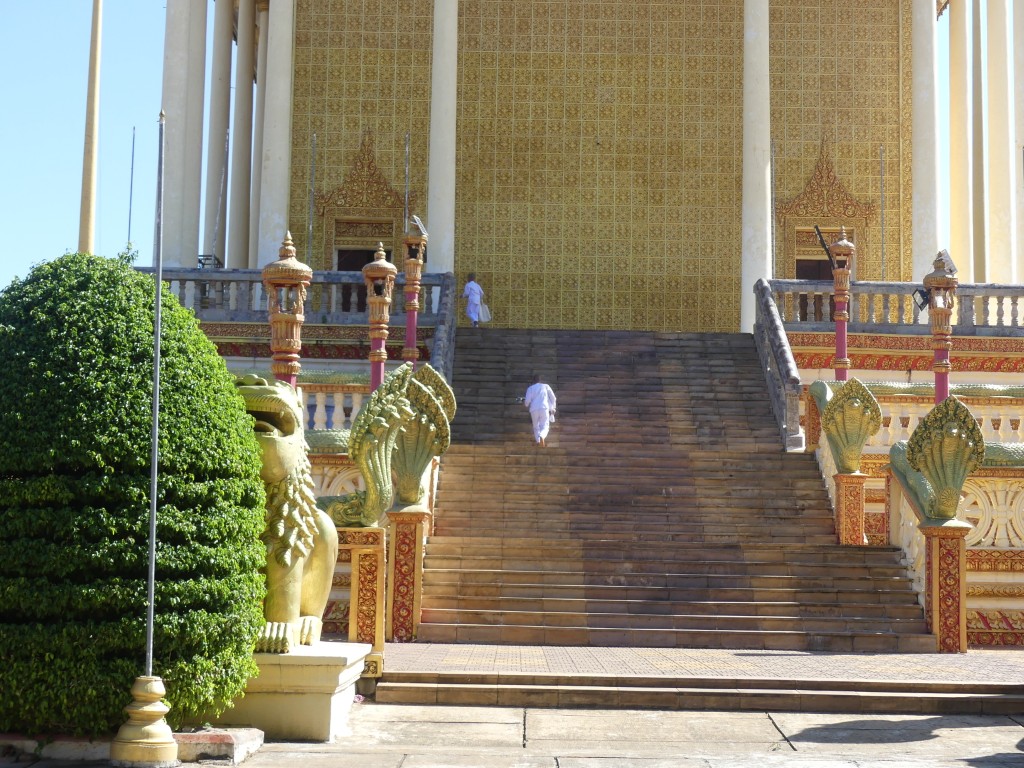
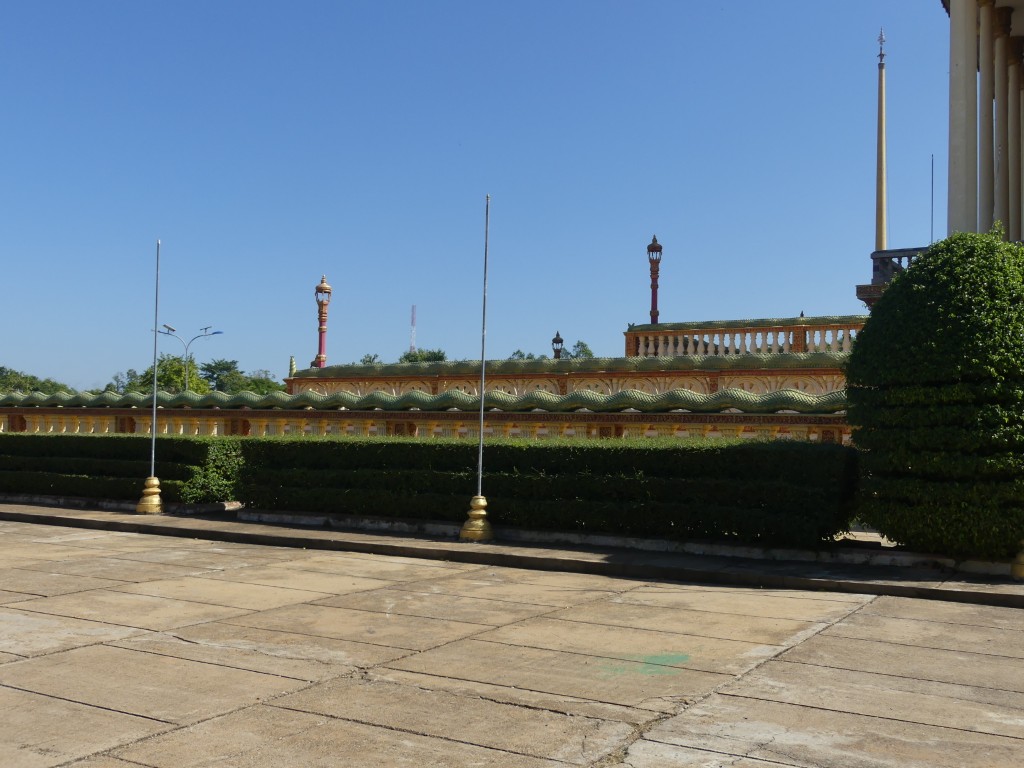
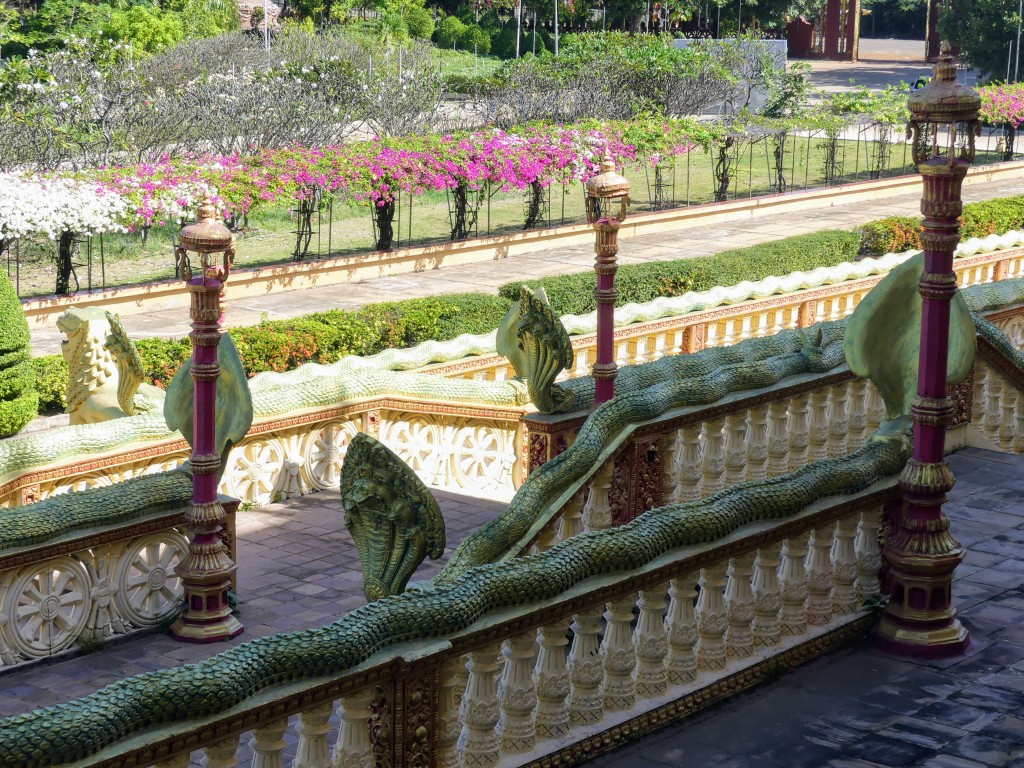
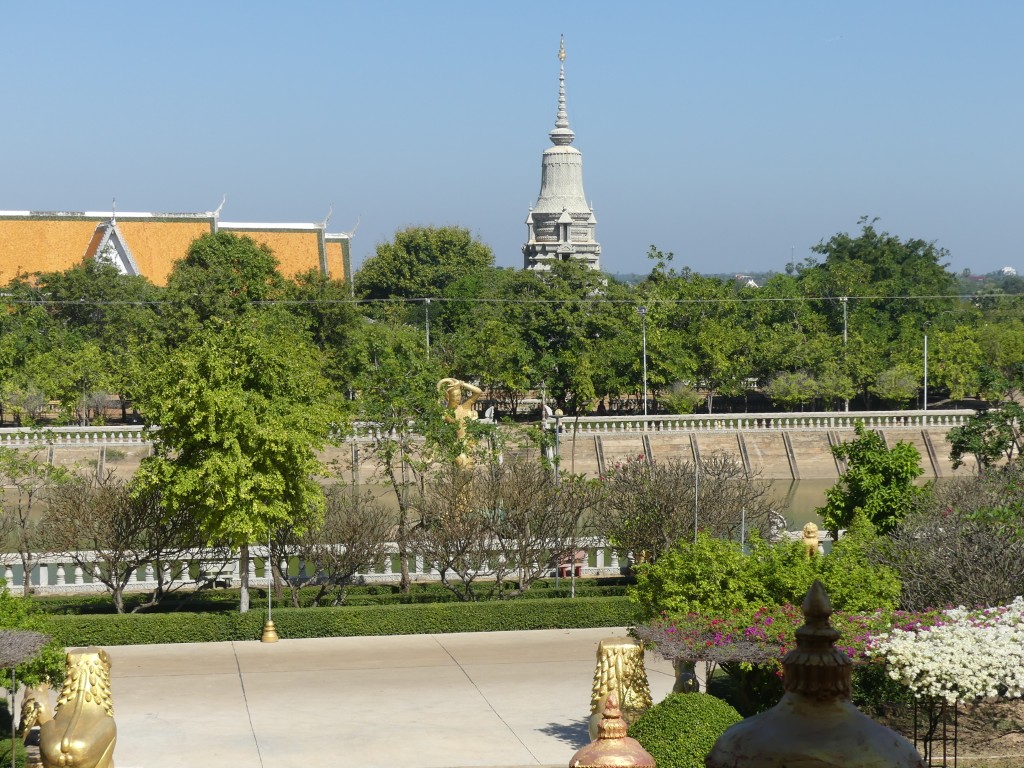
Some scenes around the temple:

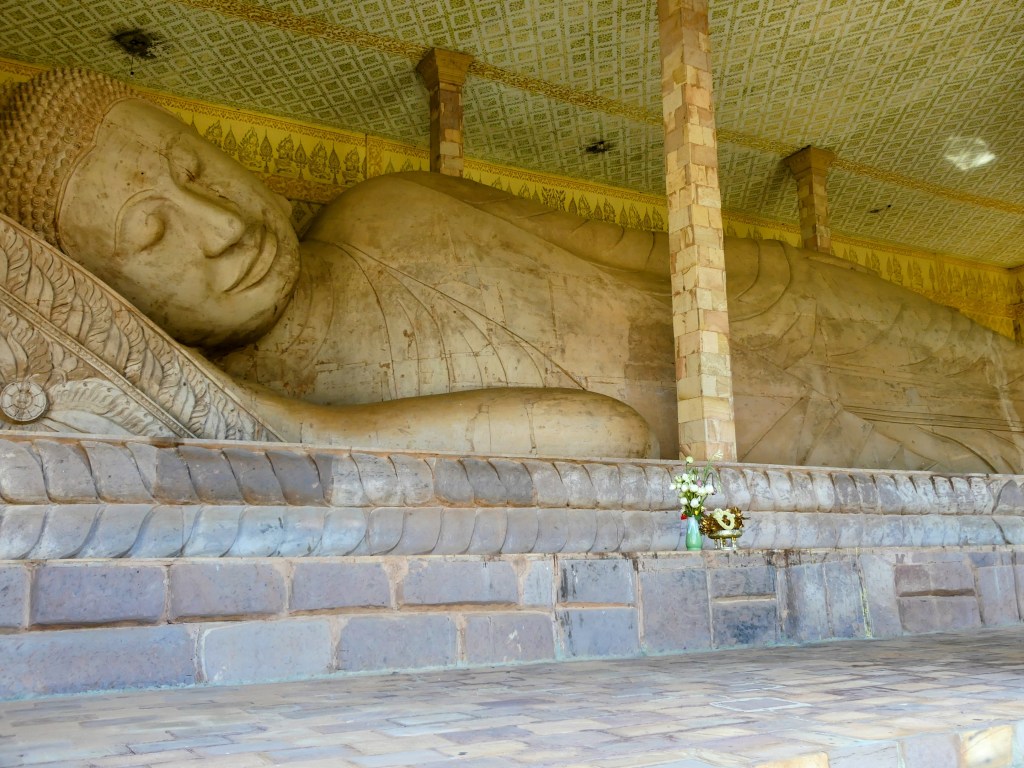
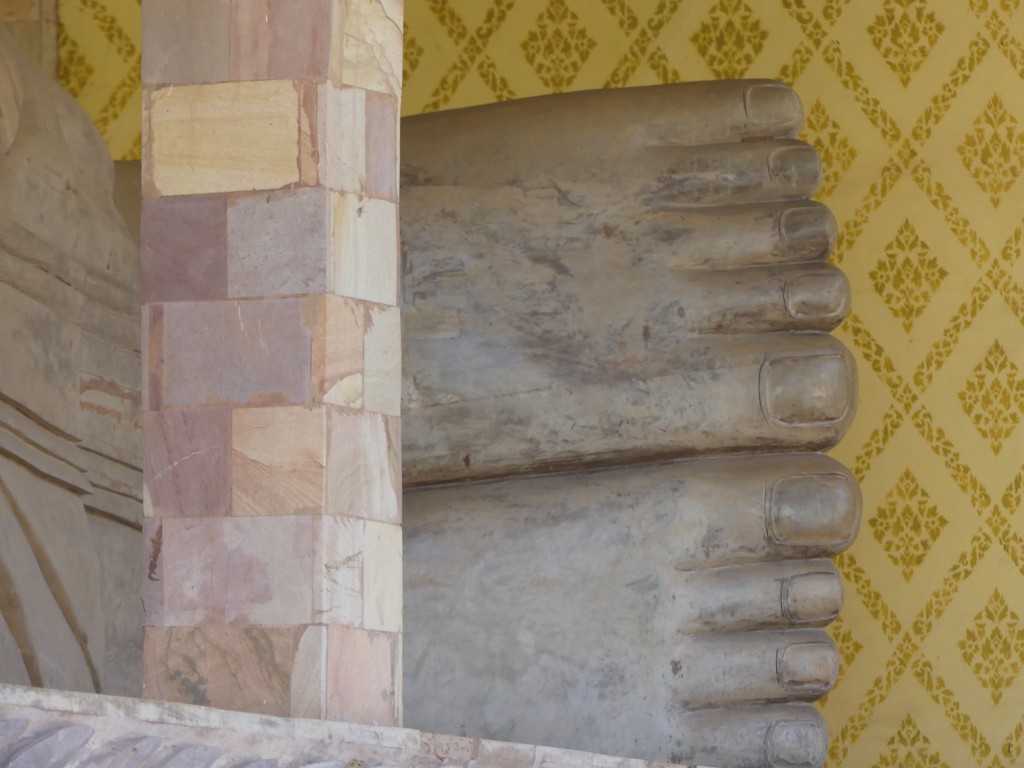
A big reclining Buddha:
This was a serene, beautiful place to spend the remainder of the morning.
 travelswithheather