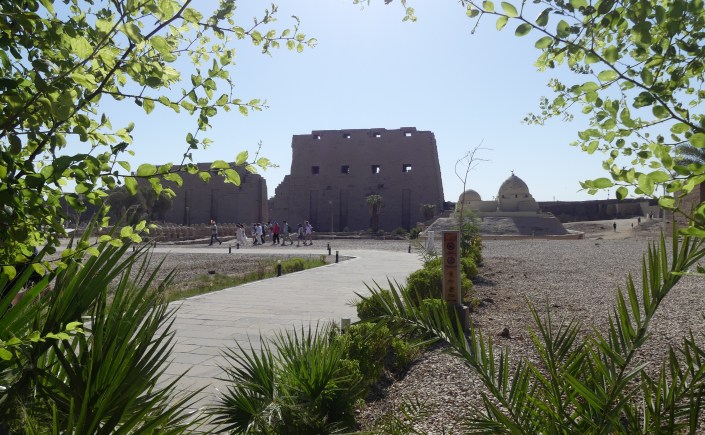
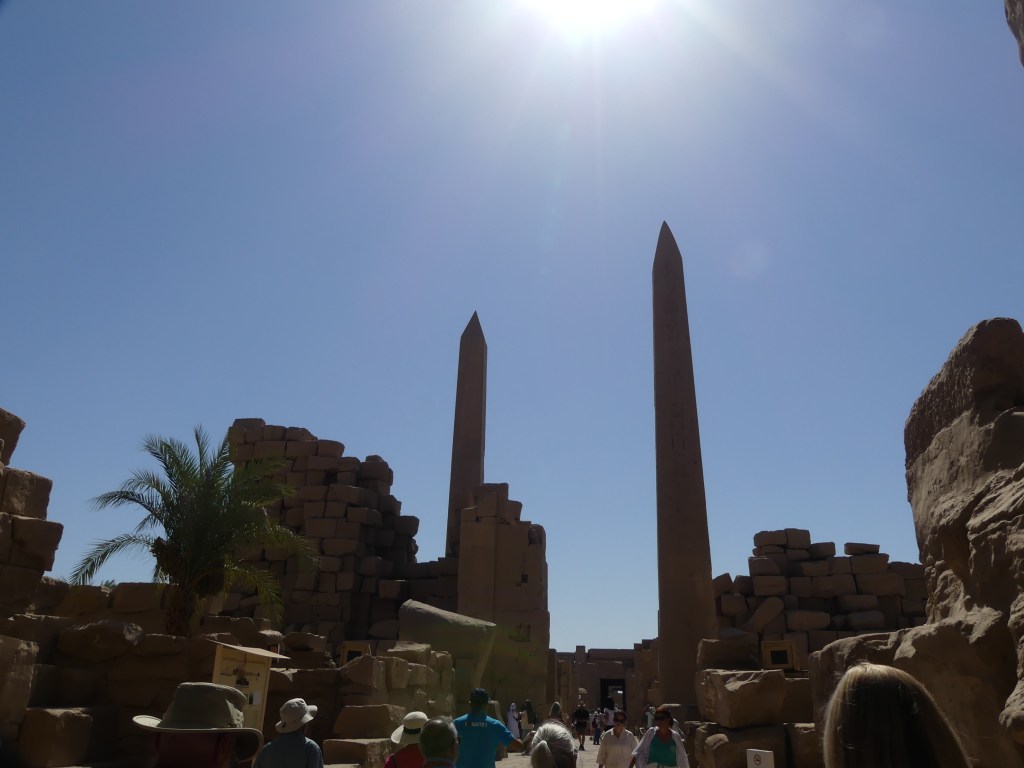
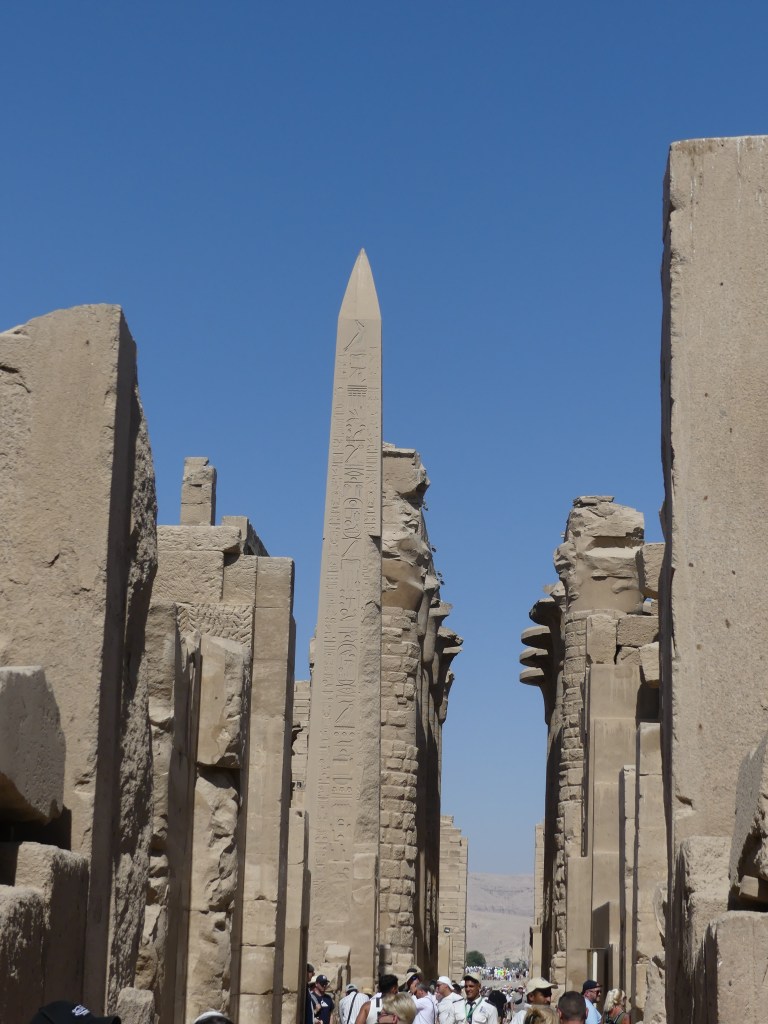
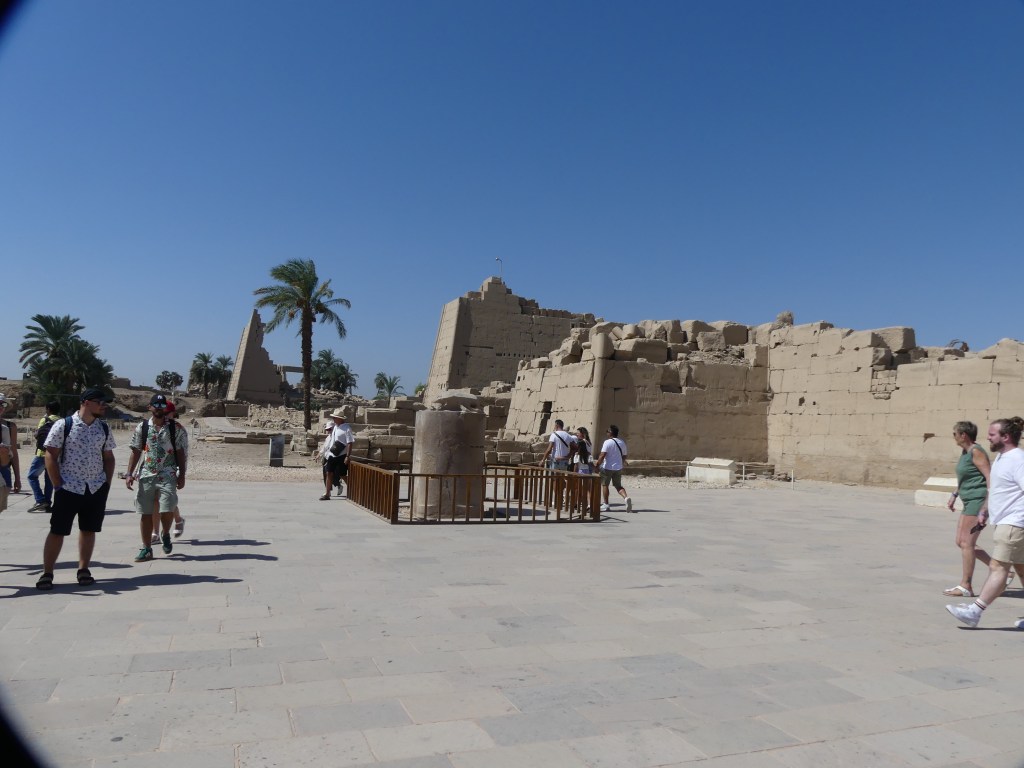
We visited this temple in March of 2020, right before the pandemic shut down the world. It is a very impressive site; massive in size compared to many other Egyptian temples.
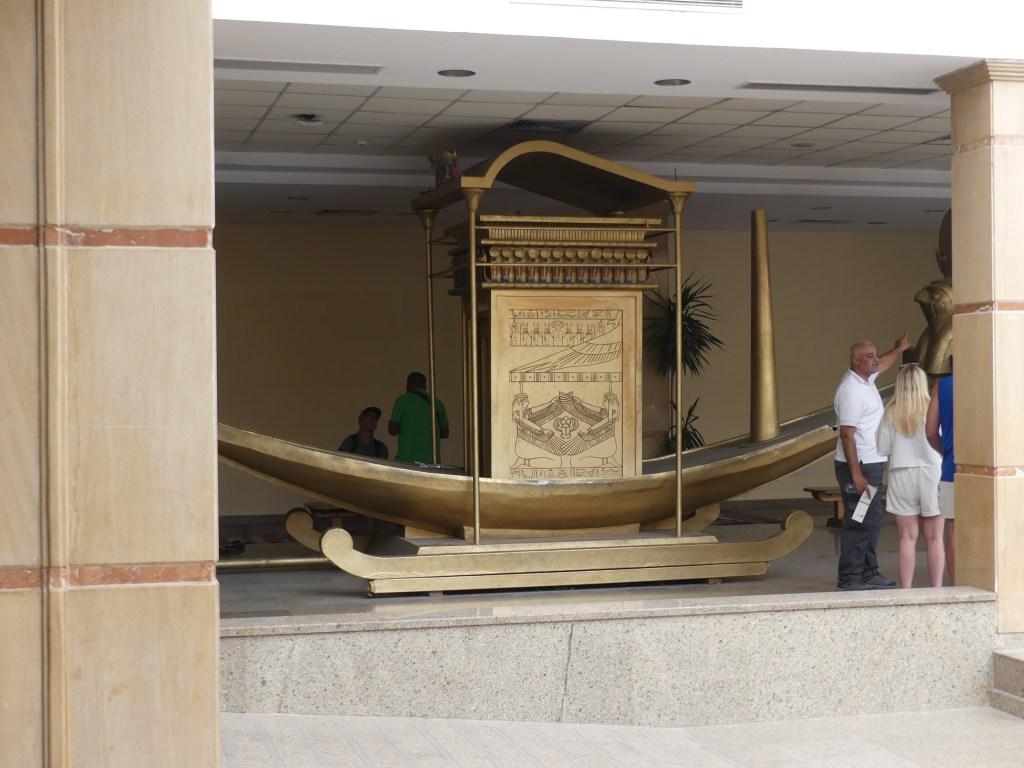
We arrived at the temple bright an early in the morning since our flight landed in Luxor around 8 am. We drove to the temple, passing by the avenue of the Sphinxes which connects Karnak and Luxor temples. There are 1,000 sphinxes (or used to be) lining the avenue. Many have been damaged because people built houses on top of them. The most intact sphinxes are near Luxor temple. The god Amun Ra and others were carried between the two temples on sacred barques (boats).
Originally, the temples sprawled over 250 acres. There are multiple pylons (huge stone gateways) running north/south and east/west leading to nine large courtyards. It took over 2000 years to build. The Nile used to be at entrance but that has changed over the years.

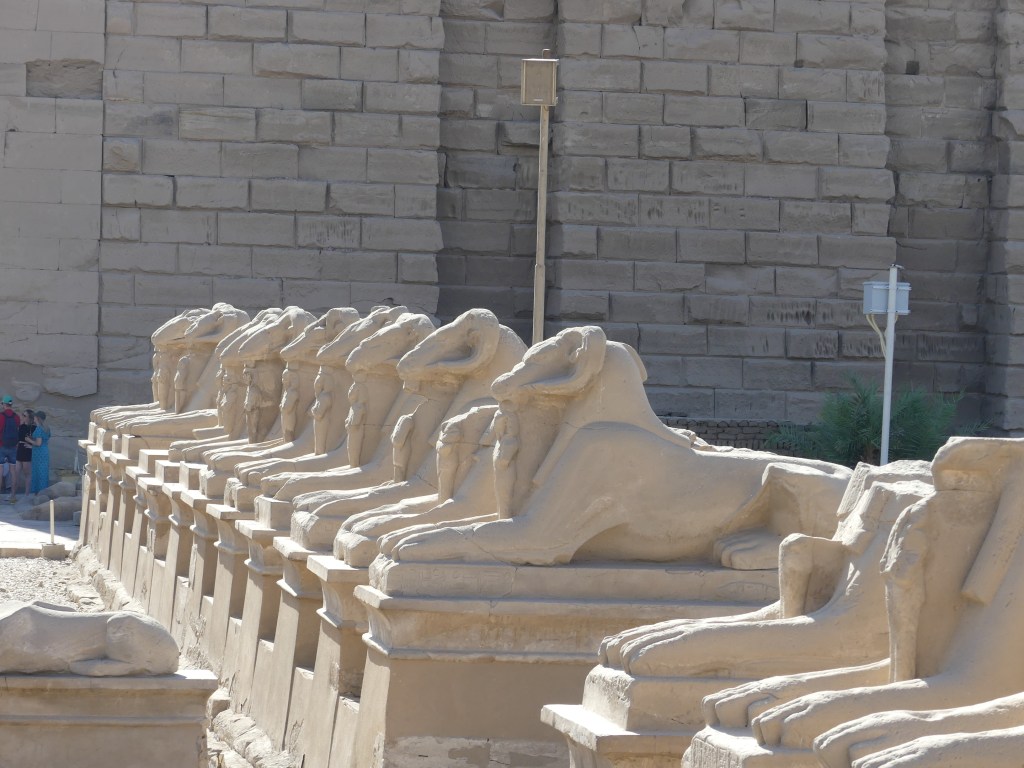
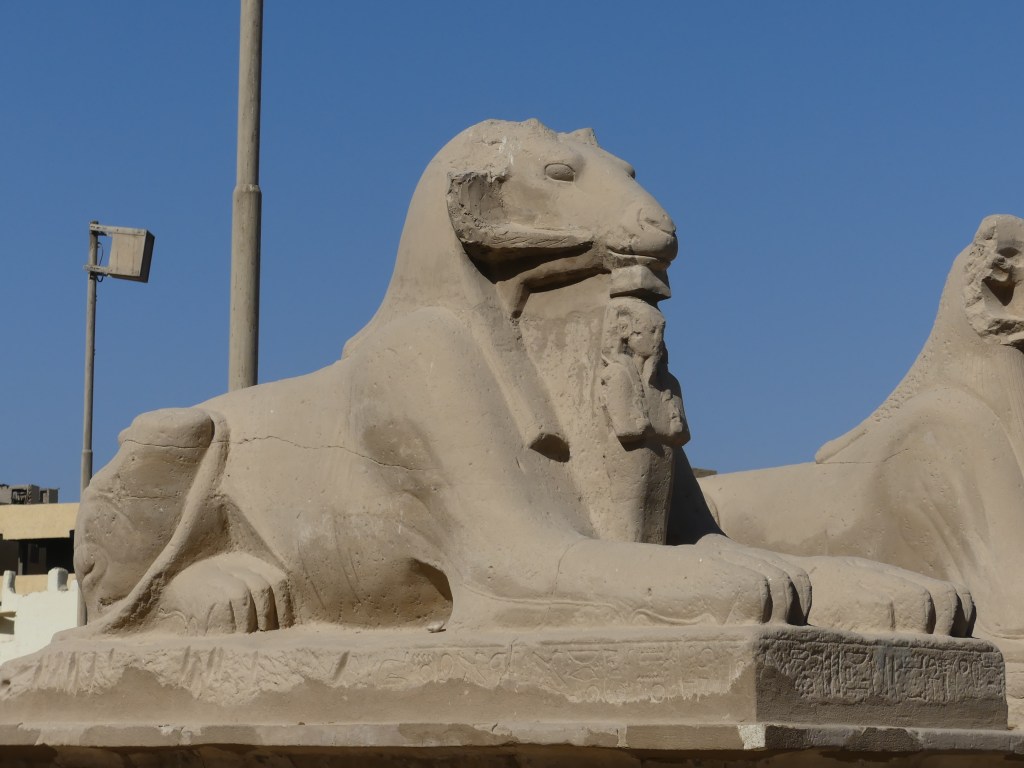
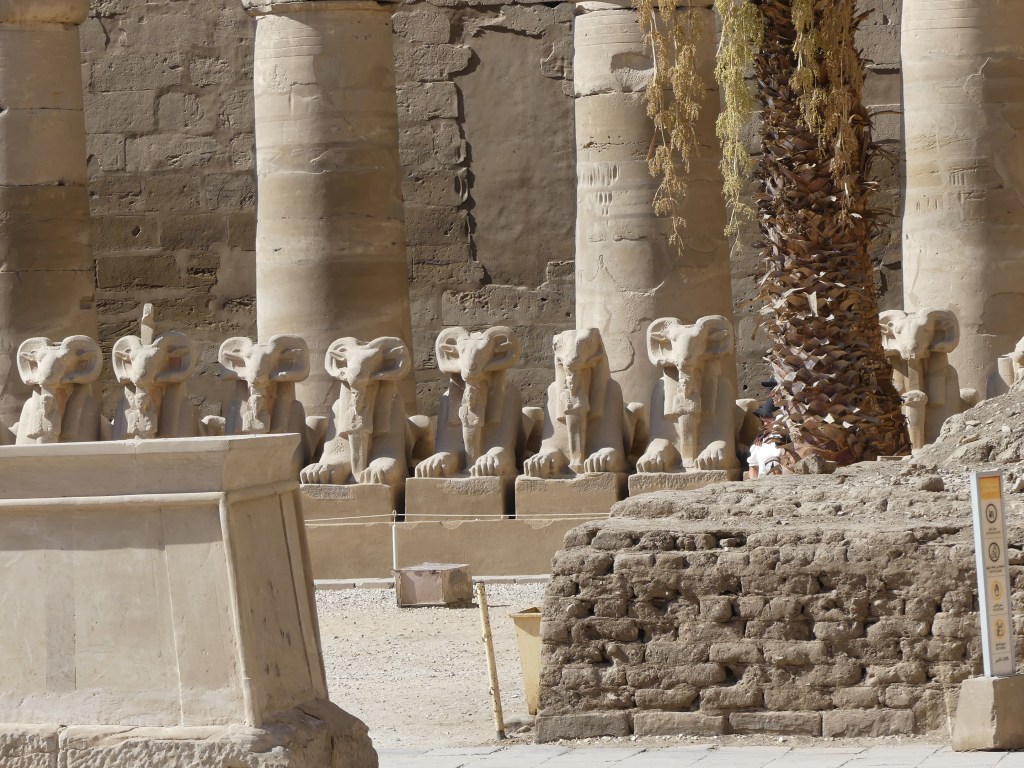
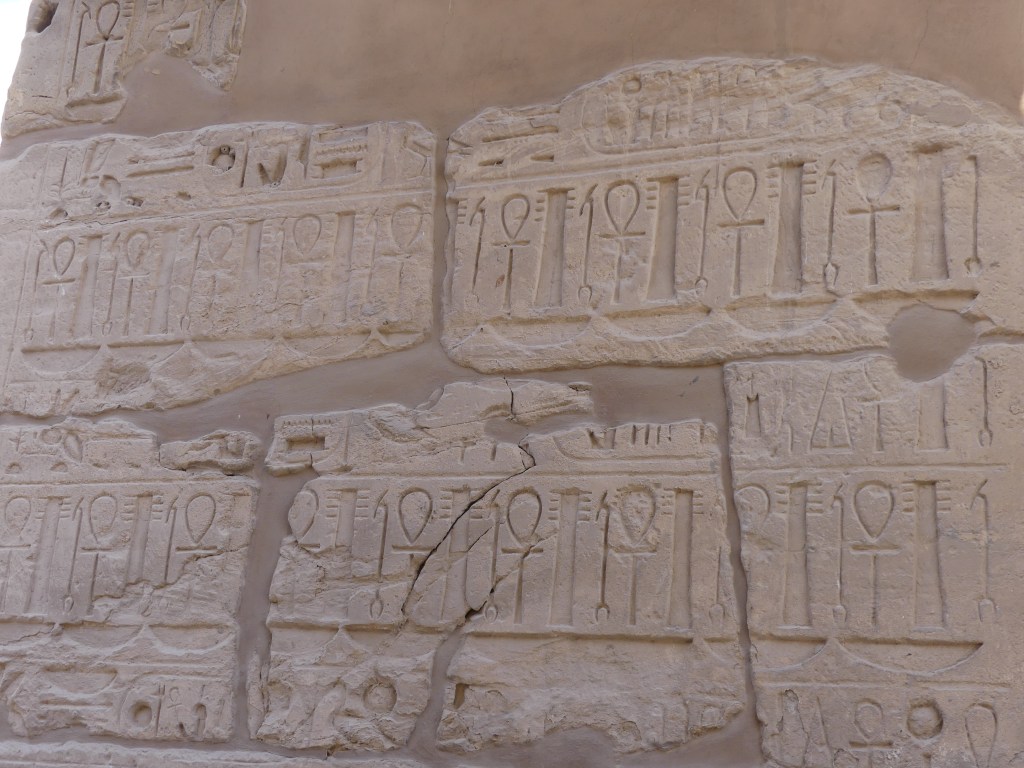
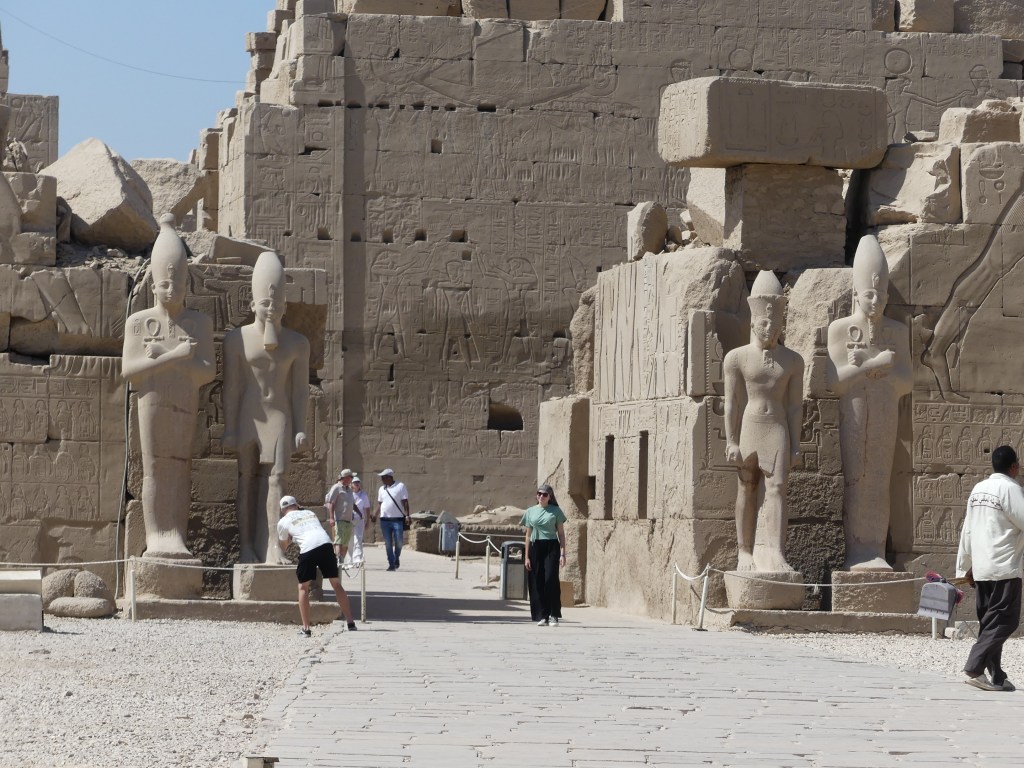
We entered the Temple of Ramses III. As we toured, Walid (our Jordan guide was Waleed, our Egypt guide, Walid!) pointed out unique features to us. The sphinx here is a ram-headed sphinx, unlike the sphinx at the pyramids of Giza. The Ankh is the symbol of eternity. It actually represents the male member topped by a uterus! We learned some interesting facts about Ramses III. It used to be common practice to cut off the hands of your enemies as a way of counting how many you had captured. This pharaoh stopped that practice. Instead, he made them eunuchs. Less counting, I guess? Ramses wife had him killed so that her son could be king. It didn’t work so well since they were both arrested and killed.
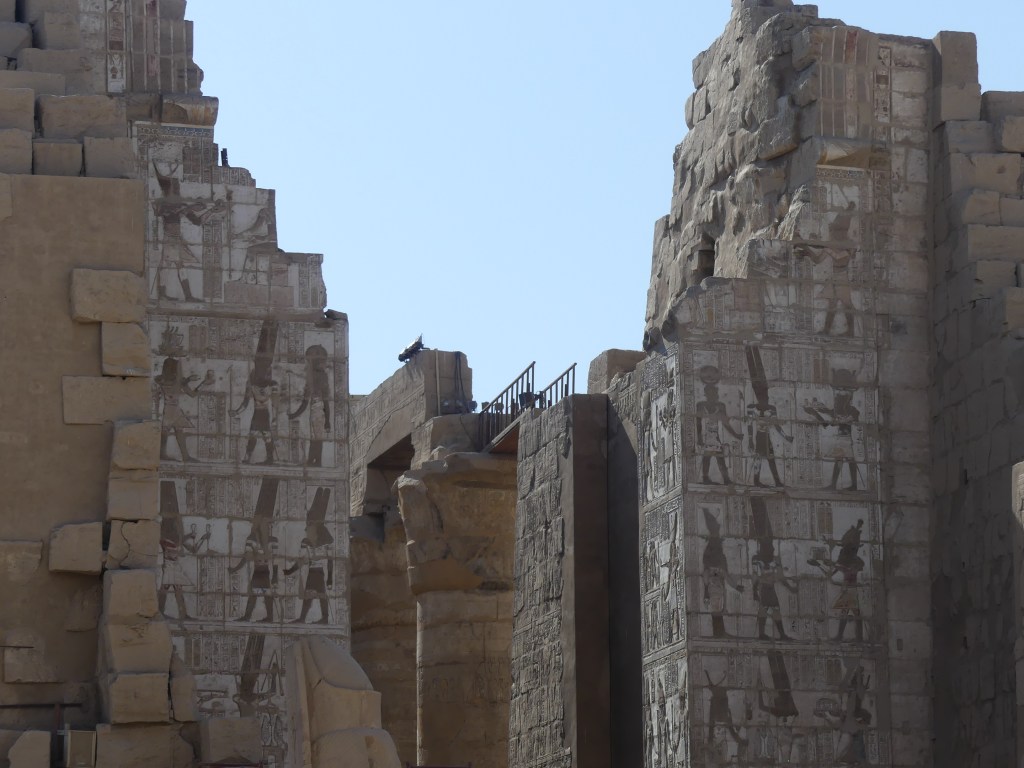
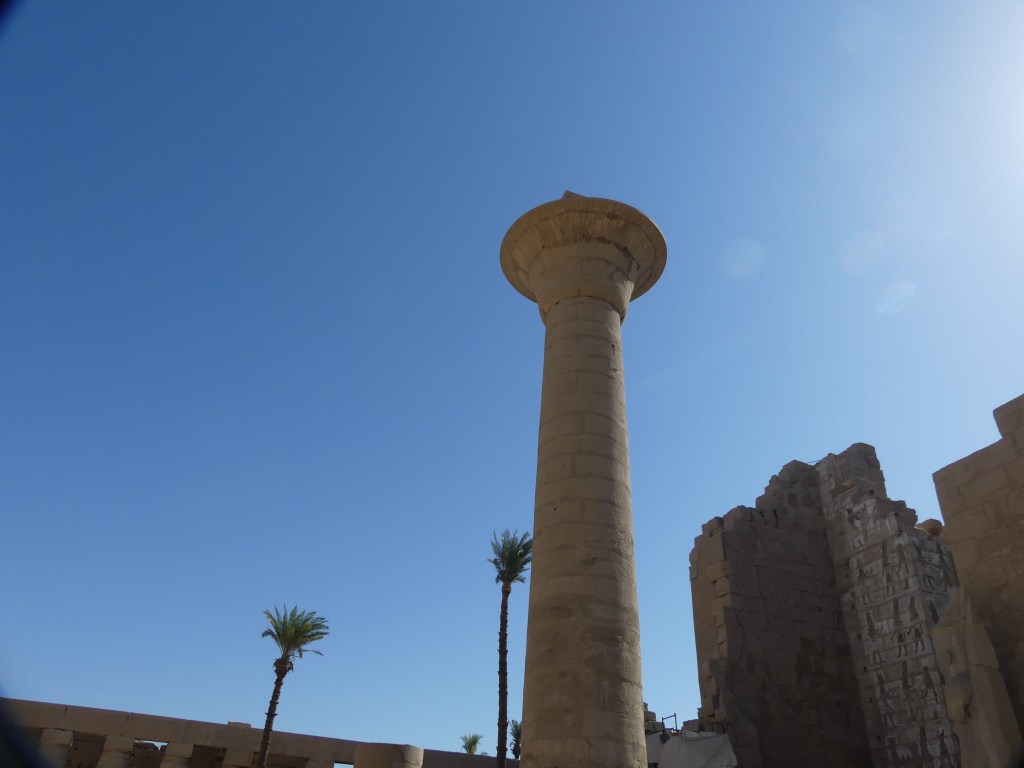
The Egyptians worshipped the god Amun Ra. King Tutankhamun’s father decided that he would worship a different god. Turns out that wasn’t a popular decision and so he was killed, and Tut became king. He went back to worshipping Amun Ra. The tree shape here is the god that his father worshipped.
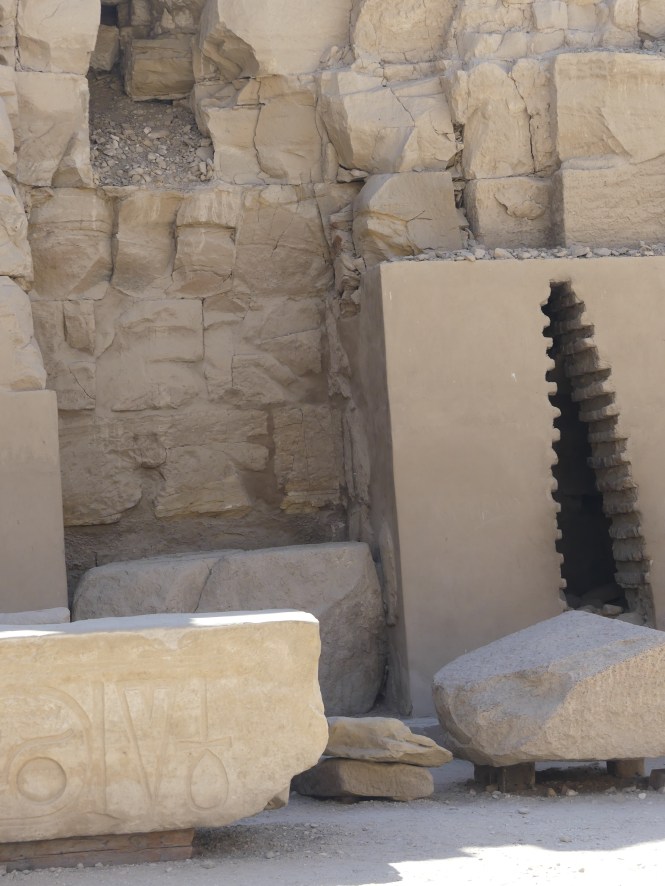
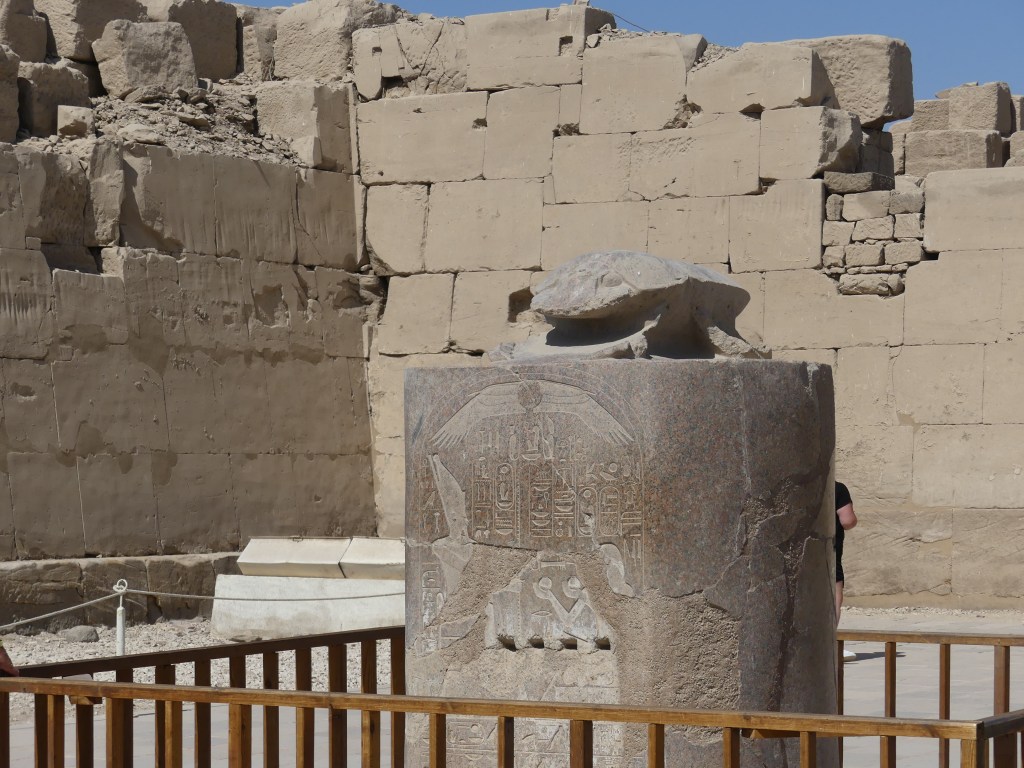
As we walked through the temple, Walid explained the meaning of the cartouche, drawings, and hieroglyphics we saw. Ancient paint was visible on some.
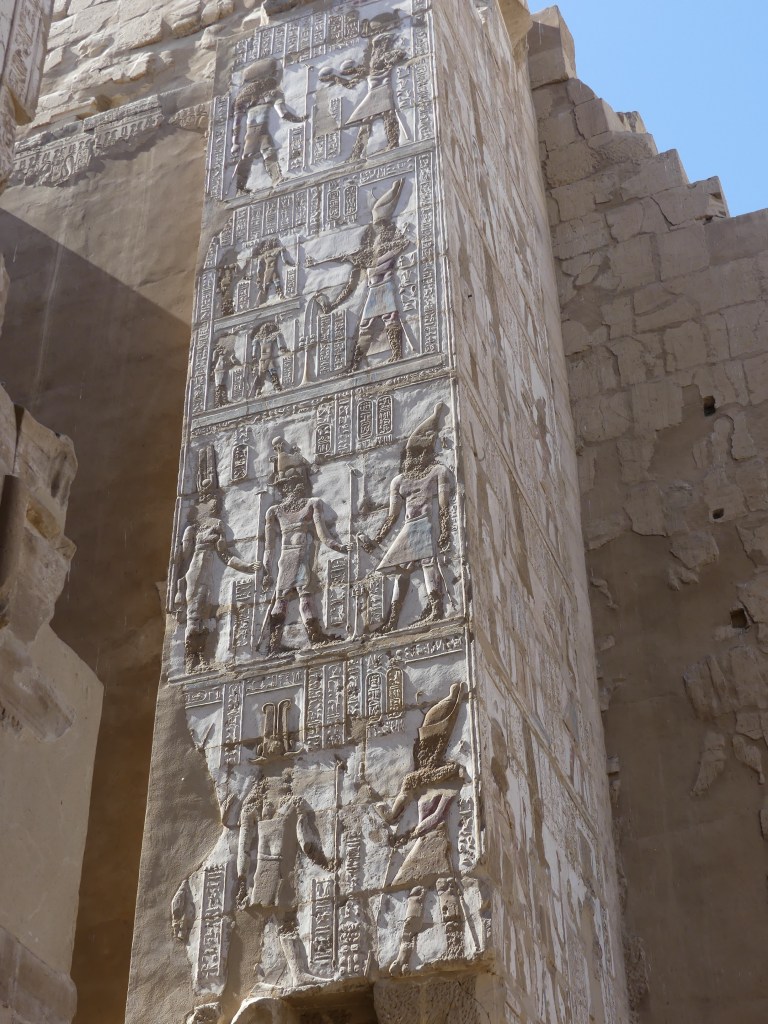
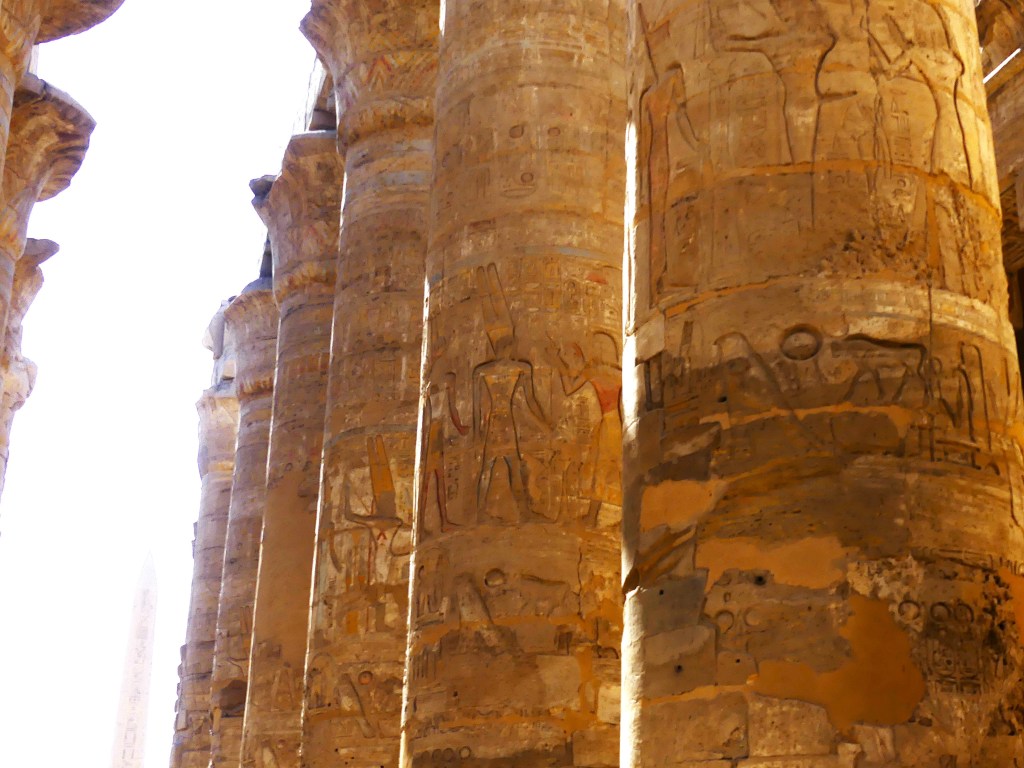
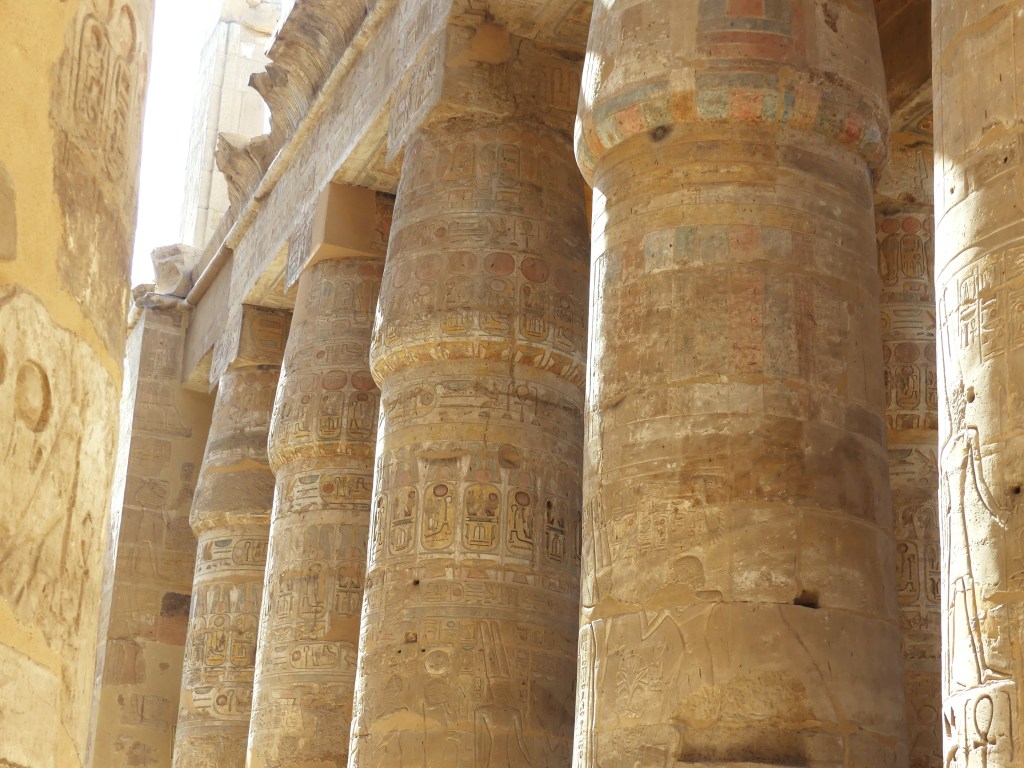
We entered the holy of holies. As you approach, the height of the building narrows and path leads uphill. This was standard at each temple we visited. Only the high priest could enter the holy of holies. The oval shape on the walls is a cartouche, which symbolizes eternity. The king’s name is inscribed inside the cartouche.
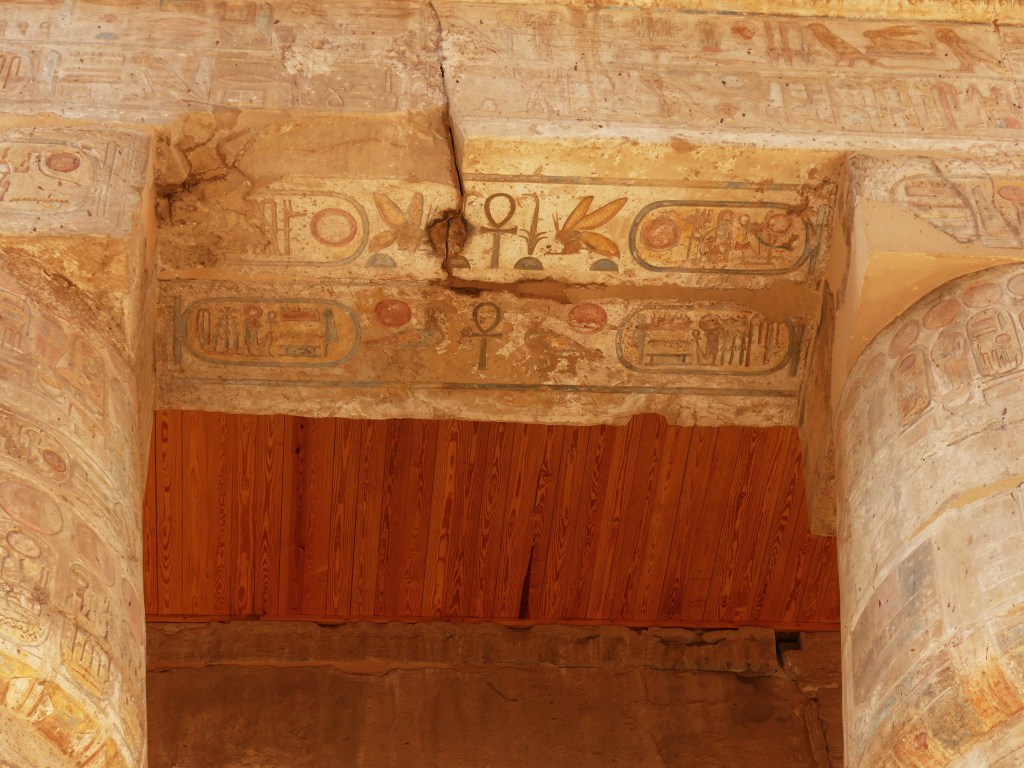
We were given a little bit of time to wander around before heading to the next stop.

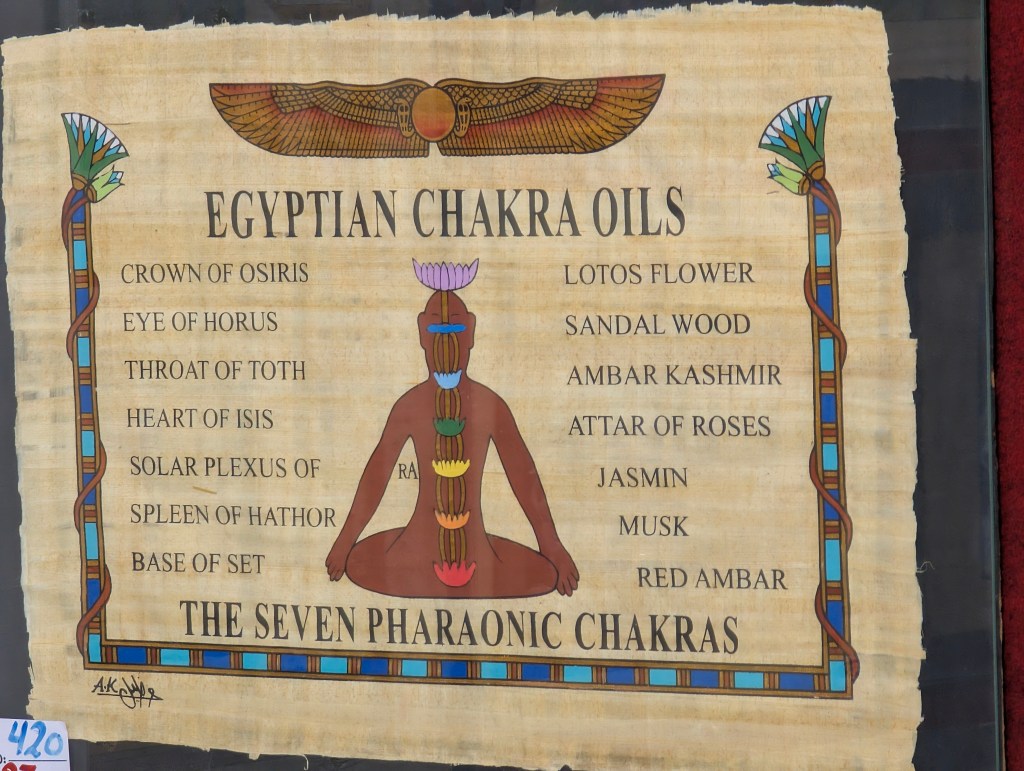
After visiting the temple, we had a stop at a designated shop, this one selling papyrus. We had been warned by our tour guide not to buy papyrus “off the street” as it is fake. We were given a demonstration of how papyrus is created and then given the opportunity to purchase artwork.
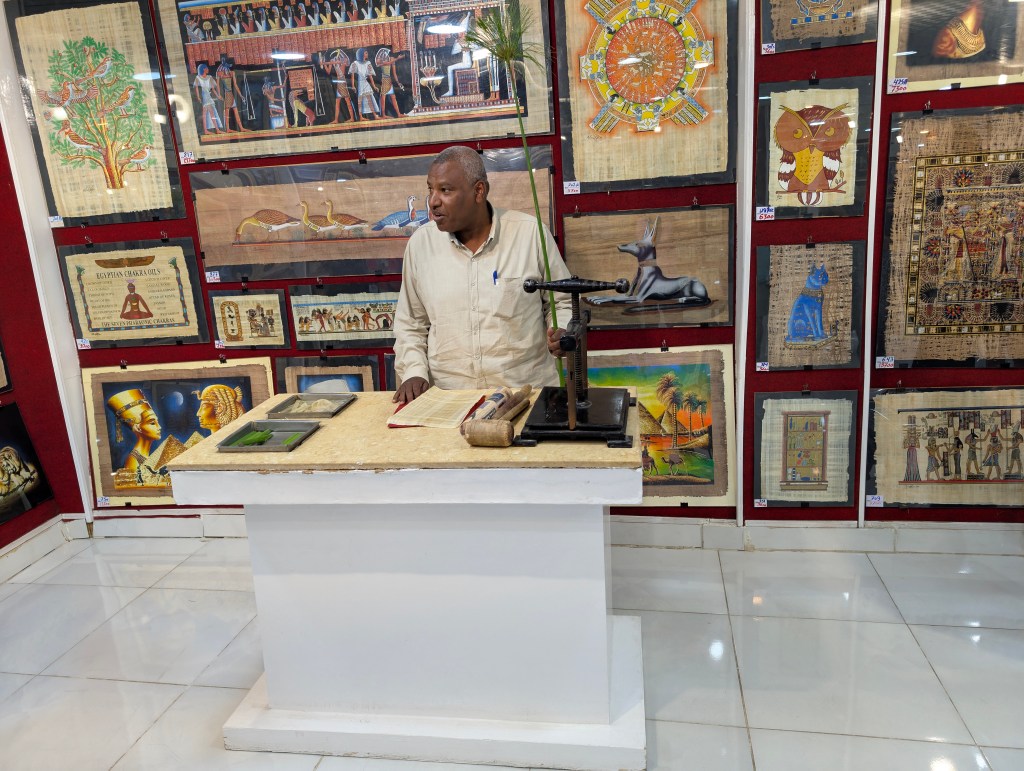
A papyrus plant grows 3 meters (a little over 9 feet) tall. It is considered a holy plant; the stem is pyramidal in shape. The exterior is sliced off and the interior is sliced into rods. A mallet is used to pound the rods into flattened pieces. A rolling pin is then used to squeeze any remaining water out. I’m not sure why as the next step is to soak the pieces in water for 6 days! Then, the pieces are arranged horizontally and vertically to create a piece of “paper”, which is pressed with a stone for 6 additional days. A finished piece of papyrus will not crack, even when rolled up. It can be washed to erase the writing in order to be reused. We were told that ancient Egyptians used lengths up papyrus up to 25 meters in length!
The prices of the artwork ranged from $25 US on up into the hundreds. A few in our group took advantage of the buying opportunity.
 travelswithheather