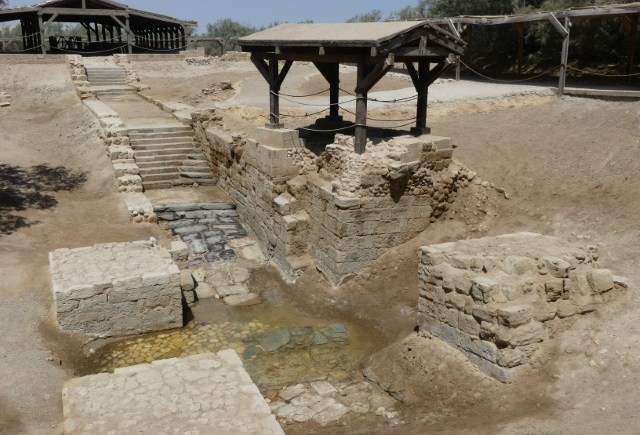
Much to my surprise, the baptism of Jesus by John the Baptist took place in Jordan rather than Israel. Throughout history, the river has changed courses multiple times, so it may originally have been in Israel, but now it forms the border between Jordan and Israel. As we drove from the hotel to the baptism site, we could see the ancient city of Jericho, thought to be the oldest city in the world. It has been around since 10,000 BC. From the road we were on to Jericho is a mere 2 miles. From the road to Jerusalem? Only four miles.
The area we were in is known as the Wilderness of John the Baptist. It is where he wandered for many years. It is a desolate area; 86 % of Jordan is desert and the area at or below sea level is extremely hot.
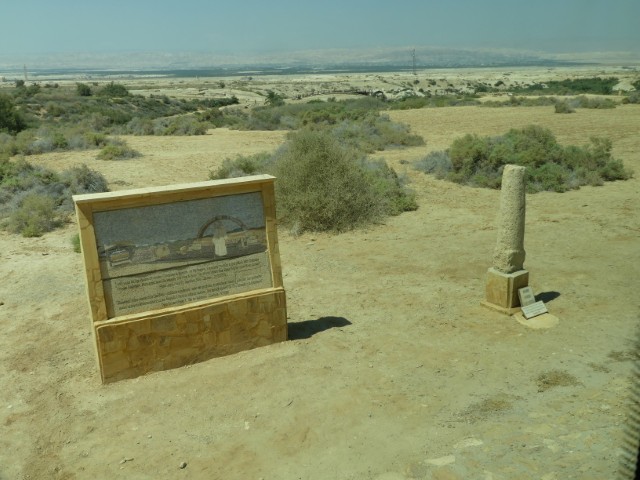
You may wonder, as I did, how they know this is where Jesus was baptized and why many believe that the place was located on the other side of the river, in Israel. Jordan itself has been through numerous changes, from the days of Christ until 400 AD when the Romans were in charge, to the Byzantine era (Christian), to the Islamic era, to the Ottoman era, and right up until World War I when the British occupied it. The British occupied Jordan until 1994 which is when excavations began. It took until 2015 for it to be proven that the site was indeed where Jesus was baptized.
The baptism of Jesus is not the only event of biblical importance that took place in the Wilderness of John the Baptist and its surrounding area. This is where Lot’s wife was turned to a pillar of stone, where Jacob encountered the angel of God, as did Elijah, where Moses ended his journey, where Joshua fought the battle of Jericho, and where John was beheaded.
We learned that Bethany is actually two words put together in Aramaic. Bet means house and hany means John, so literally, the house of John.
As we approached the entrance to the site, our bus boarded by a man in a military uniform. He counted how many were on the bus. As we left later, a second count was taken to make sure everyone was on the bus. We were also told that there would be armed men around the site itself for security purposes.
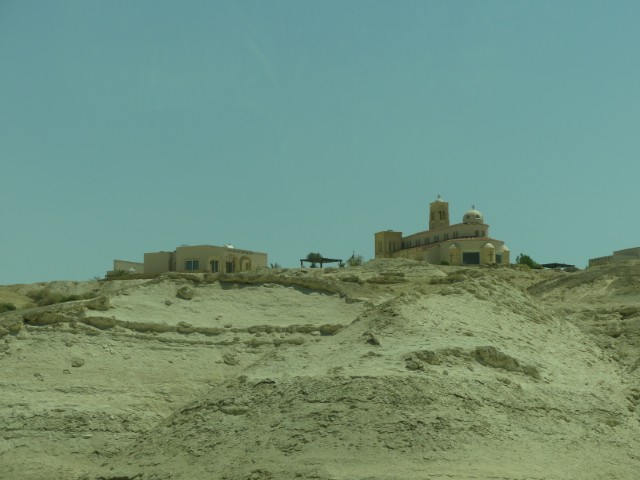
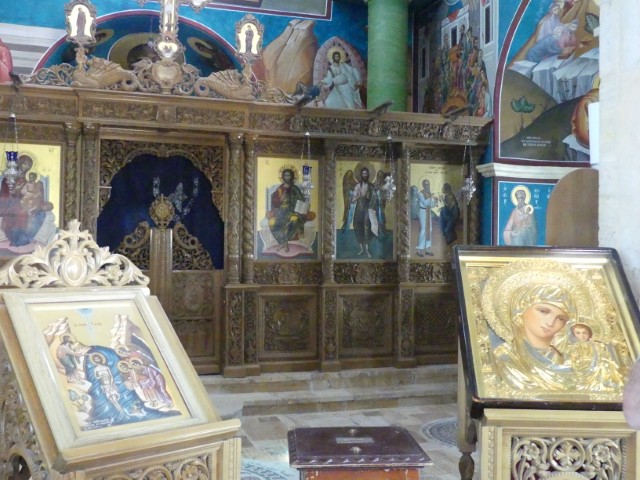
There are twelves churches that have been built here since 2015, the largest of which is the Catholic church. Any Christian denomination that wants to can build a church here. Pope John Paul II visited here, and the Catholic church manages the UNESCO World Heritage site.

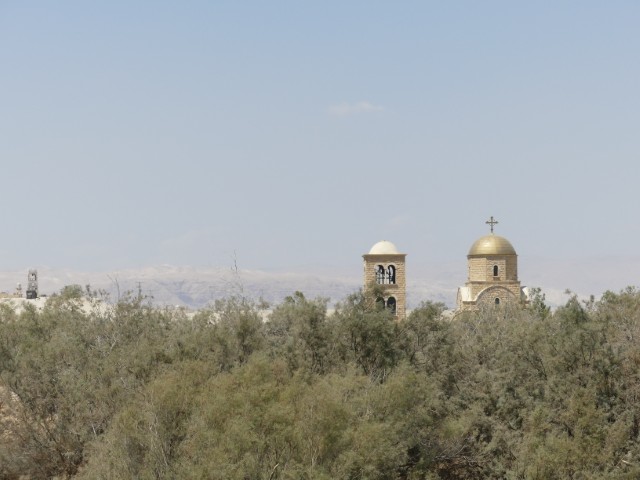

Due to this being a UNESCO World Heritage site, no renovations are allowed to take place. Around 400 AD, the first church was built here. The small wooden shed is the location of it. Due to flash flooding in the area (since it’s 1400 feet below sea level), the church itself was destroyed. Behind it, there is a larger wooden structure. Four other churches were built here. Each time a church was built, it was destroyed by flooding and so a slightly different location was used. The fifth church was actually built on top of the fourth.
The only water visible at the site comes from an underground spring. At other times of the year, water from the Jordan does pass through here. The location has been proven to be “real” by archeologists. One factor is that there is a cross chiseled into the limestone in the original chapel. Additionally, the chapel was built with the altar facing east, so was built by Christians. Mosques always face south. It was most likely built around 400 AD. The churches built here were the only churches built without Roman influence.
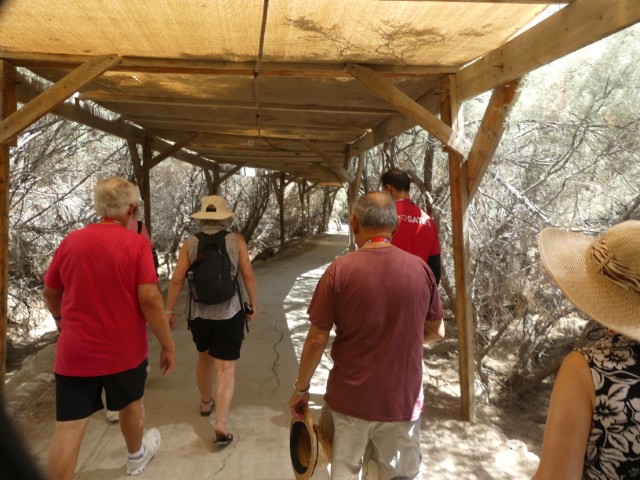

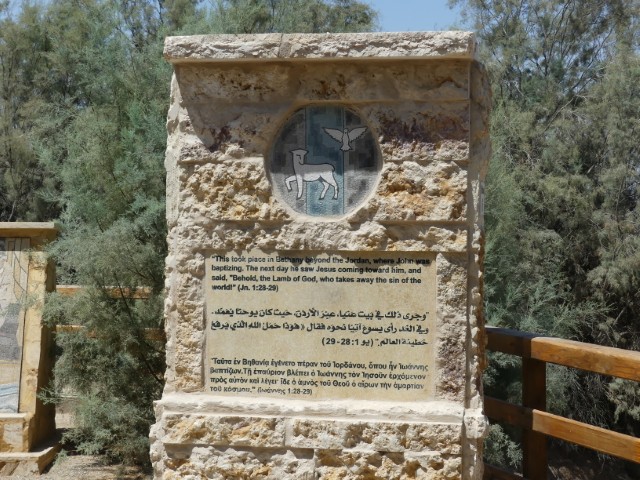
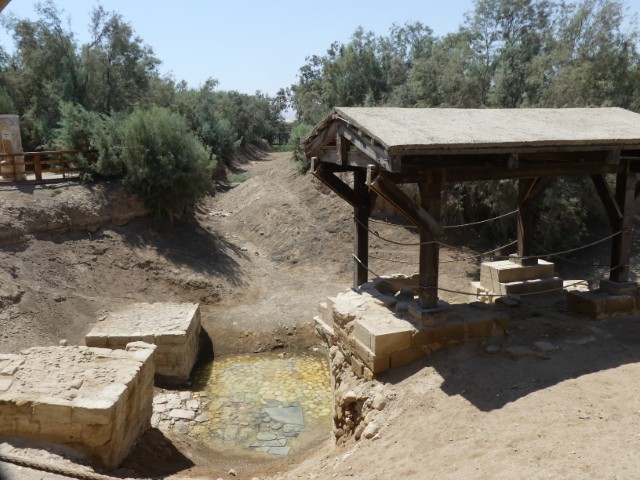
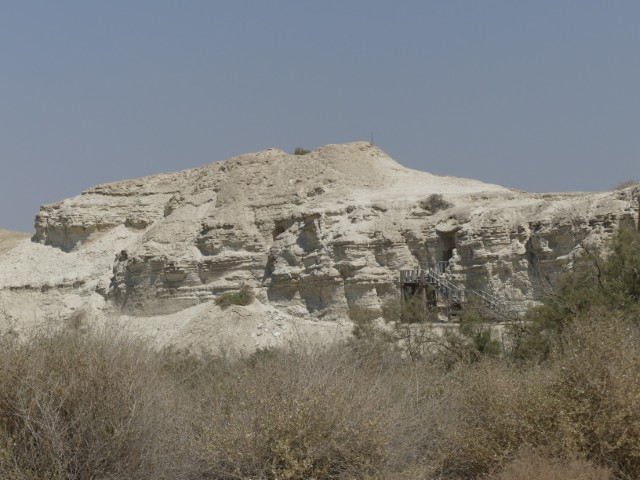
As we walked from the baptismal site, Waleed pointed out a large cave off in the distance. It was here that the Dead Sea Scrolls were found.
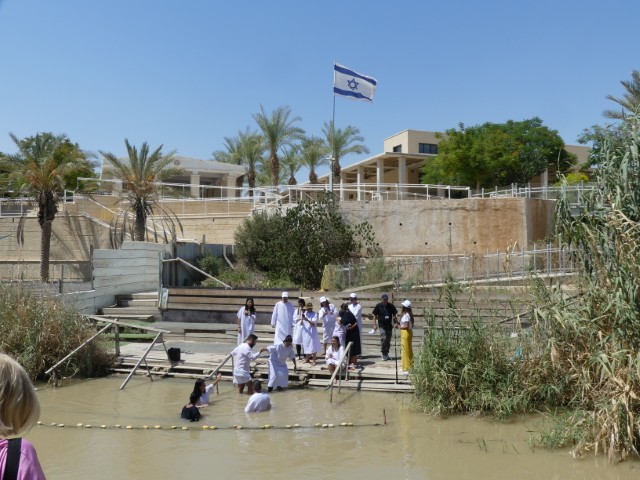
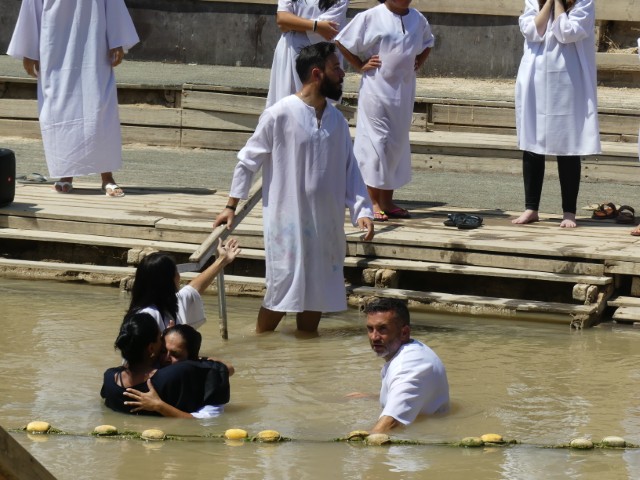
The river Jordan is accessible from both sides. Those that wanted to were able to touch the water. On the Israeli side, a group was getting baptized. We are not sure what their nationality was (Waleed did not recognize the language), but a woman seemed to be in charge. There was much enthusiastic celebration as each person was baptized.

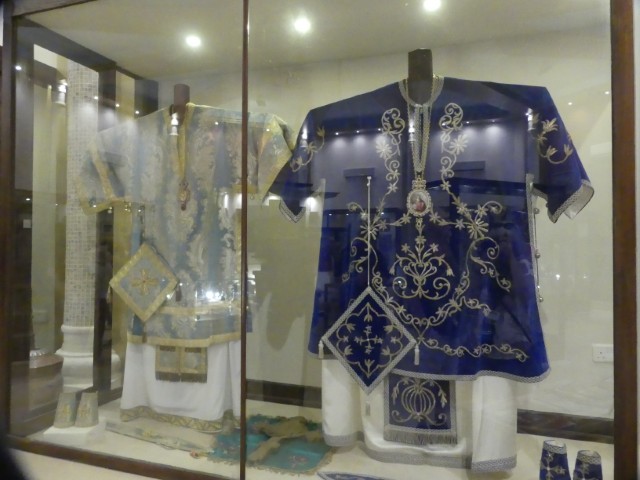
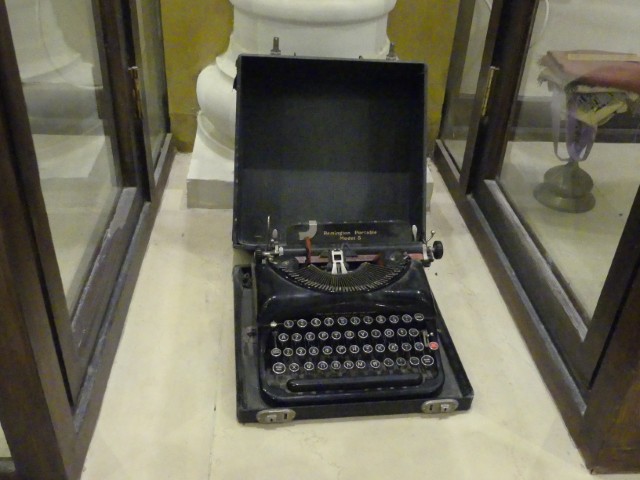
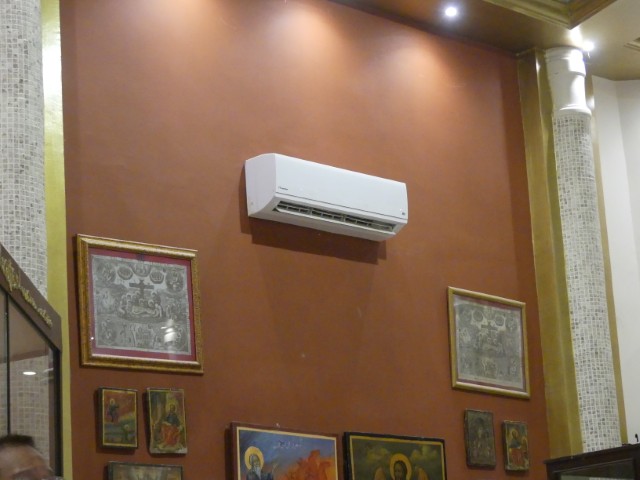
Given the extreme heat, Clayton and I opted to hop a ride on a golf cart back to the museum which would be our final top on the tour. Shockingly, there was a gift shop there with all types of religious items for sale. The best part of the museum was the fact that there was an air conditioner on each wall! The items on display seemed to be predominantly affiliated with Catholicism, given their ornate quality.

It was a relief to get on the bus and chug down some cool water as we drove back to the hotel for the rest of the day.
 travelswithheather