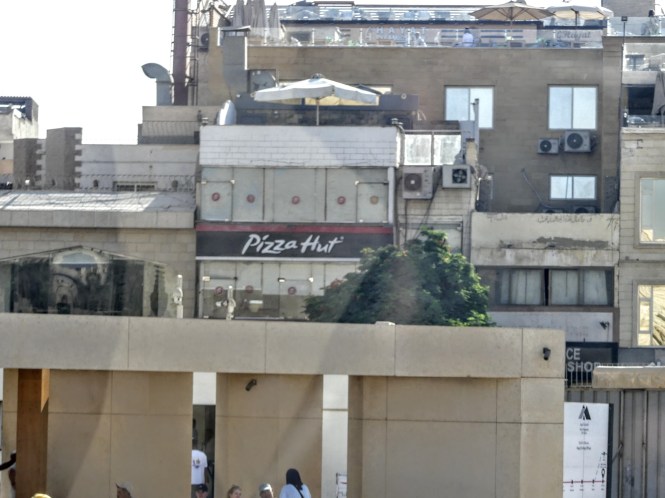
Have you seen photos of people eating at Pizza Hut or Wendy’s looking out at the pyramids? Influencers claiming that you don’t really need to pay to see the pyramids when you can view them for free? That is certainly the economical way of seeing them, but nothing beats actually walking through the ancient ruins and experiencing them up close and personal.
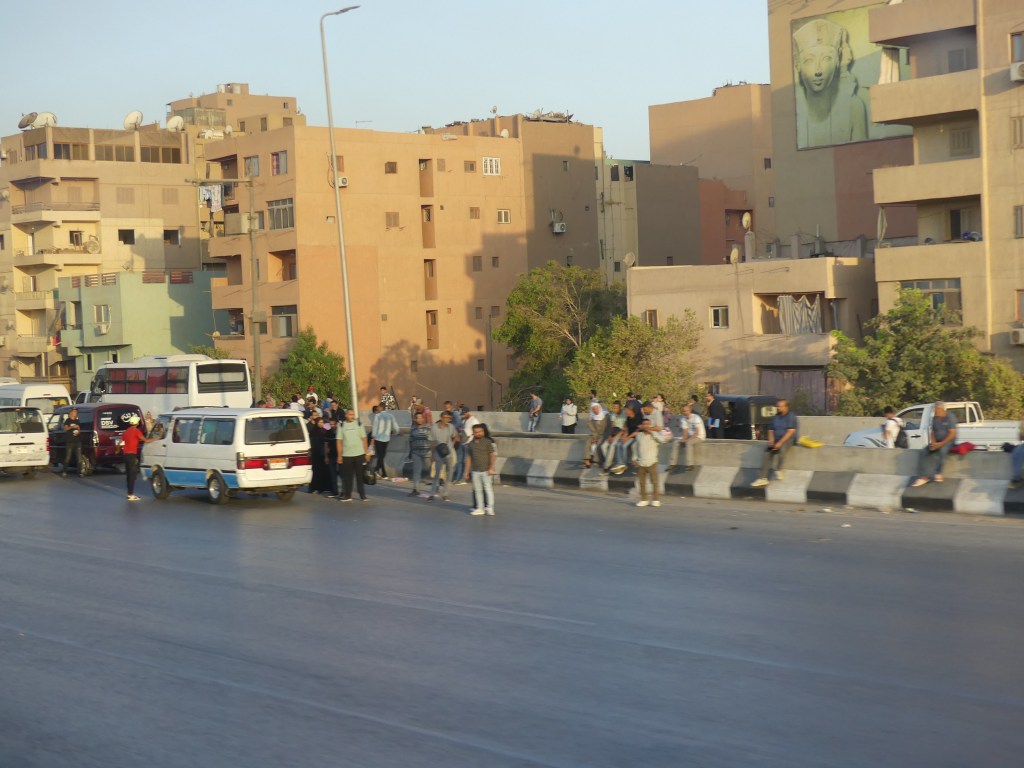
As is typical in Egypt, we got an early start to beat the heat and the crowds. Cairo is a city of 25 million people and has terrible traffic. It was shocking to see people standing along the side of the freeway. There are minibuses that drive by to pick them up. The city is developing a bus system but for now, this is the norm.
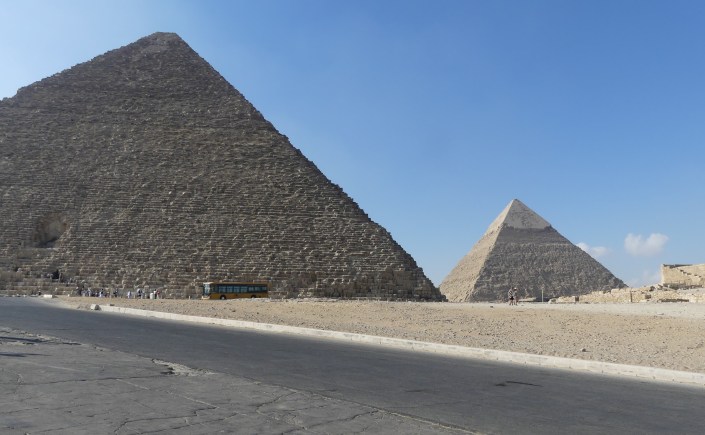
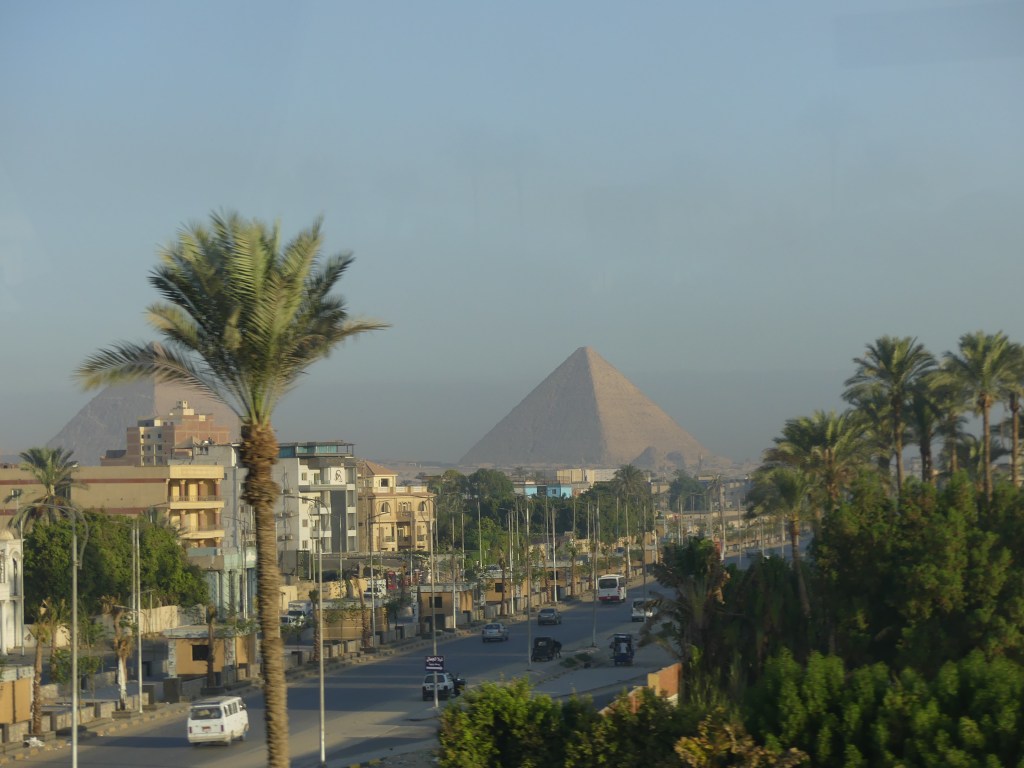
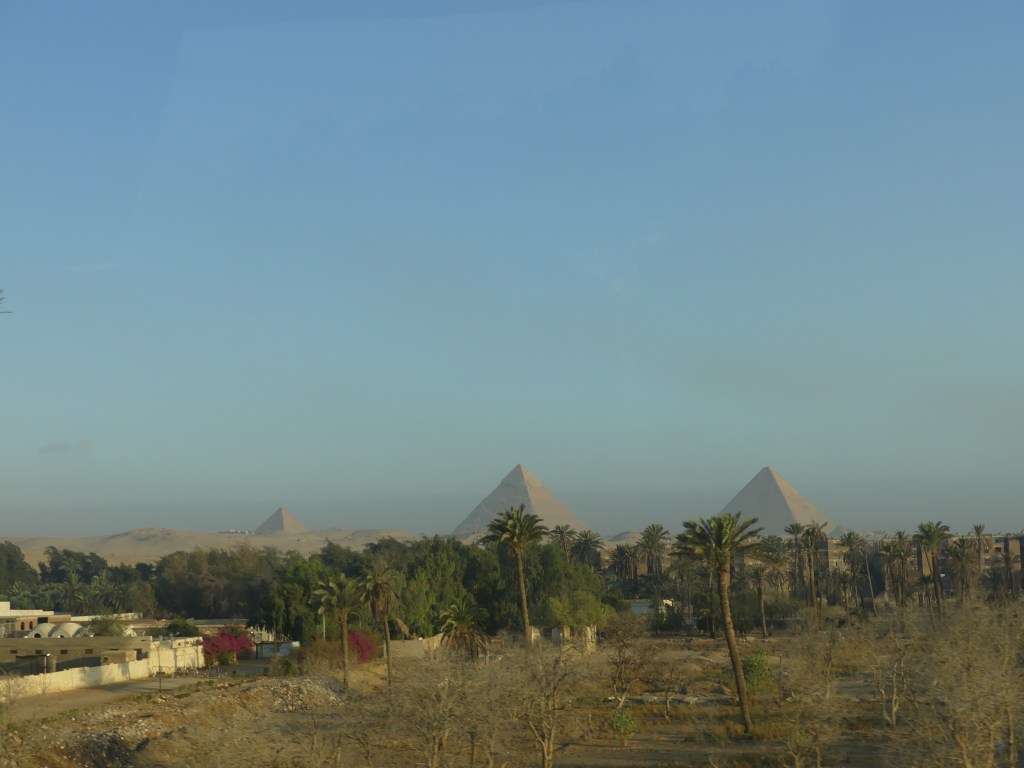
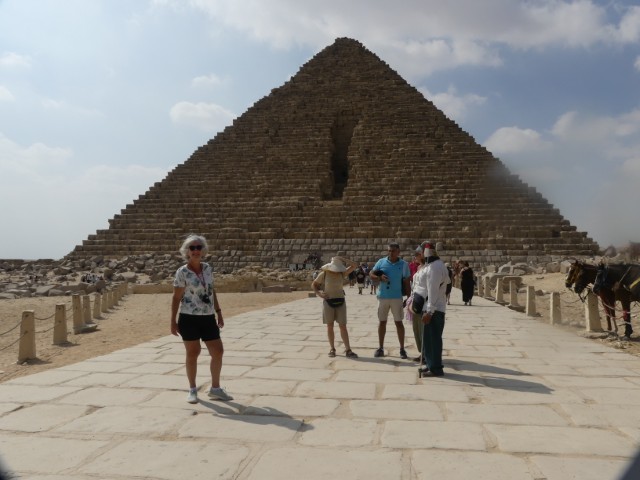
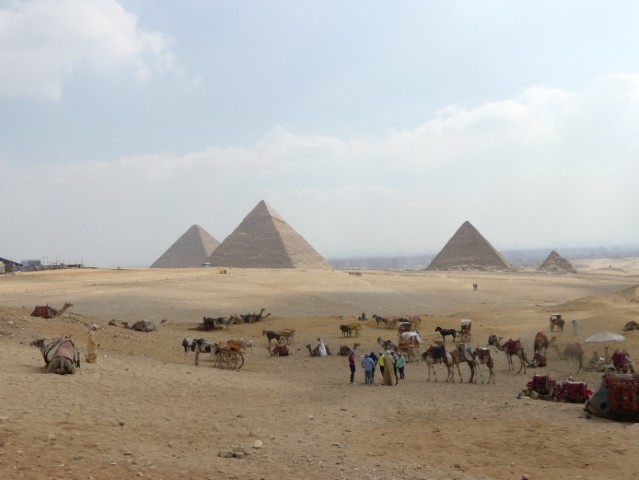
There are 122 pyramids in Egypt. The largest is in Giza, along with 2 that are slightly smaller. Since they are built on different levels, the tallest appears shorter than the one next to it when viewed from the panorama stop on the tour.
The pyramids are relics from a kingdom 3000 years BC, so are at least 5000 years old. There were 3 kingdoms in ancient Egypt. In the old kingdom, the king was considered to be a god and was worshipped. The middle kingdom was approximately 2000 BC. Kings were no longer gods and irrigation was used to grow crops. During the new kingdom (1500 to 1100 BC), Egypt was at the peak of its civilization; the empire was large and wealthy. This is the era of the most famous kings, such as king Tut. Whenever I think of Tut, I can’t help thinking of Steve Martin on Saturday Night Live performing the King Tut song. If you haven’t seen it, look it up on You Tube! There were local rulers until 331 BC with the invasion of Alexander. Cleopatra existed during the Ptolomy era. The Roman era was 40 BC to 700 AD.
If you visit the pyramids, I recommend taking a tour rather than using the hop on hop off bus that is available at the site. Why? Because the HOHO bus takes you first to the panorama point, then to the pyramids, and then to the sphinx. You will be with the hordes of tourists, waiting in the hot sun for the next bus to arrive. We did the reverse and avoided many of the crowds. We also didn’t have any waiting in the baking heat; our bus driver was always waiting with cold water and blasting air conditioning when we were ready to move on.
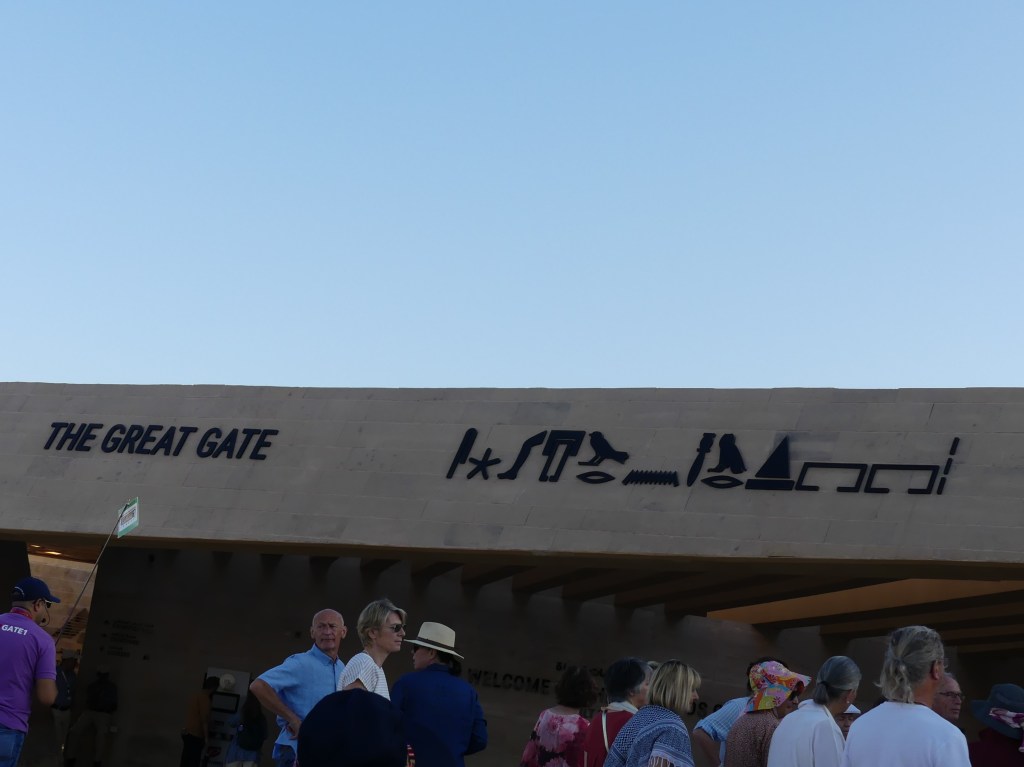
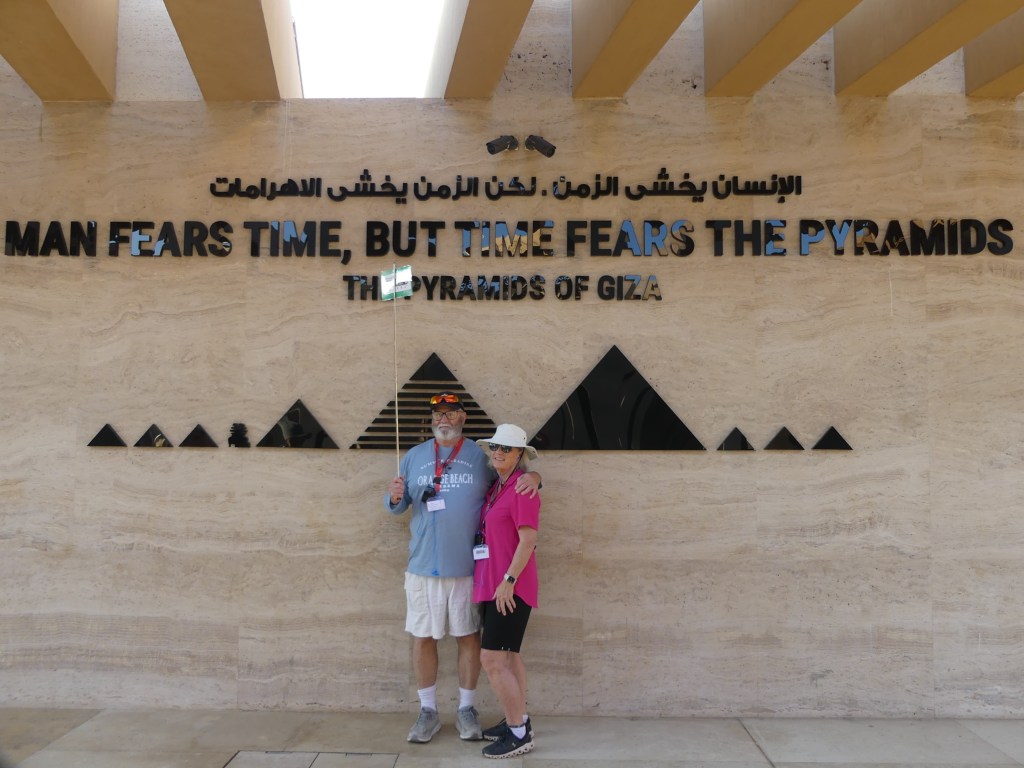
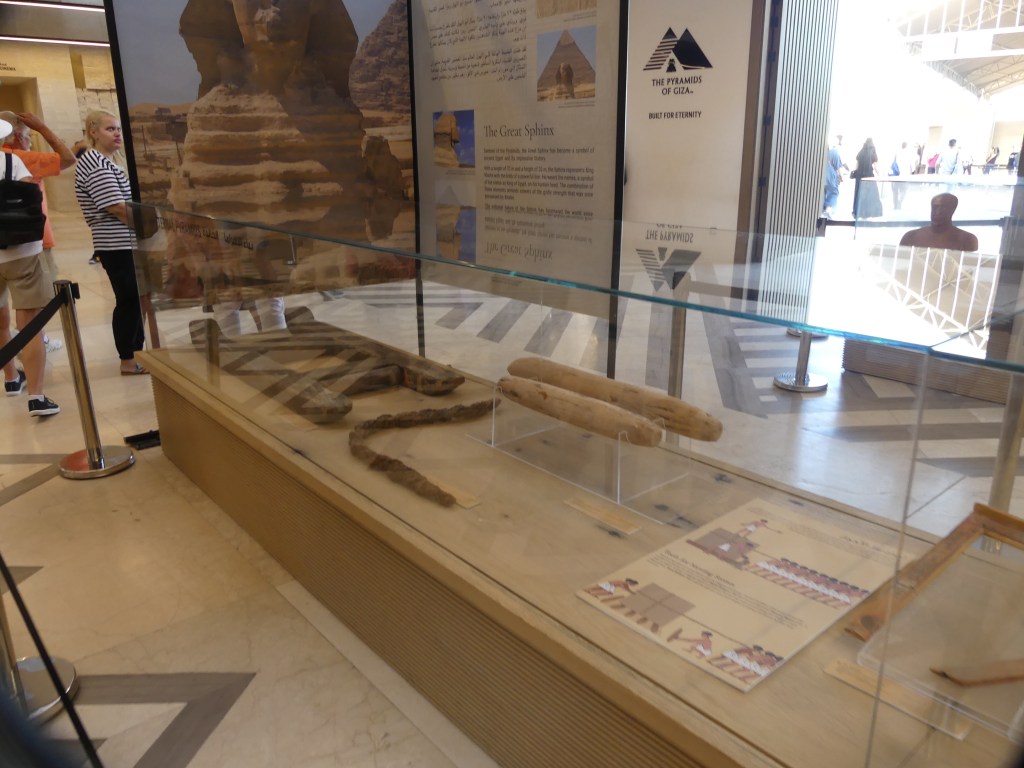

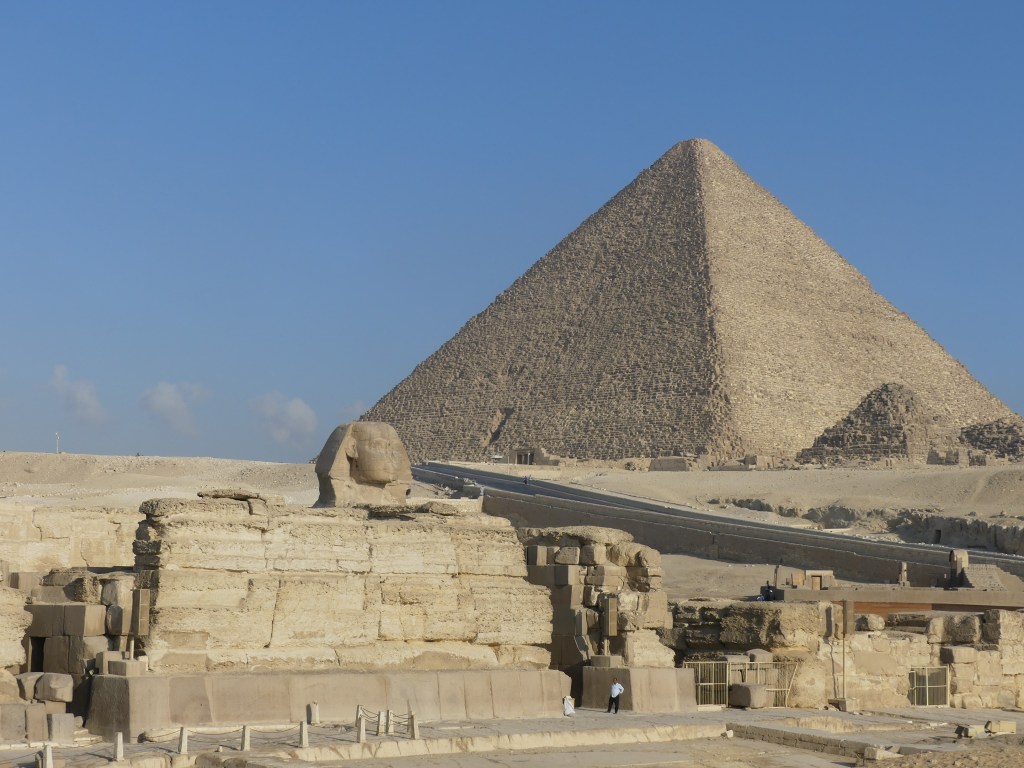
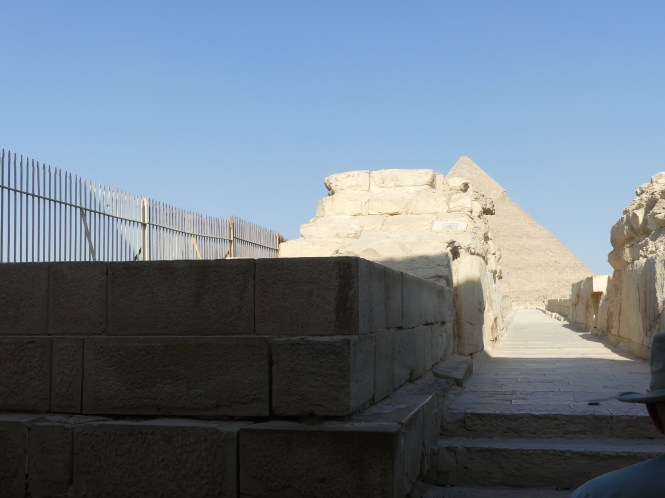
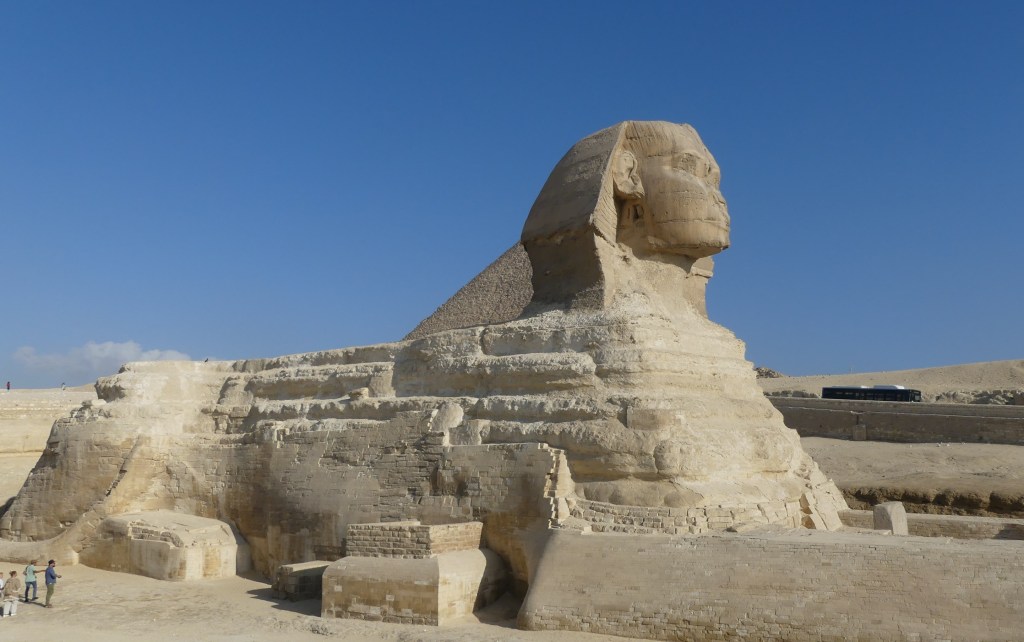
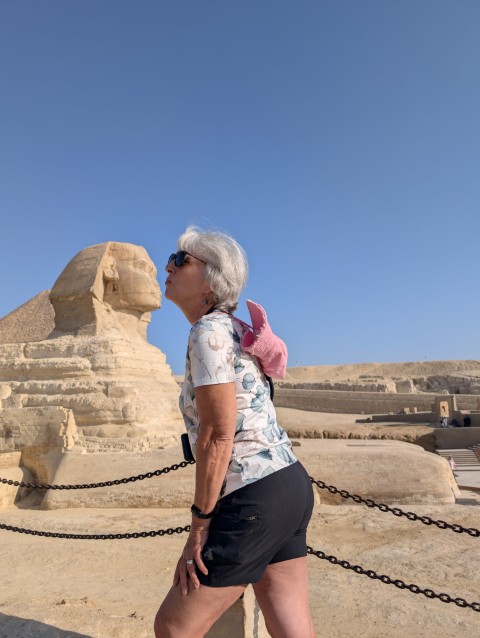
Our first stop was to view the sphinx. It is massive (240 feet x 65 feet) and is the largest in Egypt. We entered the alabaster temple. The king would be mummified nearby before his remains were carried to the pyramids to be entombed with all items needed in the afterlife. The queen was not placed in the same room as the pharaoh; there are three smaller pyramids nearby for the queen, the pharaoh’s mother, and for a second wife.
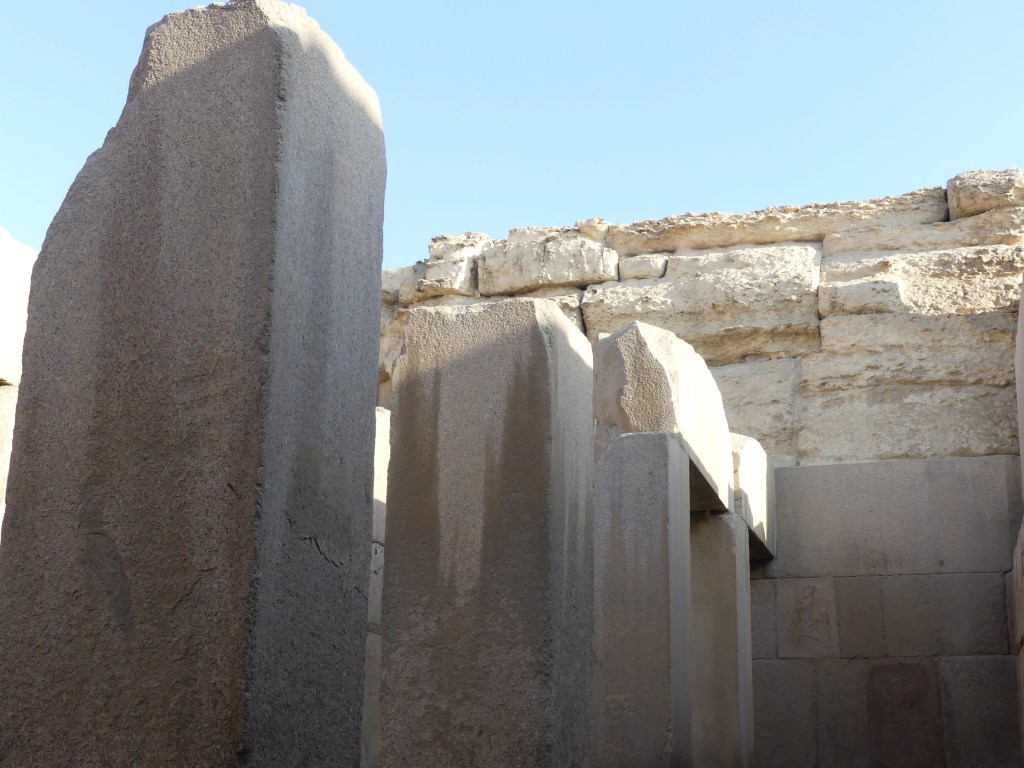
Before the mummification took place, the king’s organs were removed and placed in 4 alabaster containers that contained natron salt to dehydrate them. Oddly, the heart was left in. No one knows why. There were two high walls lining the path to the mortuary temple to keep the king’s body’s privacy. There was no roof so that the spirits would reach the king.
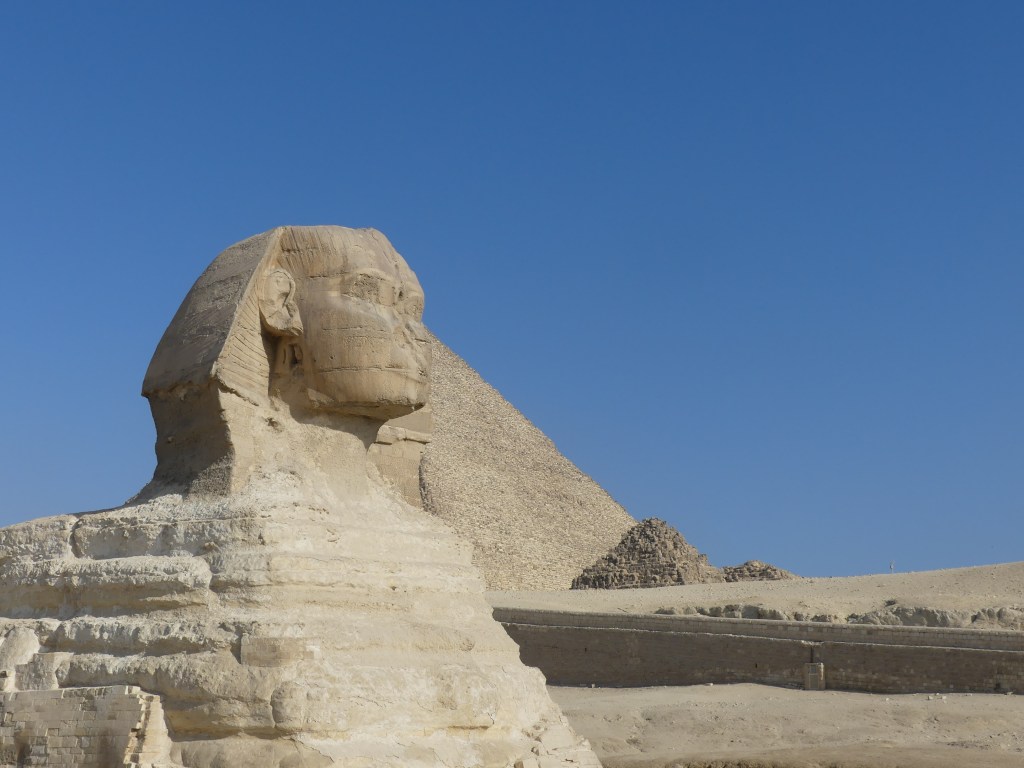
You may wonder why the sphinx has no nose. Unlike many statues and temples in Egypt, it was not damaged by natural disasters or erosion. It was removed by the mamelukes out of religious zeal; it was thought that defacing the gods removed their power. The sphinx used to be painted but of course, no paint is still visible. In 1997, supports were added to the bottom of the sphinx since the water level had risen.
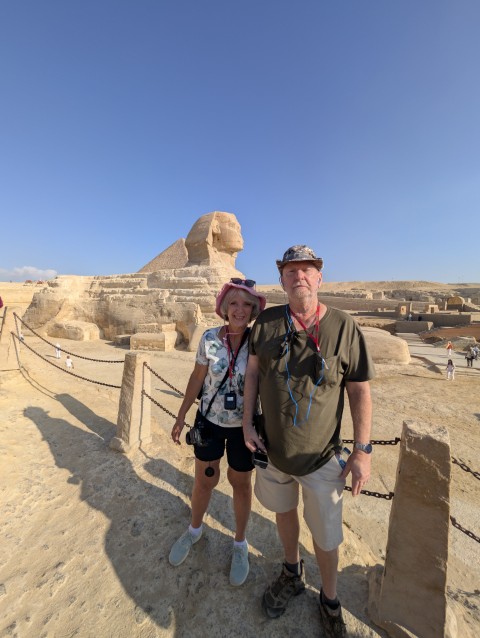
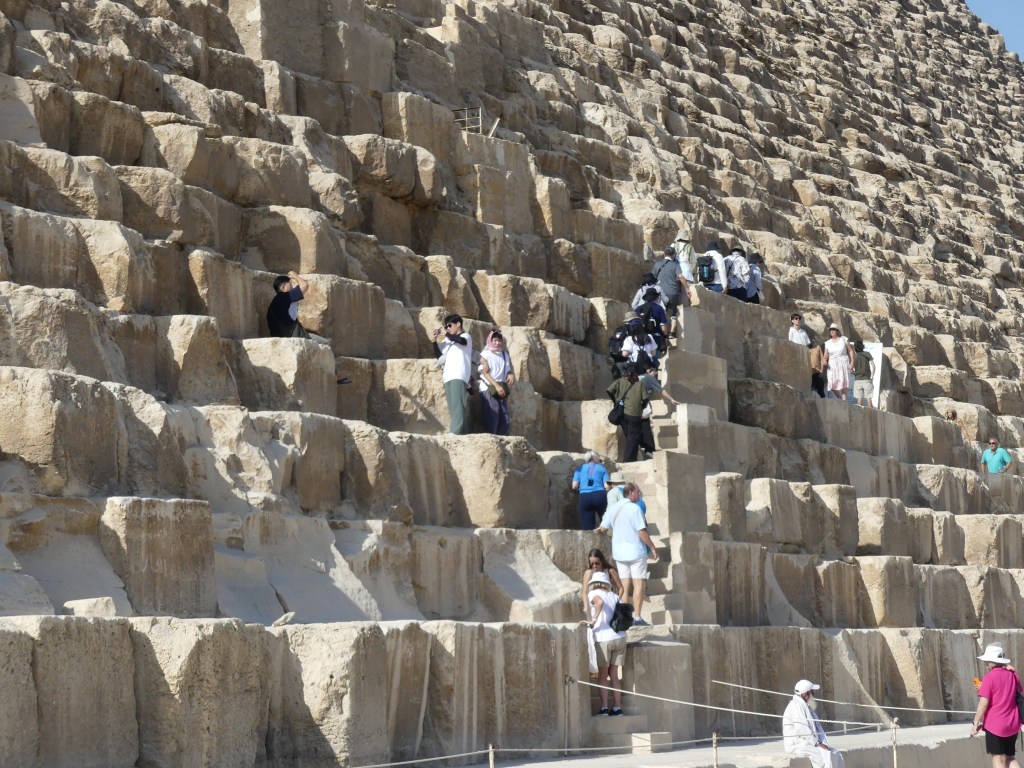
We loaded up the bus to head to the tomb of King Khufu, the largest pyramid in the world. Most people believe that slaves built the pyramids, but we were told that this was not true. It was built by farmers during their “off season”, they worked for beer and pita. A medical clinic was found next to the pyramid. Needles made of gold and silver were found within. Skeletons found on the site show that a broken shoulder was the most common injury. That makes sense given the heft of the stones – each weighted thousands of pounds. The limestone used to construct the pyramids was brought from the south and floated up the Nile River. Logs were used to move the stones to the site of the pyramid from the river.
The top of pyramid had a smaller pyramid made of electrum – a shiny metal of silver and gold, which shone radiantly. The pyramidion (smaller pyramid) no longer exists in King Khufu’s tomb.
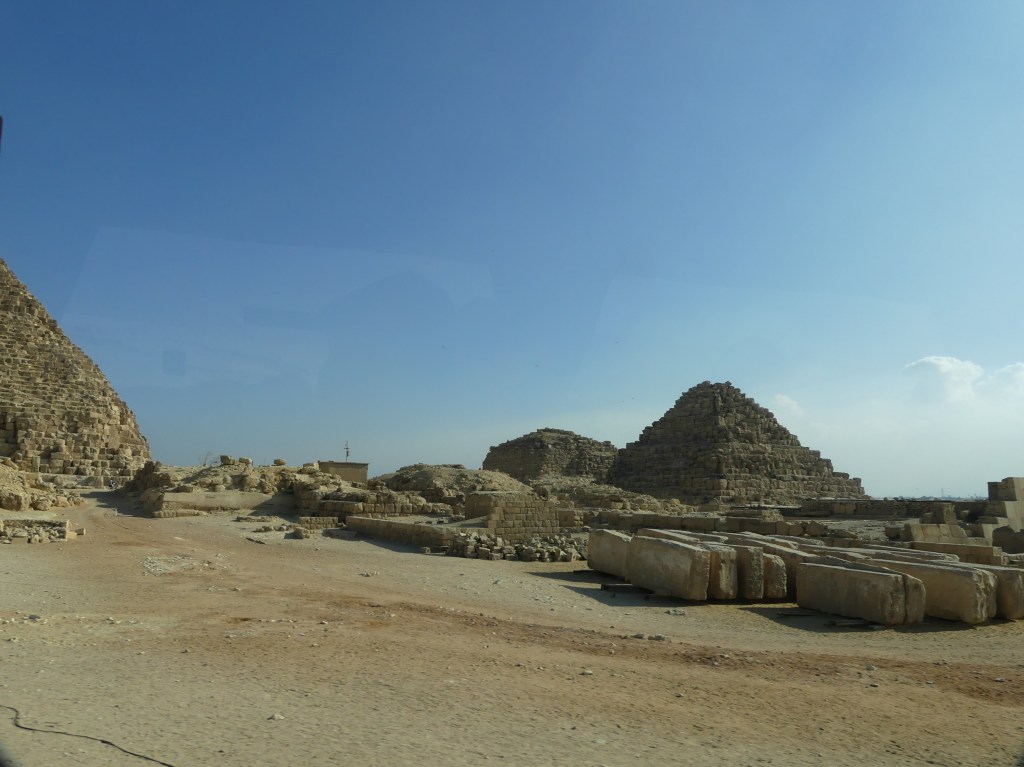

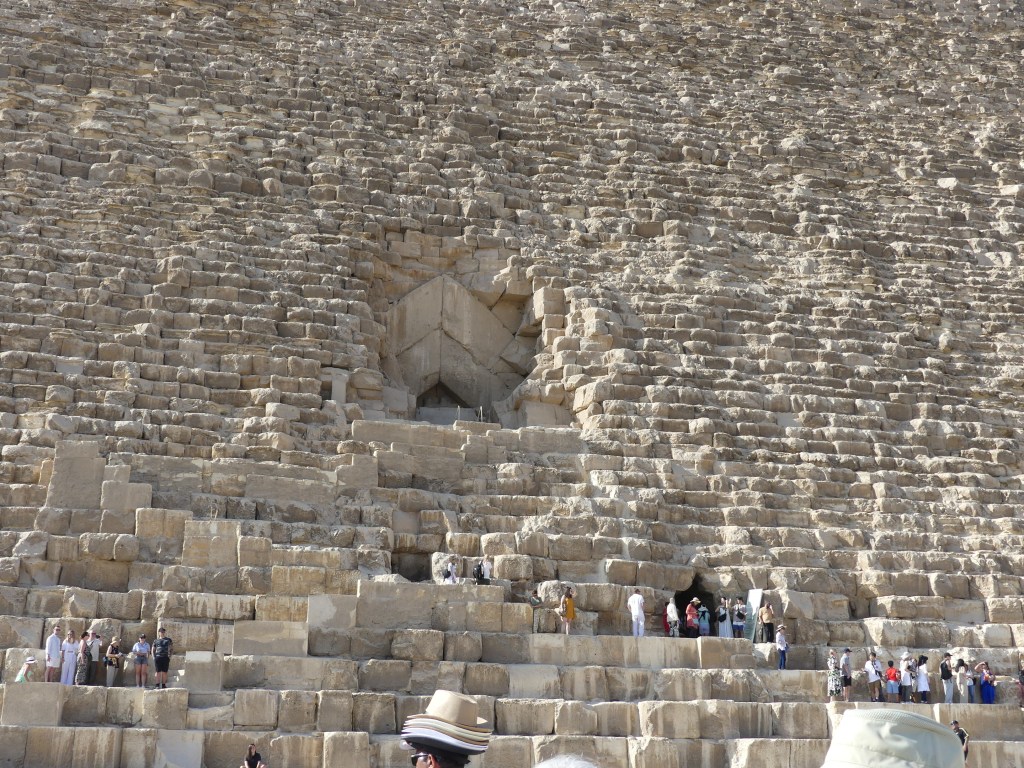
It was possible to spend another 1000 Egyptian pounds (a little over $20 US) to enter the pyramid. It involved walking much of way hunched over because of the height of the passageway. We opted to skip that part. You can see in the photo that there are two entrances. The original one is triangular; the tourist entry is below and is accessed by climbing a set of stone steps.
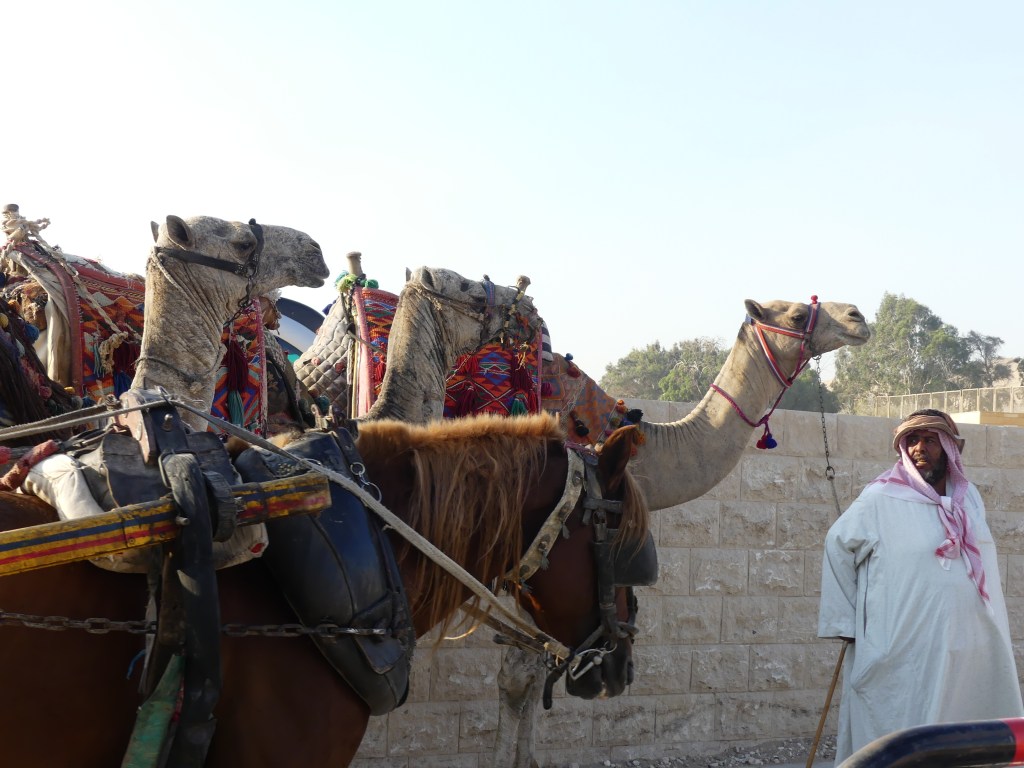
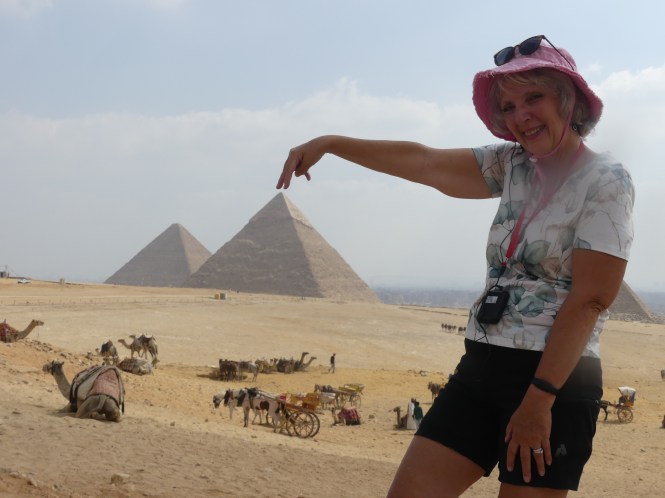
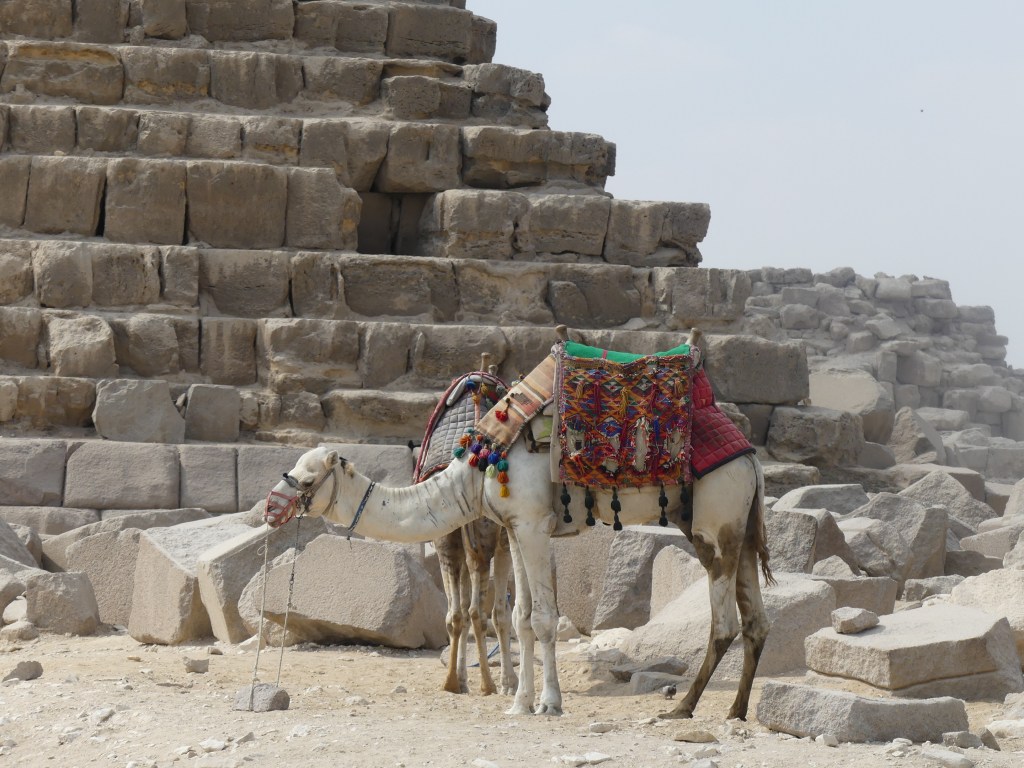
Our last stop on the tour was to the panorama area where all three pyramids are visible. Camel rides are available here. You know I can’t resist taking photos of camels!
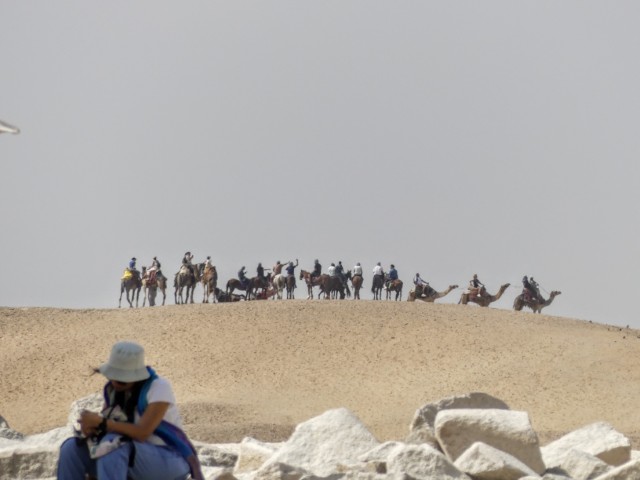
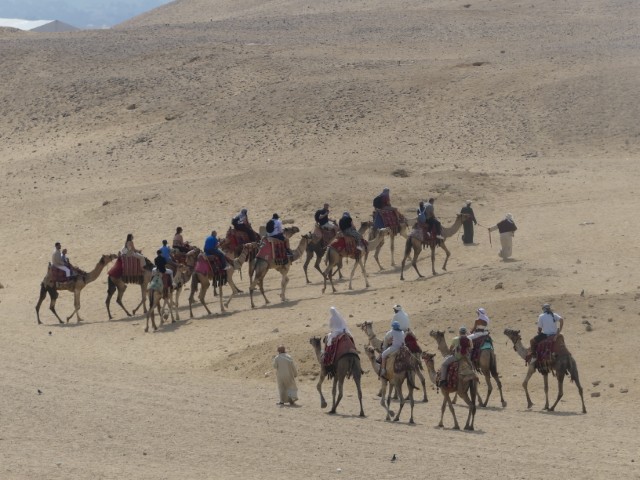


There was an optional afternoon tour to the Sakkara pyramids, but we opted not to go. After seeing the “big boys”, for us, smaller pyramids would’ve been a letdown.
The next day was an early start (3:30 am wakeup call!) and a flight to Luxor followed by a tour of Karnak Temple.
 travelswithheather