The country of Jordan is fairly small, but the drive from the Dead Sea to Petra would take all day, mainly because we made several stops along the way.
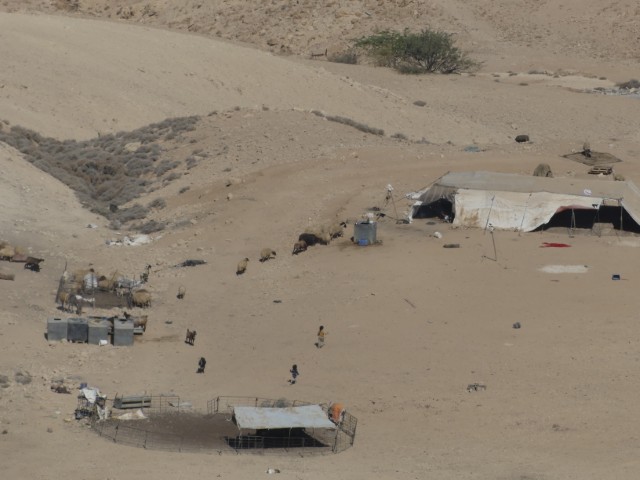
First up was Mount Nebo, where Moses ascended to see the land of Canaan (around 1200 BC) and lived out his days. We climbed from 1400 feet below sea level to the top of the mountain, which is nearly 2700 feet above sea level. It was a long and winding road. Eighty-six percent of Jordan is desert, and so it wasn’t a very picturesque ride. I was glad I took my meclizine before boarding the bus. As we drove, we saw tents which were occupied by Romanian gypsies. There are also Bedouin tents, but they are a completely different style. I was surprised to learn that there are multiple ethnic groups that occupy Jordan. At one point, 2 million Syrian refugees were there, which comprised about 20% of the population. Chechens, Armenians and Assyrians are other ethnicities that live here. One can tell the background of a Jordanian by the color of their scarf (if wearing one, that is!): red indicates an indigenous Jordanian, black and white for Arabs, blue for Chechens, and green for Armenian. Take that last one with a grain of salt; I couldn’t read my handwriting in my notes given the bumpy bus ride!
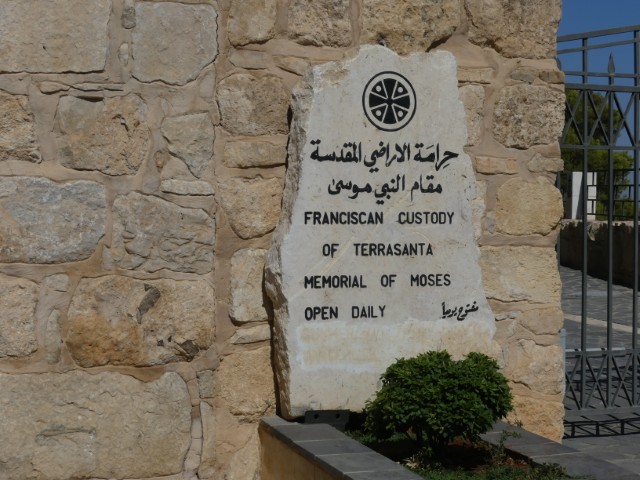
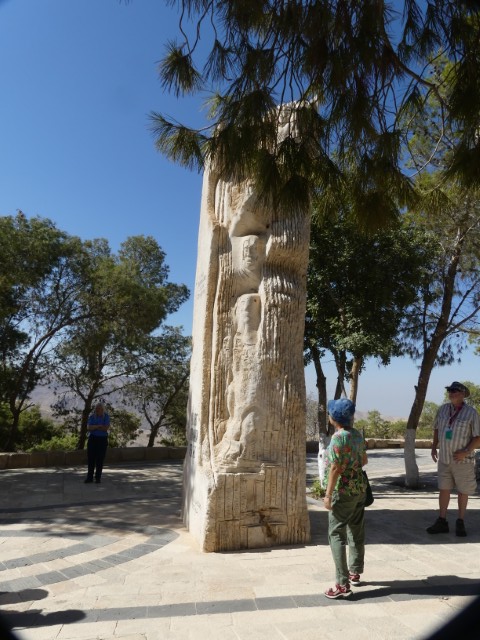
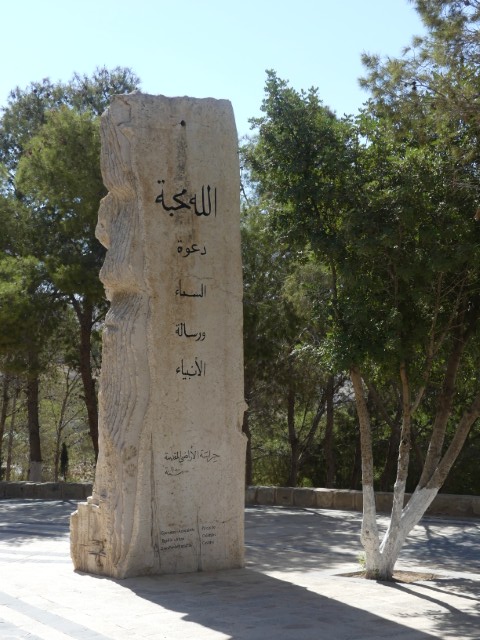
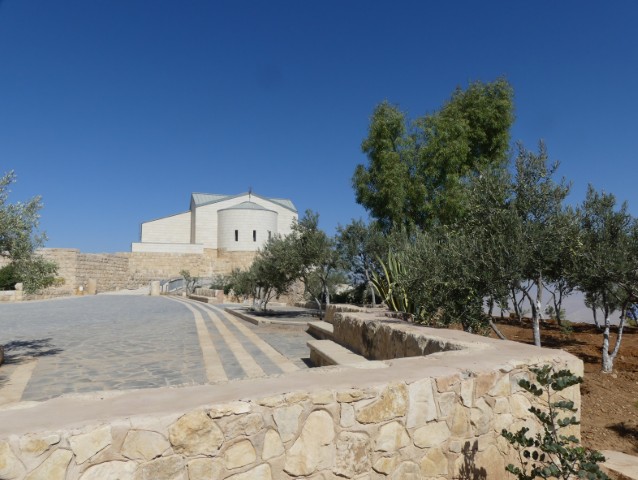
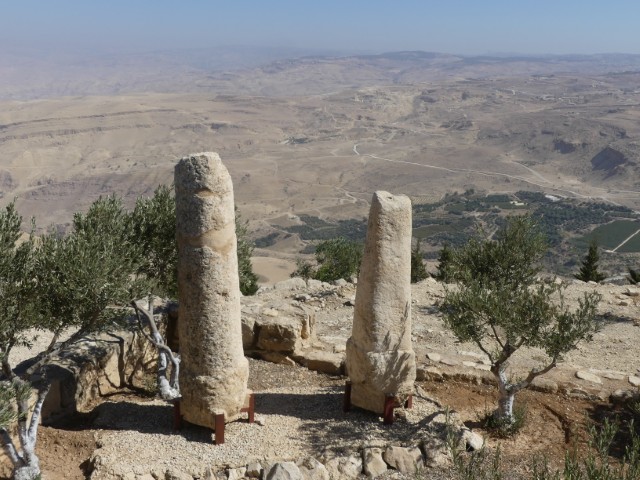
When we reached Mt. Nebo, there was a large pillar which was installed after Pope John Paul II’s visit in 2000. The facility is run by the Franciscan order of the Catholic church. The ruins are Ottoman.


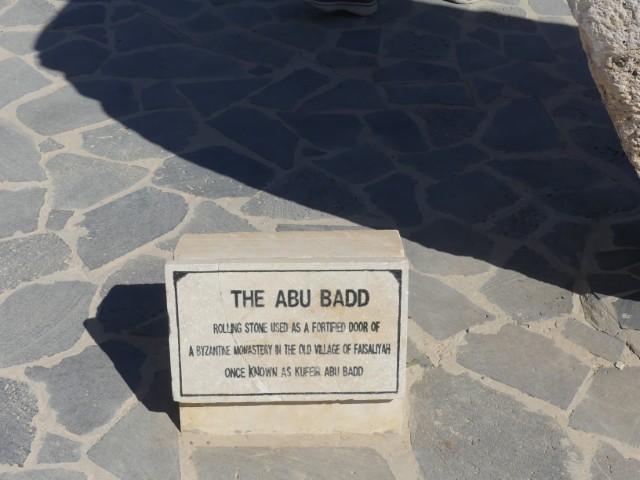
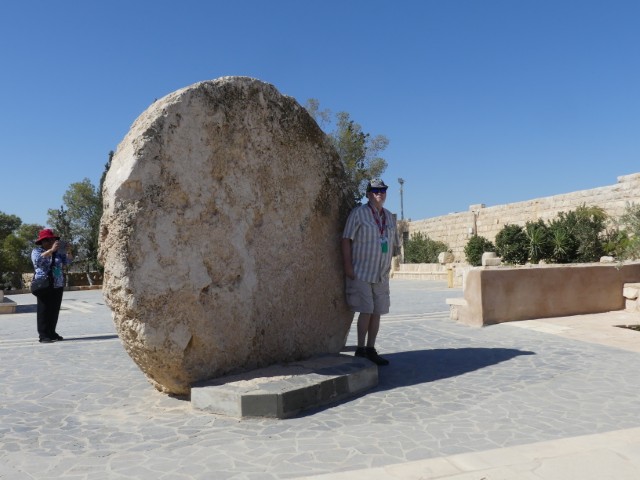
The large round stone is from a baptismal site. These were used to close the monastery and protect it during the Roman occupation. In 324 AD, the Byzantines took over and it was safe to be a Christian. A similar stone was found protecting the Dead Sea Scrolls. We could see the cave where they were found across from Mt. Nebo
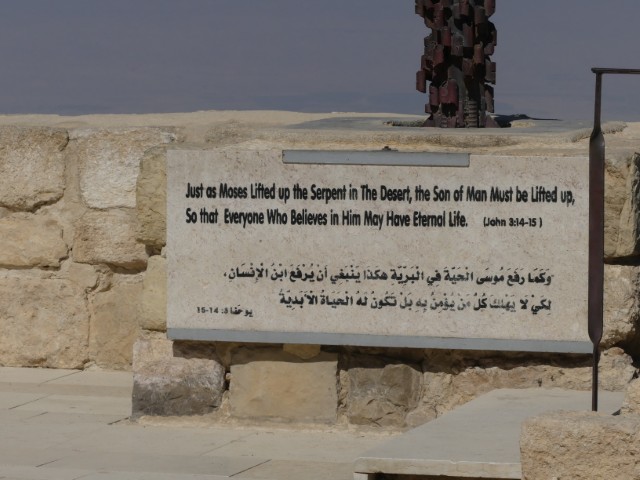
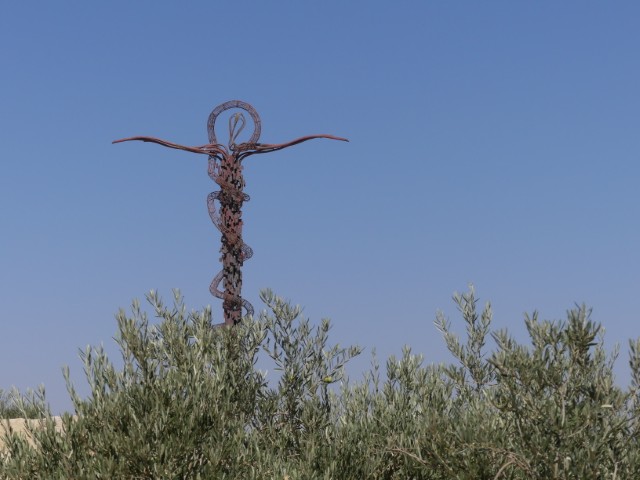
The serpent monument outside of the church symbolizes the Old Testament (the serpent in Genesis) with the New Testament (the cross).
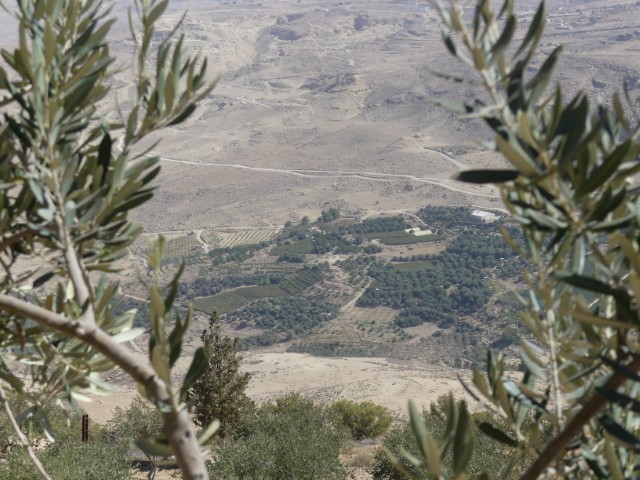
Looking towards river Jordan, Moses could see holy land. We could also see it!

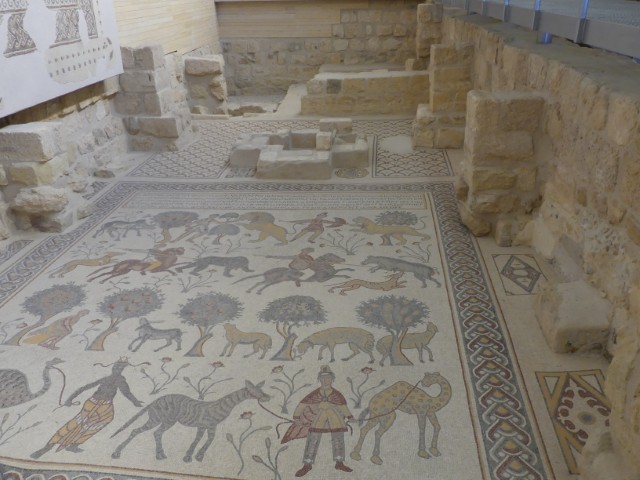
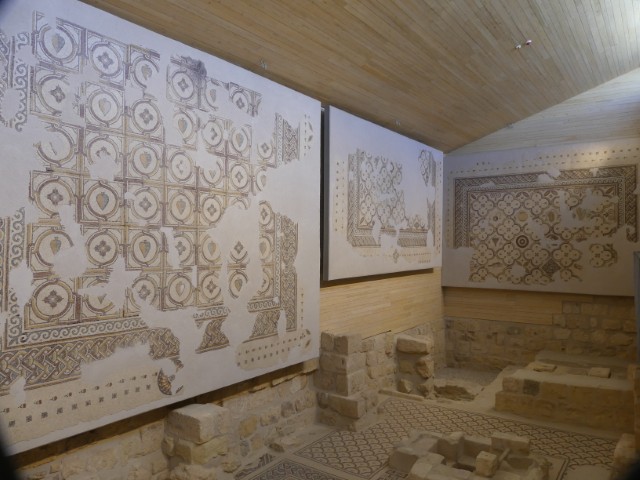
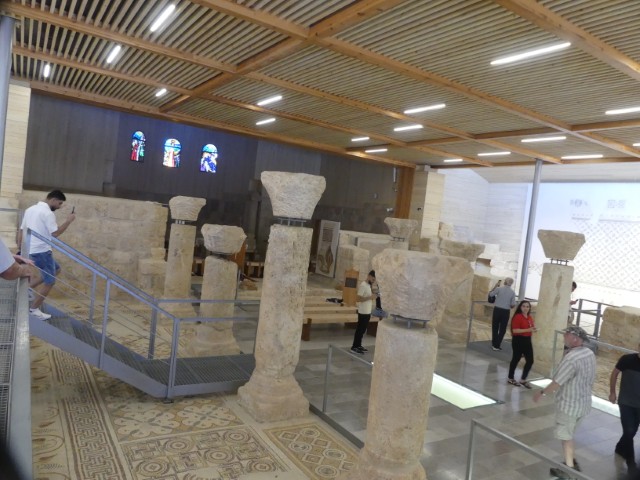
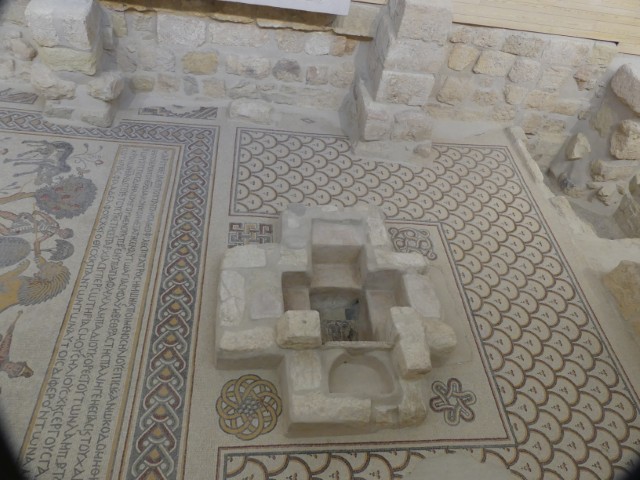
We entered the church. The mosaic on the floor is from 536 AD. Zebras and giraffes are pictured as they used to live in the area. The church was originally one level; the wall mosaics were originally on the floor. There are no images of people and animals due to people potentially worshipping them.

Our second stop of the morning was at the Queen Noor Foundation. Queen Noor was an American woman that married the king of Jordan. She was his fourth wife. She wanted to revive the traditional art of mosaic and use it as a means of village women earning income.
The free training takes from two to three months. It can take place at the foundation or at home. The money earned if their art sells go to the artists. There are 250 artists that display their work at the foundation.
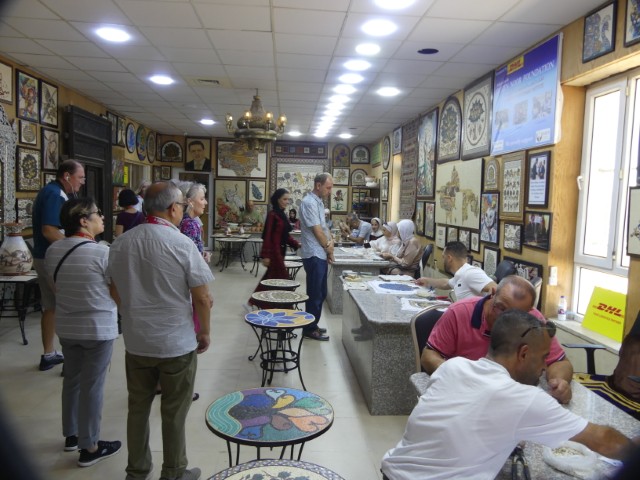

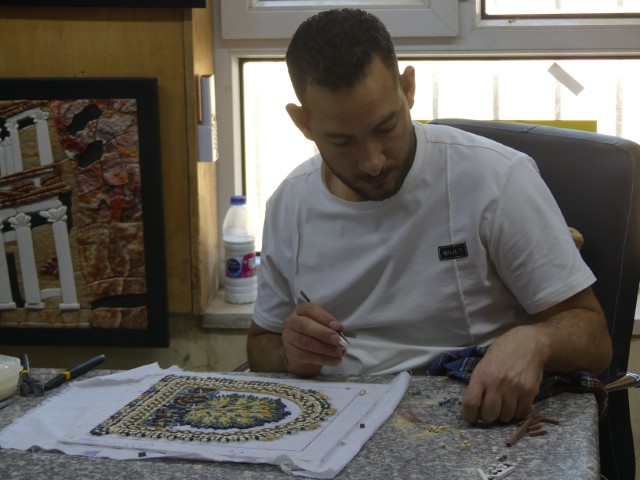
Guests can visit as well and learn to create mosaics.
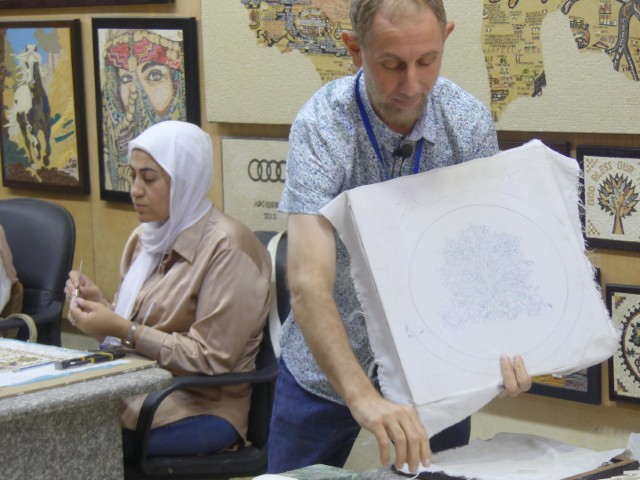
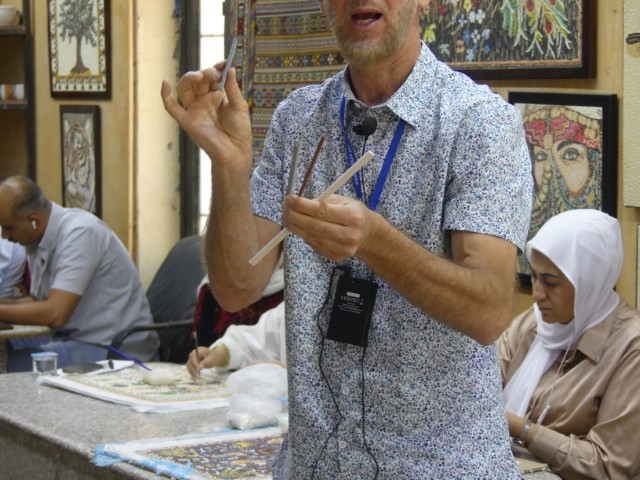
It was explained to us how to use the canvas technique to create a mosaic:
- A blank canvas is stretched on cardboard
- The design is sketched
- Stone scraps are collected from local business, such as from countertops
- These are cut using a wet saw into strips
- Nippers are used to cut into small pieces different heights
- Additional cuts are made until each is right size
- Tweezers and paste are used glue the mosaic (mosaics are uneven because it is the backside!)
- The mosaic is flipped to the flat side
- A frame is ordered
- Grout is used to fill the frame; the mosaic is flipped onto frame
- The canvas is removed by adding hot water which melts the paste
- It is left outside for a week to dry, then it is cleaned and sealed
- DHL ships the mosaics for free anywhere in the world (they support the foundation by doing this
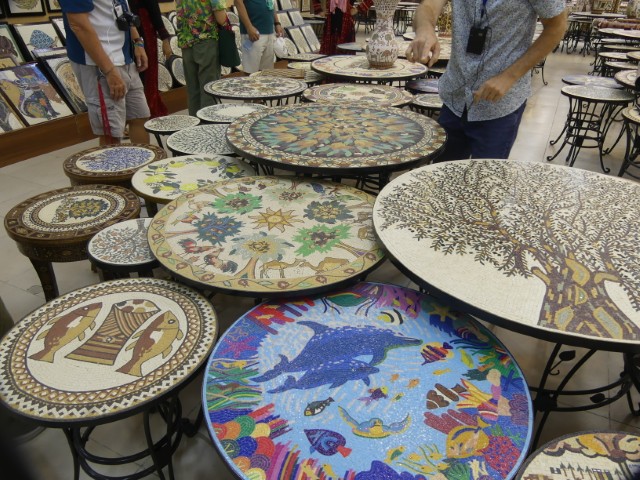
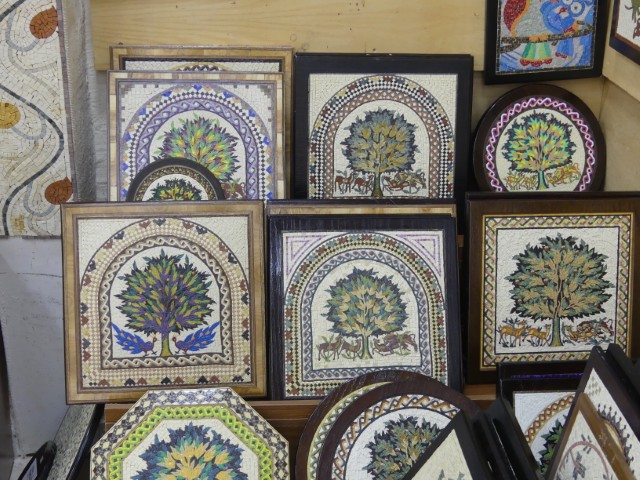
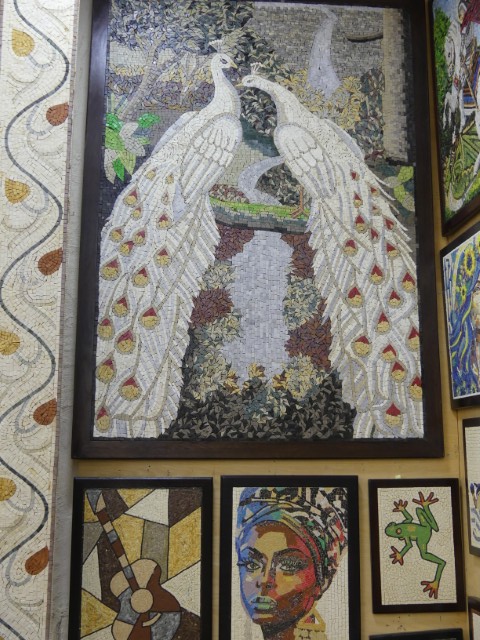
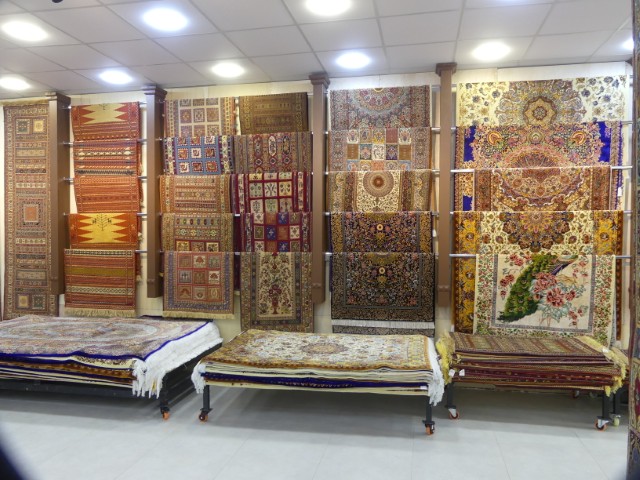
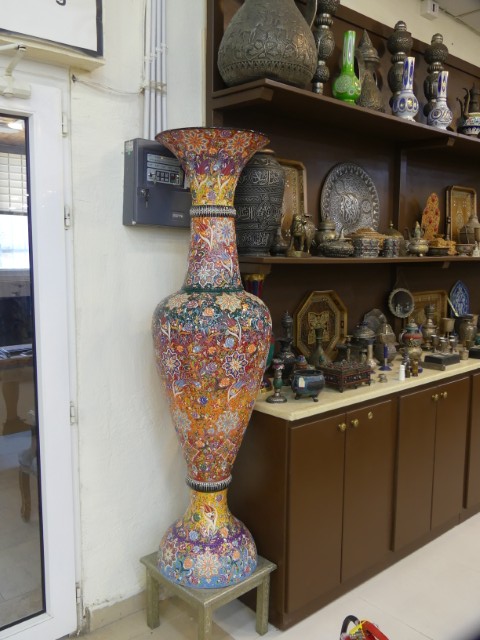
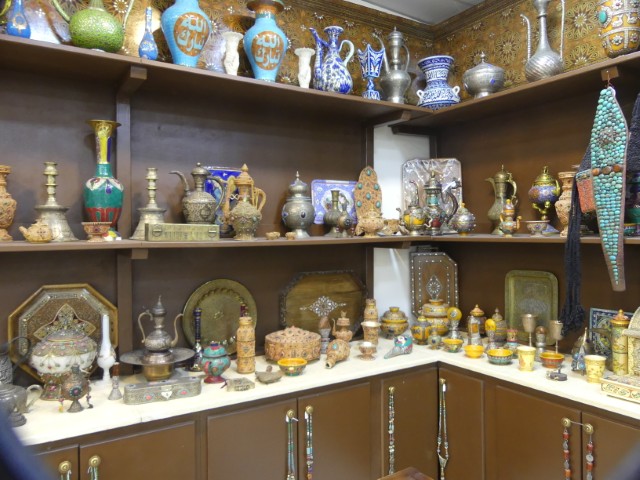
Of course, we had the opportunity to shop before leaving! Many items were for sale in addition to the mosaics.
Prior to stopping for a delicious lunch, we stopped by the Church of St. George. Madaba, the city where it is located, has the biggest Christian community in Jordan; there are more Christians than Muslims.
The church is named after George who was courageous and supposedly slayed a dragon. George was born in 275 AD during the Roman era. He joined the army but refused to sacrifice an animal to the Roman gods as the emperor insisted. Therefore, he was beheaded. The legend of George started 800 AD; long after his death. He is a prophet in the Muslim faith.
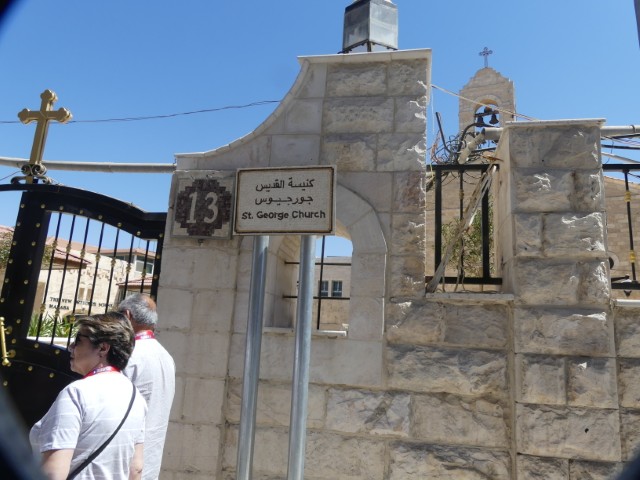
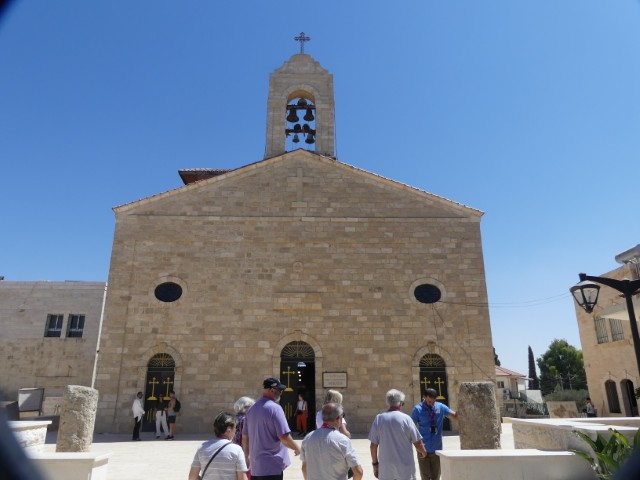
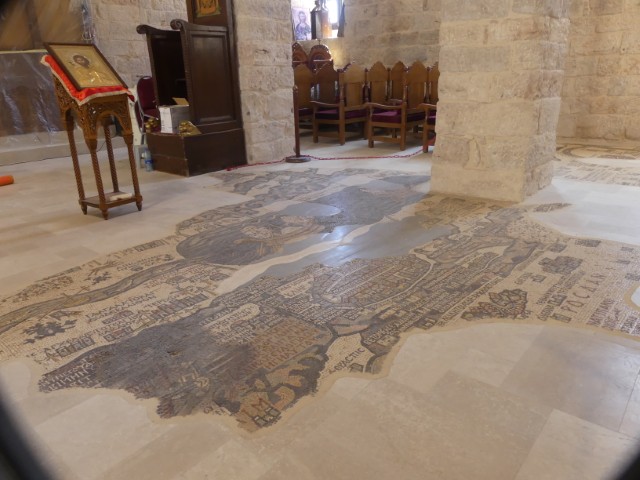
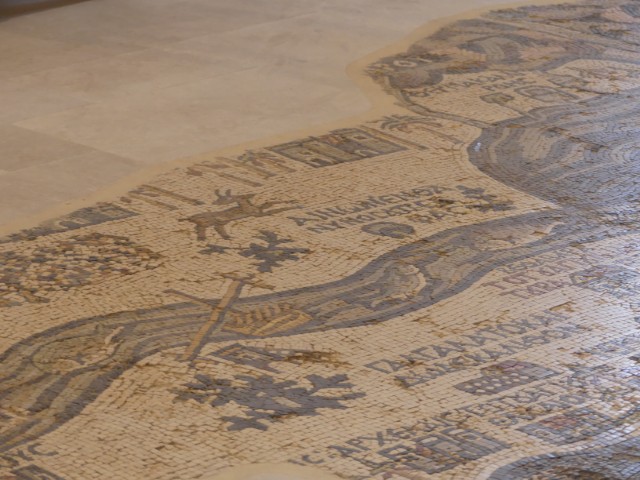
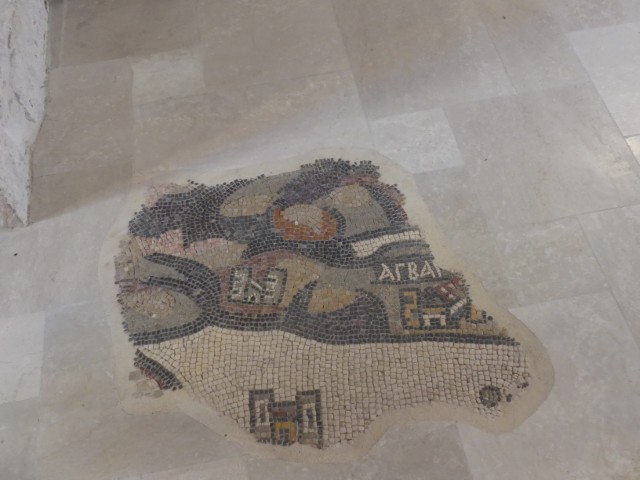
The church contains a famous mosaic map from 527 AD. Earthquakes and floods have damaged the mosaic as well as the building surrounding it, which is why the church itself has been rebuilt. Some of the damage is from the mosaic being defaced; non-Christian images were removed over time. What is unique about the map is that instead of the traditional NSEW orientation, it is ENWS, so up is east. The church faces east, the same as the map.
In1884 the map was discovered. The current church was rebuilt in 1902. Prior to that, there were only tents in the area. The city was built around the church.
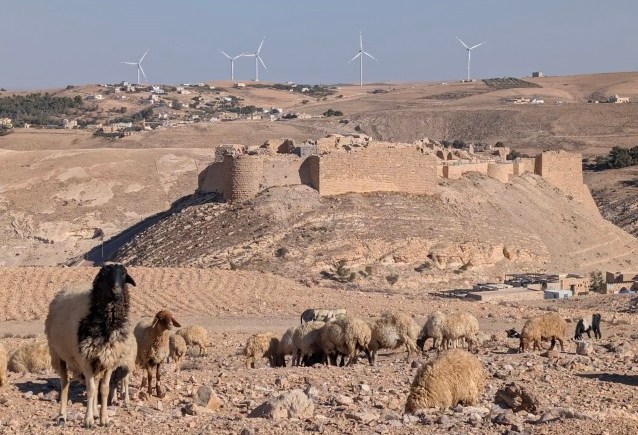
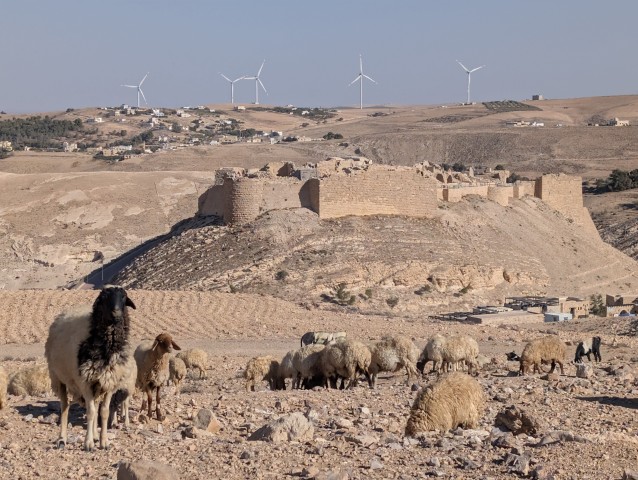
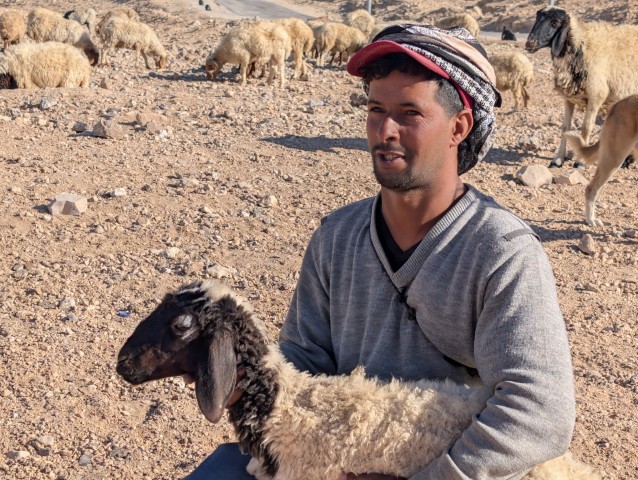
After lunch, we continued our journey with a photo stop at Shobak castle, a ruin from the Crusades. It is one of ten castles built to protect Jerusalem during that time. The best part of the stop was when a Bedouin and his daughter stopped to let their sheep and goats graze in front of the castle. I am not exactly sure what they were grazing on; there was no vegetation in sight!

After a long day on the road, we finally reached Petra. We were delighted to find that our hotel (the Petra Mövenpick) was directly across from the entrance to the site. Great hotel, great location.
 travelswithheather