
After a lovely lunch on board, we were off to visit Tiger Island to see how local people live. We took a short sampan ride to the island. We passed by some fish farms along the shore of the island. Tomorrow, there is an excursion to visit a fish farm. I will be passing on that one! You’ve seen one fish farm…Twenty thousand people live on the island, spread among five villages.
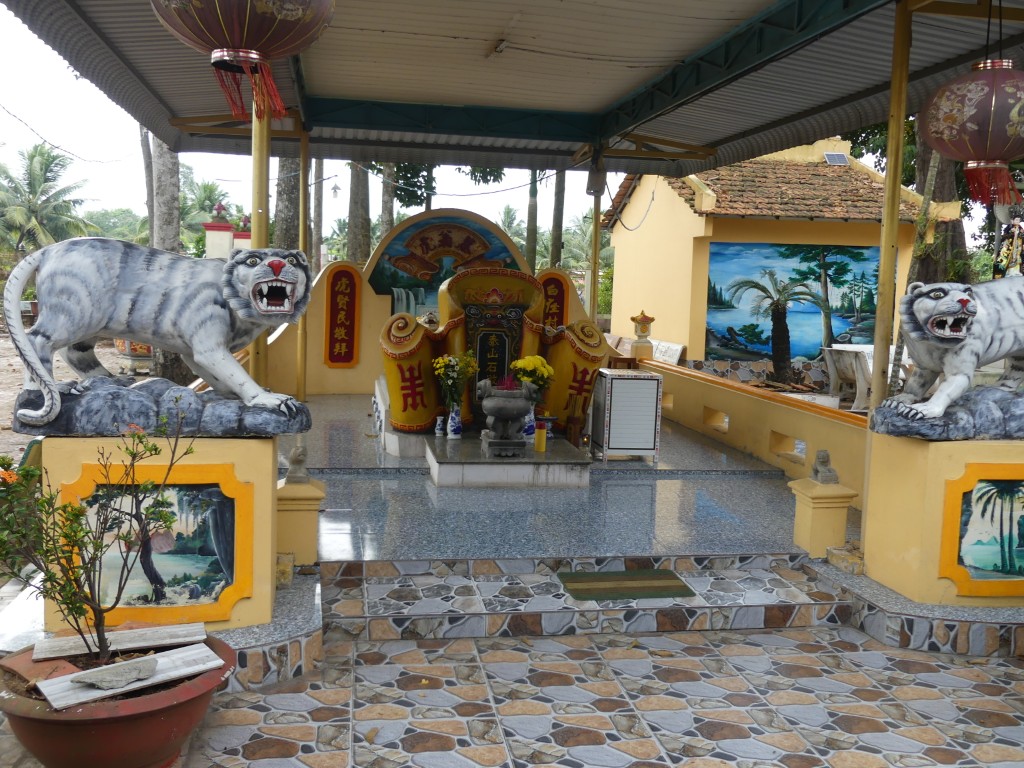
As we walked, our guide, Nam, pointed out the tropical fruit that grows in the area. The soil is fed by the silt from the Mekong River and so it is extremely easy to almost anything. I am familiar with most of the crops grown so didn’t take any pictures (except of the dragon beans). Lemongrass is grown because water snakes don’t like it, but they do like ginger, so that is not planted here. Most of the homes have an odd number of doors because their local religion says that it is lucky. Tiger statues (as well as other representations) are posted to scare away evil spirits. Something unique to south Vietnam is that the youngest son inherits property and businesses; in the north, it is the eldest.




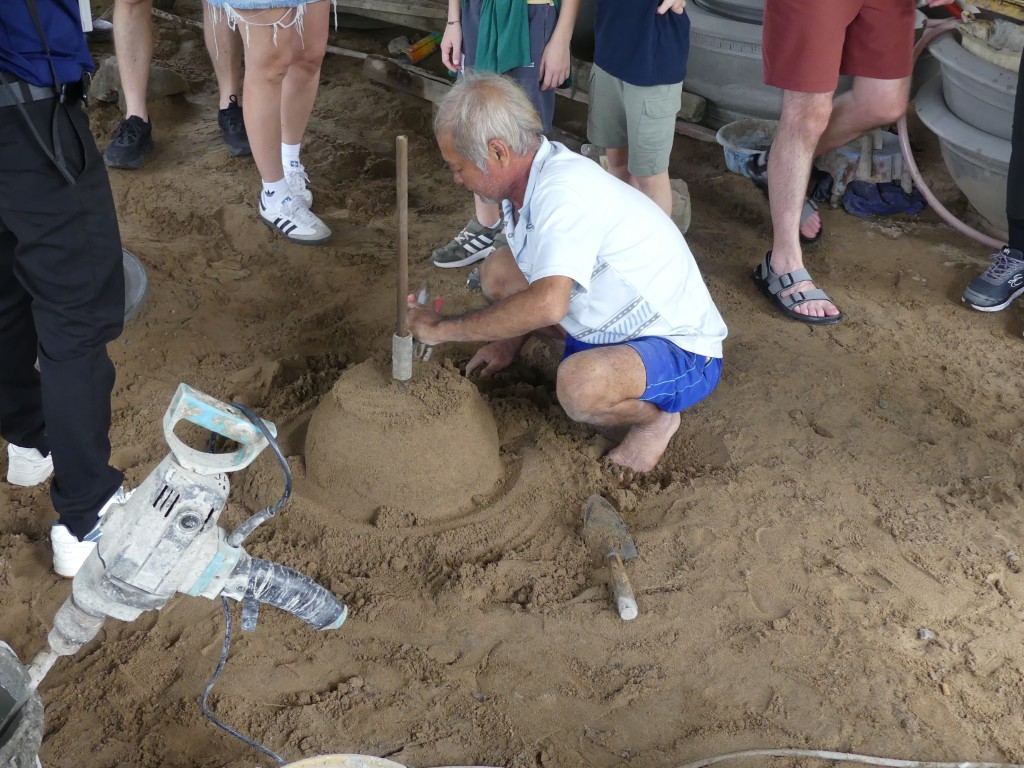
We stopped at a business where a man was creating plant pots out of clay. We watched as he made a mound of dirt that was used to mold the pots. Cement is then poured on top (mixed with silt from the river) and a trowel is used to create a pattern. The man said he can create 10 large and 25 small pots daily. Since Tet (Lunar New Year) is coming, he is busier than normal.

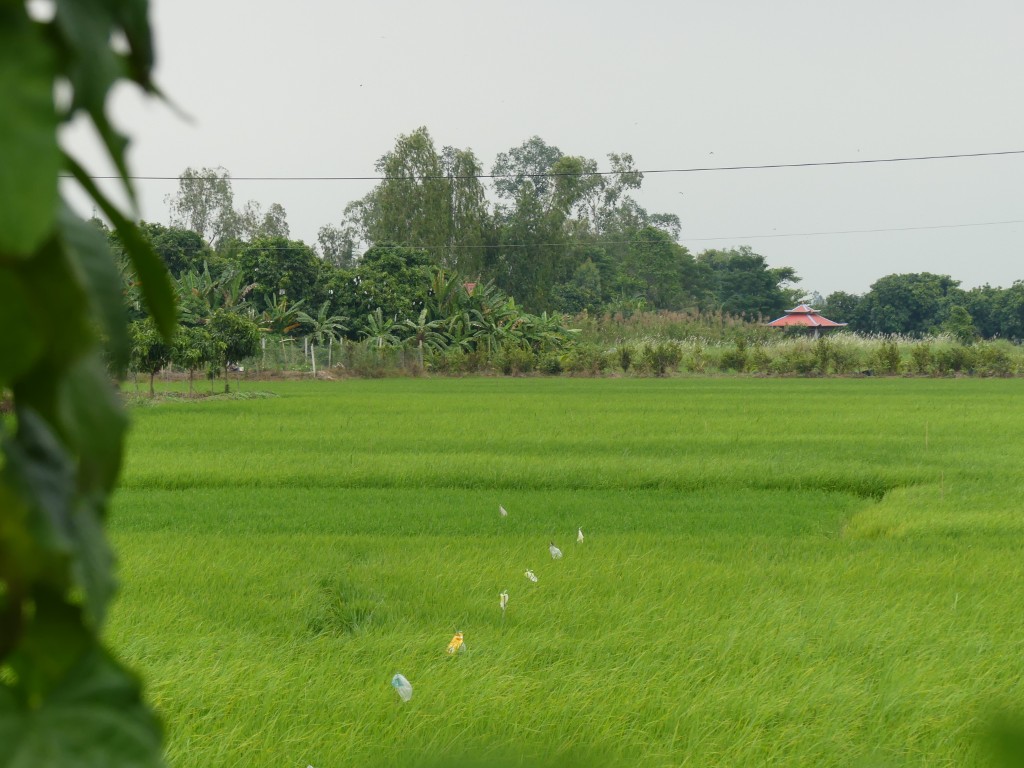
We passed rice paddies. The stakes with the plastic on them are to scare away rats that would eat the crop. Nets are also used to catch the rats – and then eat them. Tastes like chicken?
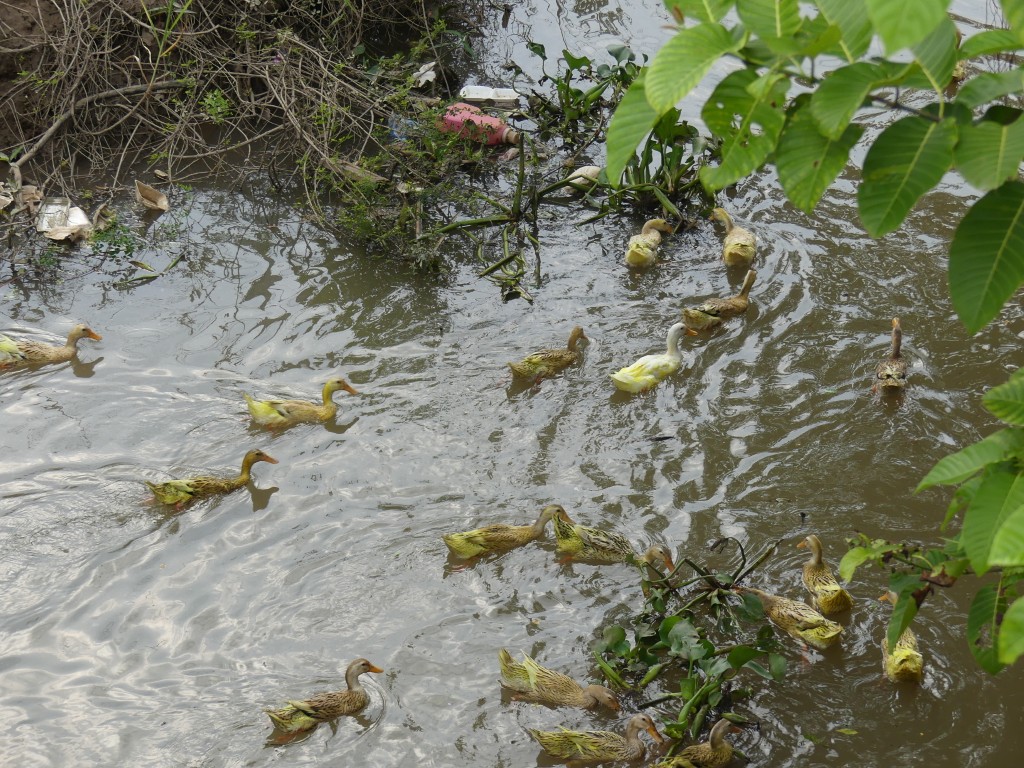
We then passed over a bridge and spotted some unusual ducks. Have you ever seen yellow waterfowl? Me, neither! Our guide explained that ducks are dyed to show ownership. I was hoping to see some pink ducks, but no luck.
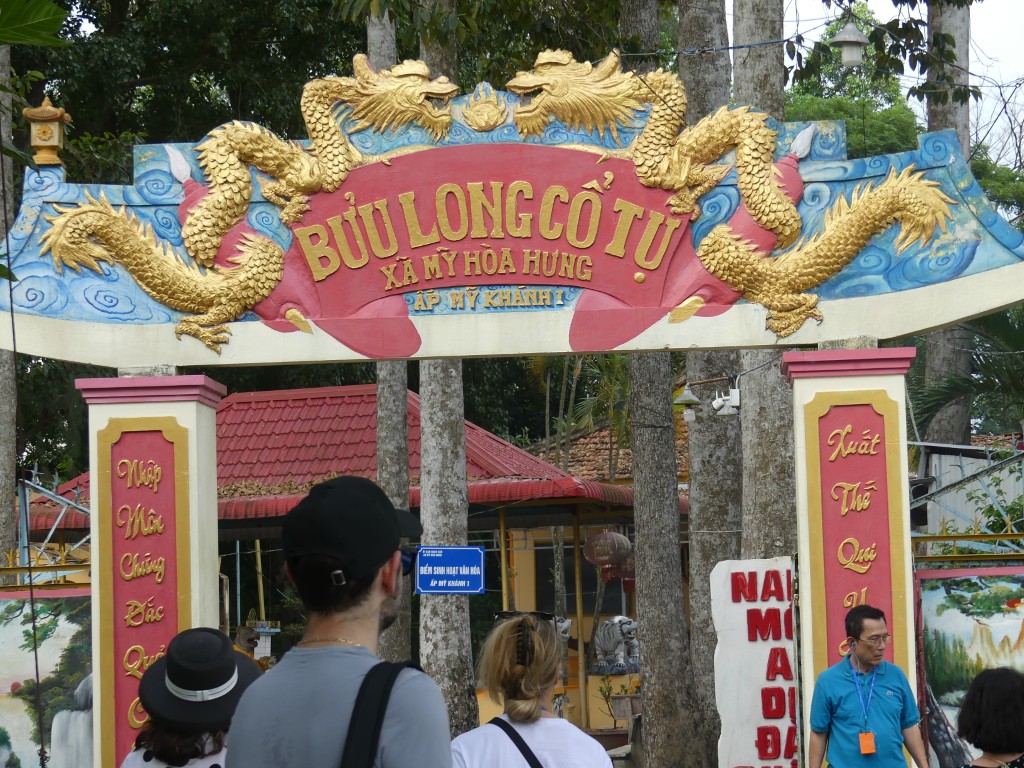
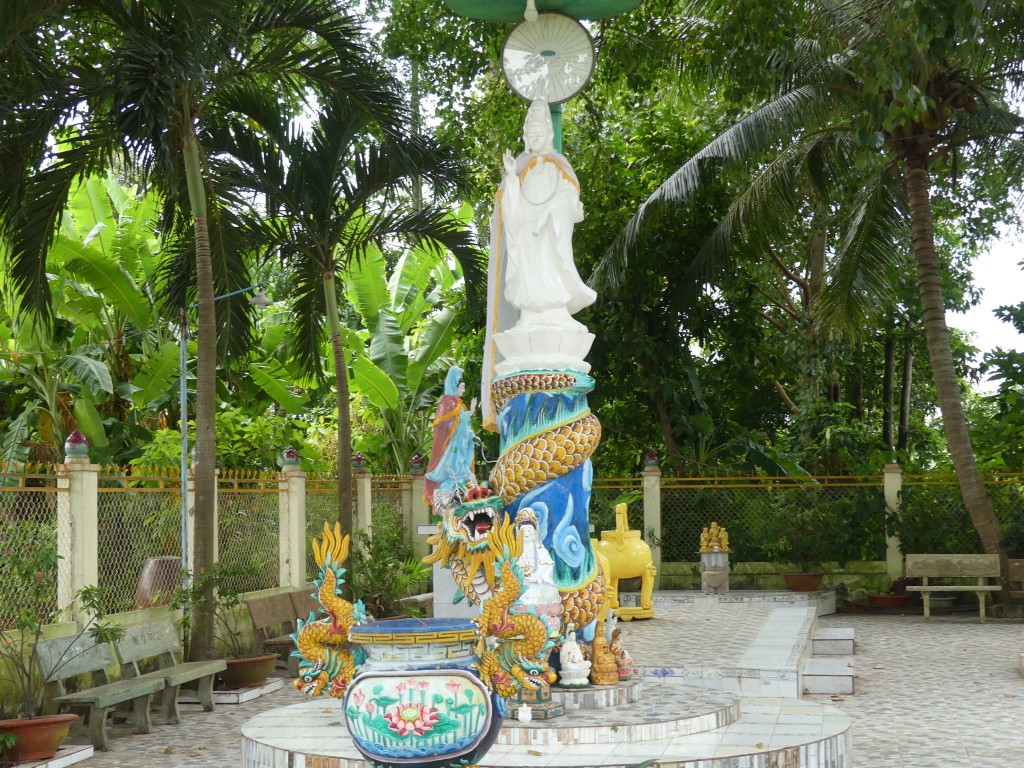
Our final stop before heading back to the sampan was at the Tiger Island Temple. The island was named after the fact that a tiger was buried in this spot over 200 years ago. Our guide showed us a cup with numbered sticks. He shook the cup and a stick was chosen. The number on the stick would determine your fortune. Locals do this daily, according to Nam.

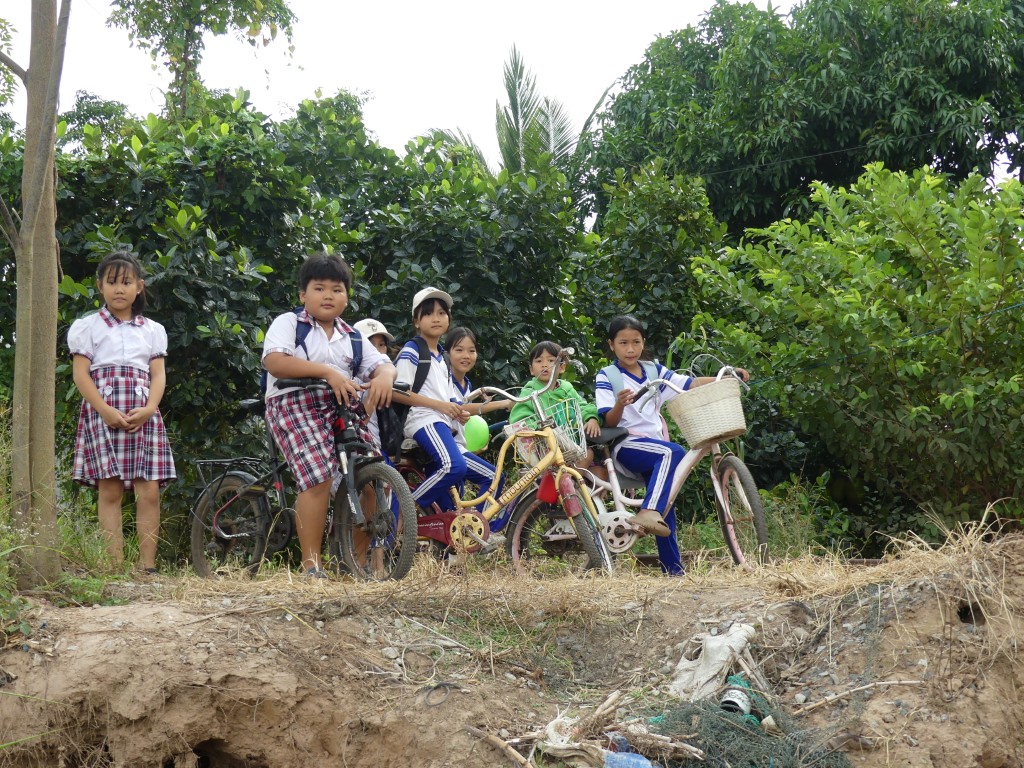
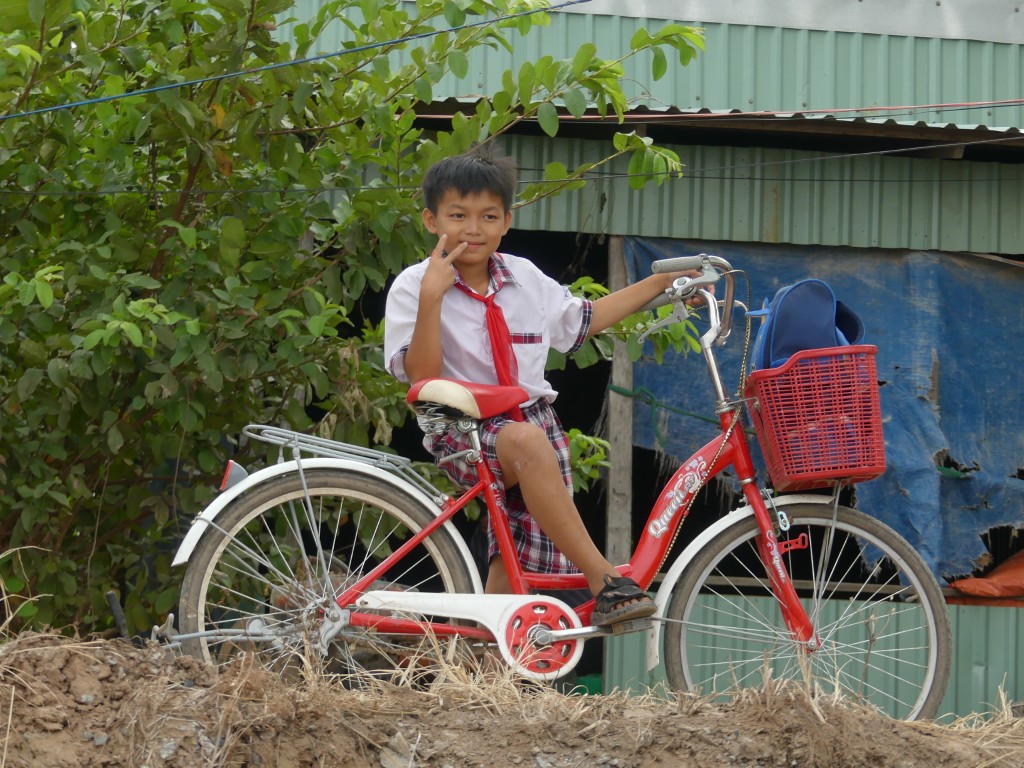
The best part of the visit for me was the walk back. The local children had just gotten out of school and so were riding their bikes home. They were very excited to see us and a group of them followed us to the dock to see us off.
 travelswithheather